Jangir Maddadi brings classical architecture to the washbasin with Hellas
For his first collaboration with Flaminia, Jangir Maddadi gives a circular ceramic basin an architectural exterior. Presented at Cersaie 2026, Hellas explores how relief, proportion and colour can give an everyday bathroom object a distinct presence.
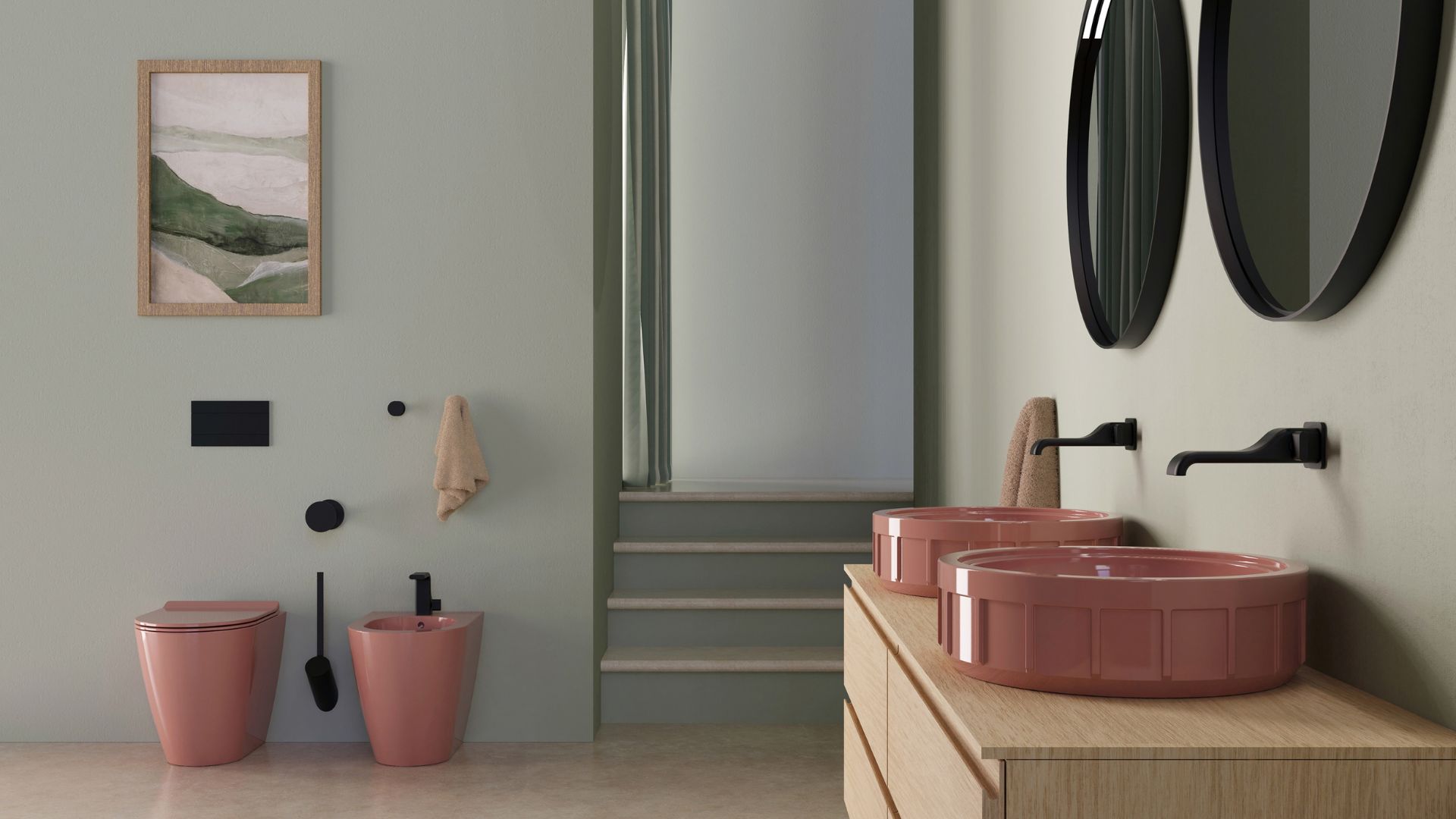
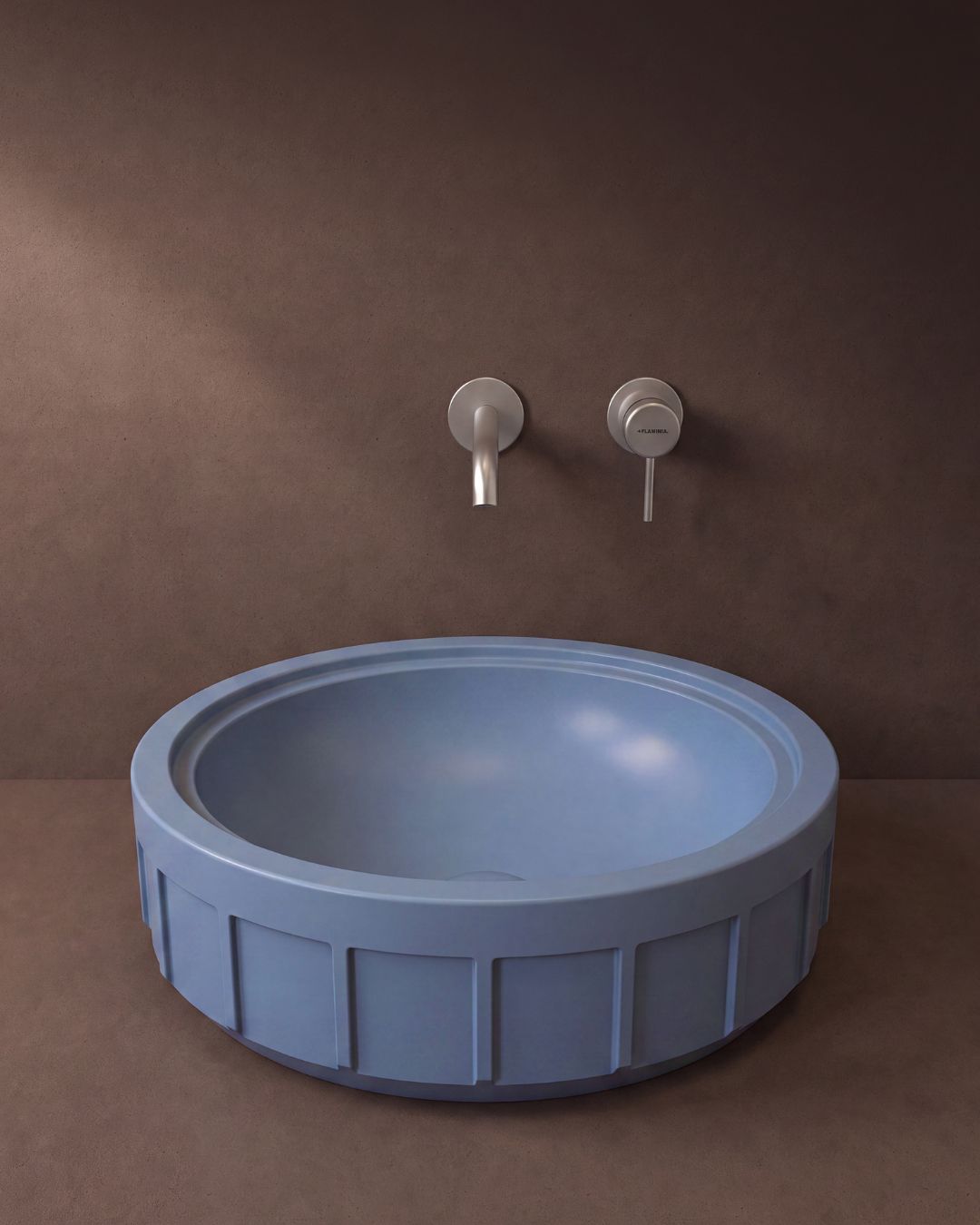
A regular sequence of shallow reliefs wraps around Hellas, the countertop washbasin designed by Jangir Maddadi for Ceramica Flaminia. Above them, a continuous rim frames a smooth, curved interior. The distinction between these two surfaces gives the project its character: architectural detail on the outside, an uninterrupted bowl within. Making its debut as part of Flaminia’s Cersaie 2026 presentation, Hellas marks the company’s first collaboration with the designer.
Gallery
Open full width
Open full width
Jangir Maddadi’s Hellas washbasin – Highlights:
Starting with the purpose of the object
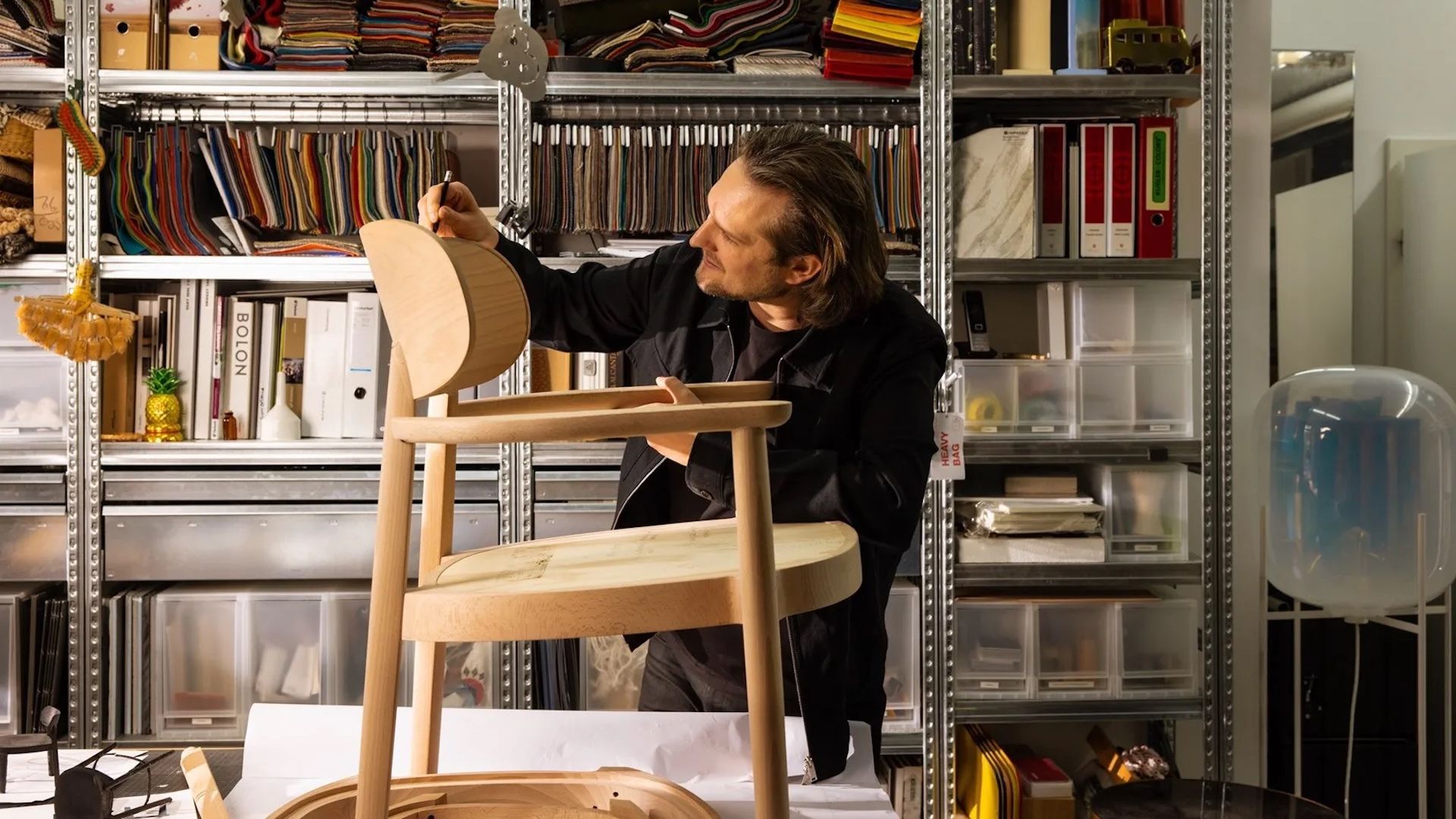
Maddadi, a designer of Kurdish origin whose professional career developed in Sweden, works across furniture, lighting, sculptural objects and public spaces. The biography supplied by Flaminia describes an approach that begins with understanding how an object is used and why it exists, allowing decisions about form, material and proportion to follow.
His first design to enter production, the Union Bench, was installed at the U.S. Embassy in Stockholm and subsequently added to its Cultural Heritage collection. His work has also been realised in airports and commercial environments. This background places Hellas within a practice accustomed to considering objects in relation to the spaces people use.
With Hellas, that relationship is expressed at the scale of the bathroom counter. The circular body remains easy to read as a basin, while the exterior gives it a more defined relationship with the architecture around it. The design concentrates its detail on the surface facing the room.
Classical references shaped into ceramic
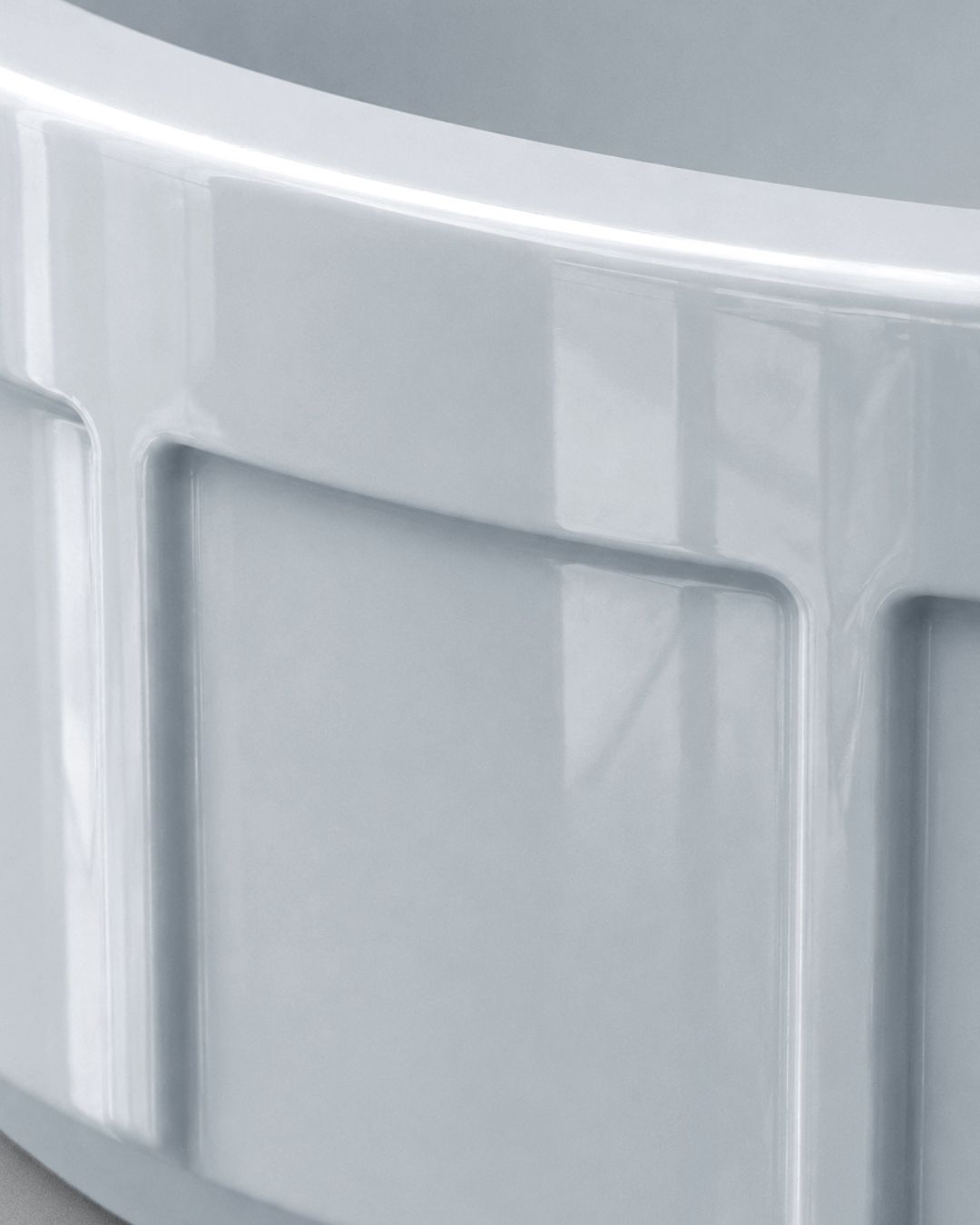
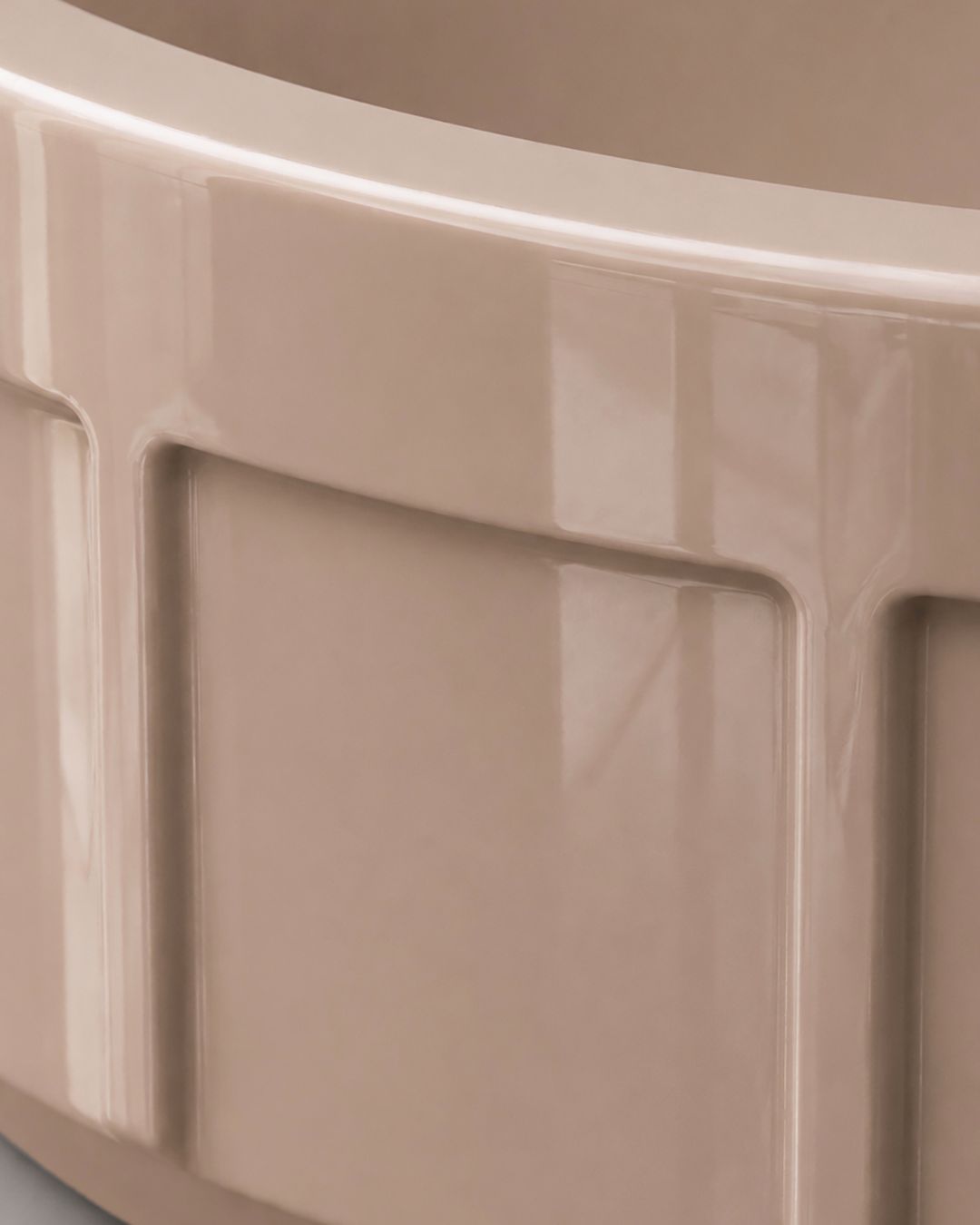
Flaminia identifies arches, columns and plinths as the architectural vocabulary behind Hellas. Maddadi translates those references into a repeated relief around the ceramic body. The result is compact, with a strong horizontal rim holding together the rhythm of the exterior.
The shallow recesses create alternating areas of light and shadow. Their repetition makes the curvature of the basin more apparent as the surface turns away from the viewer. The classical reference is carried through this organisation of the surface, giving the object an identity that can be read without additional ornament elsewhere in the setting.
The interior has a different treatment. Its smooth geometry curves down into the bowl, leaving the relief confined to the outside. Seen from above, the continuous rim connects the two. This is the central formal decision in Hellas: a single ceramic volume accommodates both a patterned outer face and a soft inner surface.
A new collaboration within Flaminia’s ceramic practice
Founded in 1955 in Civita Castellana, Flaminia has developed its bathroom collections through collaborations with designers and research into ceramic forms and colours. Under art director Giulio Cappellini, the company treats sanitaryware as a component of interior design, with its own material and visual presence.
Hellas extends that approach through Maddadi’s architectural references. Its exterior gives Flaminia another way to explore what a ceramic surface can contribute to a bathroom. Alongside the outline of the object, depth and repetition become part of its expression.
The manufacturing context is relevant here. According to Flaminia’s company profile, production takes place entirely in its Civita Castellana facilities, from prototyping and modelling through casting, glazing and firing. Industrial processes are combined with manual checking and finishing. This is the production framework into which Maddadi’s design enters, connecting the surface treatment to the company’s established work with ceramics.
Colour and the surrounding space
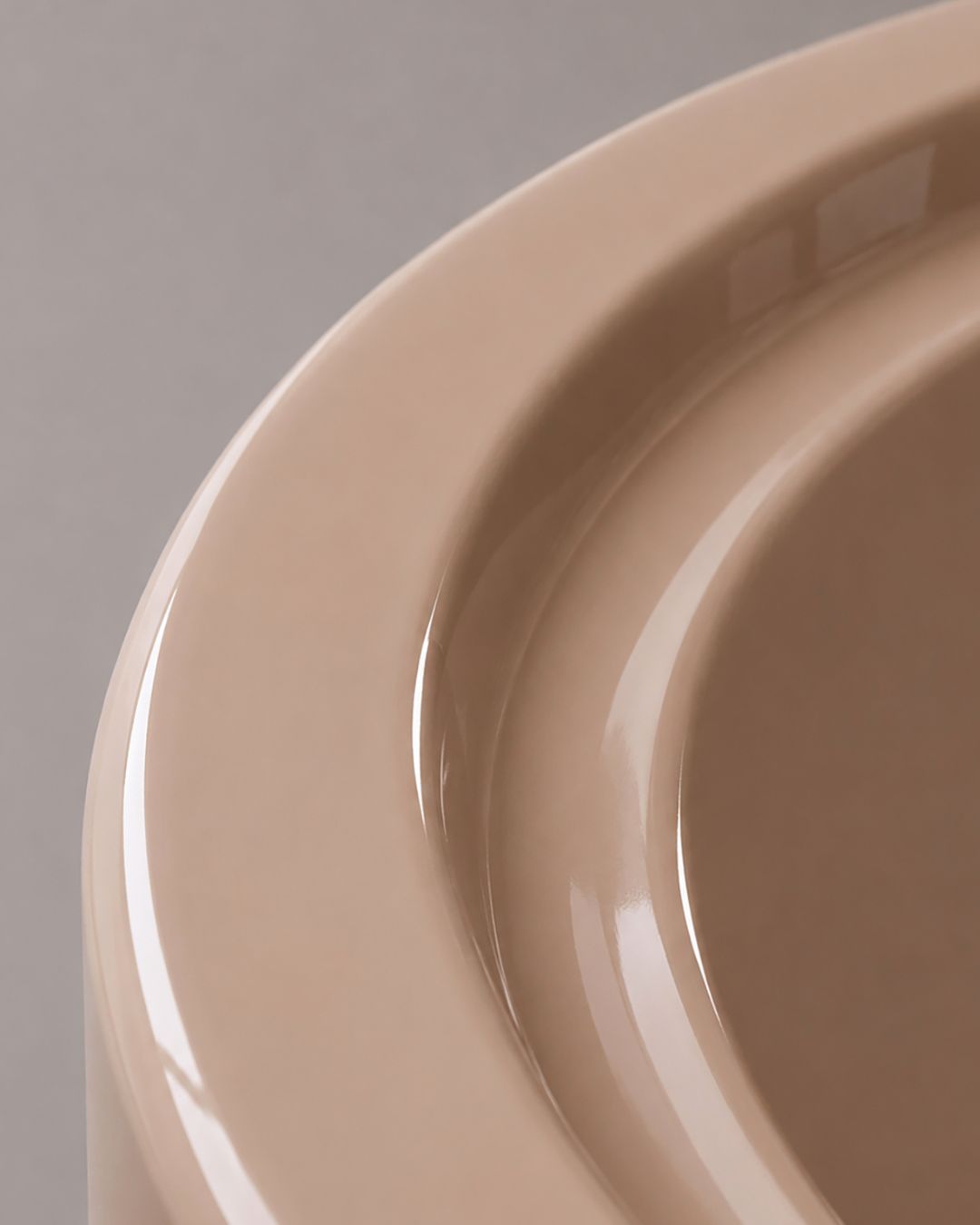
Hellas is presented in a range of finishes, with Flaminia’s launch materials showing Nuvola and Terracotta versions. The Nuvola image makes the relationship between colour and relief particularly clear: a blue-toned surface catches light along the rim and raised edges, while the recesses appear darker.
At Cersaie, the basin forms part of a wider presentation conceived by Cappellini with references to Marrakech’s Jardin Majorelle. Full-scale bathroom settings place the new products within compositions of colour, materials and furnishings. That context is useful for reading Hellas as part of an interior.
Its repeated exterior detail could provide a focal point against a plain counter and wall, as the supplied image suggests. For architects and interior designers, the interest lies in that capacity to introduce an architectural rhythm through one functional object. Maddadi gives the basin enough definition to shape its immediate surroundings, while keeping its overall form simple.