Holy Carp!: the iconic soy sauce fish turns compostable
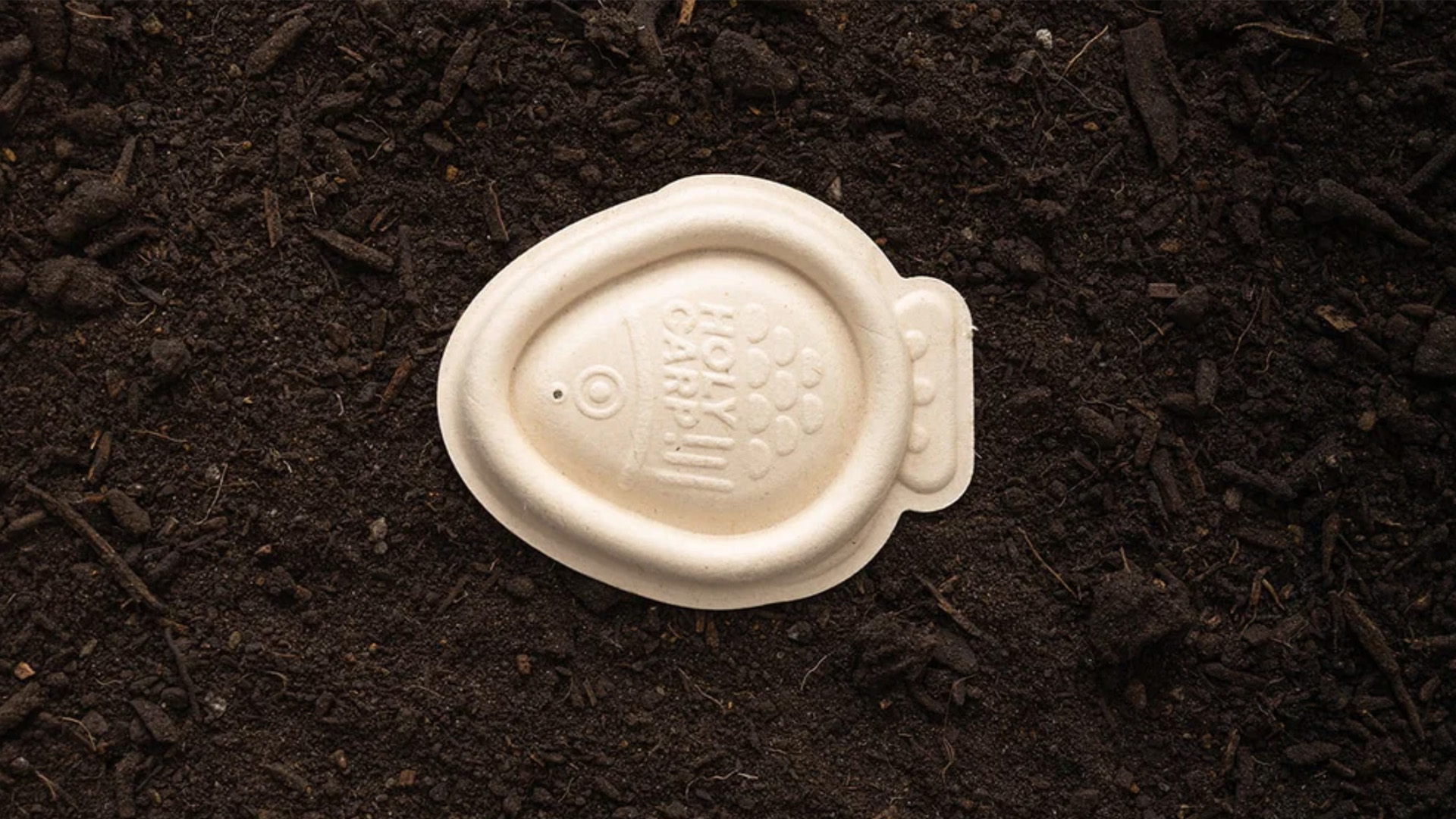
Developed by Heliograf with Vert Design, Holy Carp! rethinks the familiar fish-shaped soy sauce container using plant-based fibres, aligning the lifespan of the packaging with the few seconds it is actually used.
Single-use packaging has quietly become one of the most widespread by-products of contemporary consumption patterns, reflecting a culture increasingly shaped by convenience and overconsumption. From takeaway meals to personal care products, everyday convenience often relies on small disposable containers designed to be used for just a few moments, yet destined to remain in the environment for decades.
Starting precisely from this reflection, the Australian design studio Heliograf developed Holy Carp!, a compostable reinterpretation of the classic soy sauce container. The project, created in collaboration with Vert Design, does not seek to eliminate the object, but rather to rethink it. The goal is to preserve the familiar experience of the soy fish while completely transforming the lifecycle of its materials.
Gallery
Open full width
Open full width
Among the most problematic forms of waste are micro-packaging formats: small sachets, condiment packets and single-dose containers that circulate globally in enormous quantities. According to industry estimates, around 855 billion sachets are produced every year, making them one of the most widespread forms of plastic packaging worldwide.
Due to their small size, these items are notoriously difficult to collect, recycle or recover efficiently. Many inevitably end up in landfills or are dispersed throughout ecosystems. But how often do we actually stop to think about them?
These objects are so small and familiar that they often go almost unnoticed. We use them, throw them away, and move on. Yet when multiplied by billions, their impact becomes anything but invisible. Among these artifacts of everyday consumption, there is one that many people instantly recognize.
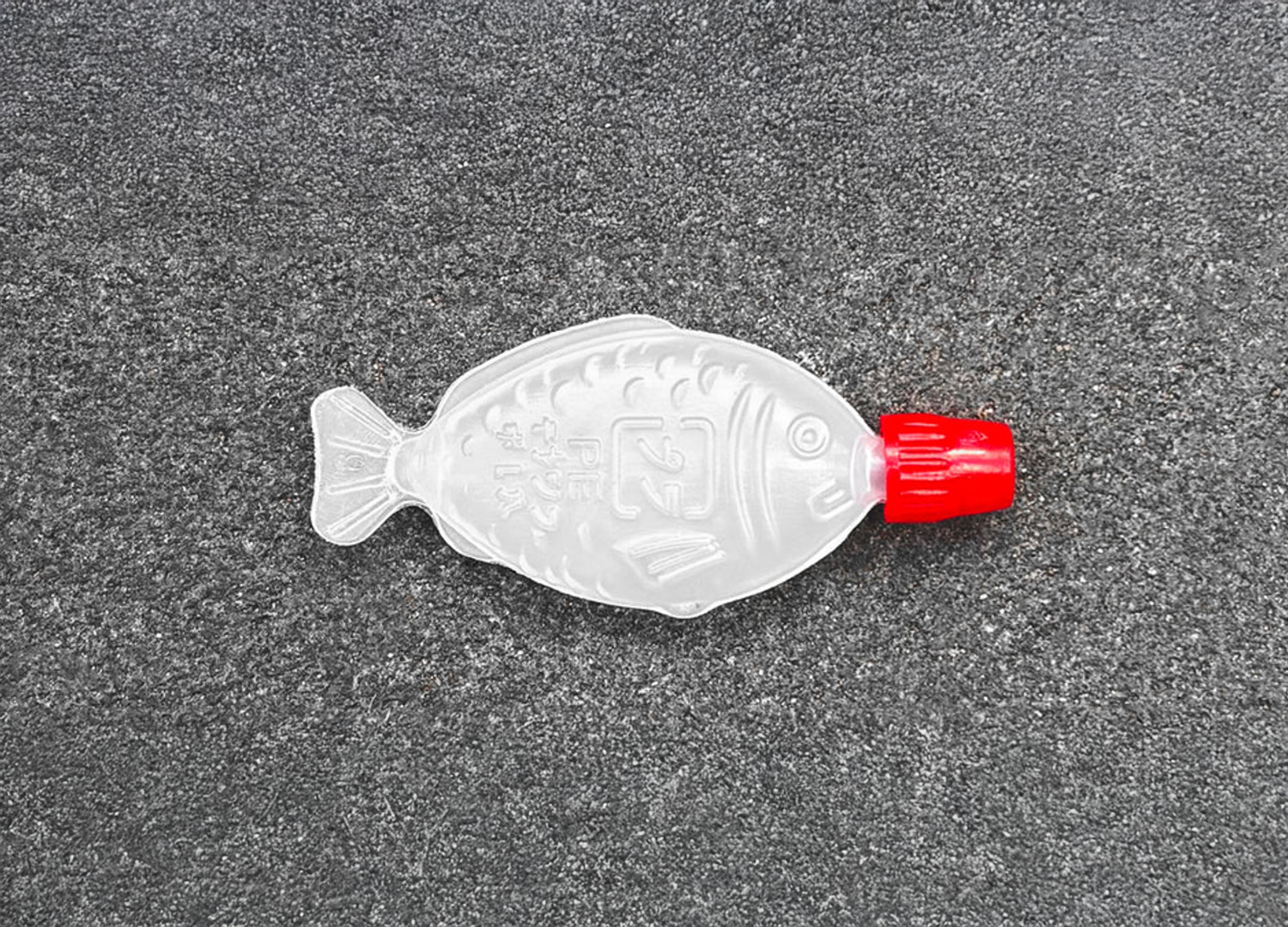
The fish-shaped soy sauce container, often simply called a soy fish, has become something of a visual symbol of takeaway sushi culture. Introduced in the mid-20th century, this small squeezable dispenser quickly spread across restaurants and supermarkets in Asia, Europe, and North America.
Its success lies in its simplicity. Compact and easy to use, the tiny plastic fish delivers just the right amount of soy sauce for a single meal. For many people, opening the little fish has become part of the ritual of eating takeaway sushi. Yet this is where the paradox emerges.
The container is used for just a few seconds during a meal, yet it is made from plastics that can persist in the environment for hundreds of years. Over decades of global sushi consumption, billions of these small containers have been produced and discarded. What may appear to be a playful accessory is in fact one of the quietest symbols of disposable culture.
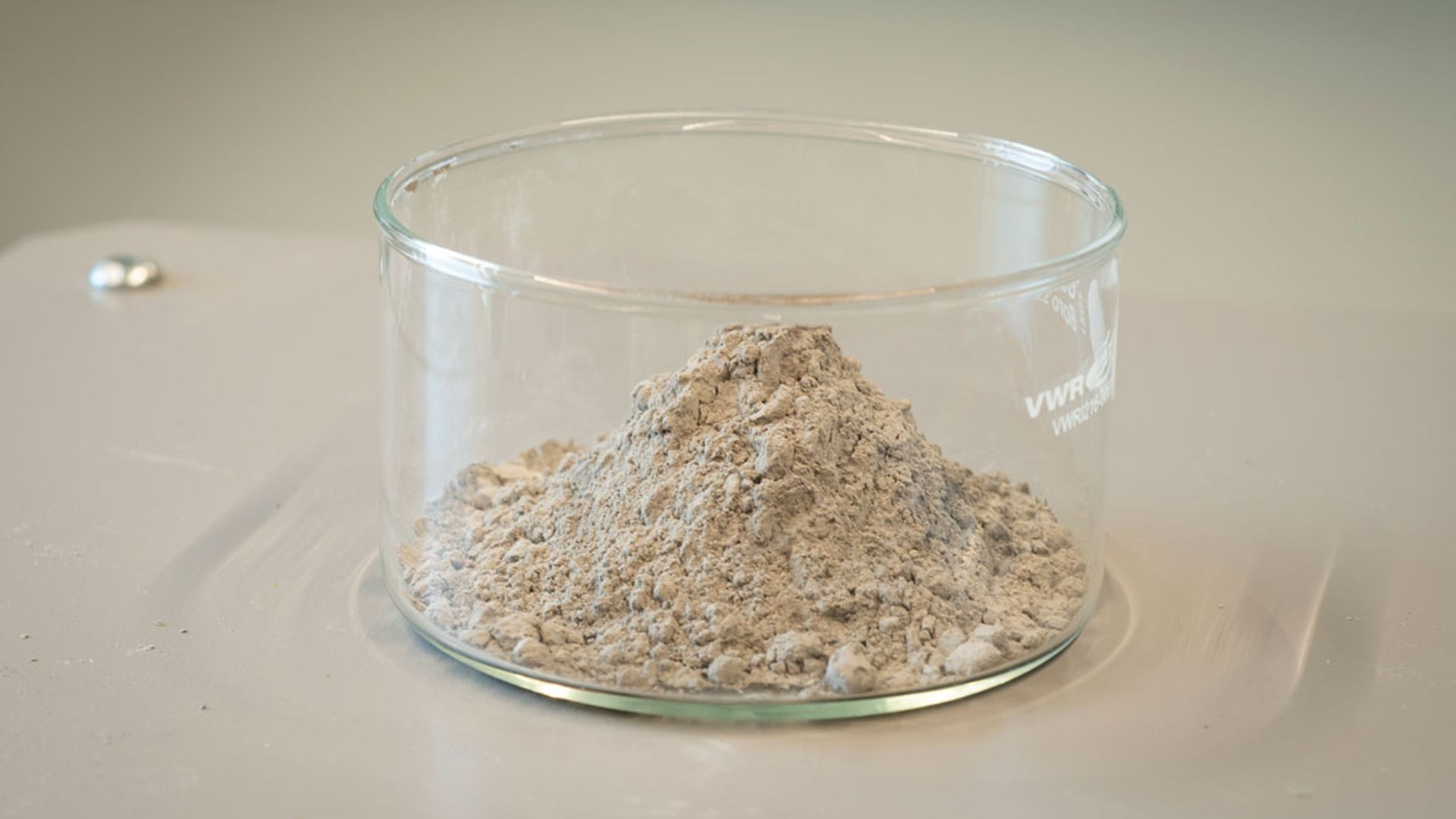
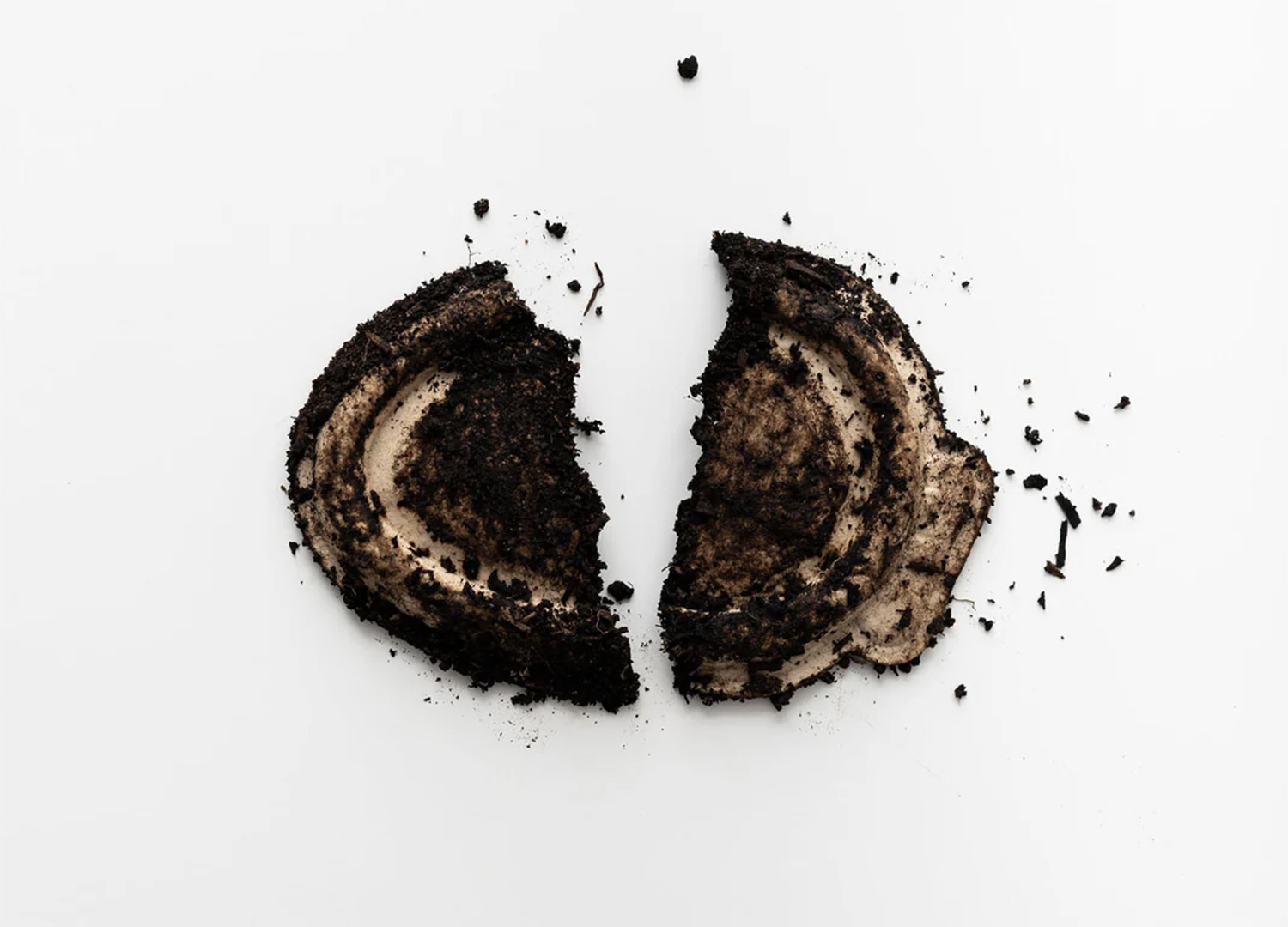
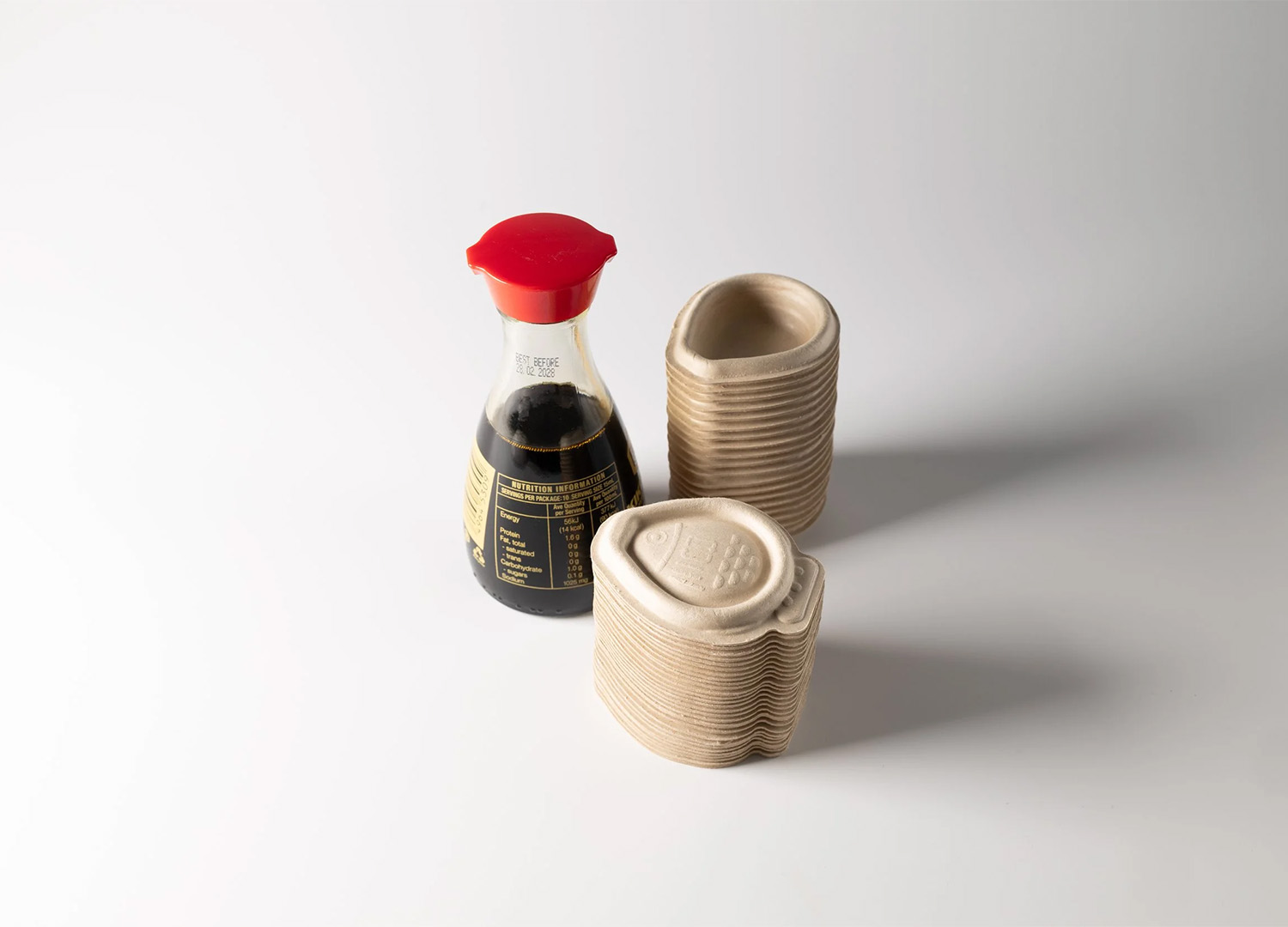
Instead of plastic, Holy Carp! is made from renewable plant fibres, including pulp derived from bagasse, a by-product of sugarcane processing. The container is designed to be plastic-free, PLA-free and PFAS-free, and can decompose in home composting conditions within just a few weeks, rather than persisting in the environment for centuries.
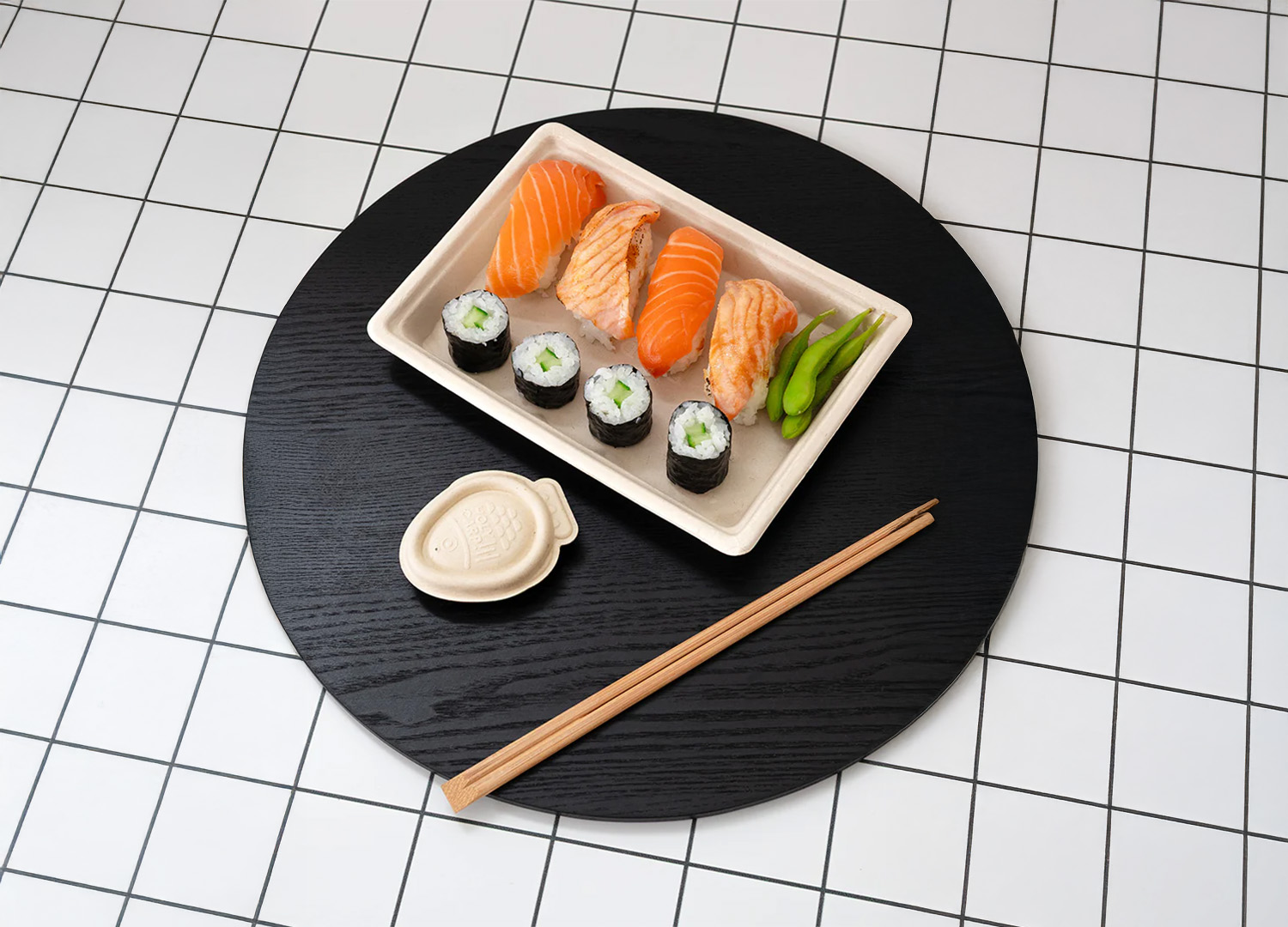
The principle behind the project is simple yet powerful: to align the lifespan of the packaging with the few seconds of its actual use. Interestingly, the design does not abandon the recognizable fish shape. Holy Carp! deliberately retains the iconic silhouette of the traditional container.
Why keep the fish? Because sometimes the most effective sustainable solutions do not erase familiar rituals—they transform them. The fish shape has become part of the cultural language of takeaway sushi. By preserving this visual identity while changing the material, the project demonstrates how design can intervene without disrupting everyday habits.
In this sense, Holy Carp! represents more than a simple material substitution. It is an example of design-led transition, in which environmental improvements are integrated into existing practices. The project was also developed with real-world application in mind. The container is leak-resistant and can hold soy sauce for up to 48 hours, allowing restaurants to fill it directly in-store instead of relying on pre-packaged plastic alternatives.
Heliograf also introduced several small adjustments based on observations of real user behaviour. The container is slightly larger than traditional soy fish, responding to the tendency of customers to take multiple packets at once. Increasing the capacity of a single container could therefore help reduce overall consumption.
An optional compostable sealing sticker further improves the transport and handling of takeaway orders. After all, sustainable design only works if it can be used in real life.
Within the vast ecosystem of global packaging, the soy sauce container may seem like an insignificant detail. Yet its story reveals something fundamental about the design challenges of the present. When hundreds of billions of single-use objects are produced every year, even the smallest ones take on systemic significance.
Holy Carp! shows that change does not always come from major technological breakthroughs. Sometimes it begins with a simple question: What if we redesigned the objects we stopped noticing?