House 720 Degrees: architecture as a perceptual device
Hidden in a remote Mexican valley, Fernanda Canales has designed a circular, off-grid residence that eliminates the conventional façade and transforms its central courtyard into a contemporary solar clock, effectively doubling the boundaries of perception.
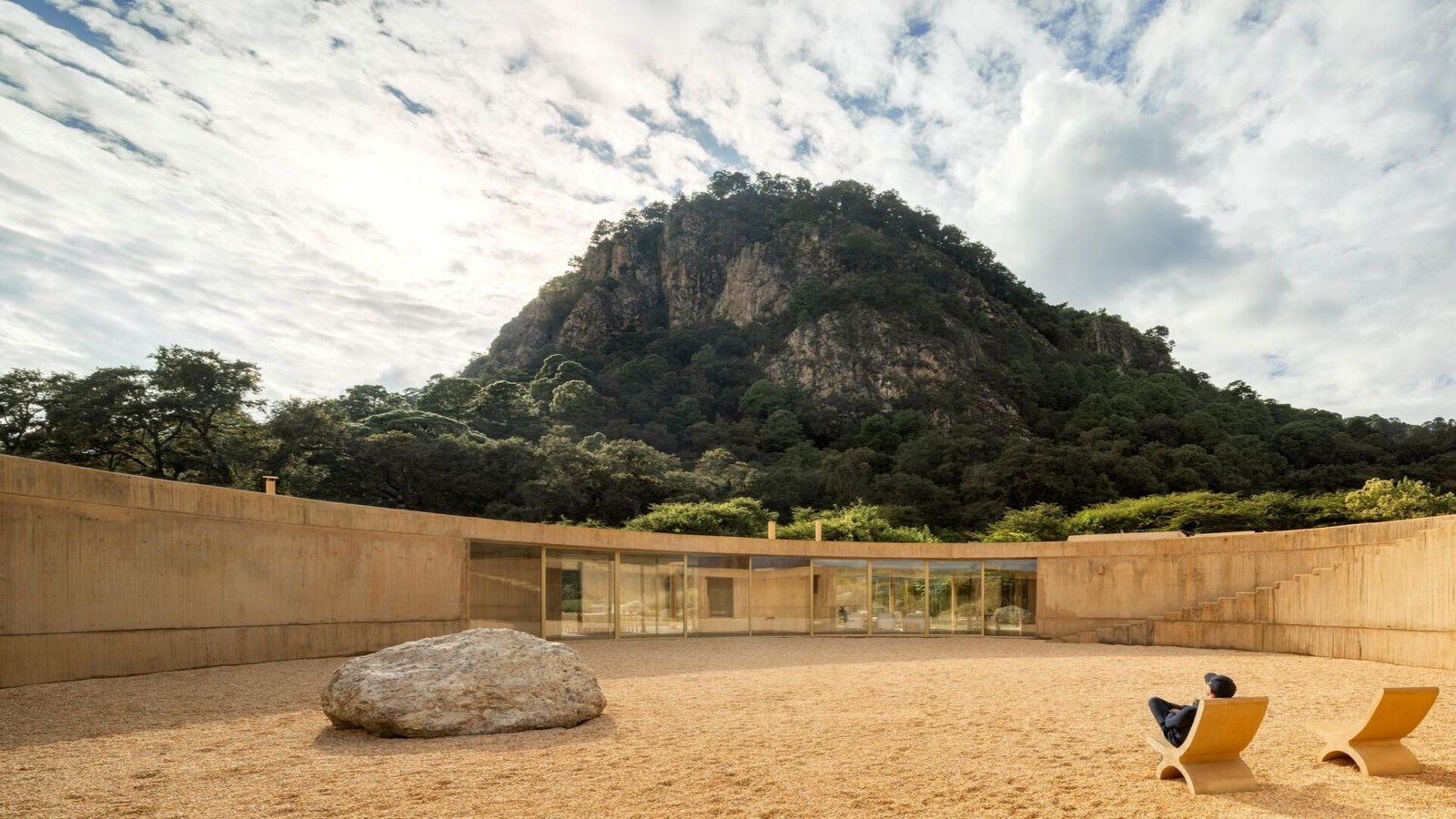
What does it mean to live at 720 degrees? It is not a provocation—it is a design reality by Mexican architect Fernanda Canales, transforming domestic space into a fully immersive experience within nature. Set in the heart of a remote valley, three hours from Mexico City, House 720 Degrees is not just a house. It is a geometric device, an “eye” that doubles the 360-degree range of ordinary vision, redefining the relationship with nature. Rather than merely occupying the landscape, it amplifies it.
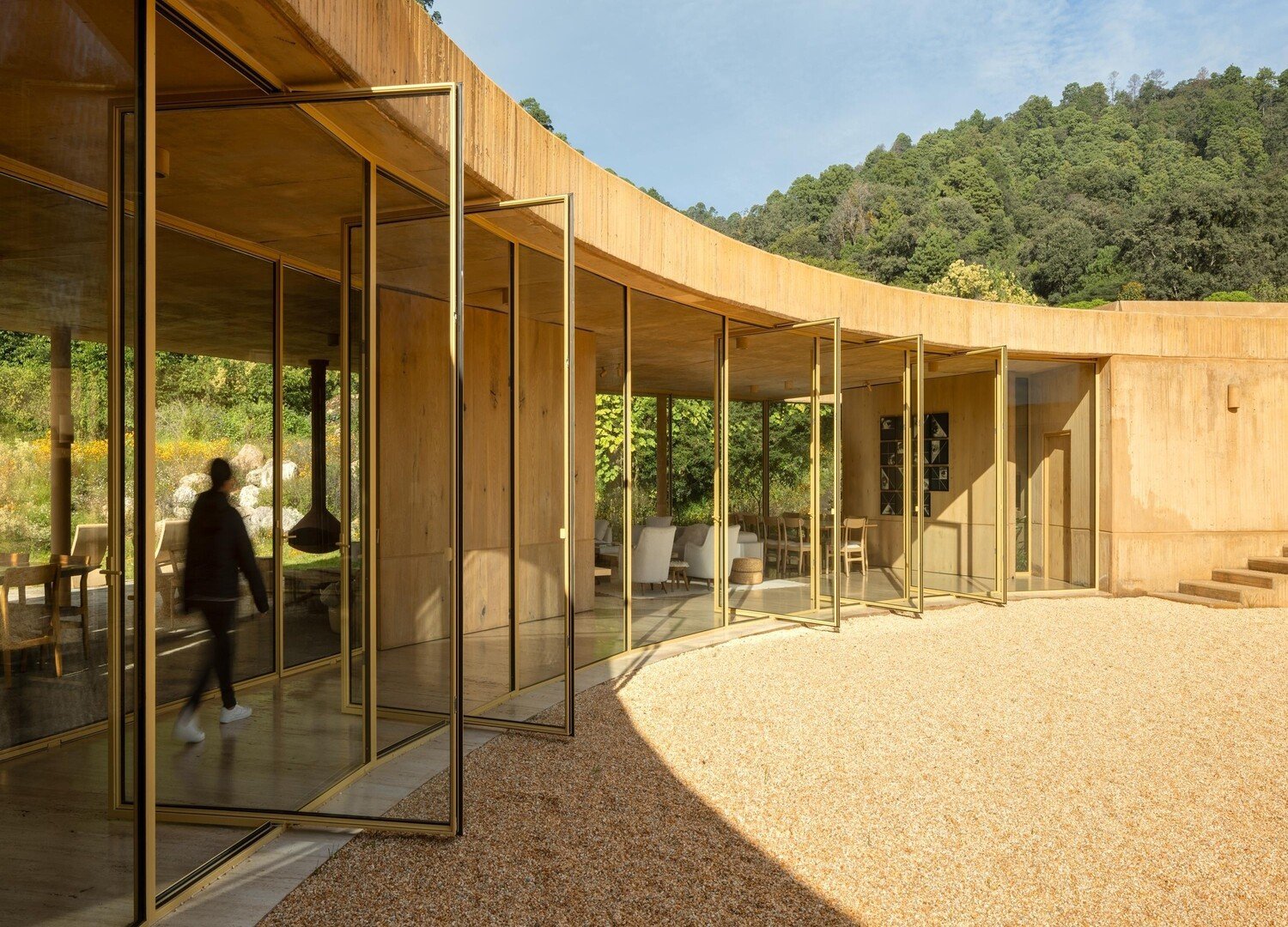
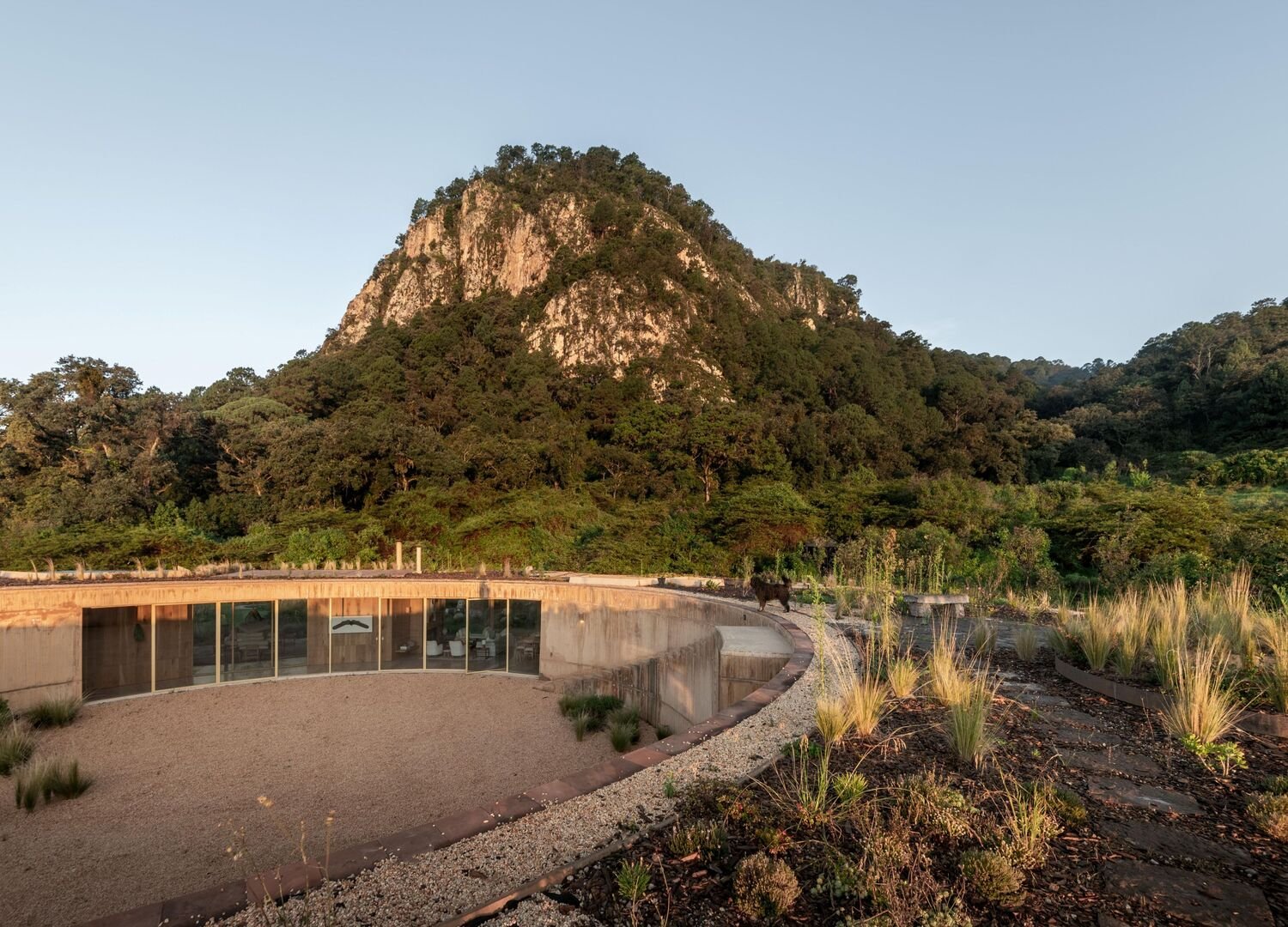
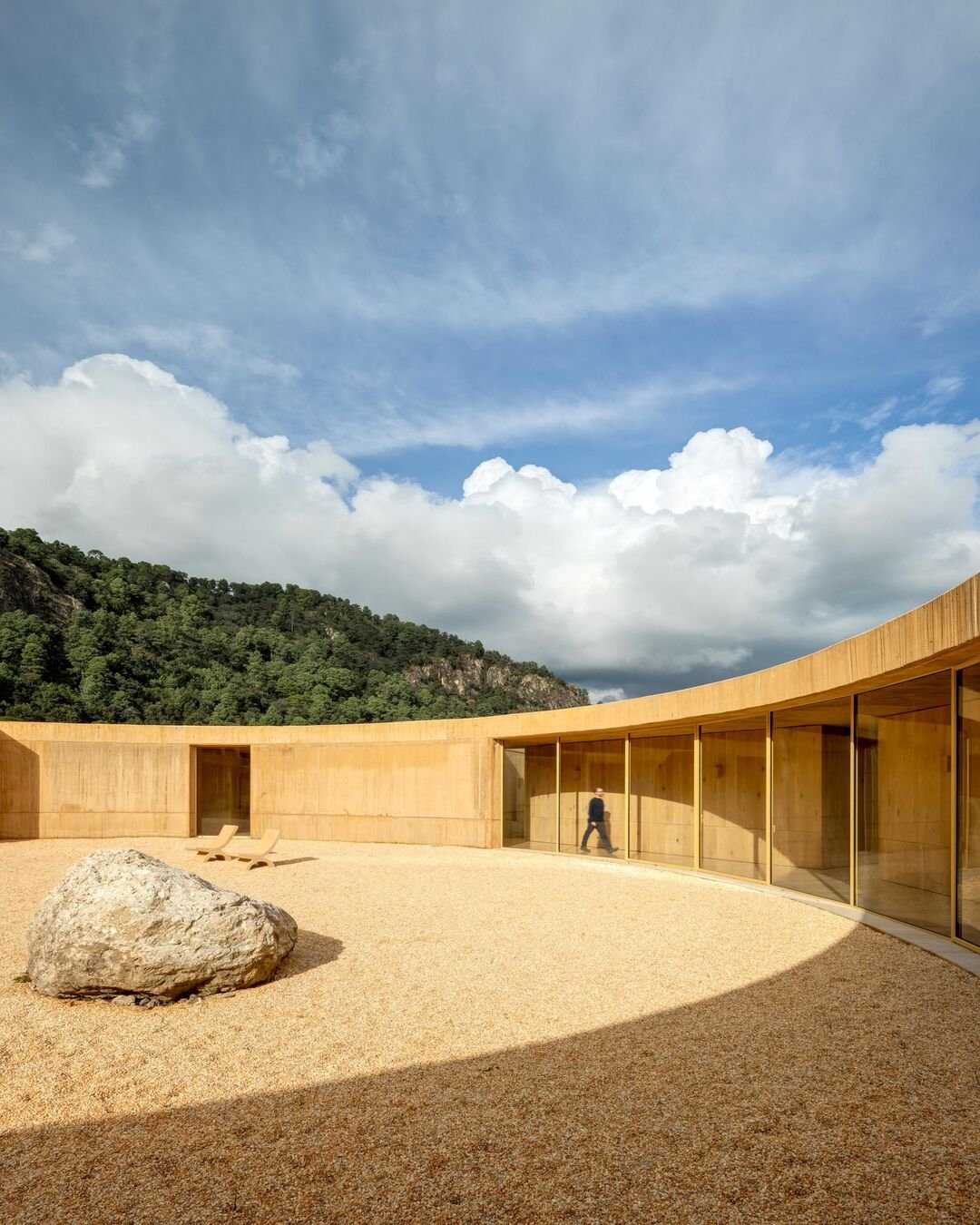
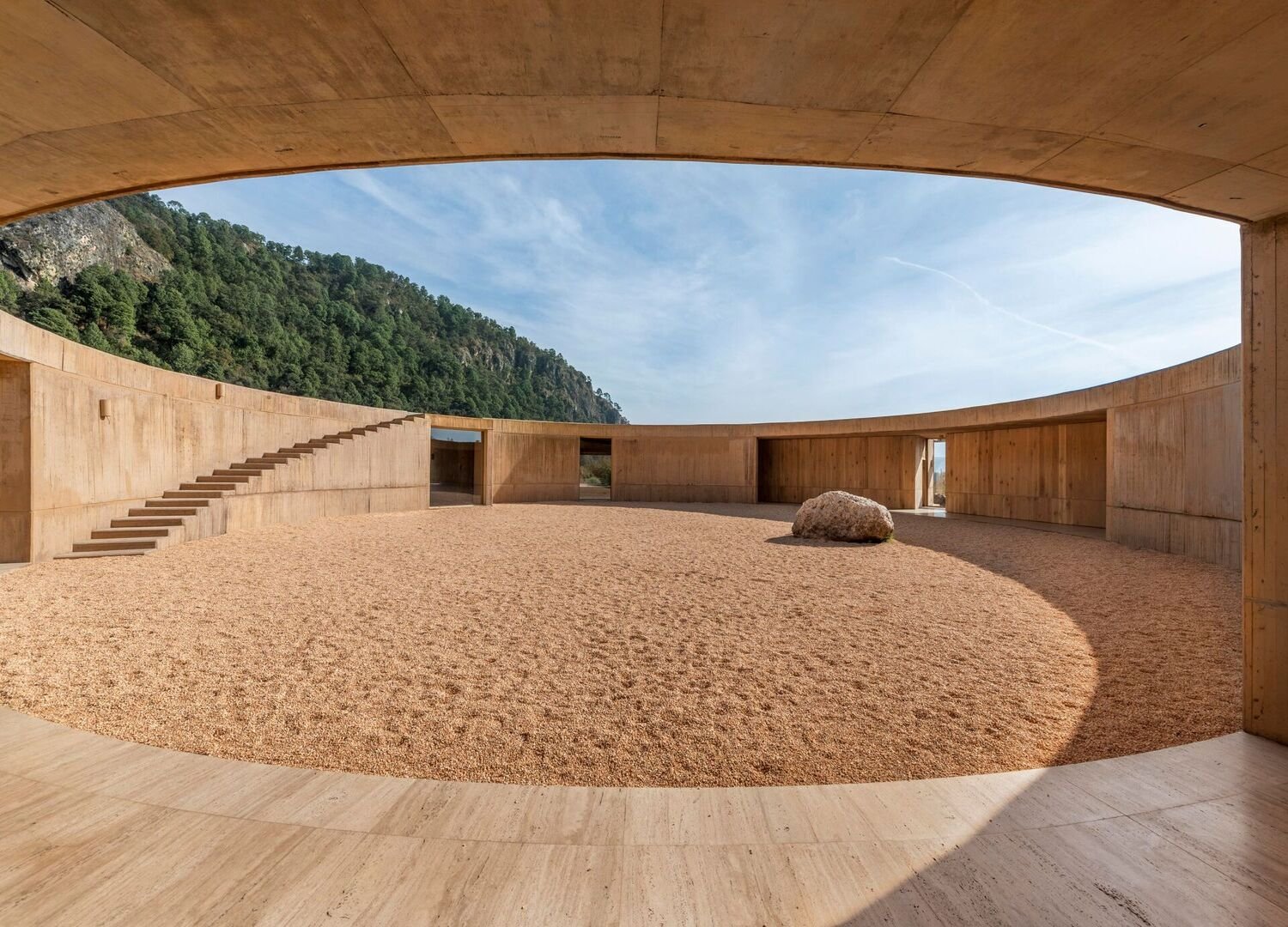
One of Canales’ boldest, almost subversive gestures is the elimination of the conventional façade. On an 8,000-square-meter plot, with 1,115 square meters of built area, House 720 Degrees adopts a circular plan, etched into the terrain. It functions simultaneously as an optical instrument and a language of architecture. The continuous circular perimeter dissolves hierarchies, eliminating front and back: here, every point is a center, every direction – visual or navigational – is possible.
Gallery
Open full width
Open full width
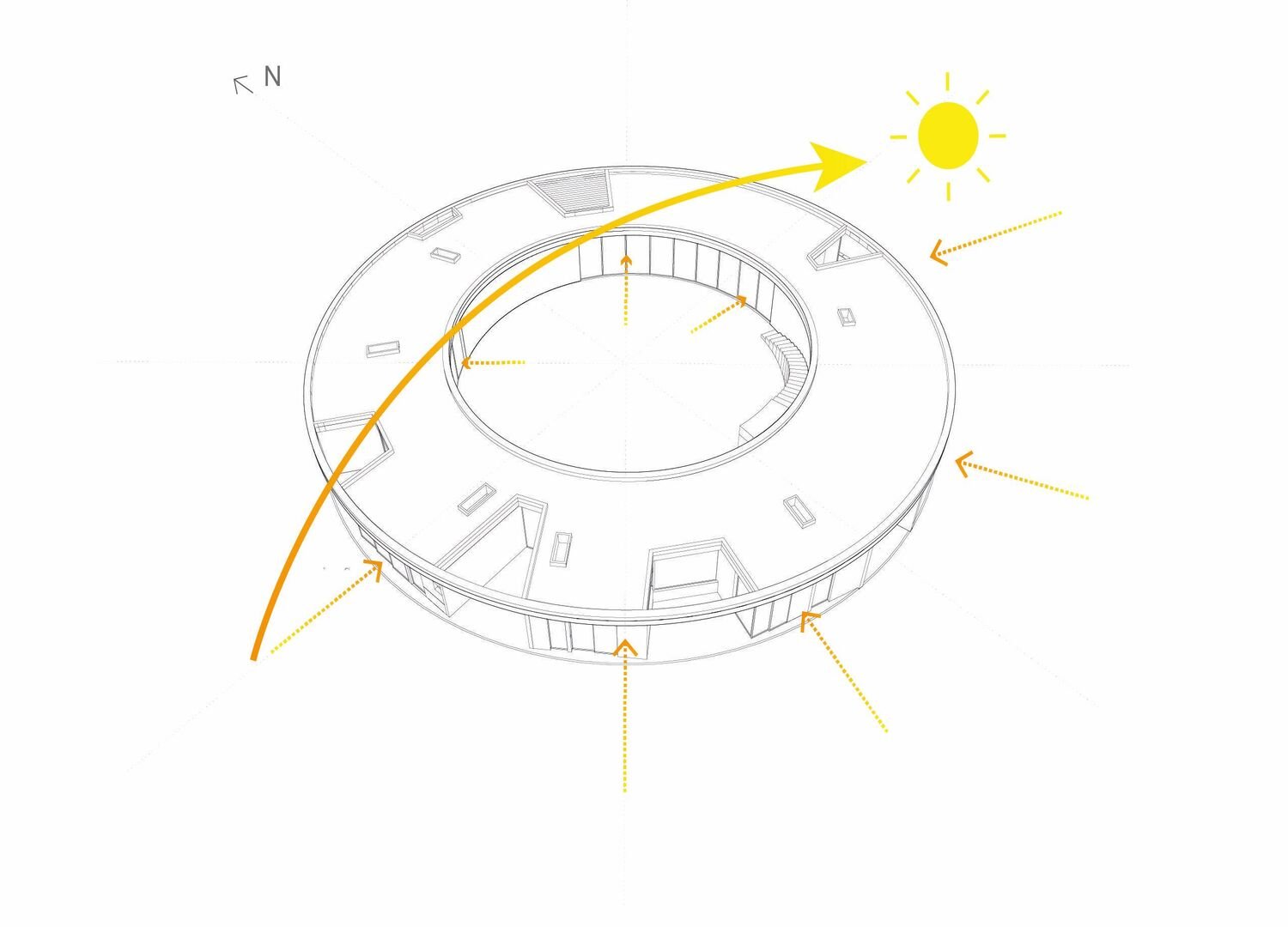
At its core lies a central courtyard, conceived as a contemporary solar clock, where light and shadow mark the hours and give form to space. By day, the house opens to mountains and volcanoes; by night, it contracts around the courtyard, offering privacy without isolation. This alternation between openness and retreat is not merely a visual effect, it forms the very structure of the design: the house behaves like an organism, responding to the passage of time and light, turning every opening into a ‘inside-outside’ connection.
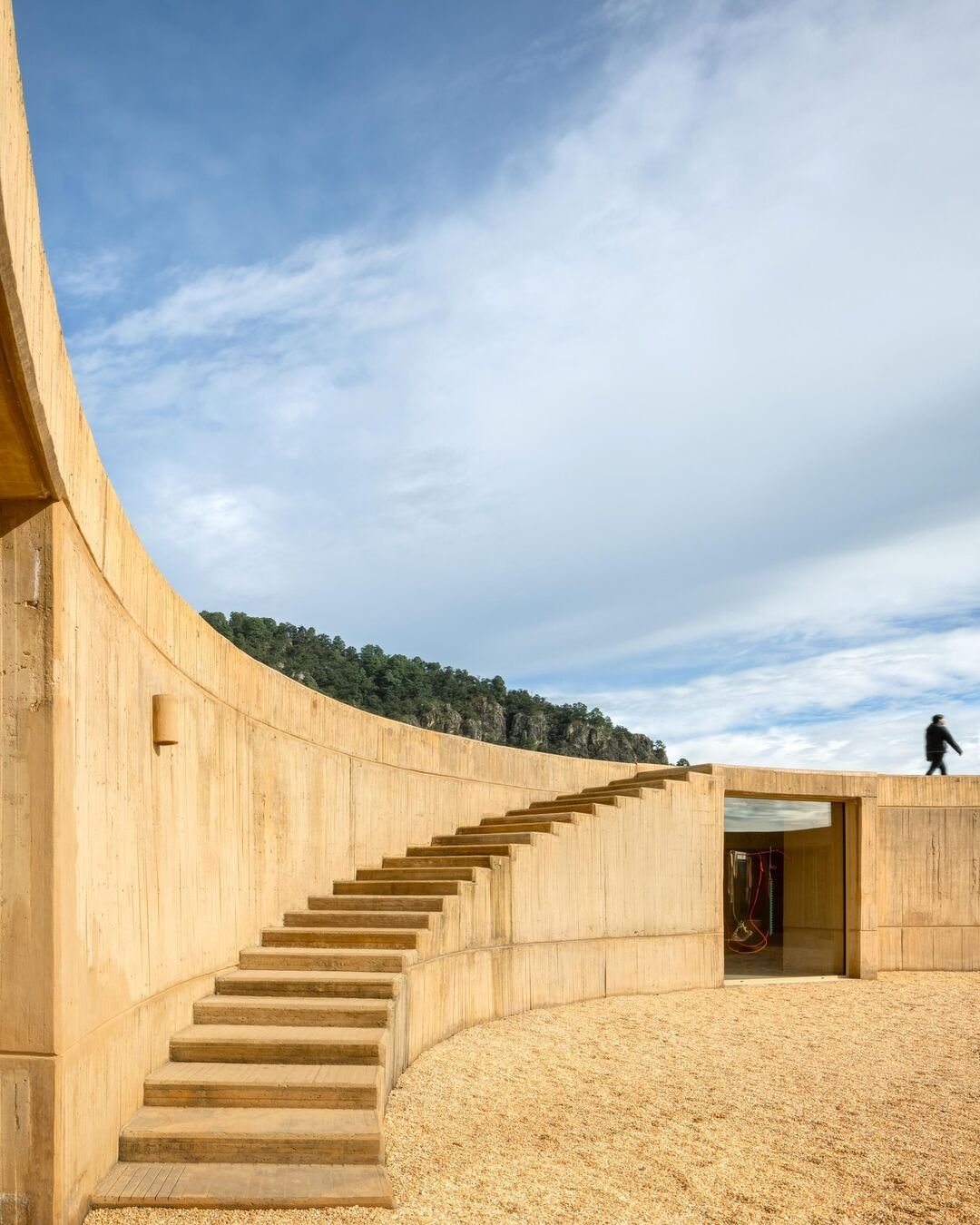
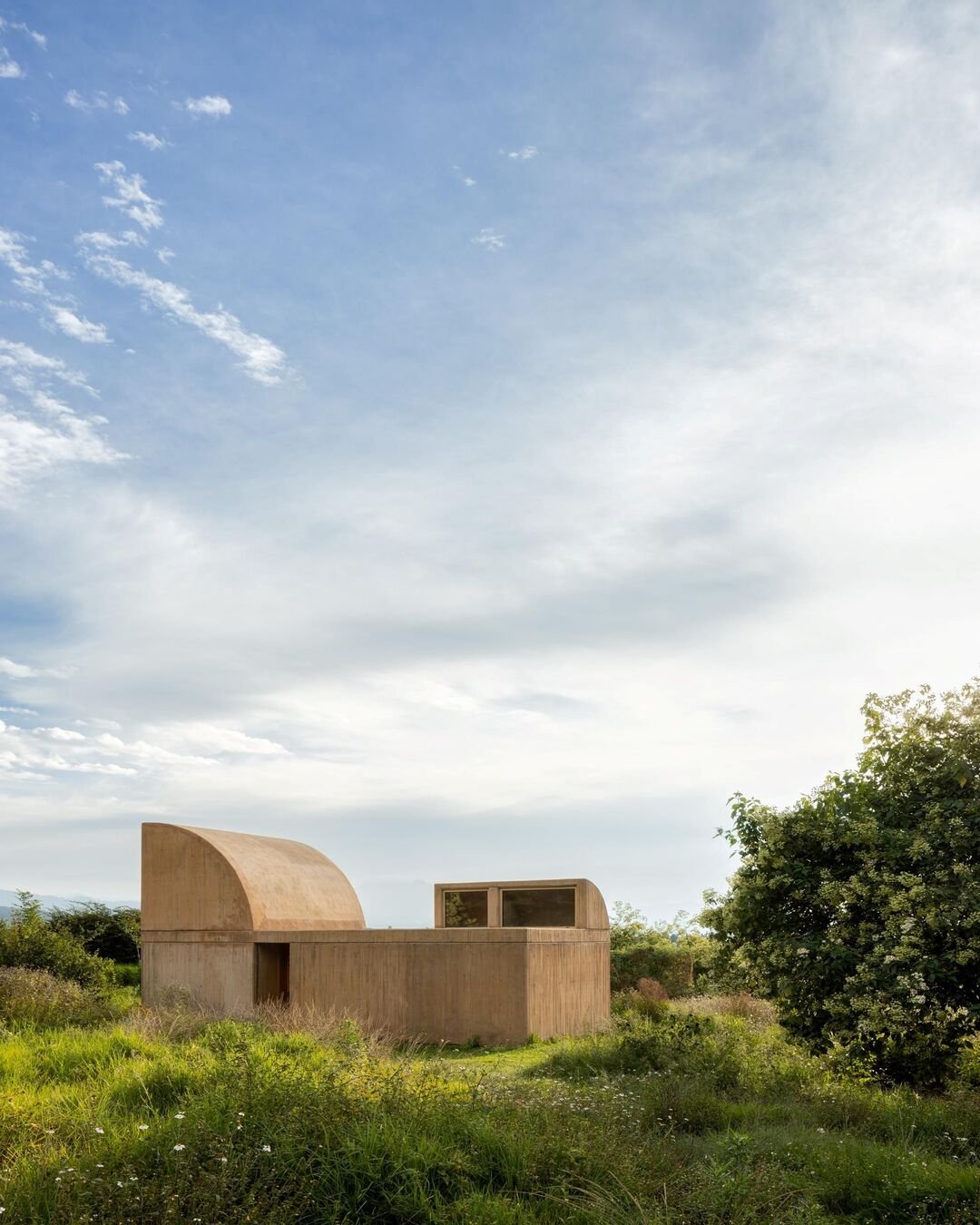
House 720 Degrees consists of three strategically arranged volumes, distributed in a fluid, non-intrusive manner to respect the topography and preserve existing vegetation. The circular structure rises over two levels – ground floor and rooftop terrace, accessible via an external staircase – alongside an independent guest studio and a rectangular volume with a patio that houses additional bedrooms and service areas.
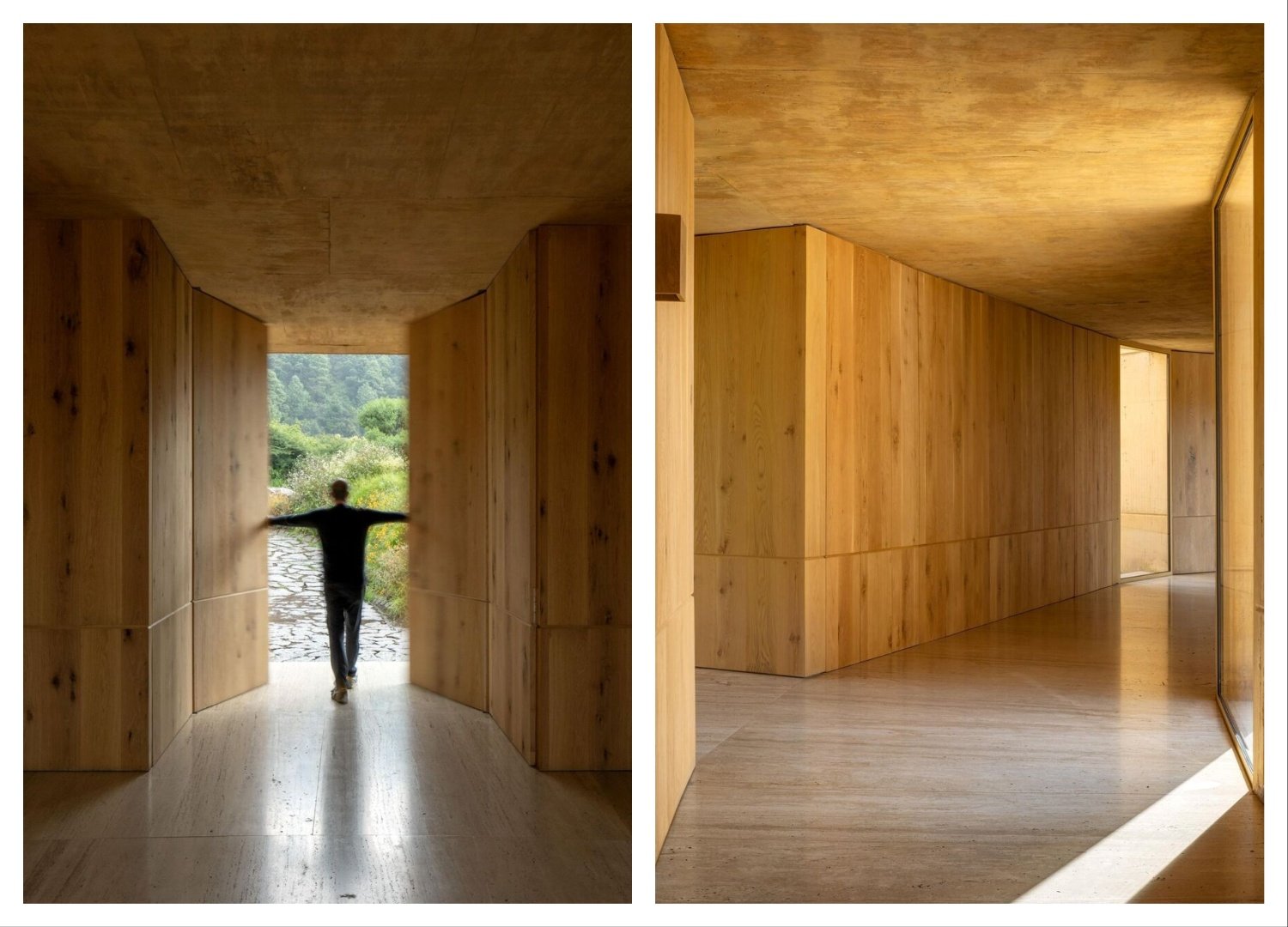
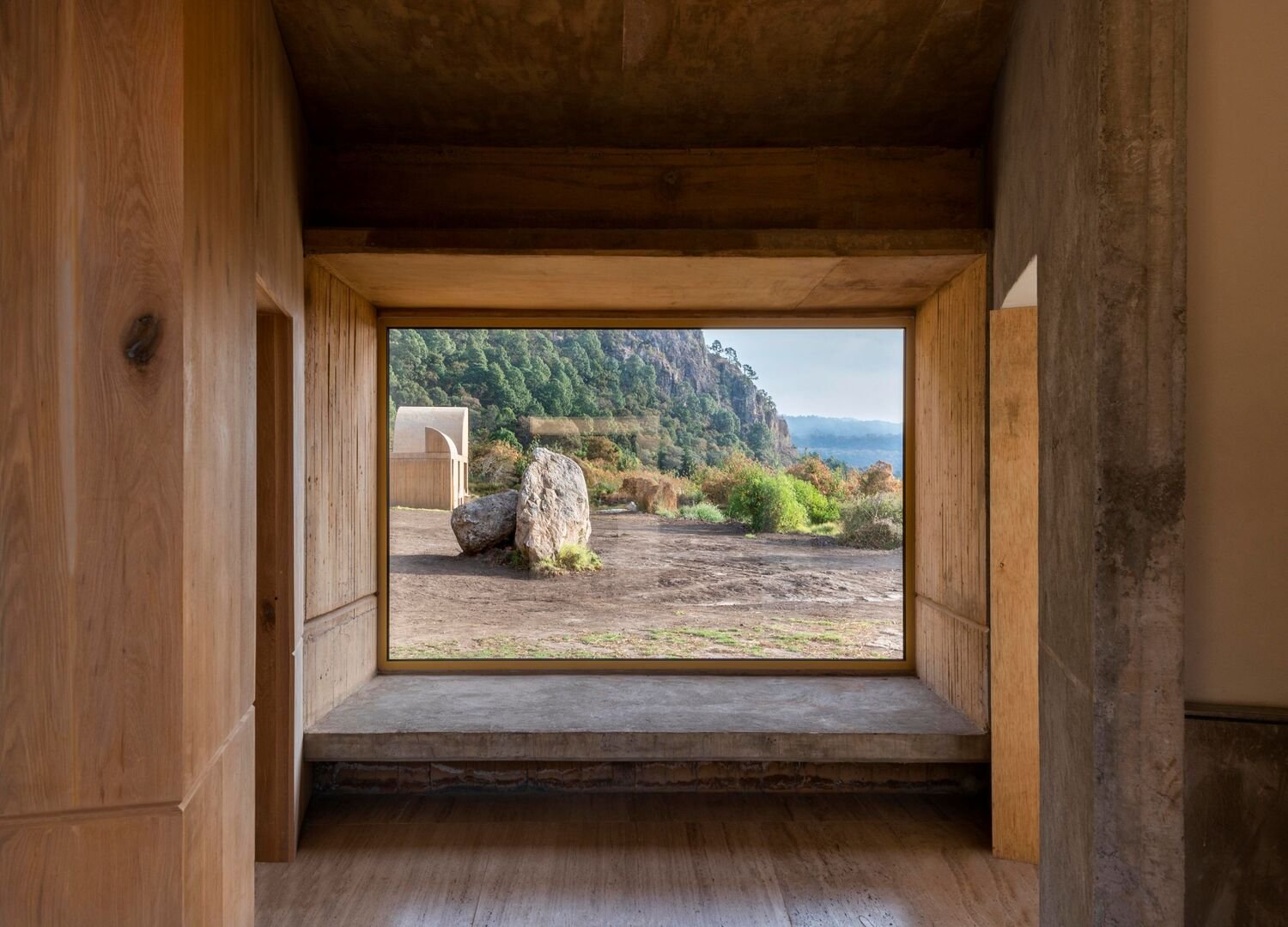
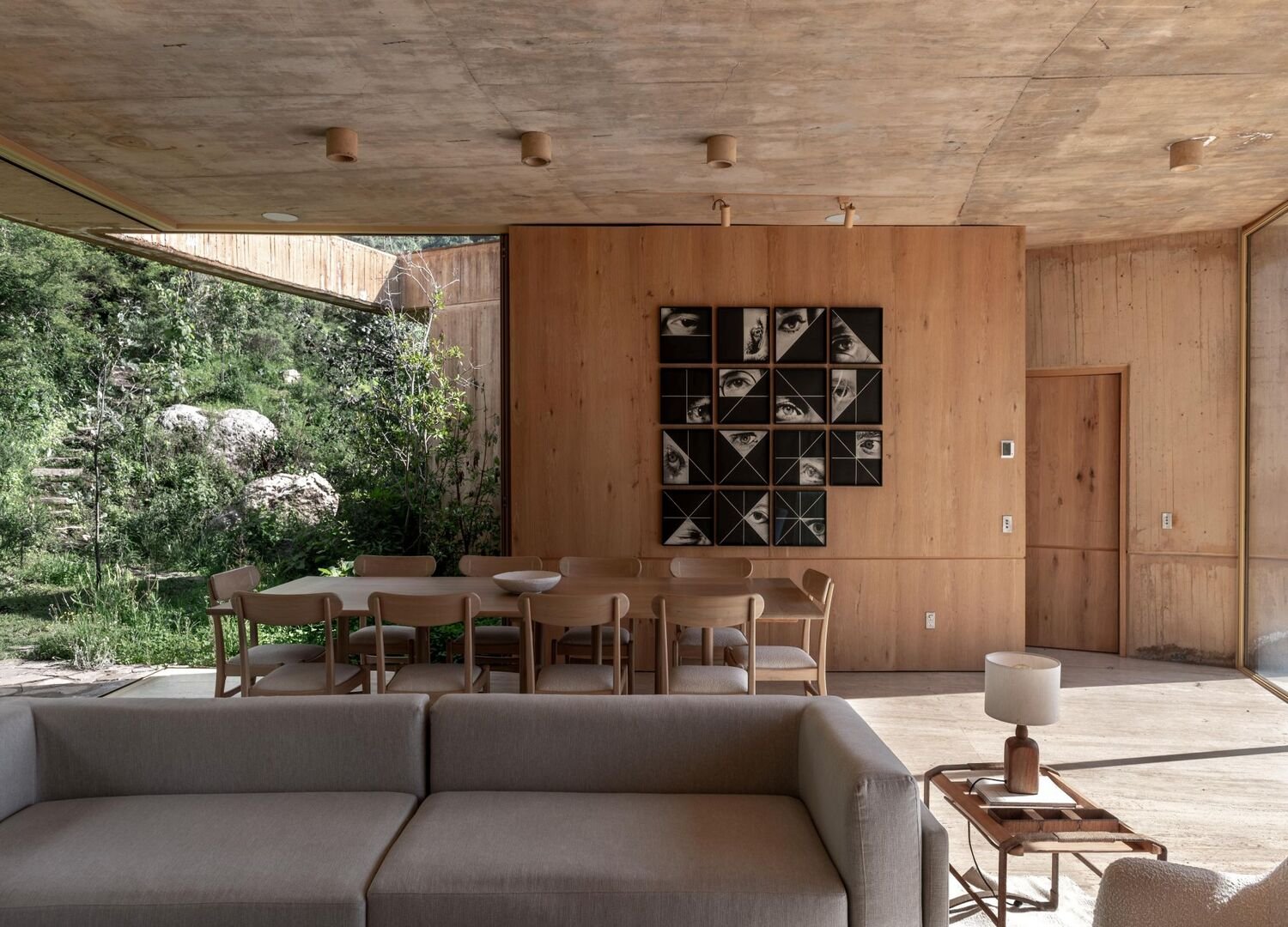
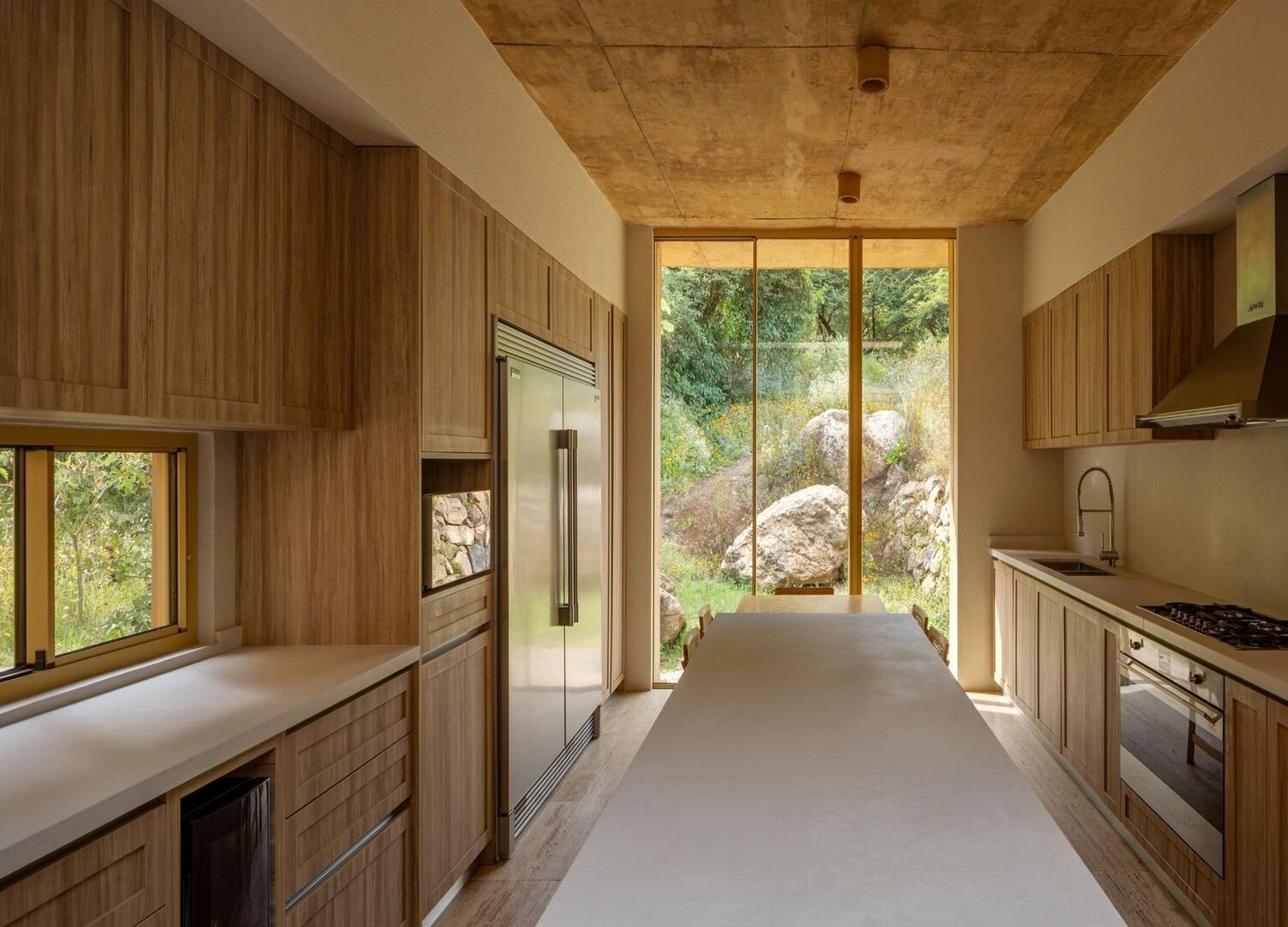
This fragmentation accomodates two families, as well as extended relatives and guest, ensuring autonomy and flexible use. Within the circular perimeter, rooms remain rectangular: bedrooms, kitchen, and bathrooms are rational elements within a pure geometry, while curved walls become pathways, terraces, and gardens. Large folding and sliding windows open the interior to the landscape, establishing a dynamic balance between structural rigor and spatial freedom.
Material choices reinforce an almost primordial dialogue between architecture and landscape. By mixing local soil with concrete, the project creates tactile surfaces that echo the earth’s tones, allowing the building to root itself in its context. Rather than imposing itself, the house seems to emerge from the ground as a presence both primitive and contemporary. Sustainability and comfort coexist seamlessly. House 720 Degrees is fully off-grid: it harvests rainwater, generates electricity through solar panels, and heats interiors with hydronic radiant floors.
Natural ventilation and multiple orientations serve every space, while furniture and lighting crafted on-site from local materials strengthen the connection with the surroundings. In an extreme climate, where temperatures can swing by 30°C in a single day and the rainy season dominates for months, the walls act as membranes—between forest and prairie, dry and wet seasons, inside and outside. Here, sustainability is structural: integrated quietly, never ostentatiously. D
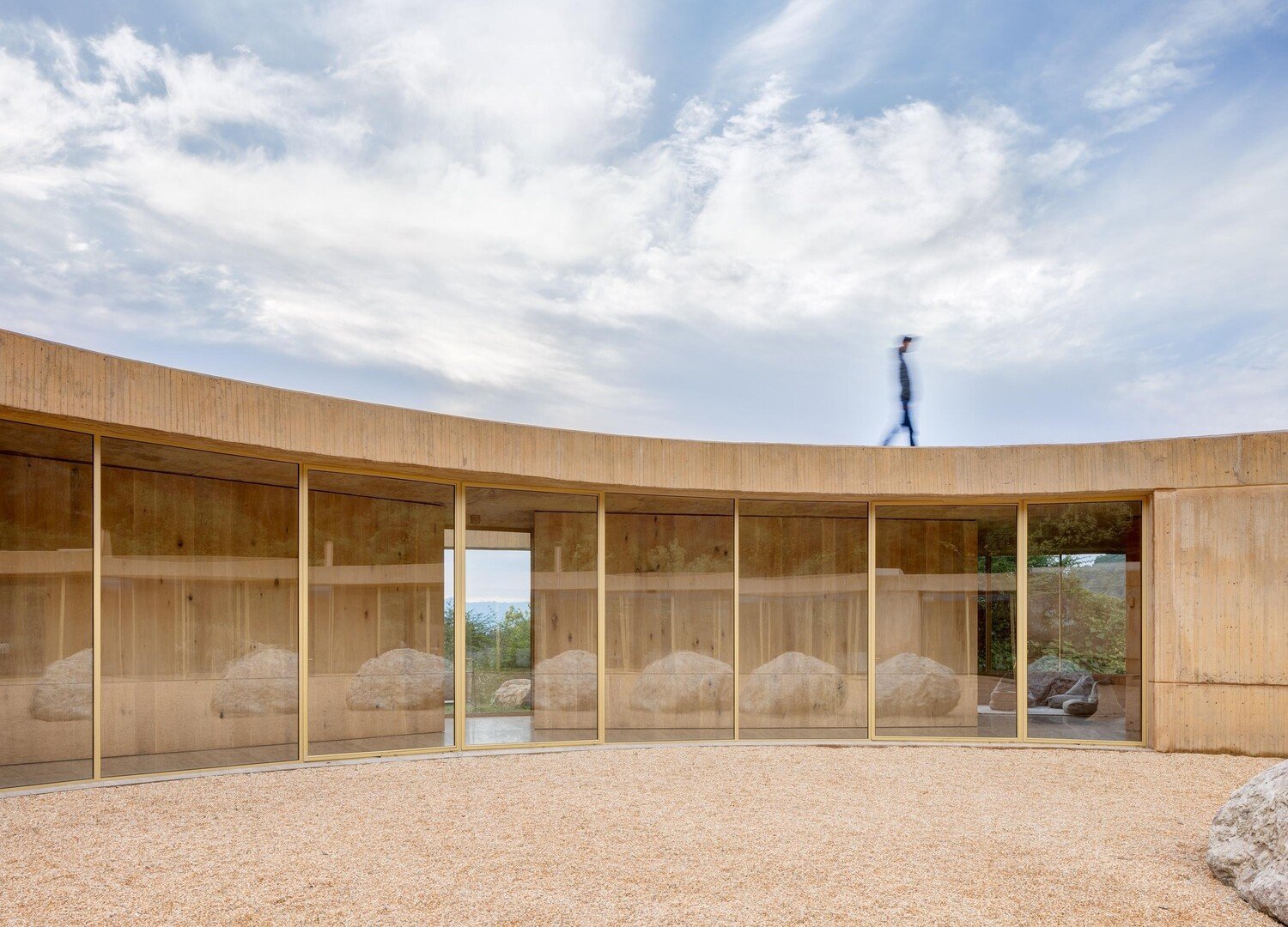
Durable materials, the absence of superfluous cladding, and locally produced accents allow the house to evolve with the seasons and resonate with the spirit of the place. House 720 Degrees redefines the relationship between humans and nature at a time when the concept of home often closes in on itself. It offers an alternative where conventions dissolve, transforming dwelling into a conscious, immersive experience.
This approach reflects the cultural and design trajectory of Fernanda Canales, architect, theorist, and international educator based in Mexico City. Her works, exhibited at the Royal Academy of Arts in London and the Venice Biennale, are never ‘just’ buildings: they are conceptual devices questioning the way we inhabit space. In this sense, House 720 Degrees is not merely a residence in a remote, extreme climate. It is an organism that adapts, roots, and breathes with the landscape. To live at 720 degrees is to transcend a single point of view—conceptually, spatially, and in everyday life.