Is nomadic living the future? With KOMPISHÄNG, IKEA seems to think so
Created after studying the homes of young London renters, IKEA’s KOMPISHÄNG responds to a generation that moves frequently without giving up the feeling of home. A collection that opens a wider conversation about mobility, domesticity and contemporary design.
When change is the only constant. That is how IKEA introduces KOMPISHÄNG, its new collection, and it is difficult to imagine a more accurate description of the condition many of us live in today. Our present – and perhaps even more our future – is increasingly defined by instability. Homes are no longer fixed places but temporary settings, shaped by movement, adaptation and uncertainty.
We first experienced this shift during the pandemic, when the boundary between domestic and professional life dissolved almost overnight. Kitchens became offices, bedrooms turned into meeting rooms, and the home was suddenly expected to accommodate every aspect of daily life. “Remote working” legitimized an idea that had already begun to emerge: the digital world could shape our routines as profoundly as the physical one.
Gallery
Open full width




Open full width
Since then, instability has become even more tangible. Wars, from Ukraine to Palestine, have forced millions of people to abandon homes, belongings and memories in search of safety. At the same time, climate change continues to displace entire communities, while economic uncertainty, rising housing costs and increasingly flexible careers make moving house a recurring condition rather than an exceptional event. In moments like these, one question inevitably arises: what can we actually carry with us?
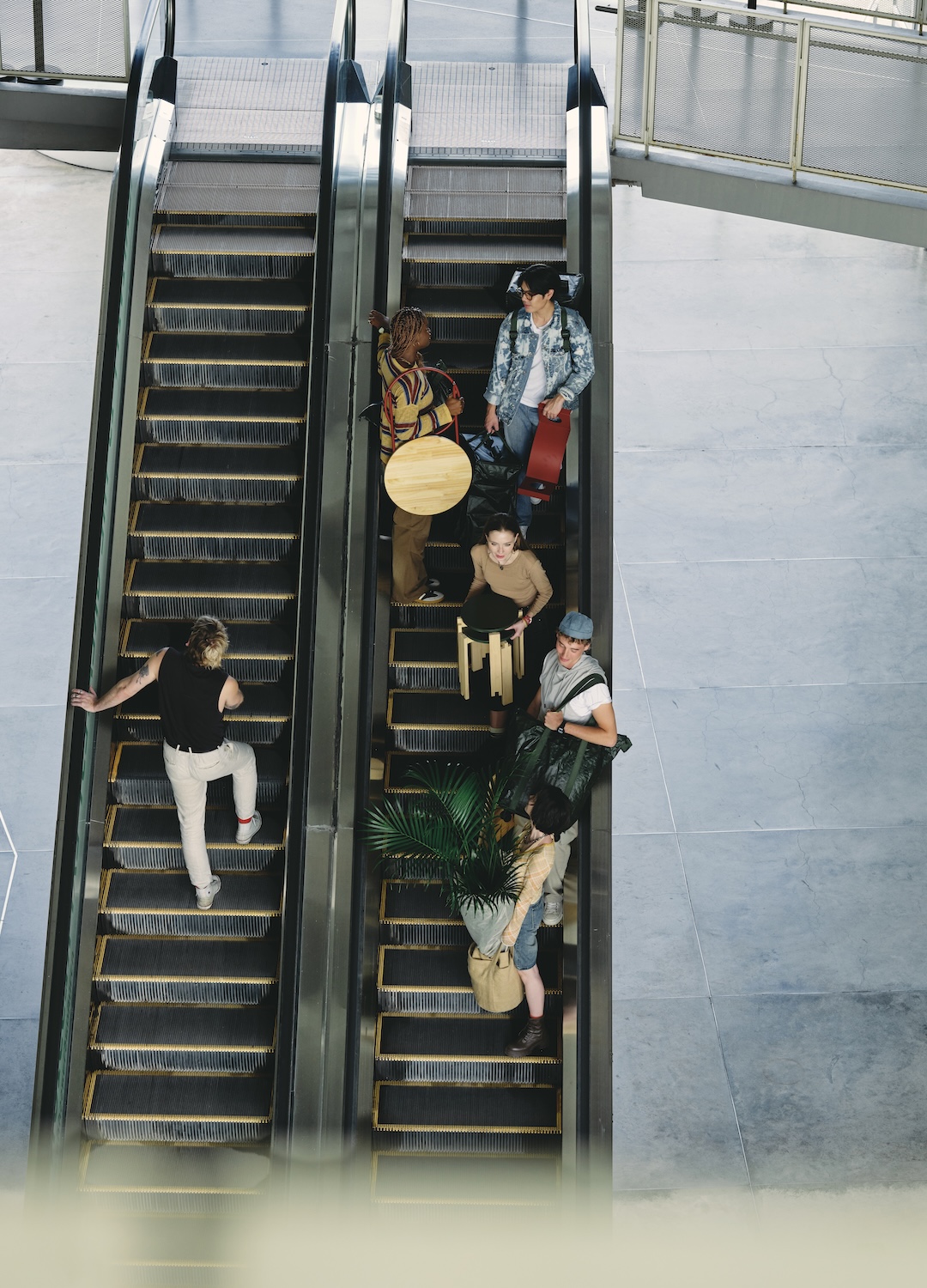
Yet it is not only emergencies that are reshaping the meaning of home. For younger generations, moving between cities, sharing apartments, renting for short periods or relocating for work has become an ordinary part of life. Permanence is no longer the default condition, and domestic space is increasingly defined by its ability to evolve rather than remain unchanged. The challenge is no longer designing for a house that will stay the same for decades, but for one that may disappear within a year.
In many ways, this marks a profound shift from the twentieth-century idea of domesticity, around which modern design largely developed, following the concept of the permanent home: furniture was conceived as an investment, intended to accompany families over long periods, while architecture reinforced the idea of stability through ownership and permanence. Even modular systems – from the Eameses to Dieter Rams‘ shelving concepts – were ultimately designed to organize fixed interiors, and not to accompany continuous movement.
KOMPISHÄNG by IKEA:
The idea of mobile domestic landscape
We know, from the history of design, that the idea of a mobile domestic landscape is not entirely new. During the 1960s and 1970s, radical architects imagined forms of nomadic living that challenged conventional architecture, with groups such as Archigram, who proposed inflatable environments and portable capsules, or Superstudio, which envisioned an endless infrastructural landscape where architecture dissolved into networks rather than buildings. Joe Colombo’s Total Furnishing Unit, presented in 1972, condensed an entire apartment into a single modular system, imagining interiors that could be assembled, reconfigured and transported according to changing needs.
Those projects, however, belonged largely to the realm of speculation, and mobility was presented as an optimistic vision of technological freedom, a future liberated from fixed conventions. Half a century later, mobility has lost much of its utopian character – less a choice than a consequence of economic, environmental and geopolitical conditions. The nomadic lifestyle imagined by Radical Design has become an everyday reality, and not because society has embraced limitless freedom, but because permanence itself has become increasingly difficult to achieve.
This broader context makes KOMPISHÄNG particularly interesting, because IKEA, one of the largest and most famous furniture producers and brands, acknowledges it as an existing condition and asks what design can do to make it more livable. The collection emerged from a series of home visits conducted in central London with residents between the ages of 20 and 28. Across shared flats, rented rooms and compact apartments, one recurring need surfaced: investing in furniture that feels worth keeping, yet remains easy to transport from one home to the next.
Affordable, durable but… flexible
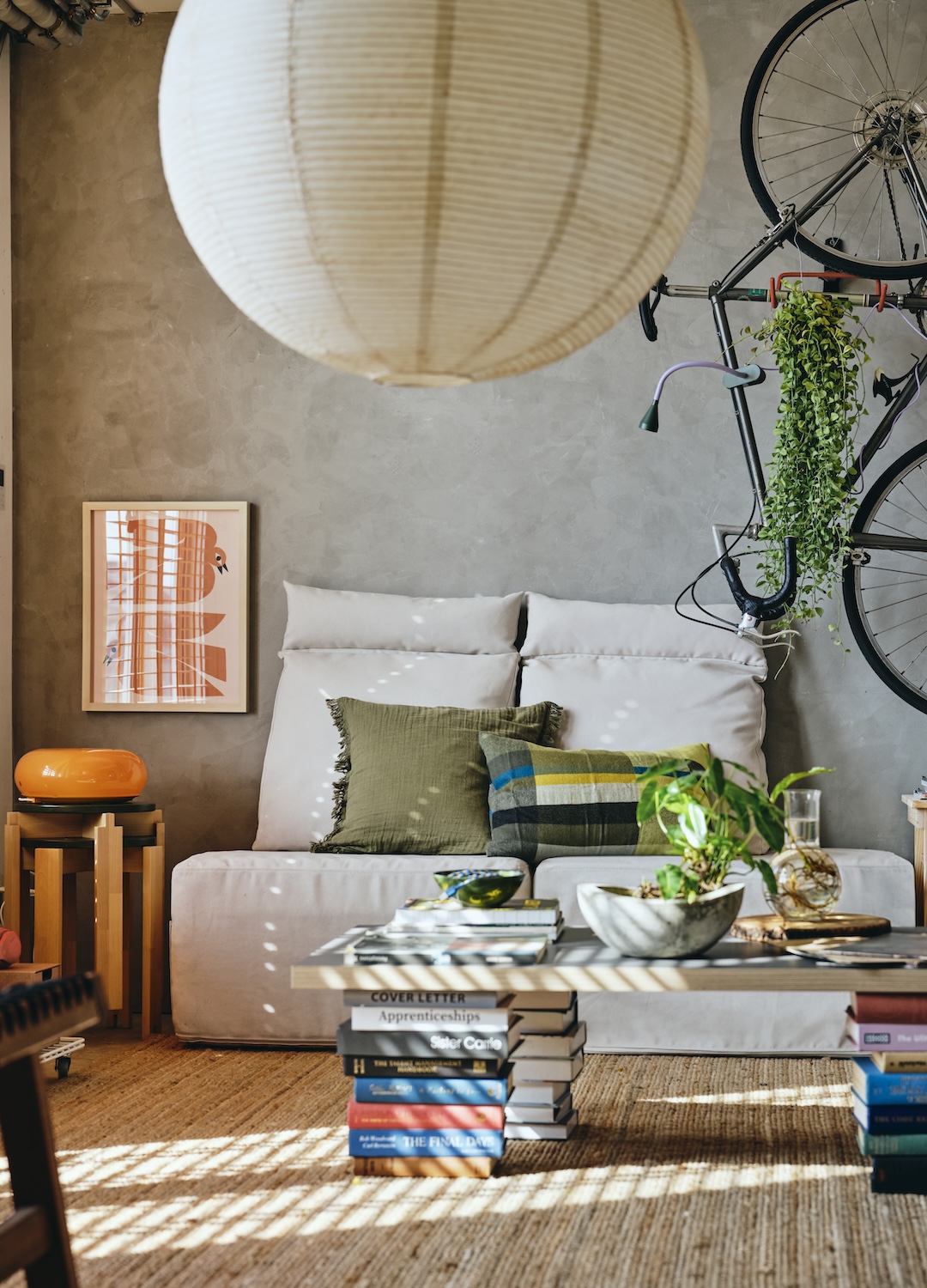
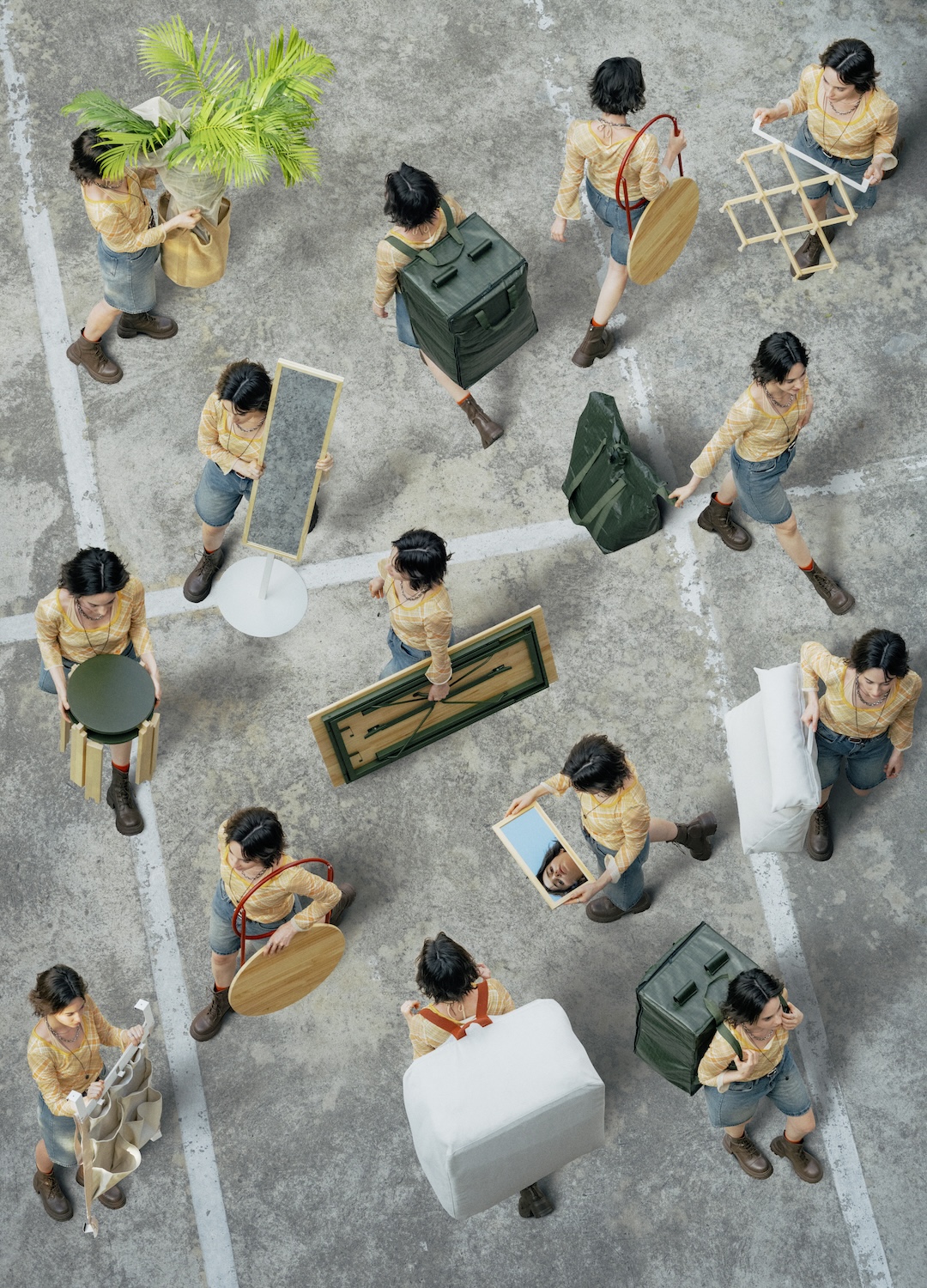
The result is a collection of 13 affordable products made from robust everyday materials – including solid pine, powder-coated steel and durable canvas – that prioritize portability without sacrificing durability. More importantly, the collection avoids the visual language of temporary solutions. As Product Developer Dora Ding explains, “No one wants to feel as though they’re living in a temporary home, even if they move frequently. We wanted to create a collection that is easy to transport while still offering a sense of stability.”
IKEA involved two recently graduated industrial designers through its internship program in Älmhult, inviting them to participate from the earliest workshops through prototyping and product development, reflecting this ambition of stability. Their contribution to six of the thirteen products introduced the perspective of those who experience small rented spaces and frequent relocations first-hand, grounding the collection in everyday rather than theoretical experience.
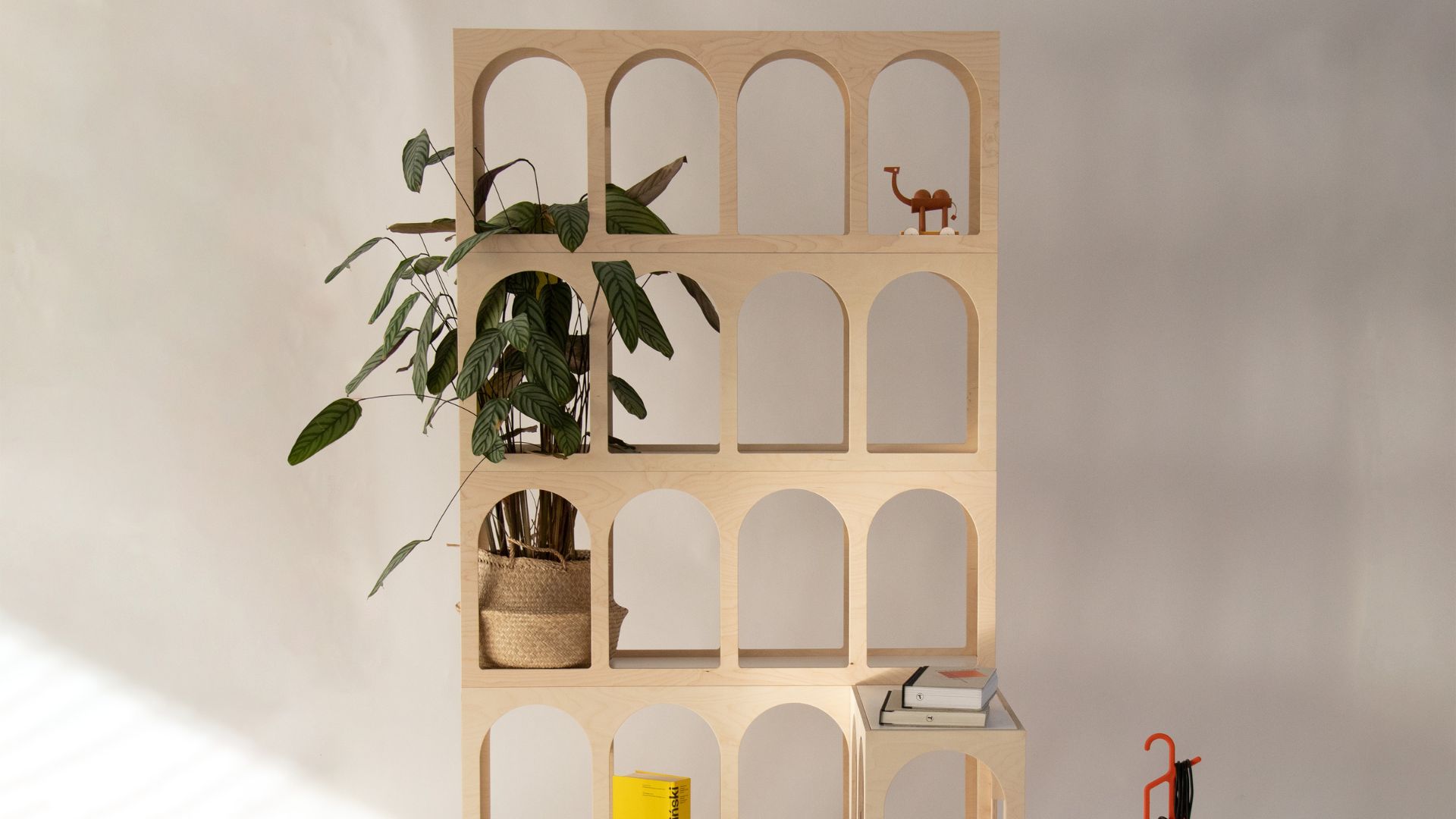
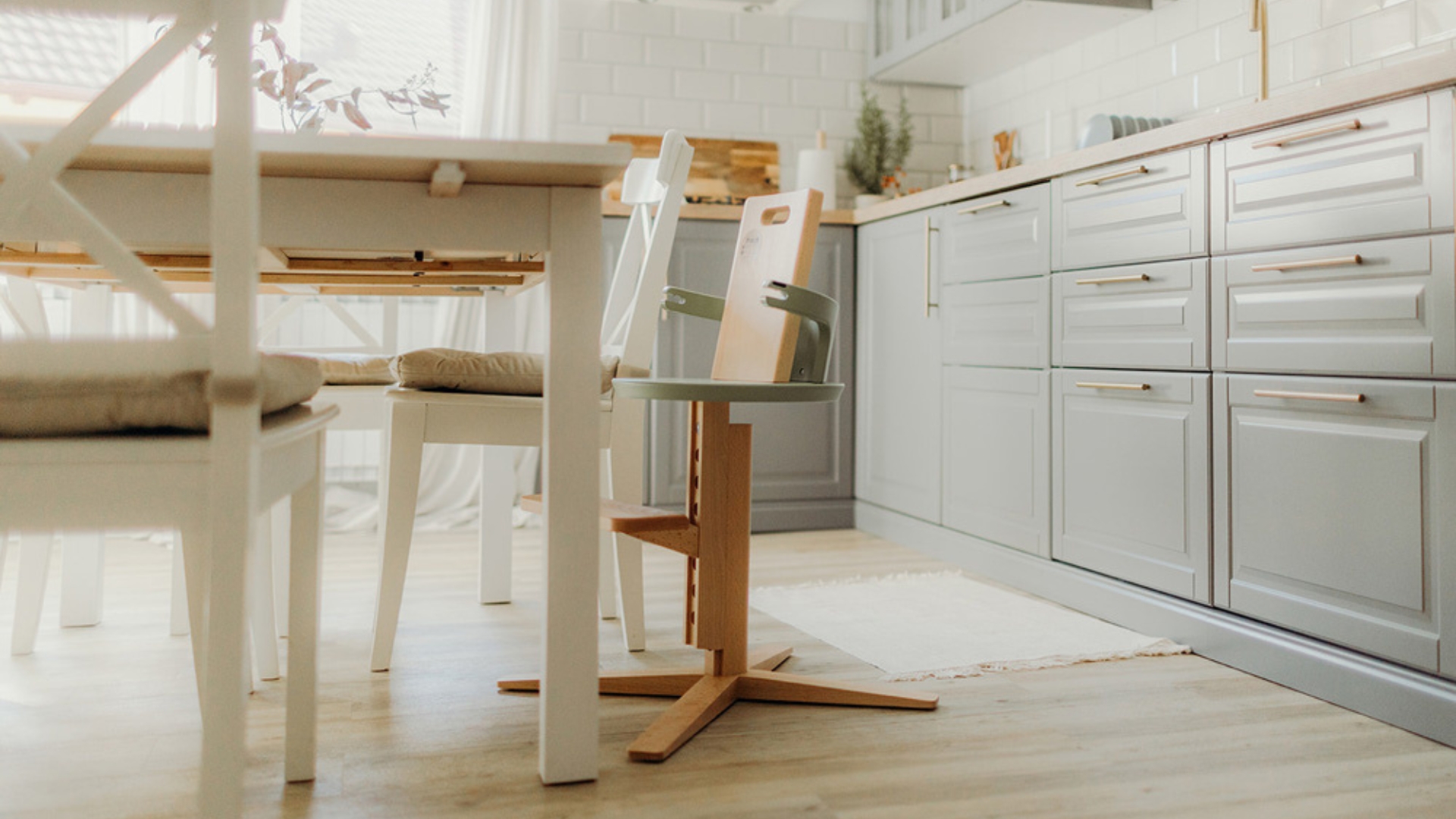
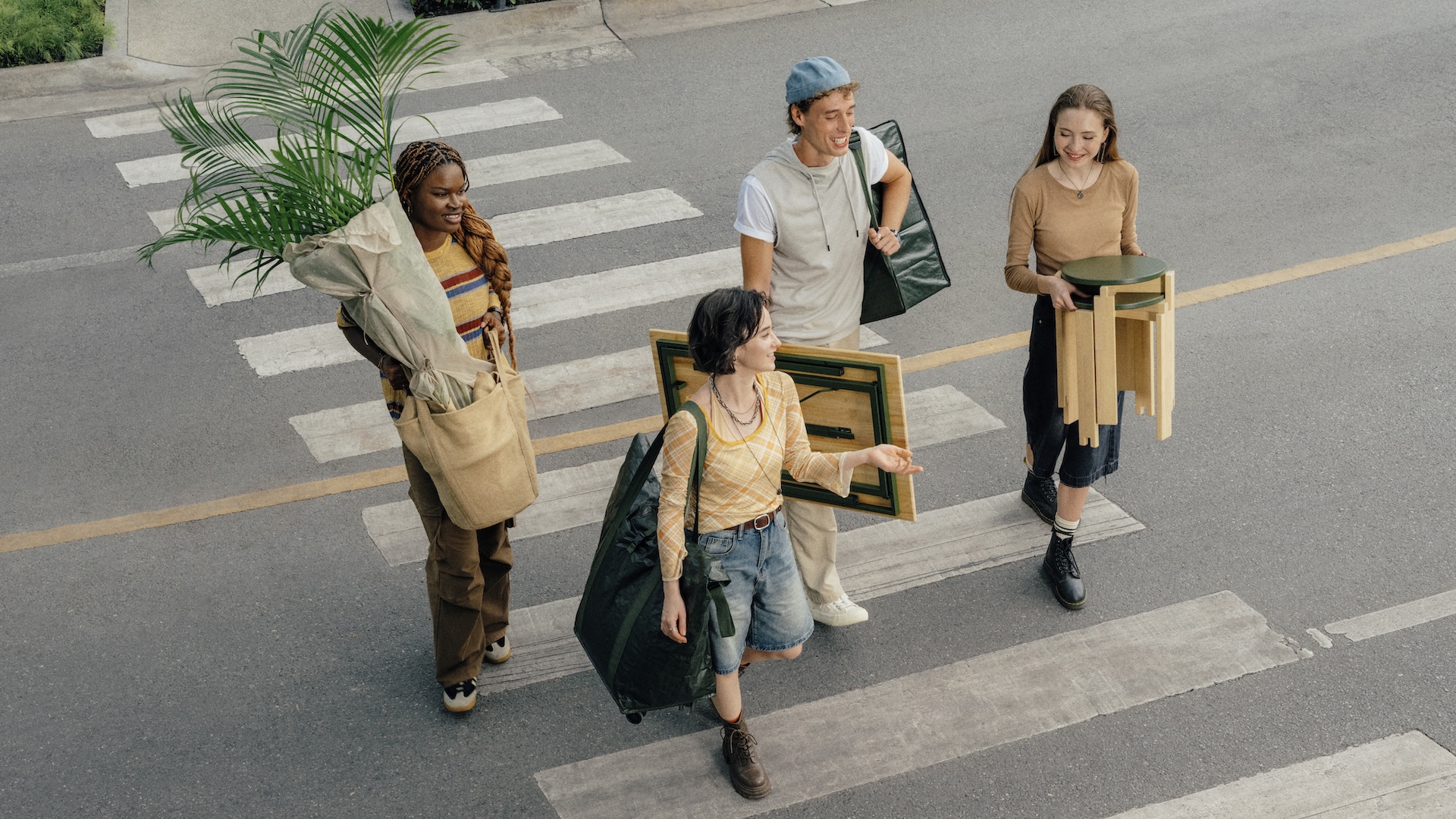
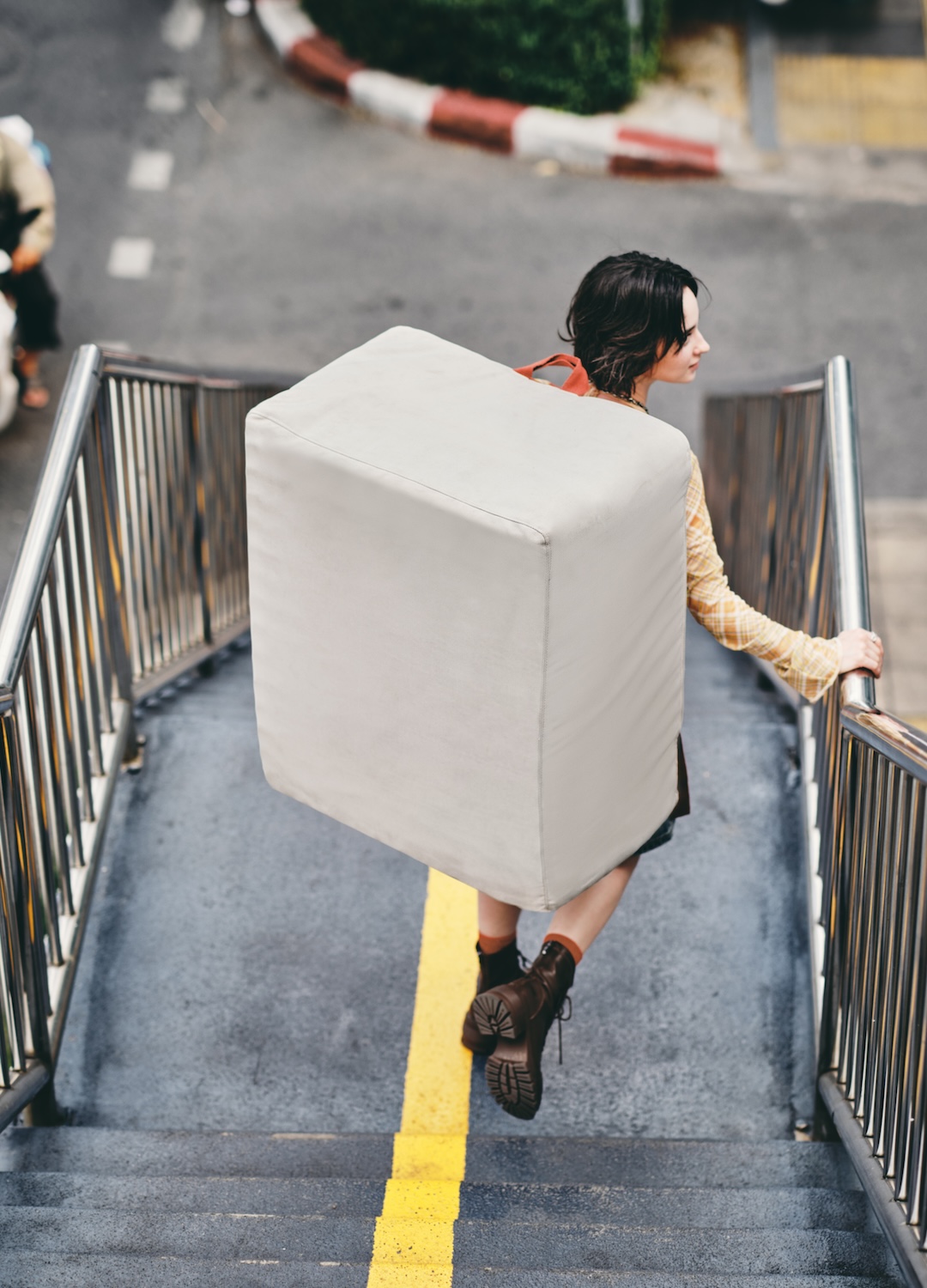
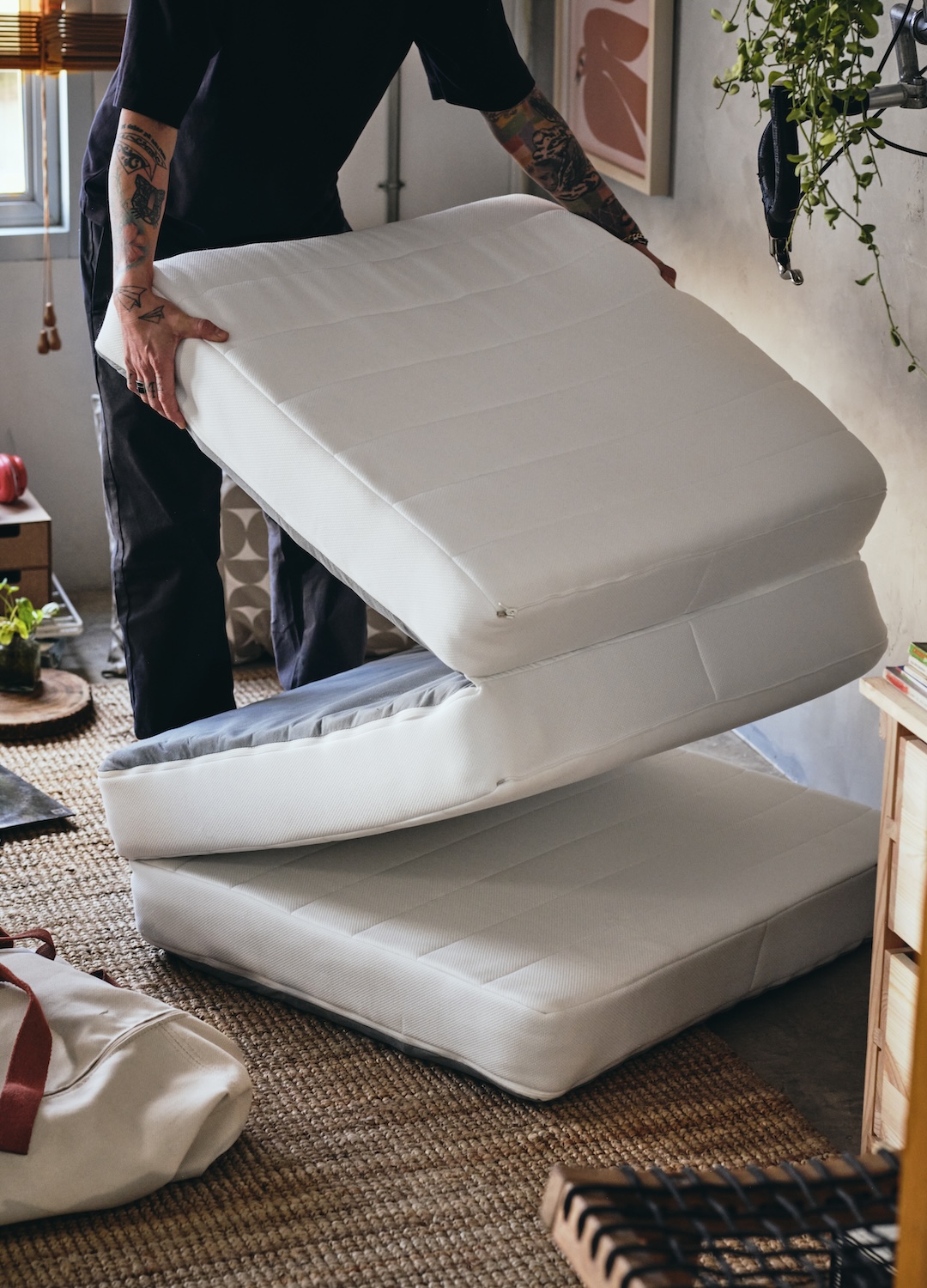
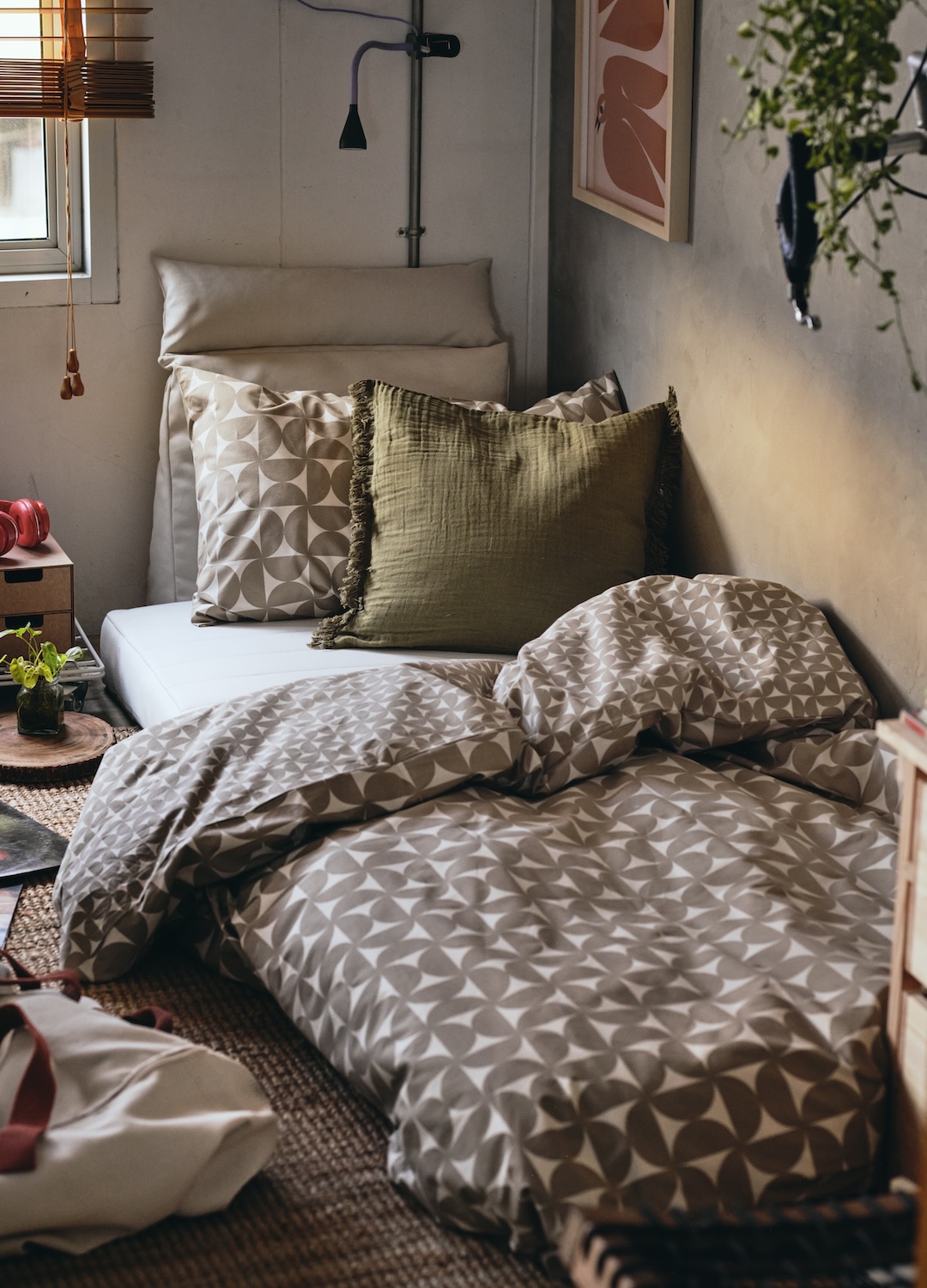
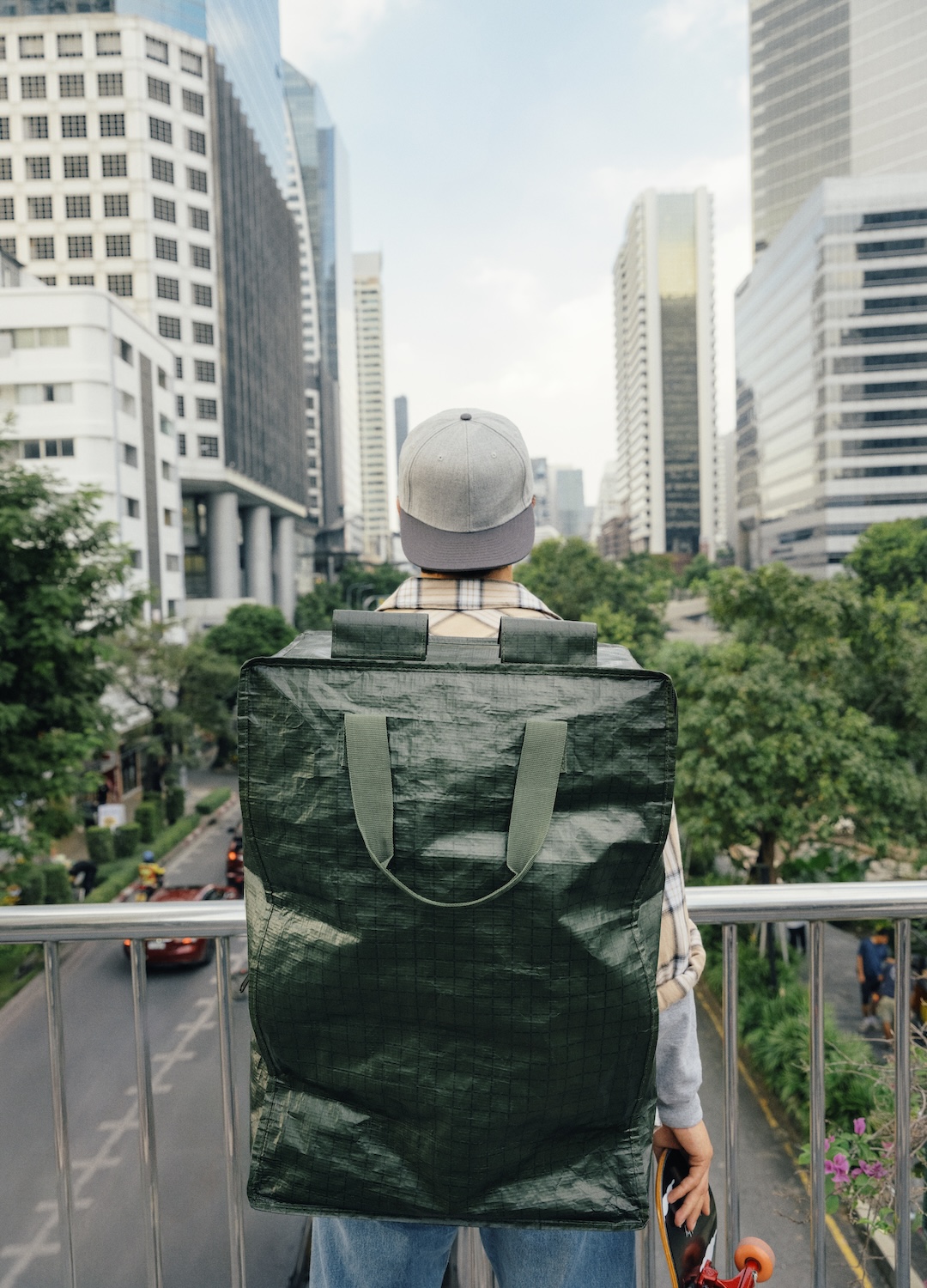
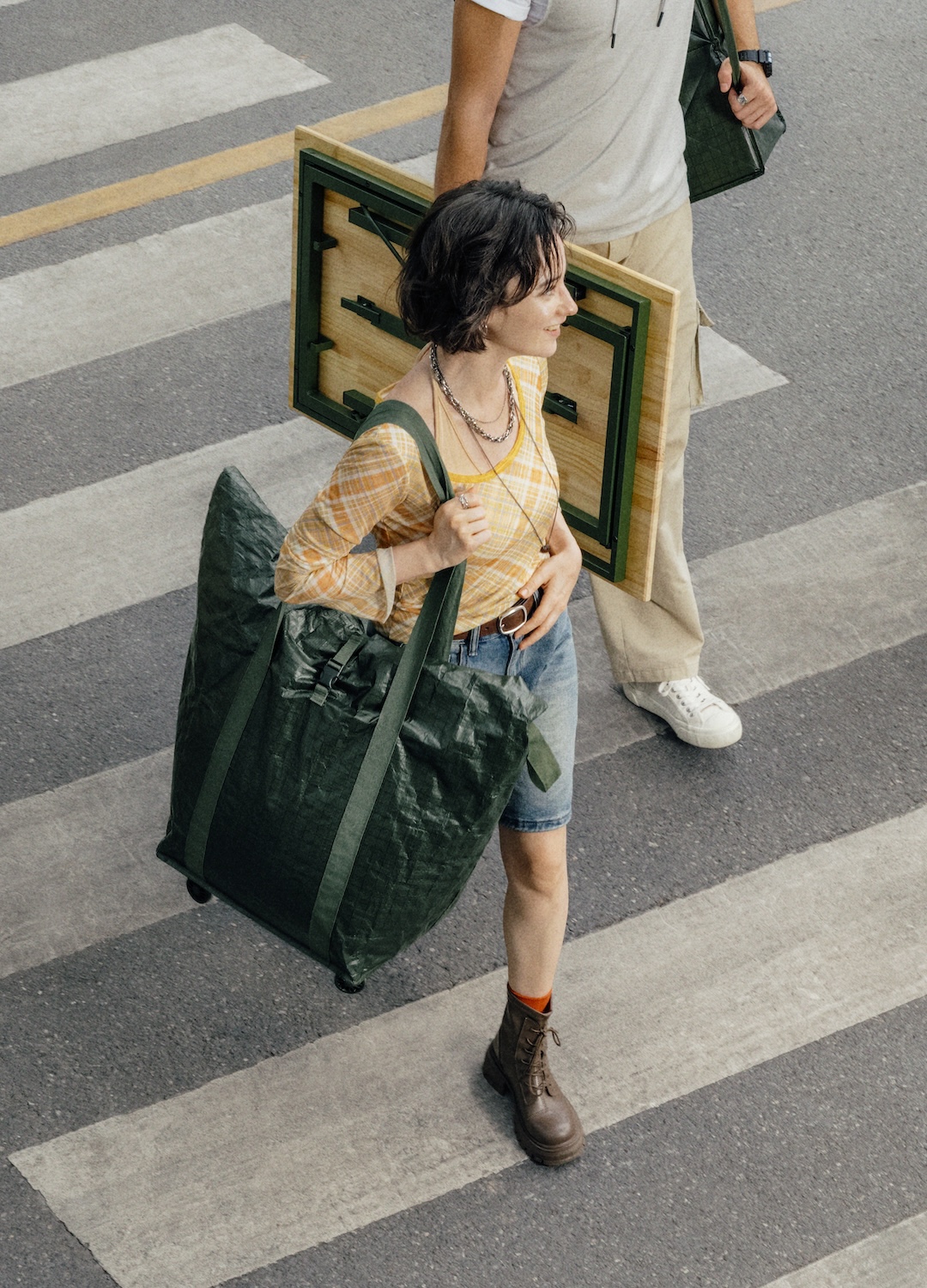
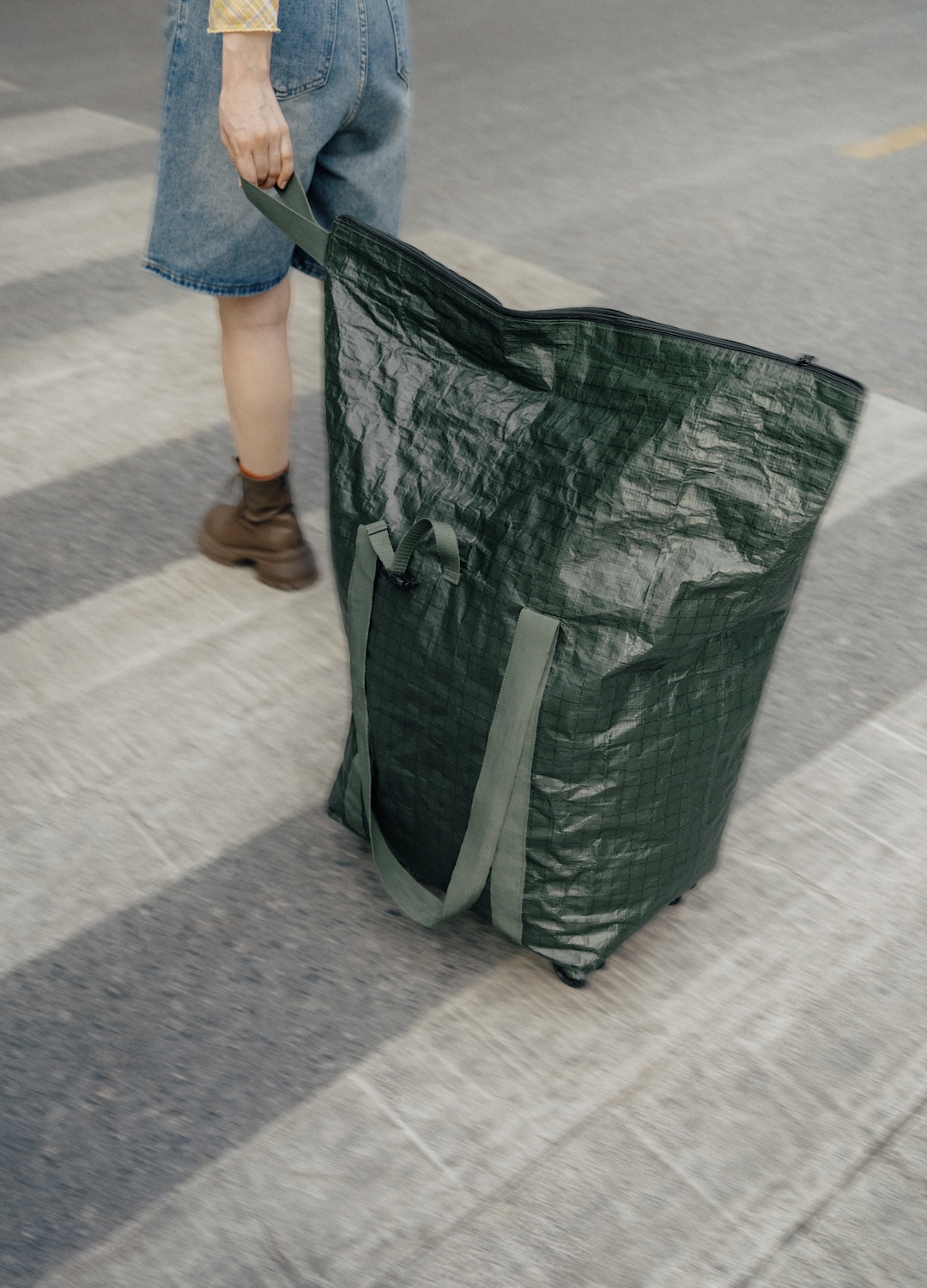
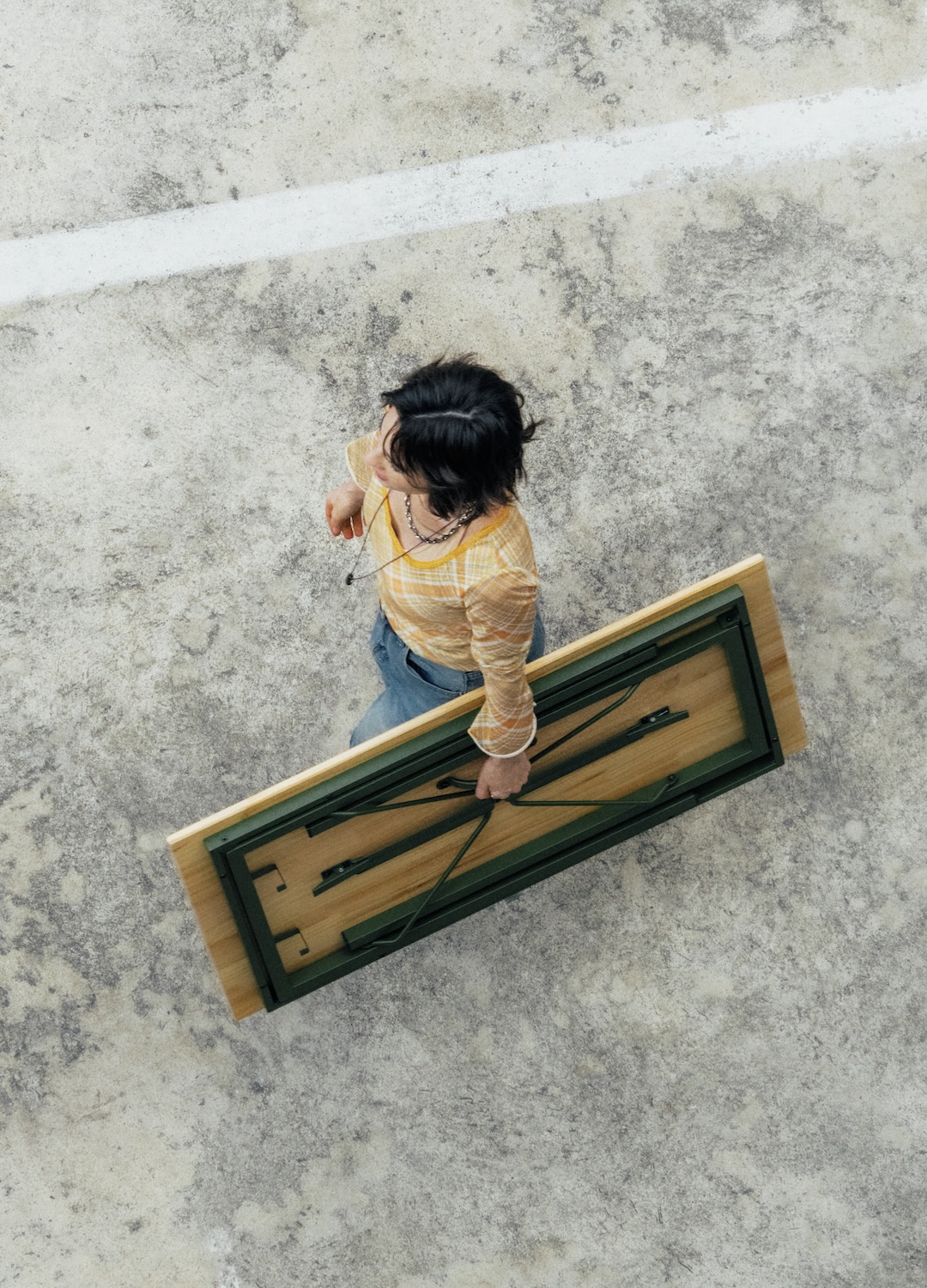
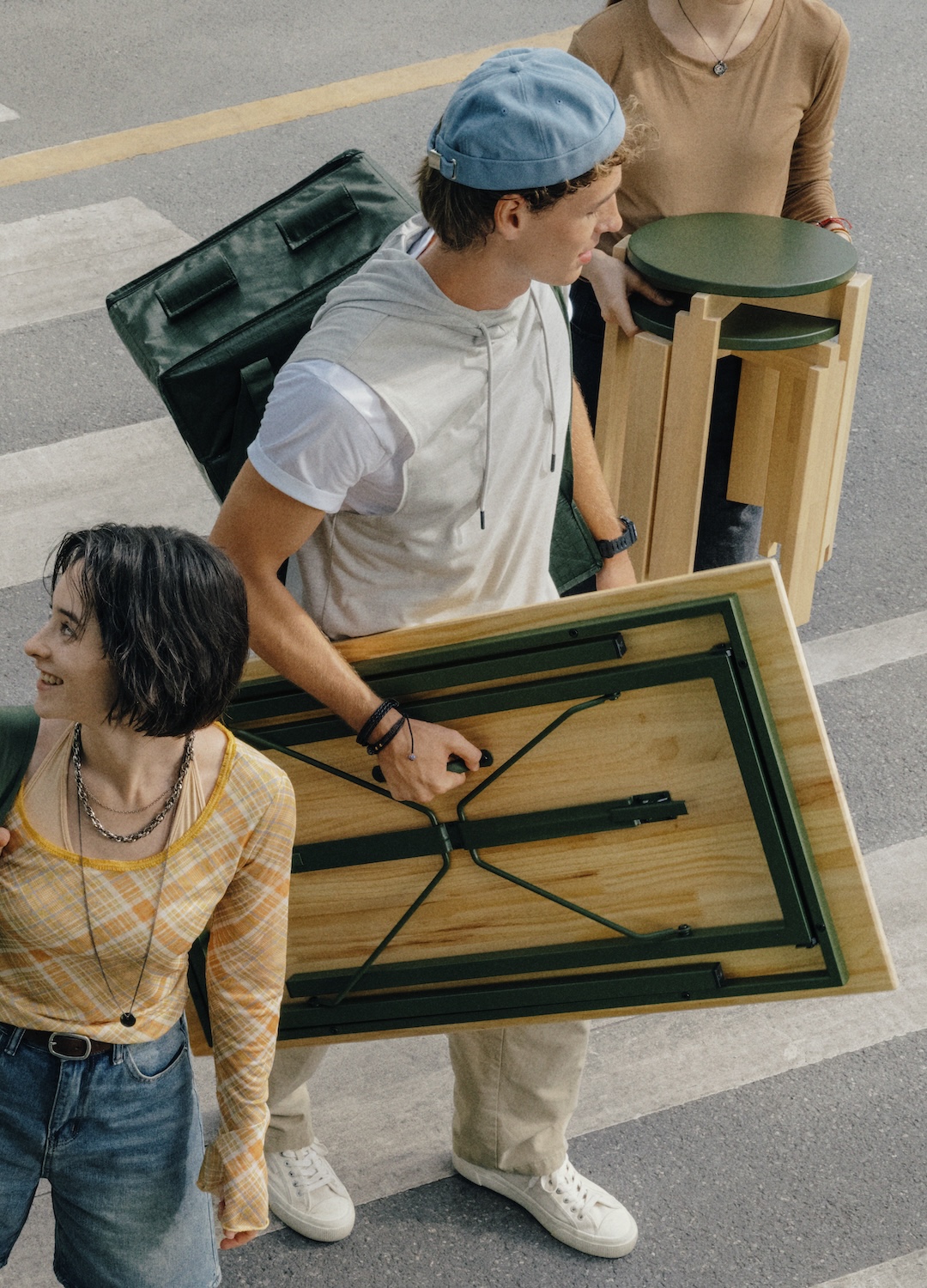
Following this idea, a solid pine desk can be assembled without tools and folded away using an integrated handle and a mattress transforms into a pouf and can be carried like a backpack before unfolding into a guest bed, while interlocking stools become compact side tables, and a wardrobe organizer doubles as a transport bag, allowing clothes to move already sorted from one apartment to another. Mirrors accommodate photographs, tickets and personal mementos within their wooden frames, enabling renters to personalize interiors without drilling into walls. Door-mounted storage elements and lightweight accessories similarly respond to the practical limitations of temporary housing rather than ignoring them.
We can see that this is not simply a collection of flexible furniture but a subtle reconsideration of what permanence means today. Stability is no longer necessarily tied to architecture, ownership or even location. Instead, it can reside in the objects that accompany us, allowing fragments of domestic life to survive repeated displacement.
Between a home and another
It also offers us a perspective on what we can define as an interesting paradox. IKEA has long been associated with affordable furniture often chosen for a first apartment – pieces that can easily be left behind when life changes and people move on. With KOMPISHÄNG, it introduces a different approach, creating objects designed for the spaces between one home and another, designing a collection built around repeated moves and changing circumstances, with pieces that can become familiar companions over time instead of temporary solutions. Following this idea, the concept of mobility starts to be, not necessarily, different from the one of disposability.
Reflecting on our times, this group of furniture says less about furniture than about the society it reflects. Through one of the world’s largest design companies, a broader cultural shift becomes visible: domesticity is no longer measured by permanence but by adaptability. As homes become increasingly temporary, perhaps the real challenge for design is no longer creating objects that belong to a place, but objects capable of carrying the idea of domesticity wherever we happen to go.
About the author

Ludovica Proietti, journalist, design historian and curator, teaches in universities and curates events, always exploring projects with fresh, unconventional perspectives.
Instagram