ACE by Marco Ciacci: when hearing design becomes a matter of material
Developed at ECAL, ACE is a modular system for hearing devices that uses cellulose acetate to redefine form, materiality, and expressiveness in product design for hearing.

In the landscape of contemporary product design, the hearing aid remains one of the least explored typologies from a formal and material perspective. Historically driven by technical and medical requirements, it has often been designed to disappear — to blend in, to minimise its visual presence. ACE, a project developed by Marco Ciacci within the Master in Product Design at ECAL, approaches this typology from a radically different standpoint: not as a device to be hidden, but as a designed object, where form, material, and system become integral to the user experience.
Rather than a single product, ACE is conceived as a system of objects for hearing, designed to accommodate and organise different audio technologies within a coherent formal language. The project introduces a clear separation between the technological core, destined to evolve over time, and the external structure, which takes on the role of a stable, durable, and recognisable element. In this way, design does not merely clothe technology, but becomes its architecture, providing a structure capable of absorbing change without losing its identity.
Gallery
Open full width

Open full width
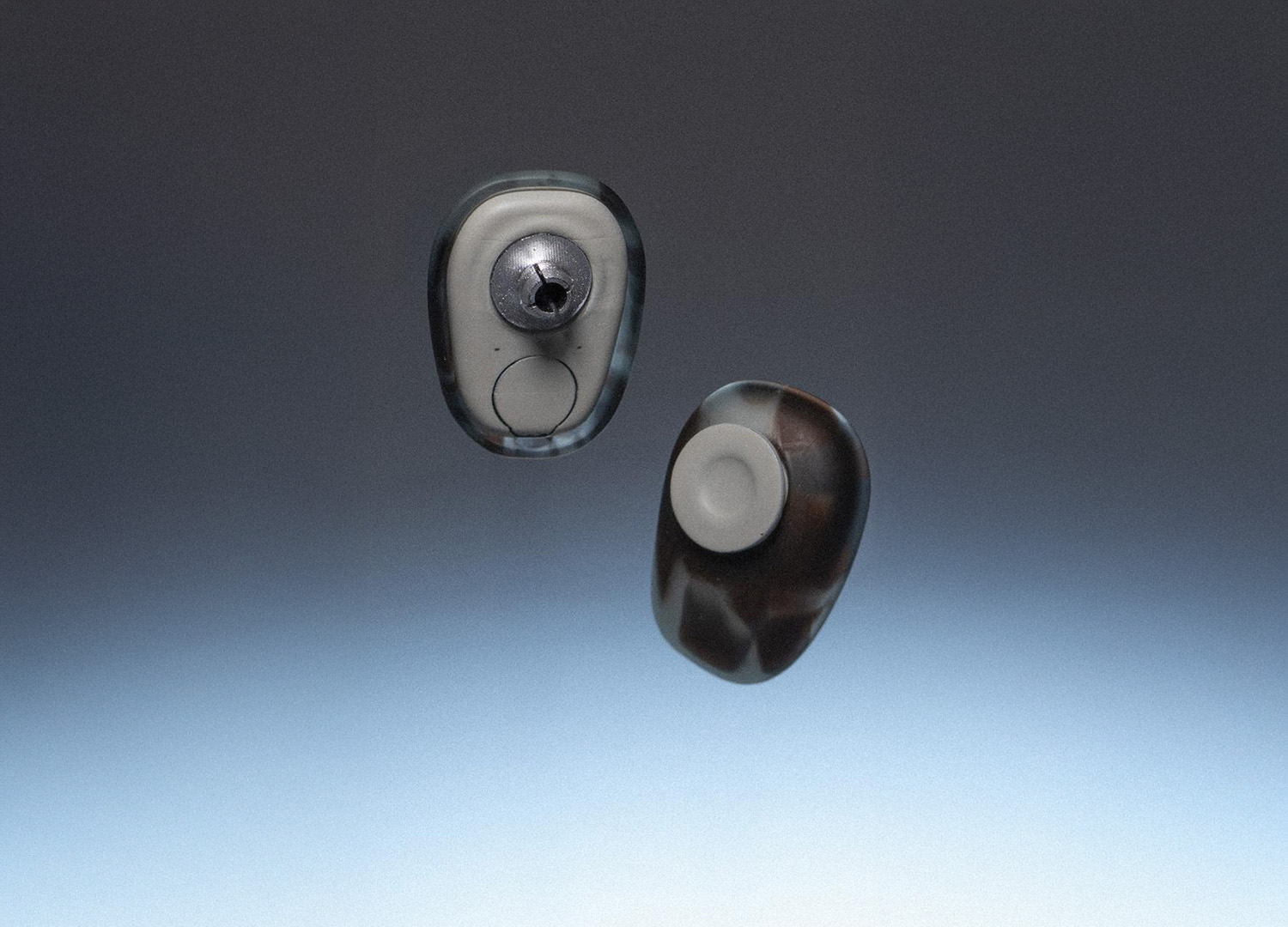
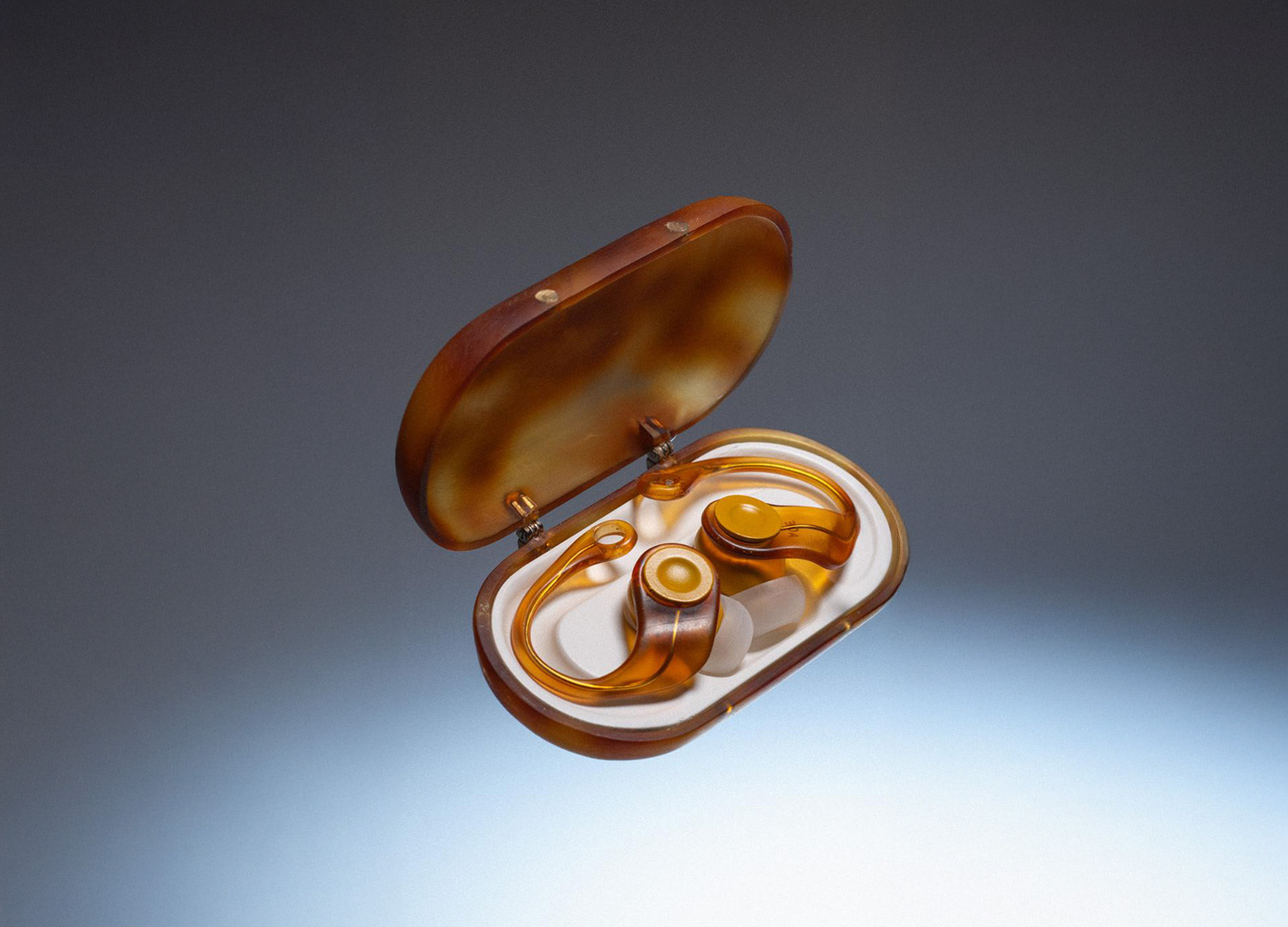
From a formal standpoint, ACE distances itself from the neutral, mimetic aesthetics typical of traditional hearing aids. Volumes are solid, controlled, and deliberately expressed, while proportions are carefully calibrated to engage with the body without pursuing invisibility at all costs. The device does not attempt to vanish behind the ear; instead, it seeks to inhabit the body naturally, asserting a measured and conscious presence. This positioning brings ACE closer to the world of wearable accessories than to that of medical aids, shifting the focus from mere functionality to the overall quality of the object.
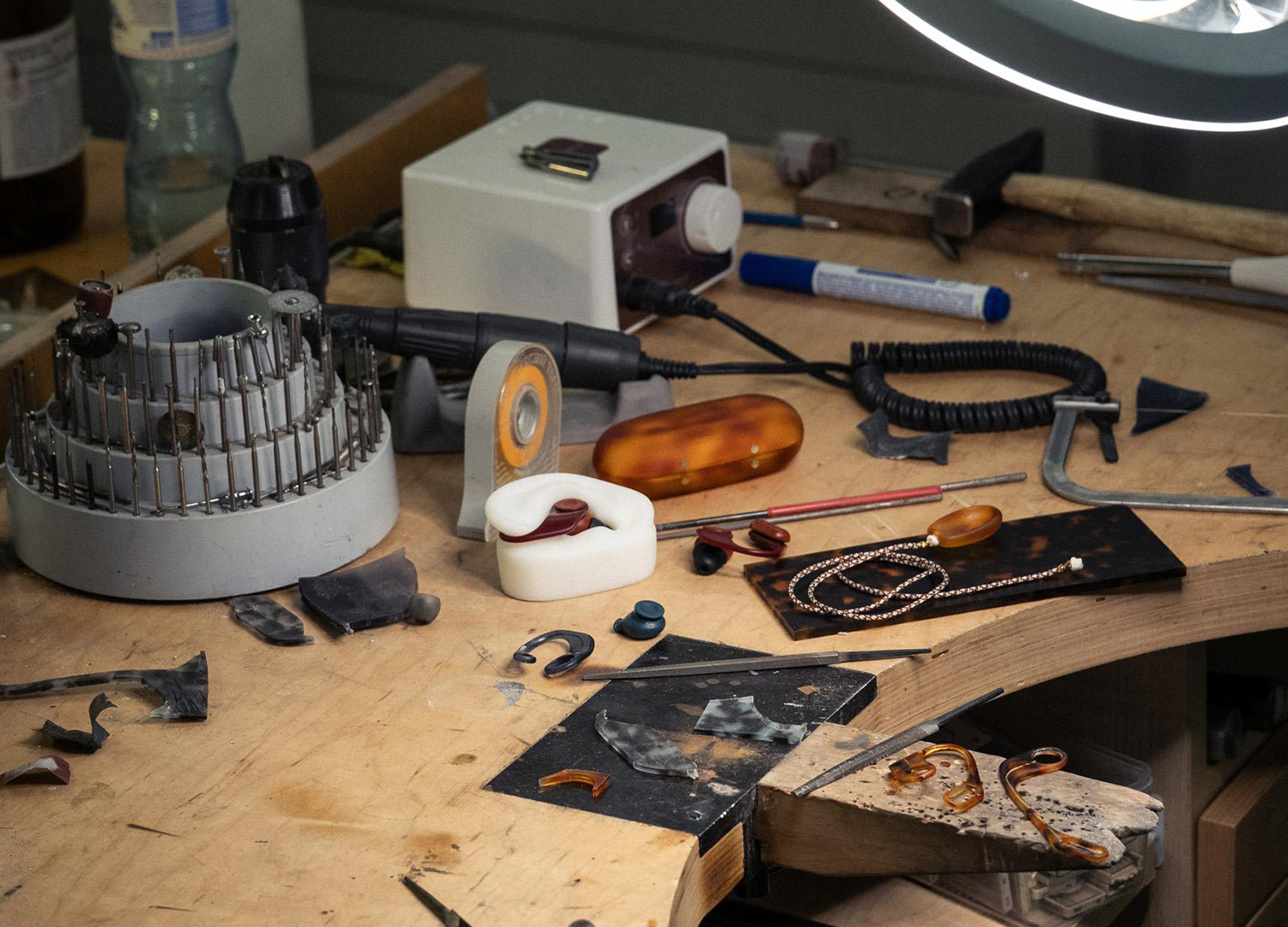
A central role in this transformation is played by cellulose acetate, the project’s key material. Far from functioning as a simple surface layer, cellulose acetate becomes in ACE a structural and identity-defining element. A bioplastic historically associated with high-quality eyewear, it is valued for its stability, precision in manufacturing, and tactile qualities. These characteristics allow for the creation of slim yet durable frames, soft curvatures, and controlled thicknesses — essential features for an object designed to be worn for extended periods in close contact with the body.
On a sensory level, cellulose acetate introduces a warmer tactile and perceptual dimension, moving away from the cold, impersonal feel of traditional medical plastics. Surfaces appear dense and material-driven, capable of conveying solidity and long-term quality. At the same time, the material offers wide possibilities for colour variation and finishing, enabling a restrained form of personalisation that strengthens expressiveness without compromising the coherence of the system.
Material choice also shapes the way the project addresses sustainability. Cellulose acetate is a bio-based, recyclable material, already integrated into established production chains and widely used in sectors where durability is a core value. In ACE, sustainability is not articulated as an explicit message, but emerges as the natural outcome of a design approach focused on quality, longevity, and technological upgradability. The project thus suggests an alternative to the logic of rapid obsolescence that characterises many electronic devices.
The ACE system unfolds across multiple typologies — from over-ear hearing aids to cochlear implants, as well as earbud-style and bone-conduction solutions — while maintaining a strong formal and material coherence throughout. This ability to adapt to different technological configurations without losing recognisability demonstrates how design, when operating at a systemic level, can become a tool for order within a field traditionally fragmented and dominated by technical constraints.
Ultimately, ACE offers a mature reading of product design applied to hearing technologies. A project in which material and form are not secondary elements, but critical devices capable of redefining a typology, restoring perceptual quality, formal clarity, and design dignity. Rather than imagining a distant future, ACE by Marco Ciacci constructs a credible present in which the hearing aid once again becomes, quite simply, a designed object.