What does aerospace engineering have to do with residential architecture?
Spanish architects from Meii Estudio have revealed how the two disciplines might help each other with the project Modulo Habitat, a new kind of residential home.

In design and engineering disciplines, few domains attract as much investment and radical innovation as space exploration does. However niche this field may be, is it possible for commercial designers to investigate and use the outcomes of space research? Modulo Habitat is a project by Meii Estudio that draws direct inspiration from spacecraft habitat modules, applying their optimisation to everyday residential spaces.
Modulo Habitat takes place in the historic port city of Cartagena, Spain, an oddly nostalgic place for such a contemporary architectural experiment. Perched on top of the ancient Muralla del Mar, the project represents a bold fusion of technology and traditional Spanish living, questioning what conventional home design really is.
Gallery
Open full width


Open full width
Spacecraft habitat modules are autonomous, compact units that concentrate all basic life necessities in a minimal space, for astronauts to use in their explorations. Transforming aerospace efficiency into earthbound architecture, Meii Estudio has created a living space that addresses the growing need for compact and functional housing solutions. Rather than viewing limited space as a limitation, the studio embraced it as an opportunity for innovation.
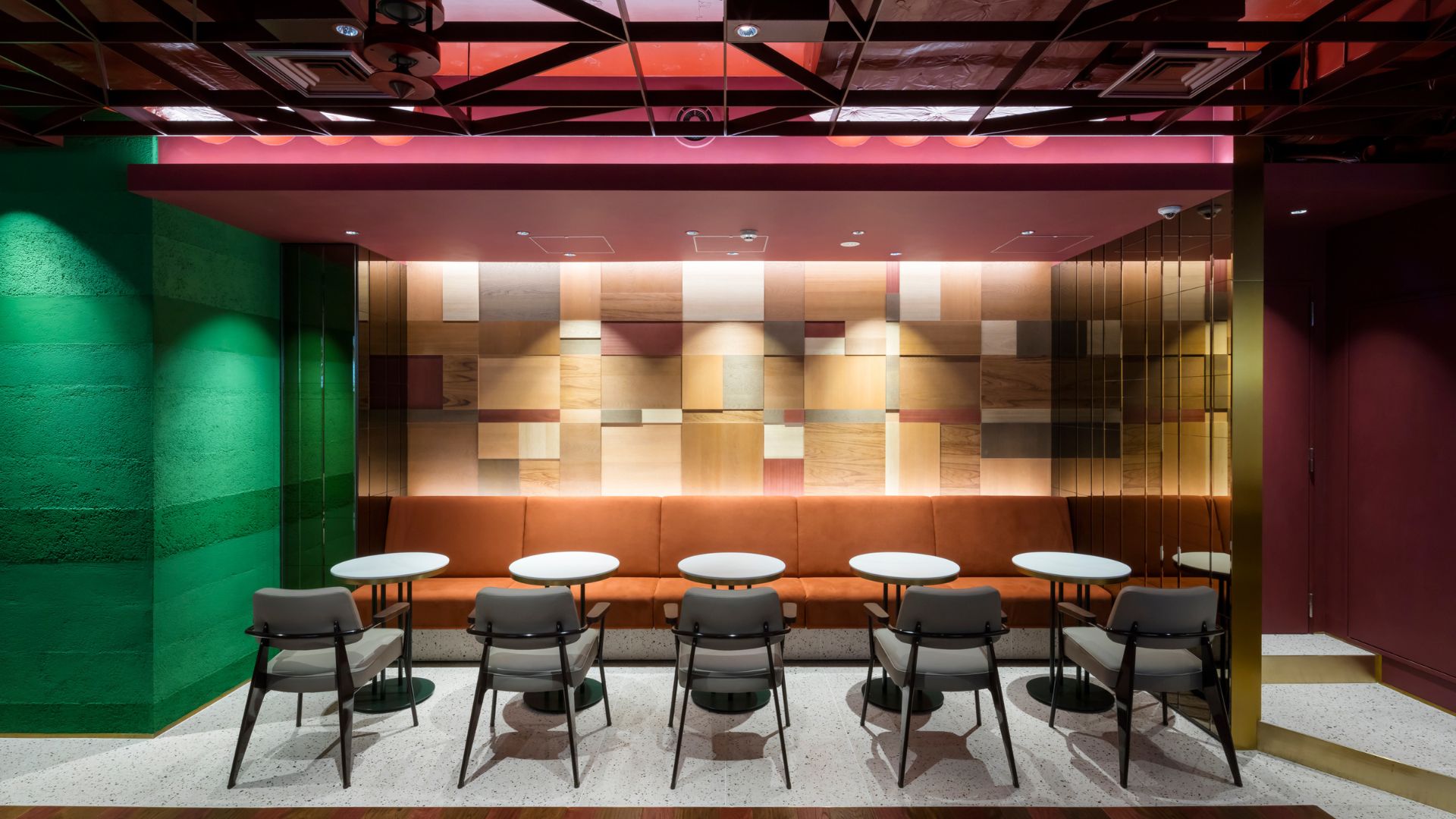
The heart of the residence’s optimisation lies in a central service core that groups together essential services: kitchen, bathrooms, storage, utilities, and air conditioning. Concentrating these facilities in one volume also improves the clarity and efficiency of the system, facilitating setup and maintenance. The structure is essentially made of a prefabricated metal structure, clad in polycarbonate panels, which reinforce the work’s technological character. Inside the module, spaces are organised through a curated chromatic strategy, which uses vibrant tonalities, colour transitions, and transparency to define each area’s personality.

Despite its futuristic character, Modulo Habitat maintains deep connections to its regional context, especially through strategic collaborations with local artists and designers. The work features contributions from Murcian creative firms, including DelAmorYlaBelleza, Sancal, PottProject, Catalina Catarsis, SomosFino, Marta Sanchez, Omar Miranda and Gonzalo Moreno, ensuring that the space still maintains authentic cultural connections, as well as supporting the local creative economy.
The creators of the project, Meii Estudio, focus on architecture, design, sustainability, recycling and innovation. The studio is led by Elvira Carrion, an architect specialised in sustainability and climate change, and Jose Maria Mateo, who holds a master in business and focuses on reconnecting architecture with society and nature. Their name, Meii, doesn’t hold any particular meaning, it stands as an anonymous name representing their flexibility and holistic approach.

The studio’s flexible approach is particularly significant in Modulo Habitat, which is conceived for an international family with a nomadic and adventurous spirit, as it is capable of accommodating both daily life and social gatherings. This adaptability reflects current lifestyle patterns, as homes must now serve multiple functionalities, especially in more rural contexts.
Modulo Habitat stands as a demonstration of the power of cross-pollination between disciplines, especially between unlikely fields. By integrating high level research conducted in aerospace and applying it to our simple, daily life, the studio managed to create a unique architecture. As cities worldwide struggle with housing density, Modulo Habitat offers an inspiring example of how creative design thinking can help connect the dots, finding an unexpected solution.