Orchestra Park: the melody of landscape
Between natural refuge and social infrastructure: SoBA transforms an urban plot in Kunshan, China, into an immersive park and community hub, redefining the role of contemporary public space with fluid geometries that unfold like a living score.
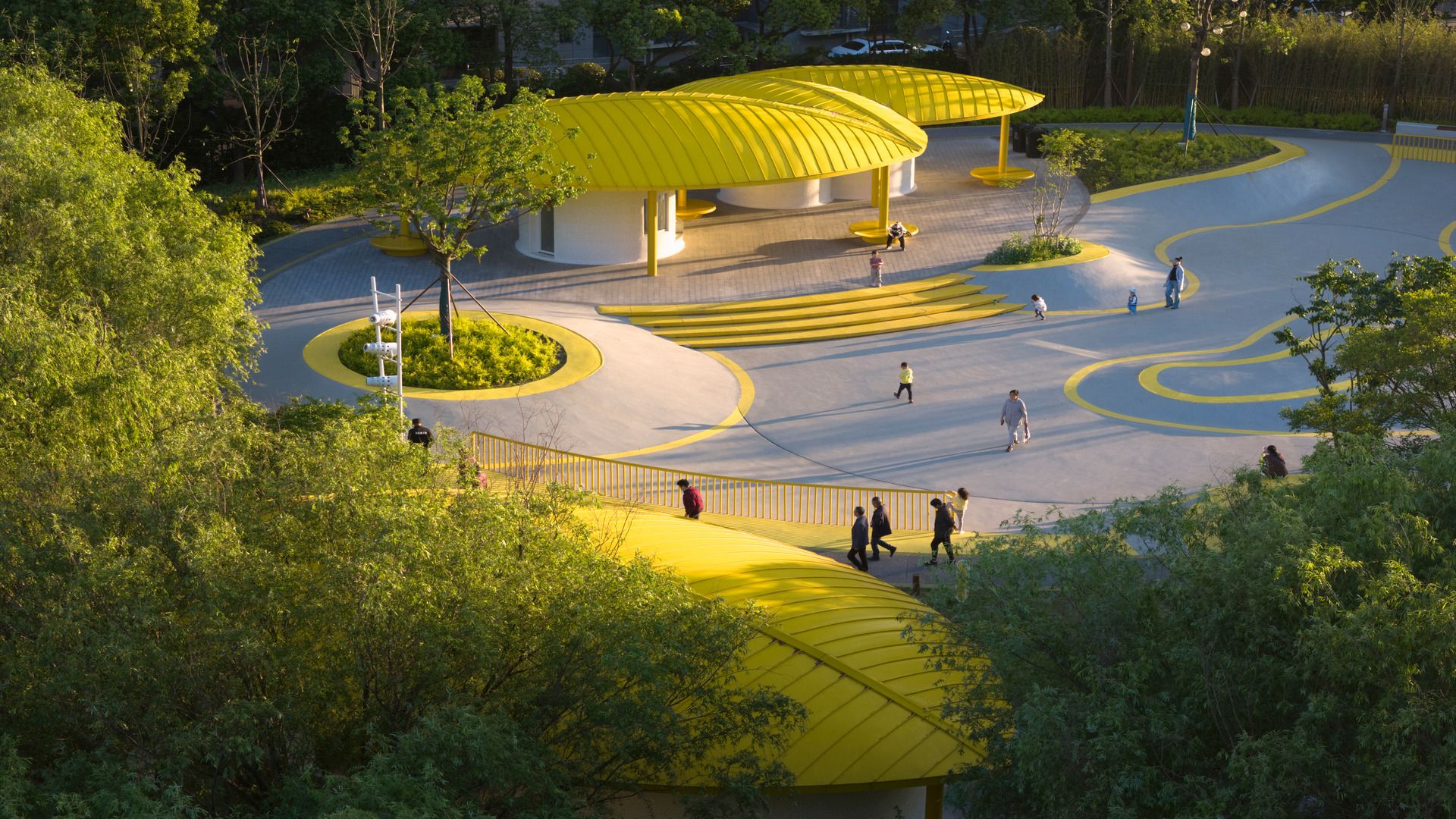
Balancing nature and urban life: Orchestra Park functions both as a green oasis and a gathering hub, where engagement with the environment and daily activities coexist within a unified landscape. Carefully calibrated and thoughtfully designed, the park navigates the complex challenge of being simultaneously a natural refuge and an active public space—particularly in high-density urban areas, where residual spaces between infrastructure and residential fabric often remain undefined.
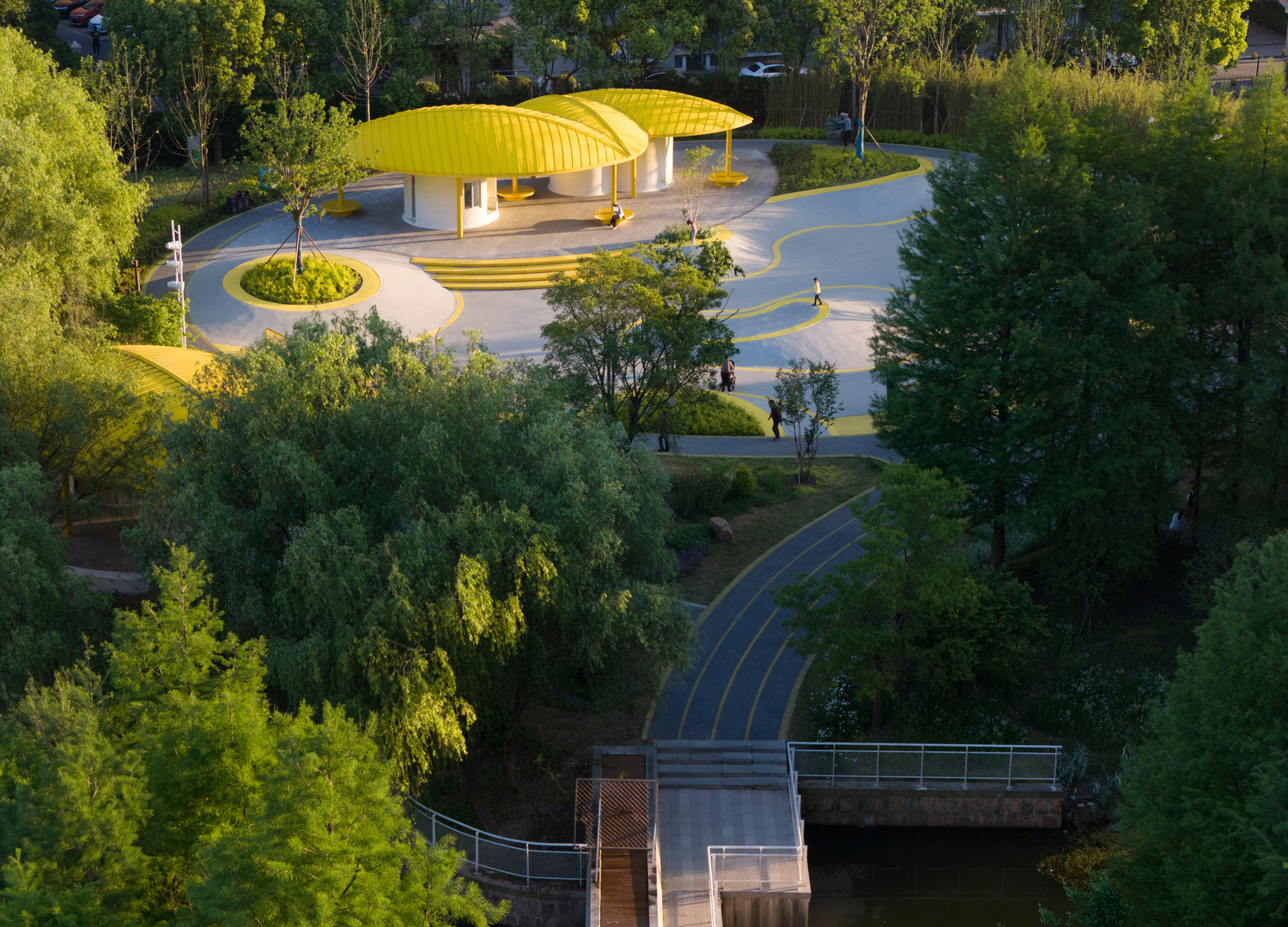
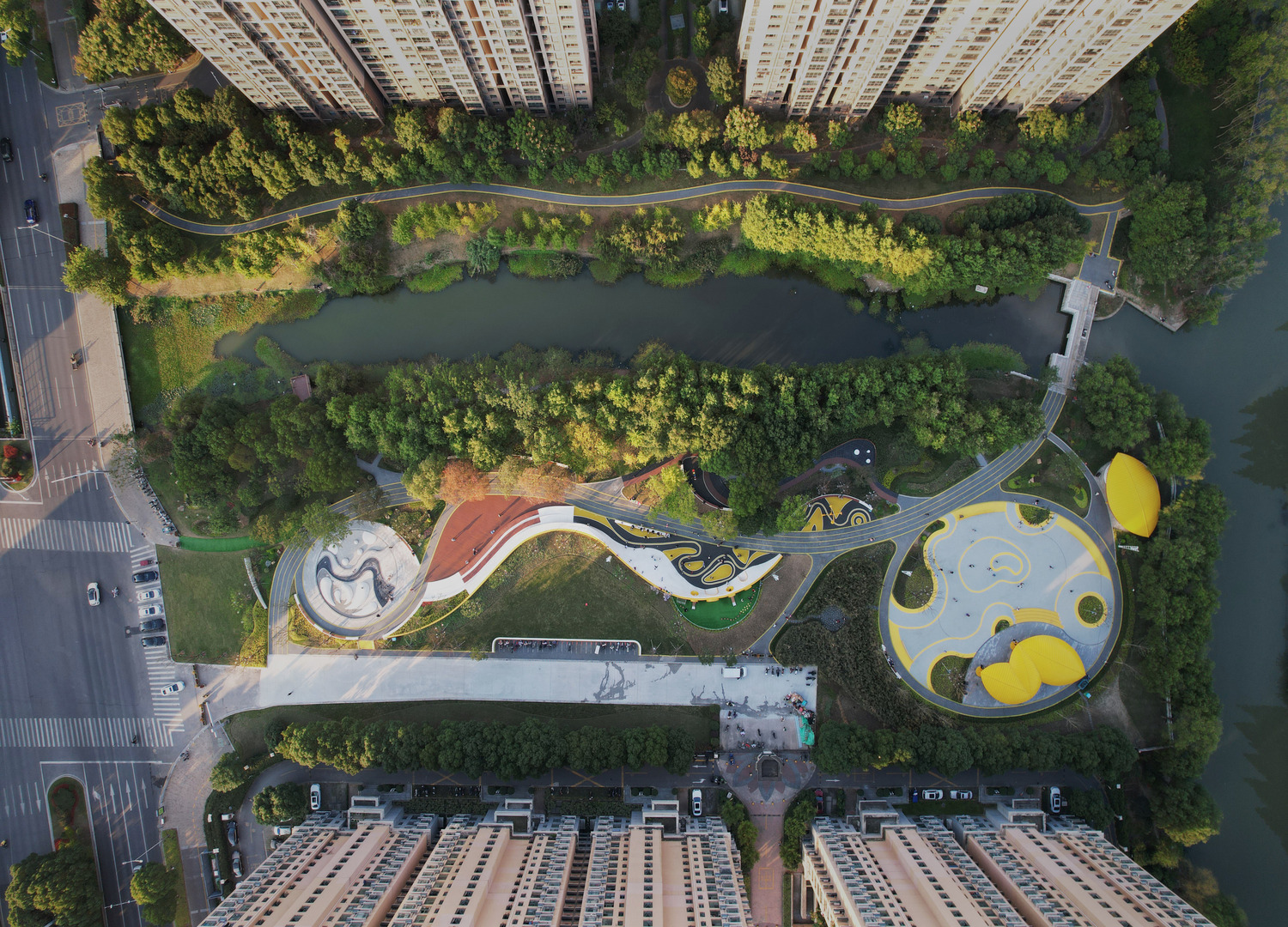
Orchestra Park, designed by SoBA in the Huaqiao Economic Development Zone of Kunshan, Eastern China, responds precisely to this context, transforming an 8,500 sqm urban plot nestled between two residential communities and at the confluence of two waterways into an immersive urban park.
Gallery
Open full width
Open full width
The formal inspiration, according to the studio, derives from the Chinese “Jiangnan Silk and Bamboo” musical tradition, known for its elegant and flowing melodies and recognized as an intangible cultural heritage of Kunshan. In this project, the rhythm and softness of the music are translated into spatial terms: sinuous lines and curved geometries structure paths and environments, creating a continuous and dynamic landscape.
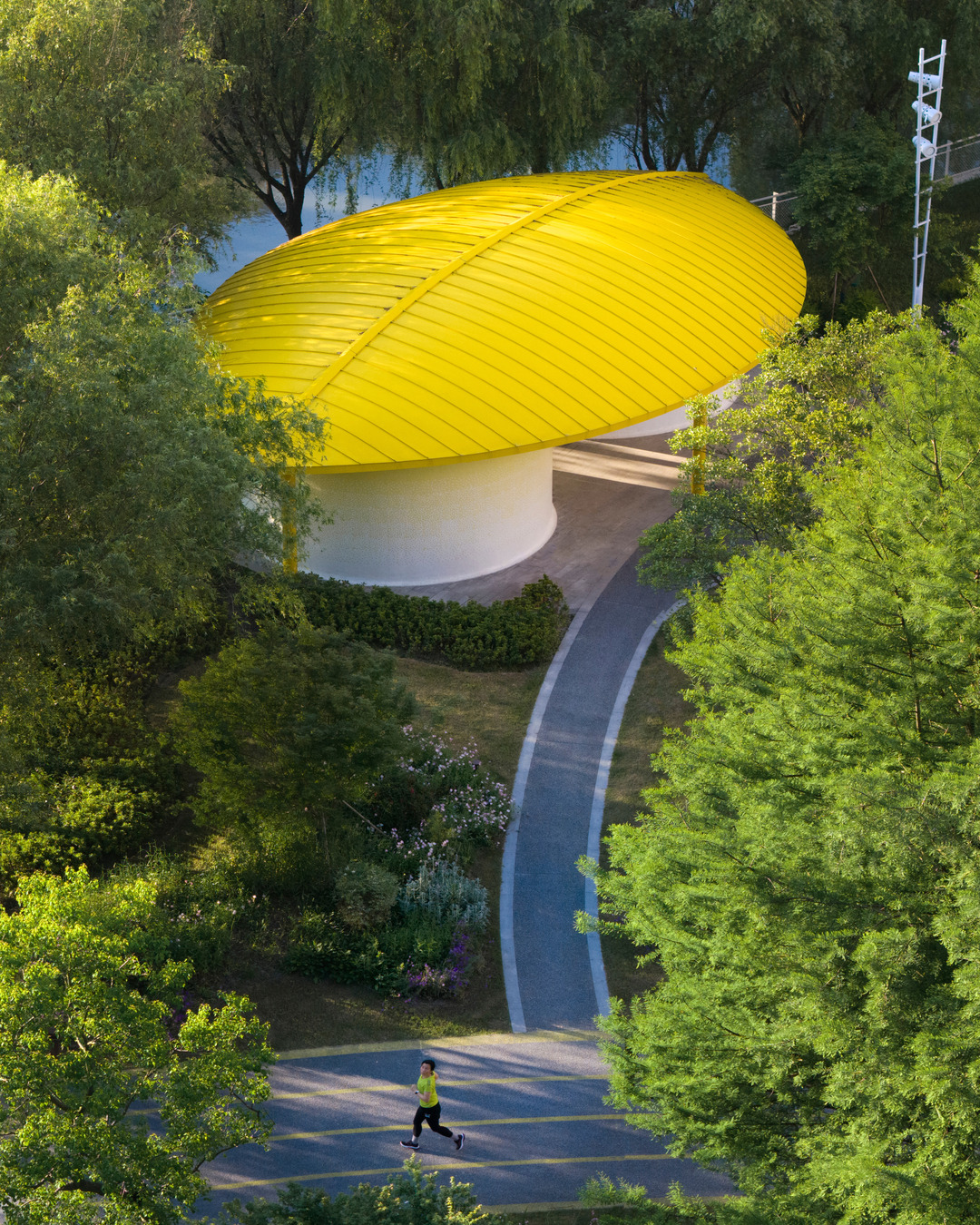
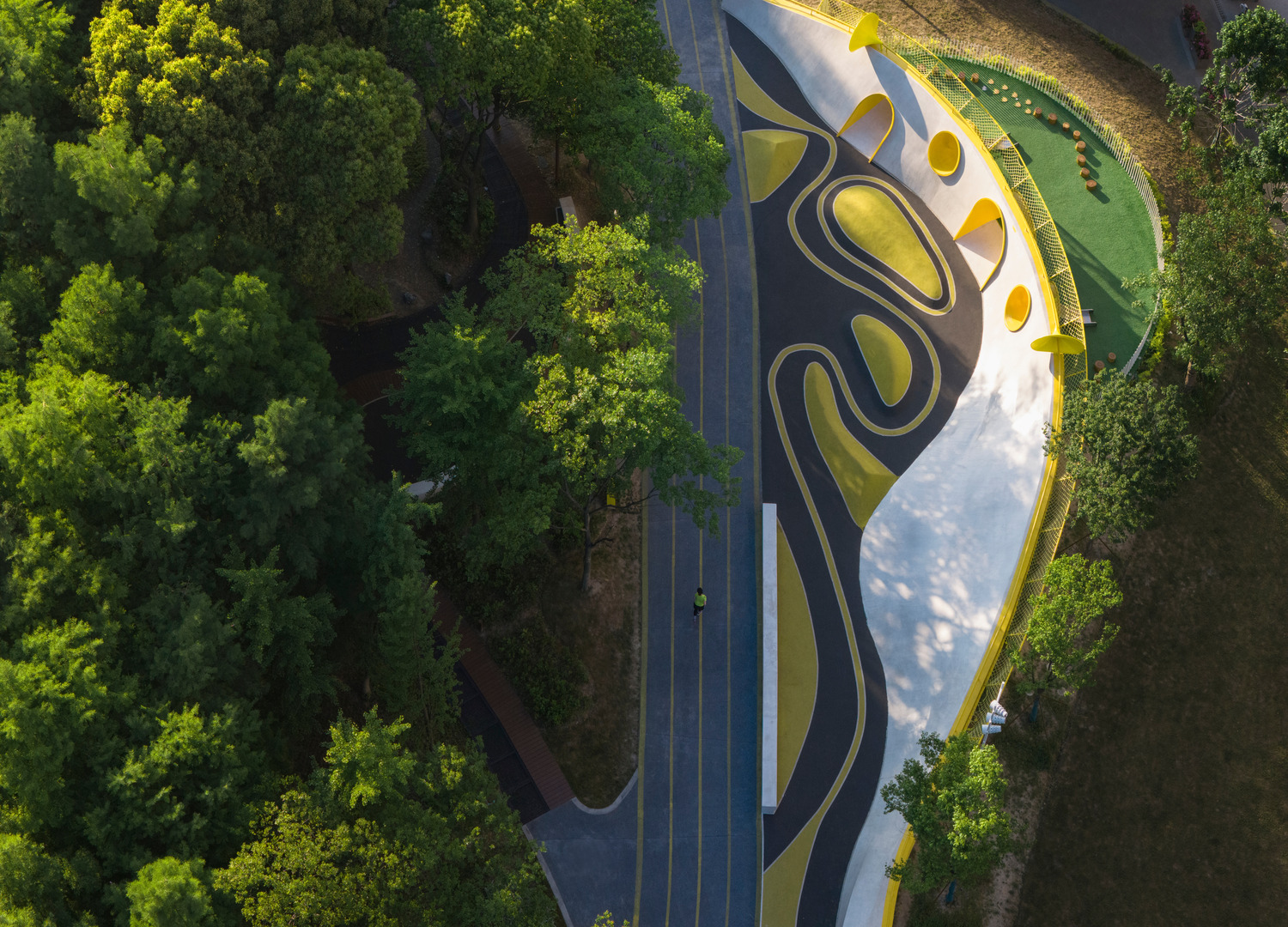
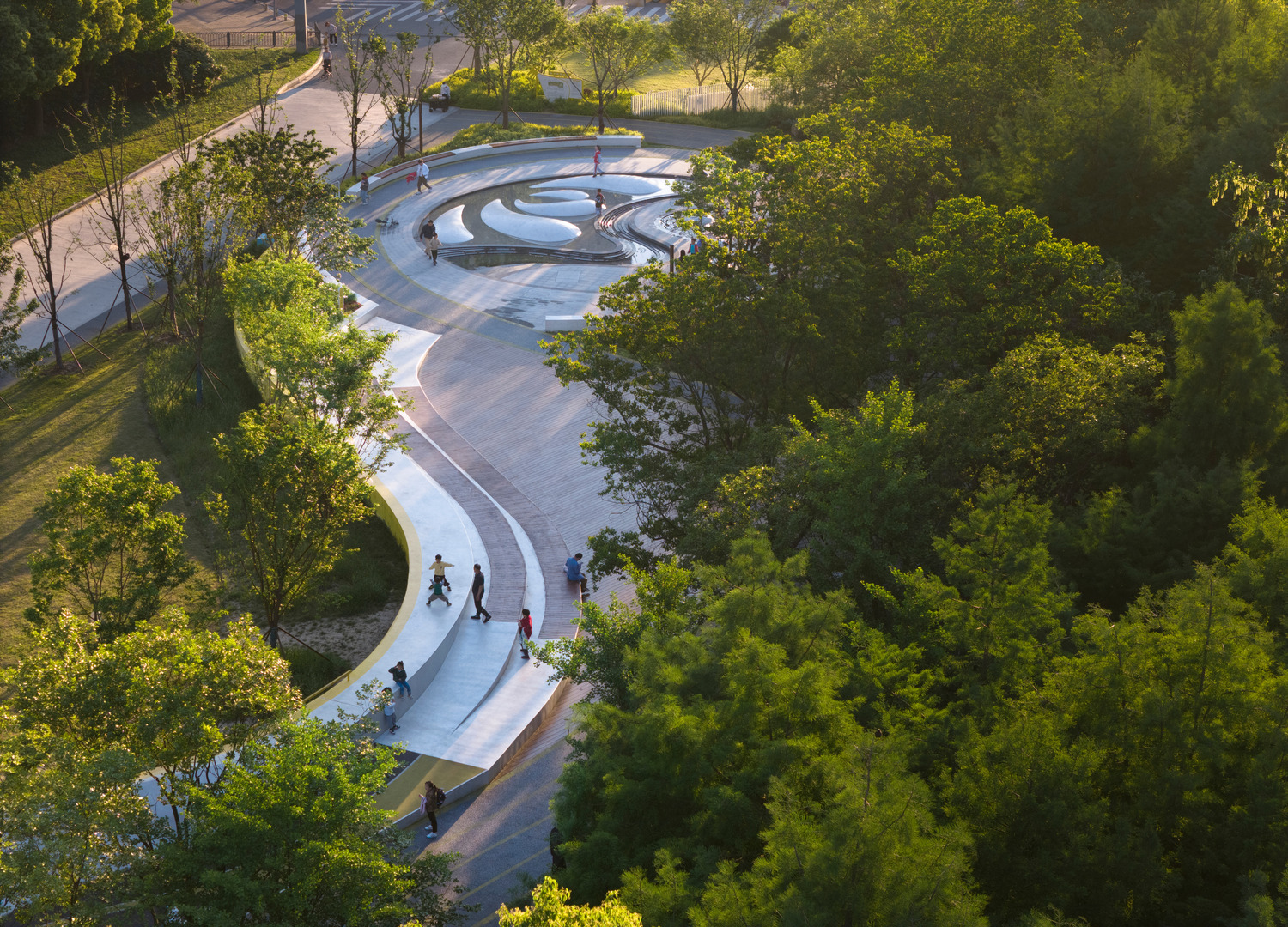
Seen from above, the park evokes the sinuous movement of a coiling snake, inspiring both awe and curiosity. Rather than treating site constraints as limitations, SoBA embraced them as opportunities, integrating mature trees – including camphor and dawn redwoods – and the existing environmental system into a conservation-focused strategy that preserves the woodland and undulating terrain while introducing selective interventions.
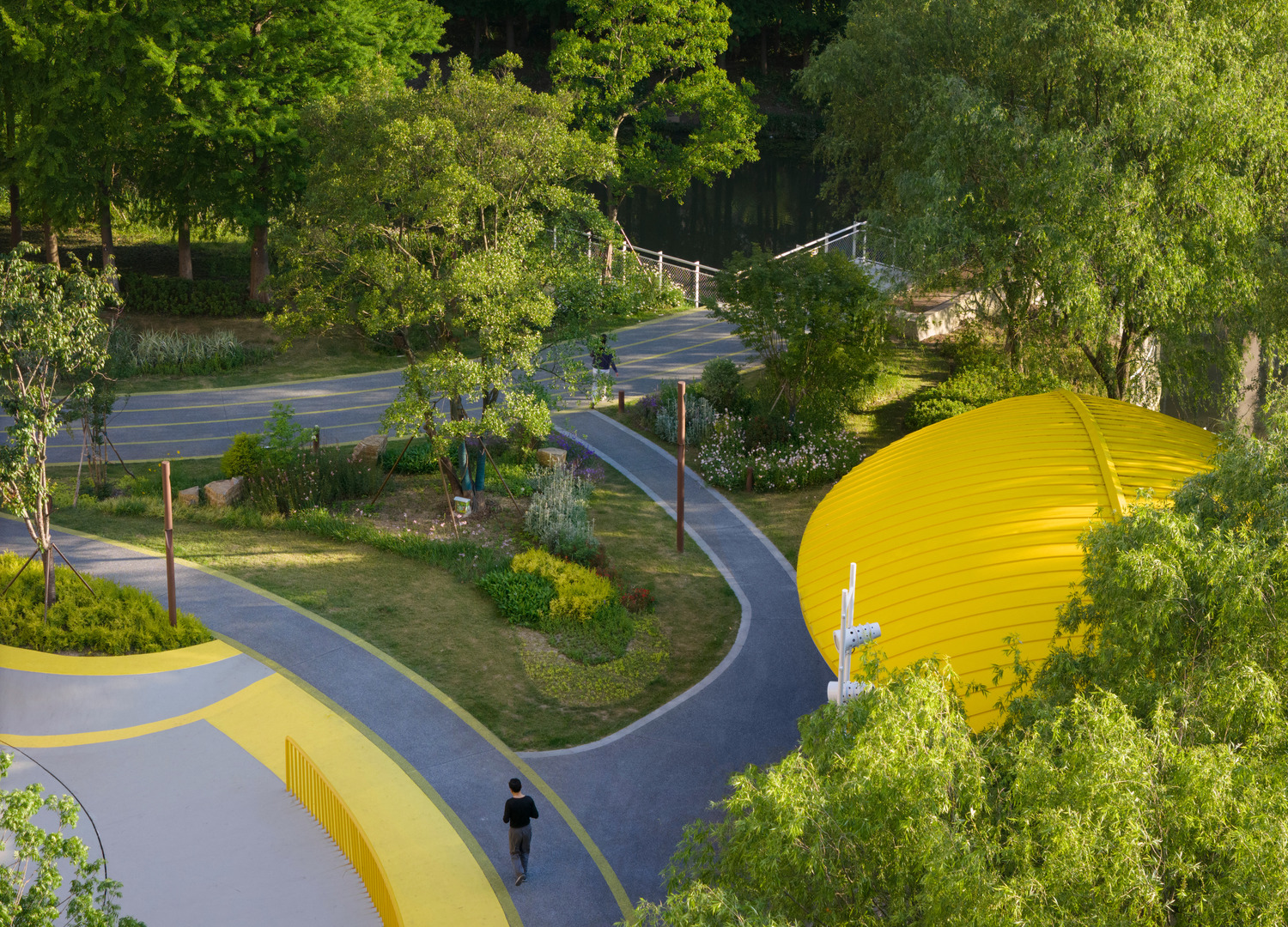
This approach, summarized as “minimal intervention, maximum impact,” is particularly evident along the riverside green belt, where the design enhances the existing ecosystem respectfully. A waterside observation platform and winding paths under the tree canopy expand usability without altering the natural layout.
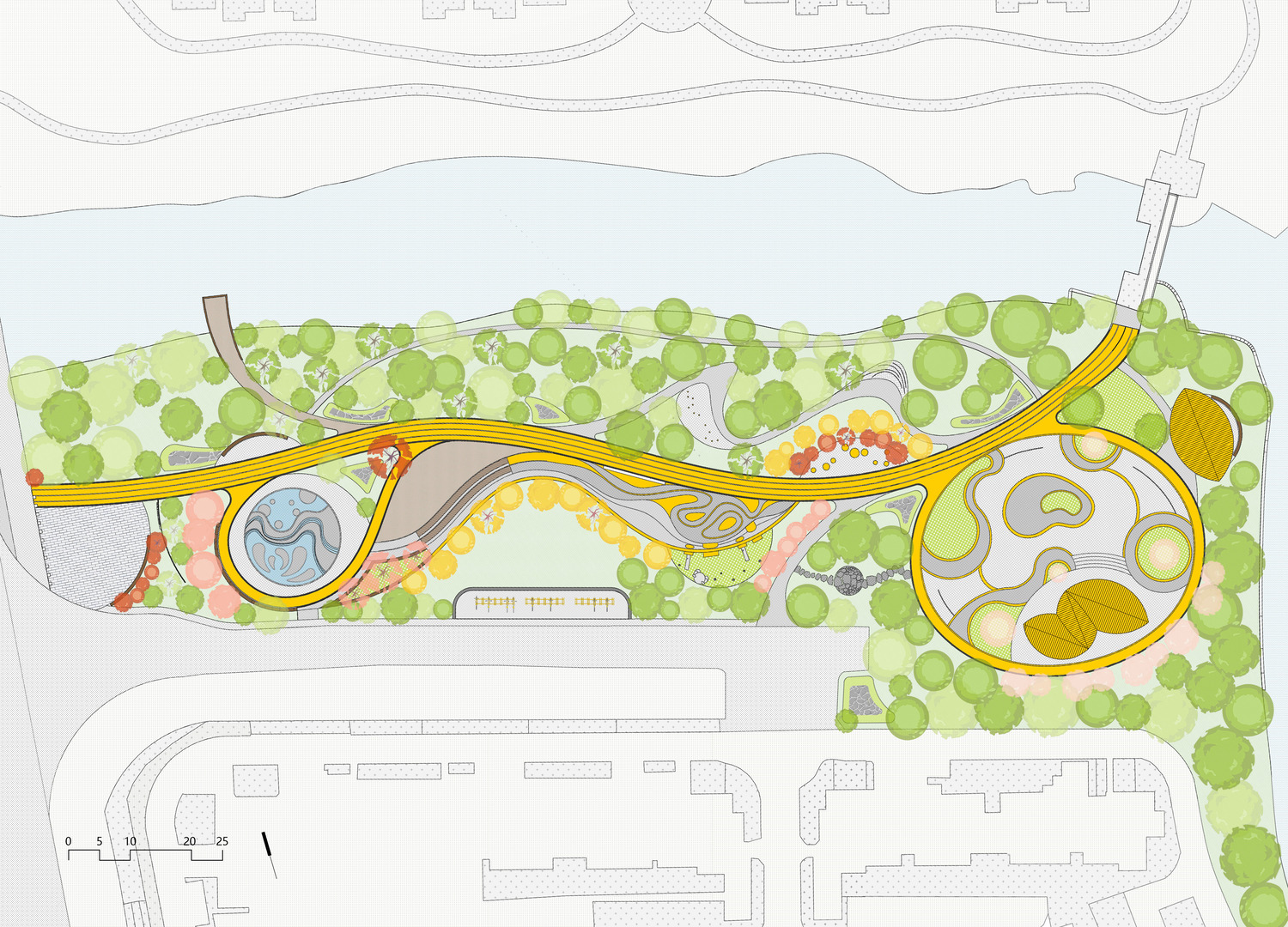
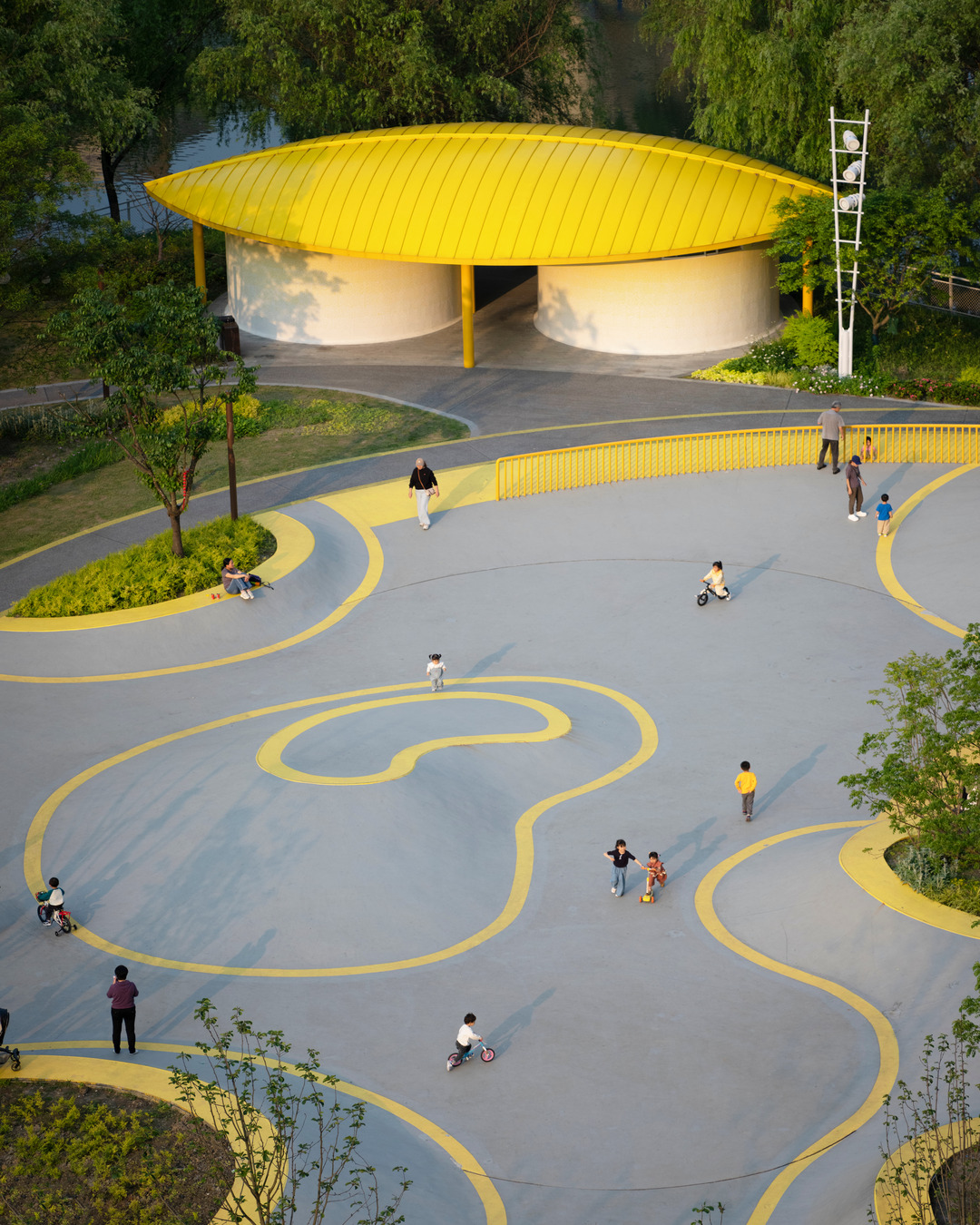
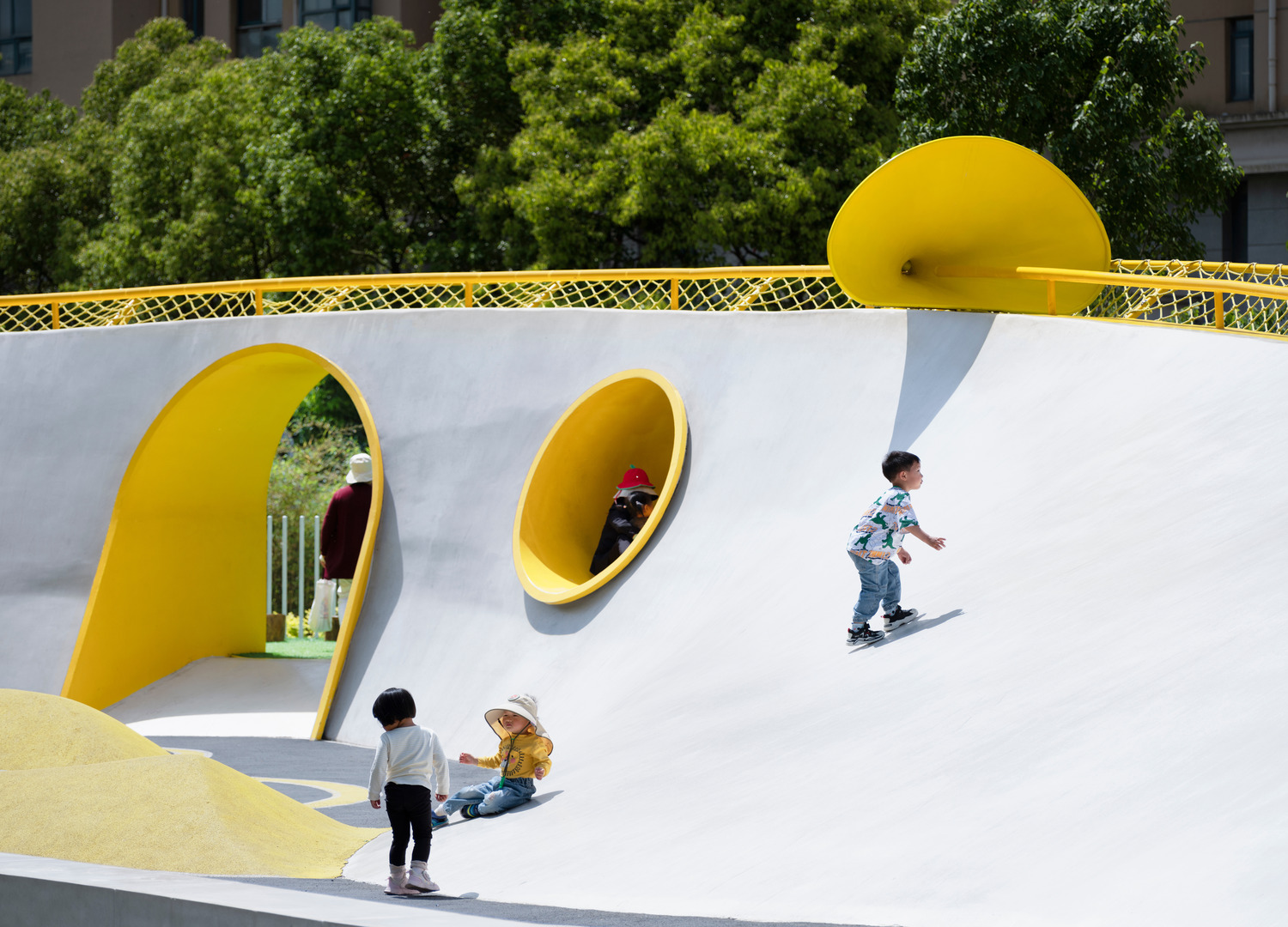
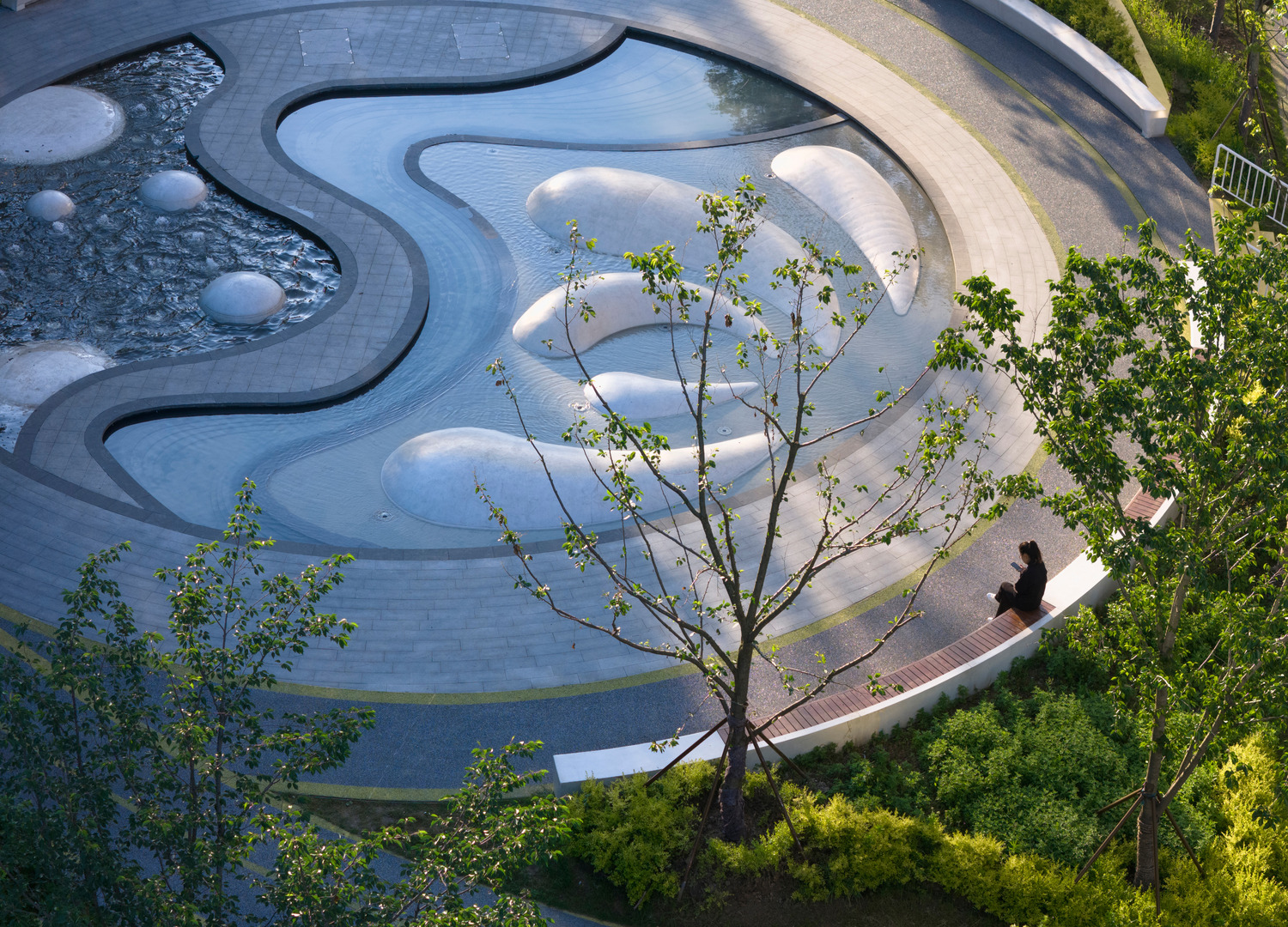
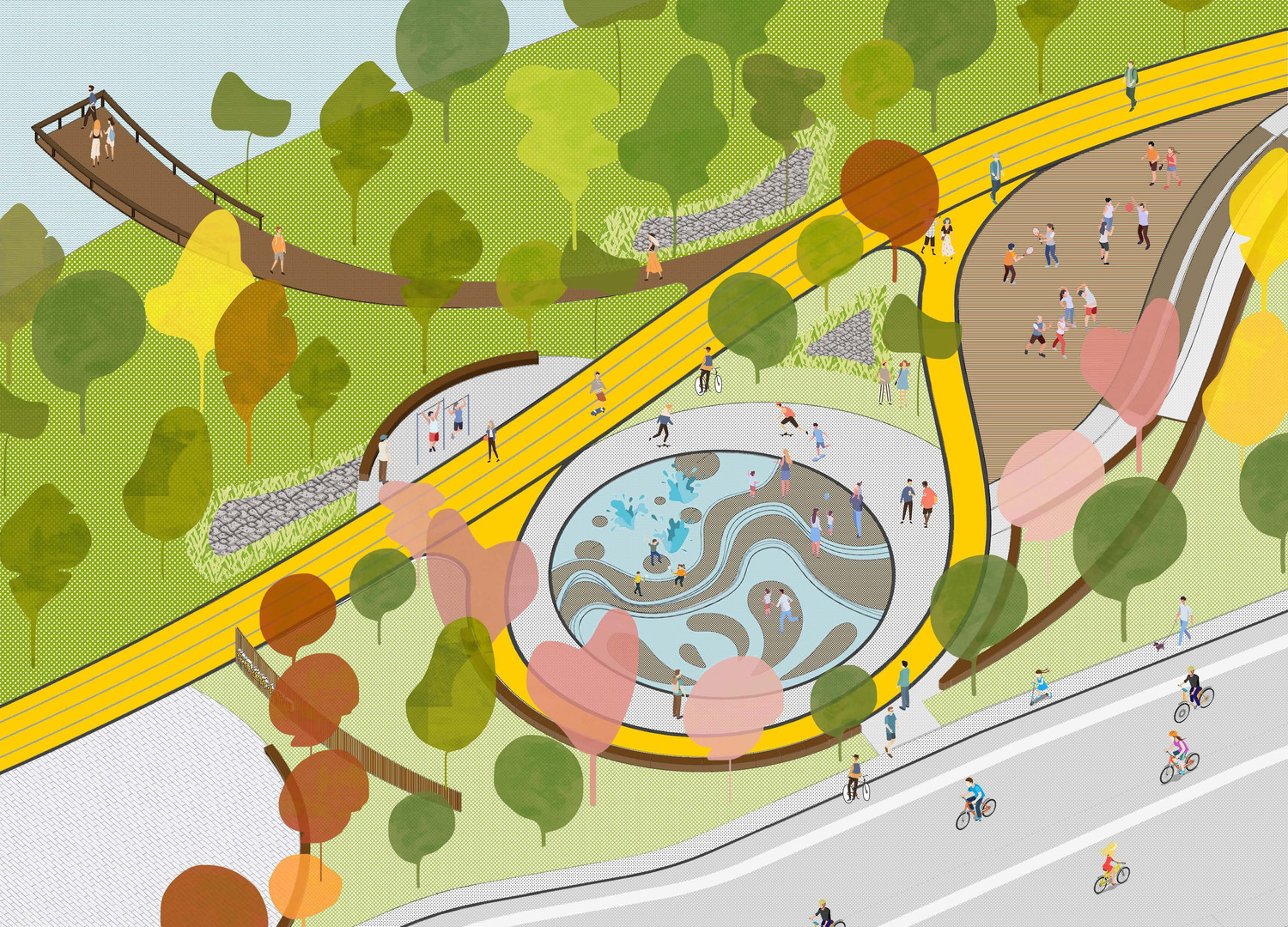
A circular path organizes and optimizes the entire park, connecting Xugongqiao Road, the main access route, with the residential communities to the north and south. More than a walking or jogging trail, it acts as the park’s backbone, guiding visitors and making circulation legible. At the same time, it defines two main areas: along the river, the green belt retains the site’s natural character with shaded trails and observation platforms; in the more active recreational zone, the existing topography accommodates purpose-built spaces such as a skatepark, climbing areas, fitness playground, outdoor theater, bamboo grove trails, a plaza with a musical fountain, and a small music classroom, creating a stimulating environment for visitors of all ages.
In the recreational zone, abstract geometries inspired by musical instruments transform the terrain into a three-dimensional landscape that encourages social interaction. Children, teens, and adults can share the spaces without strict separations between activities, achieving a balance between nature and use. Along the riverside, the experience is more introspective: trails weave under the canopy, and observation platforms offer moments of reflection without imposing significant or invasive changes.
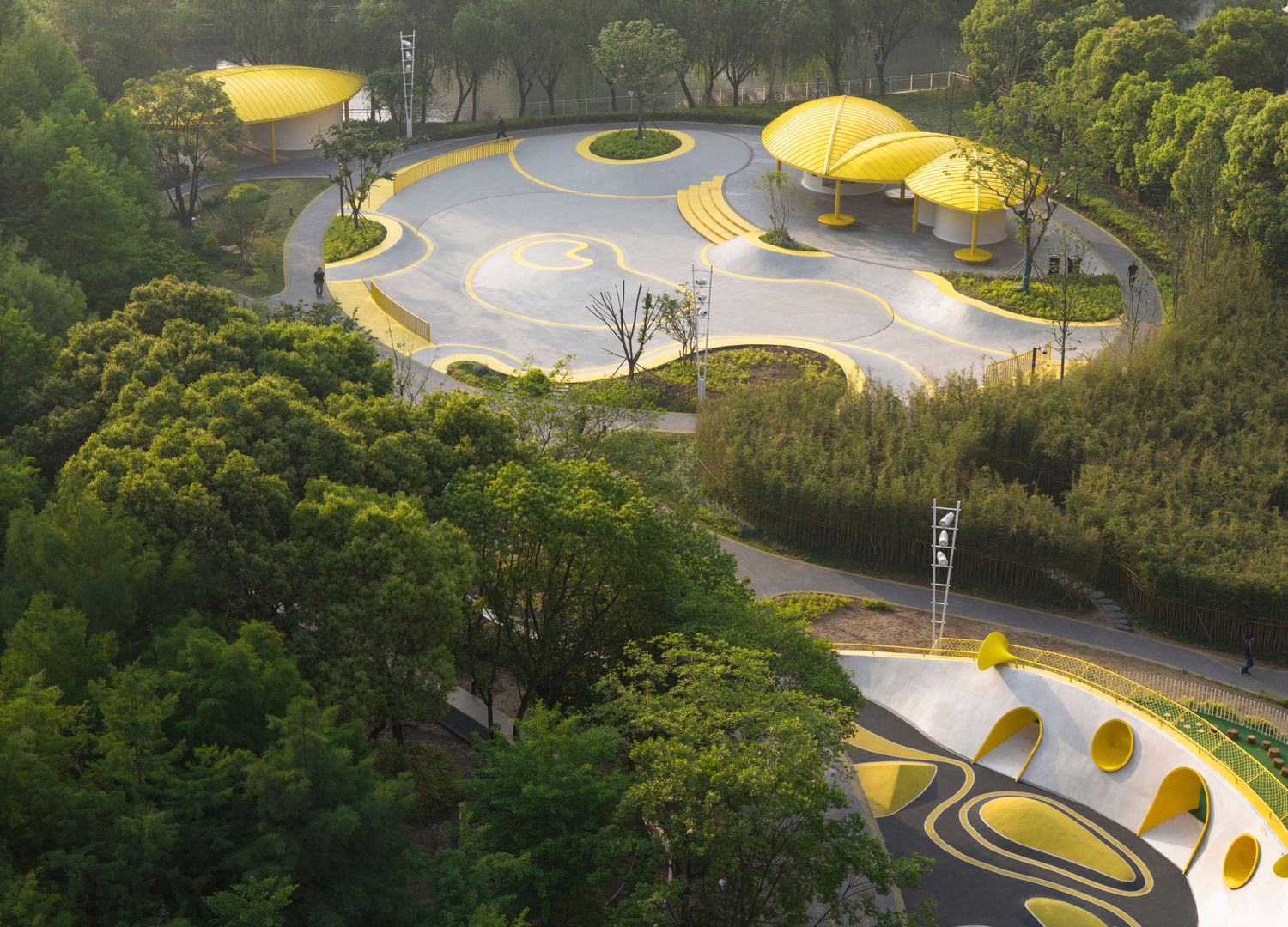
The harmonious coexistence of nature and activity is one of Orchestra Park’s most compelling aspects. The park does not simply provide usable space: it builds an ecosystem, functioning as a true social platform with calibrated equilibrium rather than rigid hierarchies. Design precision, contextual sensitivity, and the ability to foster relationships between landscape, culture, and everyday life are the intervention’s true strengths. More than a new urban image, the park generates experiences and social moments, transforming a marginal urban plot into an accessible and richly articulated public space.
SoBA’s work reflects the “Soft Build” approach, a design philosophy emphasizing adaptability, sensitivity, and contextual awareness. Without excessive interventions, Orchestra Park exemplifies micro-urban regeneration: carefully calibrated, environmentally respectful actions create social, cultural, and ecological value, turning a marginal urban plot into a livable space where architecture, nature, and community coexist harmoniously.