Prestige University: the roof becomes an urban amphitheater
Sanjay Puri Architects transforms Prestige University into a habitable topography: an accessible roof turns into an open-air amphitheater, where passive strategies for extreme heat and fluid spatial layouts redefine the campus as both civic and climatic infrastructure.
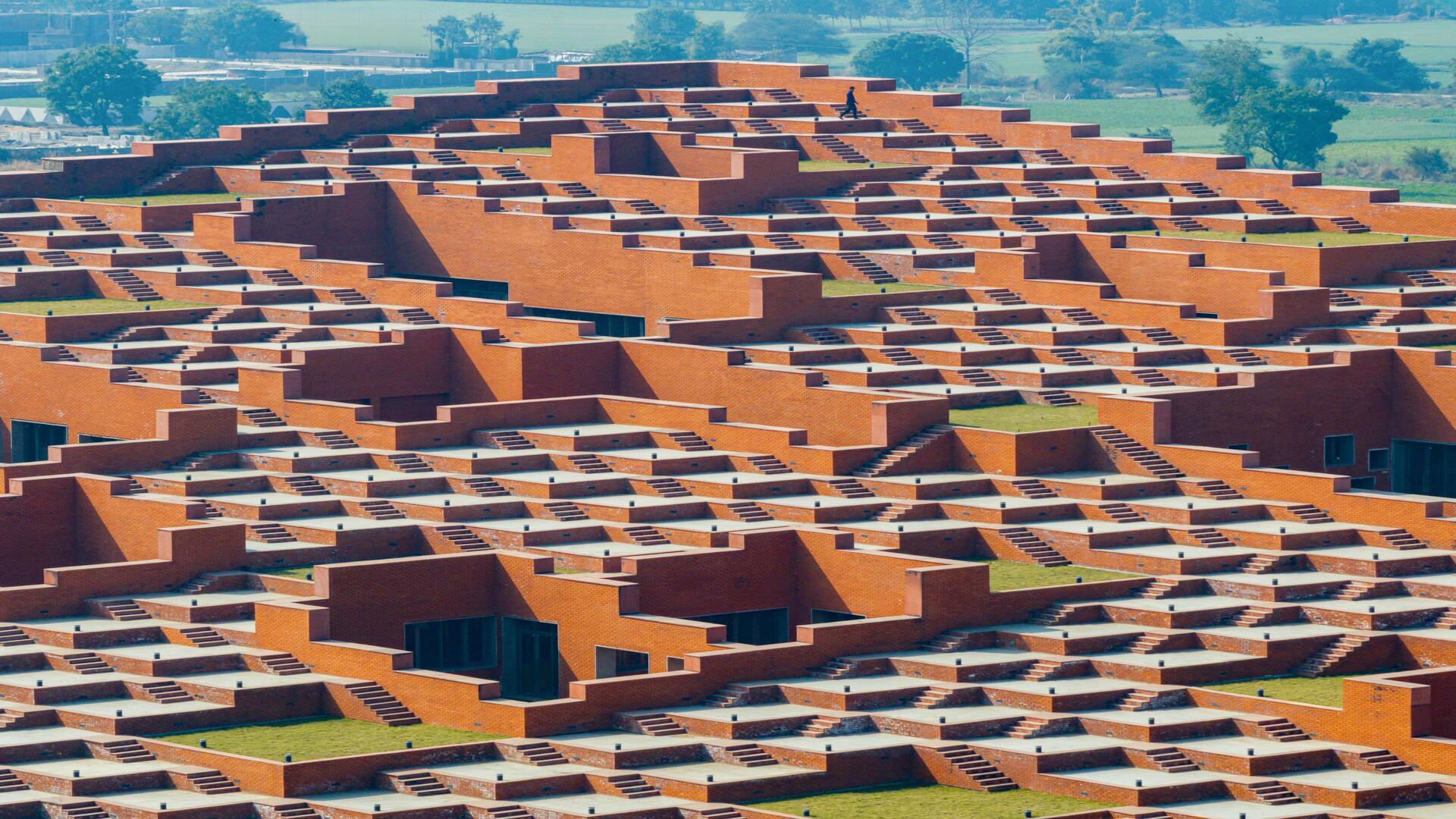
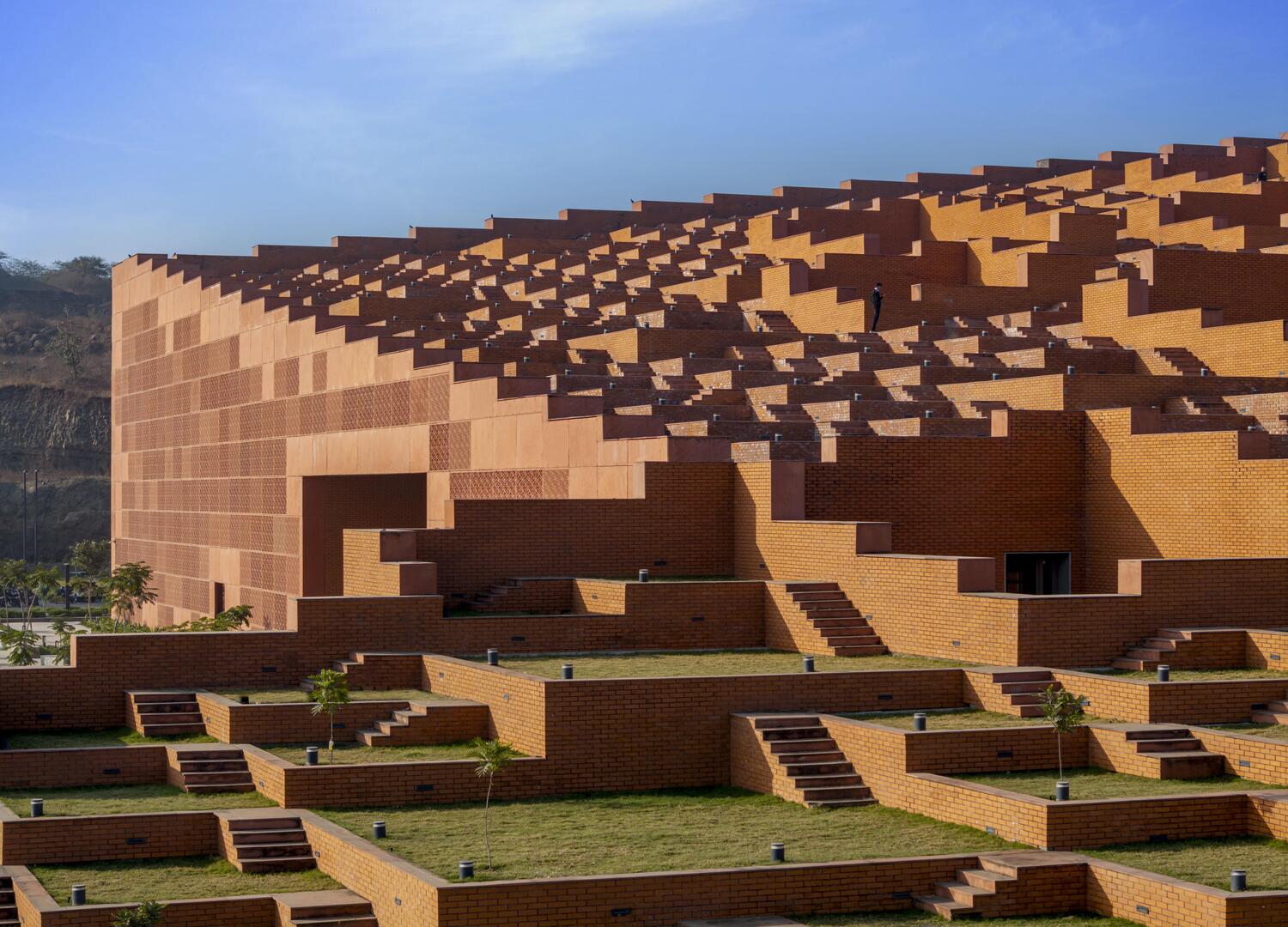
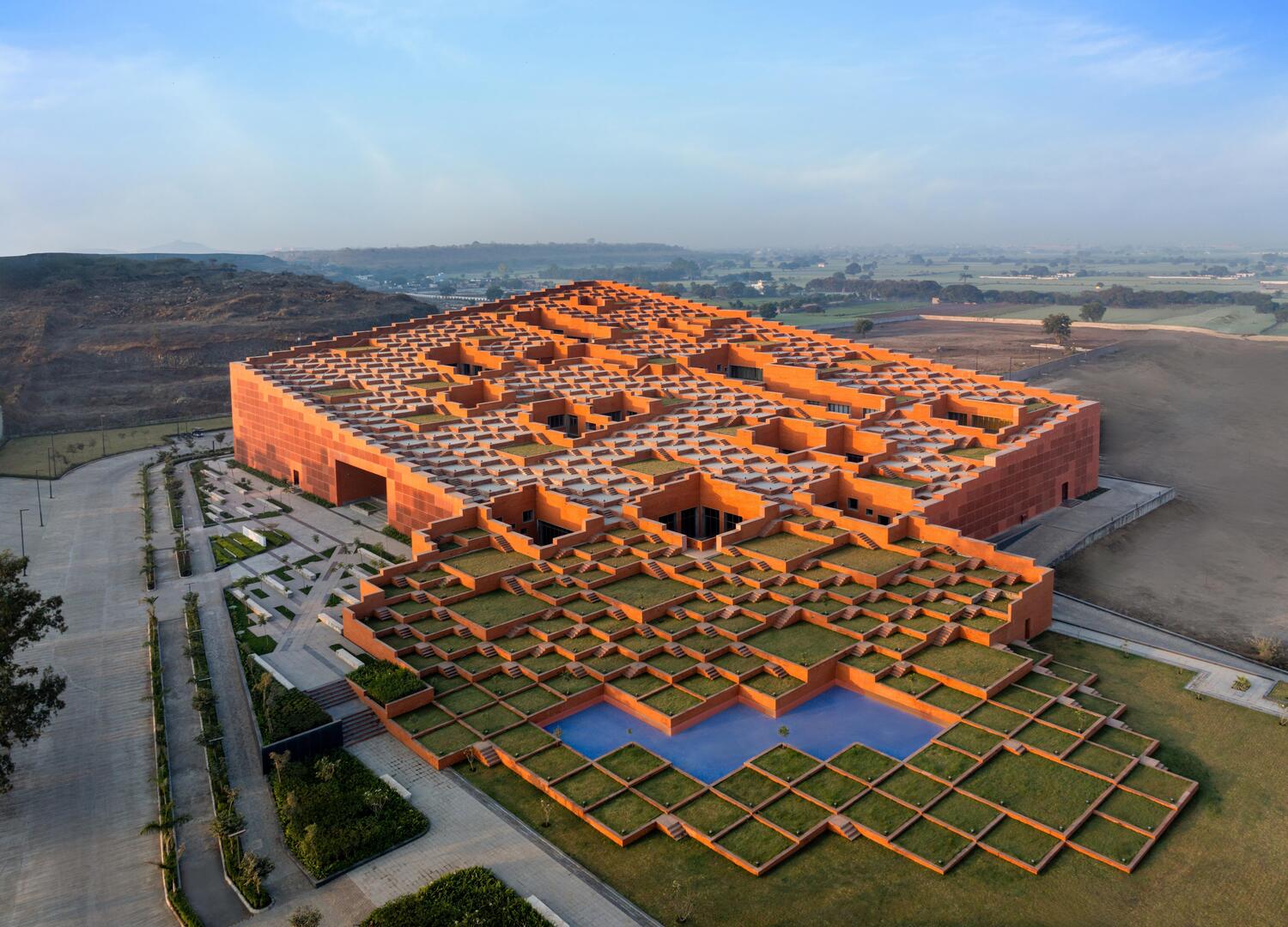
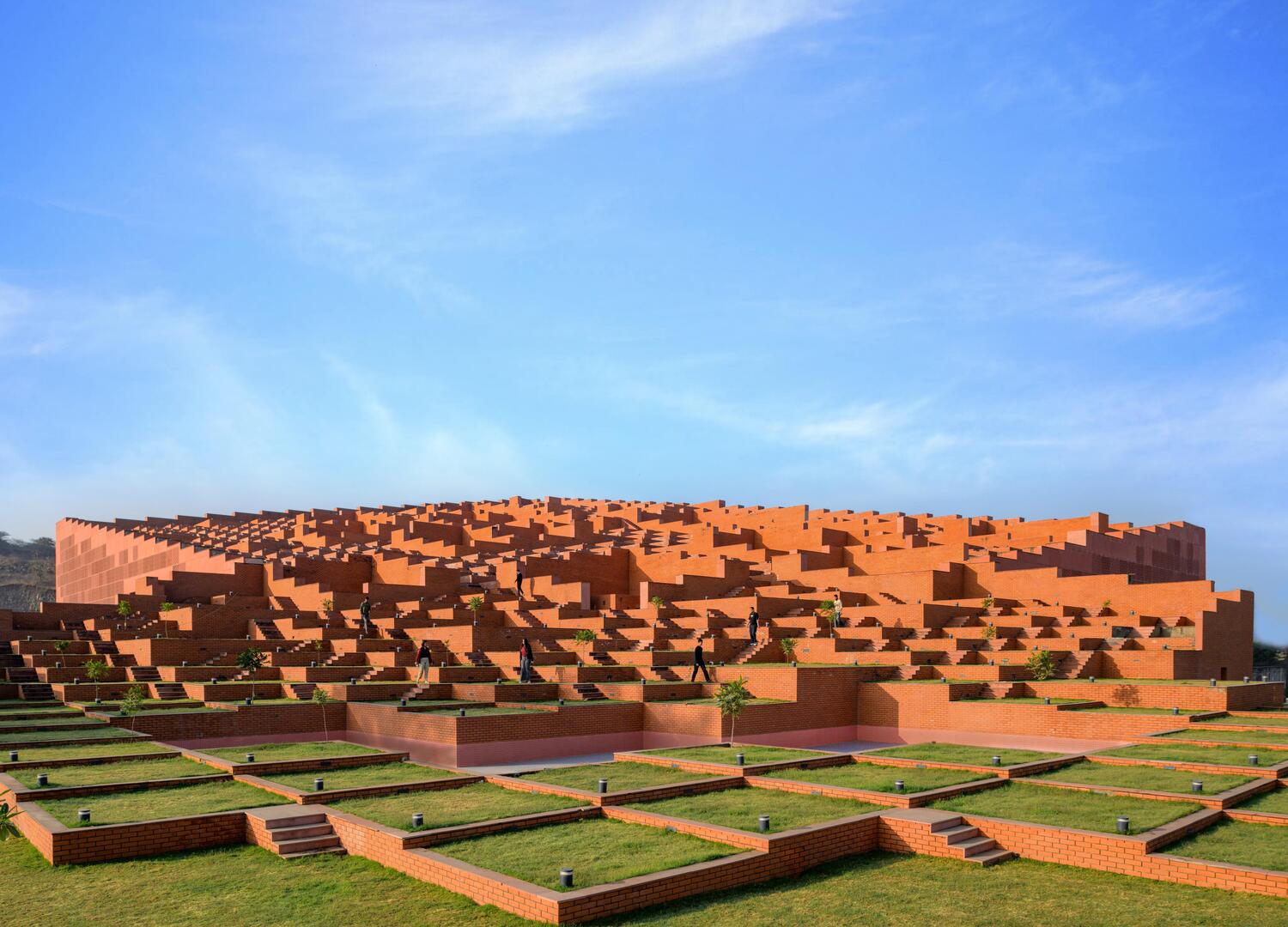
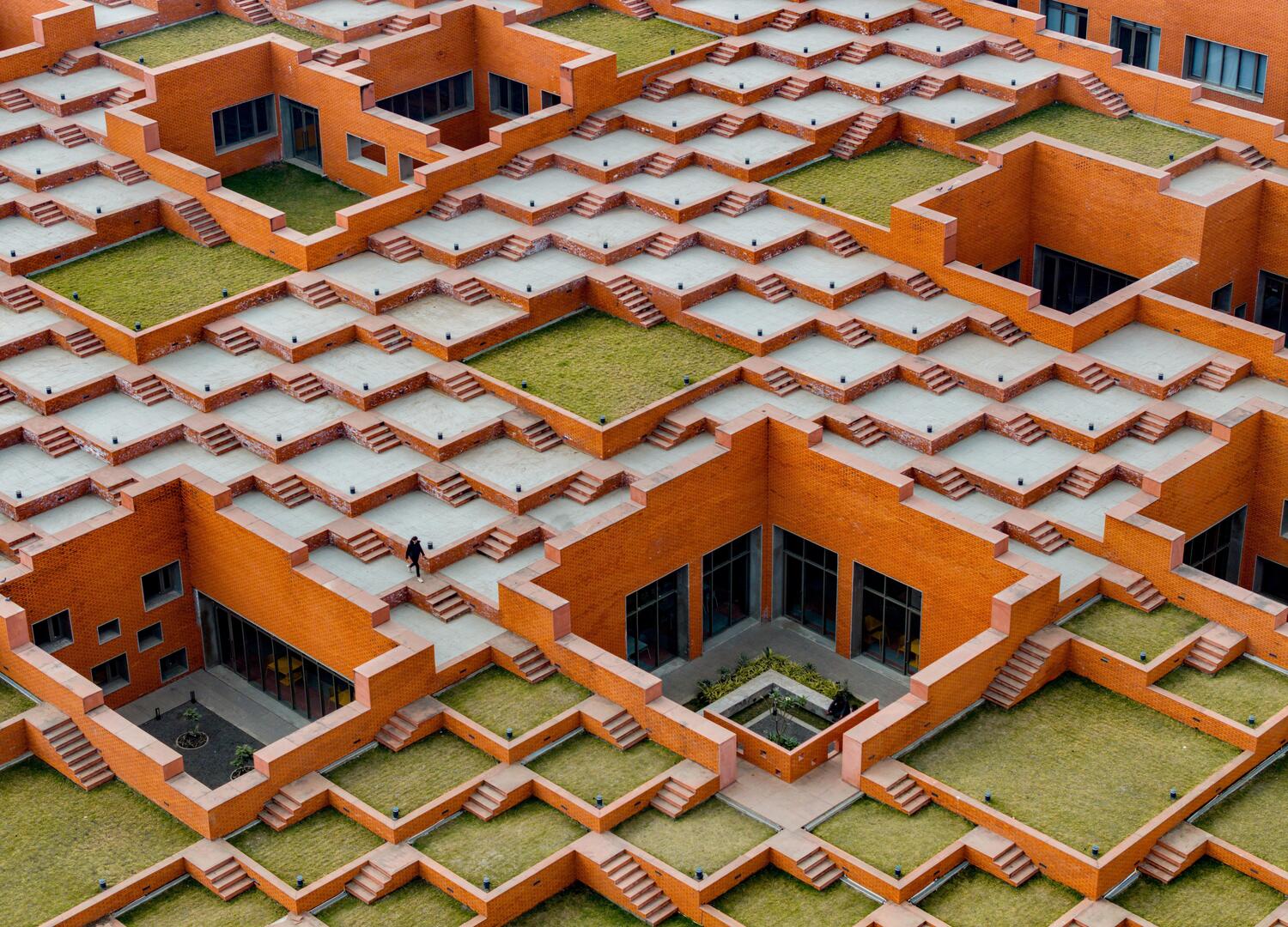
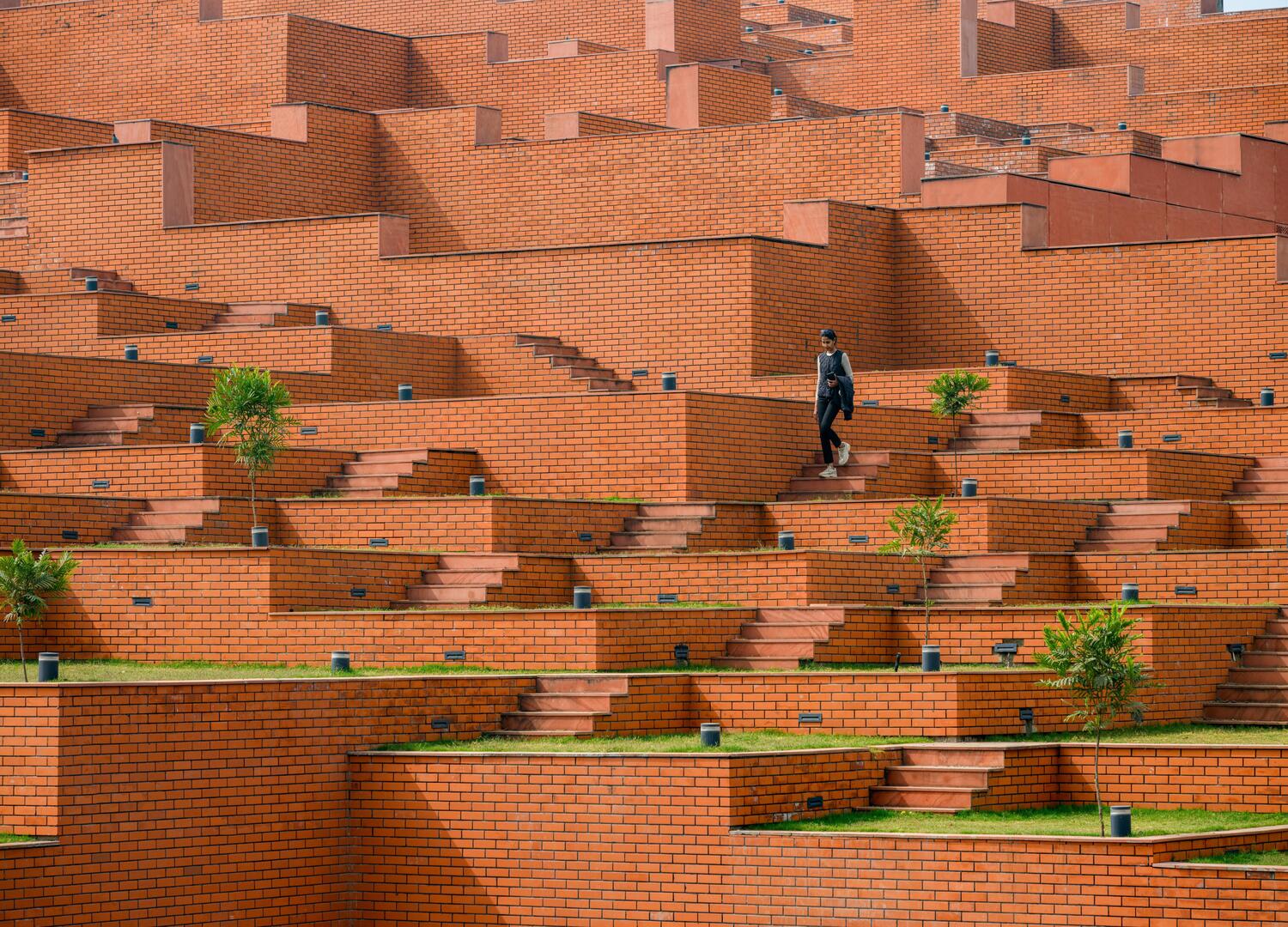
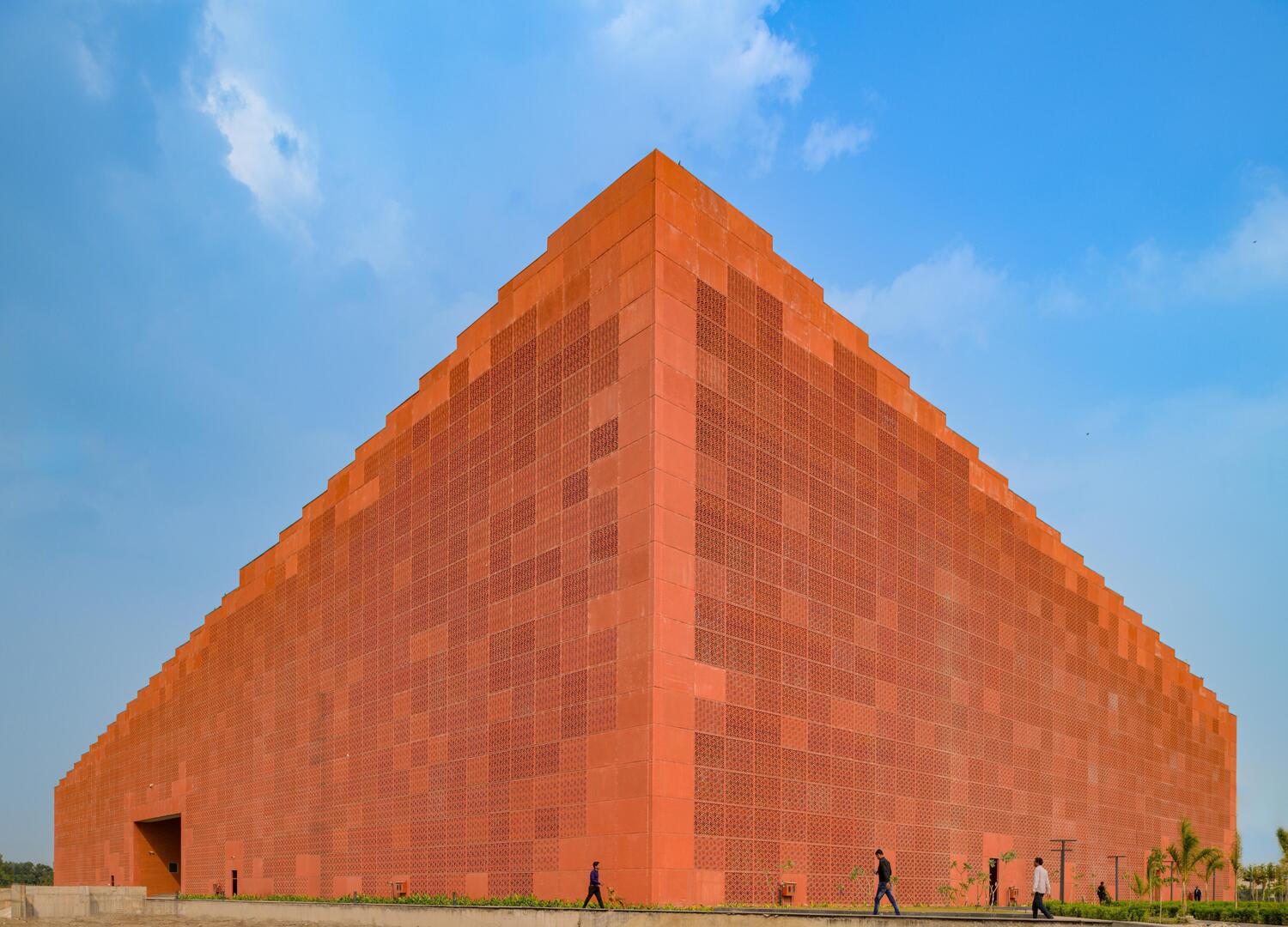
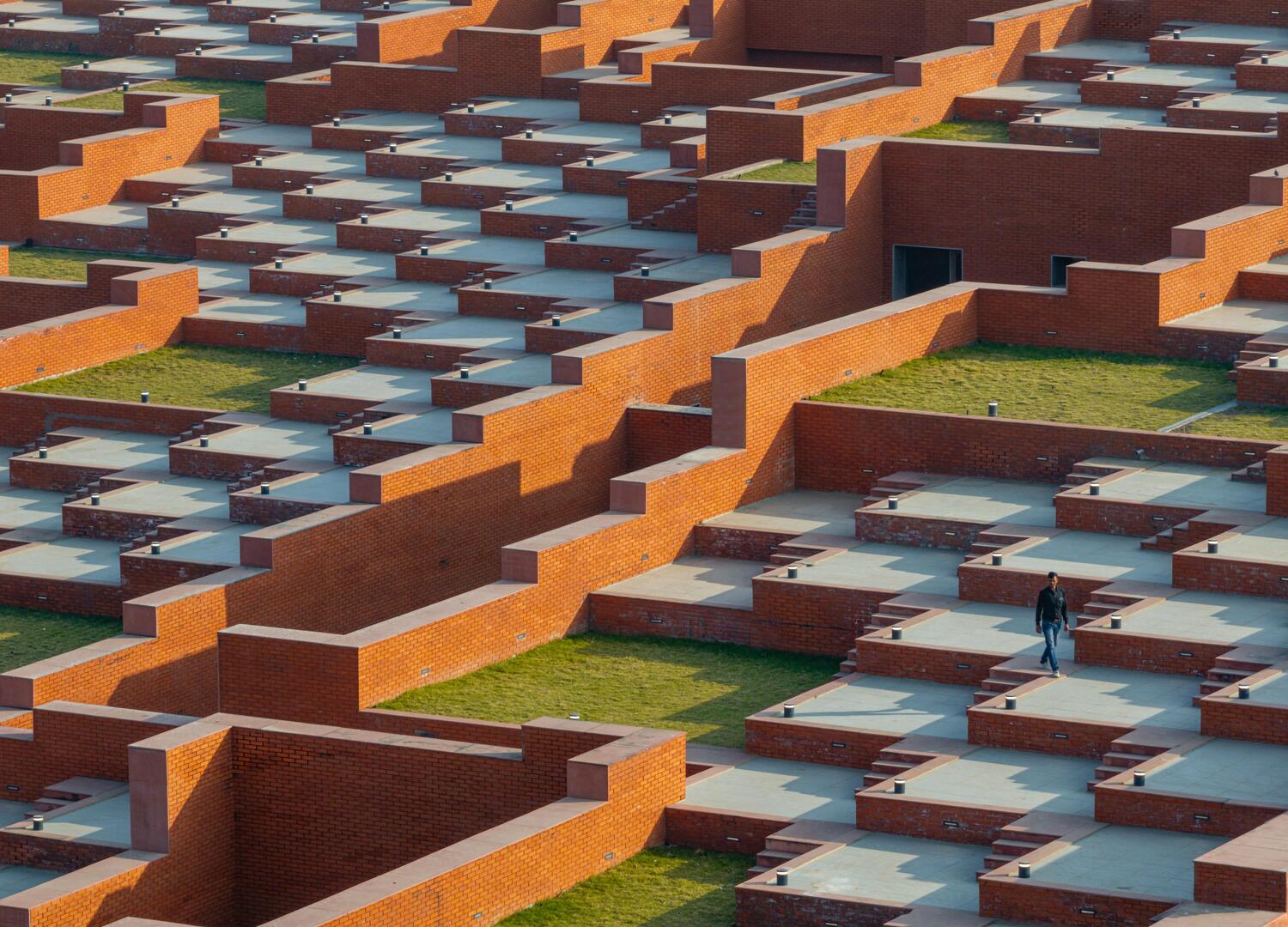
Located in Indore, a city in Madhya Pradesh, India, the new campus of Prestige University by Sanjay Puri Architects challenges the conventional image of the academic building. Rather than asserting itself as a monumental object, the project reshapes and inhabits the landscape. Its most striking feature – and what makes it a potentially replicable model – is a system of 463 stepped platforms rising diagonally from the ground, transforming the roof into a suspended public space where students can walk, sit, and gather. The result is nothing less than a contemporary amphitheater capable of hosting up to 9,000 people at once.
In a climate where temperatures range between 30°C and 40°C for most of the year, the building goes beyond fulfilling the functional requirements of a university campus. It becomes both an environmental device and a social platform. Here, architecture operates as climatic infrastructure—redefining how educational spaces are inhabited, shared, and experienced.
Gallery
Open full width
Open full width
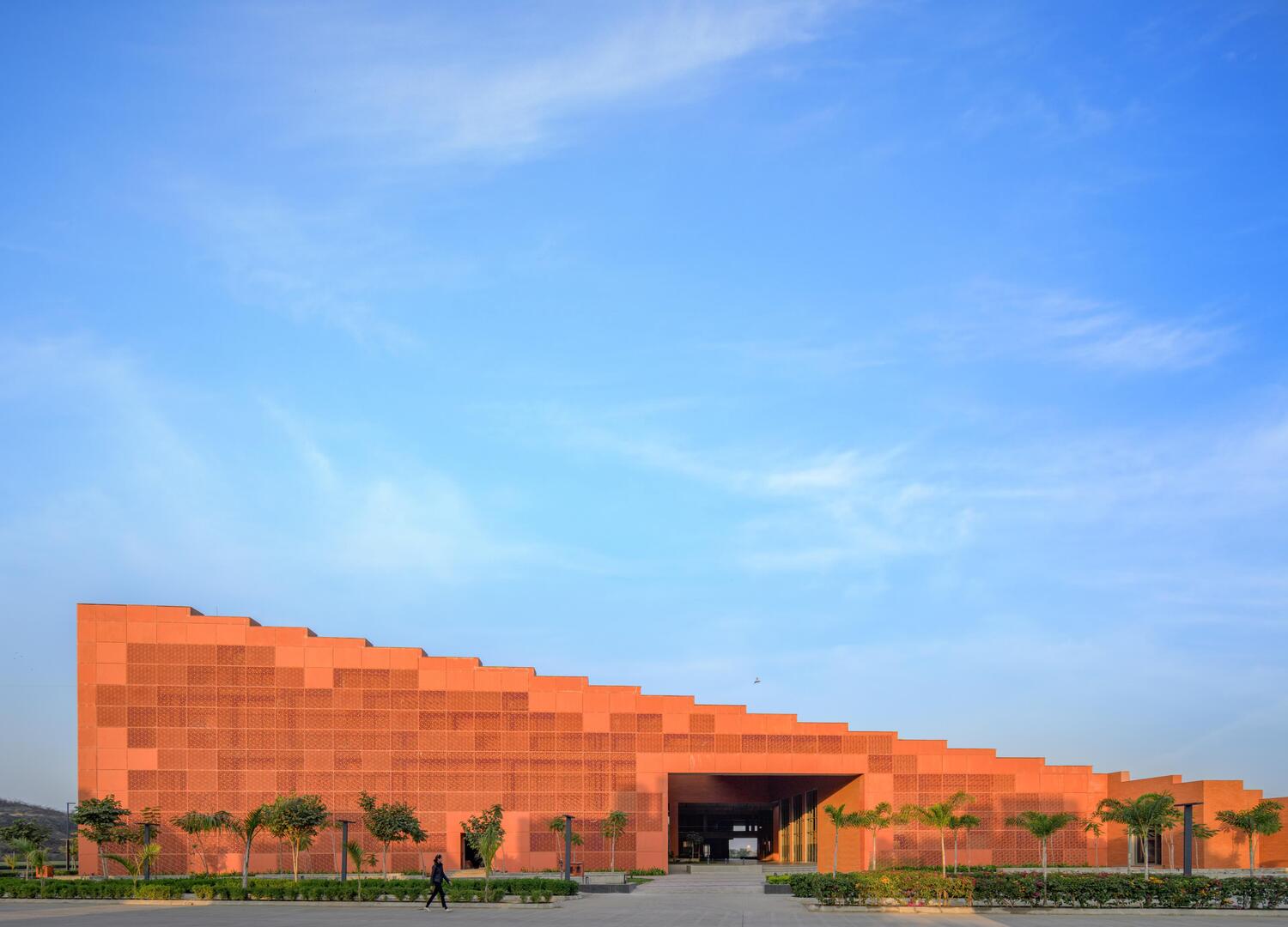
Set within a 32-acre masterplan, the 28-meter-high volume deliberately avoids monumentality. Instead of a vertical block or isolated object, it unfolds as a sequence of staggered levels along a diagonal axis. This design move dissolves the perception of the building as a closed entity, turning it into a continuous extension of the ground it emerges from. The boundary between built form and landscape gradually fades.
The project draws inspiration from traditional Indian stepwells, known as baoli, which have been part of the region’s culture for over a thousand years. These structures were not only used for water collection but also served as social gathering spaces. Here, that spatial logic is reinterpreted as a contemporary educational infrastructure, where the collective dimension becomes both central and foundational.
The roof is the project’s most radical element: 463 stepped platforms forming approximately 9,000 square meters of accessible rooftop garden. This is not simply a green roof, but an elevated public realm designed to host events, collective learning, and informal social interactions. Portions of the surface are also designed to be accessible to people with reduced mobility, reinforcing the project’s inclusive approach.
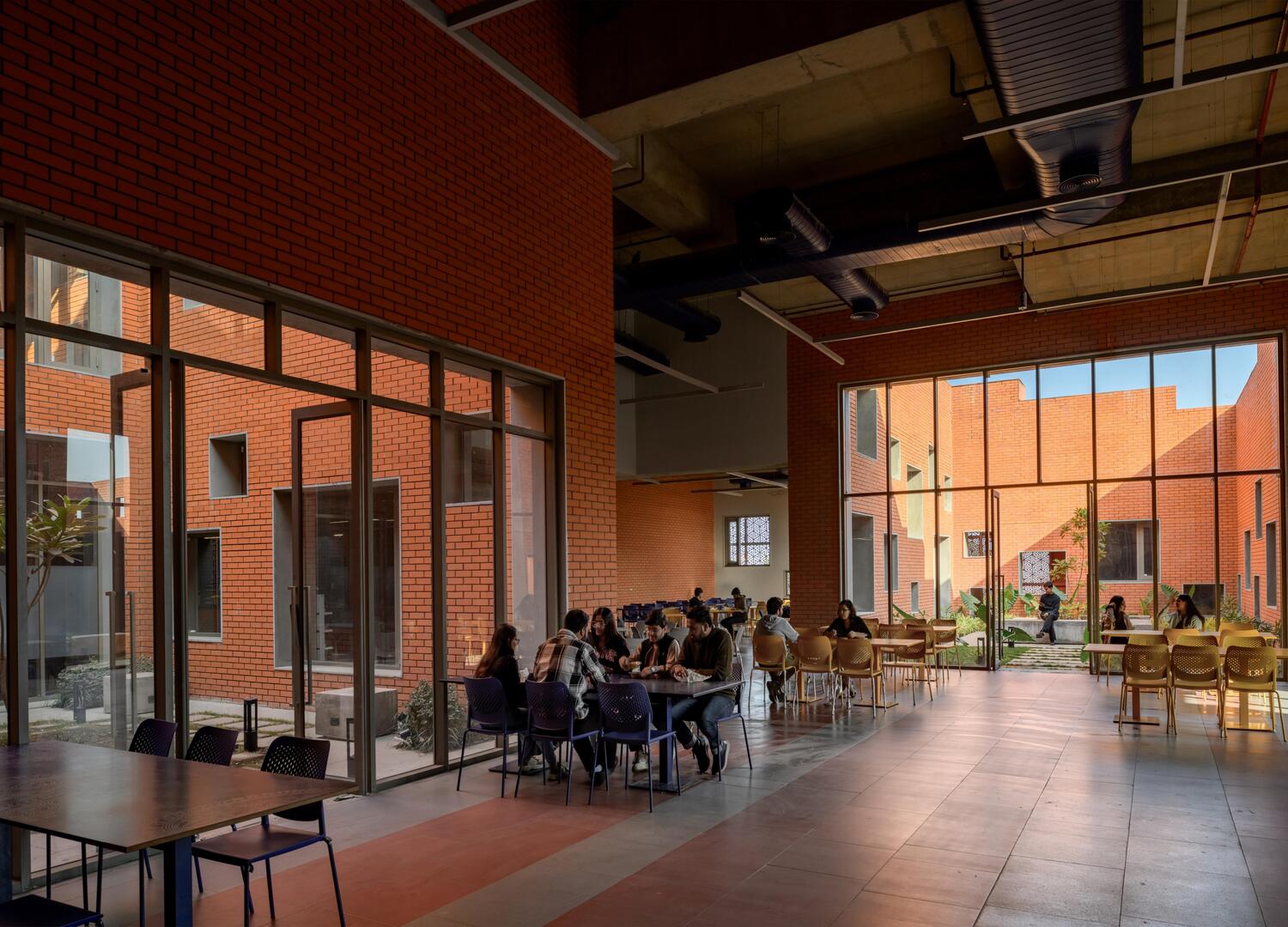
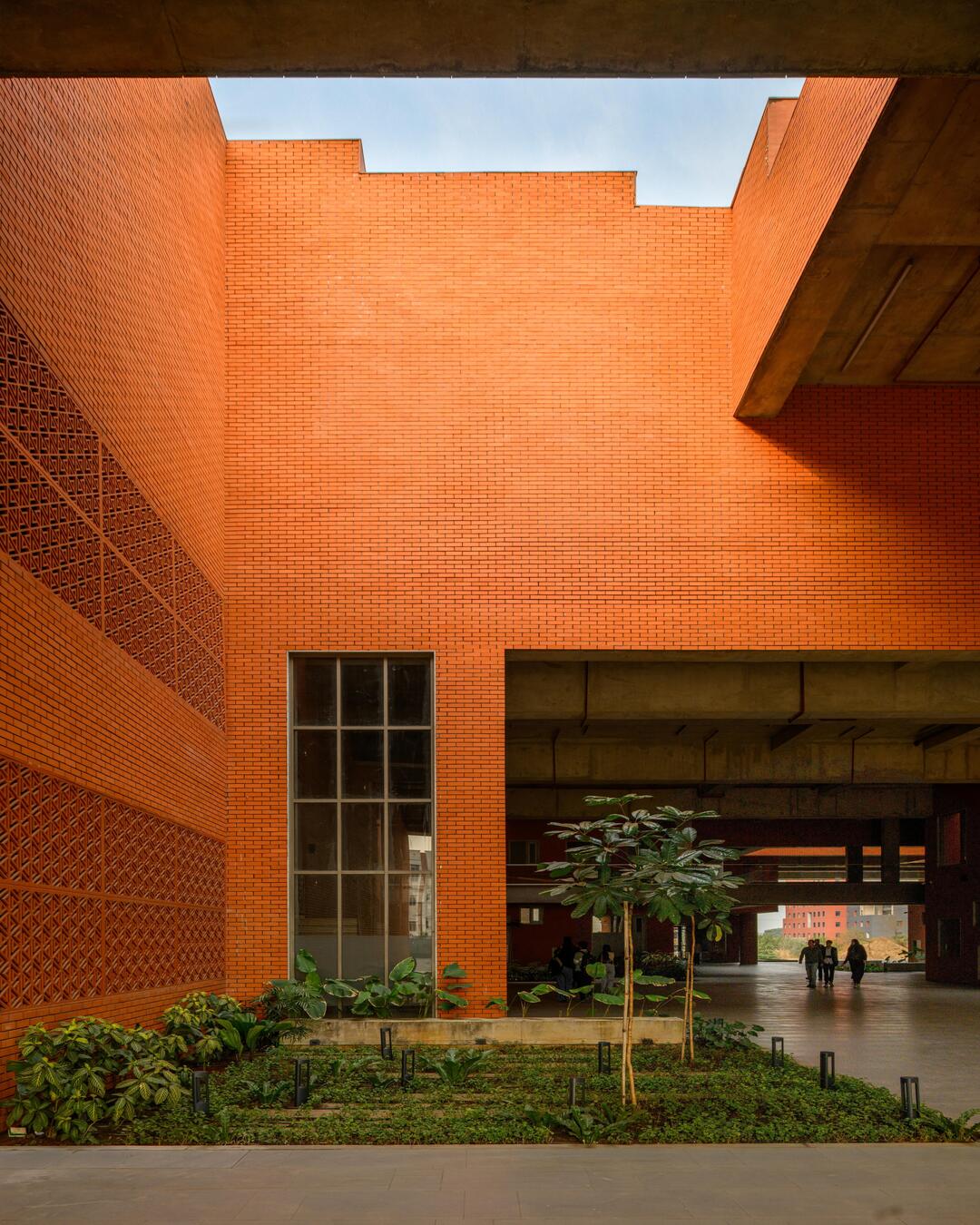
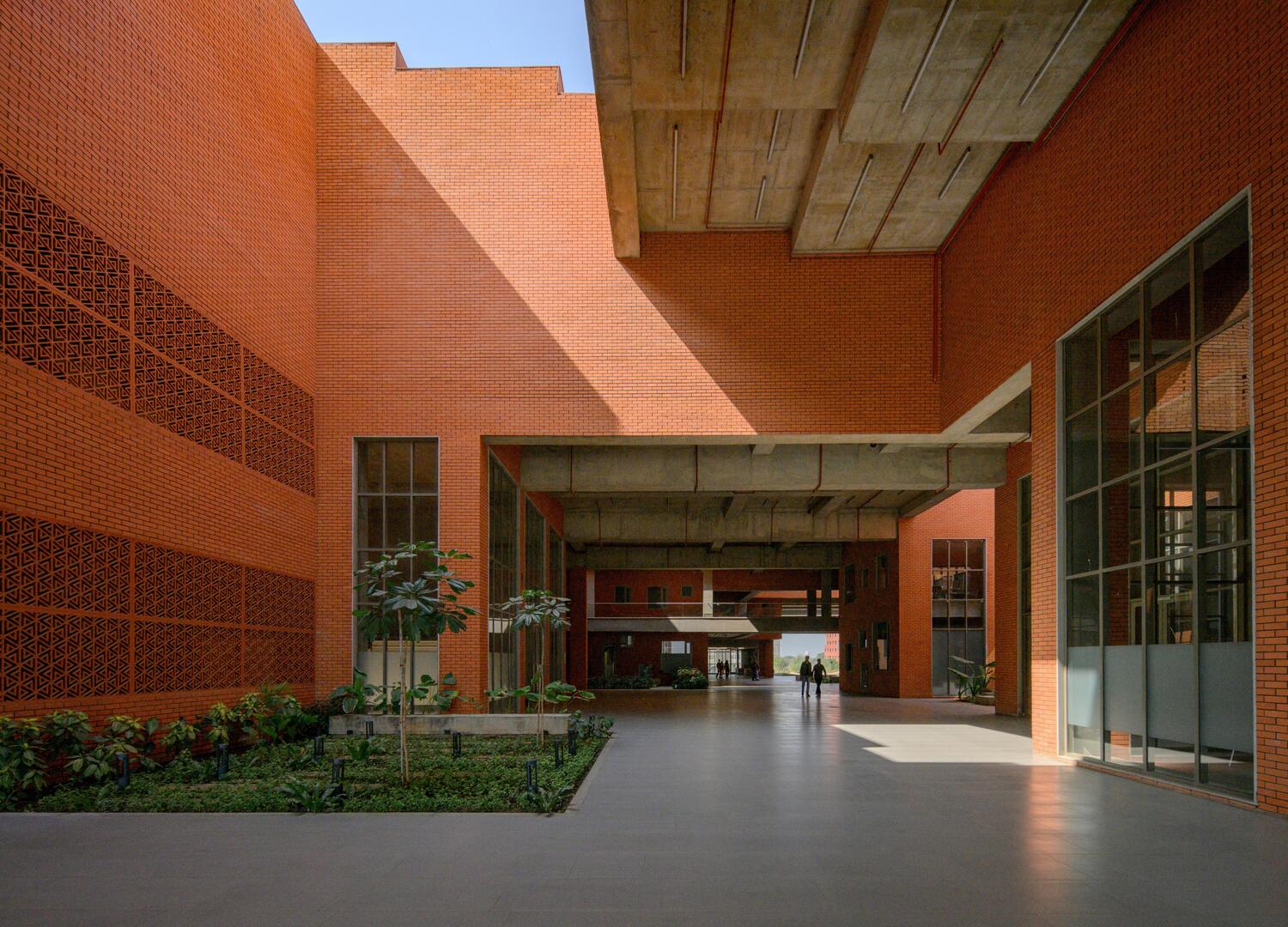
Inside, the building is conceived as a fluid and interconnected system. A covered diagonal street cuts through the entire volume, acting as a spatial backbone that links different functions and levels. The ground floor houses administrative and public areas, including a food court and auditorium. The first floor accommodates the library, connected via a bridge that spans the central space. Intermediate levels host classrooms and spillover areas for informal interaction, while upper levels include tiered classrooms and faculty spaces.
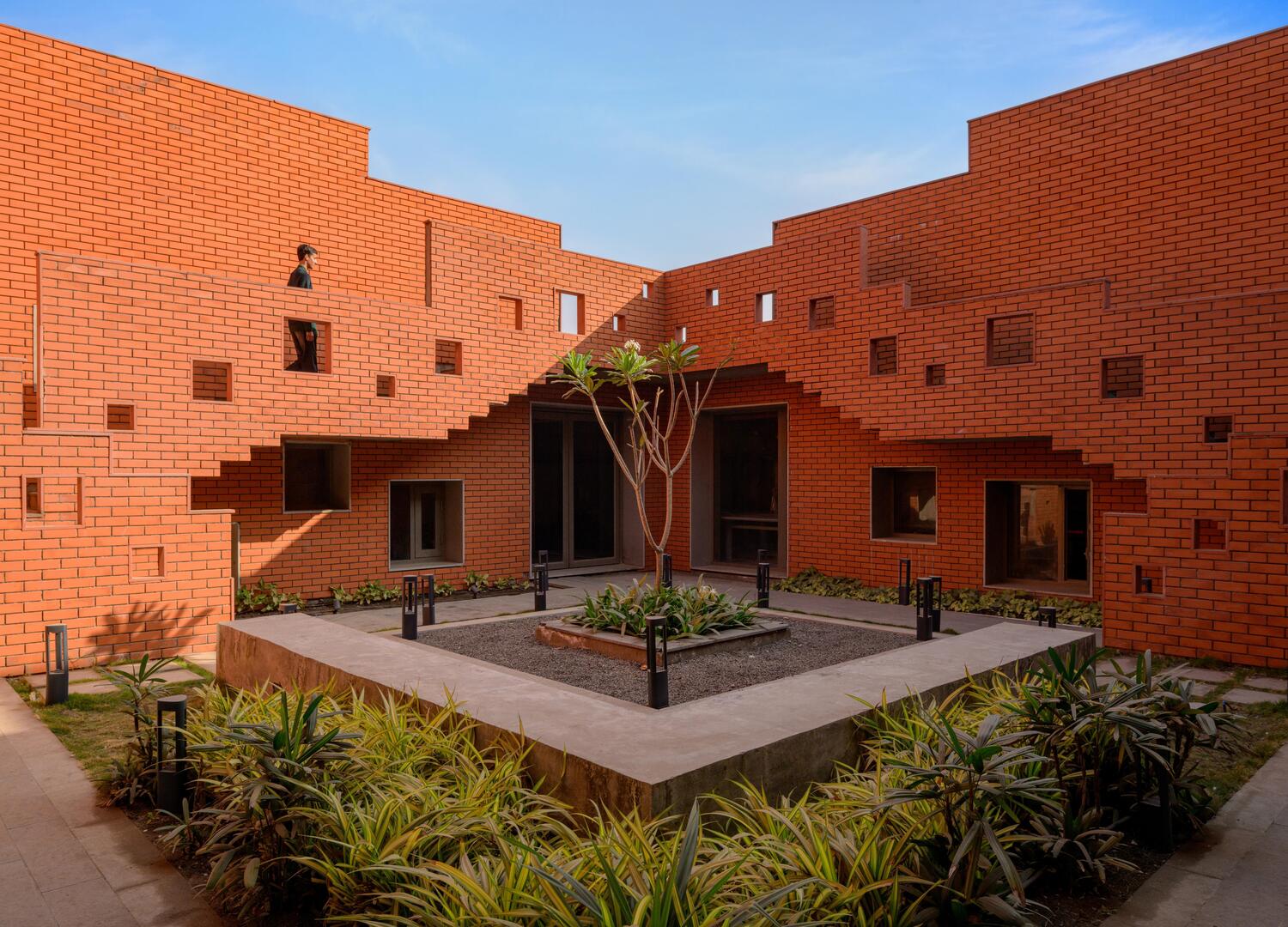
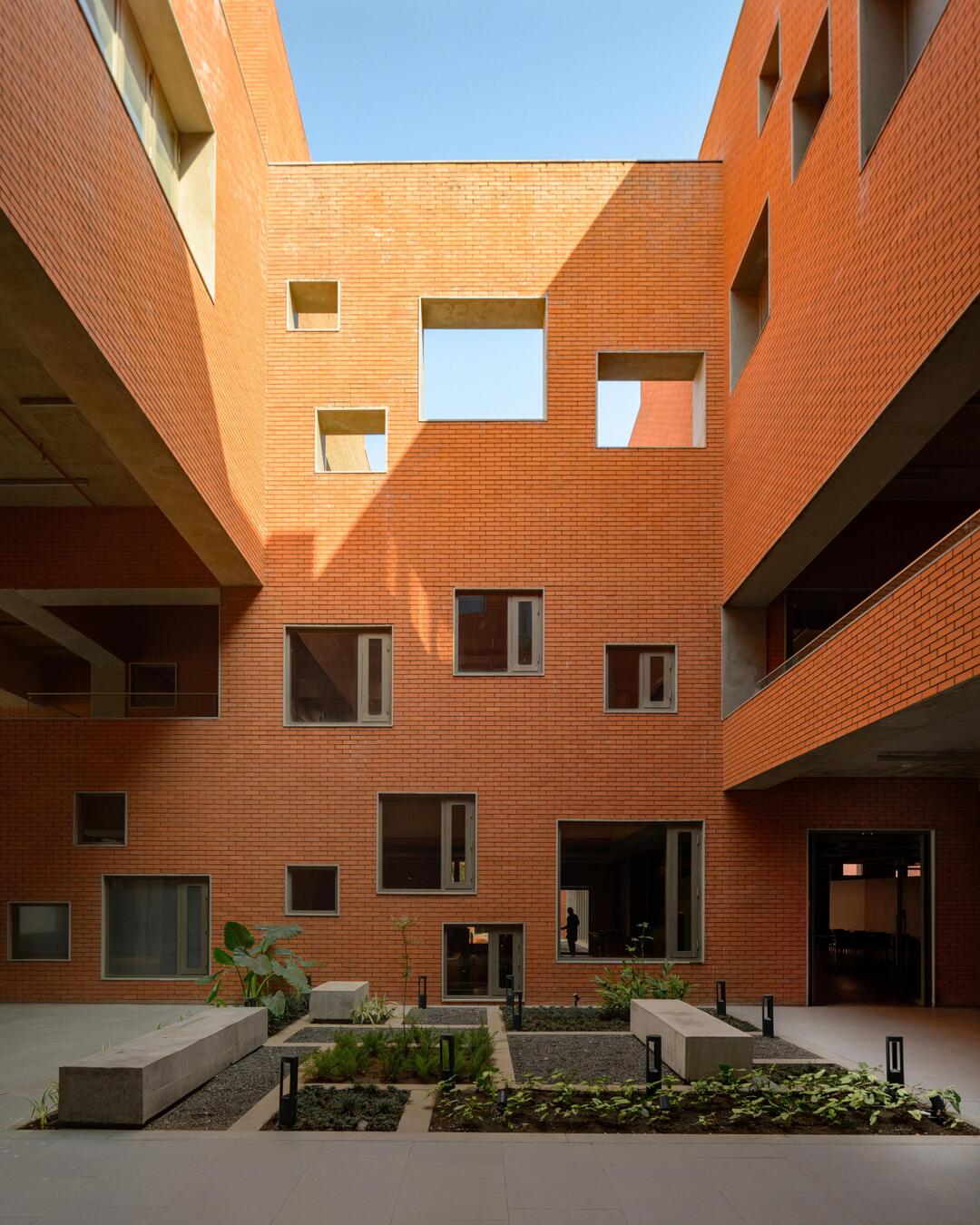
This organization is not hierarchical in a traditional sense but dynamic, unfolding as a continuous sequence of connected environments. Landscaped courtyards, distributed throughout the section, bring in indirect natural light and promote ventilation, enhancing overall environmental quality.
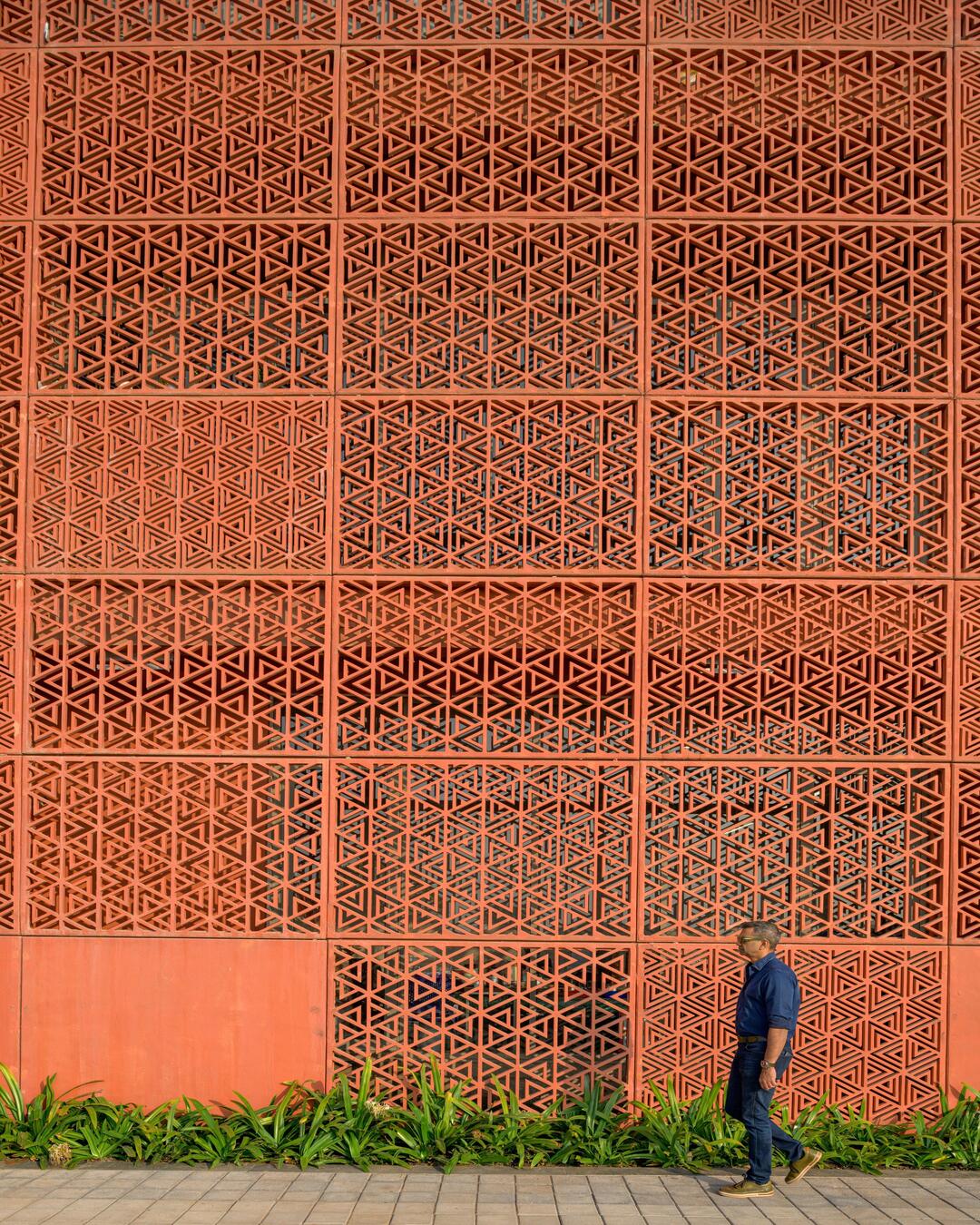
Sustainability here is not an add-on but a direct consequence of form. Passive strategies are embedded into the architecture: orientation maximizes natural light, courtyards reduce heat gain and glare, and natural ventilation is driven by the internal diagonal street – functioning as an air channel – along with sectional shifts that promote the upward movement of warm air. The result is a building designed to significantly reduce reliance on mechanical cooling and artificial lighting, responding to – and protecting against – a harsh climate.
Beyond its functional complexity, Prestige University emerges as a civic space. It is not just a campus, but an open urban infrastructure where academic, public, and landscape dimensions intersect. Ground becomes plaza, the roof becomes park, and interiors become spaces of movement and encounter. In this sense, the project integrates learning, events, environment, and social life into a single architectural system, challenging traditional definitions of the university building.
This approach reflects the broader research of Sanjay Puri Architects, led by Sanjay Puri alongside Ruchika Gupta and Madhavi Belsare. The studio’s work is grounded in a contextual methodology, where each project emerges from the interaction between climate, culture, and social use. Internationally recognized for its focus on sustainable and innovative design, the practice operates across scales – from urban planning to public architecture – always with a strong emphasis on spatial experience.
At Prestige University, this philosophy takes shape as an architecture that moves beyond the notion of a traditional educational building. Instead, it becomes an extension of the ground itself, a dynamic landscape where architecture and territory merge, and learning unfolds as a spatial, collective experience.