Quasizero is bridging the gap between biomaterials and additive manufacturing
Two designers’ decade-long pursuit of a coherent workflow between material, data, and making is redefining how bio-based design can actually work.
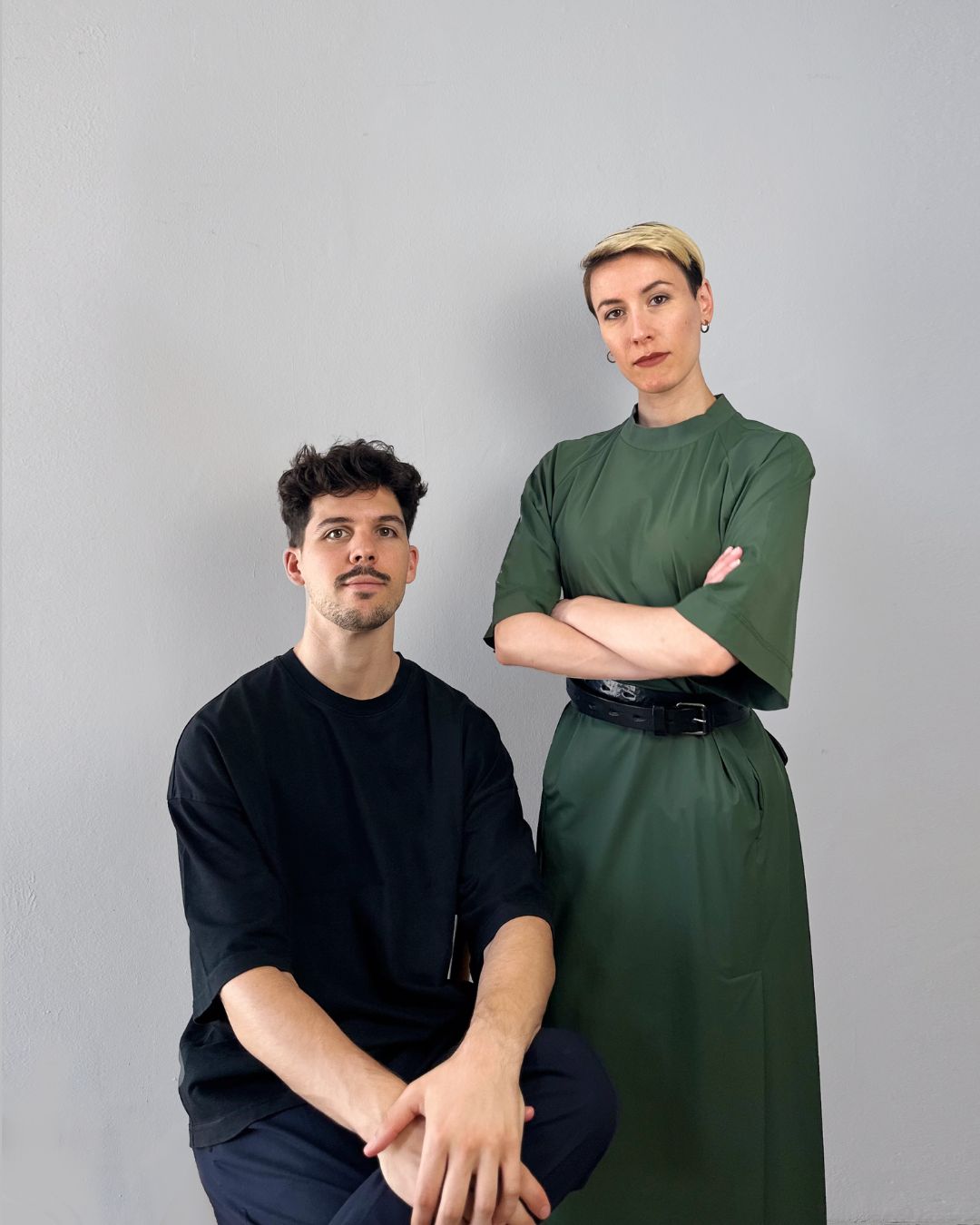
There’s a restlessness that drives the best innovators in emerging fields, which is not the anxiety of someone trying to keep up, but the impatience of someone who can already see the thing that doesn’t exist yet. Laura Civetti and Juanda Cabrera Cobo shared this attitude for a decade before they found each other, and Quasizero, the studio they co-founded in Perugia, is what happened when those two impatiences were pointed at the same problem.
The problem is this: bio-based materials have produced extraordinary research and a great deal of compelling exhibition work in the past years. What they have struggled to produce, though, is a reliable, repeatable methodology that connects organic waste to a finished, functional object. Closing that gap requires multidisciplinary knowledge, working simultaneously across computation, material science, and fabrication.
Gallery
Open full width
Open full width
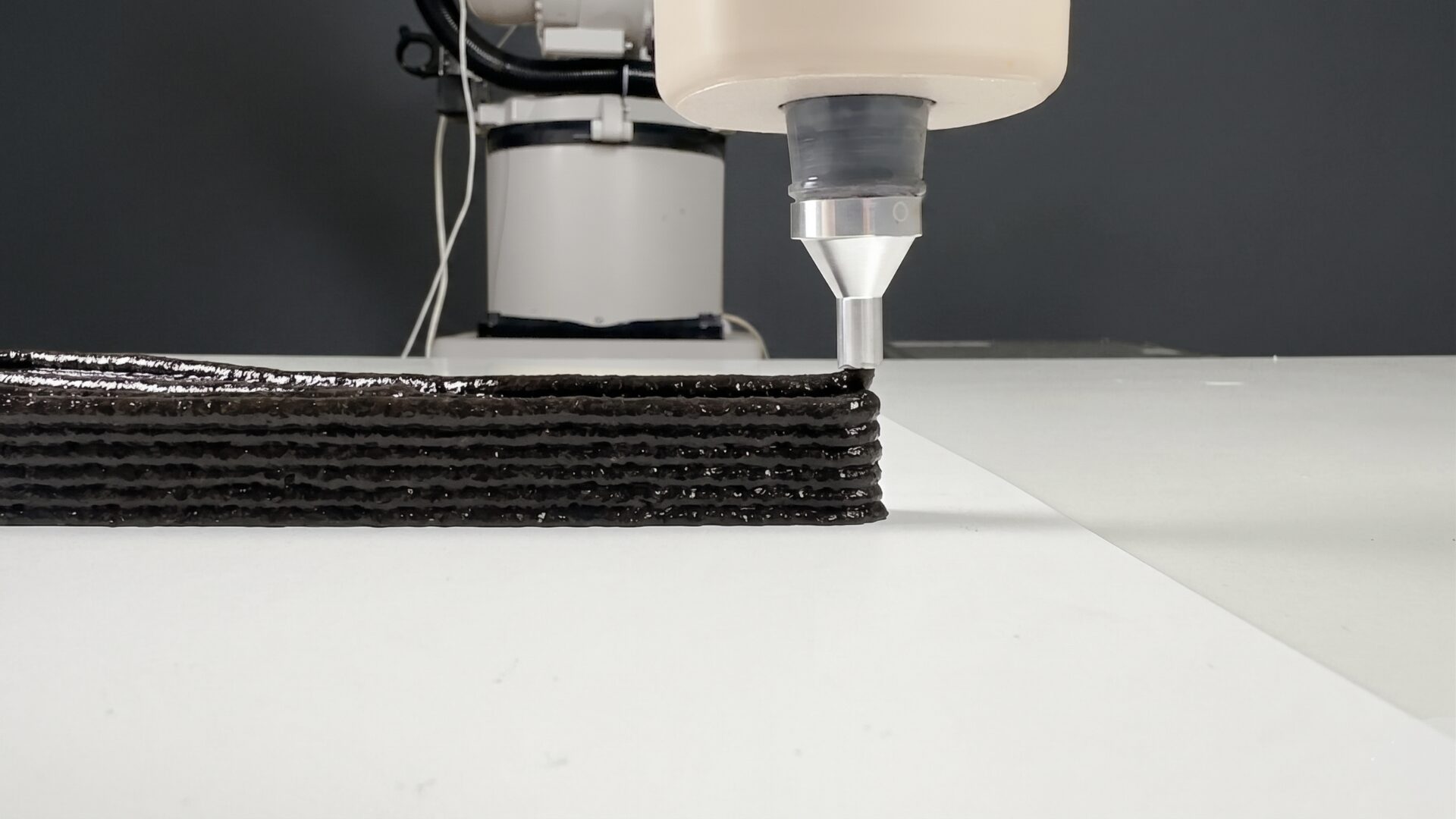
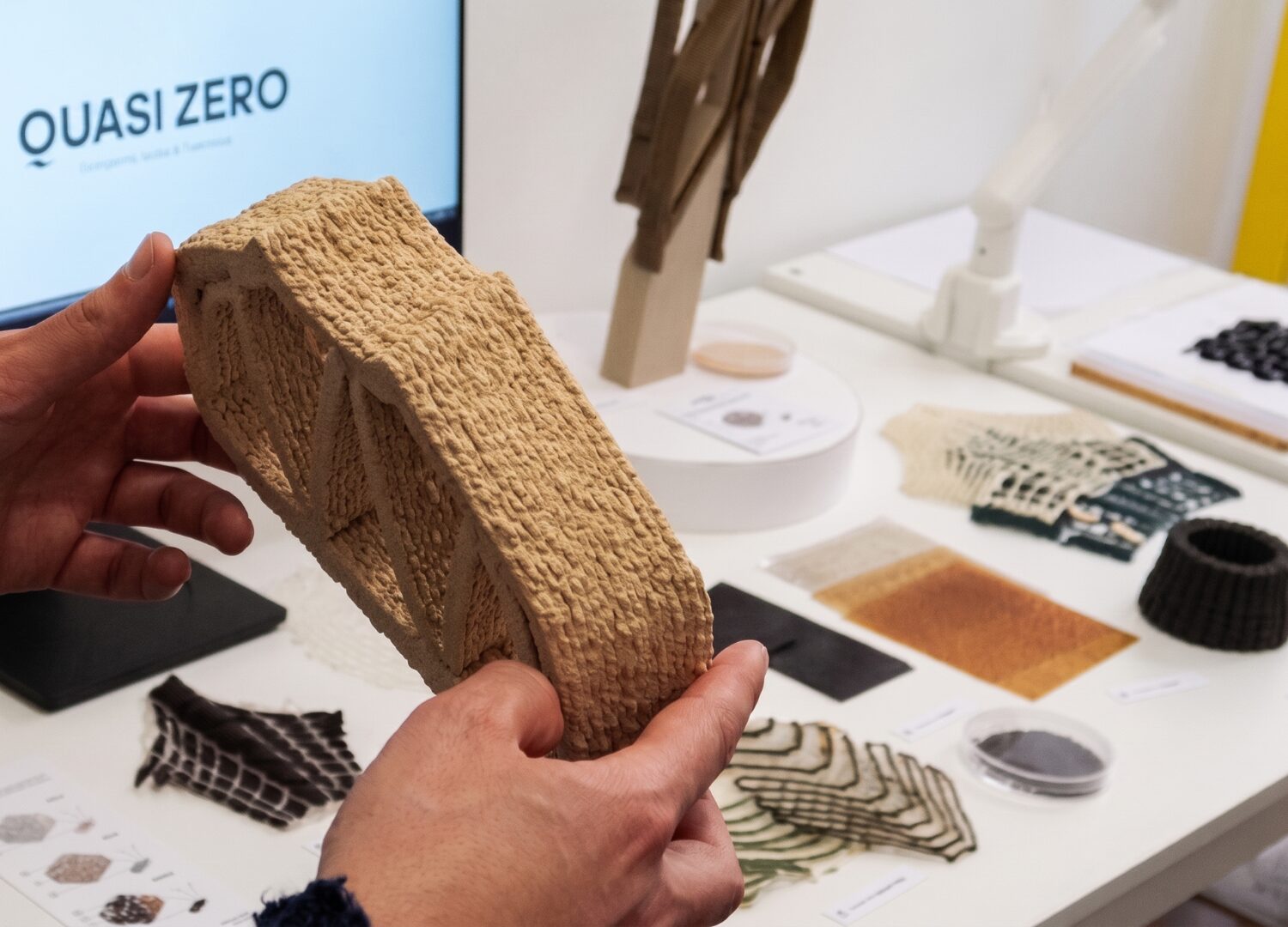
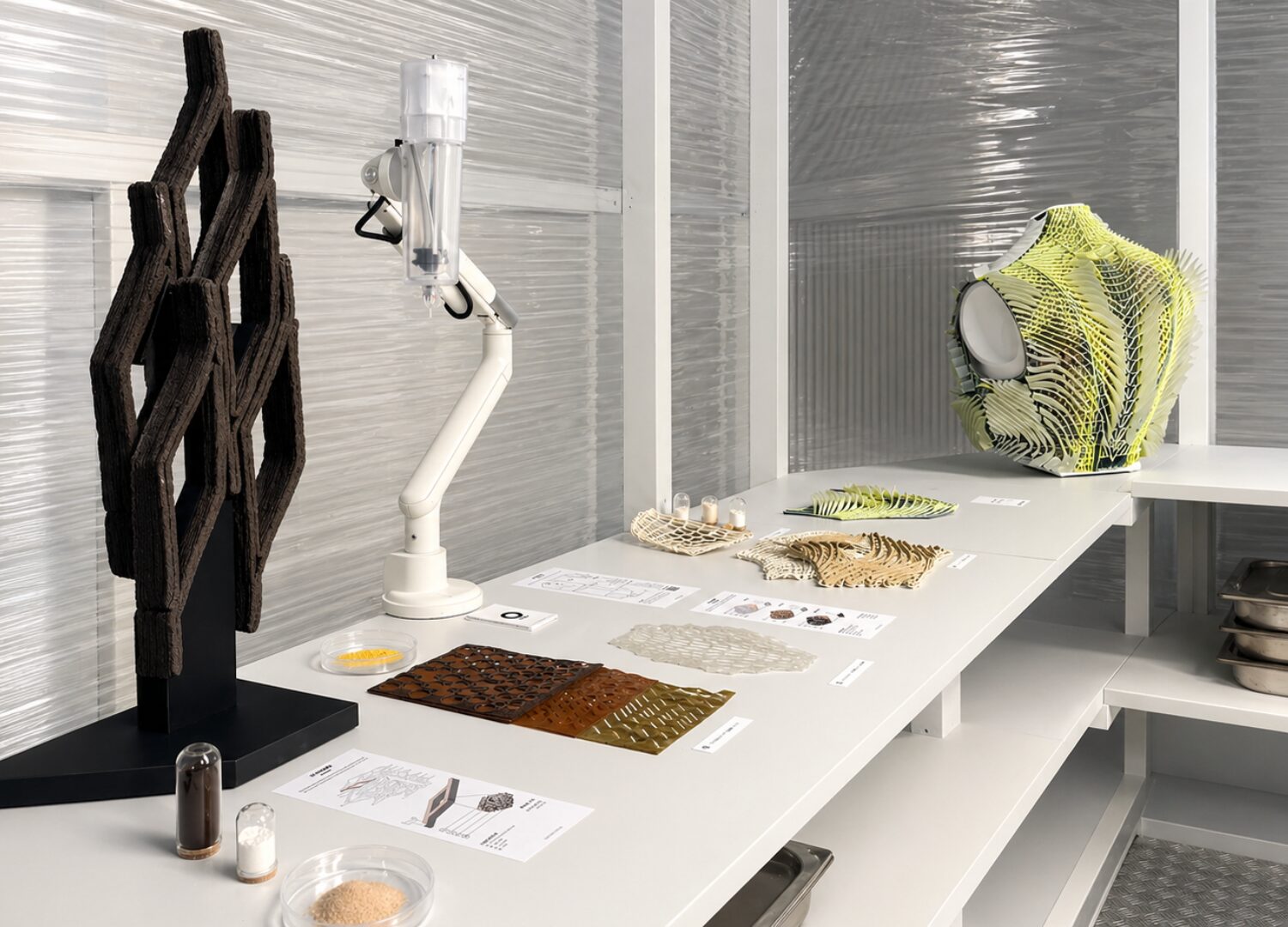
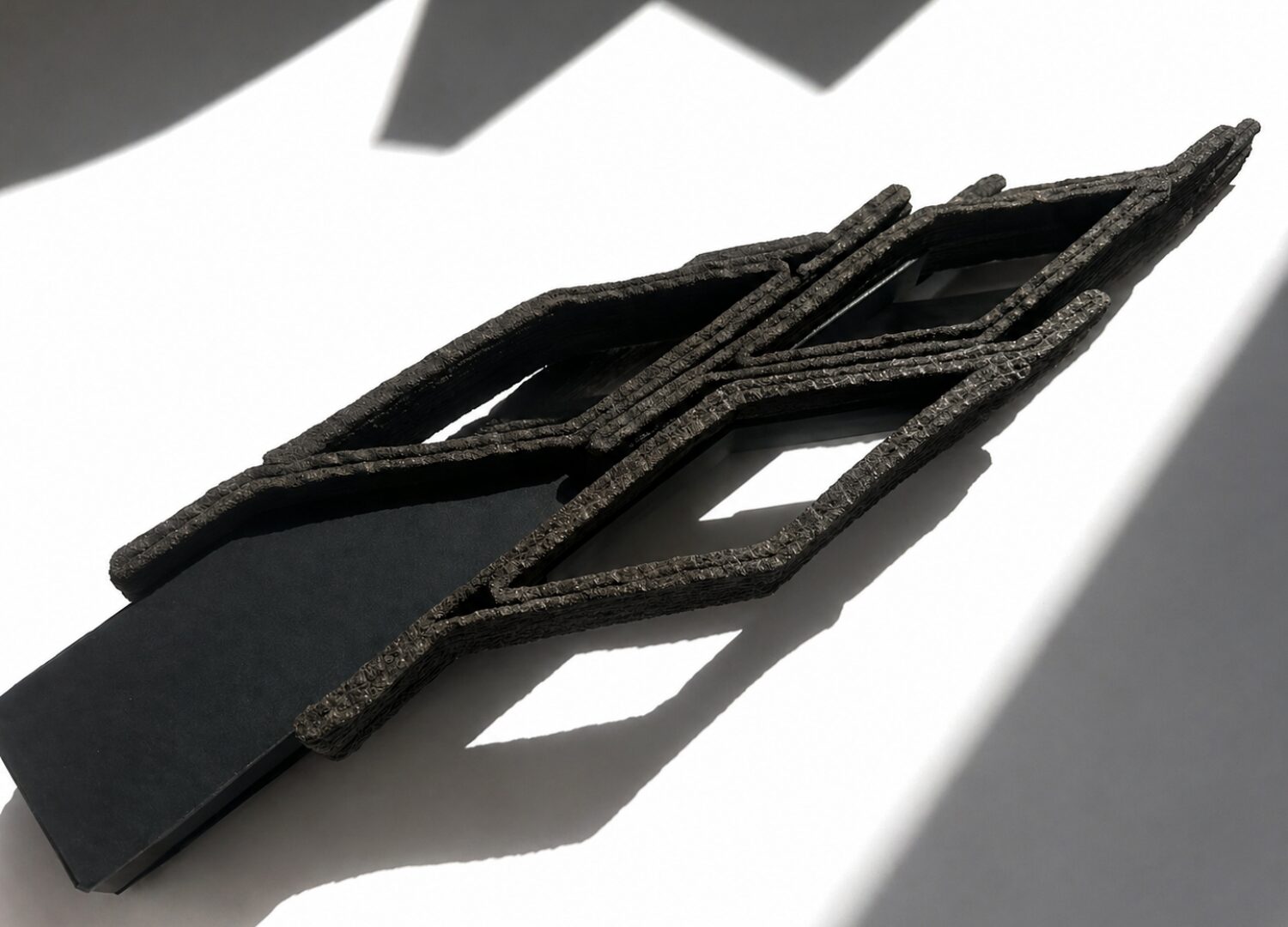
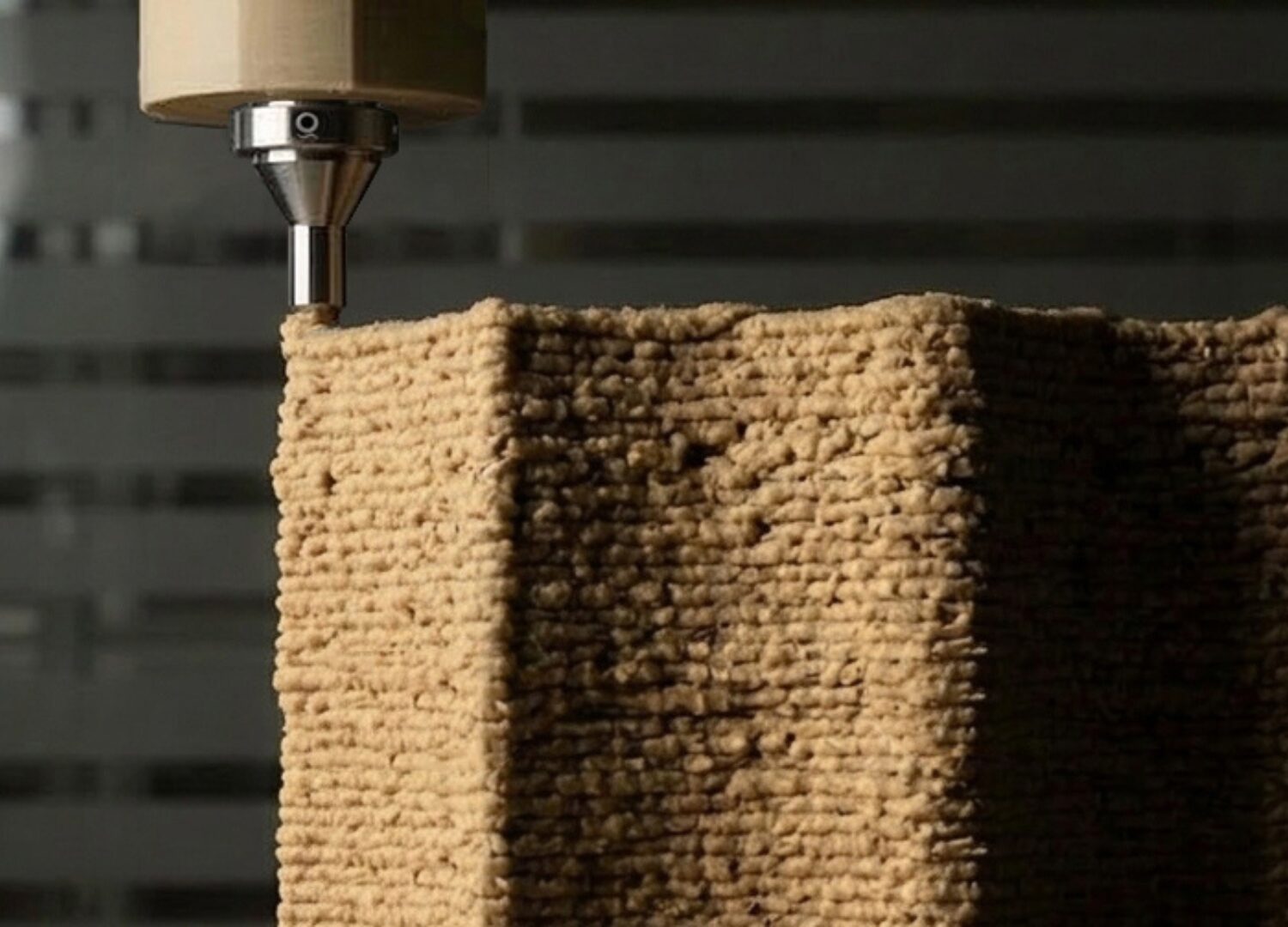
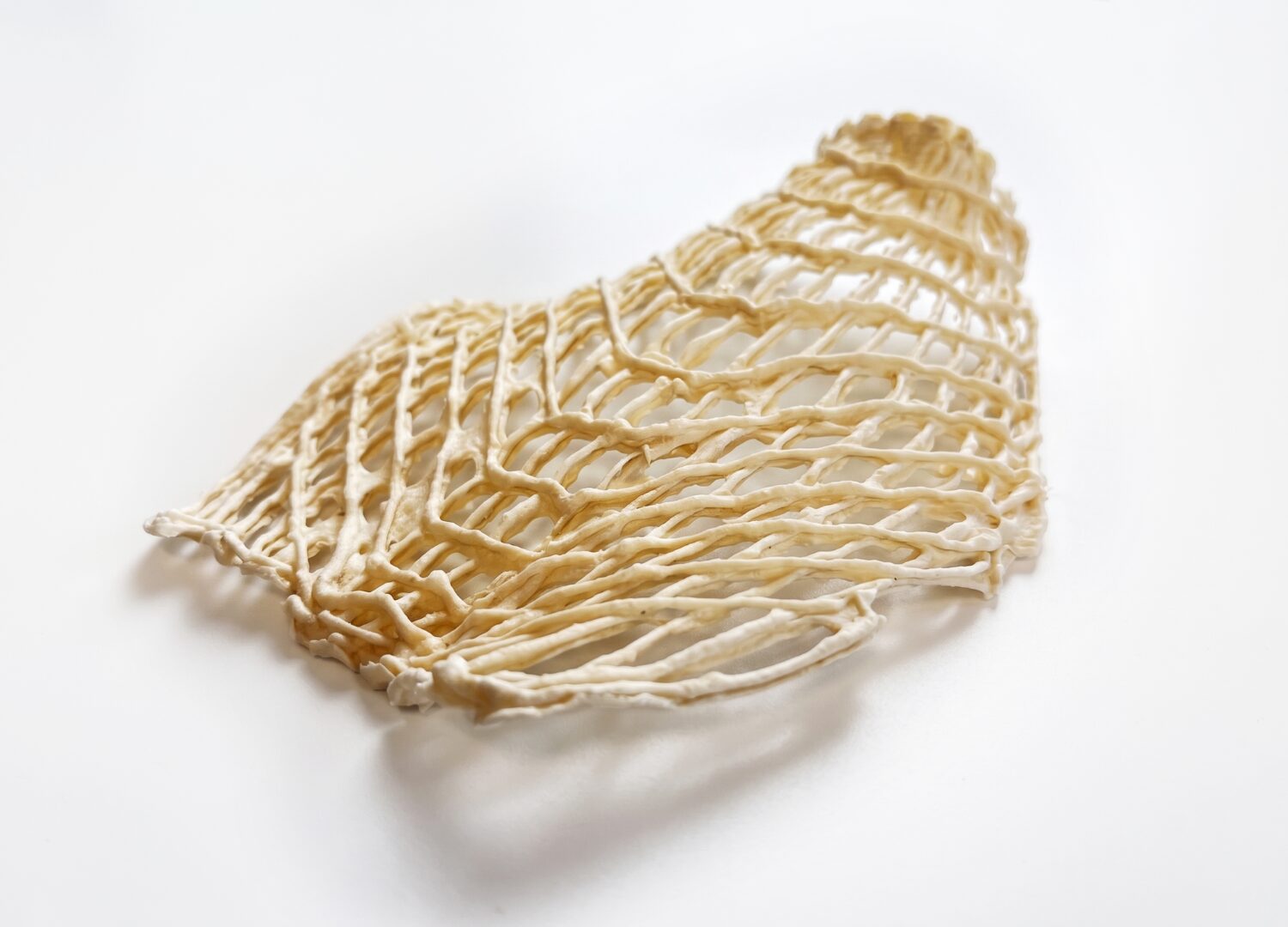
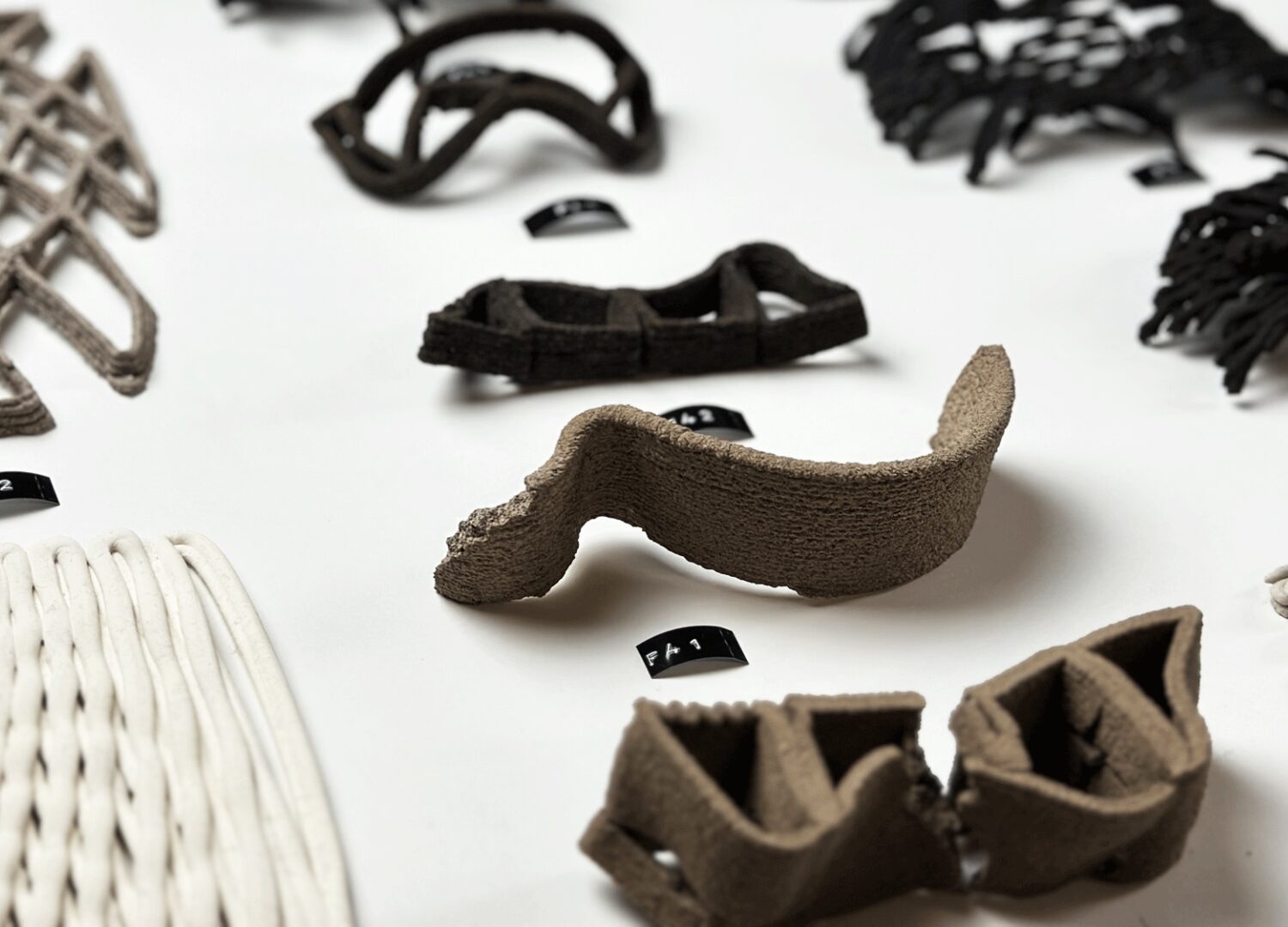
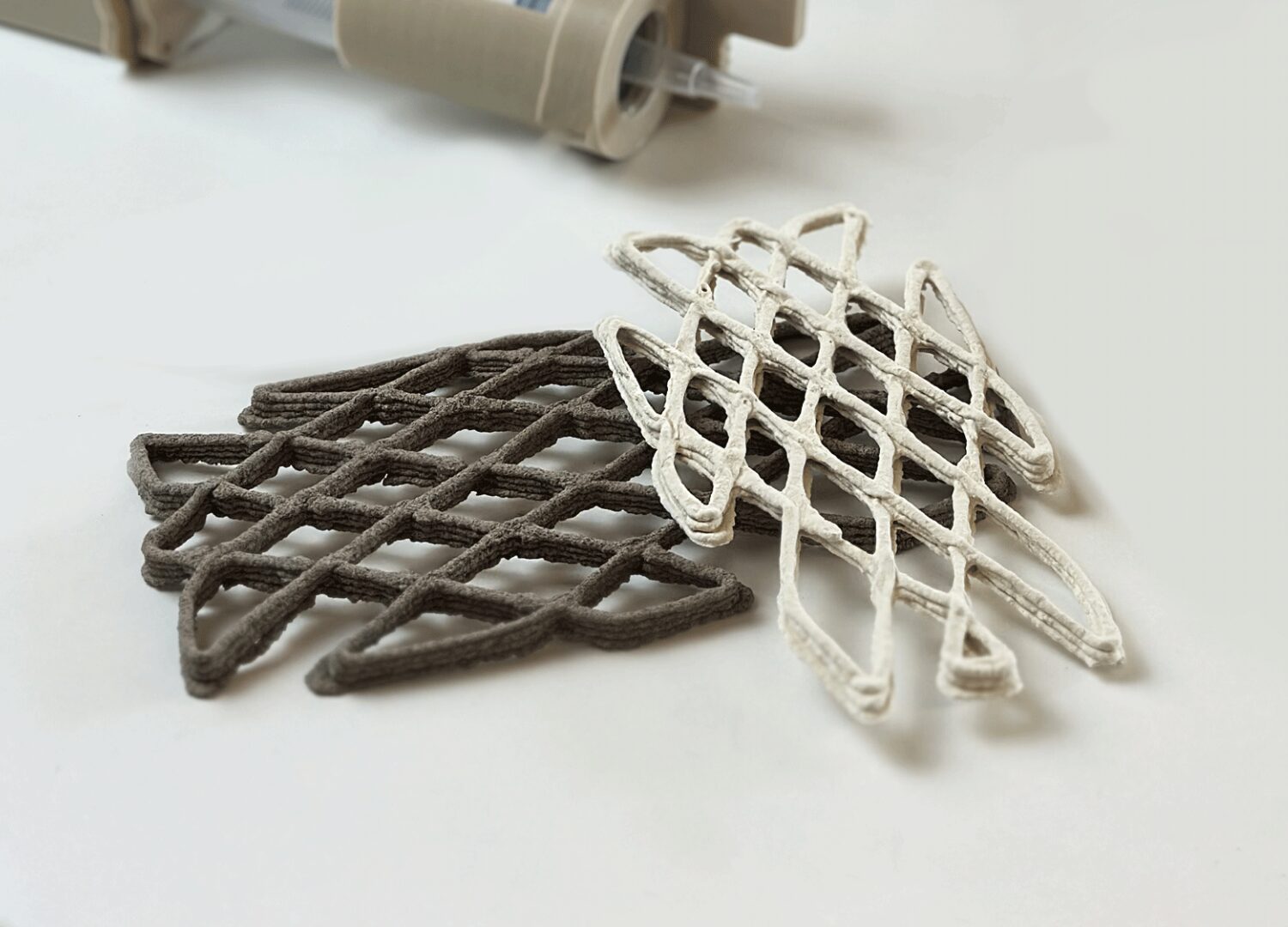
Quasizero’s core project is methodological: they take organic byproducts from local industries, and develop them into paste-based materials that can be 3D printed. The computational side of their practice uses parametric design tools to generate geometries that are directly informed by how those materials behave, how they flow, how they set, how their layers hold. The result is a workflow where material composition and form are developed together, following a philosophy called Nexus.
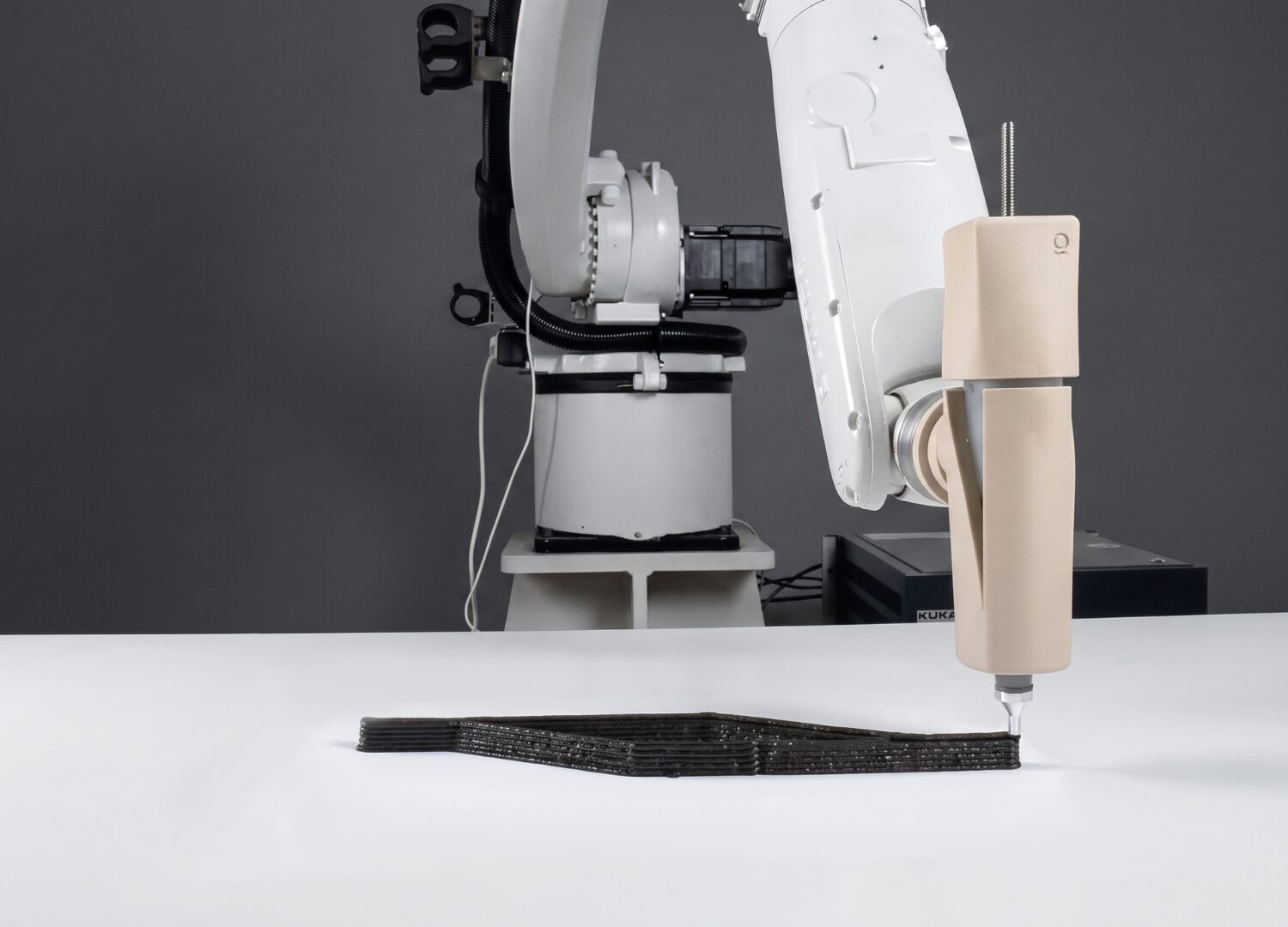
The QZMini Extruder is a product they developed which acts as a key symbol of their approach. It is a compact syringe-based extruder that can be attached to any standard FDM printer, transforming the machine from a plastic printing device to a biomaterials one. With an integrated motor and a touchscreen control box that regulates flow, it helps the user in regulating these generally unreliable materials, and therefore lowers the barrier to working with bio-based materials.
We had a chat with the design duo about the positives and negatives of the biomaterial field, their philosophical approach to design, and their predictions about the future.
Interview with Laura Civetti and Juanda Cabrera Cobo:
What fascinated you about the field of biomaterial design, and led you to pursue it?
Laura Civetti and Juanda Cabrera Cobo:
“What fascinated us most was how biomaterials, combined with additive manufacturing, enabled us to understand and harness the profound relationship between matter, form, and production. This connection, once closely associated with the figure of the Craftsman, someone capable of understanding materials and enhancing their value through the use of specialized tools, has now expanded to new professional fields. Architects, engineers, and designers have increasingly found themselves working with technologies such as 3D printing, which have brought them back into direct contact with the potentials, limitations, and intrinsic qualities of materials.
A deep understanding of materials not only allows designers to become more aware of the impact generated throughout the different stages of the production process, both before and after an object is created, but also encourages a circular approach to design. This perspective makes it possible to rethink production systems, transforming materials traditionally considered waste into valuable resources and turning machines into powerful allies within the design process.
This is the aspect that has fascinated us most in working with biomaterials and additive manufacturing, two fields that we apply daily in our practice and in which we strongly believe as essential tools for addressing contemporary challenges related to the widespread use of synthetic materials and the need for more sustainable, distributed, and decentralized production models.“
You’ve described the core gap you’re trying to close as being between experimental biomaterials and additive manufacturing. Why do you think that gap has persisted so long, given how much interest there is in both fields?
Laura Civetti and Juanda Cabrera Cobo:
“When we speak about biomaterials and additive manufacturing, we are referring to two distinct technologies that, over the past decade, have become increasingly integrated due to a growing awareness of the opportunities their combination can offer.
Considered separately, biomaterials and additive manufacturing follow very different logics. Biomaterials research focuses on material properties, environmental impact, and the development of new formulations, often influenced by factors such as humidity, temperature, and processing conditions. Additive manufacturing, on the other hand, requires stable and predictable materials that can be properly extruded, retain their shape, and ensure reliable performance.
To this difference, a further technological gap must be added: most 3D printing systems were designed for plastics rather than for more sensitive bio-based mixtures. As a result, researchers and designers are often forced to adapt existing tools, with very few solutions specifically designed to test and scale these materials.
Therefore, integrating these two worlds means addressing both challenges simultaneously and, therefore, bridging the gap. It is precisely within this space that Quasizero is positioned. The challenge is not only to develop higher-performing biomaterials but to build a fabrication ecosystem that integrates hardware, software, and design methodologies capable of transforming these materials into scalable and truly applicable architectural systems.
In this direction, we are developing the QZMini Extruder, an extrusion system designed for printing bio-based materials and easily compatible with both FDM 3D printers and robotic arms. The QZMini Extruder stands out for its compactness and versatility, enabling a fast, accessible, and efficient prototyping process. This is particularly crucial in the early stages of research and experimentation, where multiple material formulations and compositions need to be tested and validated in short timeframes.”
You describe your philosophy as Nexus, the idea that form should remain coherent with the environment and the process that made it. Can you give a concrete example in which you applied this principle?
Laura Civetti and Juanda Cabrera Cobo:
“The concept of Nexus is deeply rooted in the way we think and design. For us, design is not simply about giving form to matter, but about building relationships between a material, a process, a context, and the ecosystem in which the object will exist.
At the beginning of every research or project, we ask ourselves where we are operating and which needs we are addressing. These questions are translated into data that we process through a computational approach, enabling us to generate forms and geometries capable of responding to the identified requirements. These are then further developed using bio-based materials and finally fabricated through 3D printing, which materializes the relationship between context, form, matter, and production that we establish from the earliest stages of the process.
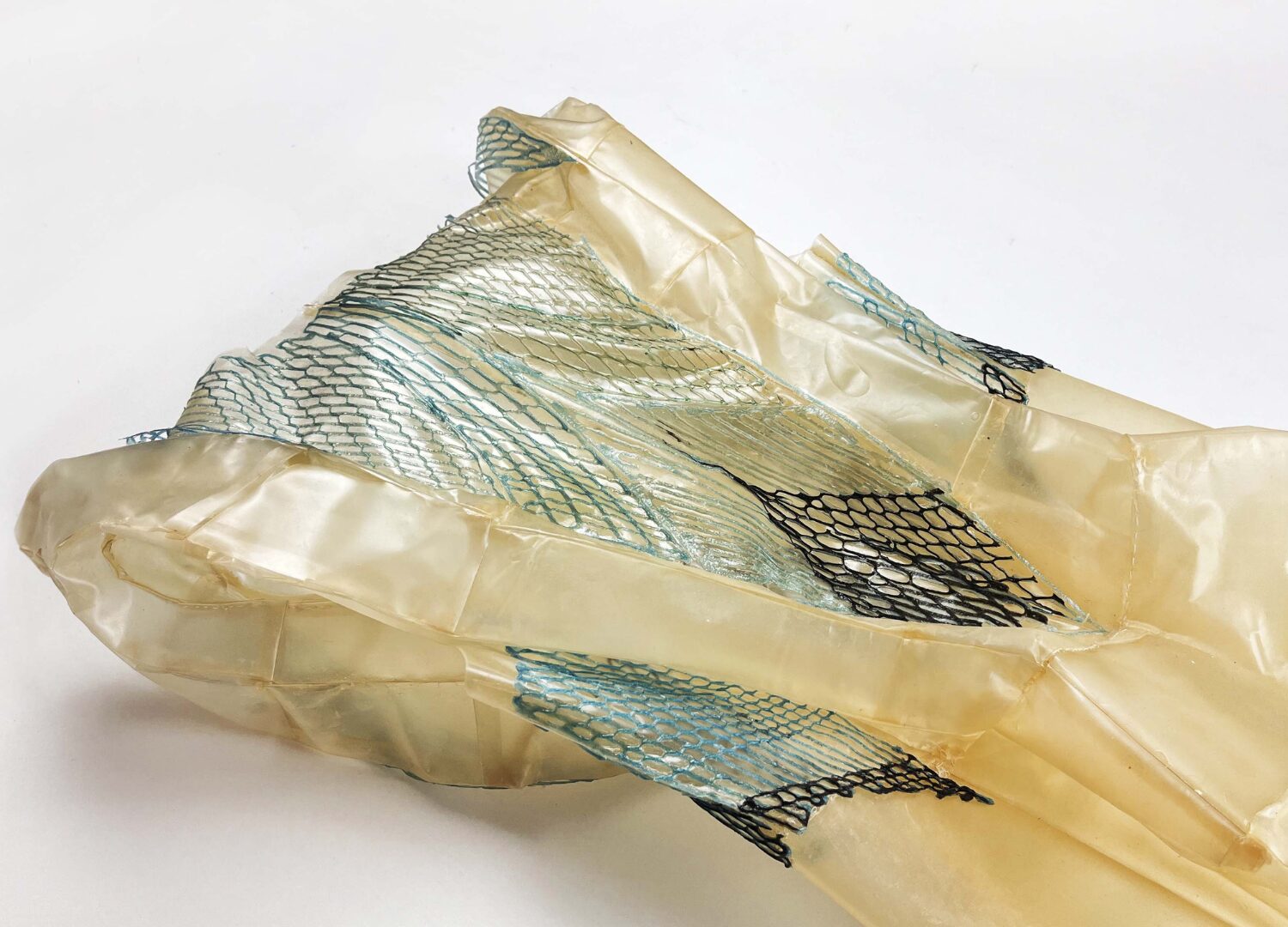
One of the first projects through which we began to explore both the complexities and the potentials of materializing the concept of Nexus was Trinity, a 3D-printed garment realized and exhibited at The Festival of the New European Bauhaus 2024. Trinity introduces the requirements of a surface, in this case, the human body, into the design process and material decisions. The geometries defining the garment, as well as the bio-based compositions developed and subsequently printed, are the result of a custom-designed algorithm aimed at linking form, matter, and function.
Today, Quasizero is in an internal technological development phase, in which the concept of Nexus is progressively being translated into tools and algorithms capable of unifying design and fabrication into a single coherent process. The goal is to build an integrated methodology that allows these principles to be extended to an architectural scale, while maintaining the connection between data, materials, processes, and context.“
When you imagine the biomaterial field in ten years, what do you think it will look like, realistically?
Laura Civetti and Juanda Cabrera Cobo:
“Realistically, I think the biomaterial field in ten years will be much more mature, but also much more specific. I do not think biomaterials will simply replace all conventional materials. That would be an oversimplification. Instead, I think we will see them integrated in the places where they make the most sense: interior architecture, temporary structures, furniture, exhibition design, packaging or surface finishes.
The biggest change will be that biomaterials will move from experimental samples to material systems. Today, many projects still exist as beautiful prototypes, but the next step is repeatability, certification, durability data, fire performance, water resistance, cost analysis, and scalable manufacturing methods. In ten years, the most successful biomaterials will not only be the most ecological or visually interesting, but the ones that can be produced, maintained, repaired, reused, or biodegraded within a clear value chain.
I also think the field will become more local. Instead of one universal biomaterial distributed globally, we may see regional material ecosystems: materials developed from local waste streams, agricultural residues, soil, fibers, minerals, or by-products from nearby industries. This is where design and manufacturing can play a critical role, because the challenge will be to transform these local resources into consistent products, objects, and architectural components.“
What question should people be asking about sustainability and biomaterial design that almost nobody is asking yet?
Laura Civetti and Juanda Cabrera Cobo:
“I think one question that is not asked enough is: why do we still design and manufacture as if matter were inert, homogeneous, and disconnected from its environment?
In nature, form does not appear as something imposed from the outside. It emerges through material intelligence, adaptation, growth, stress, environmental conditions, and transitions between different states of matter. Natural systems rarely separate structure and repair into completely independent layers. Instead, they create gradients, continuities, and transitions. A bone, a shell or a tree, are not assembled as a catalogue of industrial parts; they are material systems where form, performance, and environment evolve together.
By contrast, much of our current manufacturing culture is still based on standardization, flatness, straight lines, rigid assemblies, and the forced union of materials with incompatible properties.
For me, biomaterial design opens a different question. What if sustainability is not only about replacing one material with a greener one, but about learning to design matter differently? What if we could create objects and spaces with gradients of density, porosity, stiffness, biodegradability, and performance, closer to the way living systems organize matter?“