Rocket x Audi: if a sports car became a coffee machine
How Rocket Espresso, Valerio Cometti + V12Design, and Audi translated the design language of the iconic TT model into a hand-built coffee machine.
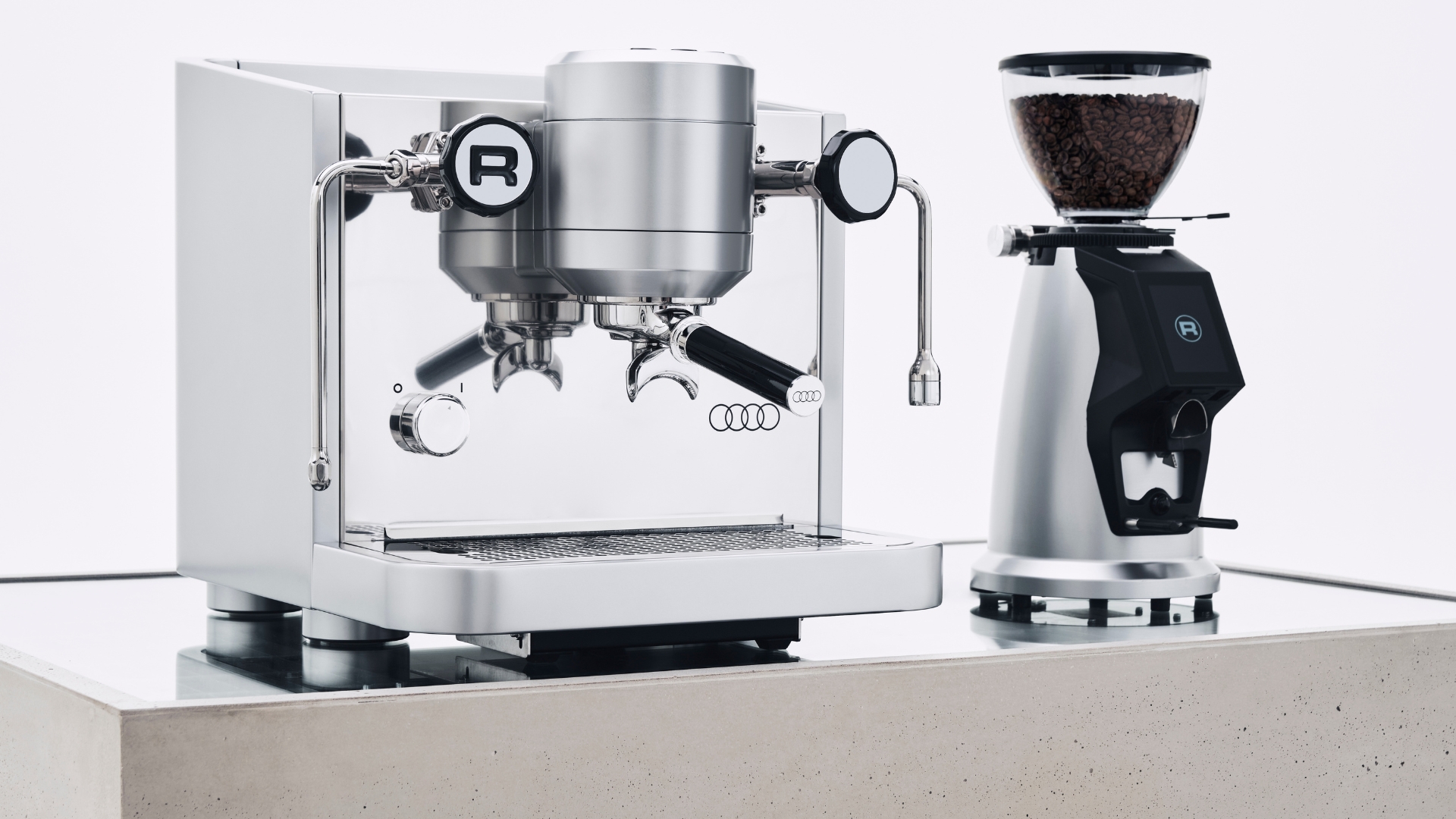
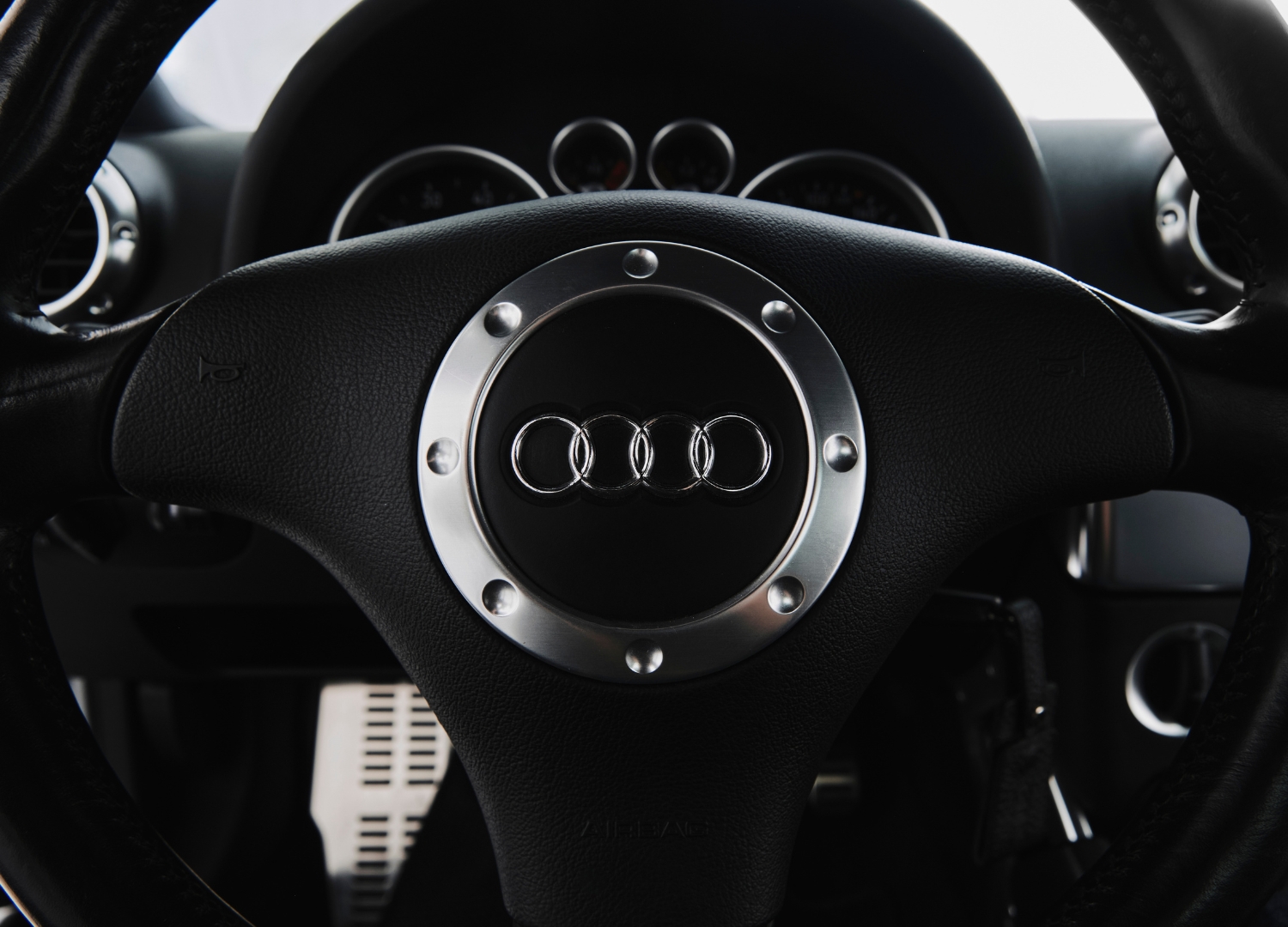
The iconic Audi TT model went out of production three years ago, but it is now being rebirthed for a second life as a coffee machine. The model had defined the brand’s design identity for 25 years, and Rocket Espresso and Audi’s in-house team chose it as the reference point for their new collaboration, Rocket x Audi.
Mediated by Valerio Cometti‘s design studio V12Design, the project joins two companies in different fields but with similar values: quality, precise engineering, and a love for designing every little detail.
Gallery
Open full width
Open full width
Rocket x Audi
Rocket Espresso
Rocket Espresso is a Milan-based manufacturer that makes espresso machines assembled by hand, in small numbers, for a niche of coffee lovers who care as much about the ritual as the result. The company was founded by Andrew Meo from New Zealand and Daniele Berenbruch from Italy, and it has built its name on domestic and light-commercial machines that borrow structurally from professional café equipment while staying small enough for a kitchen counter.
The Rocket x Audi is built on the chassis of one of the brand’s leading machines, the Bicocca, a dual-boiler model already positioned at the top of Rocket’s prosumer range.
How the collaboration began
The idea had been sitting at Audi for a long time before it found a partner willing to execute it. Audi’s design language is built on legibility: flat surfaces, controlled radii, and a preference for sharpness and precision over ornamentality. That vocabulary translates weirdly to appliances, as it tends to land either in nostalgia or in anonymity. Espresso equipment in particular has a strong regional memory, rooted in mid-century Italian and German design, that resists reinterpretation.
Valerio Cometti + V12Design
The execution was handled jointly by Audi’s design team and Valerio Cometti + V12Design, a Milan studio with a long history in this category. Valerio Cometti trained as a mechanical engineer at the Politecnico di Milano before founding his studio in the early 2000s, and his client list includes coffee machines for La Cimbali and Faema, where Cometti took over design duties in a lineage of legends like Achille Castiglioni, Marco Zanuso, and Ettore Sottsass. He has also written extensively about car design and collaborated with Ferrari, making him the perfect match for this collaboration.
The machine
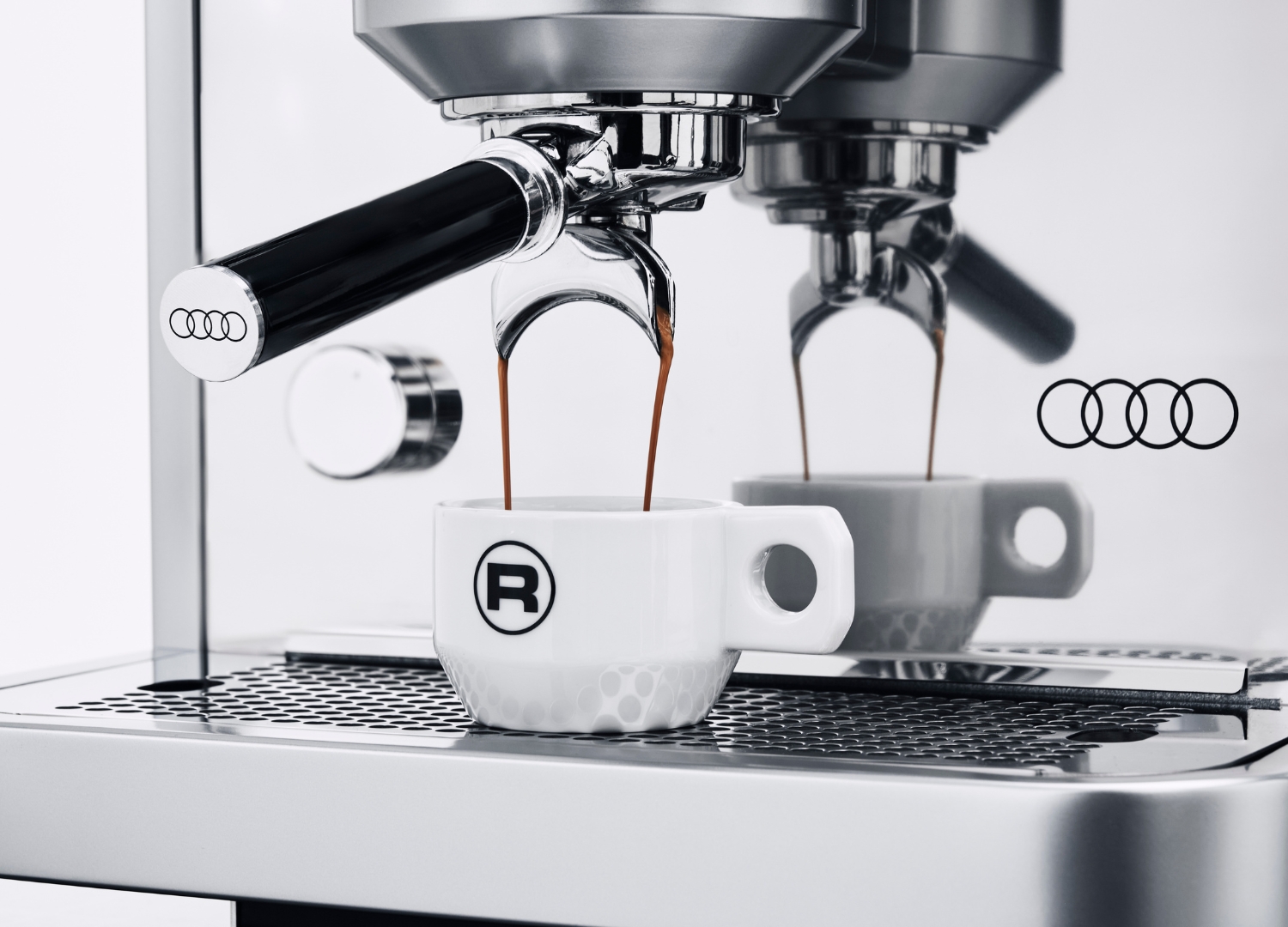
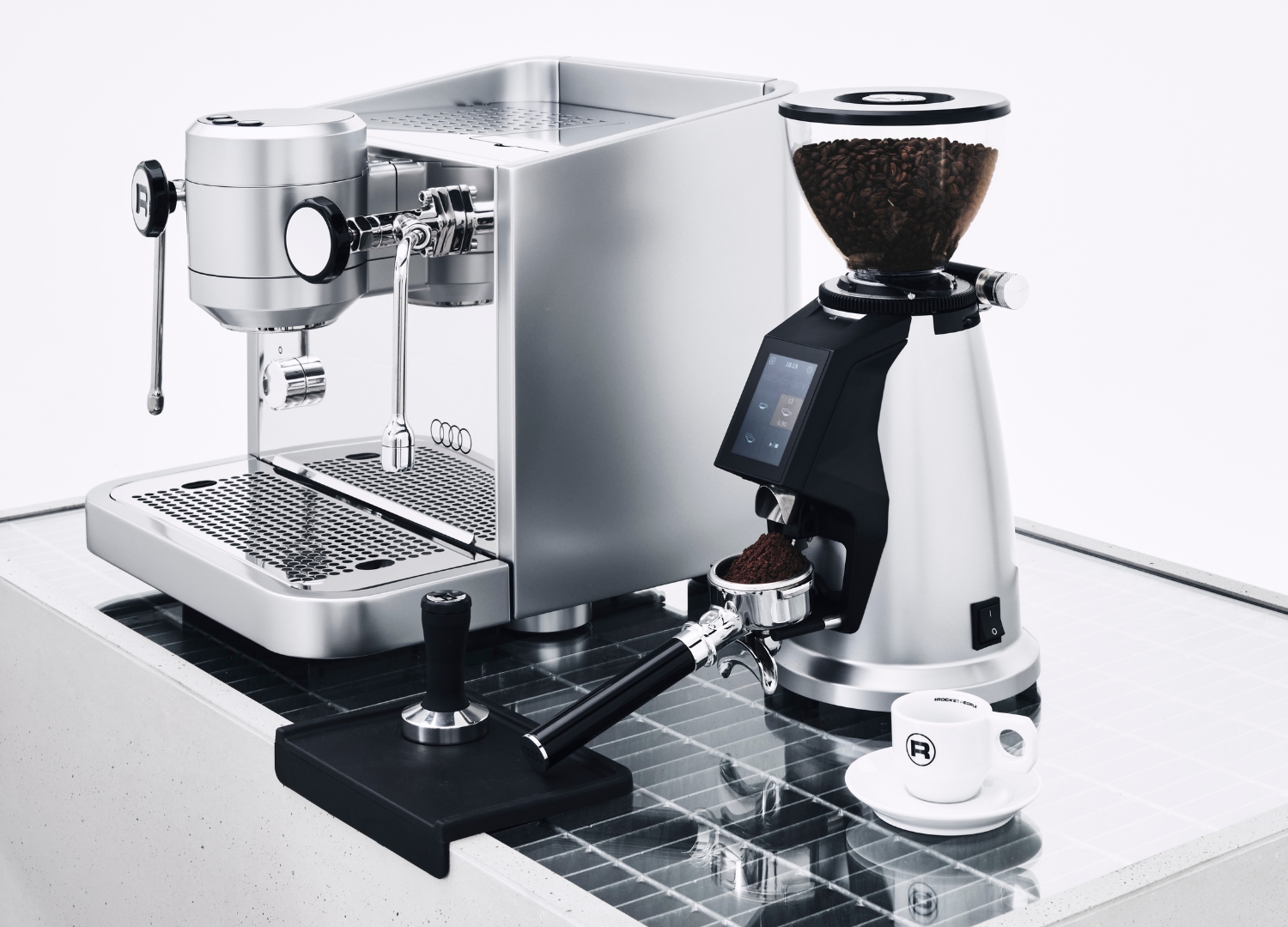
Structurally, the machine keeps Rocket’s dual stainless-steel boiler configuration, a half-litre unit dedicated to coffee and a 1.5-litre unit for steam, so that brewing and milk texturing can happen independently. A rotary pump replaces the vibration pump found in lower-tier machines, delivering steadier and quieter pressure.
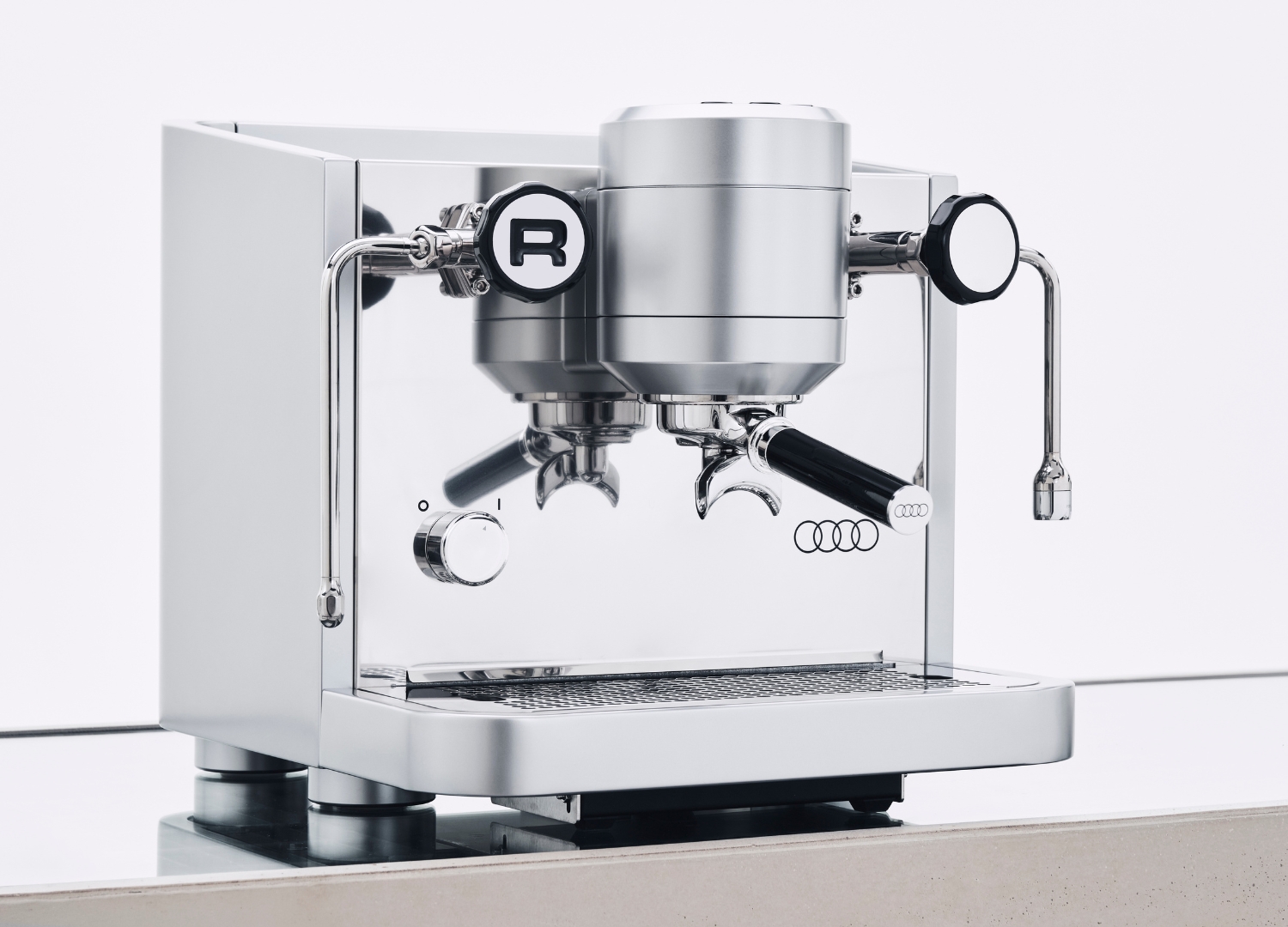
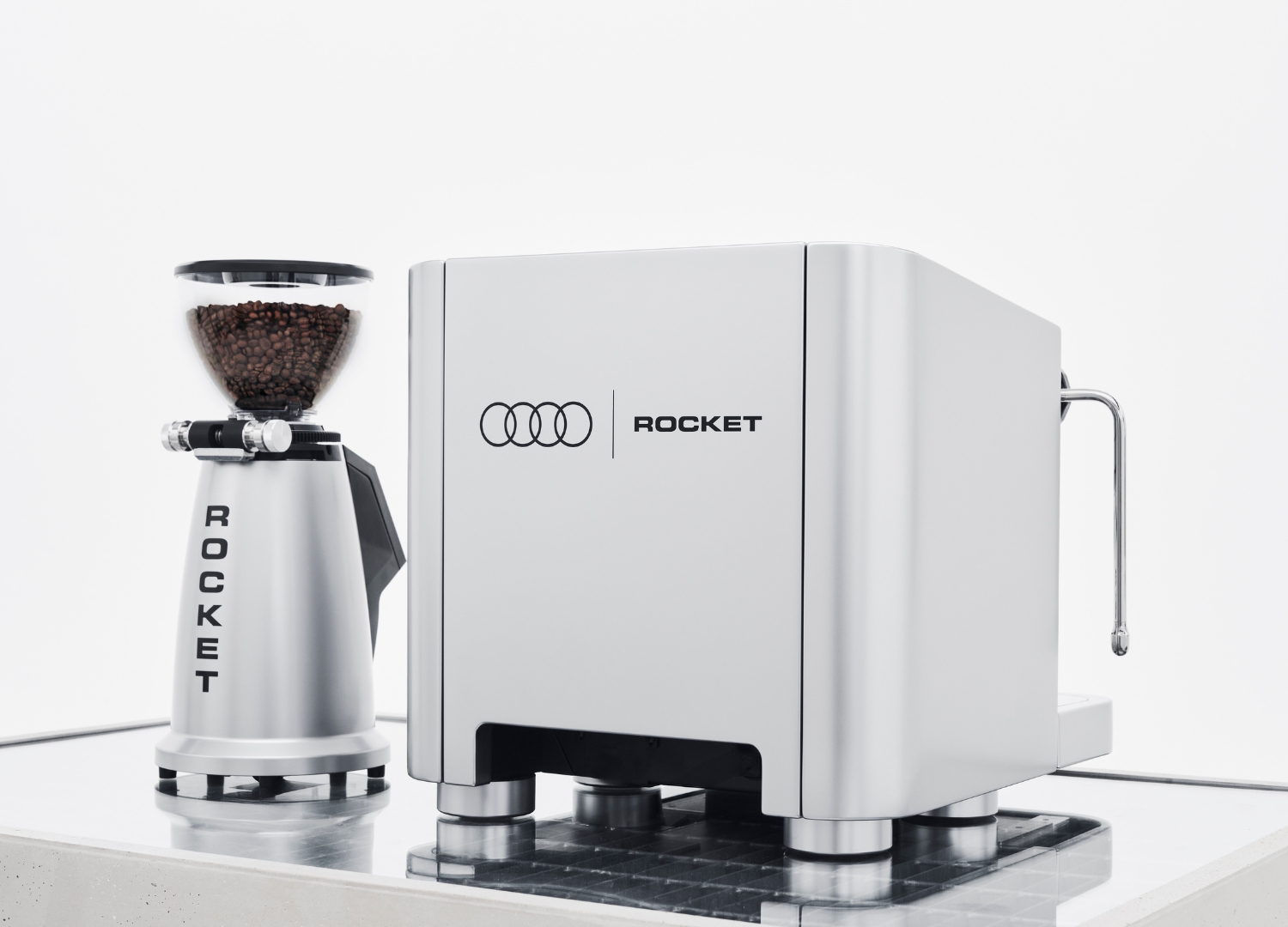
The body is where the Audi TT reference becomes legible. The design brief was to study the TT’s proportions, its surface transitions, and its minimal details, and apply the logic to the espresso machine. Every radius connecting one surface to another has been defined with the same precision a car body demands, and different surface textures are used to differentiate the outer housing from the functional elements in the front.
Design language
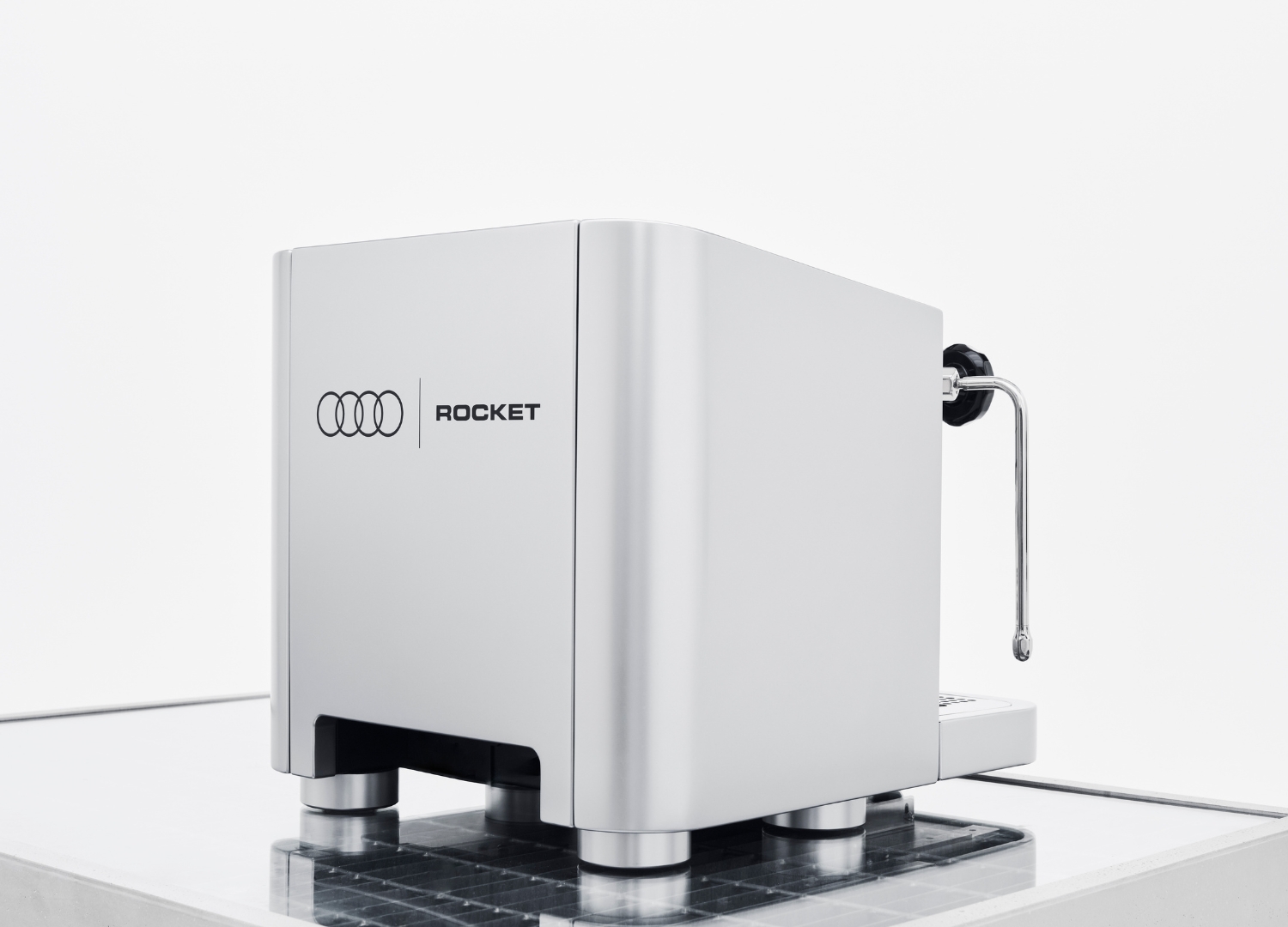
The side panels rise toward the back of the machine, which gives the object a dynamic silhouette and creates a practical lip that acts as a border for cups. The machine’s circular aluminium feet lift the body slightly, adding visual lightness to an object that in fact weighs 25 kilograms.
The most explicitly automotive feature is the control interface: a 3.5-inch touchscreen recessed into the upper section of the brewing unit, running a textless HMI, meaning that the interface relies on icons and symbols rather than written menus. This is the same logic behind a car’s dashboard, which has to be legible at a glance and across languages.
Overall, the Rocket x Audi is a statement object more than it is a product, designed for a narrow audience of design aficionados. The seemingly odd pairing of Italian espresso engineering and the German automotive design discipline is actually a lot more coherent than it sounds, showing a convergence of two industries that have spent decades arguing that precision and restraint are, themselves, a kind of luxury.