An airport lounge inspired by Piet Mondrian’s paintings and the Dutch landscape
The Amsterdam-based studio Beyond Space has designed the Lounge 2 of Schiphol Airport as if it were from the artist’s Boogie-Woogie series, translating art into architecture.
In Amsterdam’s Schiphol Airport, travellers passing through Lounge 2 will encounter an unexpected artistic intervention: a seating area that offers a meditation on Dutch identity, artistic heritage, and the evolution of abstract art. Designed by Beyond Space, an architecture studio, the project reimagines the lounge experience through the lens of Piet Mondrian’s work, creating a composition that honours both the Dutch landscape and the modernist vision that derived from it.
Beyond Space was founded by Remi Versteeg and Stijn de Weerd, later joined by Esther Bentvelsen as a third partner. The studio believes that architectural thinking applies beyond the matters of just space, and they draw from a range of interests and disciplines in their design process, including the arts, as seen in this project.
Gallery
Open full width
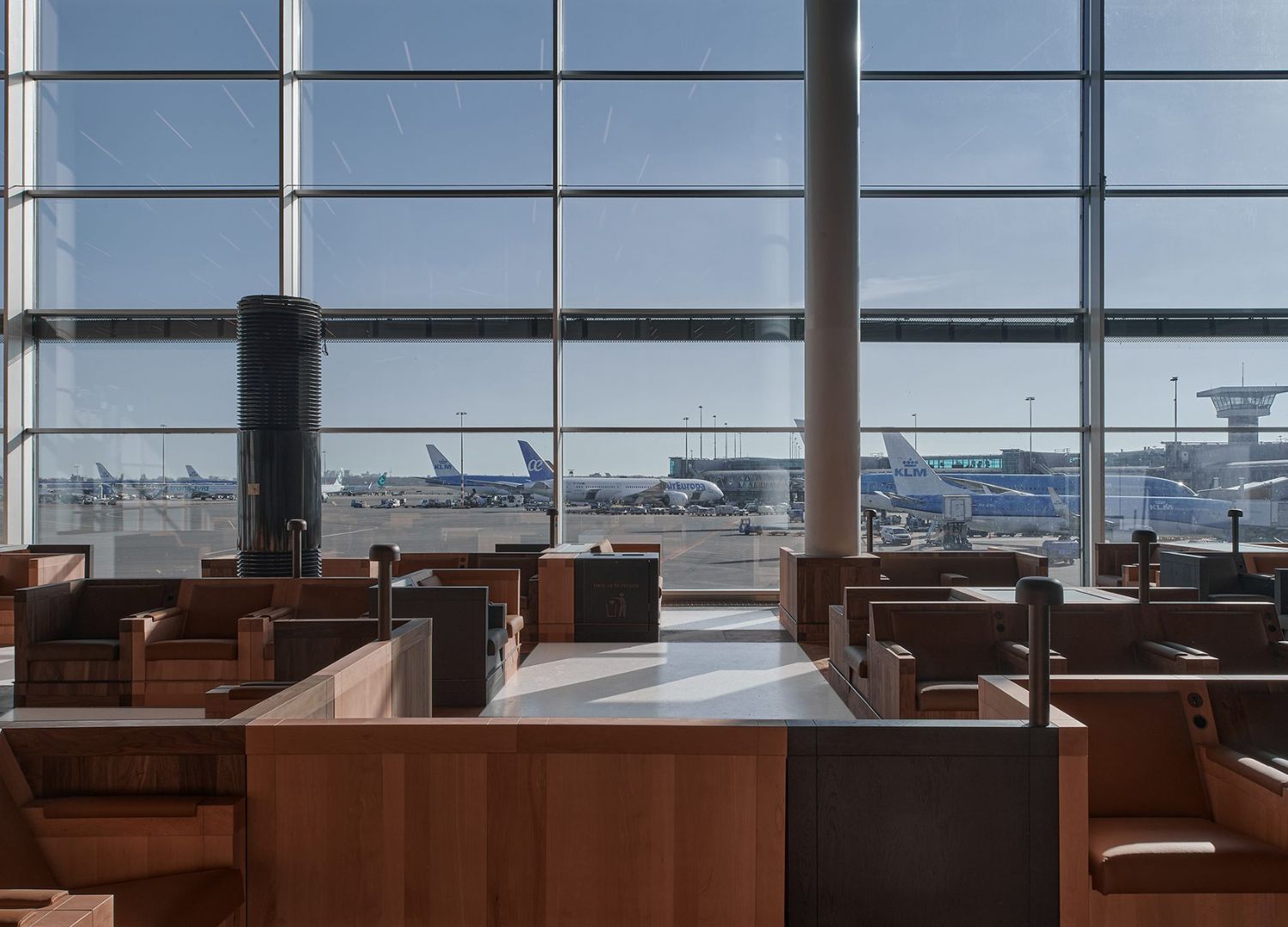
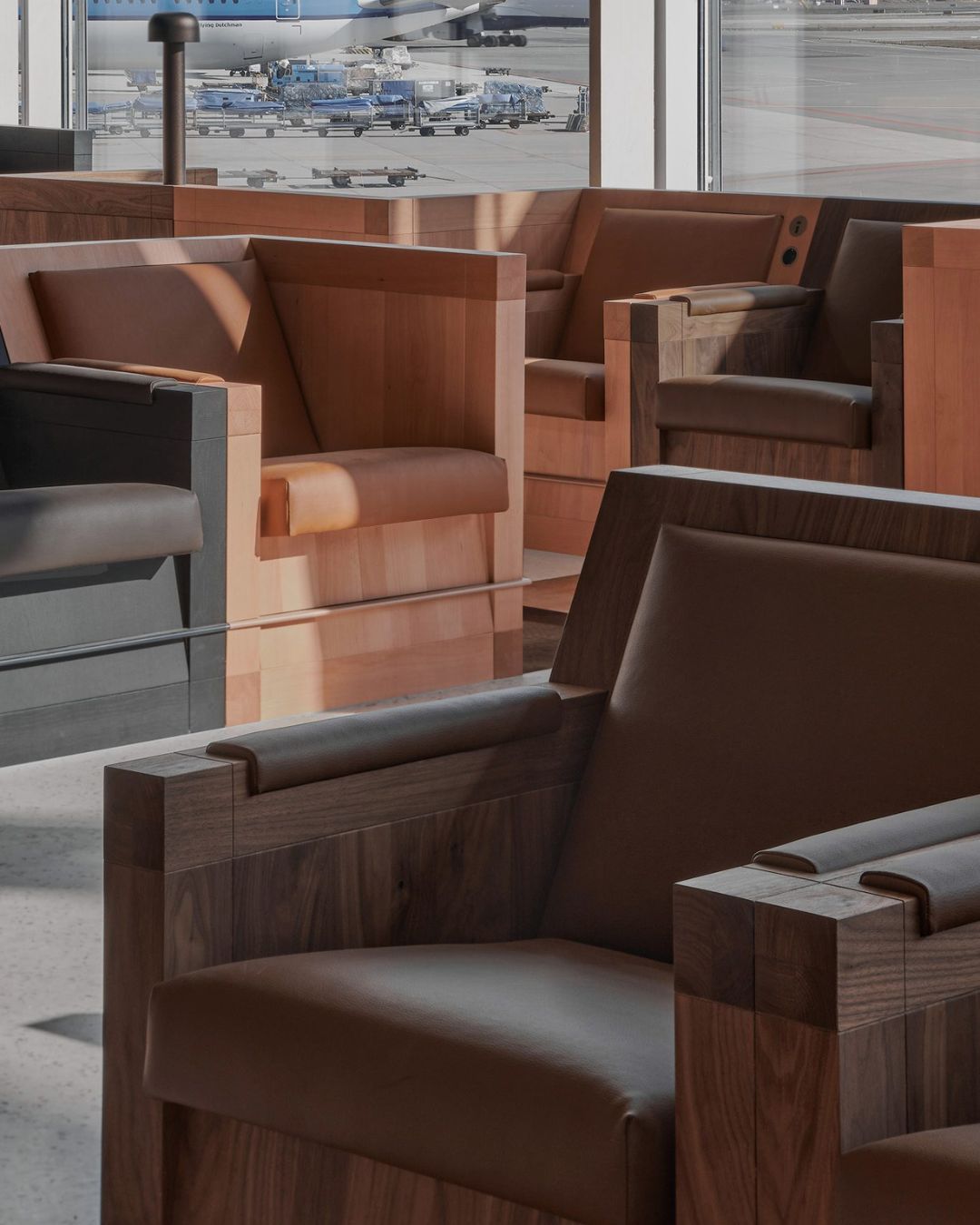
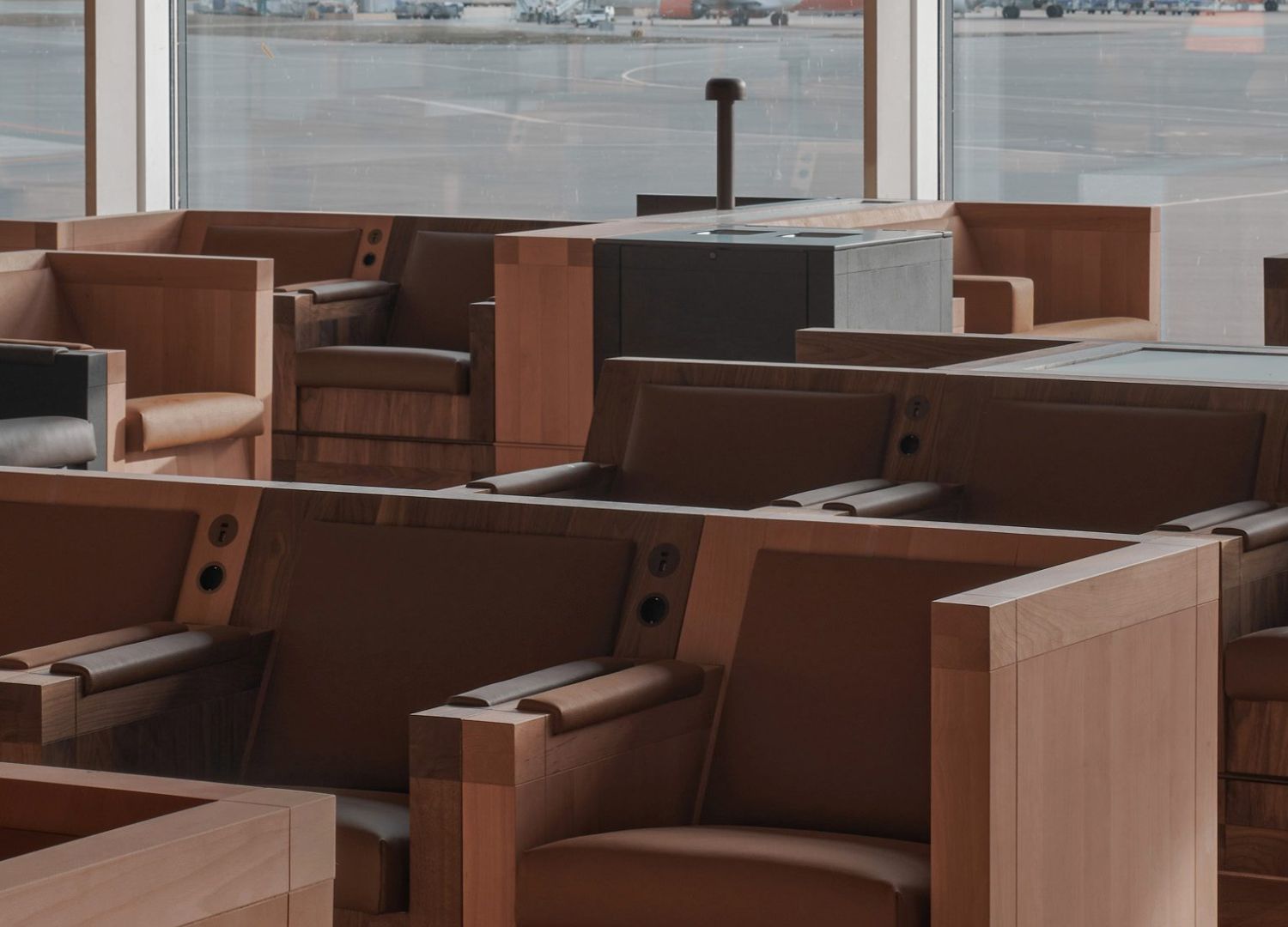

Open full width
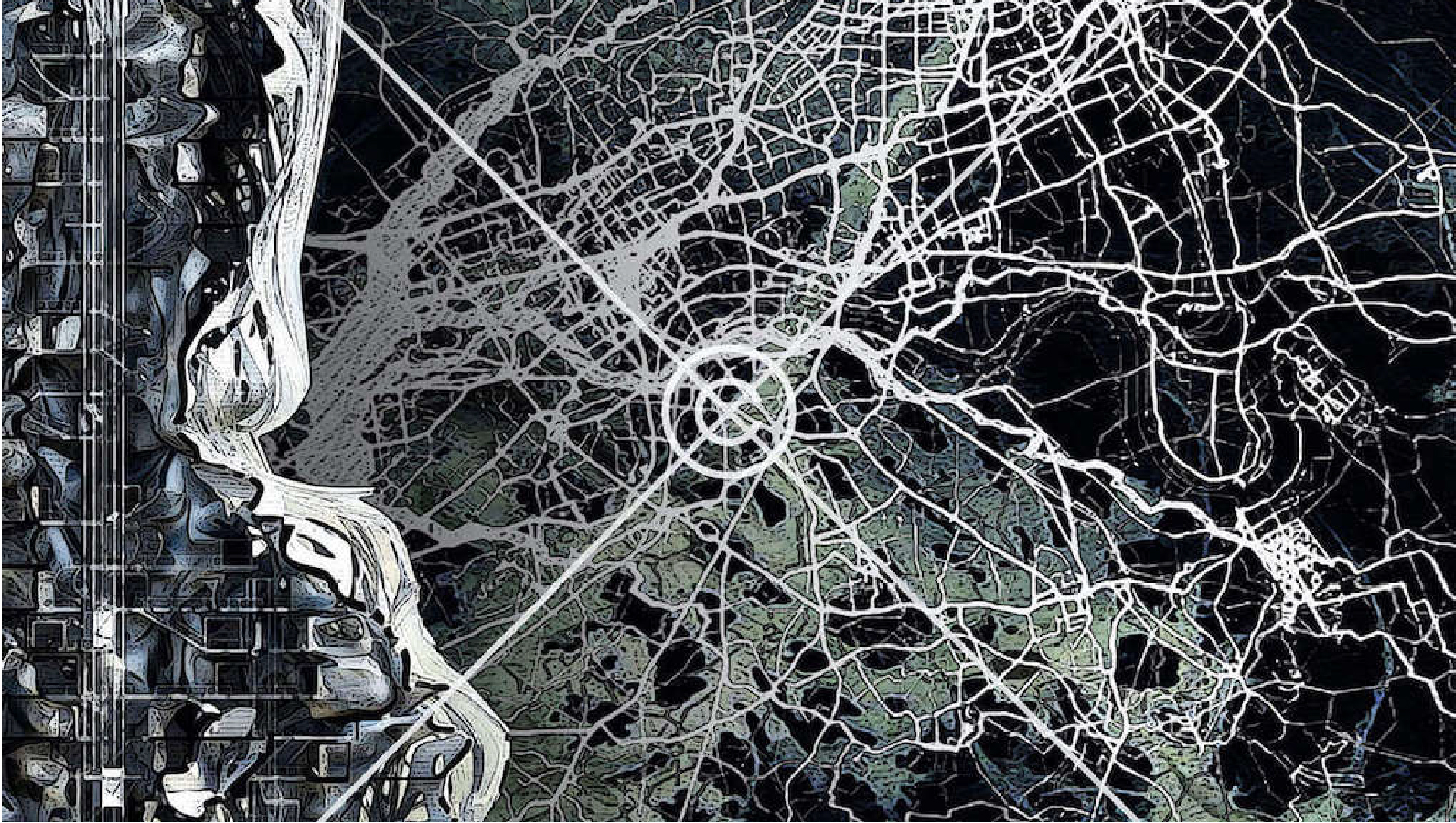
Schiphol Airport sits in the Haarlemmermeer polder, a land that epitomises the Dutch landscape: flat, geometric, ordered. This landscape was an inspiration for many artists in the Dutch art movement ‘De Stijl’. Mondrian began his career by painting the green landscapes of the Netherlands, capturing the characteristic orthogonal patterns of their fields and waterways. His work then increasingly progressed from these scenes to more abstract compositions. The landscape’s emphasis on horizontal and vertical lines serves as the base for what would then define the artist’s neoplastic style.
For the design, Beyond Space took as their primary reference some of Mondrian’s final works, the Boogie-Woogie series created after his move to New York in the 1940s. These paintings saw the disappearance of the black lines that used to separate the components in Mondrian’s most famous works, becoming instead a fluid, pulsating rhythm of saturated colours. This was a visual response to the energy of Manhattan’s grid, the neon lights of Broadway, and the spirit of the jazz music he loved.
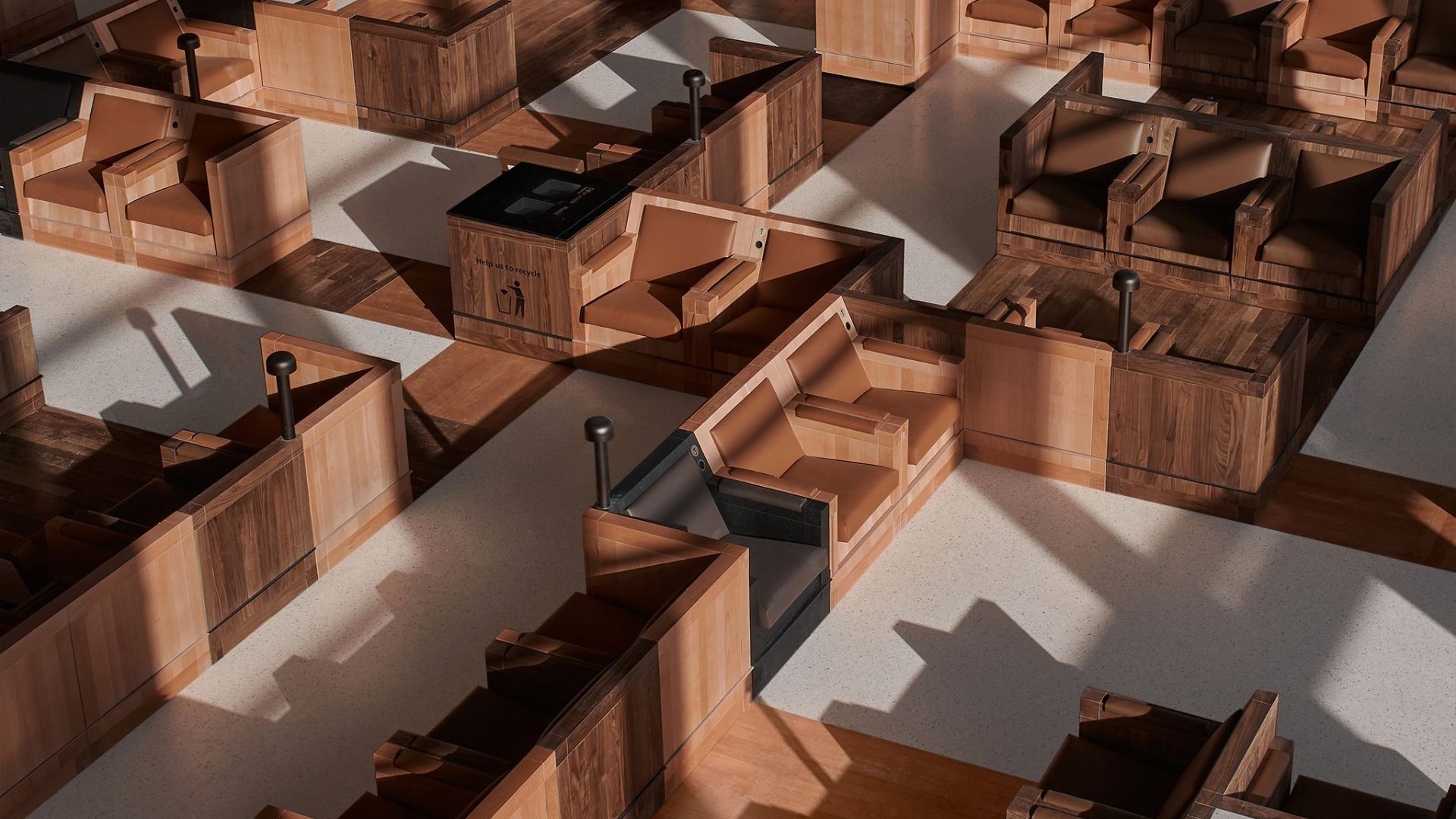
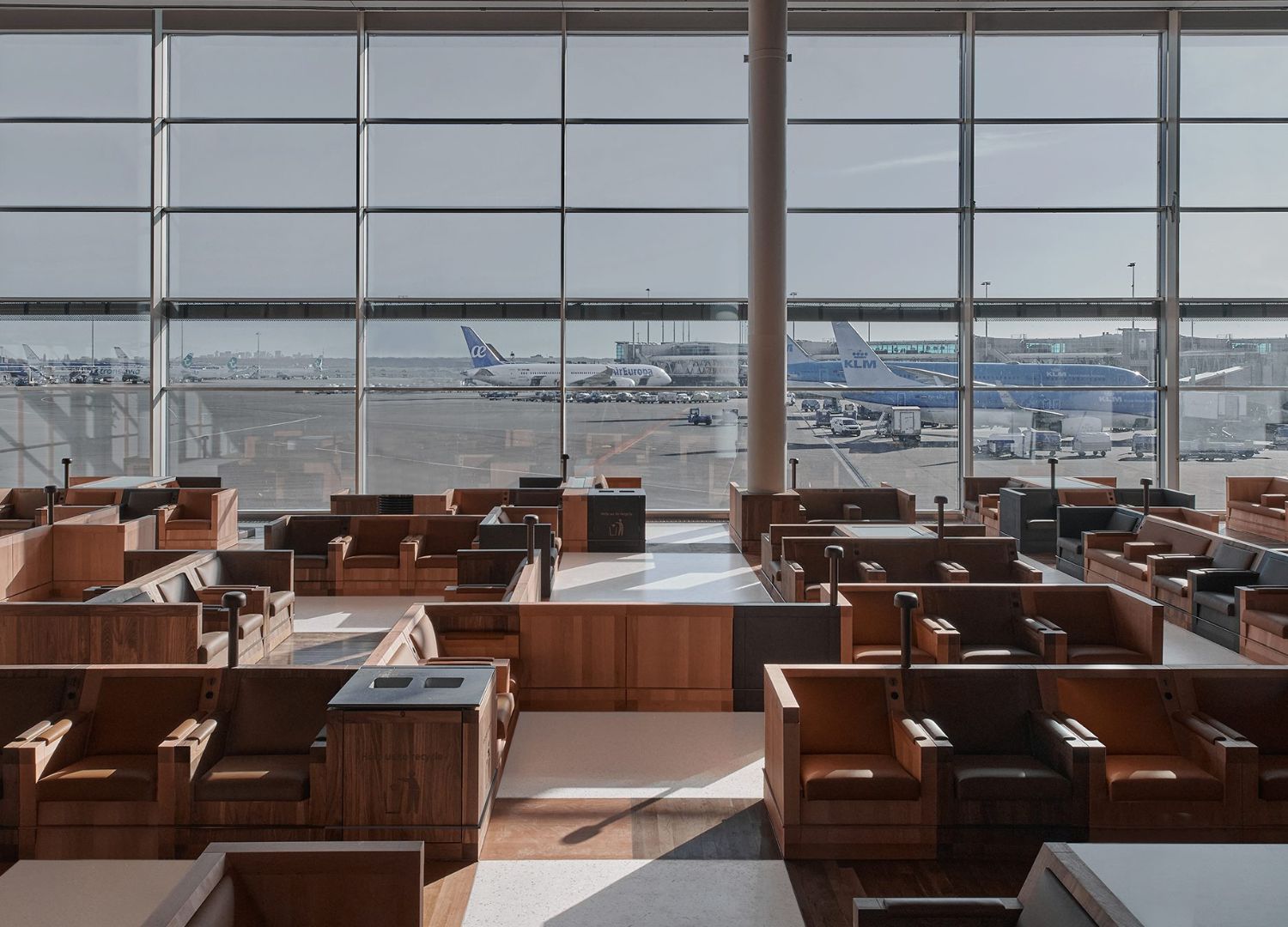
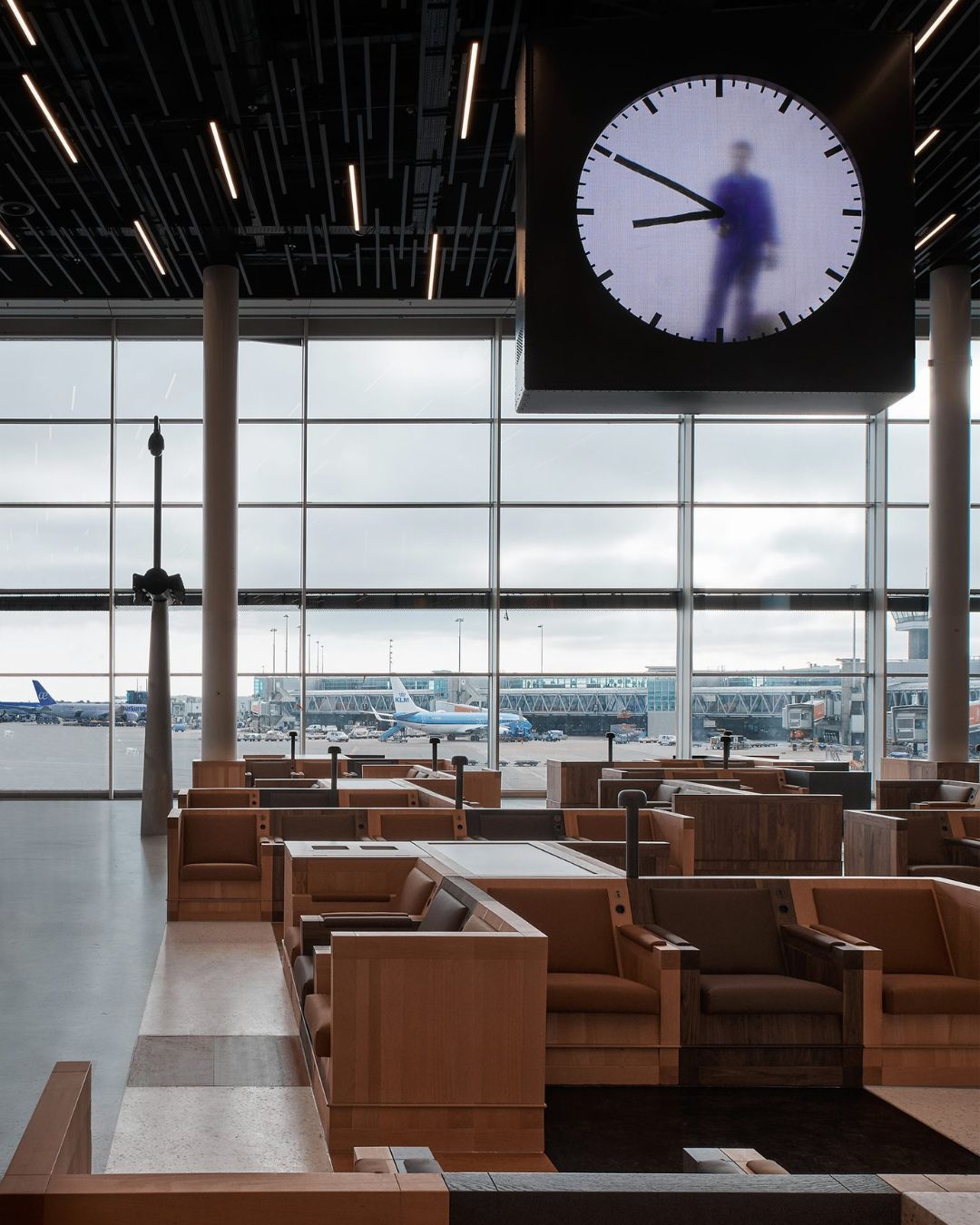
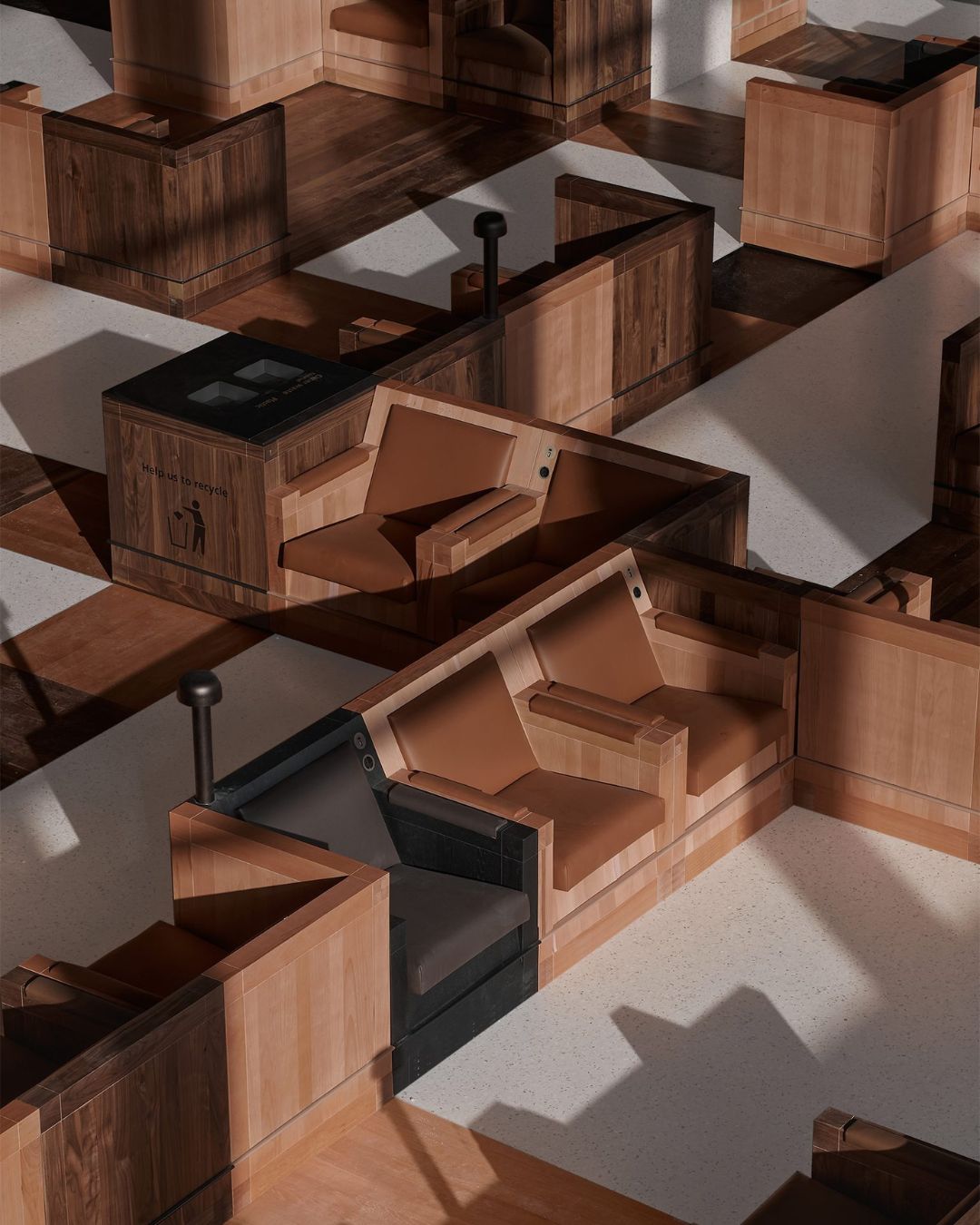
In Schiphol’s lounge, the Boogie-Woogie paintings work as an organisational system that defines the spatial composition of the seating area. Their design uses connected chairs to form seating zones of various sizes, linked together in an orthogonal arrangement that fits precisely within the existing architecture. The rhythm of the composition is varied and unexpected, offering the functionality of having diverse areas for solo travellers or large groups.
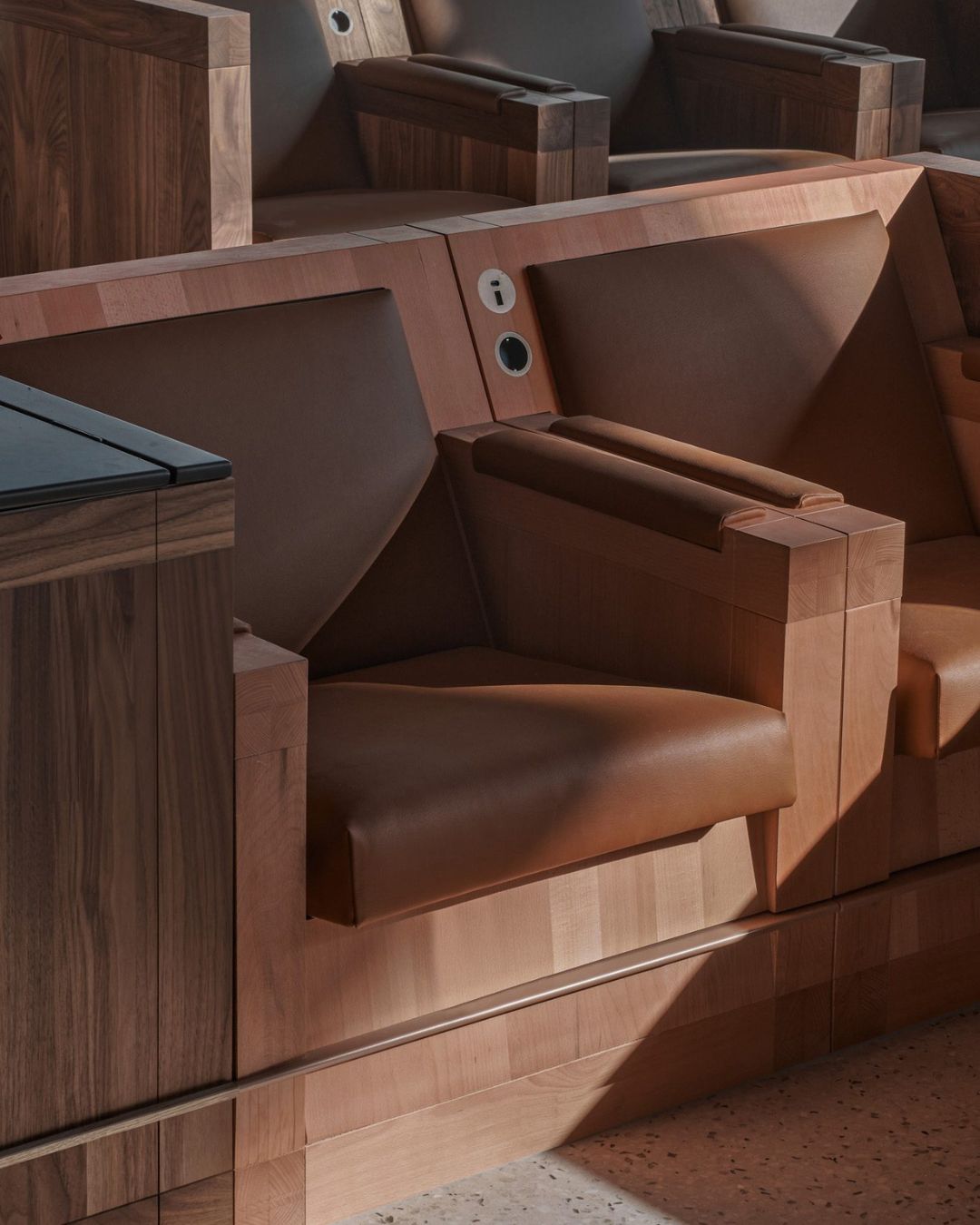
The work also removes Mondrian’s characteristic primary colours, in favour of natural wood. This choice gives a visual tranquillity to the space, in contrast with the usual chaos of an airport environment. The wood is used in different light and dark tones, still offering some variation and visual interest, while remaining calm. This material also carries a deeper significance, as the wood comes from the European trees that Mondrian himself once painted, creating a circular relationship between this architecture and the artist’s earlier and later works.
Similar to any airport, Schiphol serves as a gateway to its country, the first and last place people will encounter during their travels. The design of any transport station is fundamental in the construction of national identity for international visitors. The reference to Mondrian, one of the most internationally known Dutch artists, and the connection to the local landscape position the project within a larger cultural narrative. Yet what is particular about this approach is that it avoids simple nationalism or nostalgia, not literally recreating windmills or tulip fields, but instead using a sophisticated language to convey similar ideas.
The De Stijl movement extended far beyond the Netherlands, becoming the base for international modernism, impacting architecture, graphic design, and visual culture globally. By working with this legacy in a contemporary context, Beyond Space shows a new way to work with and demonstrate heritage.