Inviting biology into architecture through minimal surface geometry
We had a chat with Serame Studio, exploring the search for a built environment shaped by the mathematics of nature.
Rameshwari Jonnalagedda is a London-based architect and designer whose work sits at the intersection of computation, digital fabrication, and biology. A graduate of the Bartlett School of Architecture at UCL, she developed the ideas that now define her practice, Serame Studio, during her master’s studies there, and has continued to expand them since.
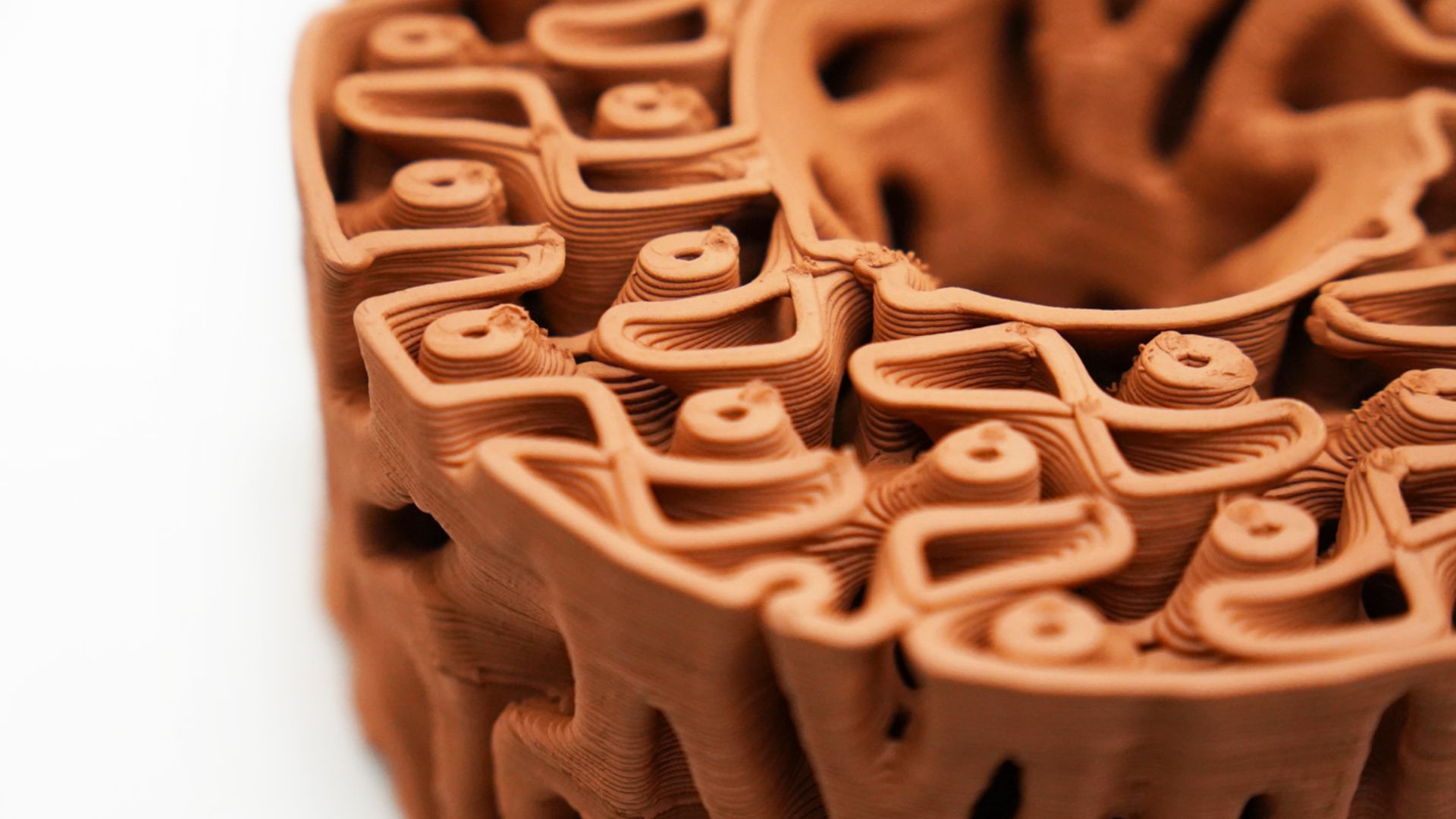
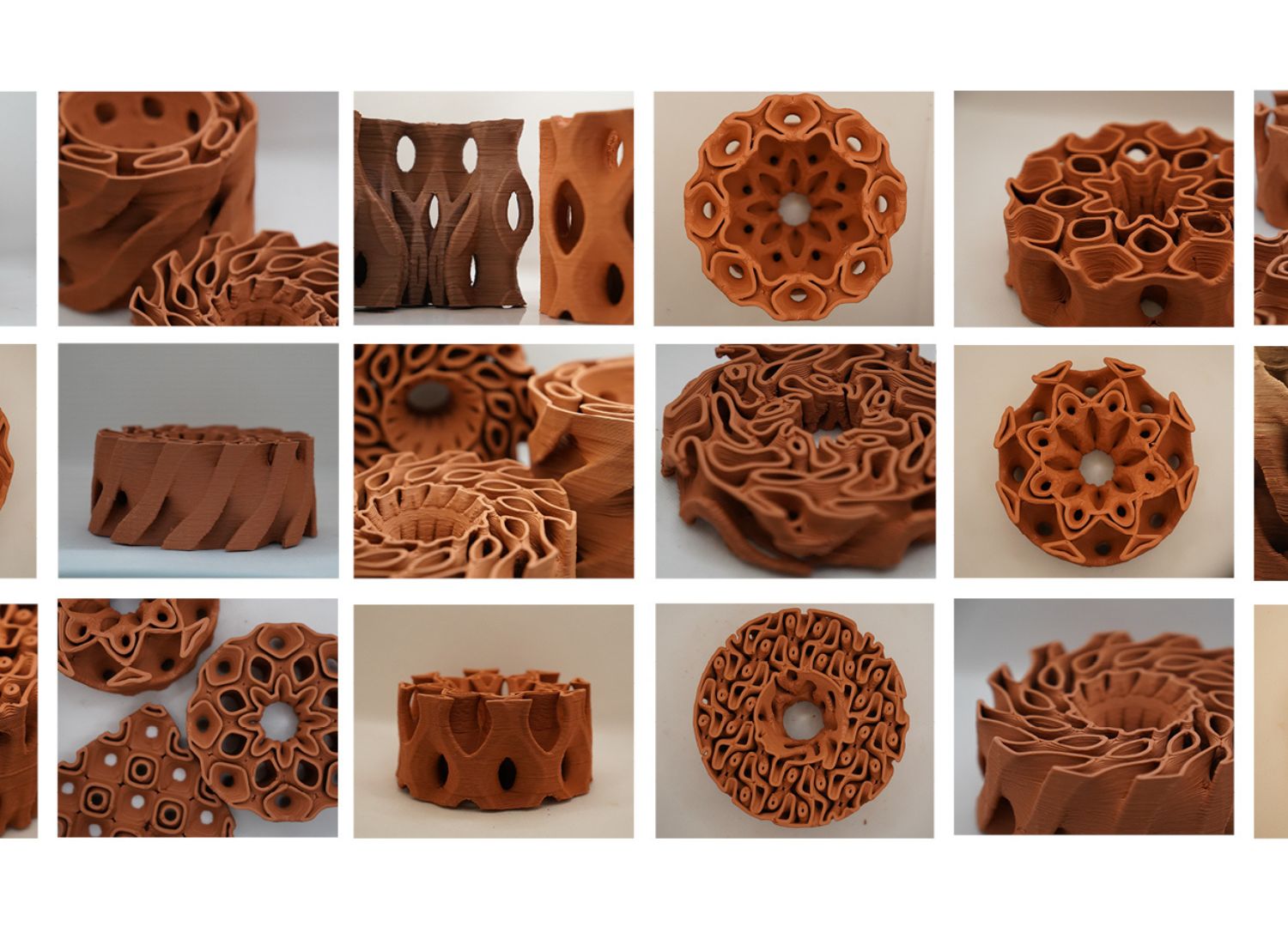
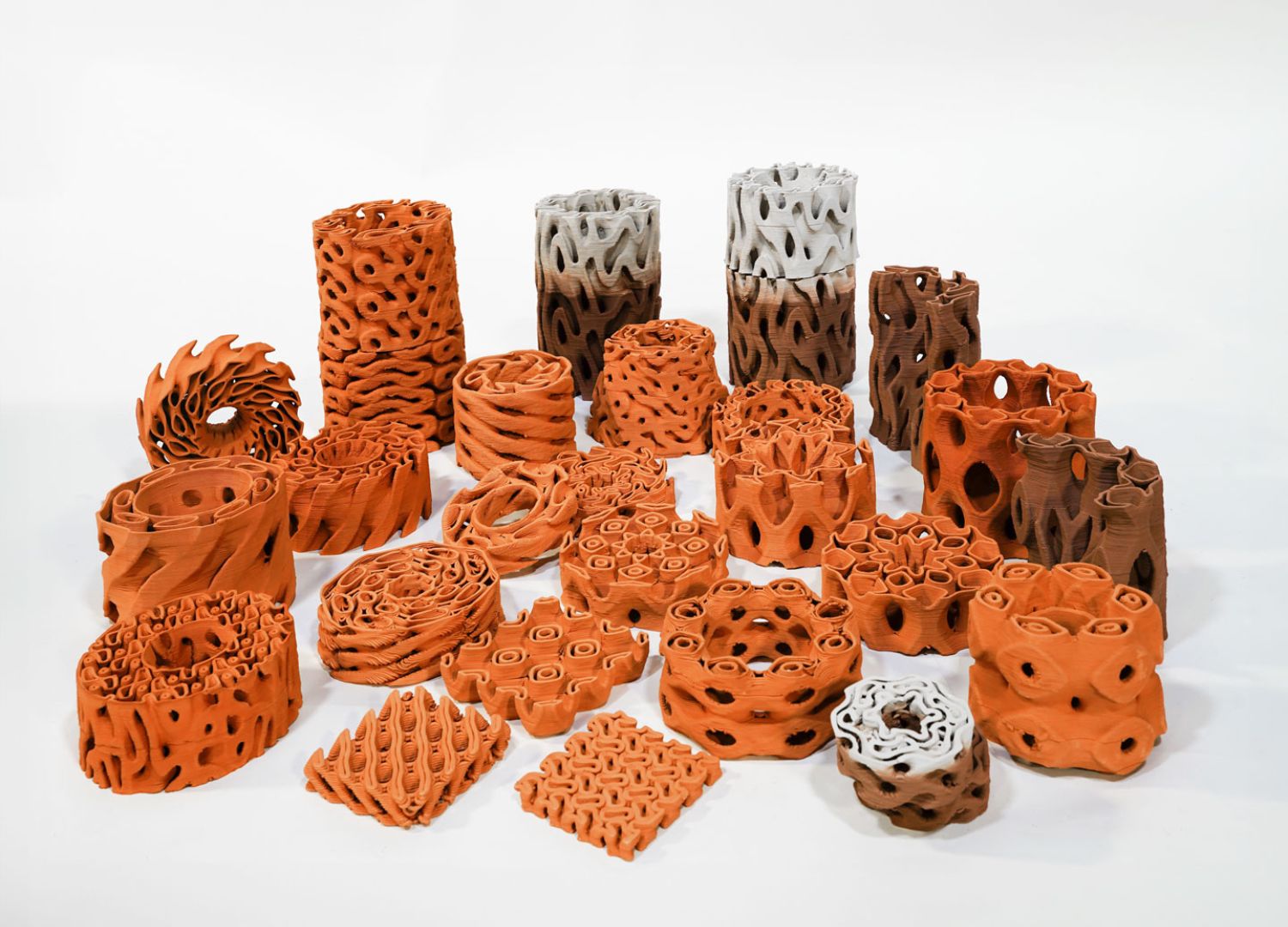
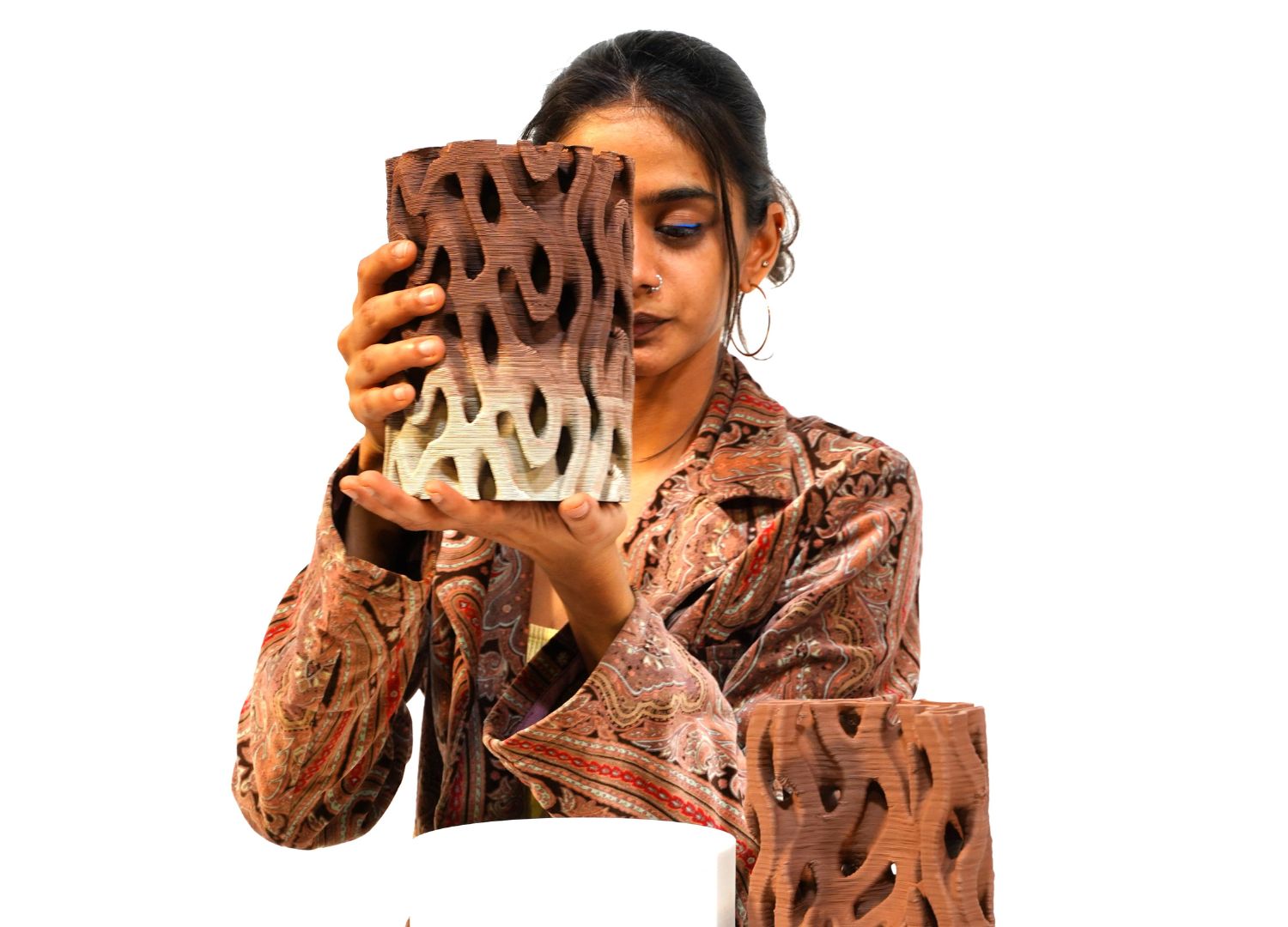
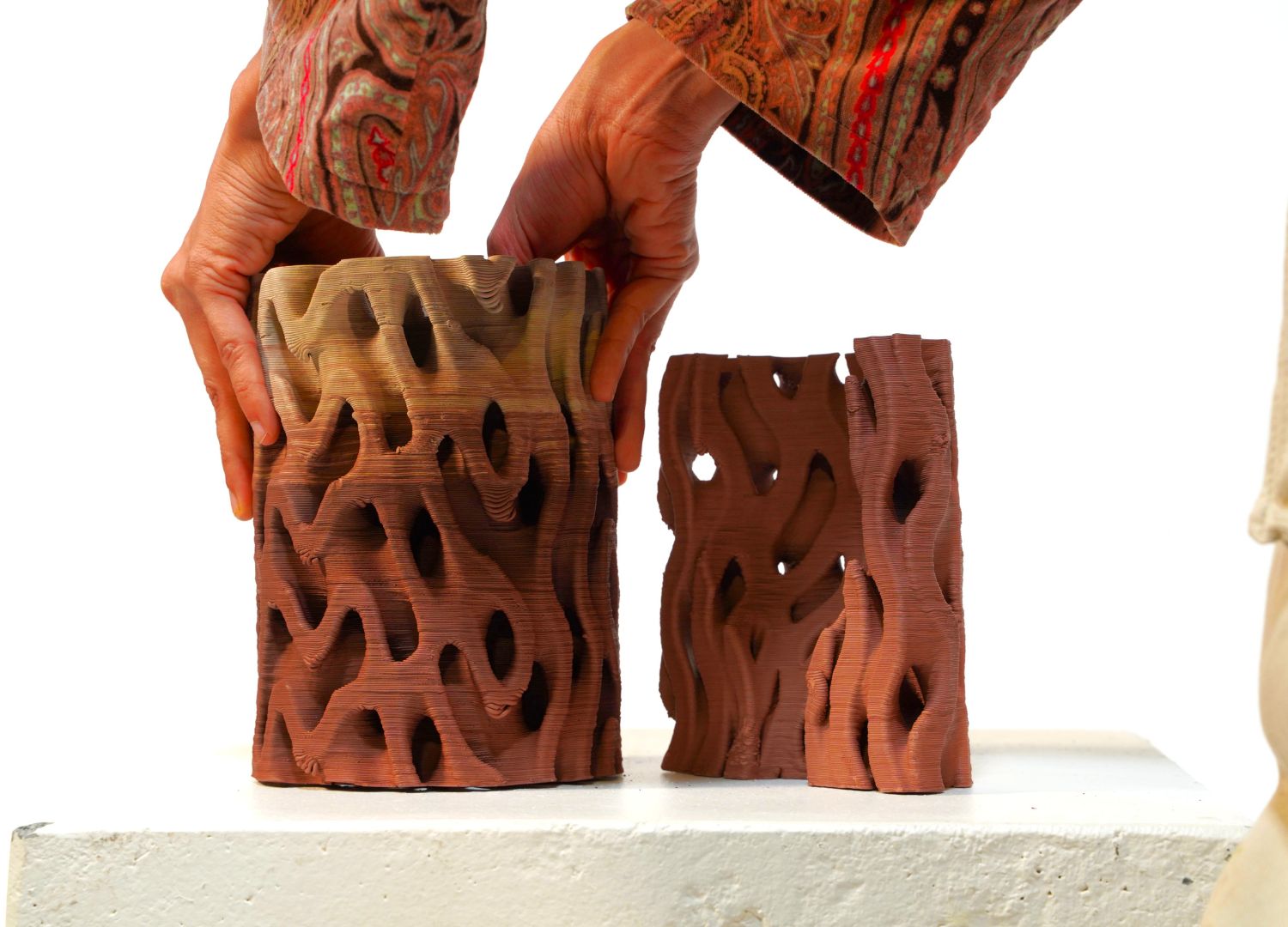
The premise of her practice is that nature is treated as the longest-running reference library available to designers. Her flagship project, Minimal Matter, frames architecture as something that should listen and adapt rather than impose itself on a site, drawing on the way natural systems negotiate with their surroundings instead of dominating them. The formal language she works in is that of minimal surfaces: geometries defined by a high surface area to volume ratio and cellular porosity, the same mathematics that show up in soap films, cell membranes, and the curve of a leaf.
Gallery
Open full width
Open full width
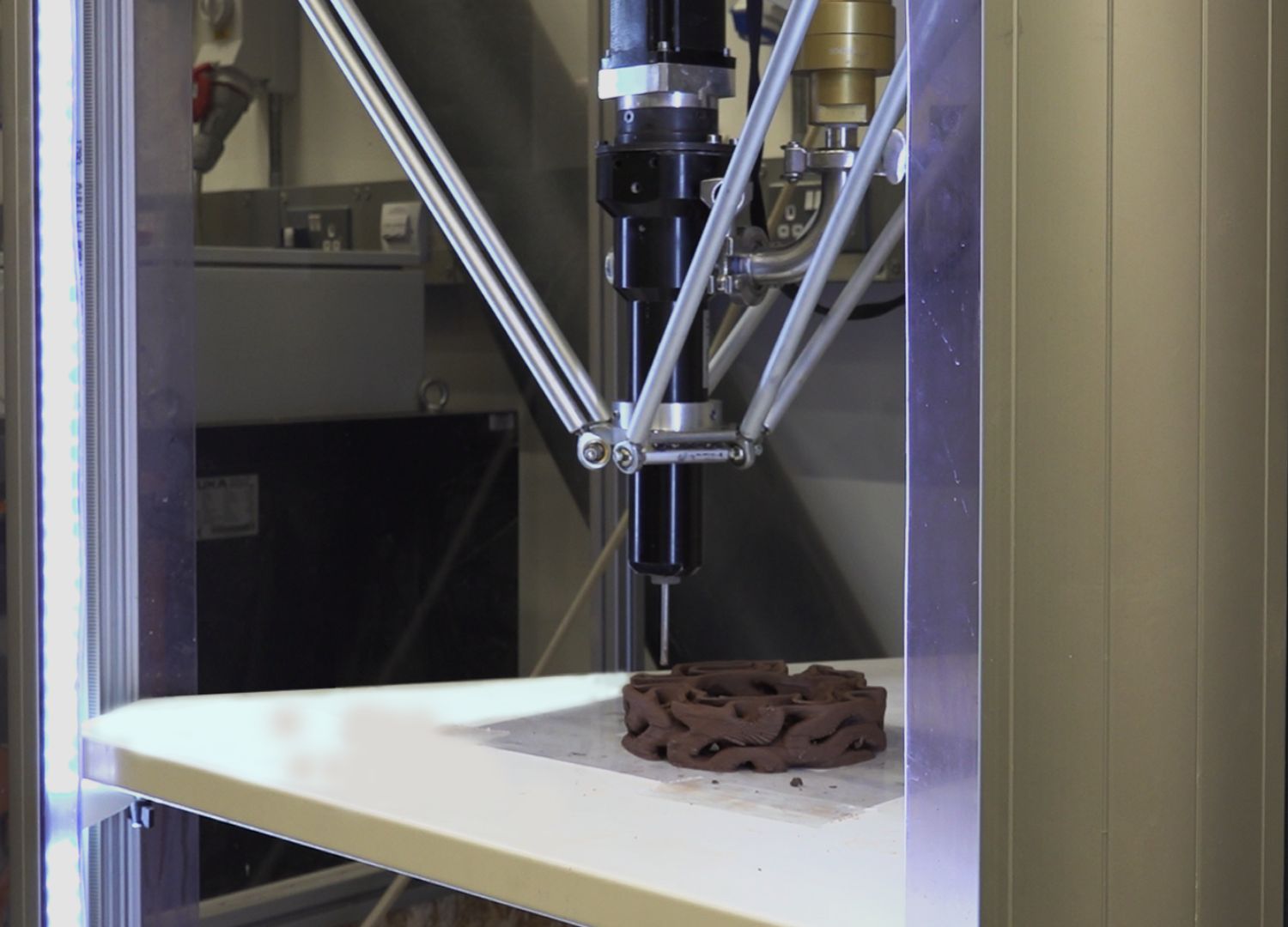
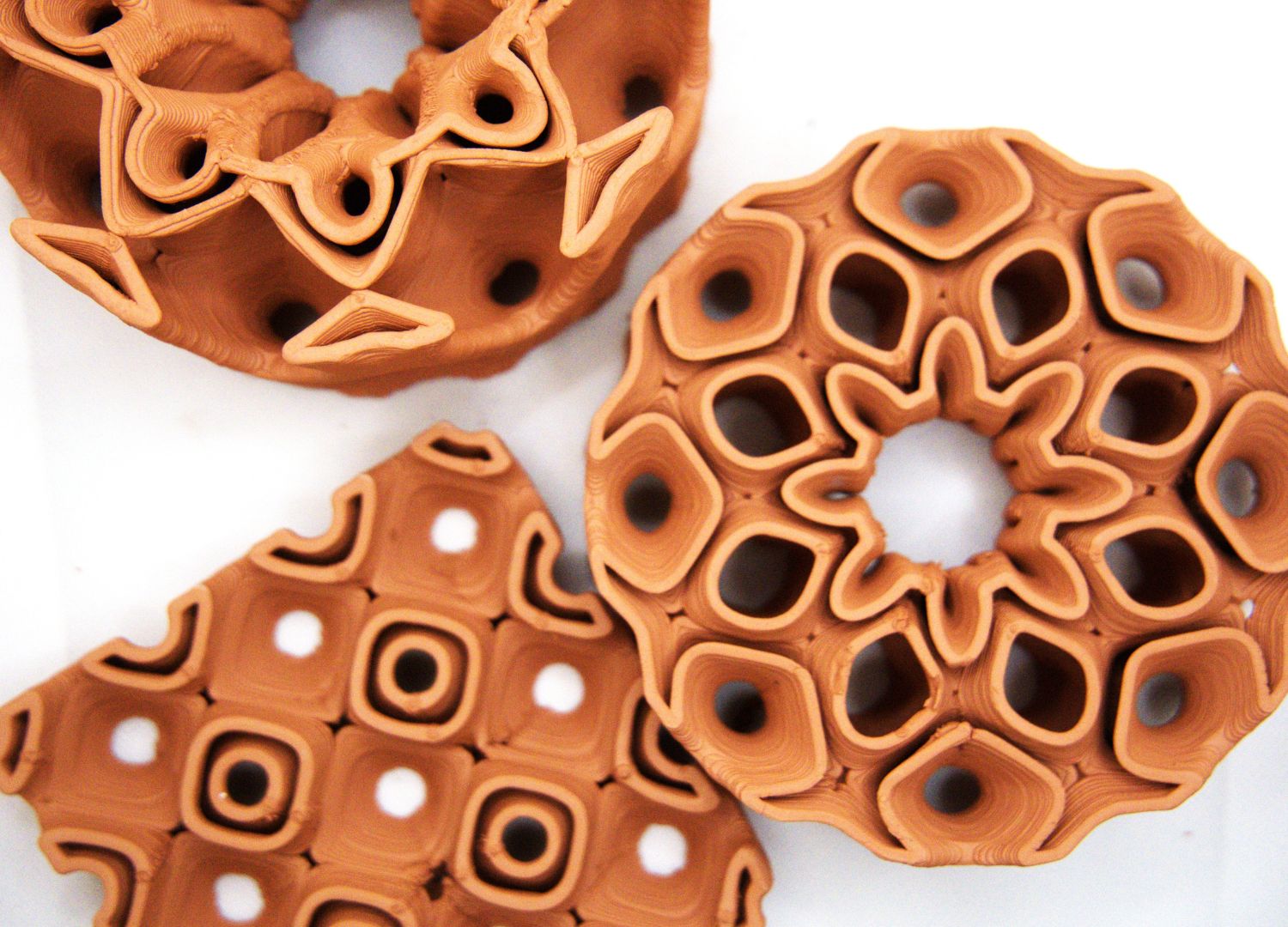
What separates Serame Studio from a purely theoretical design research project is the fabrication: Minimal Matter is realised through 3D printing in clay, producing porous ceramic objects that act as open forms meant to be colonised by moss, insects, light, and air over time. The intent is for the object’s relationship with the environment to keep changing after it leaves the printer. While most building components are engineered to resist weathering and biological growth, Jonnalagedda’s ceramics are engineered to invite it.
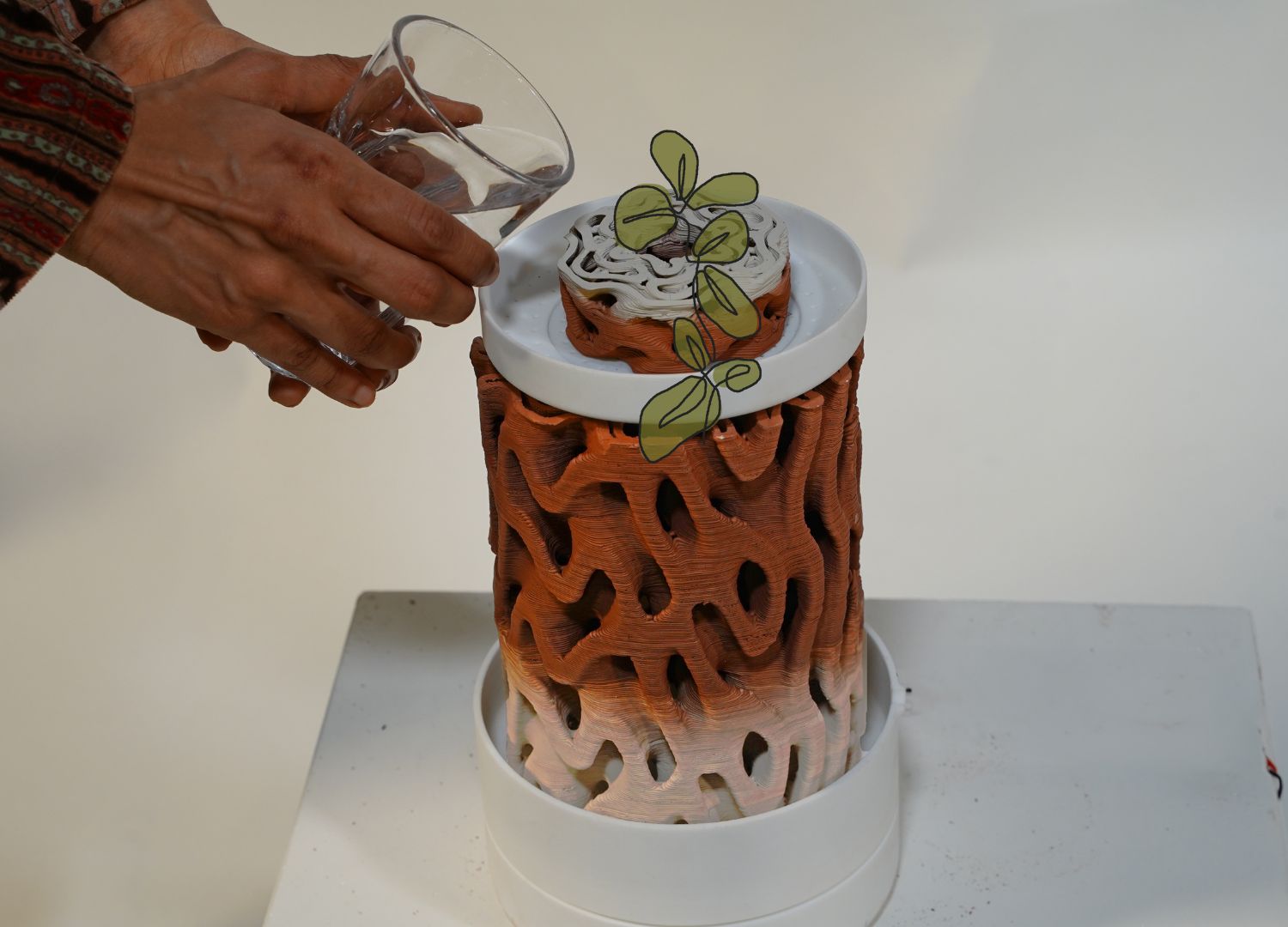
The same logic carries into TerraMound, the studio’s second most important project, which leans more into product design. It is a desktop cooling device modelled on the ventilation systems of termite mounds. A porous ceramic body is paired with a planter, water evaporates through the clay to cool the surface, while a low-energy fan moves that cooled air, creating a small ecosystem.
We had a chat with the designer to investigate these topics further, wondering about scaling these ideas up and the process of how to get there.
Serame Studio, interview with Rameshwari Jonnalagedda:
What drew you to minimal surface geometry specifically, rather than other biomimetic design languages?
Rameshwari Jonnalagedda:
“I’ve always been interested in how form develops. Whether I’m looking at a natural system, a material or a computational process, I’m usually asking the same question: what is shaping the form I’m looking at? Minimal surfaces introduced me to a different way of thinking. Their geometry develops through a balance of forces. Similar principles appear in soap films, cellular membranes and biological structures, but it was the underlying logic that stayed with me. It suggested that form could emerge from a set of relationships.
Exploring those ideas gradually changed the way I approached design. What interested me wasn’t a single geometry, but the possibility of creating a system that could produce many different outcomes. By changing a few parameters, the same underlying logic could adapt to different questions and different contexts. Computation gave me a way to explore those variations and compare them. Clay brought those ideas into the physical world. Gravity, moisture, drying and the movement of the printer all leave their mark, so every piece becomes a record of how it came into being.”
Walk us through your design process; what happens between research and the final fabrication?
Rameshwari Jonnalagedda:
“Most ideas begin with an observation, it could be the behaviour of a material, the movement of water, a geometric relationship, or simply something I notice that stays with me. Before I think about making anything, I try to understand why it caught my attention.
From there, I translate that observation into a computational system that I can explore. It gives me the freedom to test different possibilities and understand how each decision influences the outcome. Quite often, the most interesting direction only appears after many iterations. That’s why I describe my approach as observe, transform, materialise. Each stage feeds into the next, so every piece becomes the starting point for the one that follows.”
Minimal Matter is described as porous and open to colonisation by moss, insects, and light. How do you think about controlling versus relinquishing control in a design practice built around inviting unpredictable biological change?
Rameshwari Jonnalagedda:
“I wanted to explore what could happen if a structure wasn’t treated as something completely fixed once it was made. The porosity, depth and surface were all intended to leave room for different kinds of interaction. Light changes throughout the day. Moisture behaves differently depending on the environment. Living systems respond to their surroundings in different ways. The geometry creates the conditions, but what happens afterwards depends on the environment.
I don’t see that as giving up control. It’s more about recognising that not everything needs to be predetermined. You can make careful decisions while still leaving room for the material and the environment to play a part. Working with clay has reinforced that every time I make something. You make a decision, the material responds, and then you decide what to do next.
The work doesn’t really end when it’s fabricated. I’m interested in what happens afterwards as well. Watching how a piece changes over time becomes another way of understanding it, and those observations often find their way back into the next piece.”
What’s the biggest barrier standing between where Serame Studio is now and a genuine large-scale application of these ideas?
Rameshwari Jonnalagedda:
“I don’t spend much time thinking about it as a barrier. Right now I’m setting up my studio and ceramic printer in India, and it gives me the chance to spend real time with the material. There are still a lot of questions I want to explore, and I don’t feel any urgency to resolve them too quickly. Every experiment teaches me something. Sometimes it’s about geometry. Sometimes it’s about clay. Sometimes an unexpected result sends me in a completely different direction. That’s probably the part of the practice that’s teaching me the most. Every experiment changes how I approach the next one.
For me, this stage is about giving myself the time to make, experiment and learn. I don’t really know where those questions will lead yet, and I’m comfortable with that. Right now, I’m more interested in continuing the work than deciding where it should end up.”