Approaching architectural densification in a different way: Student Studies 46B
How a 93-square-metre project on a garage roof in Chiapas is challenging what small but comfortable housing solutions can look like.
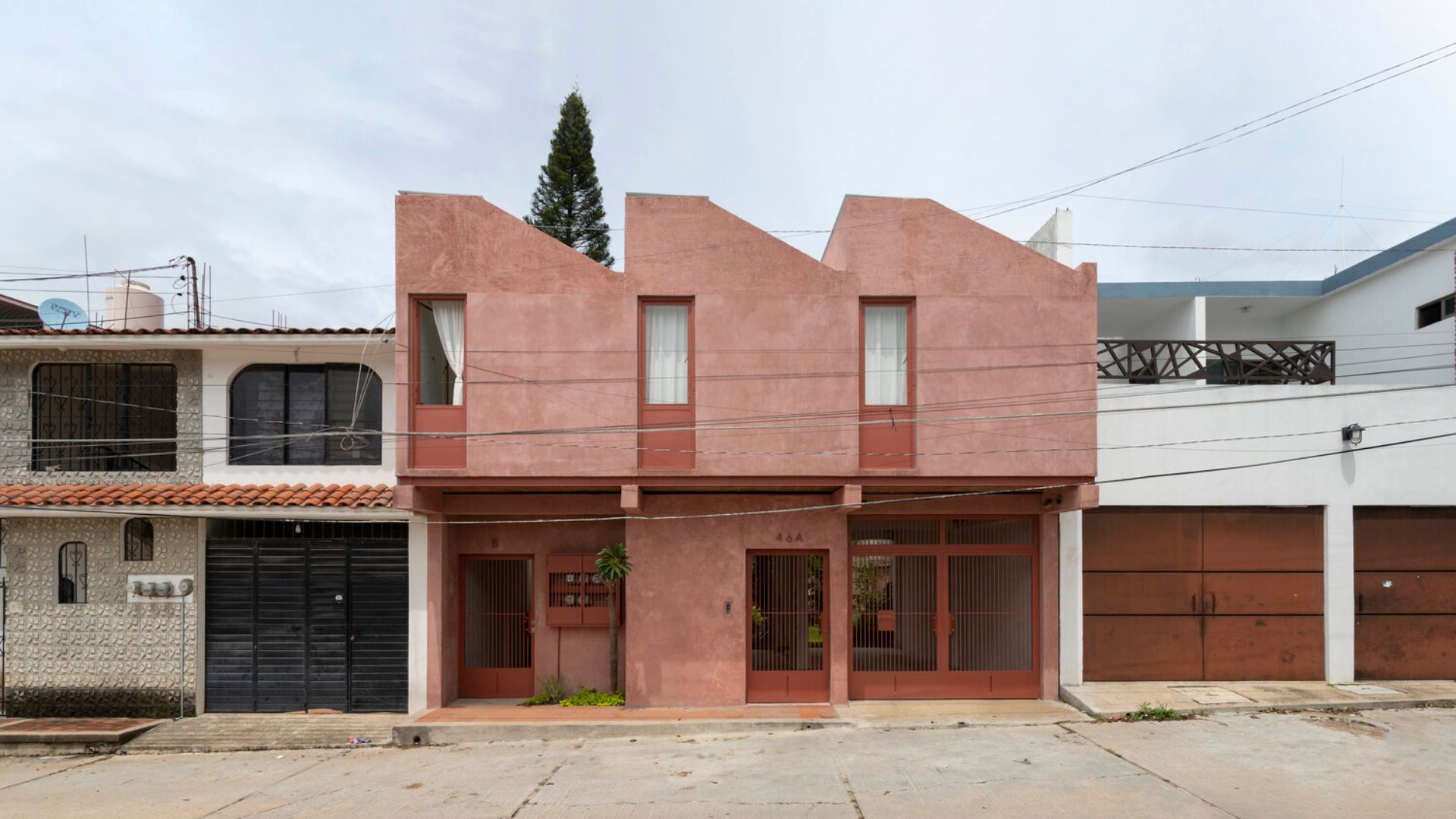
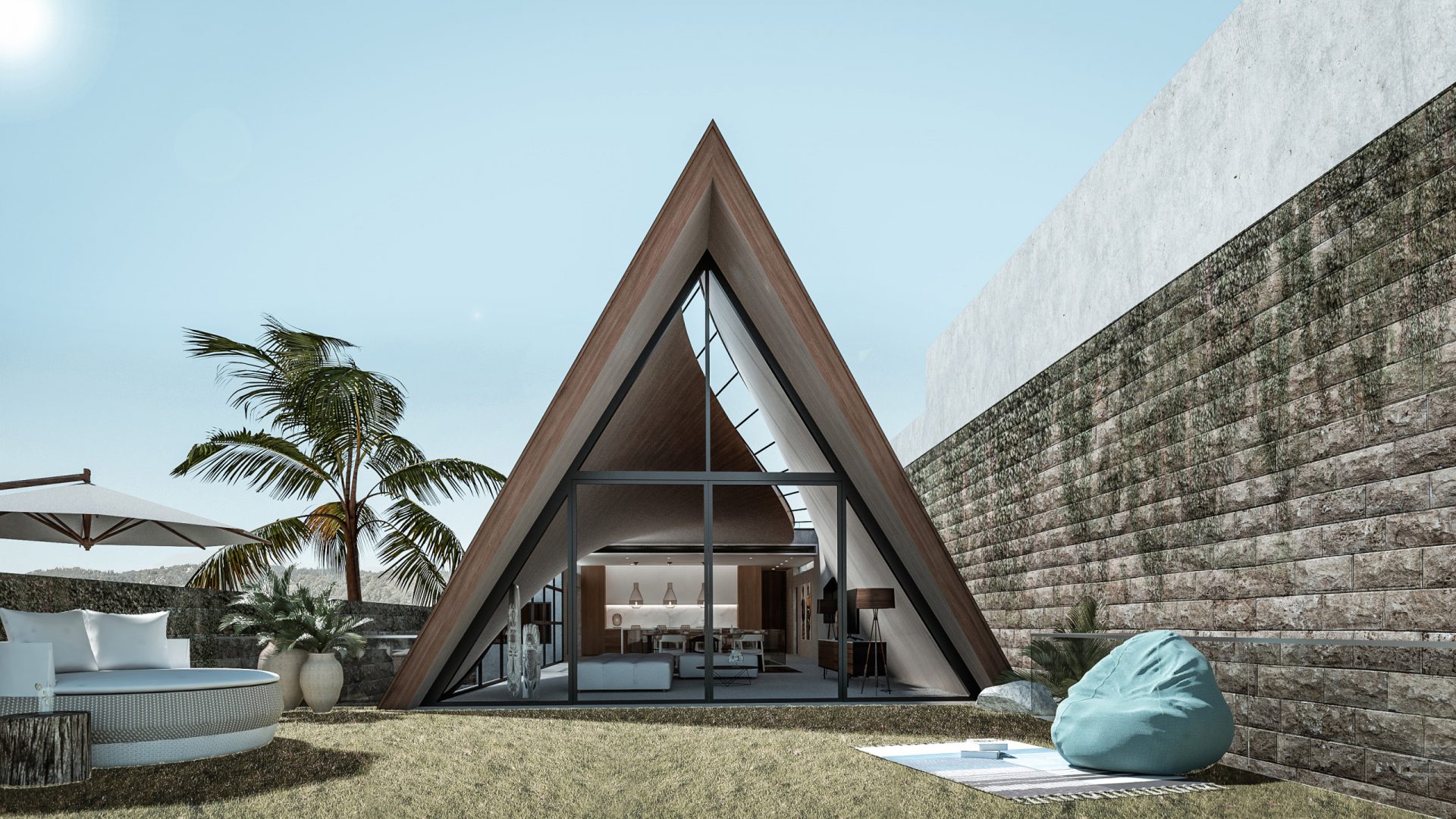
In Ocozocoautla de Espinosa, a mid-sized city in the Mexican state of Chiapas, the architecture studio Carmelina & Aurelio Taller de Arquitectura completed a small building in 2025 designed for students. Student Studies 46B comprises six student studios stacked over a garage roof, and it argues that densification does not require height, replacement, or spectacle, but intelligence applied to what already exists.
The project begins with its constraint. The garage at the front of the plot offers a concrete roof slab nine metres wide by eight metres deep, and rather than demolishing it, Carmelina & Aurelio treat this plane as the foundation for new homes. In this way, the existing single-family home at the rear and the central garden are left untouched.
Gallery
Open full width
Open full width
Student Studies 46B:
A building on a roof
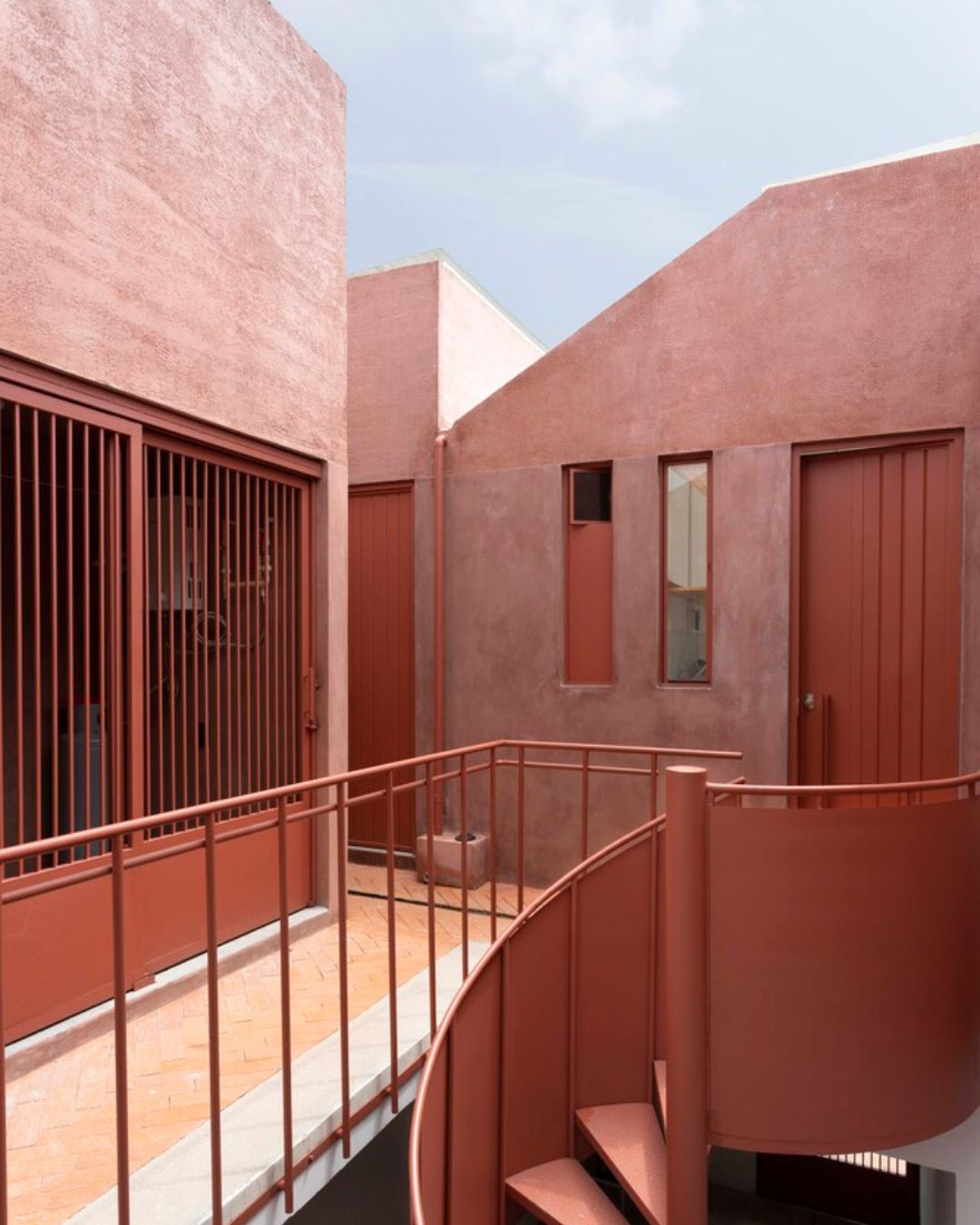
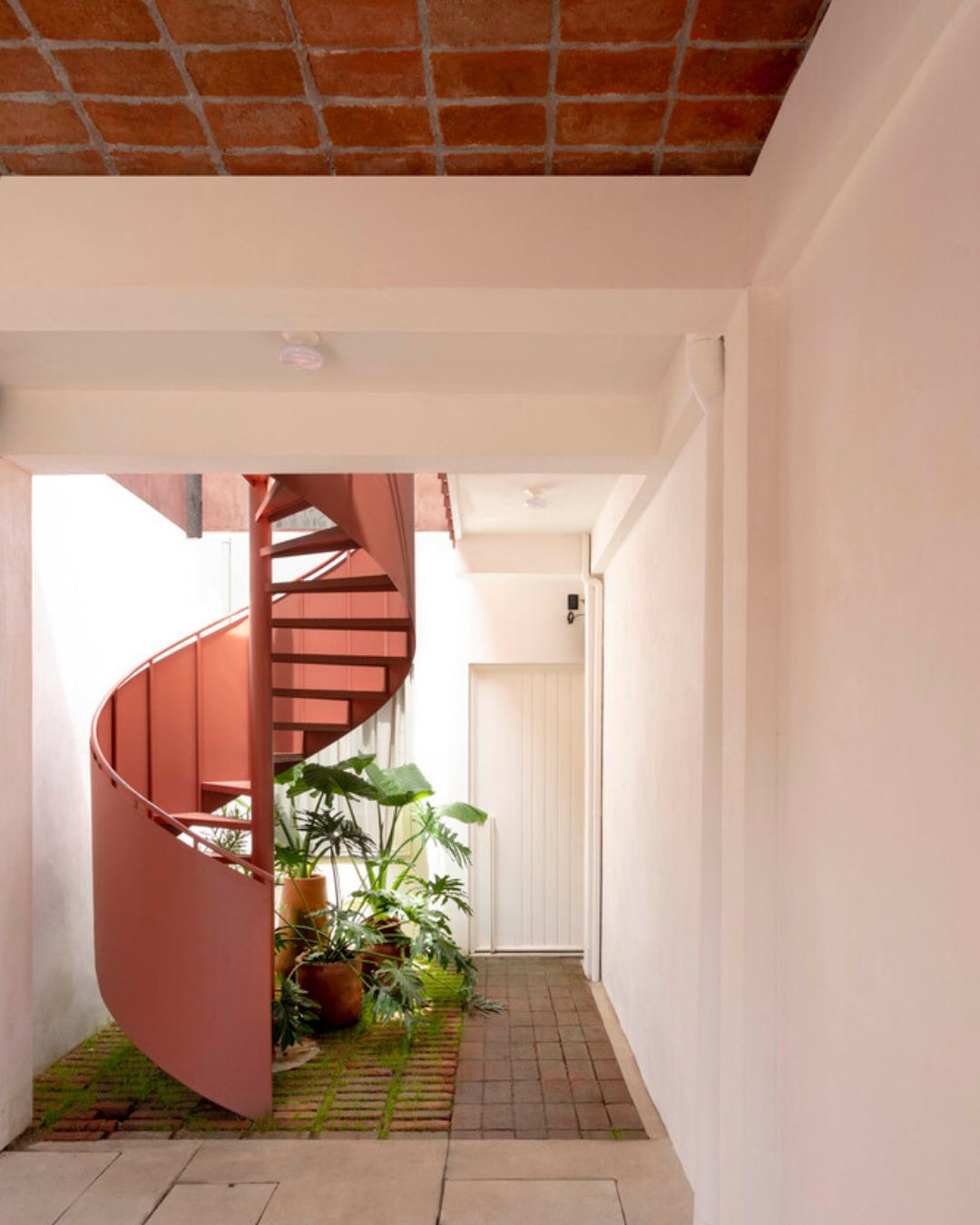
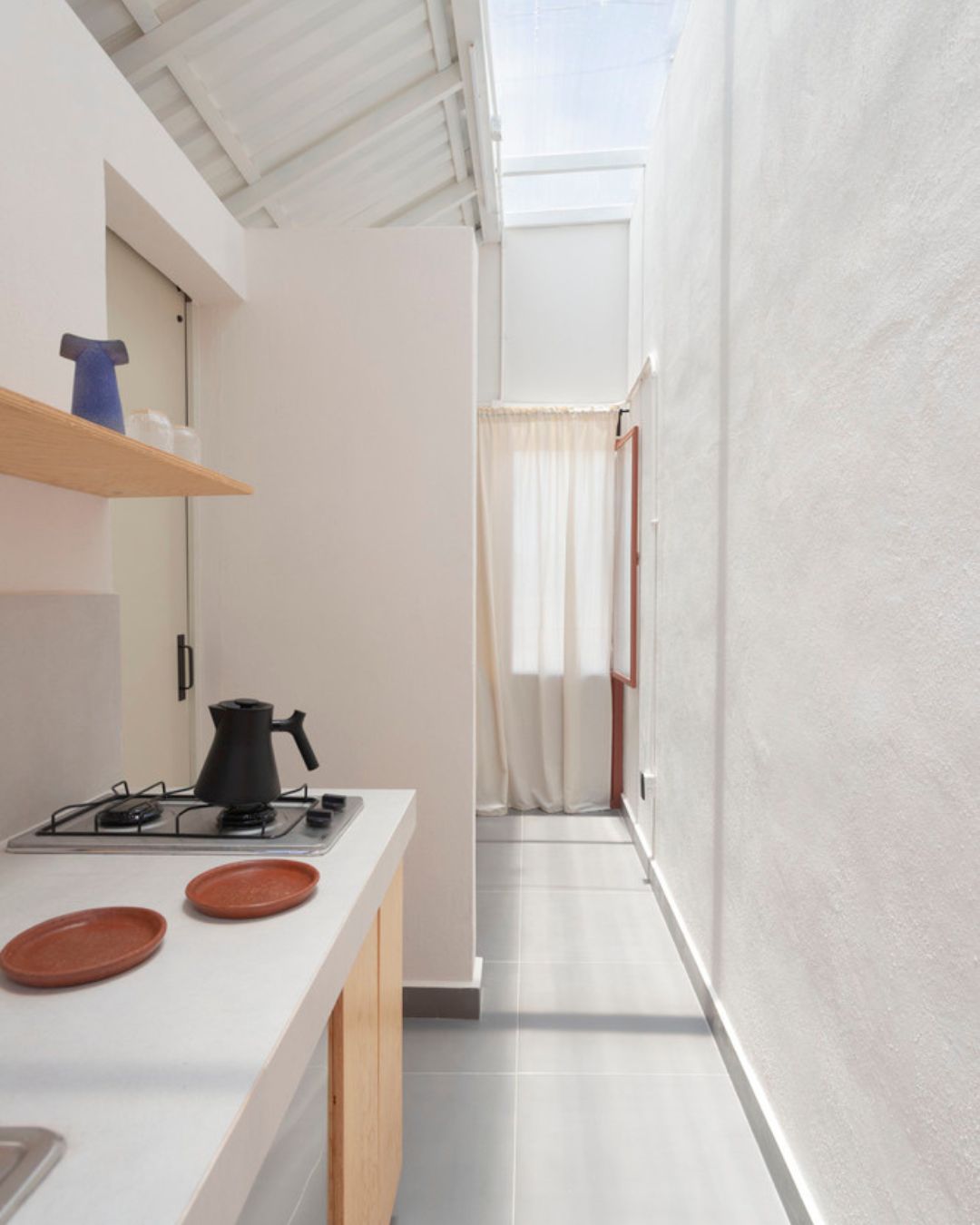
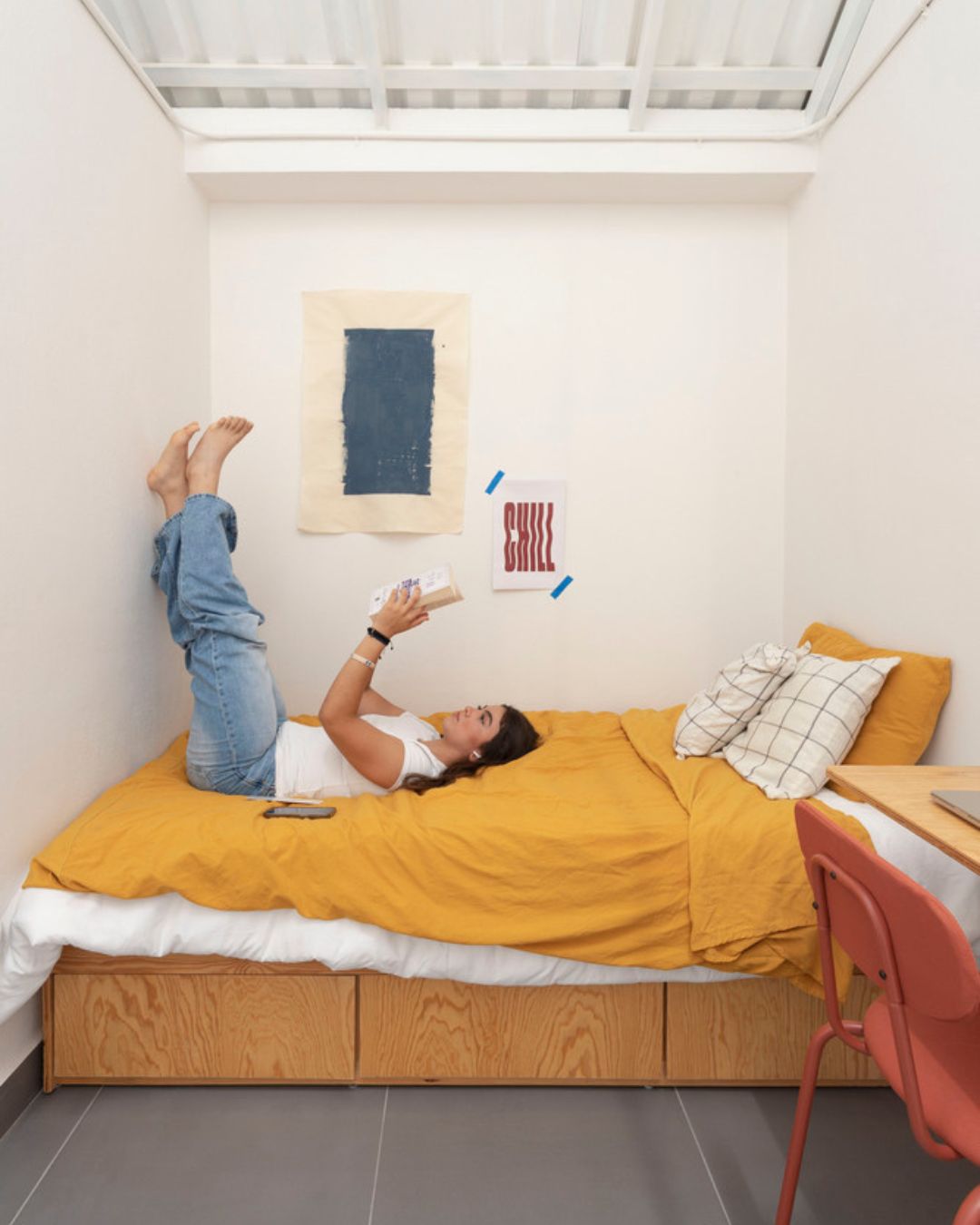
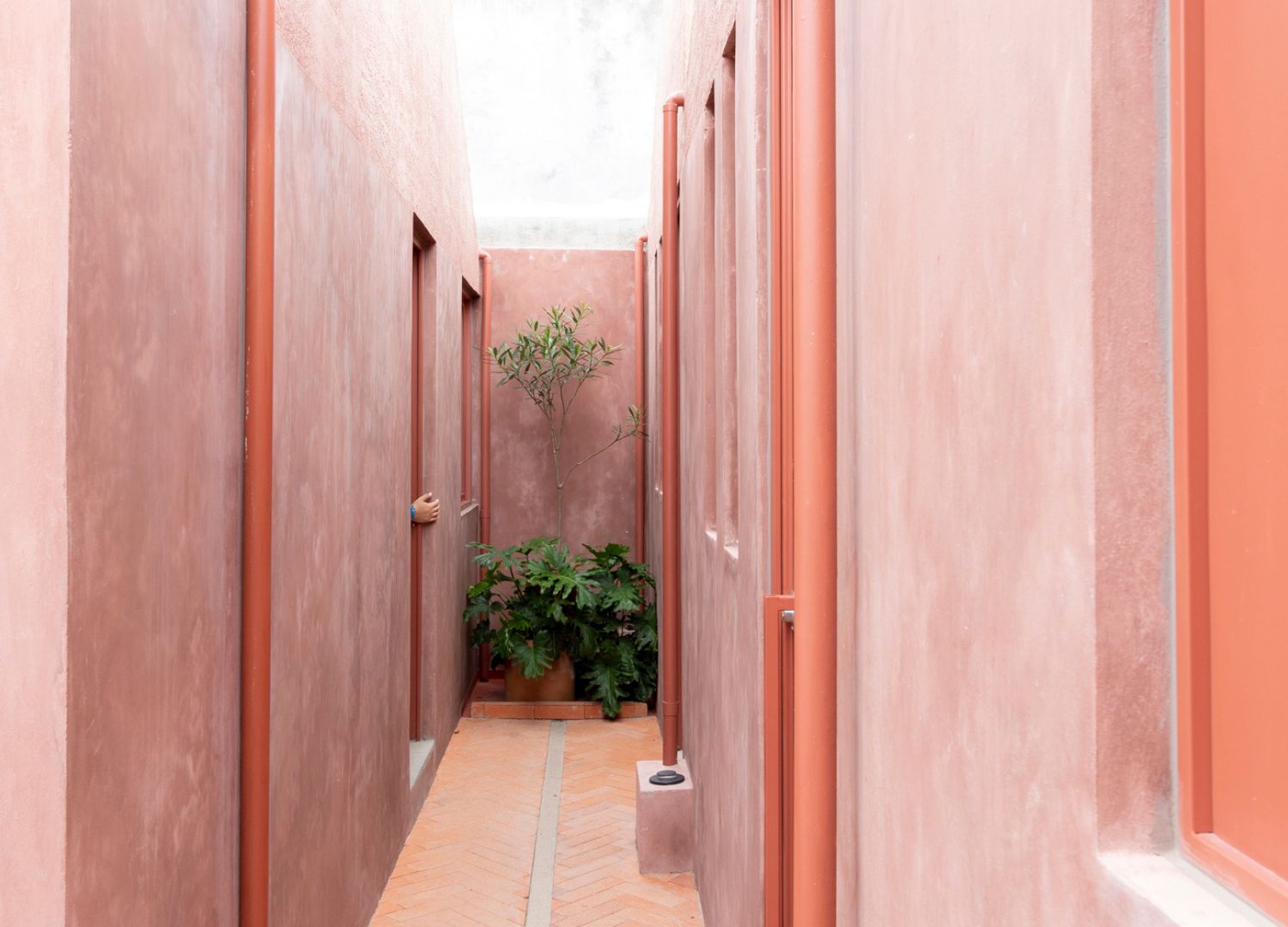
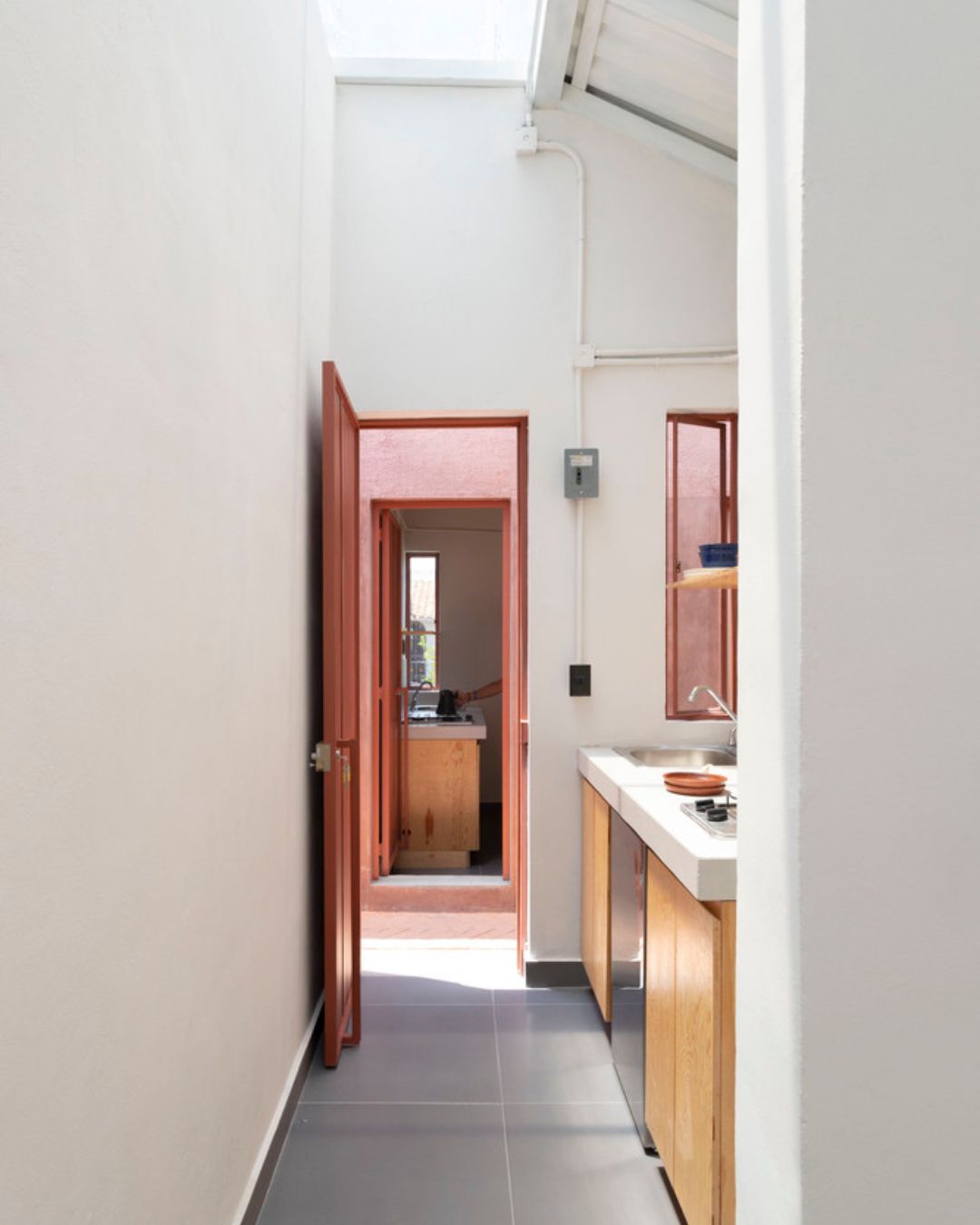
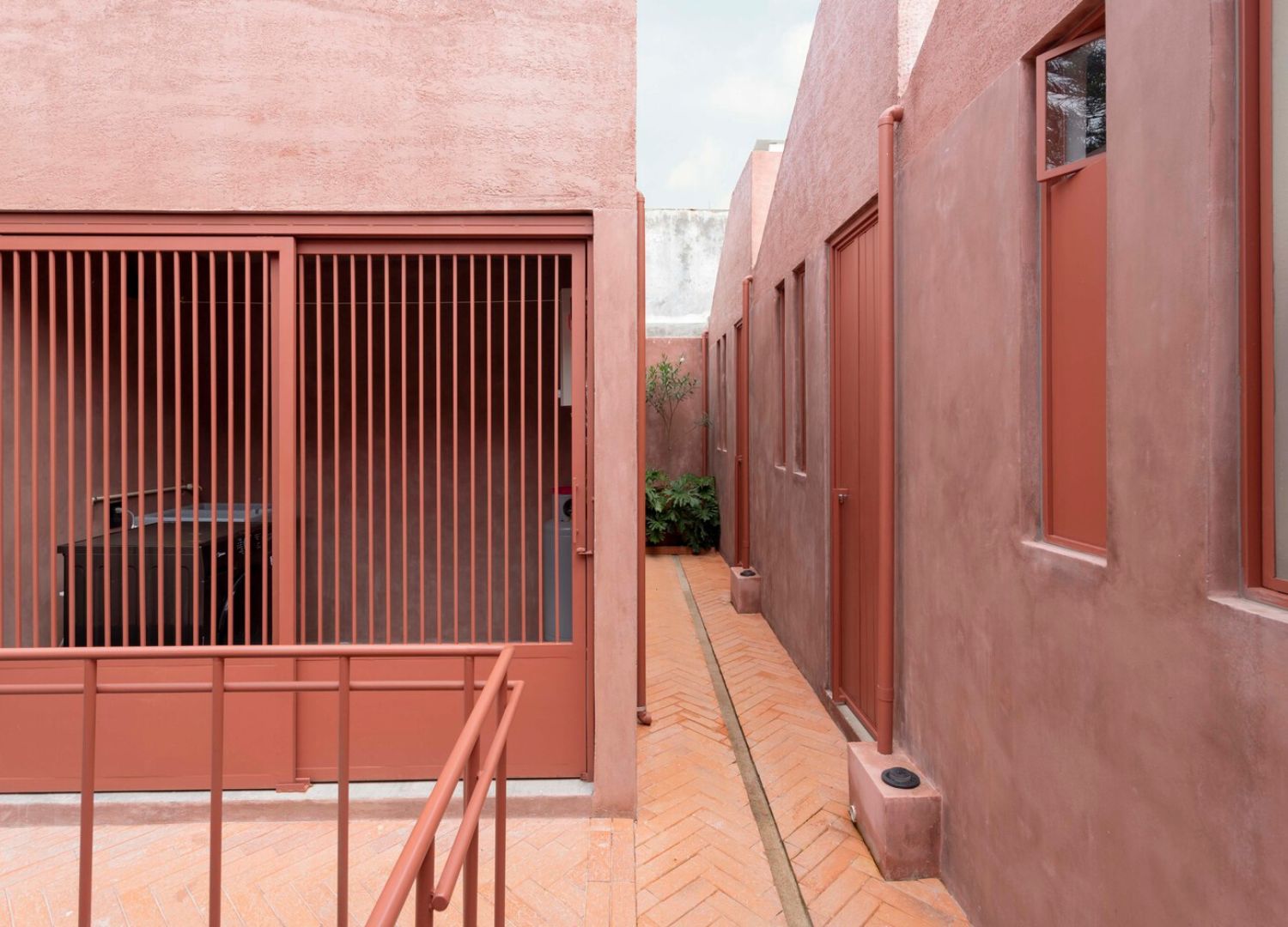
What rises from the slab is a two-storey structure containing six self-contained studios of 13 square metres each. The ground floor has a lobby, staircase, and one unit, while the upper level holds the other five. Each studio is designed with low partition walls, which divide the kitchen, bathroom, and living zone without enclosing them. The volume reads as one continuous space, giving the residents more air and flexibility.
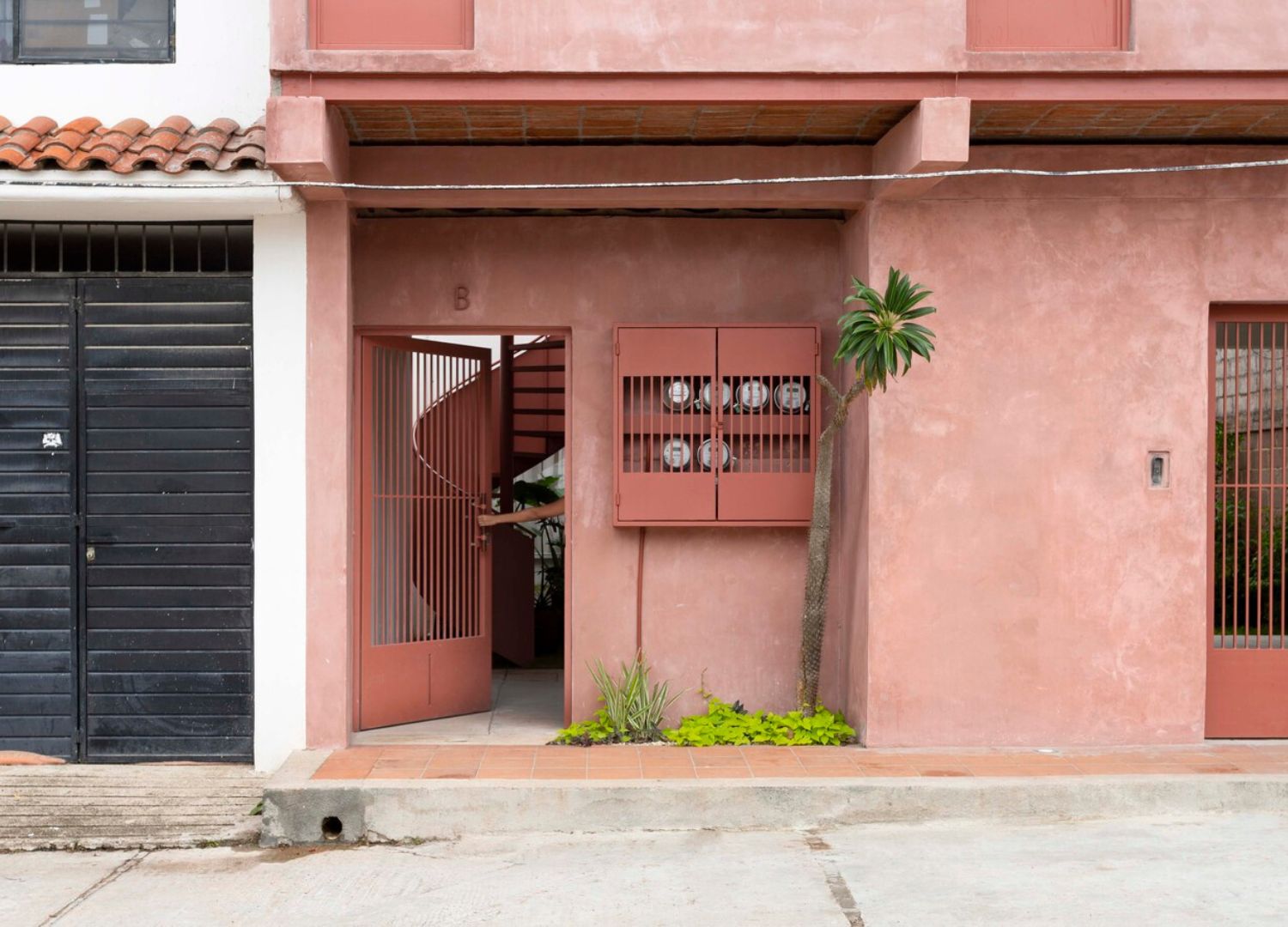
The materiality of the building is simple and honest, characterised by a pinkish plaster on the external walls, which reads against the brick of the garage roof and the local tradition of fired-clay pottery. Inside, white walls and ceilings and natural pine wood feel contemporary and genuine, finished with local suppliers like Cemex concrete, Interceramic tiles, and Pinturas Berel paint.
Intermediate cities and the housing void
Chiapas is one of the poorest states in Mexico, and one where more than half of private housing is substandard, defined as having poor construction materials, overcrowding, or lack of basic services. Urban sprawl across Mexican cities has produced a landscape of disconnected peripheral settlements, without reliable public transport or infrastructure. Ocozocoautla has an area of consolidated infrastructure and public transport near the building, and the project shows how to add housing density in those serviced areas without disrupting the urban grain of the typical low-rise residential streets.
The town is not a metropolis competing for investment, it is the kind of place where student housing as a designed typology essentially does not exist, and where students typically rent rooms in adapted family homes, sharing services, lacking privacy. Student Studies 46B’s studios are not premium units, but they are complete ones. Each has its own bathroom, kitchen, and sleeping area, and none of them share services with strangers. This is not standard, as in student housing in many cities globally, the bedroom is usually private and everything else is negotiated.
Architecture and scale
The student housing conversation in wealthier contexts has recently converged on a different kind of completeness, one measured in amenity packages, sustainability certifications, and post-use flexibility. In Milan, the Olympic village designed by SOM for the 2026 Winter Games is being converted into the largest student housing complex in Italy, backed by a team of institutional investors, government ministries, and a luxury fashion group.
The gap between the two housing examples is that the Olympic Village is, structurally, irreproducible. It required a global sporting event, a coalition of government agencies and institutional capital, a derelict railway yard, and years of planning. It is a one-time alignment of exceptional conditions, and the lesson it offers to housing architecture is nearly zero. Meanwhile, Carmelina & Aurelio‘s lesson is incredibly transferable, as the preconditions are present in thousands of locations across Latin America as well as globally.
Architecture’s relationship to scale is not neutral. The field systematically amplifies projects that require and reward large capital, prominent locations, and internationally recognised authorship. The garage roof in Chiapas is not a correction of the other models, but it is a reminder that solutions designed to be photographed and solutions designed to be useful and constructive to the field are different things, and that the housing crisis, wherever it occurs, has more use for the second.