Before form and material comes the story: the narrative design of Taekhan Yun
Taekhan Yun develops a design practice centred on repair, material authenticity and the transformation of personal experiences into objects that question contemporary consumer culture.
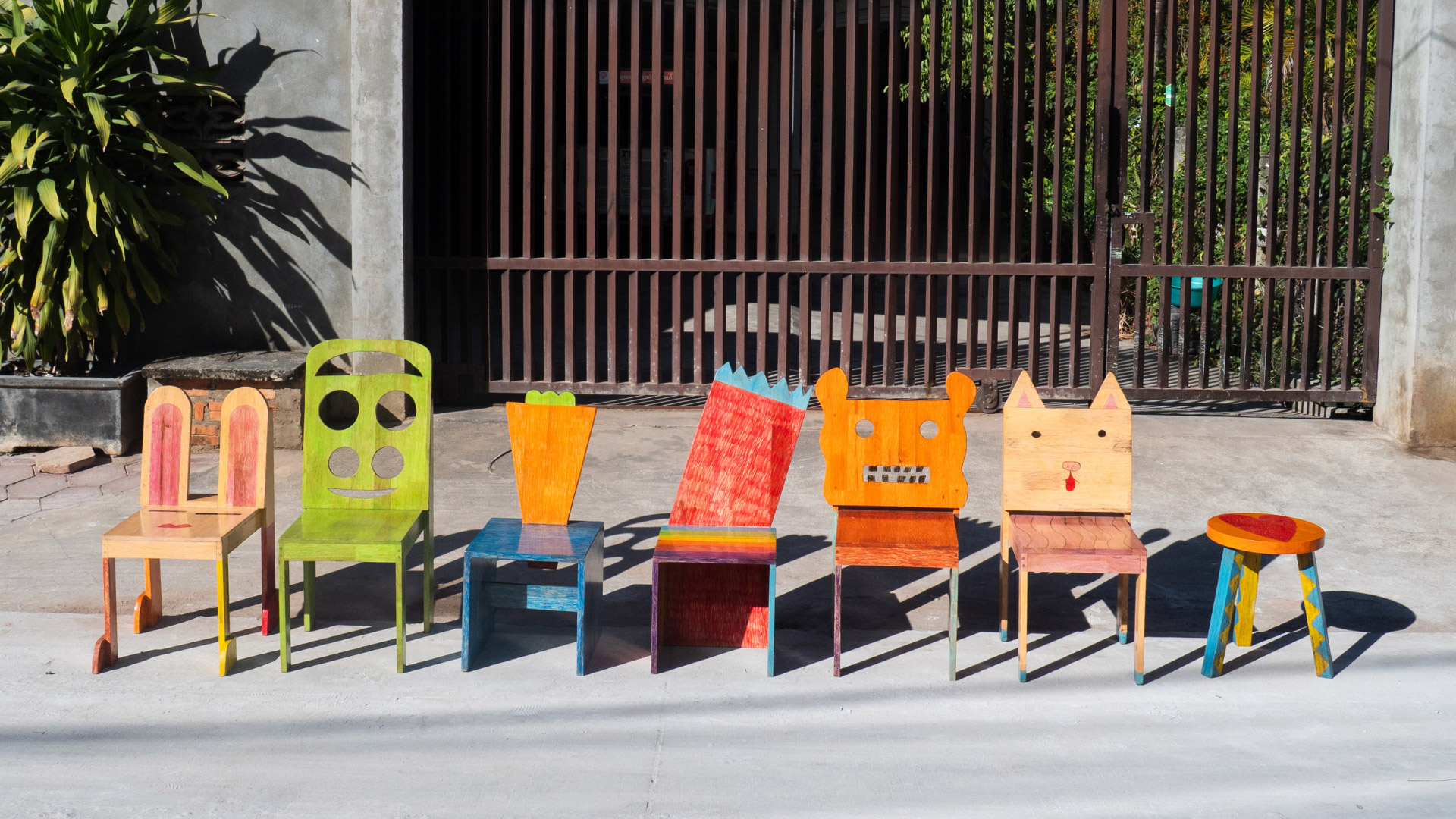
There are countless ways and tools to tell stories. A story can be stepped on with pointe shoes, it can flow through the lines of a poem, it can be splashed onto a canvas. One can even sit on a story, or switch it on with a light switch: designing, too, often means shaping stories, like those that take form in the objects of Taekhan Yun.
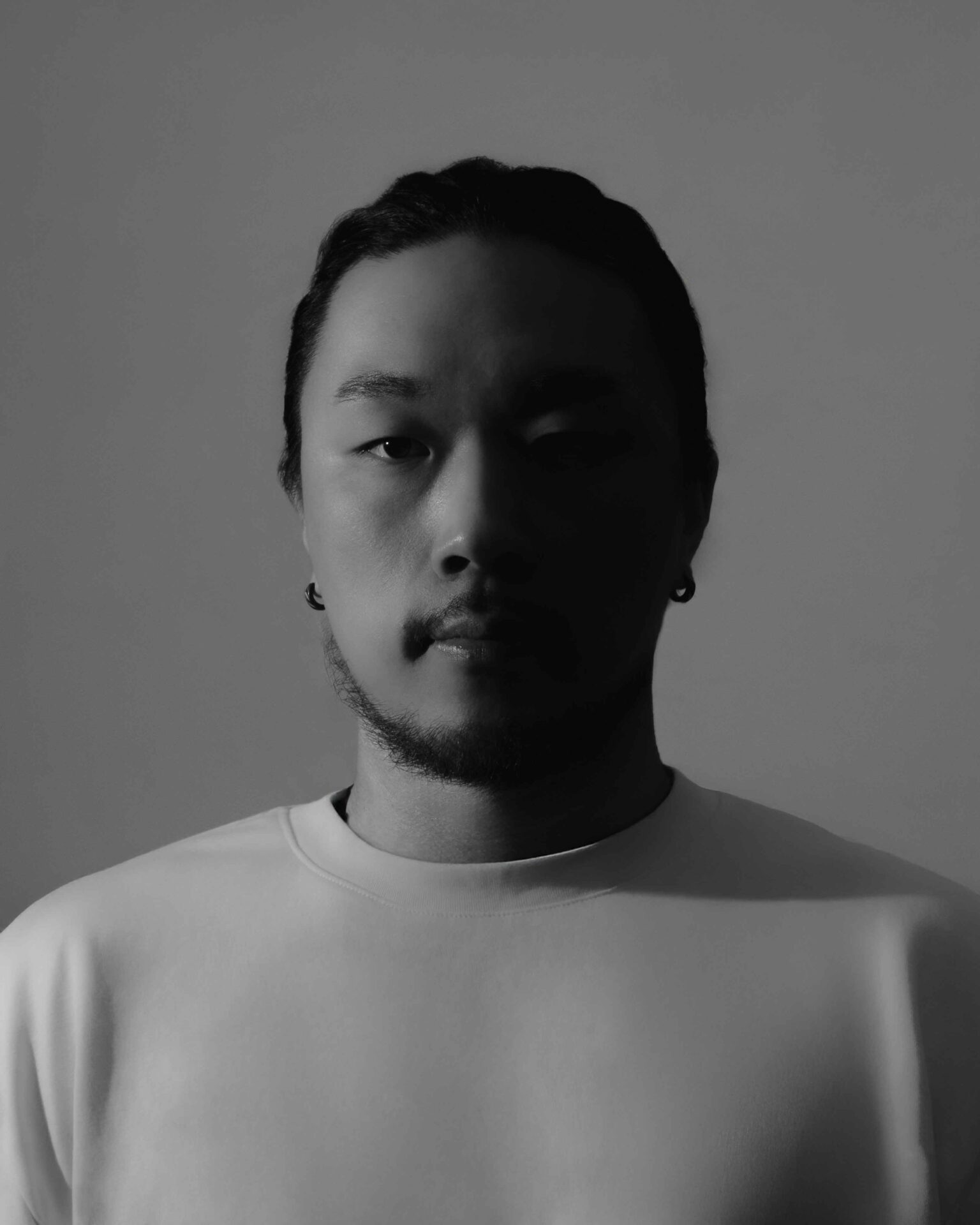
Born in Korea and currently living in Cambodia, Taekhan Yun is an art designer or a design artist, perhaps even a storyteller through design. For him, designing means first and foremost transforming the events of his life into objects: before form and material, it is the story that comes to life within a project.
Exploring his work is a bit like peeking into a secret diary: an intimate and delicate experience.
Gallery
Open full width
Open full width
Taekhan Yun’s practice exists in a tension between a perfectionist instinct, oriented toward the creation of aesthetically impeccable objects, and a desire for freedom and improvisation that embraces the imperfect traces of the hand and the authenticity of materials. This inner contradiction takes shape in projects that open up countless reflections. The first concerns the consumer society in which we live: what does it mean to keep producing objects upon objects, waste upon waste, without considering the world we will leave in the hands of future generations?
In this sense, Taekhan Yun’s practice is oriented toward repair and recovery—rather than recycling—in order to bring back to life objects that are mistakenly considered irreparable. As mentioned earlier, this approach inevitably clashes with the pursuit of perfection, because it requires letting go of preconceived ideas and adapting to the forms and materials one encounters while repairing.
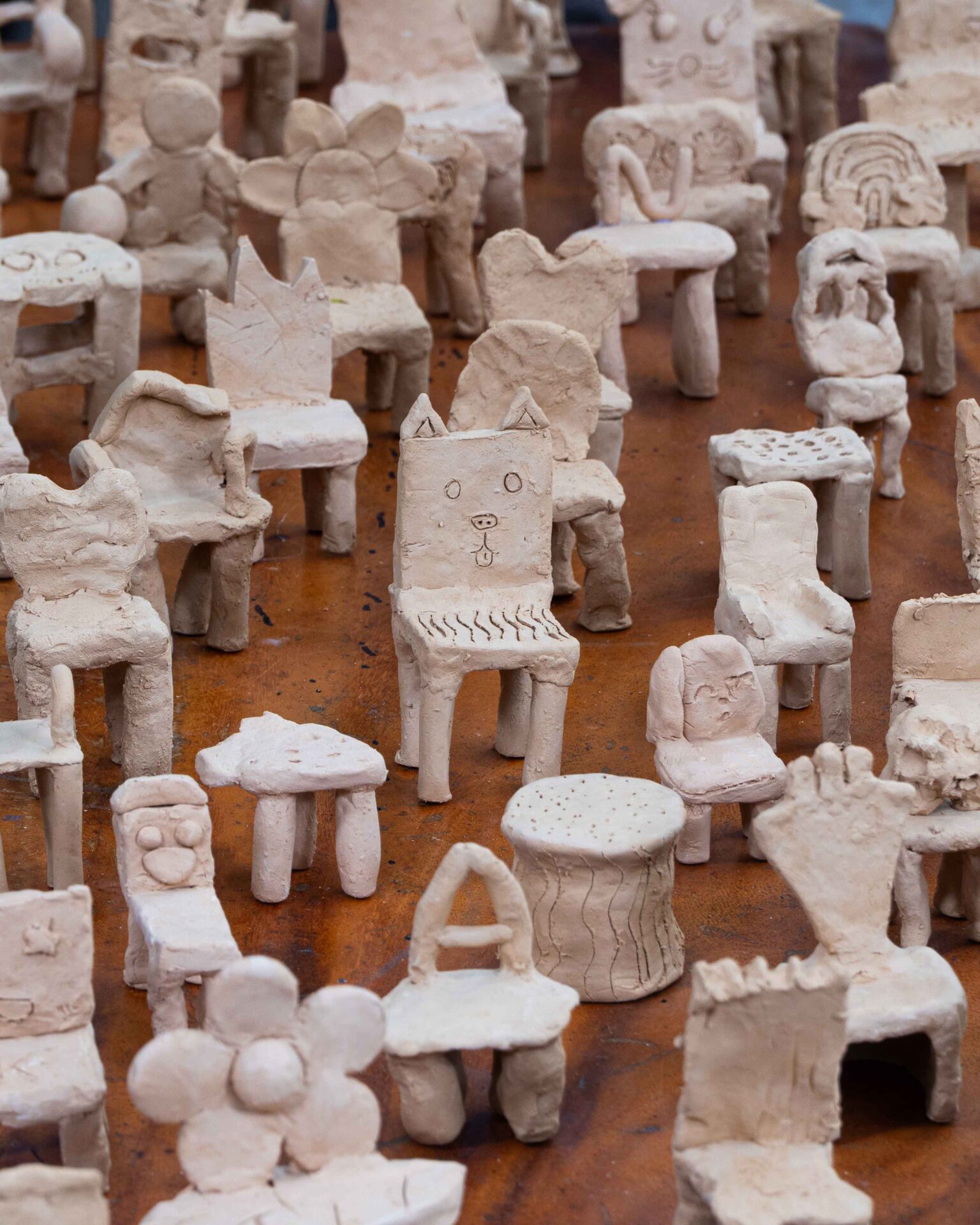
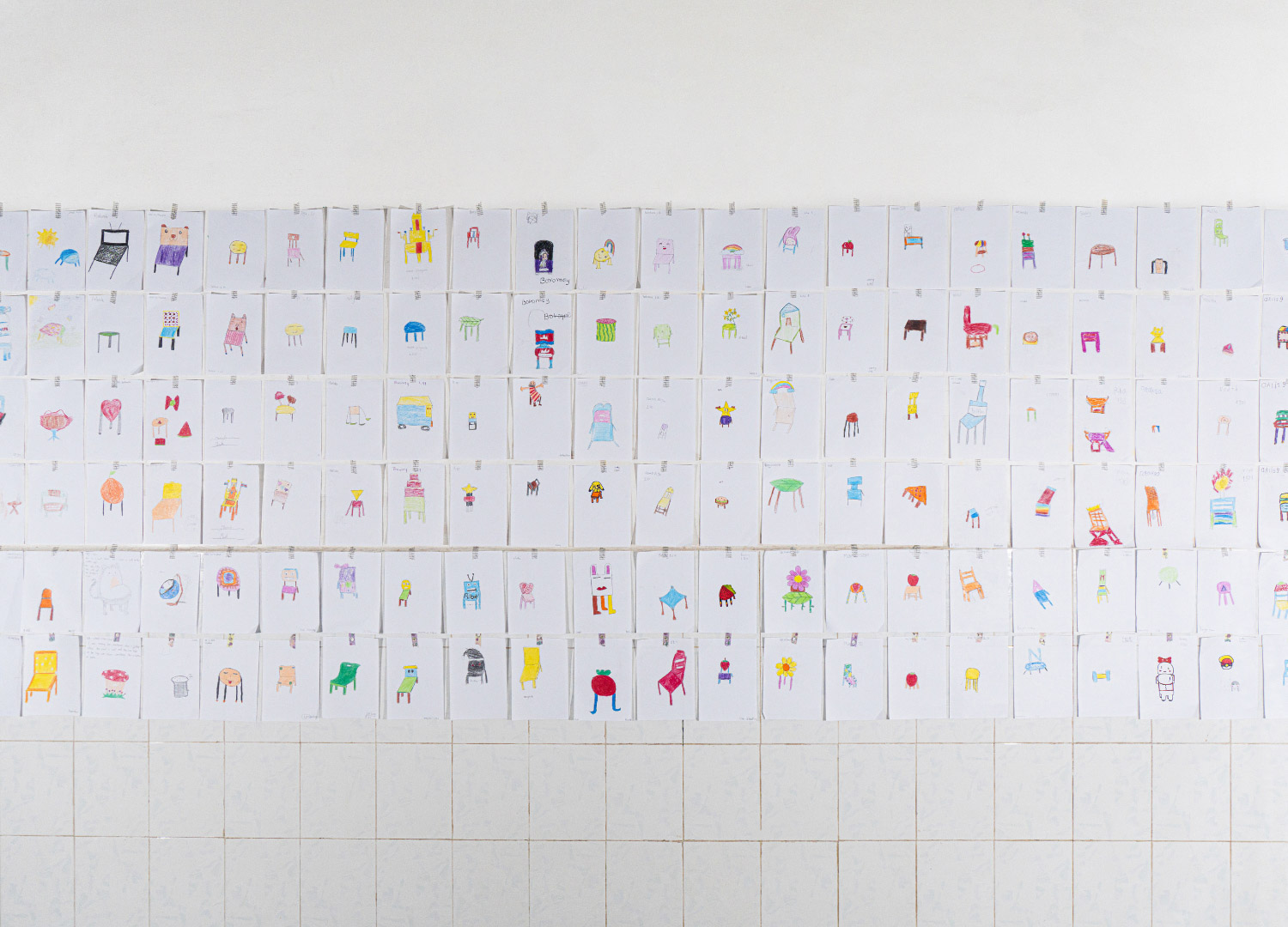
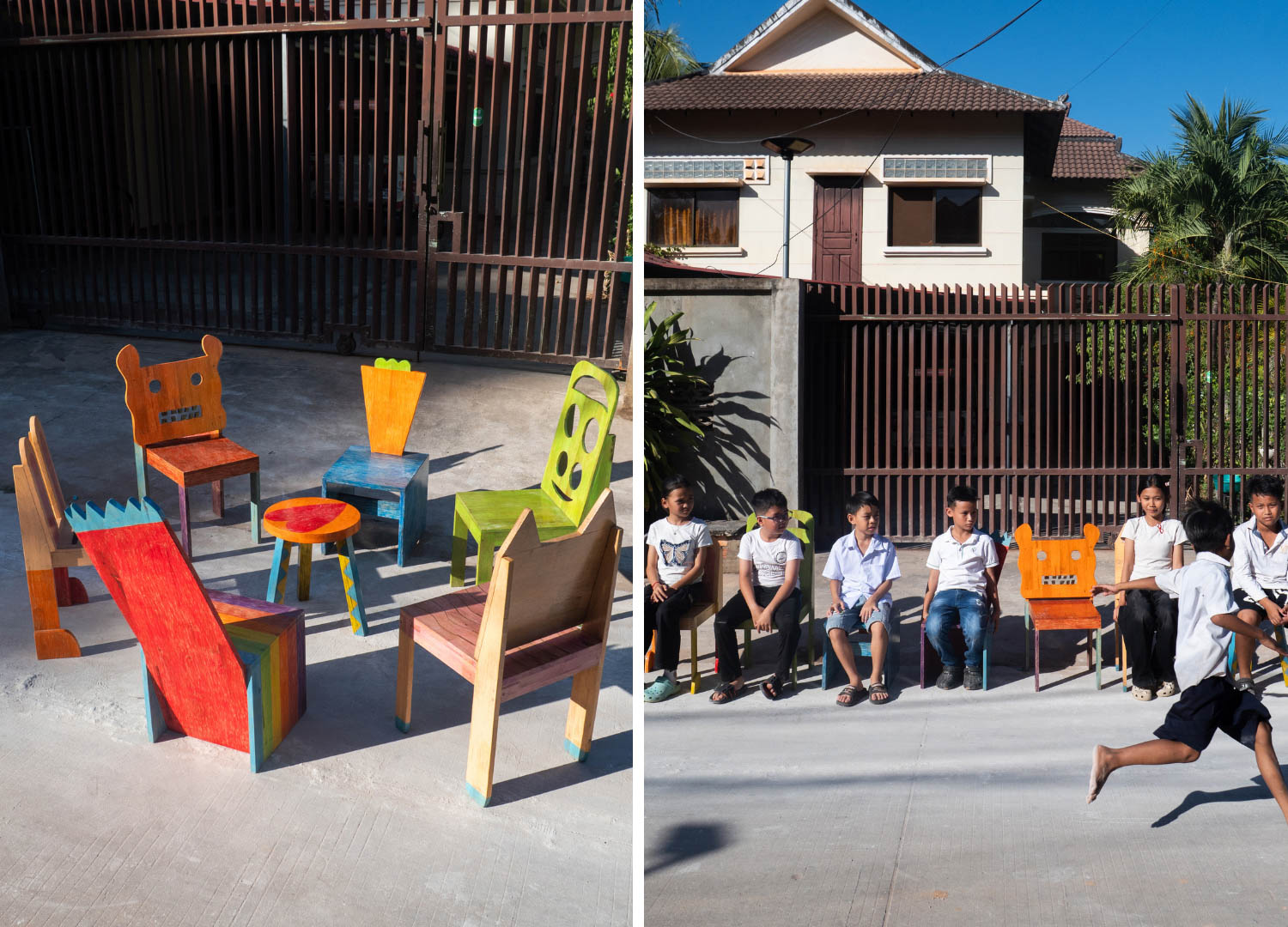
Recently, one project by Taekhan Yun in particular captured our attention: Chair for Kids, created in collaboration with seventy children from the English School of Siem Reap in Cambodia. A project that perhaps represents the highest expression of Taekhan’s deep sensitivity and his equally profound connection to the act of designing. We wanted to interview him so that everyone could better understand his world and his vision: one that moves against the current, away from a society in which it is extremely easy to know the price of things, but where there is little interest in understanding their value.
To begin with: who are you, where do you come from, and how would you describe your practice today?
Taekhan Yun:
I was born in Korea, studied design in France, and am currently based in Cambodia, where I continue my independent practice. My practice today can be described as translating the events and situations around me into objects. Rather than being defined by a single style or theme, it is closer to a way of capturing specific moments in my life.
From personal stories to environmental issues, questions about manufacturing, or design education—each project emerges from subjects that are closely connected to my life at that particular time.
Recently, you stated: “After all, I don’t really think of myself as a designer.” How would you define yourself, then? Or are definitions simply not that important to you?
Taekhan Yun:
I see a designer as someone who solves problems for the public good. However, my work begins from a slightly different position. I unfold stories that originate from myself and my immediate surroundings, and in that process, I both address problems and raise questions. In this sense, I feel that my practice shares a certain attitude with that of an artist.
For this reason, I think of myself as existing on the boundary: an “artdesigner” or a “designartist.” Although I use the language of design, my purpose is not limited to efficiency or problem-solving; it is closer to storytelling, sensibility, and inquiry.
Reading about your projects feels like listening to a story. Each creation seems deeply intertwined with your personal life, resulting in a narrative that feels intimate, almost diaristic. What role does the autobiographical dimension play in your approach to design?
Taekhan Yun:
My starting point was art. I have been taking photographs for over ten years, and I studied design at an art school in France. There, the boundaries between art and design were fluid, and the environment encouraged open discussion and critical reflection across disciplines. That experience had a profound influence on the way I approach my work today.
As I mentioned earlier, rather than seeking concepts from a distance, I begin with stories that emerge from within my own life. The autobiographical dimension is therefore not merely a source of content, but the very starting point and structural framework of my practice.
In your work, there is a strong awareness of the use of materials: reclaiming waste, repairing discarded objects, minimizing excess. At the same time, you describe matter and form as tools for telling human stories. Where does this approach come from?
Taekhan Yun:
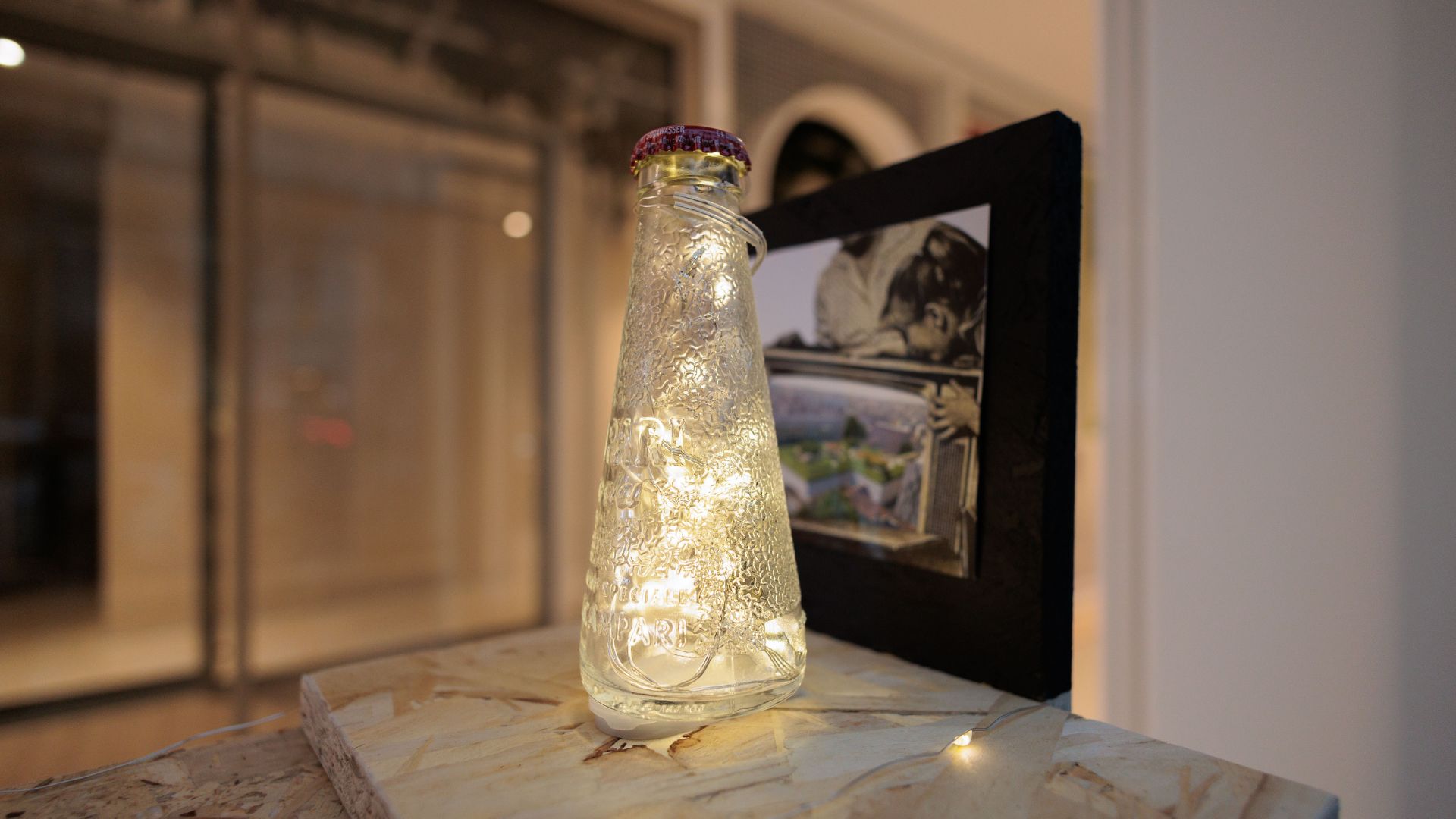
Recycling is an area I have continuously been interested in. However, it is not simply a choice made for environmental protection. Ironically, the act of “recycling” itself often involves another cycle of production and consumption. For this reason, I focus less on the concept of recycling and more on the act of “repairing.” I collect objects that have been broken or discarded, and while maintaining their original structure, I add new layers so that they can exist again in a different form and with a different meaning.
For me, making work is therefore less about creating something entirely new and more about re-establishing a relationship with what already existed. This attitude stems from my tendency to respond sensitively to the things I encounter in everyday life.
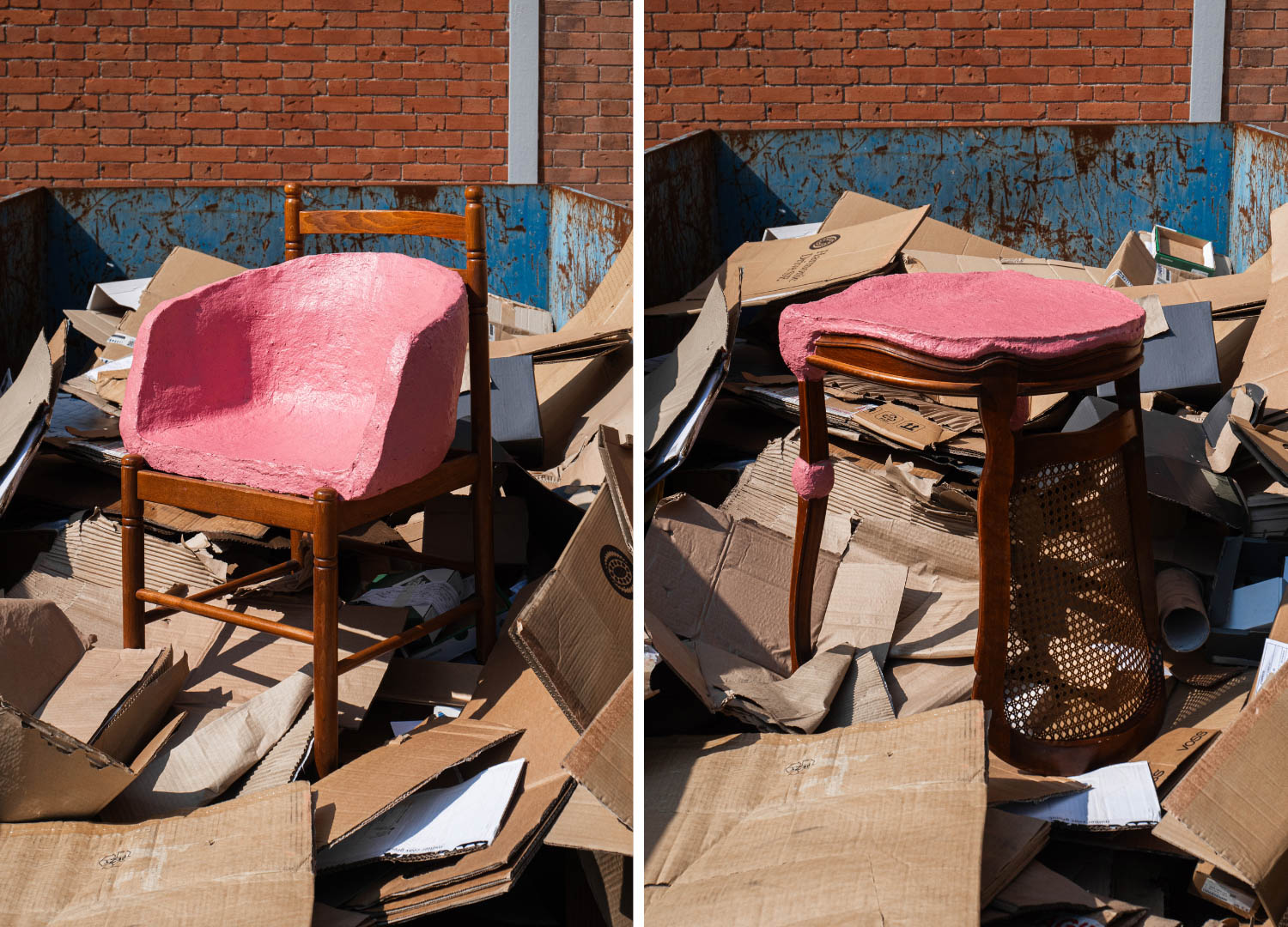
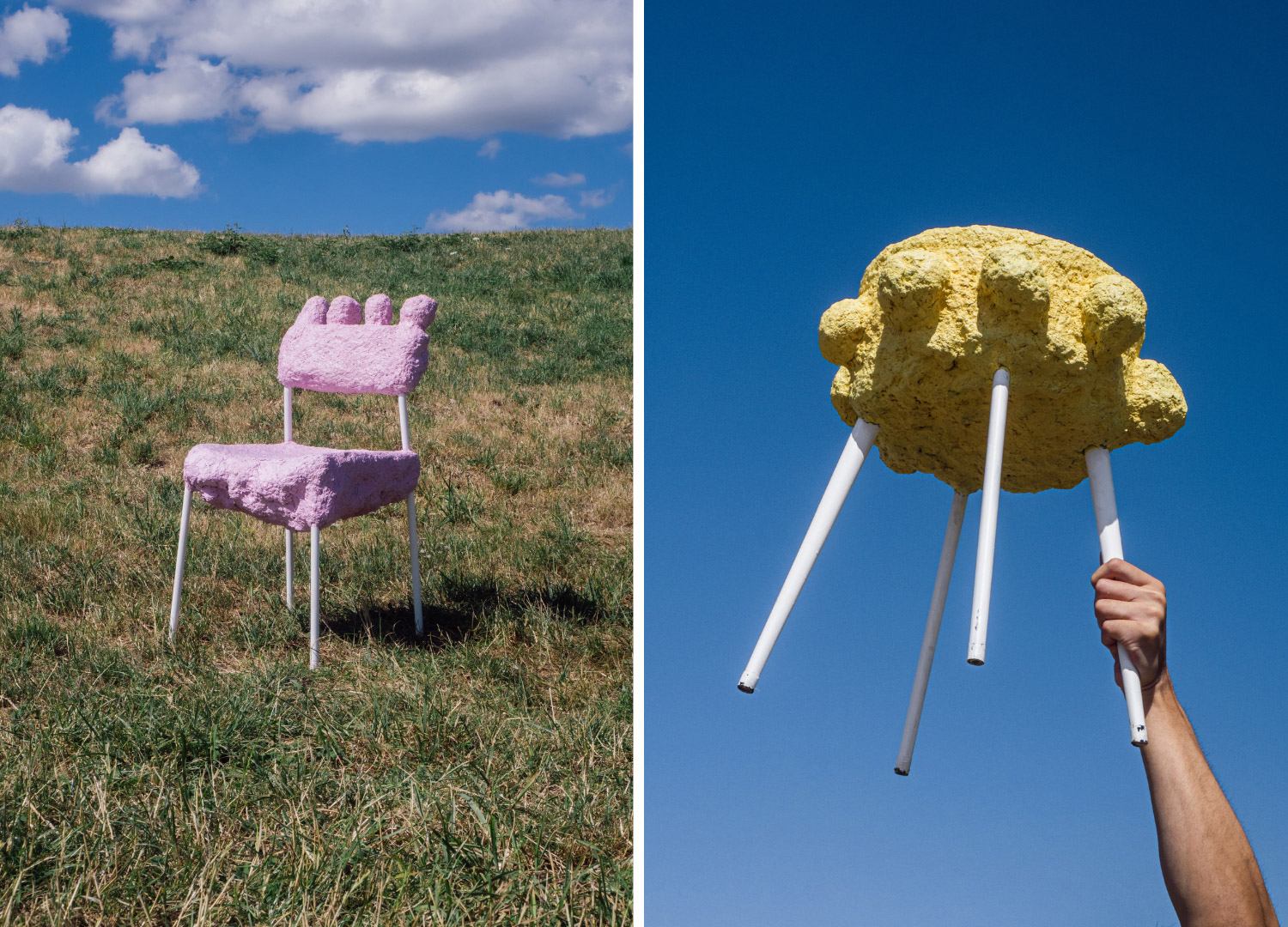
In the project “Objet Récit,” you mention trying to free yourself from your obsession with detail and perfection. Repairing a broken chair and stool using paper pulp instead of molds and resin almost feels like an act of letting go of control. In your opinion, what limitations can an overly perfectionist approach impose? And what did you discover by allowing space for imperfection?
Taekhan Yun:
Everyone makes mistakes in the process of working. And sometimes, a single mistake can bring the entire process to a halt. One of the concepts I am drawn to is the Japanese notion of wabi-sabi—an attitude that finds beauty in imperfection and in the traces of time. I see it not merely as an aesthetic style, but as a way of living.
By allowing imperfection, I began to focus more on the process rather than the final result. Instead of pursuing perfection, I learned to accept the marks of time and of the hand, and within them, I discovered forms that felt more honest and sincere.
Recently, one of your projects attracted particular attention: “Chair for Kids.” Could you tell us about it?
Taekhan Yun:
When visiting an English school run by my parents in Cambodia, I observed young children attending classes while adjusting their bodies to chairs designed for adults. That scene felt like more than a simple inconvenience. It revealed how furniture and space are routinely designed around adult standards, while children are expected to adapt and remain compliant within those environments.
Although this project began as an attempt to create chairs for children, it aimed to allow them to experience a process in which their imagination, their own bodies and choices become the basis for design.
You worked directly with children on the development of a real design project. What were the biggest challenges of this shared process?
Taekhan Yun:
Working with children rarely unfolds according to plan. Unlike adults, they do not move within predefined structures. They ask unexpected questions and suddenly shift in entirely different directions. Yet I came to feel that this unpredictability was, in fact, the greatest potential of the project.
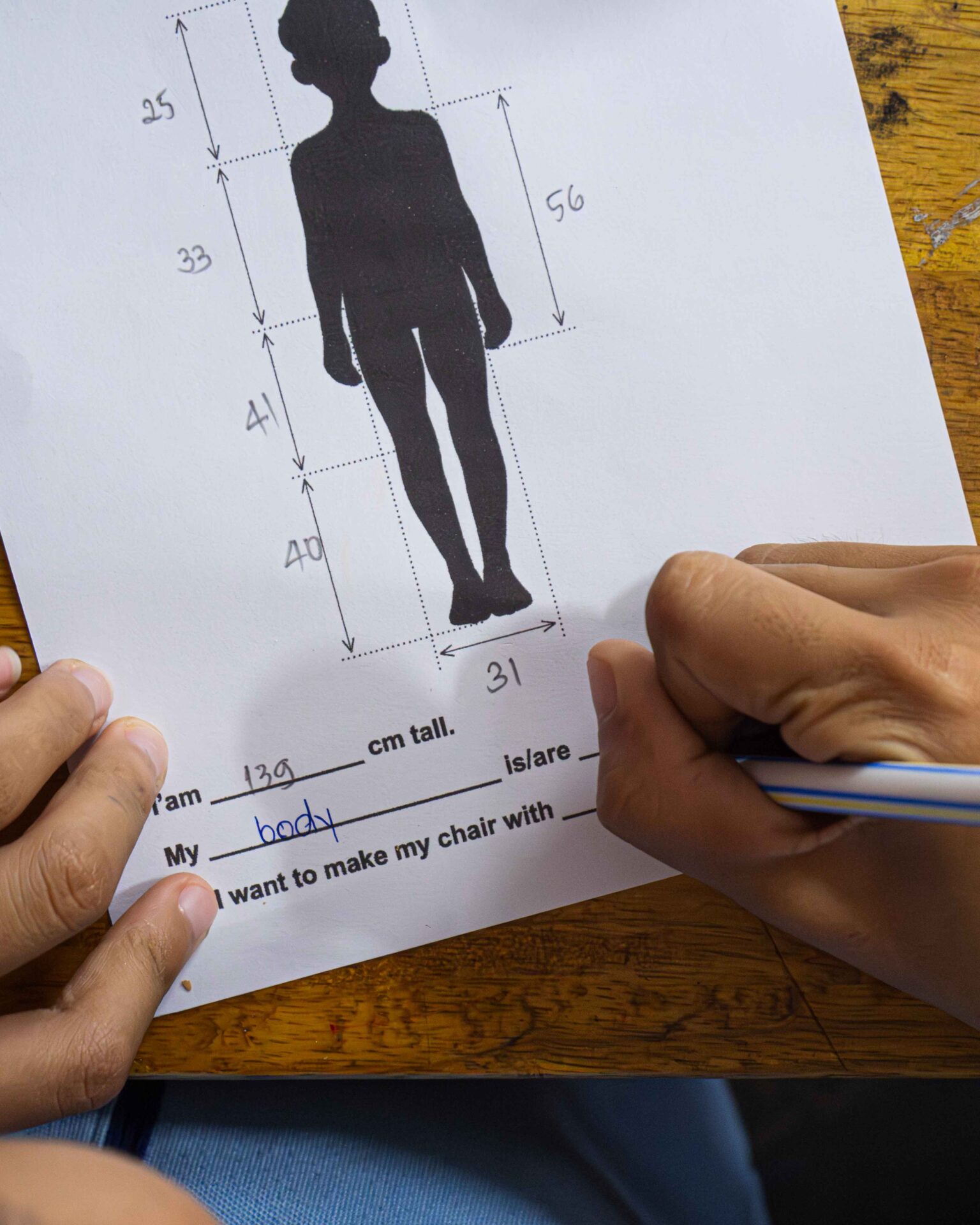
For example, measuring body dimensions was not part of the original plan. However, the children did not know their exact heights, and naturally, we began measuring each other. In that process, they were not simply designing a chair; they were experiencing a new awareness and understanding of their own bodies. The biggest challenge was learning not to control the process—and at the same time, the greatest learning began precisely at that point.
How do you transform their boundless imagination into a functional object without betraying its spirit?
Taekhan Yun:
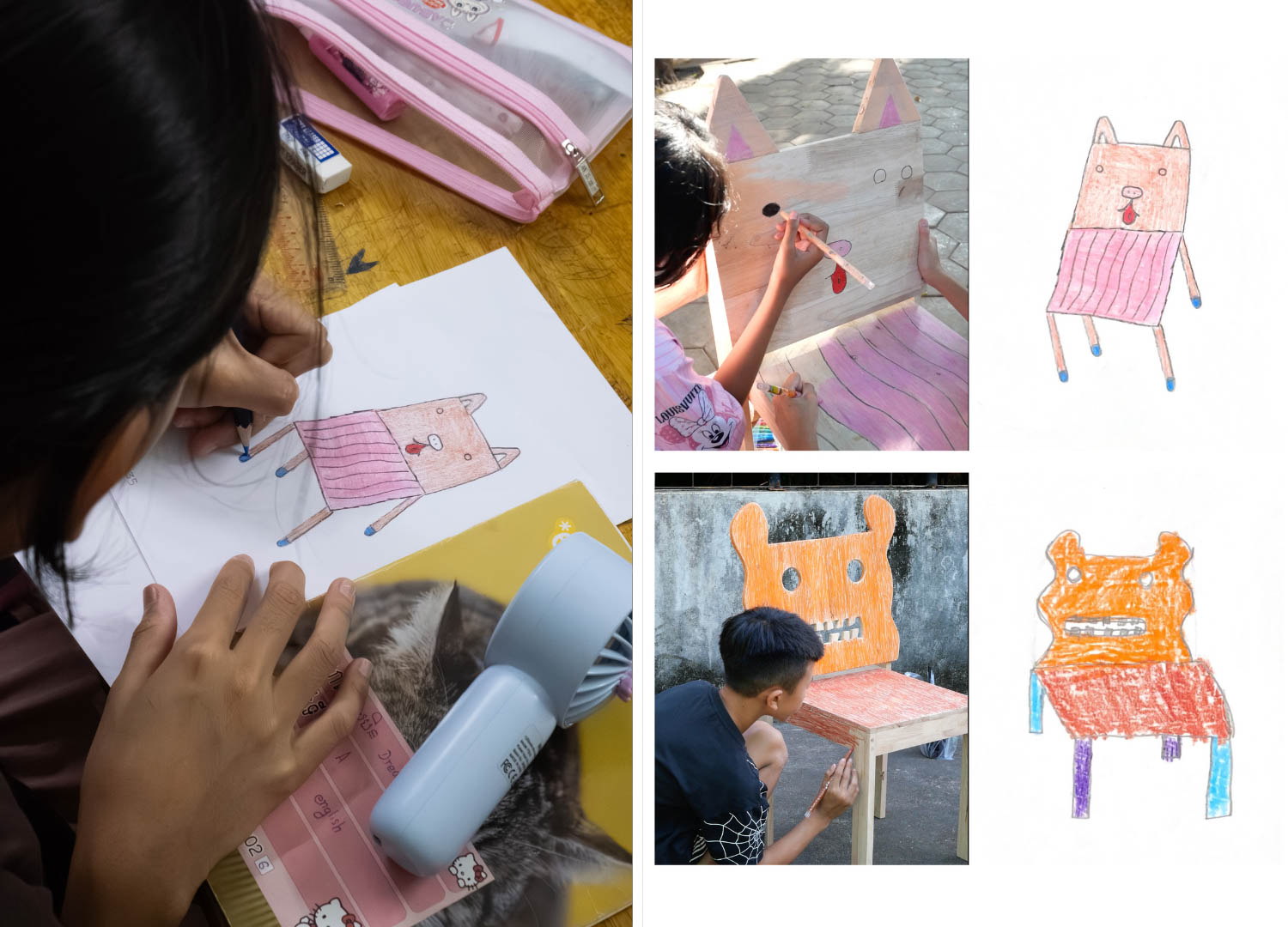
The most important principle in transforming the children’s imagination into chairs was not “correction,” but “translation.” I did not try to adjust or organize their ideas according to adult standards. Instead, I reinterpreted their proposed proportions and sensibilities in a way that was structurally safe and functional, while keeping their original intent intact. What mattered was not creating a perfectly functional chair, but producing an object in which the children’s imagination could still be felt.
Beyond the formal outcome, what was the true objective of this project for you?
Taekhan Yun:
What mattered more than the final result was the experience of the children actively participating in the process. They witnessed their imagination not remaining as mere ideas, but taking shape in physical form. And in that process, they were not passive observers—they were active participants.
Drawing their chair designs, measuring their own bodies, creating prototypes, and finishing the actual chairs with crayons: these moments, one by one, were at the heart of the project.
What did it mean for you to turn design into an educational tool?
Taekhan Yun:
Using design as an educational tool was not about teaching the “right answer.” In this project, I did not tell the children, “this is how it should be done.” I also see design not simply as a skill for making objects, but as a way of thinking. Understanding their own bodies, sensing proportions, correcting mistakes, and trying again.
All of these experiences are, in themselves, a form of learning. For me, this project was therefore not about teaching design, but about helping children think and discover for themselves through the process of design.
If you had to explain to a child what design is, what would you say?
Taekhan Yun:
“Design is about making what you imagine. It is also a way to discover what you are thinking in the process.”