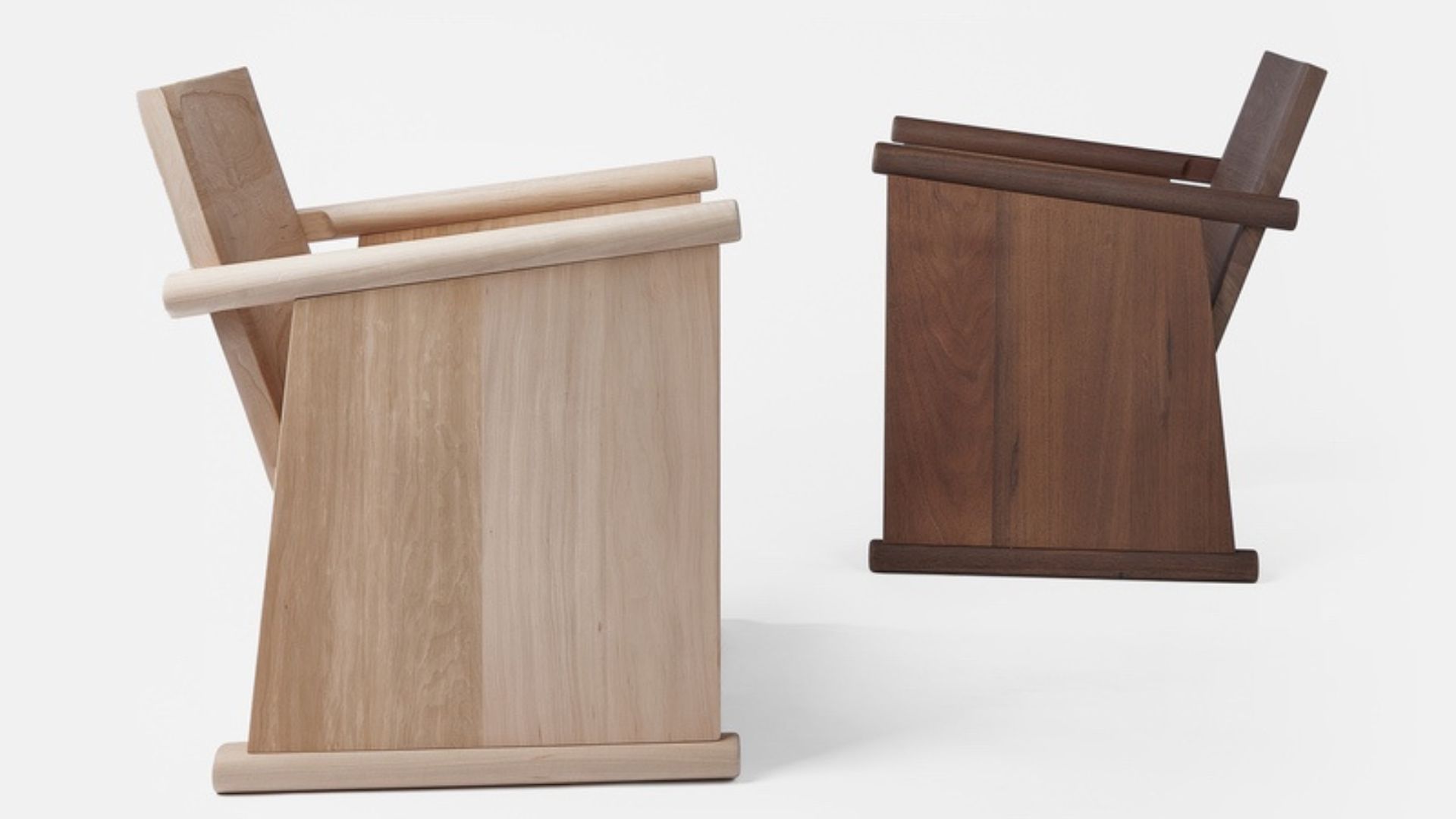
Folding chairs: a history of contemporary living
Why are designers still obsessed with folding chairs? A journey through history, industrial design and contemporary experiments in adaptable furniture.
Few objects seem to capture today’s design discourse better than folding chairs. Alongside bending, modular systems and the disappearance of clear distinctions between indoor and outdoor furniture, they reflect a broader interest in the nomadic aspect of our lives – one that resonates with architects, designers and those working across the discipline – as they are shaped by changing spaces, new habits and ways of living, but also by larger phenomena such as wars and the climate crisis.
However, not all of this rethinking of design belongs to contemporary times. Especially when we look at foldable and bendable furniture, we discover that the possibility of transforming objects has always been connected to a different idea of living. From ancient cultures using folding and portable chairs to recreate familiar conditions in unfamiliar spaces, to the role of folding as part of nomadic practices – for domestic life, but also for war, camping and travelling – we arrive today with a renewed understanding of a typology that has always existed between permanence and movement.
Gallery
Open full width
Open full width
Chairs, in general, have always been a designers’ obsession, but imagine a society – the one shaped by industrialisation – that, between the middle of the nineteenth and the beginning of the twentieth century, was defined by precision, functionality and rapid production. Imagine how such a society could benefit from an object traditionally associated with stability and fixedness, suddenly becoming an expression of movement and transformation.
Folding chairs: a history of contemporary living
Industrialization as a way of interpreting an archetype
The story of industrial production in the field of folding chairs begins with the patents developed around this emerging category. Among them, those introduced by John Cram in the United States contributed to the standardization of folding mechanisms, transforming an ancient typology into an object that could be produced and distributed on a much wider scale. The folding chair entered, then, a new phase: it became part of a broader culture of efficiency and reproducibility. The same principles that shaped industrial production – the optimization of materials, the reduction of unnecessary elements and the search for functional solutions – found a natural expression in an object whose identity was based on transformation.
By the beginning of the twentieth century, folding chairs became particularly relevant to modernist design. The movement’s interest in rational construction, lightweight structures and material honesty found in folding mechanisms an opportunity to rethink the relationship between furniture and use. Bent wood, tubular steel and later aluminium allowed designers to experiment with structures that were both visually reduced and mechanically sophisticated.
Mogens Koch’s Folding Chair, created in 1932 for Copenhagen’s Bethlehem Church, represents one of the clearest examples of this approach: its elegance came from restraint, with every element responding to functionality while maintaining the character and dignity of permanent furniture. Another important example of this evolution is the Tripolina.
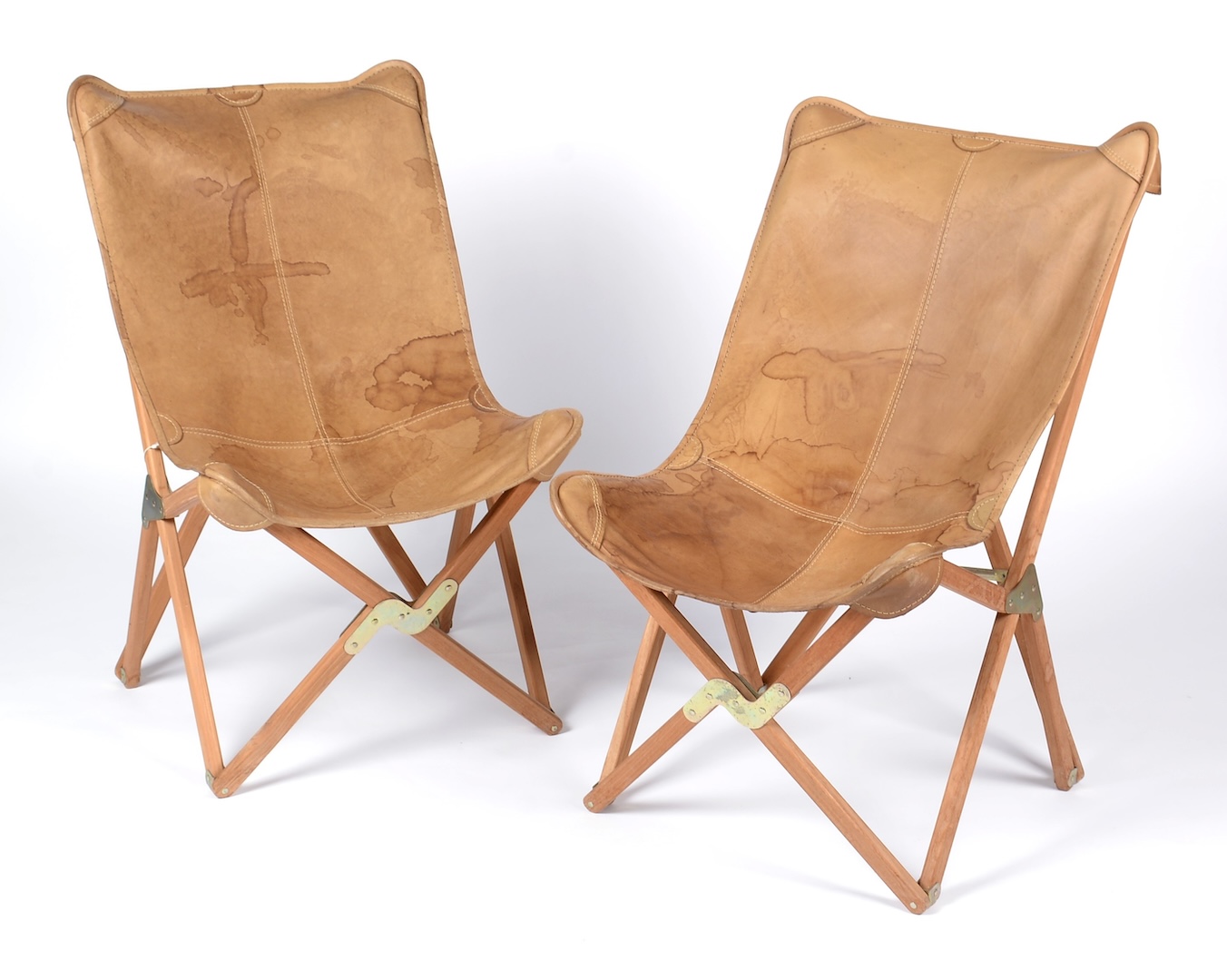
Based on Joseph Beverley Fenby’s 1877 folding chair patent and later produced in Tripoli by the Italian company Paolo Viganò during the 1930s – hence its name – it was originally designed for military campaigns and expeditions before becoming associated with leisure and seaside life. Its name also reminds us that even seemingly ordinary design objects can carry broader political and historical narratives (Tripoli was, indeed, an Italian colony in Northern Africa during fascism).
From function to meaning
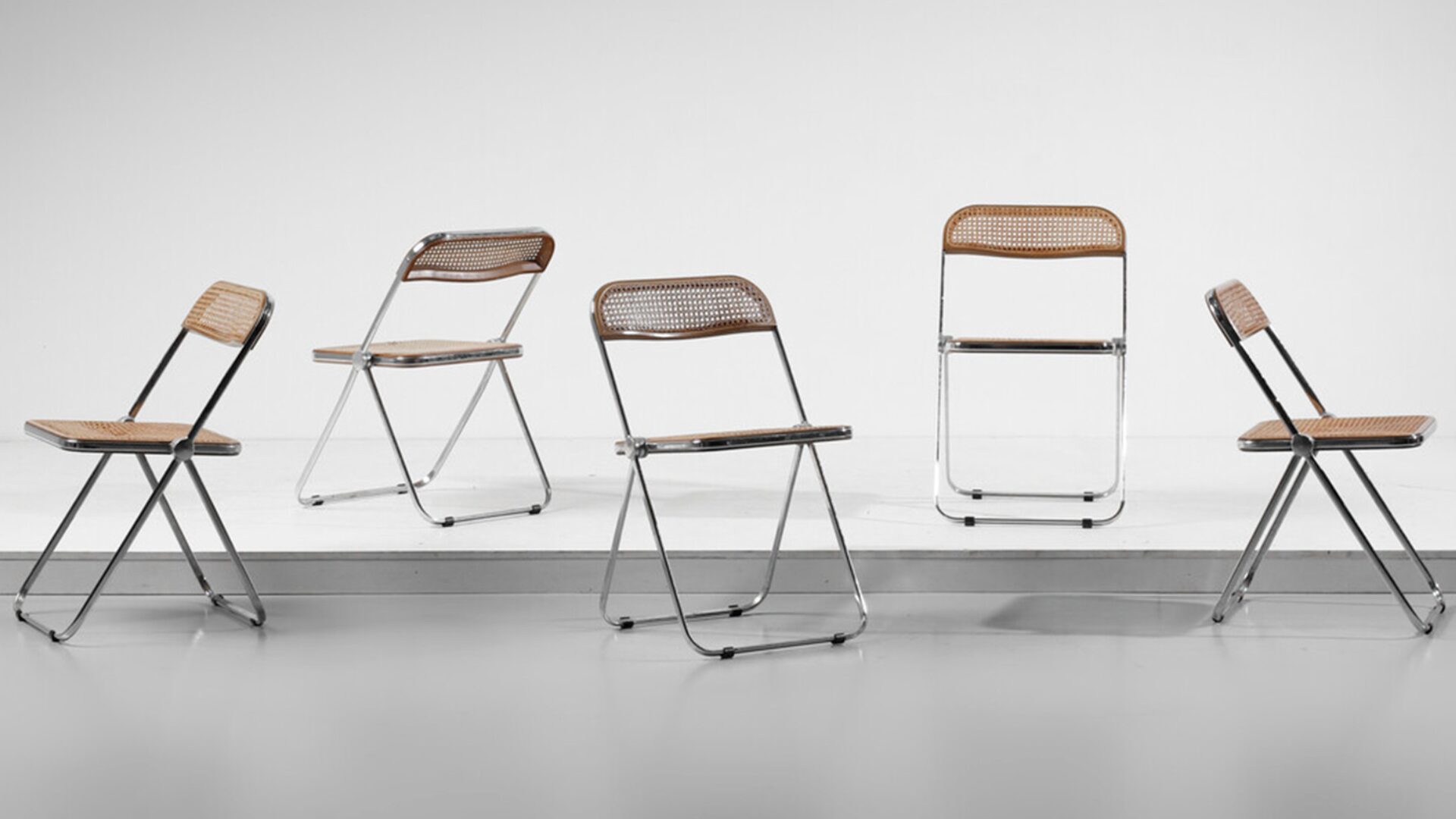
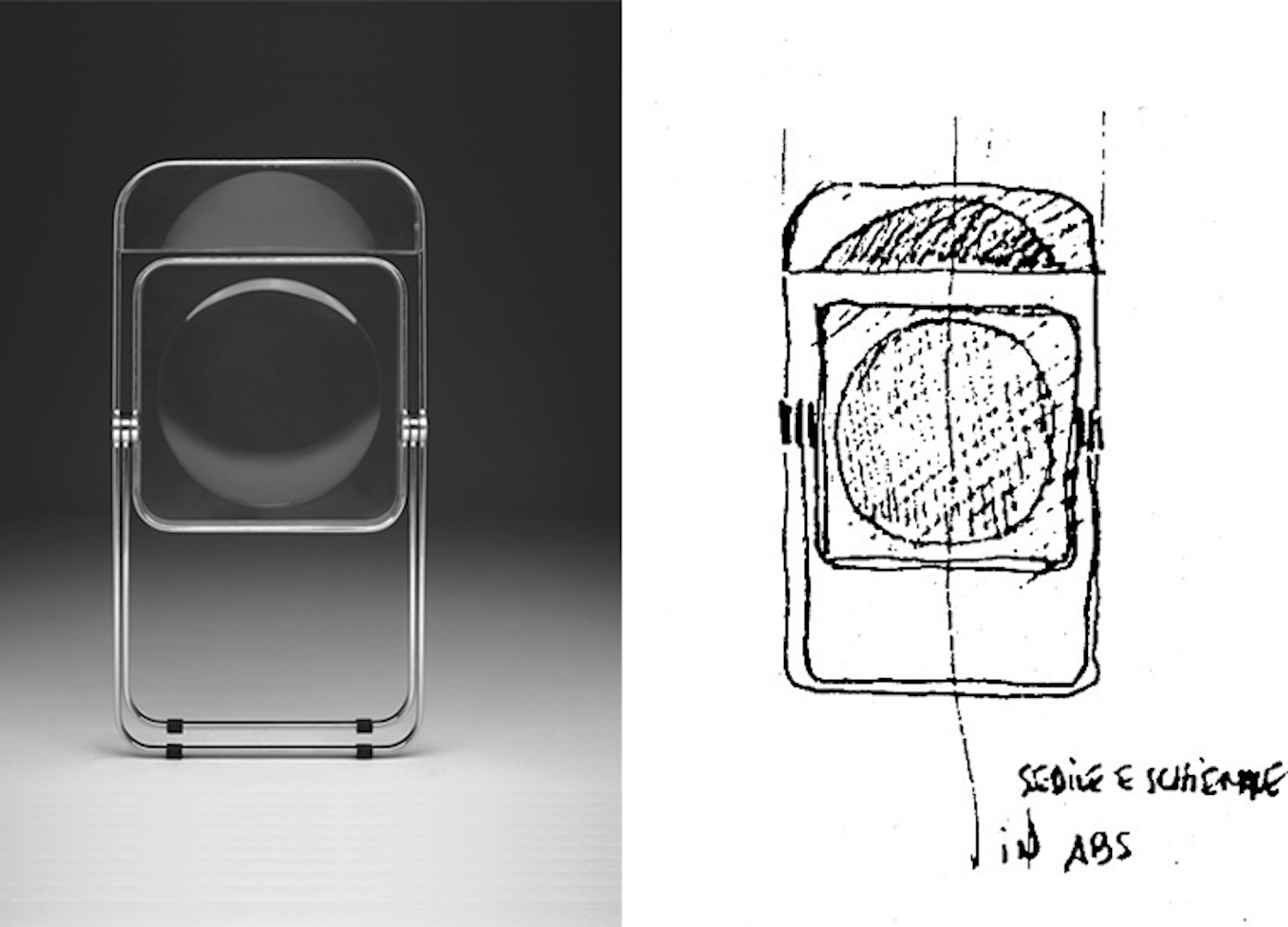
Throughout the twentieth century, designers continued to explore the relationship between stability and movement. In the second half of the century, folding mechanisms started to become more than technical solutions: they became part of the visual language of the object itself. The clearest example of this shift is Giancarlo Piretti’s Plia, designed in 1967 for Anonima Castelli.
Its transparent polycarbonate seat, lightweight aluminium structure and patented folding system transformed a practical object into an icon of industrial design. Its importance did not lie only in its technical innovation, but in the way it made the mechanism visible, and in how the hinge, usually considered a functional element to hide, became the centre of the design, showing that transformation could become an aesthetic quality.
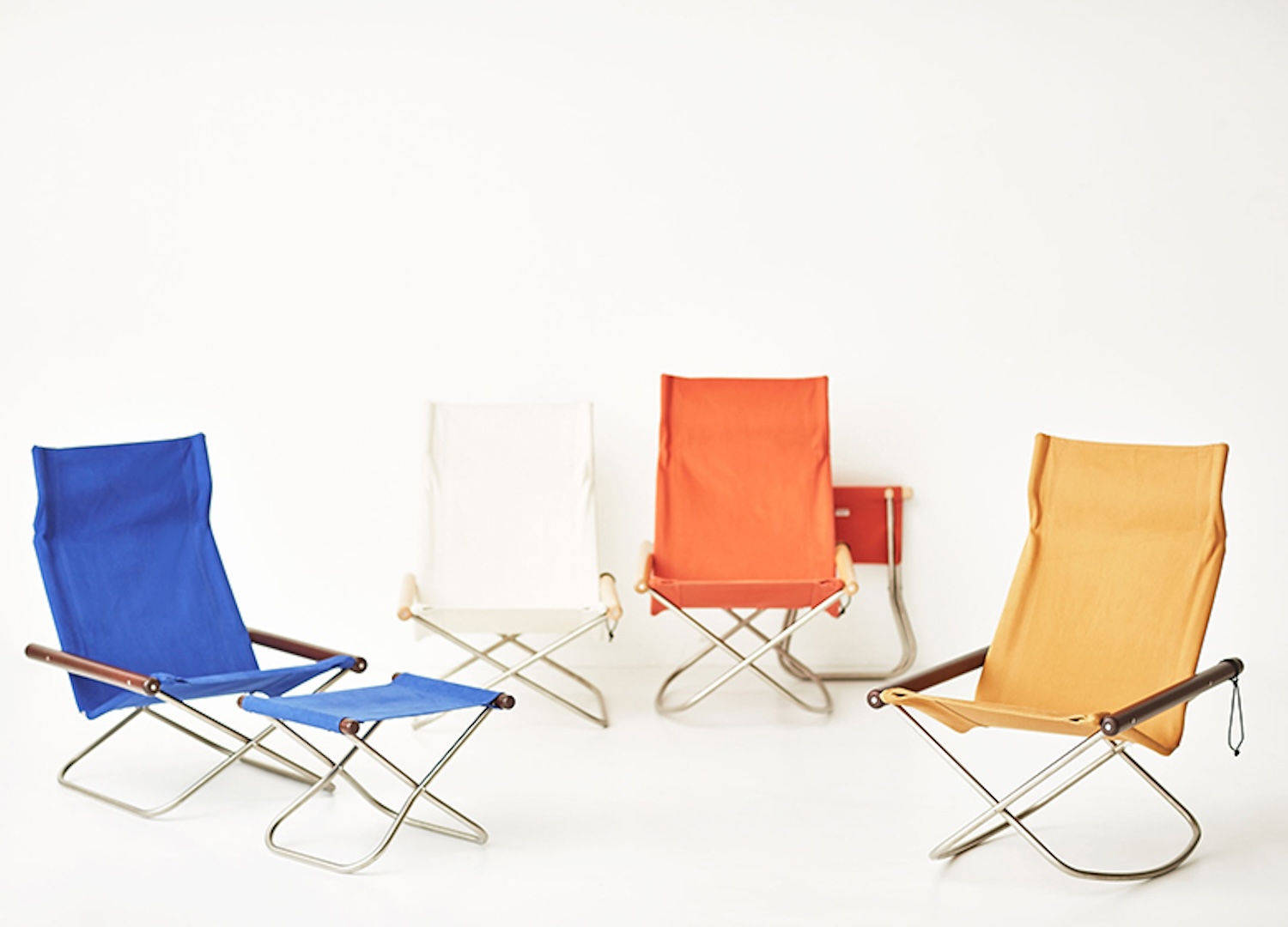
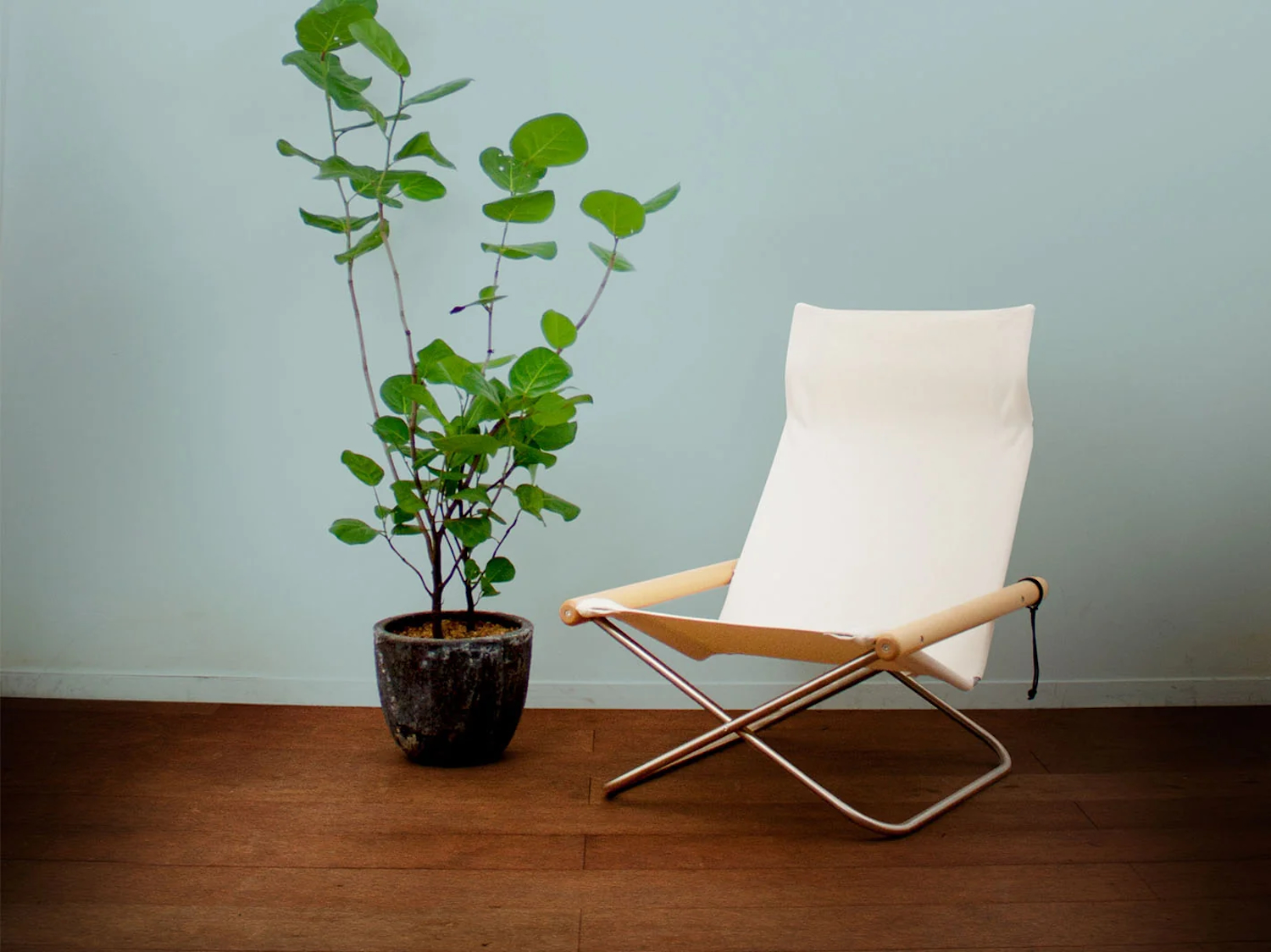
This research continued throughout the following decades, as designers increasingly approached folding as a way to rethink the relationship between form, meaning, beauty and use. We can see this in the Nychair X, introduced by Japanese designer Takeshi Nii in the early 1970s. The project explored a different possibility: a folding chair designed for everyday domestic life. With its wooden frame and canvas seat, it combined the lightness and portability traditionally associated with folding furniture with the comfort of a lounge chair.
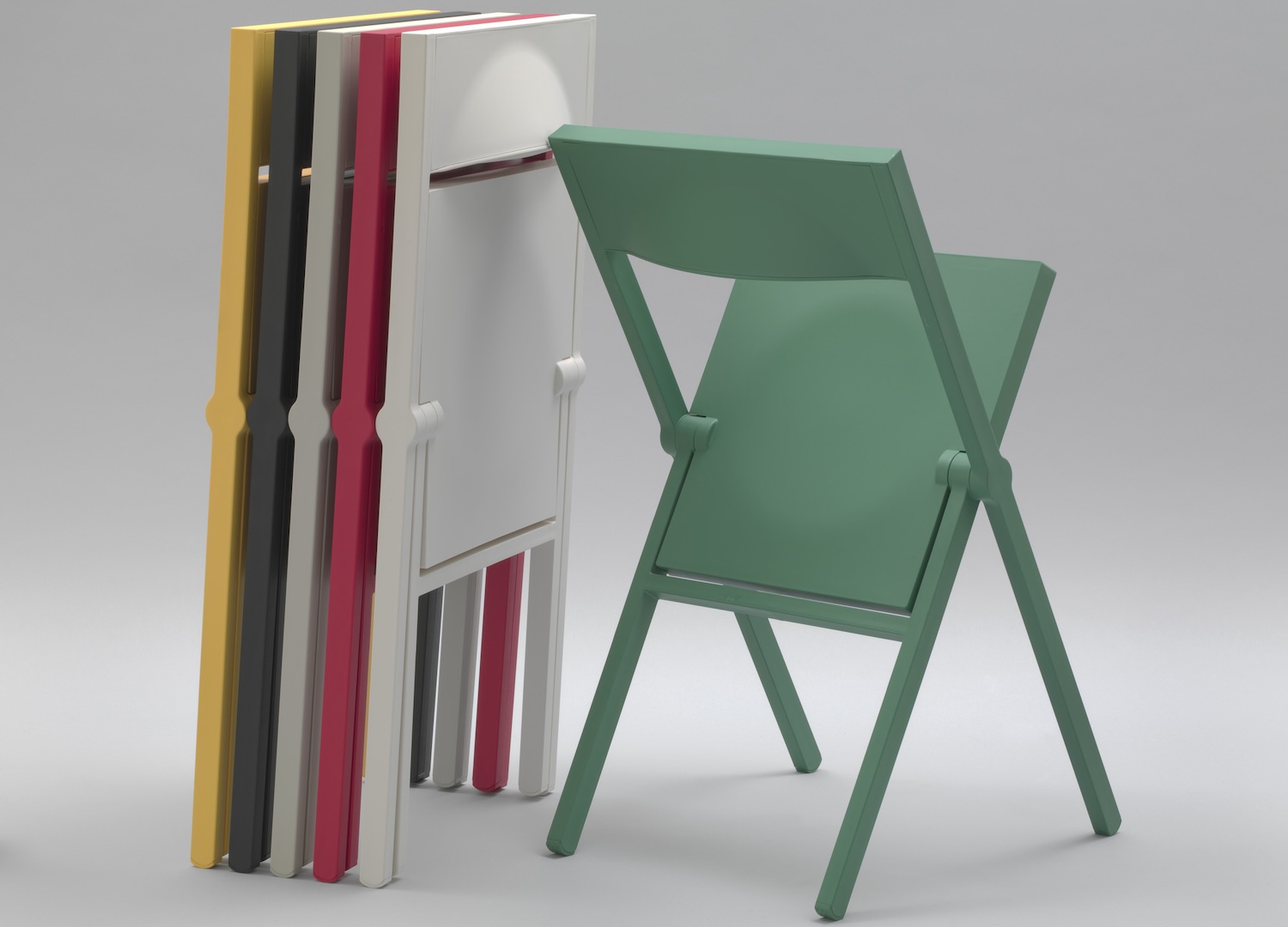
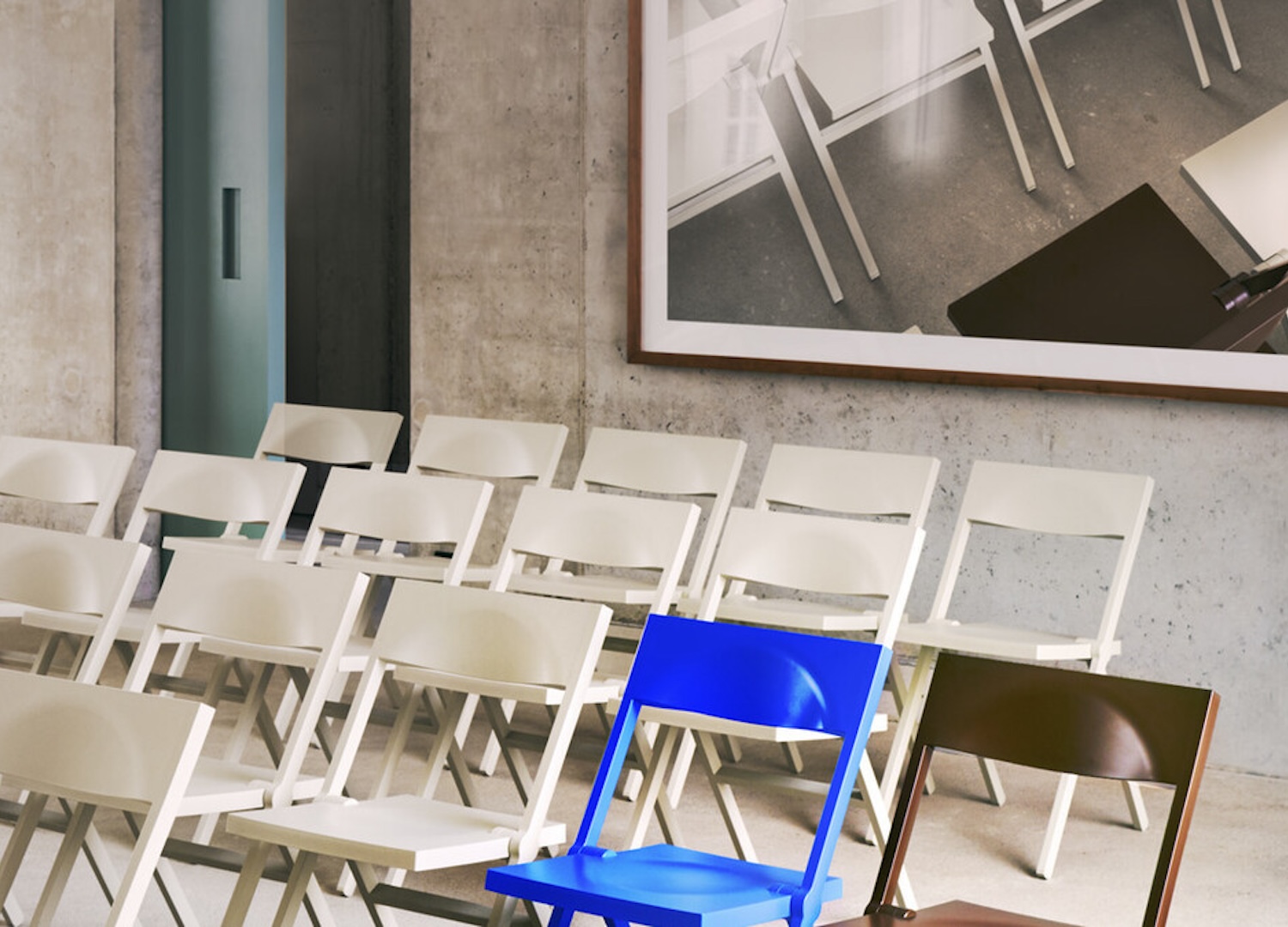
A similar reflection appears decades later in David Chipperfield’s Piana, designed for Alessi in 2011. Here, the folding mechanism is reduced to its essential elements, becoming almost invisible within the simplicity of the geometry. Chipperfield integrates the transformation into the overall identity of the chair, creating an object that, when open, has an everyday function and, when closed, becomes a compact volume defined by its own structure.
Technology and aesthetics – folding chairs nowadays
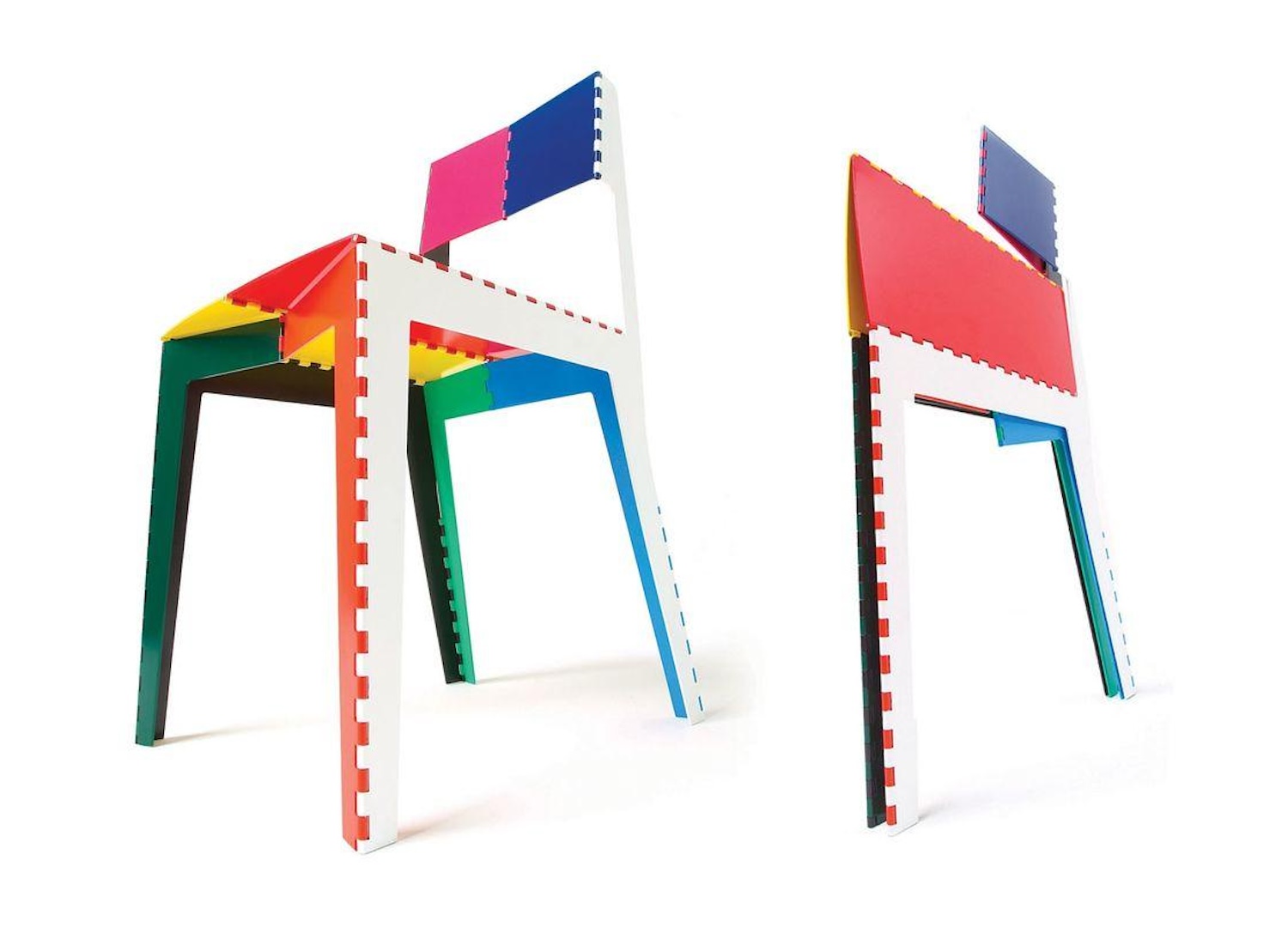
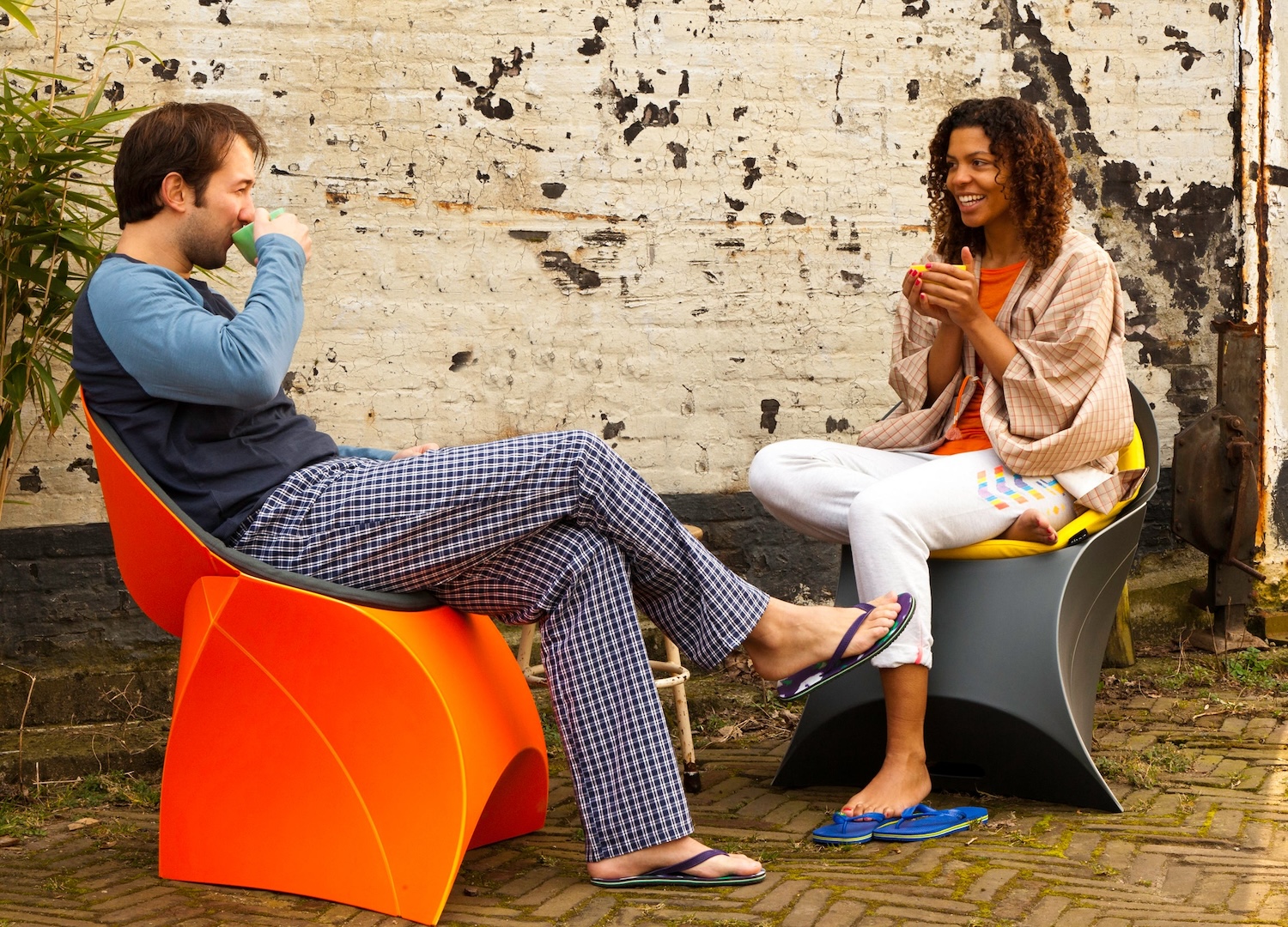
Contemporary designers have continued to push this idea further, exploring folding as a principle capable of generating new forms. The Flux Chair, designed by Douwe Jacobs and Tom Schouten in 2009, represents one of the most radical interpretations of this approach. Made from a single flexible structure, the chair transforms from a flat panel into a fully functional seat, almost disappearing when closed and regaining its three-dimensional presence when opened.
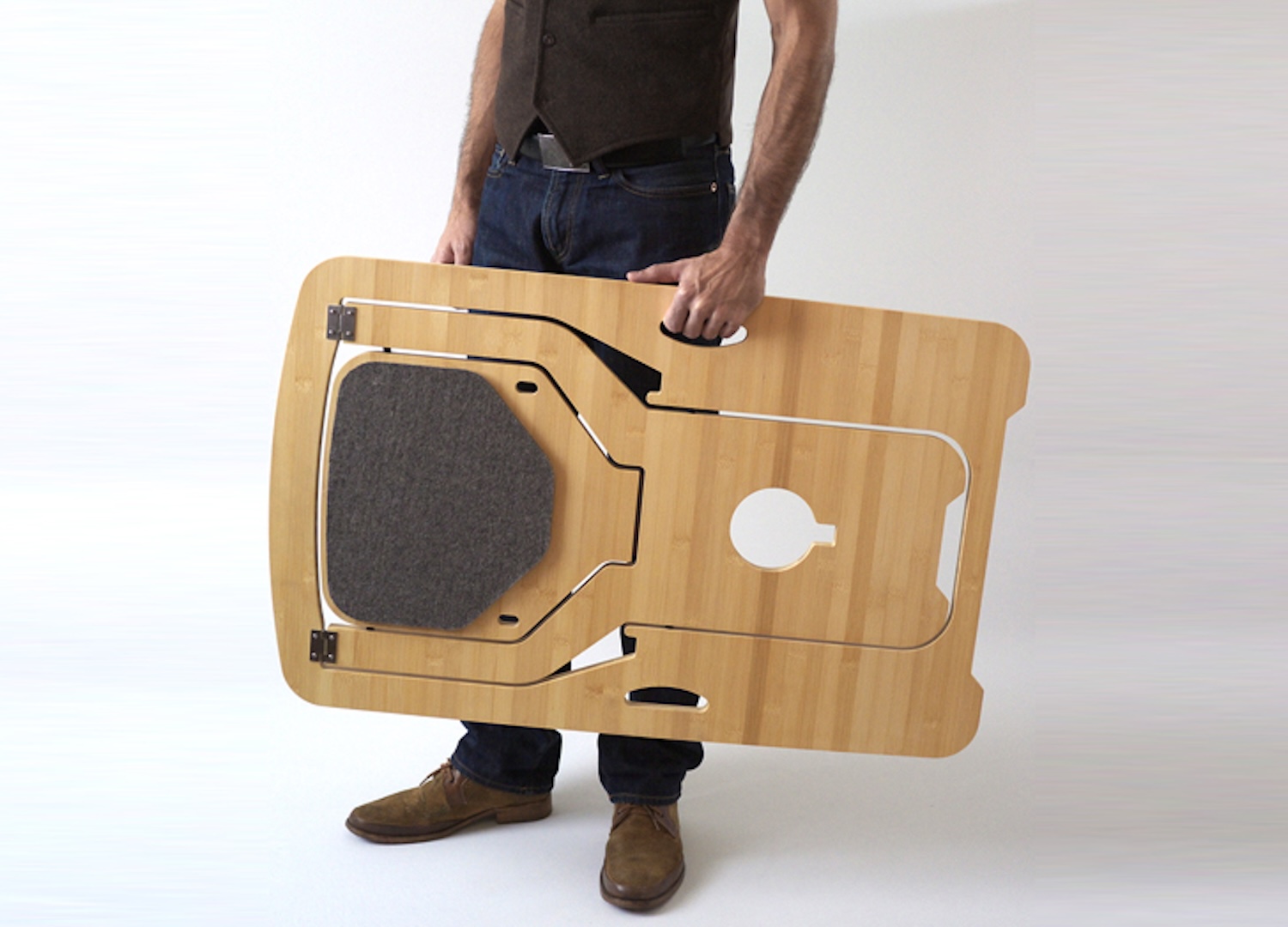
Adam Goodrum’s Stitch Chair, designed for Cappellini in 2008, is another example of how the mechanism itself can become the core of the project. Made from a thin aluminium sheet and articulated through a series of central hinges, the chair can fold almost completely flat, reducing its volume while maintaining the identity of a traditional seat. Other projects explore folding through material and sustainability, like Leo Salom’s Folding Chair, developed for Monstrans, able to reinterpret the typology through a single piece of bamboo plywood, creating a lightweight structure that can be easily transported and stored.
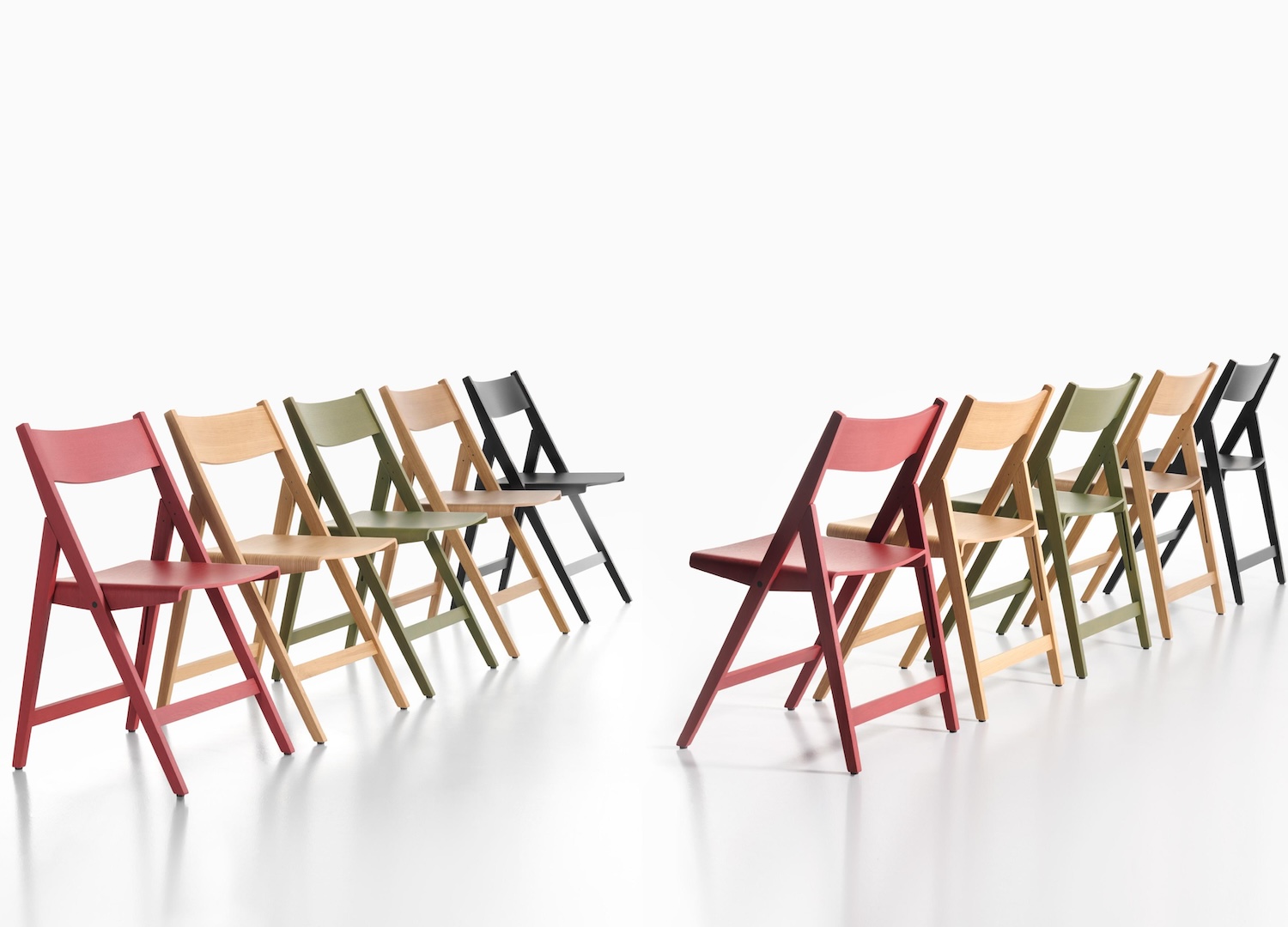
More recently, folding chairs have returned to contemporary production through projects such as THEO by Matteo Thun and Benedetto Fasciana for Plank, presented at Salone del Mobile 2026. Designed for contract spaces but also conceived for domestic environments, THEO shows how the folding chair continues to evolve while maintaining its relationship with movement, adaptability and changing uses.
In projects like these, the folding mechanism is the element that defines the object, and the fold becomes a design language: a way to question the traditional idea of furniture as a fixed presence and to explore objects that can exist in different states without losing their identity. After centuries of evolution, the folding chair remains a remarkably consistent object precisely because it has never had a single fixed meaning.
It has been a symbol of authority, a companion of travel and military campaigns, an expression of industrial efficiency and, more recently, a field for designers to explore new relationships between form and transformation. Perhaps this is what makes such a simple object still relevant. The folding chair embodies a deeper reflection on how objects can change while preserving their identity. Unlike most furniture, which is designed around permanence, it has always included the possibility of becoming something else.
About the author

Ludovica Proietti, journalist, design historian and curator, teaches in universities and curates events, always exploring projects with fresh, unconventional perspectives.
Instagram