At some point, music stopped occupying our homes. Records that once filled shelves, CDs carefully arranged in collections, and cassette tapes carrying handwritten labels have gradually been replaced by invisible libraries, accessible through a screen. Today, we can listen to almost anything, anywhere, at any moment. Yet, in gaining unprecedented access to music, have we lost something of the physical relationship we once had with it?
The renewed interest in vinyl records and other physical formats suggests a growing desire to reconnect with the material dimension of listening. More than nostalgia, this resurgence reflects a broader cultural shift: in an increasingly dematerialised world, physical objects offer opportunities for slower, more deliberate forms of consumption.
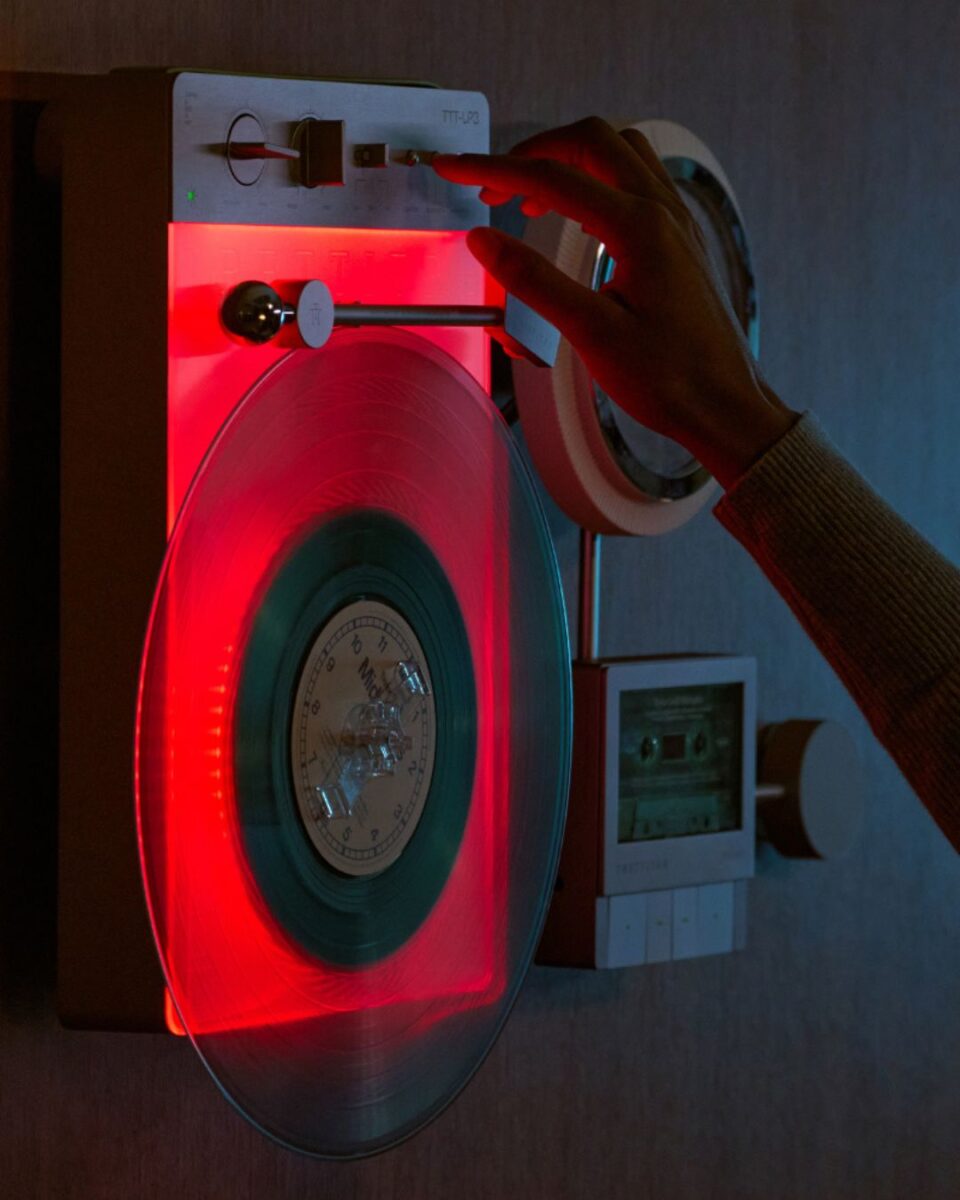
It is within this context that TRETTITRE, an audio design brand exploring the intersection of sound, technology and sculptural form, introduces Retro Back to the Future, a modular wall-mounted system bringing together three generations of music formats in a single contemporary installation.
When sound becomes part of the architecture
Rather than concealing audio equipment within the domestic environment, TRETTITRE transforms it into a visible architectural element. The system combines three independent devices: the TTT-LP3 vinyl player, TTT-DP3 CD player and TTT-CP3 cassette player, which can be arranged through the W-RACK, a magnetic metal mounting structure.
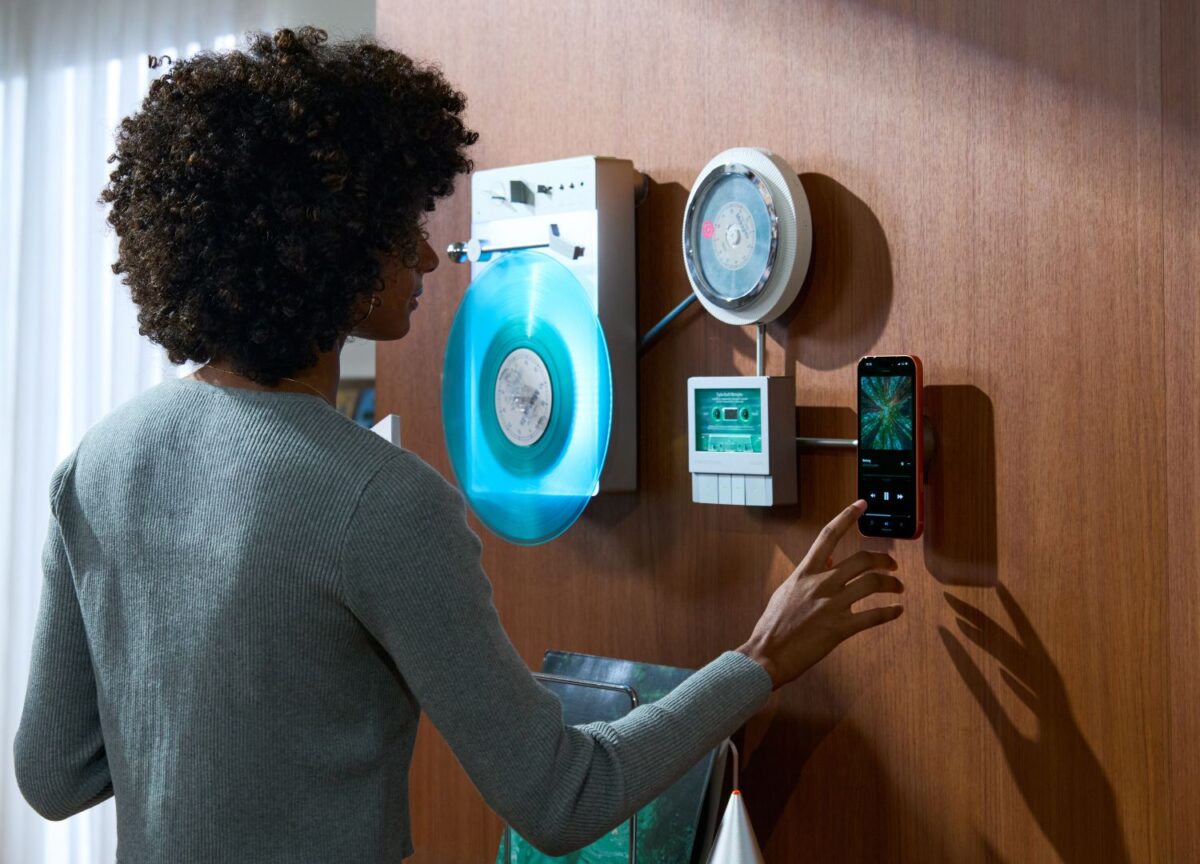
Clean geometries, circular forms and metallic finishes create a composition somewhere between technological equipment and sculptural installation. The exposed rotation of a vinyl record, the transparent cover of the CD player and the mechanical character of the cassette deck turn movement and interaction into part of the visual experience. Despite their retro-futuristic appearance, the devices integrate contemporary technologies, including Bluetooth connectivity and rechargeable batteries, allowing analogue and digital listening habits to coexist.
What makes the project particularly interesting is its relationship with domestic space. Music is no longer simply something that fills a room acoustically: it becomes something that occupies it physically, transforming an ordinary wall into a place dedicated to listening.
Beyond nostalgia: rediscovering the ritual of listening
Throughout the twentieth century, radios, record players and hi-fi systems helped define domestic interiors, creating specific spaces for listening and gathering. Today, as music increasingly accompanies other activities rather than becoming an activity in itself, these rituals acquire renewed significance. Playing a record requires selecting it, removing it from its sleeve and positioning it on a turntable. A cassette introduces another relationship with time, shaped by rewinding, turning and anticipating. These apparently insignificant gestures establish a form of attention that differs from the almost frictionless experience of streaming.
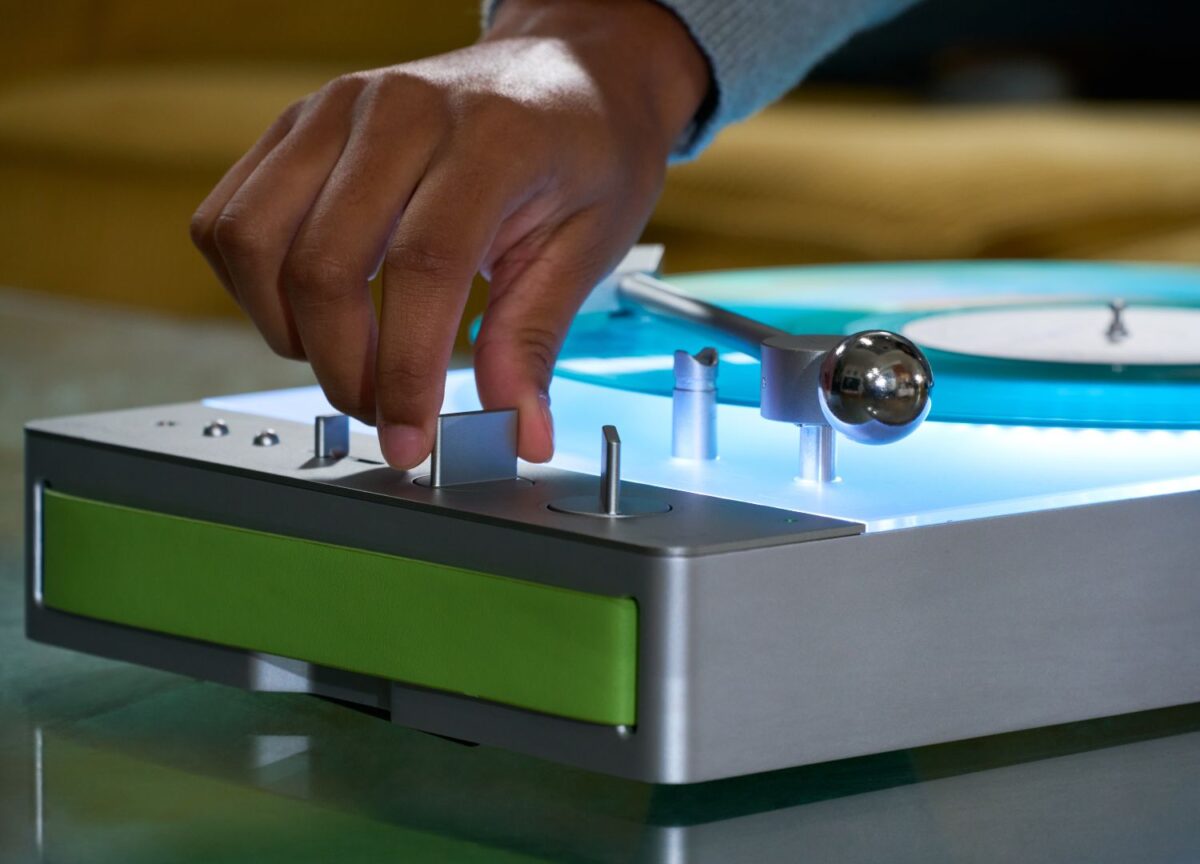
TRETTITRE‘s proposal does not attempt to recreate the past. Instead, it reinterprets familiar technologies through a contemporary design language, suggesting that their value lies not only in the sound they reproduce but also in the behaviours they encourage. Of course, owning physical music does not necessarily make us more attentive listeners. Yet design can influence the way we experience everyday rituals, giving visibility and meaning to actions that digital technology has made increasingly invisible.
Perhaps the renewed appeal of vinyl, CDs and cassettes has less to do with returning to the past than with reconsidering the pace of the present. And perhaps the future of listening will not be defined by how much music we can access, but by how much space we are willing to give it.

Patrick Abbattista
A marketer in love with Design. Founder & CEO of DesignWanted. International speaker. Professor at Istituto Marangoni - Design School (Milan).