ADAL: The bioluminescence of glass reinventing light. From within…
Born from an alchemical fusion of art, science, and glass, ADAL is a collection of light objects inspired by the abyss, where bioluminescence becomes matter. The project was born from the collaboration between Armand Louis of atelier oï and Roberto Beltrami of Wave Murano Glass.
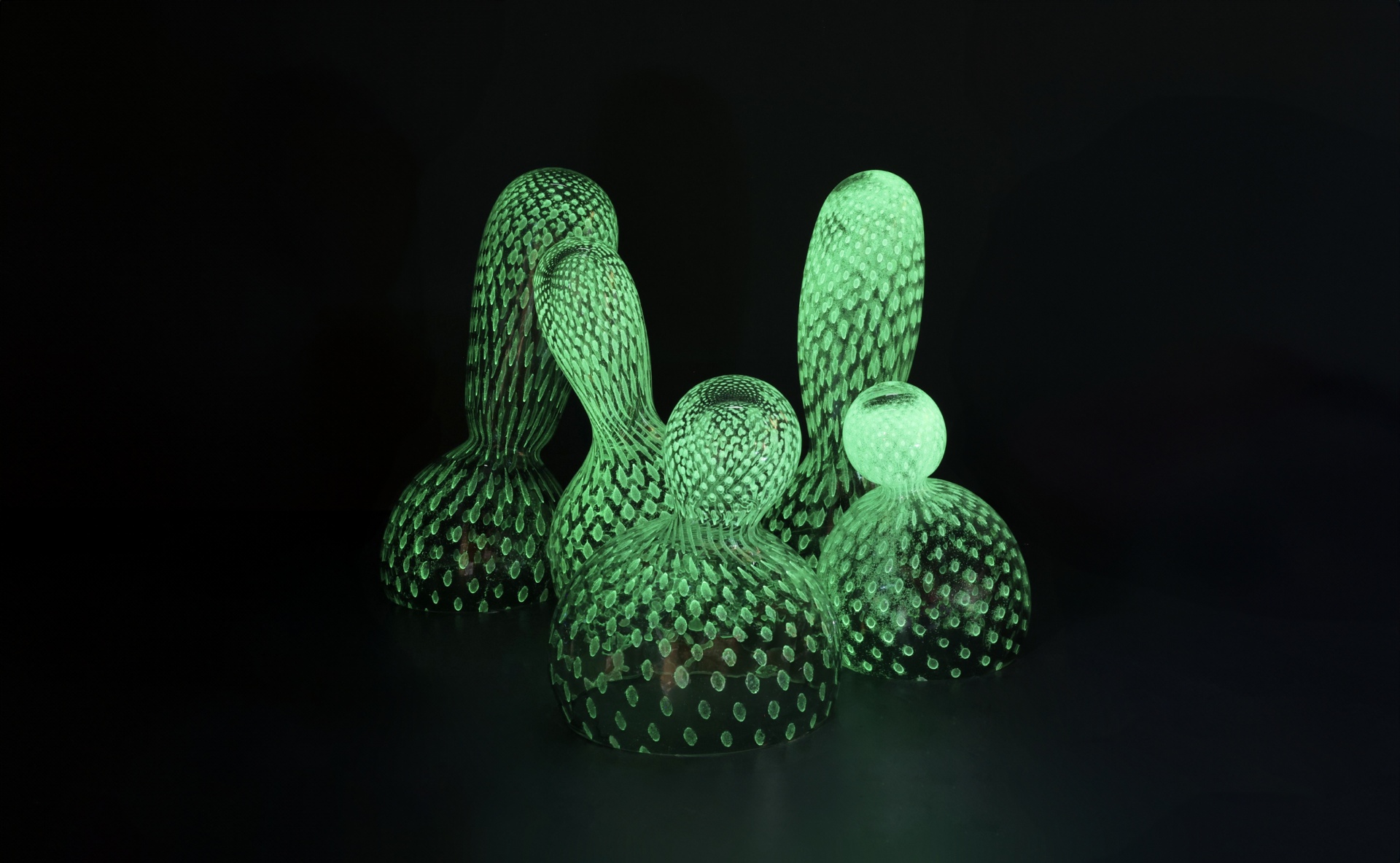
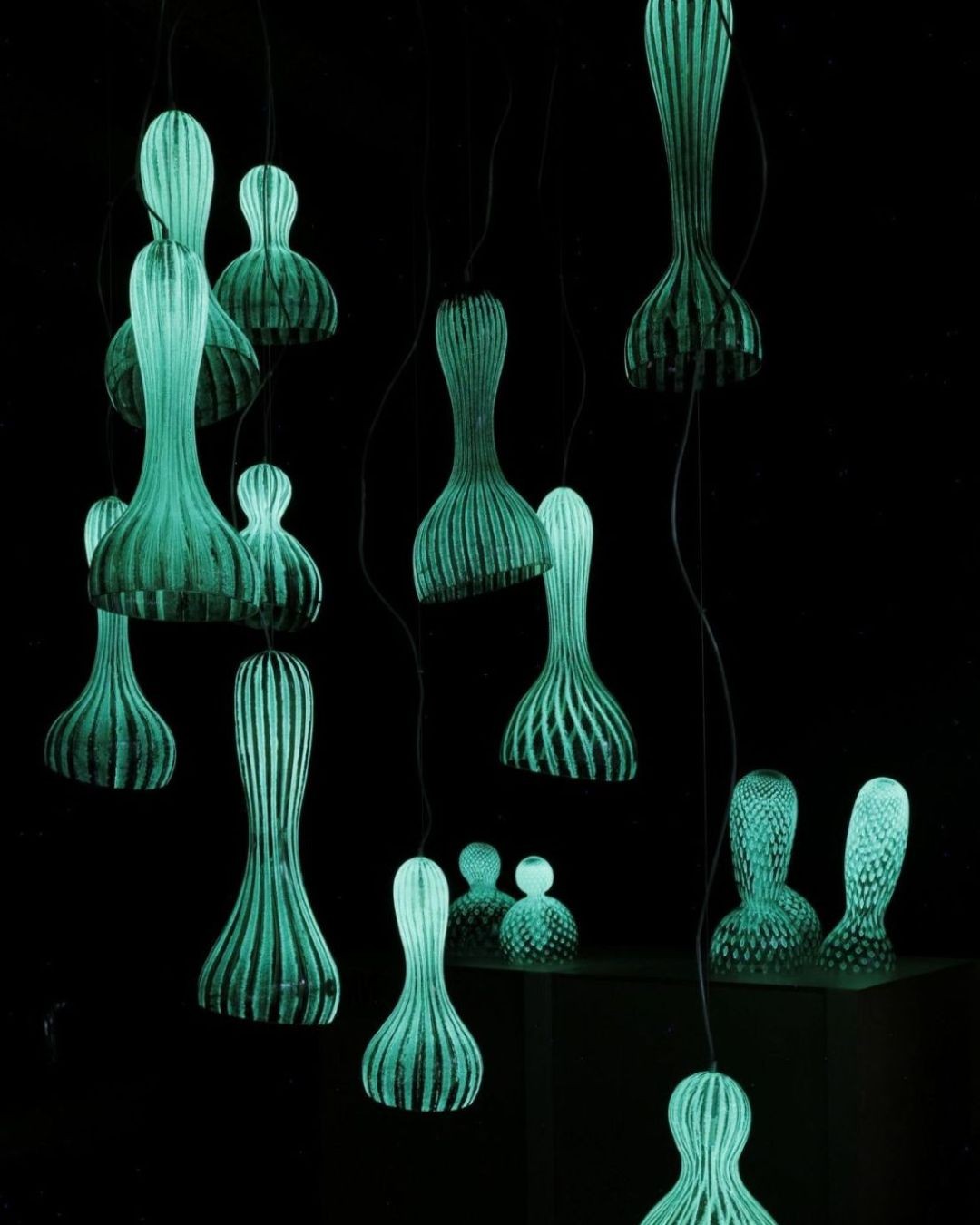
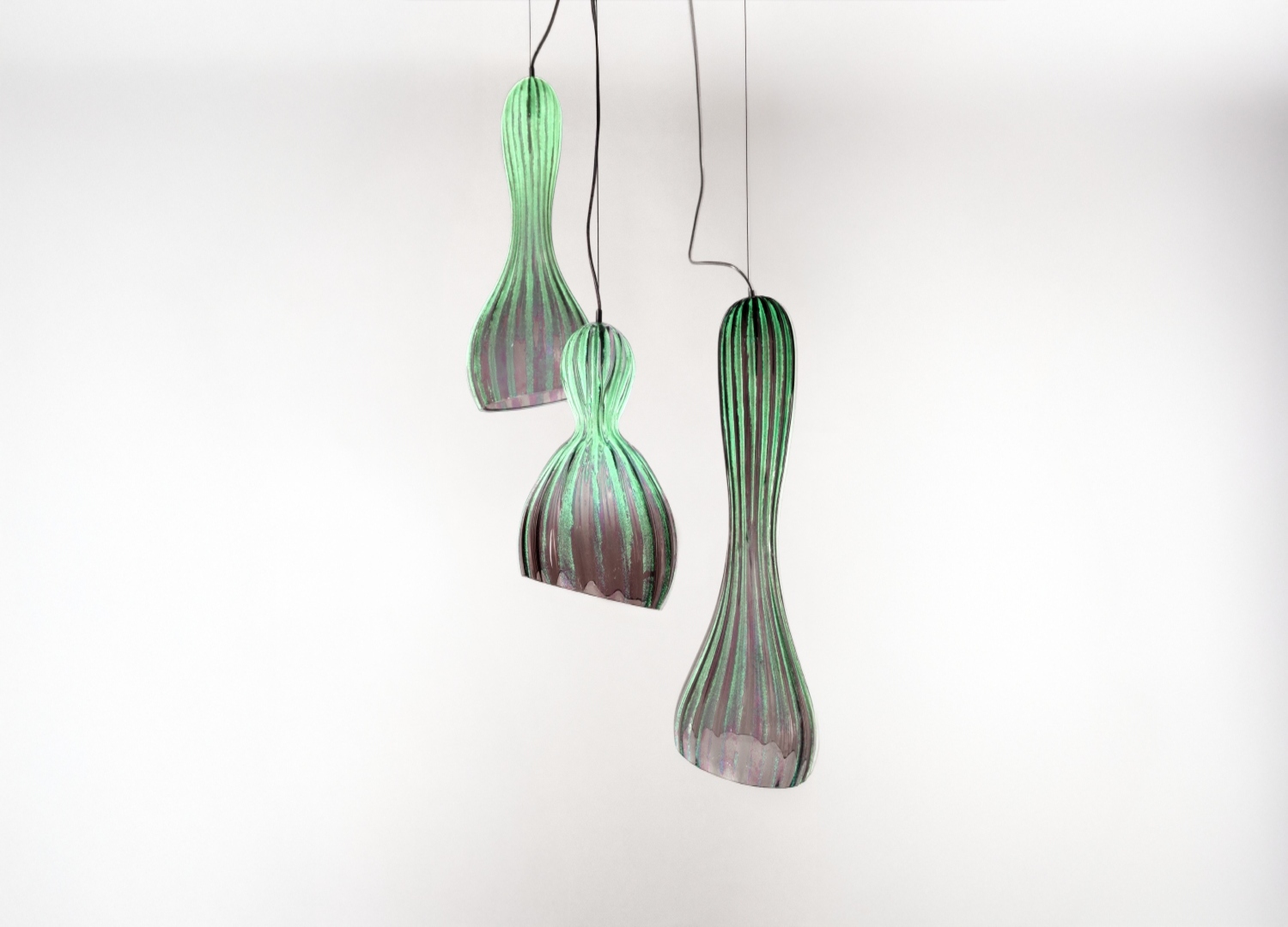
What happens when Murano’s glassmaking tradition meets experimentation with light? ADAL emerges, a project by Roberto Beltrami, master glassmaker and founder of Wave Murano Glass and Armand Louis, co-founder of atelier oï. Premiered at Galleria Rossana Orlandi, the installation explores a luminosity that doesn’t come from external sources but emerges directly from the material itself in a self-sustaining way. The collection, composed of vases and suspended lamps, is inspired by the bioluminescent creatures of the ocean’s abyss, where every life form generates its own light.
At the invisible threshold between the known, illuminated world and the deep, dark unknown, a poetic ecosystem of glass and light takes shape. Thanks to phosphorescent powders incorporated into the glass, ADAL’s “creatures” absorb light energy and gradually release it, creating a natural bioluminescent effect. In the dark, each piece slowly unveils itself — pulsing gently, shifting in intensity — as if breathing light from within. This process stems from an experimental investigation combining scientific observation, artistic intuition, and artisanal know-how.
Gallery
Open full width



Open full width
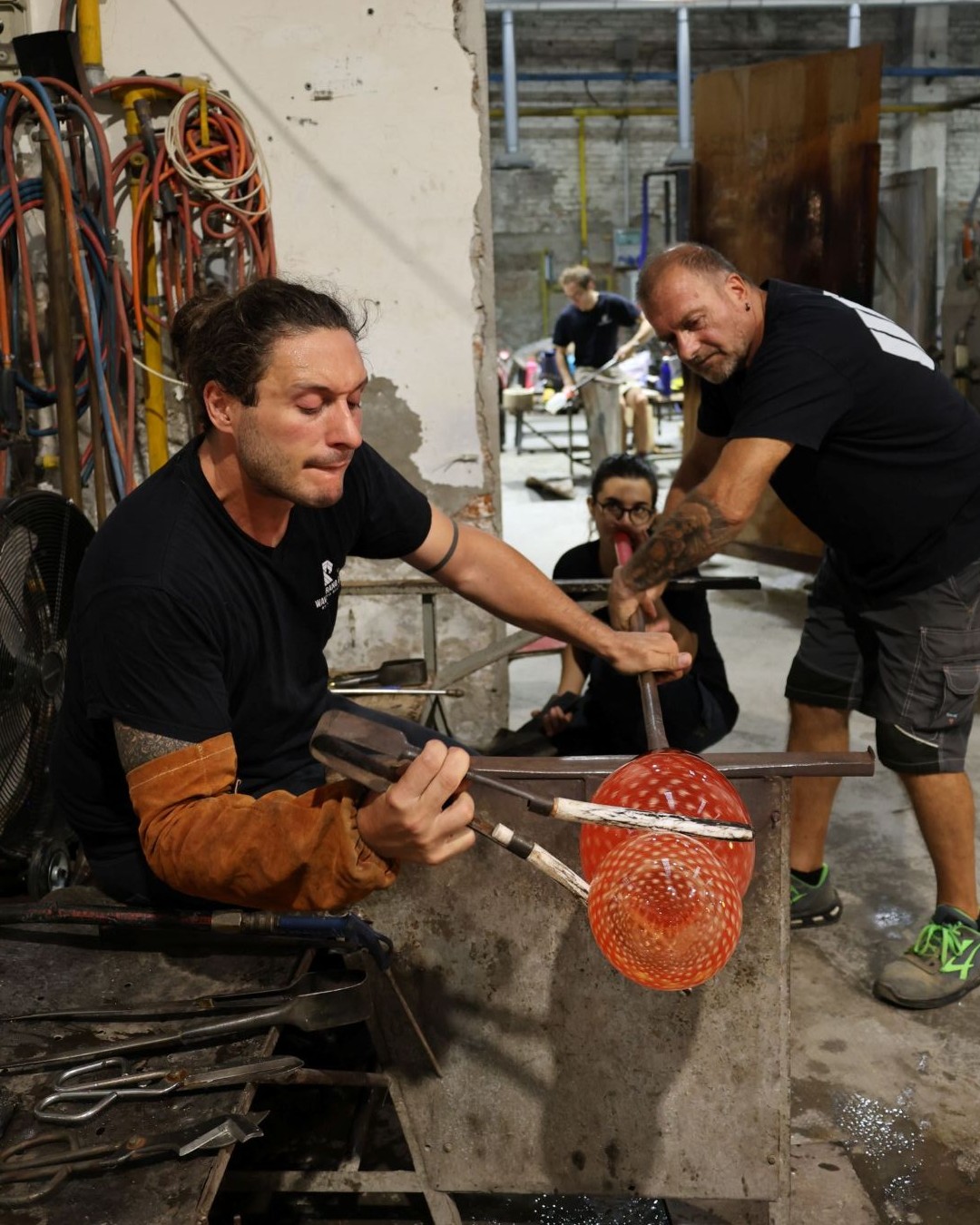
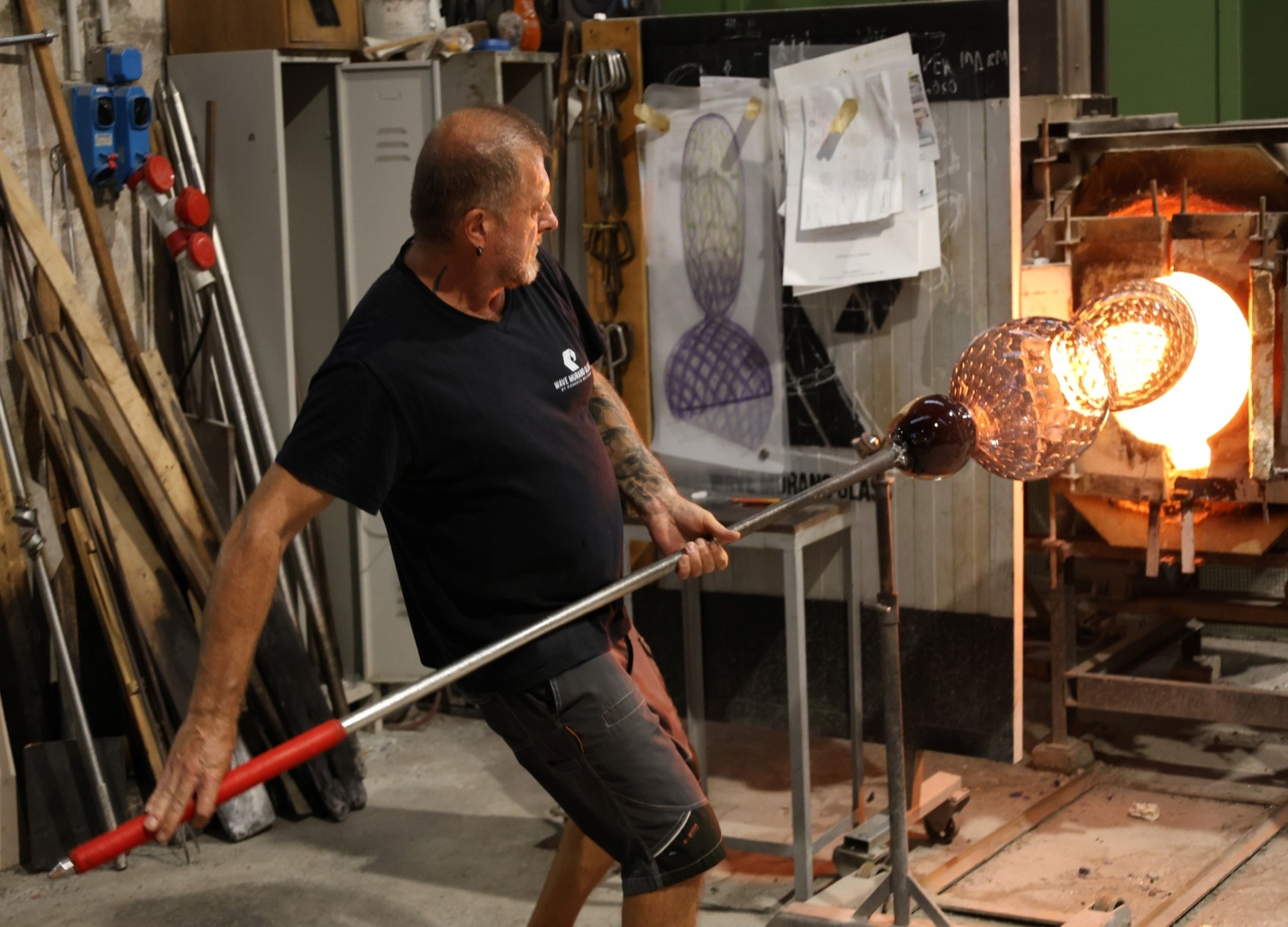
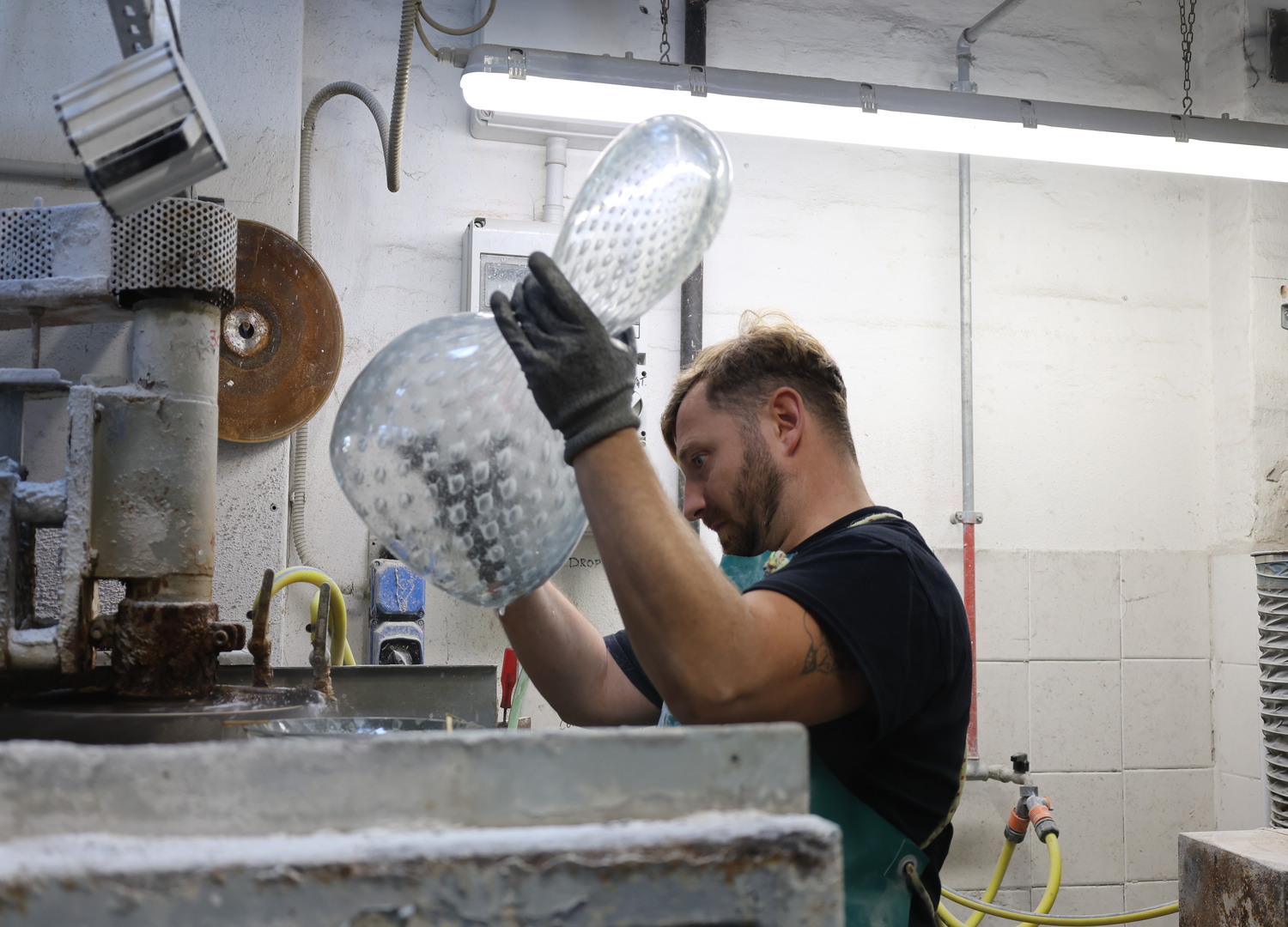
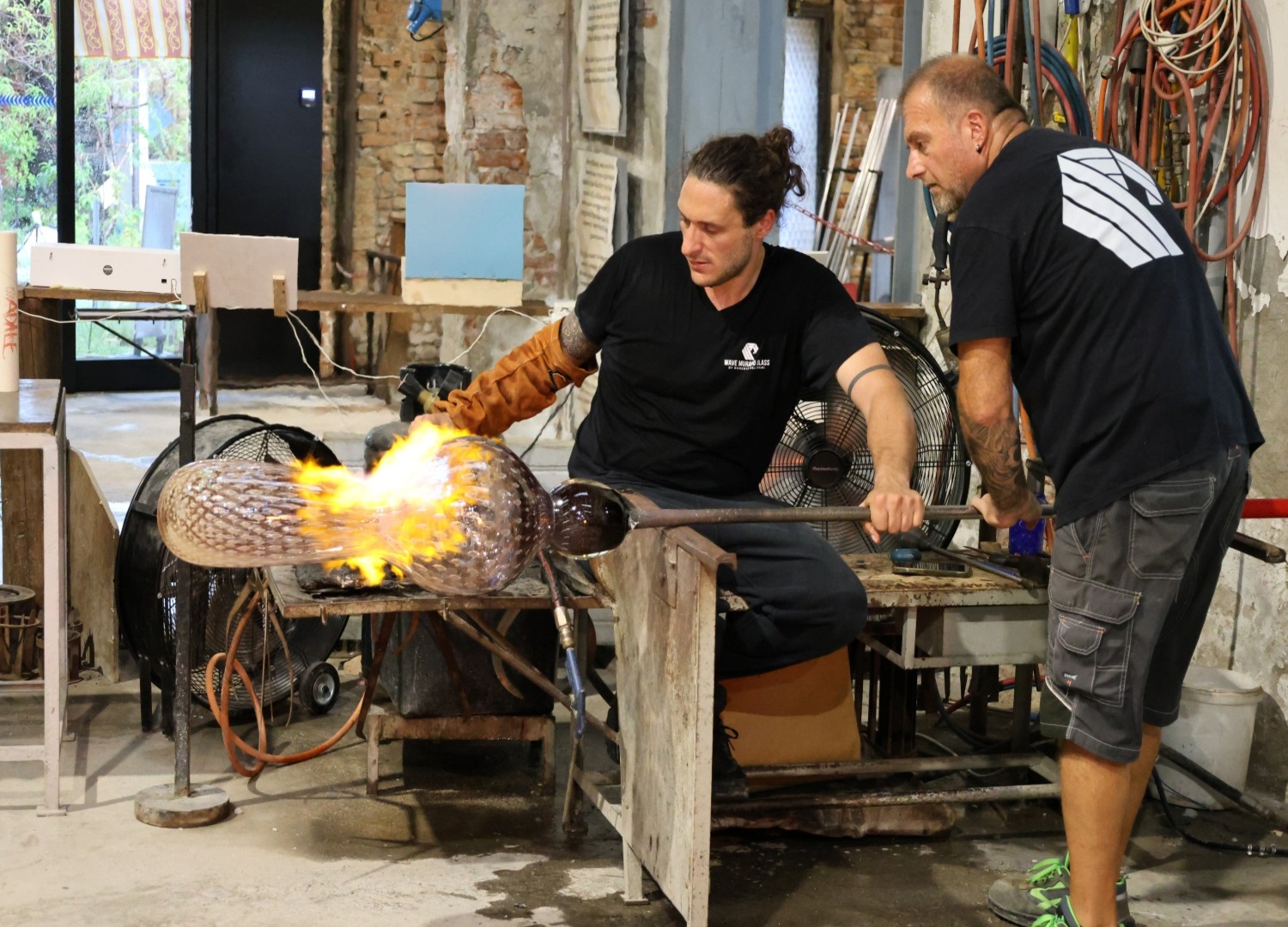
The innovative core of ADAL lies in continuous research on the relationship between matter and light, combining Roberto Beltrami’s scientific background with Armand Louis’s design sensitivity. Beltrami, the youngest master glassmaker in Murano (Venice), founded Wave Murano Glass in 2017, a furnace with origins dating back to 1850 that has brought Murano into the 21st century. Equipped with Industry 4.0 technologies and low-energy production systems, Wave uniquely blends centuries-old glass artistry, scientific knowledge, and environmental sustainability.
Through this approach, Beltrami and his team of ten glass artisans have explored new material blends in a fusion of tradition and innovation. The inclusion of phosphorescent powders is not just an aesthetic choice but an experiment in self-sustaining light and the glass’s ability to generate and emit it independently. This suggests a concept of sustainability and self-sufficiency that originates from the material itself.
The artistic counterpart is Armand Louis, whose visionary, transdisciplinary approach is emblematic of atelier oï: “Living in Murano, I discovered a vibrant culture of gesture, warmth, and suspended time,” he explains. “In this work, I learned to see limits as opportunities, and collaborating with Roberto (Beltrami) became a true creative laboratory.” The dialogue between the two creators reflects a new alliance between craftsmanship and innovation, between poetic intuition and material precision. “Together, we experiment, test, and push the limits of materials, forms, and uses,” Louis concludes.
ADAL is not simply a collection of vases or lamps—it is much more than that. It is a poetic, evolving ecosystem, whose suspended forms evoke self-sufficient, abyssal creatures on the edge between ancestral memory and imagination. The project invites reflection: how much light can we carry within ourselves when everything around is dark? From this invisible threshold, it emerges as an experience that transforms matter into light and light into language—where “hands, tools, and research” become part of the creative vision. Here, light is both the result and the medium through which glass continues to evolve, opening new horizons for contemporary design—including in terms of sustainability.