Natural Quartz: stone as a landscape of light
From Cristallo Traslux to Patagonia Original “Extra” and the Allight Collection, Antolini explores the luminous potential of natural quartz. A journey through material intelligence, backlighting design, and a circular-minded approach to stone processing.
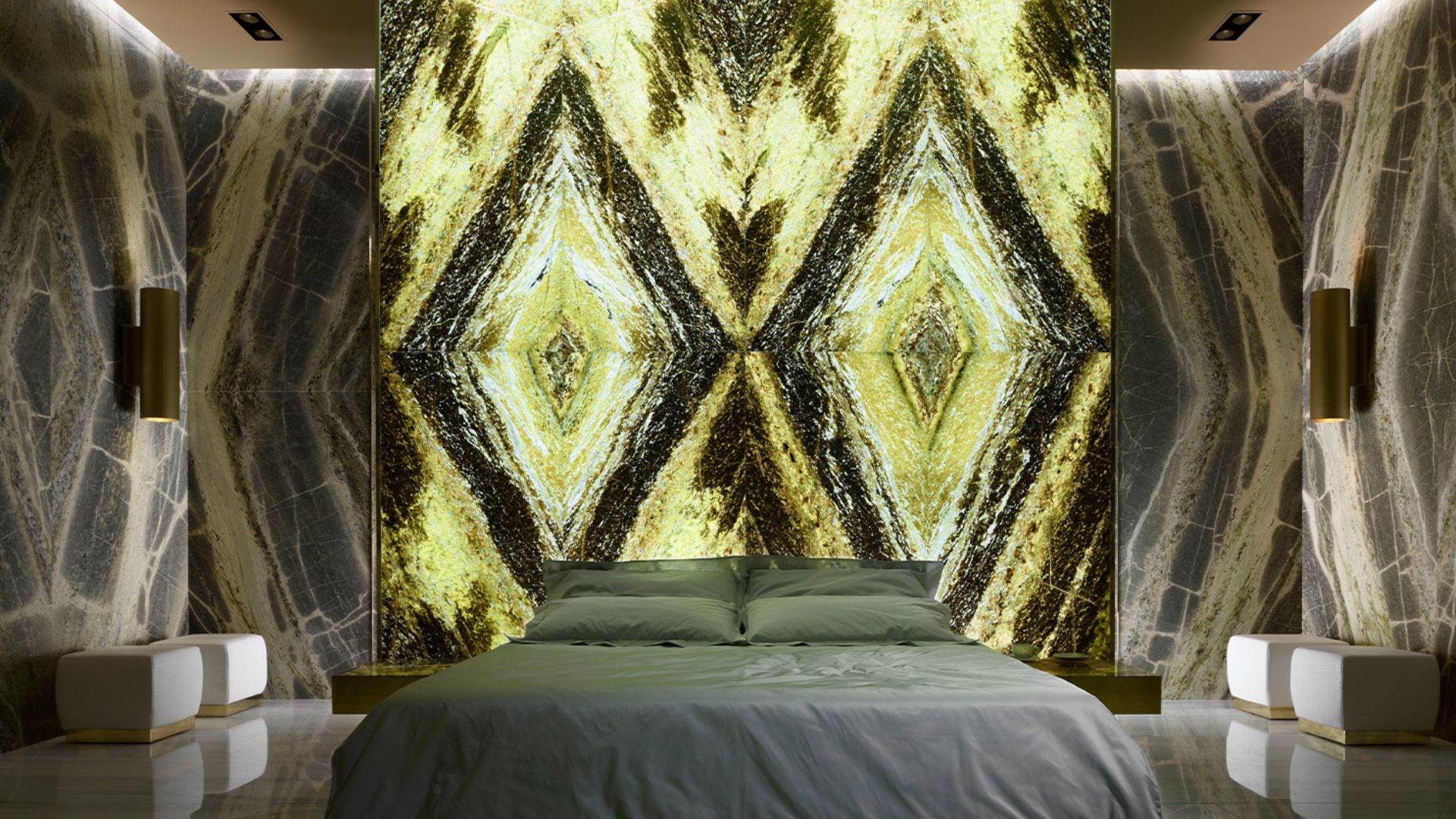
Stone has traditionally been associated with solidity, permanence, and opacity. It is a material rooted in mass, weight, and tactile presence: one that speaks of stability rather than transformation. In architectural and interior design, stone has long been valued for its ability to ground spaces, to provide structure and continuity. Yet when light enters the equation, this centuries-old perception begins to shift. Through backlighting, stone reveals an unexpected inner dimension, where depth, transparency, and luminosity redefine its role within space.
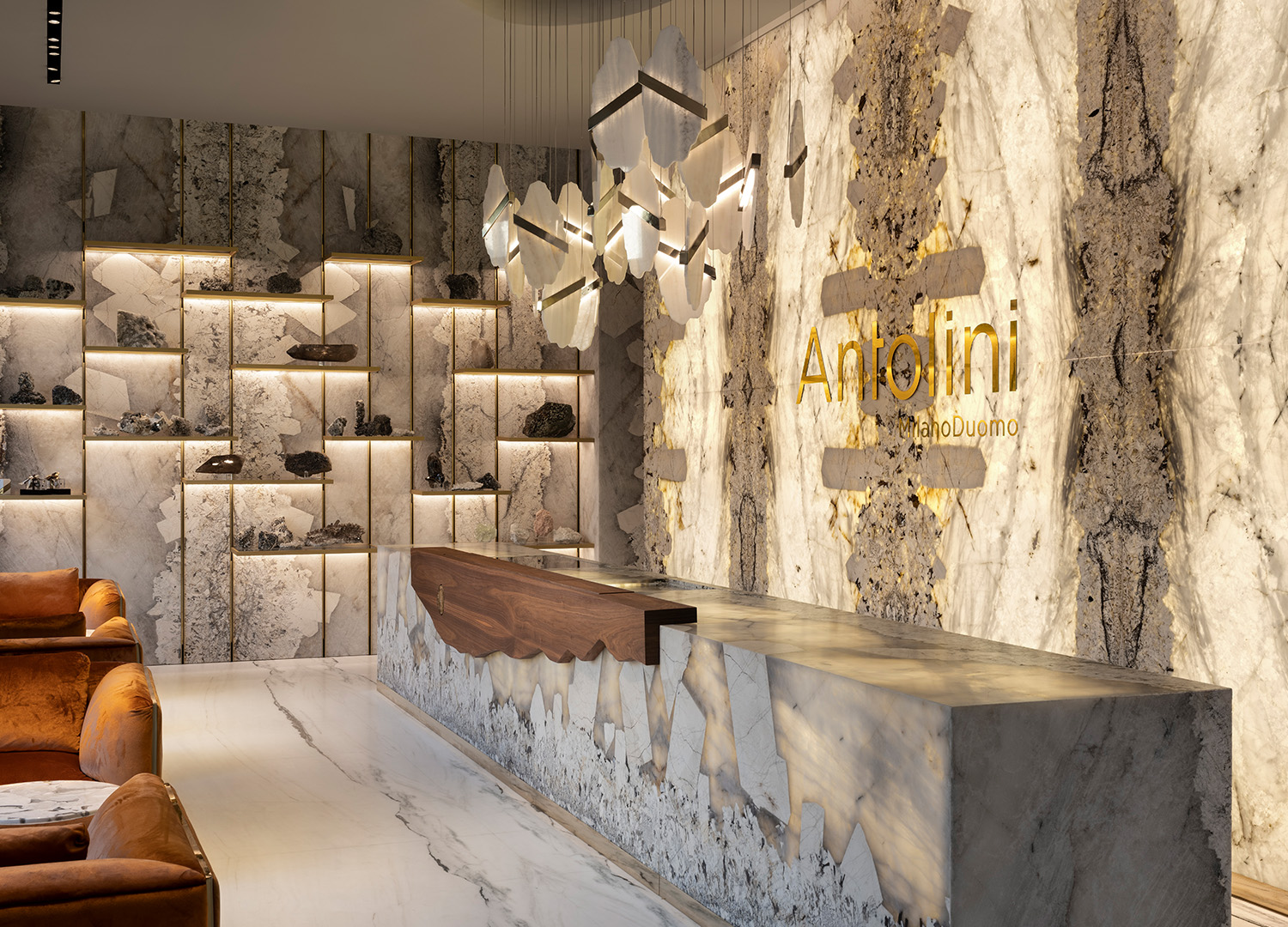
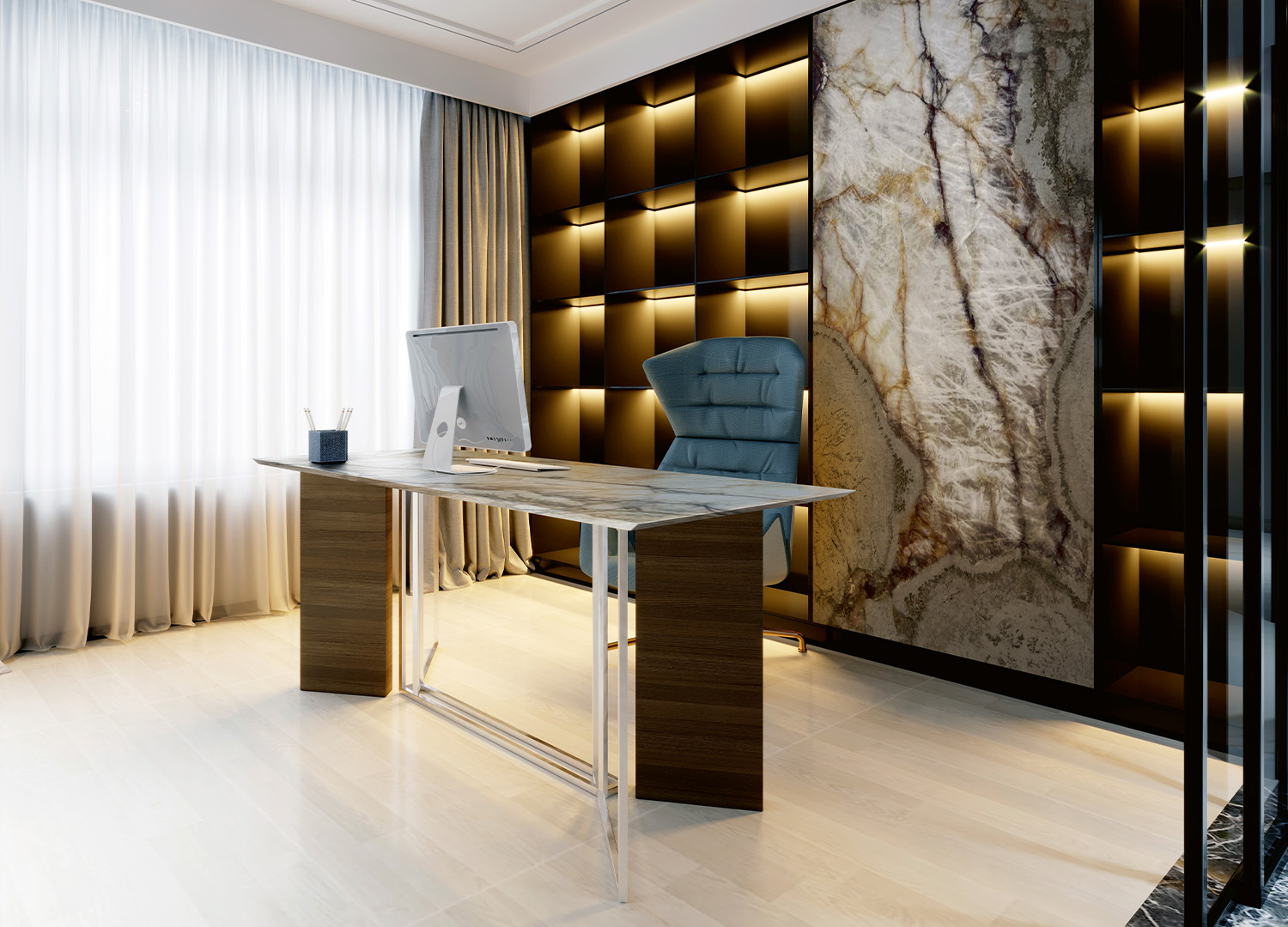
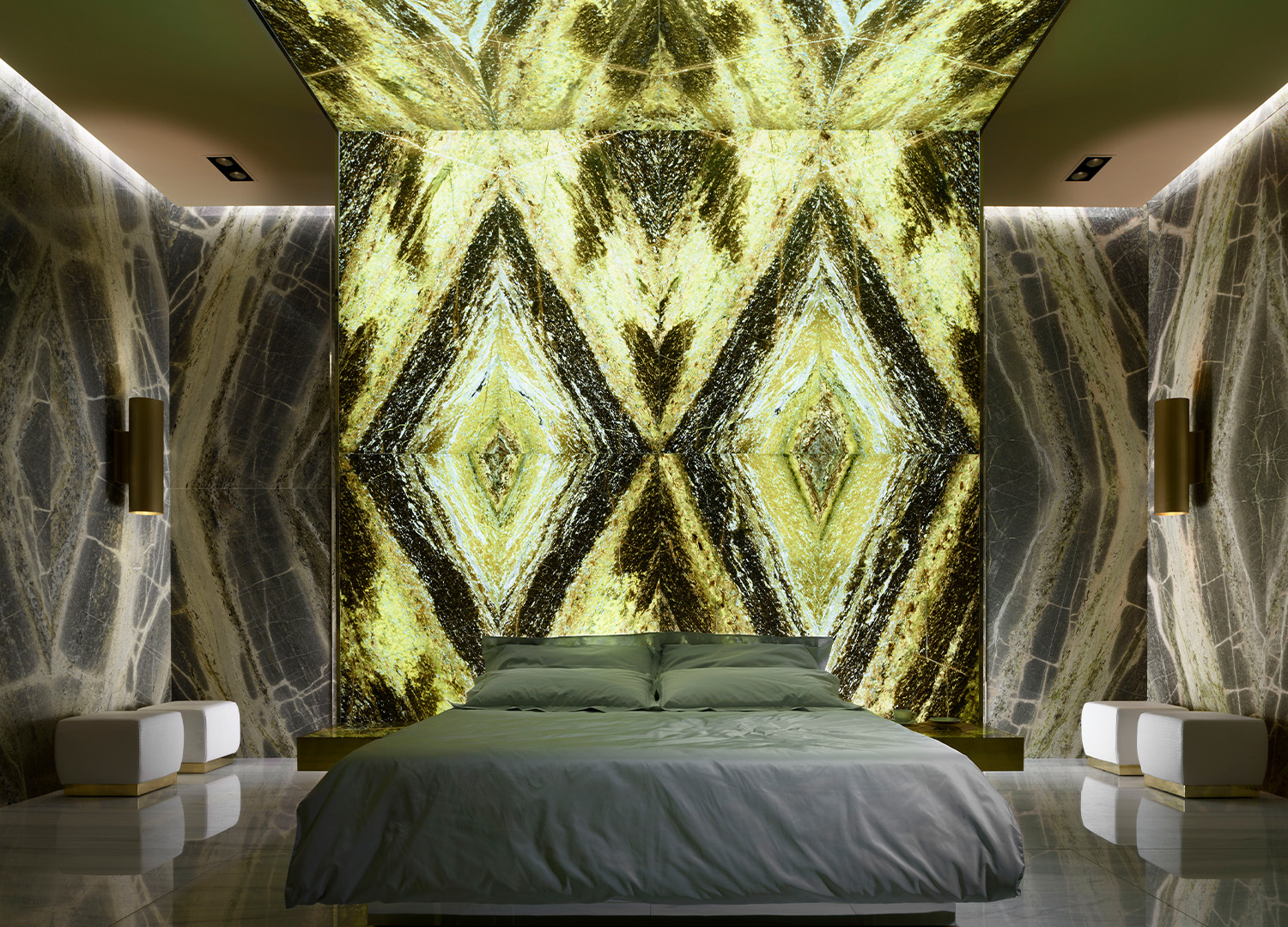
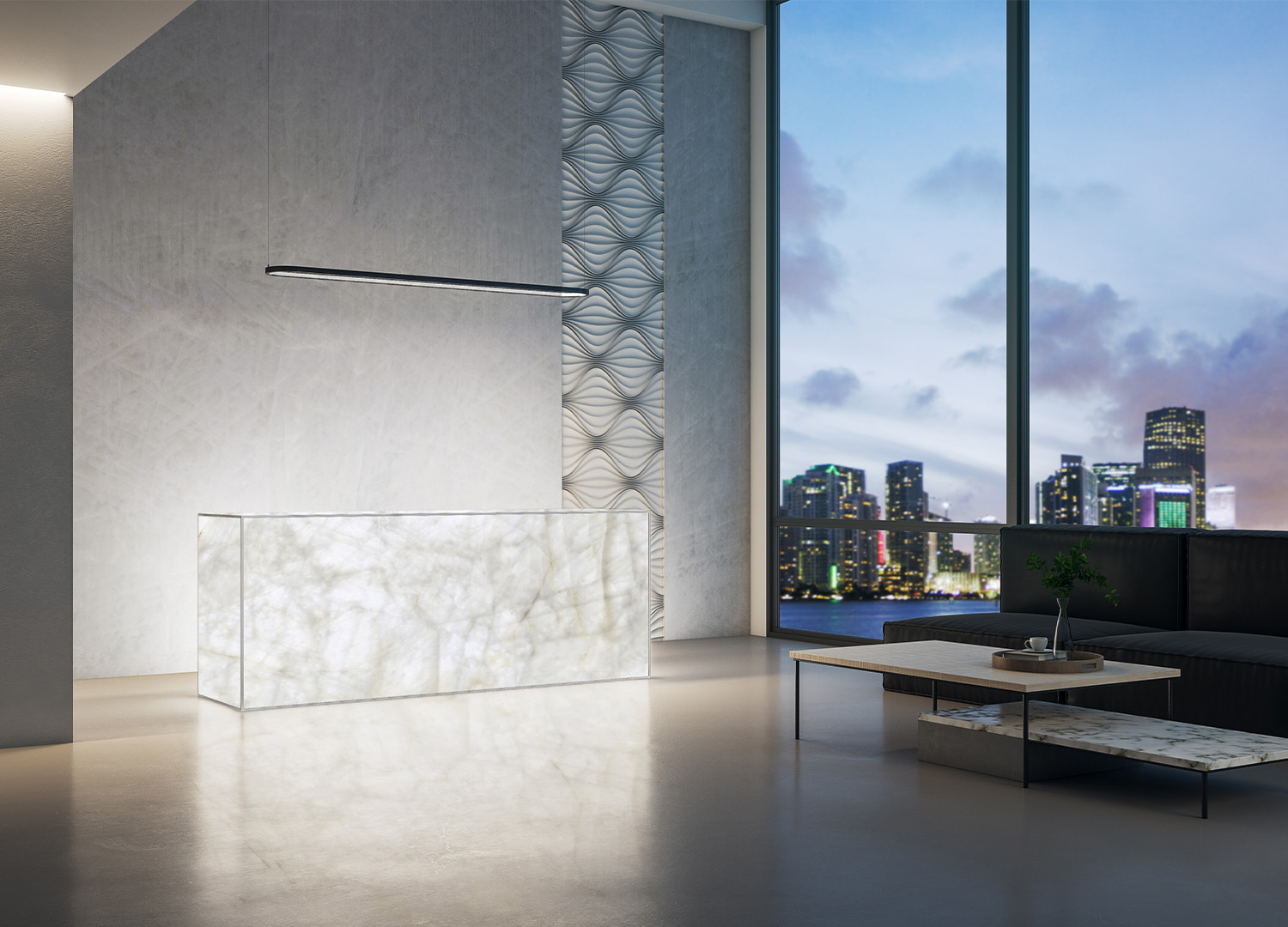
In this transformation, natural quartz plays a pivotal role, with Antolini exploring its luminous potential to the fullest. Unlike other stones, it possesses an intrinsic relationship with light: one that allows illumination to penetrate the material rather than merely reflect off its surface. When backlit, quartz does not simply glow; it unveils a complex internal landscape made of veins, crystalline formations, and mineral inclusions. The result is a surface that feels alive, dynamic, and continuously changing depending on light intensity and viewing angle.
Gallery
Open full width
Open full width
This behaviour is rooted in the material intelligence of Natural Quartz. Its crystalline structure, formed over millions of years through geological processes, enables varying degrees of translucency and transparency. Combined with its vitreous lustre, quartz becomes an ideal medium for backlighting applications. Beyond aesthetics, the material also offers high resistance to heat, mechanical stress, and wear, ensuring that its visual impact is matched by long-term performance. In this context, light becomes a design tool rather than a decorative addition: one that enhances the stone’s natural properties while preserving its authenticity.
Among Antolini’s interpretations of natural quartz, Cristallo Traslux embodies a refined and balanced approach to translucency. Characterised by its ability to diffuse light evenly across the surface, it creates a soft, luminous effect that brings a sense of lightness to interior spaces. When backlit, Cristallo Traslux transforms architectural elements into subtle sources of illumination, capable of enhancing atmosphere without overwhelming it. Its understated elegance allows it to adapt seamlessly to both contemporary and more traditional settings, making it a versatile choice for residential, hospitality, and contract environments.
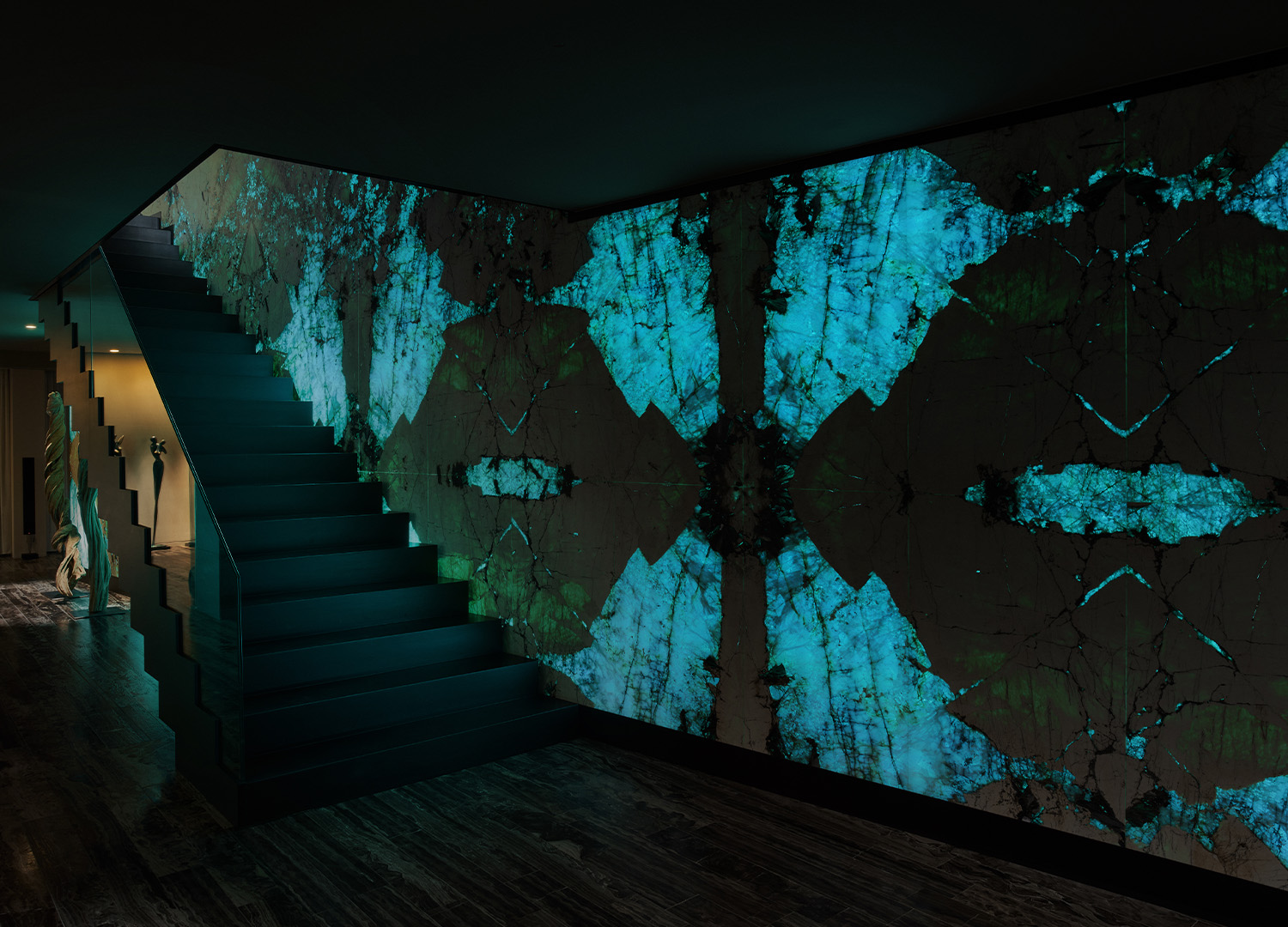
A more expressive and narrative identity defines Patagonia Original “Extra”. This surface is less about uniformity and more about visual storytelling. Its composition resembles a natural map, where crystalline zones intersect with denser, opaque formations, creating a rich and unpredictable pattern. When illuminated from behind, these contrasts are amplified, generating a dramatic interplay of light and shadow that evokes vast landscapes shaped by time and natural forces. Patagonia Original “Extra” turns stone into a visual experience, one that commands attention and transforms large surfaces into focal points within a space.
While natural quartz is inherently suited to backlighting, Antolini’s exploration of light extends beyond the limits of translucency. The Allight Collection represents a technological evolution that enables illumination to interact even with stones traditionally considered opaque, such as selected marbles, granites, and quartzites. Through innovative processing techniques, backlighting becomes applicable to a wider range of materials, expanding the expressive potential of natural stone.
Here, light is not used to alter the material’s identity, but to reveal new possibilities within it, transforming stone surfaces into active elements of spatial composition.
Working with a material as ancient and enduring as natural stone inevitably raises questions of responsibility and long-term value. In this sense, natural quartz embodies a vision of circularity rooted not in technical claims, but in material longevity and conscious design choices. Its durability, resistance, and timeless aesthetic contribute to surfaces conceived to last, both functionally and visually, well beyond short-lived trends.
Rather than focusing on transformation or artificial enhancement, the approach centres on revealing what already exists within the stone. Backlighting becomes a means of amplification rather than alteration, enhancing the material’s intrinsic qualities while preserving its authenticity. This perspective aligns with a broader understanding of circular thinking in design: extending the life cycle of materials through intelligent use, careful processing, and projects conceived to endure over time. Here, sustainability is not presented as an added layer, but as an inherent consequence of working respectfully with a resource shaped by nature over millions of years.
Ultimately, backlit Natural Quartz challenges conventional boundaries between material and light. It invites designers to rethink stone not as a static surface, but as a sensory medium capable of shaping atmosphere, depth, and emotional response. By revealing what lies beneath the surface, light transforms quartz into an experience: one that bridges geological history and contemporary design, material authenticity and technological innovation. In doing so, it becomes more than a building material: it becomes a landscape of light, captured in stone.