What if low-tech could look futuristic? Arthur Moulucou’s brutal, modular world
French designer Arthur Moulucou’s furniture explores an alternative path in contemporary design: self-produced, essential, and sustainable. Using industrial materials and modular systems, he merges craft and production for bold, lasting creations.

Arthur Moulucou’s story is deeply rooted in both his professional background and the places that have shaped his vision. After studying landscape architecture in Bordeaux, he moved to Bangkok, where he worked with Landprocess, a studio specializing in urban projects and water resource management. It was there that he developed a strong sensitivity toward urban furniture design. Yet, it was the city’s vibrant energy – its neon lights and intense nightlife – that left the deepest mark on his imagination. This “neon paradise”, as he calls it, became the seed of a radical, low-tech design language able to merge handcrafted culture with industrial standards.
Back in France, Moulucou founded MLK Furniture, a self-production lab where ethical and accessible design meets modularity and aesthetic rigor. At the core of this approach lies the “sandwich design concept” — a construction system in which components are enclosed between two metal plates, simplifying assembly and ensuring reparability and long-lasting performance. This method became his distinctive signature, translating into brutalist, almost futuristic forms where every element is reduced to its essence. His lamps and furniture pieces evoke spacecrafts with sharp, geometric silhouettes that explore the boundary between functionality and sculpture, seriality and uniqueness.
Gallery
Open full width





Open full width
Every MLK piece is a manifesto of Moulucou’s vision and design philosophy. Among the most representative: NE600/145 Lamp – the first piece ever created by MLK Furniture – draws directly from Moulucou’s experience in Bangkok, his “neon paradise.” The lamp transforms an industrial “ready-to-use” lighting system into a hybrid decorative object: functional yet elegant, industrial yet artisanal, universal yet local, futuristic yet low-tech. Its stainless-steel structure, held between two metal plates and acrylic diffusers, combines technical simplicity with aesthetic precision.

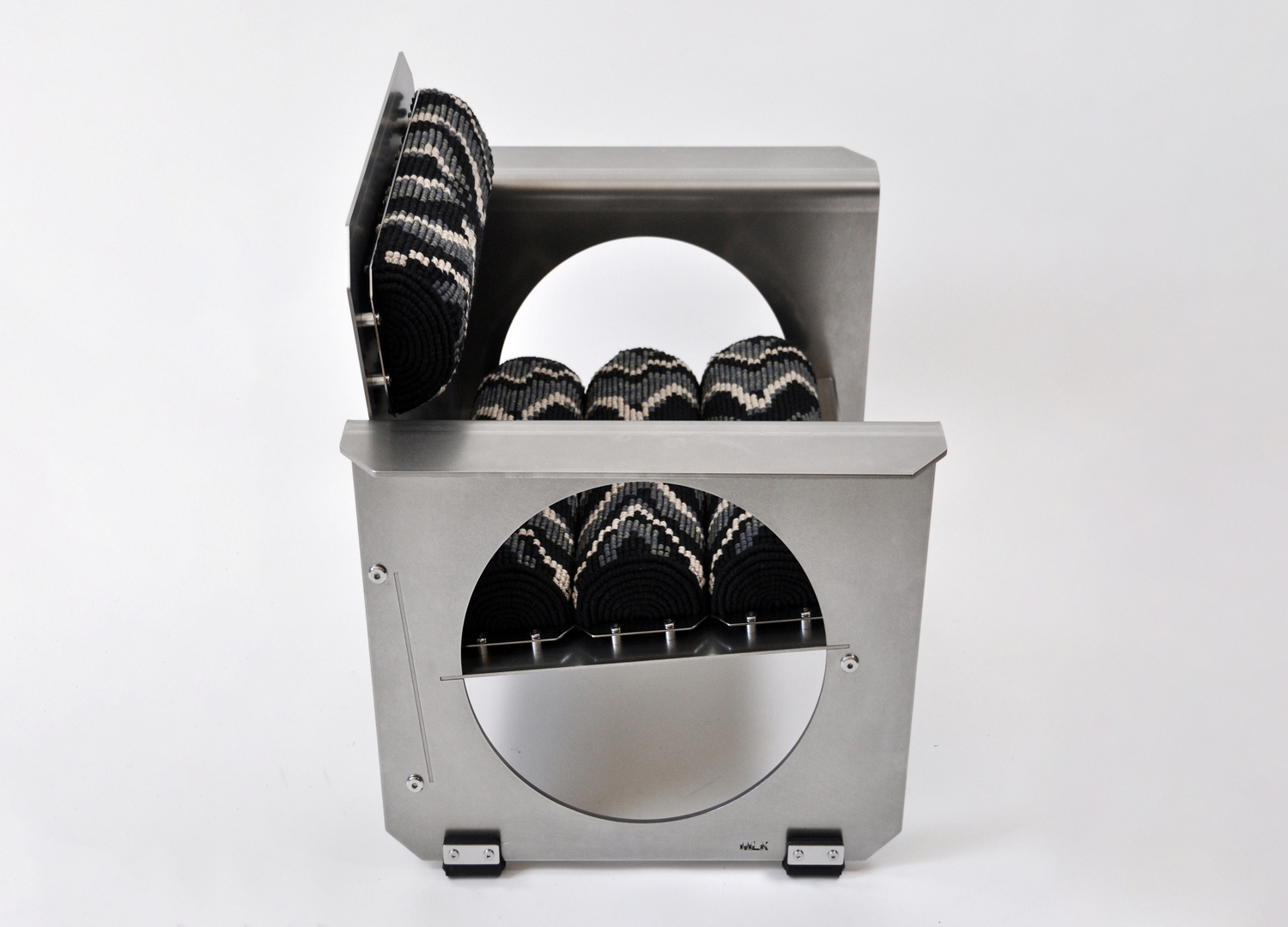
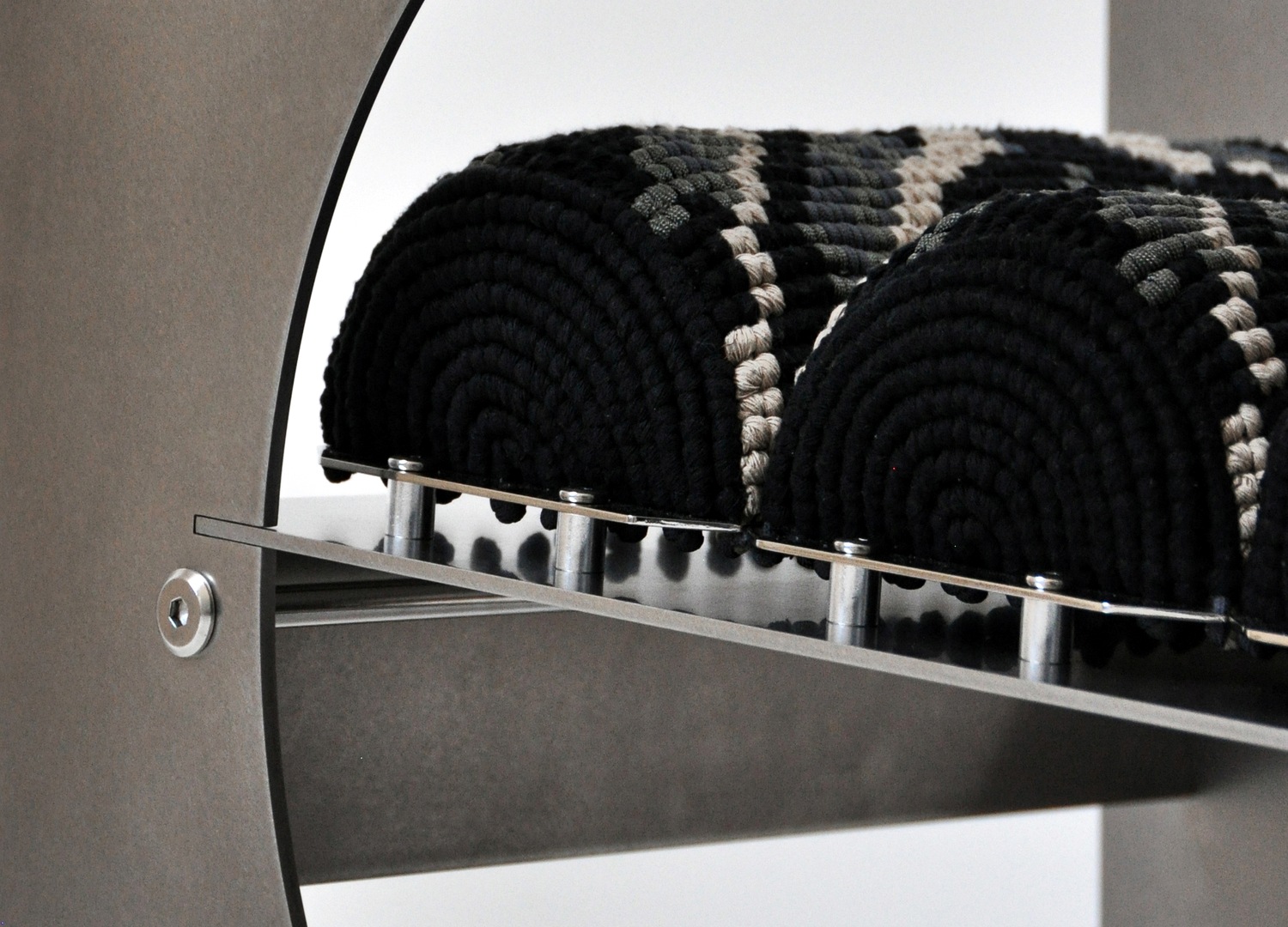
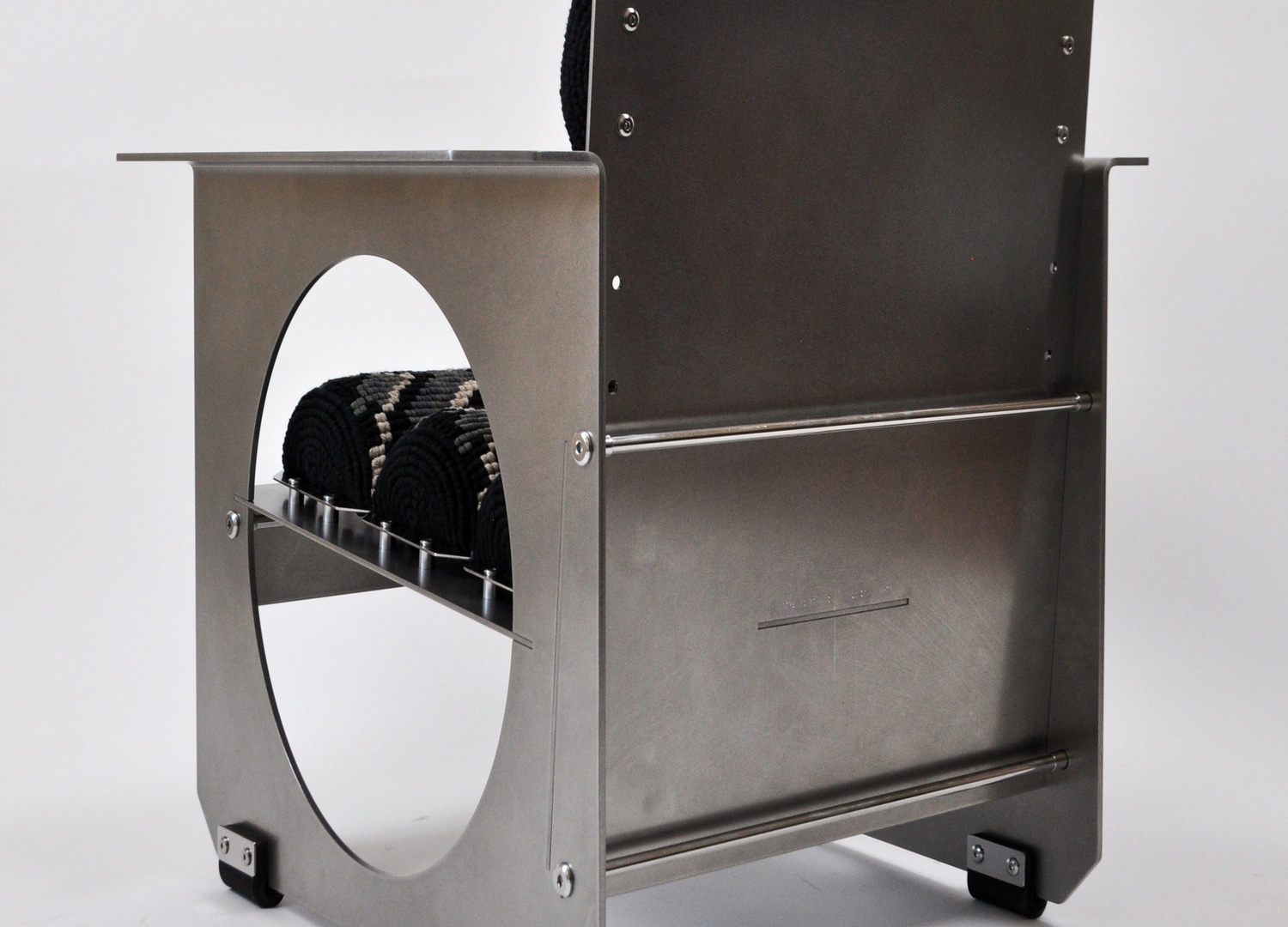
D400 Collection – composed of a console and an armchair – turns material into language. Sculpted from seven hand-sanded aluminum plates, it is the result of a gesture that’s both technical and poetic. Each surface bears the marks of handcrafting. The four circular holes punctuating the structure are not mere decoration but part of an intelligent production cycle: the removed material is reused to create the HEX400 Table. The D400 Armchair – Black Mamba Edition, cut and folded from a single sheet of brushed stainless steel, embodies the same philosophy — a monolithic form with sharp, almost lunar geometry. Its custom cushion, made by Diane Diebold Atelier, introduces a soft counterpoint in an almost oxymoronic gesture. Together, they form a coherent diptych where every element is born from necessity and transformation — a system in which matter regenerates itself.
D300 Shelves emerged from a simple question: how can laser-cutting waste be reimagined? The answer is a disassemblable, versatile, and fully recyclable shelving system. Made of aluminum, the shelves are sturdy yet lightweight, with panels that can be easily added or removed depending on the user’s needs. Waste materials are once again transformed into functional components, embodying MLK’s low-tech philosophy: zero waste, maximum functionality, and long-term durability.

Who says ‘complex and complicated’ are prerequisites for good design? Arthur Moulucou offers a clear, countercurrent answer: simplicity, autonomy, and design intelligence can generate objects of great conceptual and aesthetic value. Each piece is made to last and be repaired, with sustainability as a structural principle guiding materials, processes, and production chains. This doesn’t mean that advanced technologies or hyper-specialization are useless — only that they should be applied with moderation and awareness. The work of MLK Furniture thus stands as an operational and ethical manifesto, giving form to objects whose technical and formal honesty is built to endure.