SUR+PLUS, a collection that questions our production systems
The series of seating designed by AtMa reflects on the concept of surplus, proposing a sustainable alternative while also becoming a metaphor for connection in contemporary society.
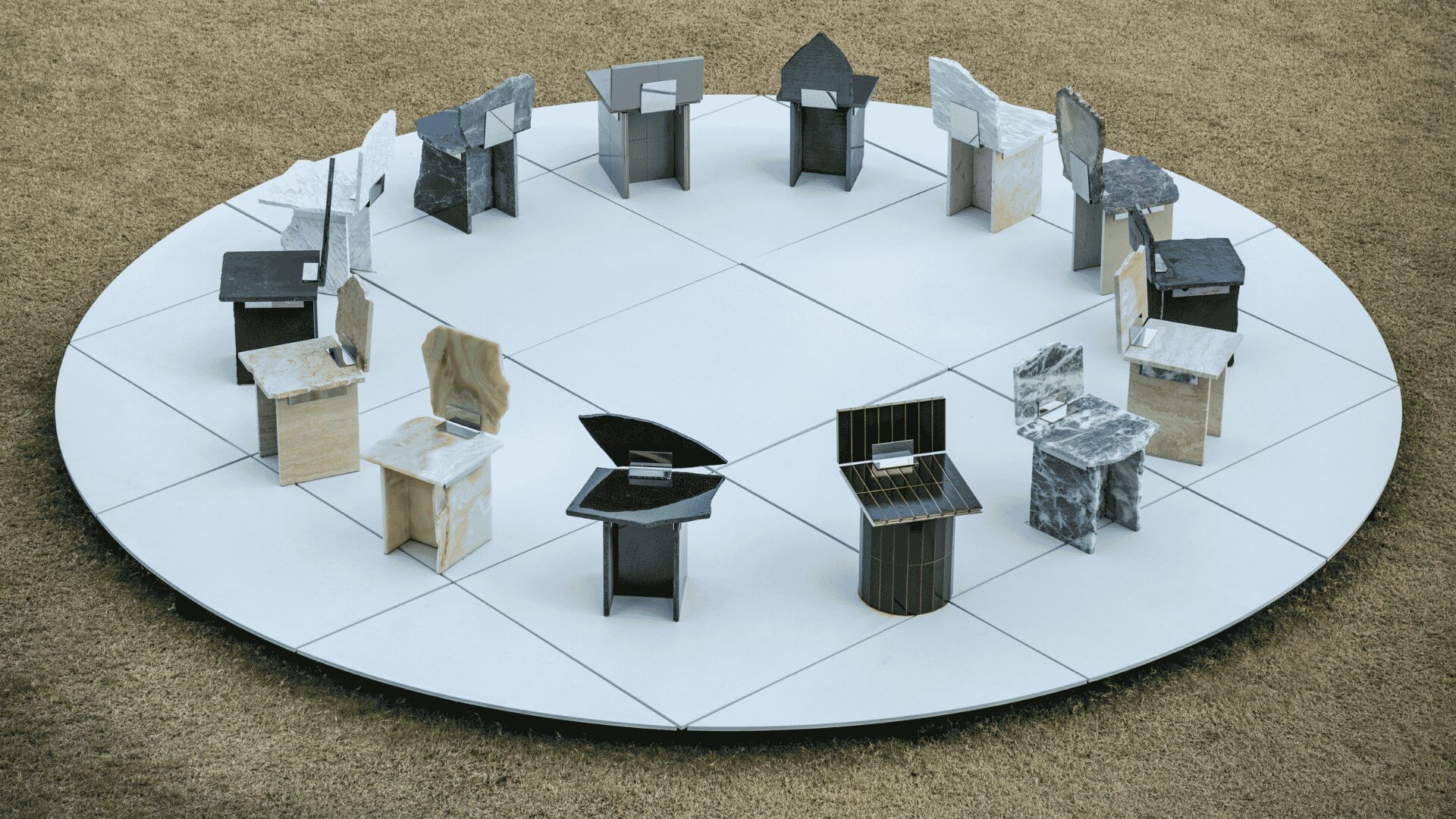
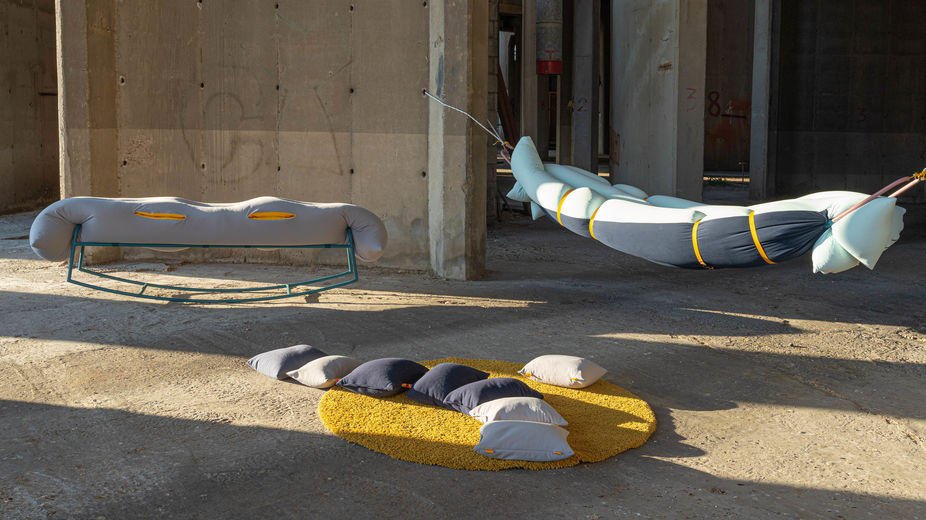
Presented at Alcova 2026 in the setting of Villa Pestarini, SUR+PLUS is a project by Japanese studio AtMa, founded by Makoto Suzuki and Ayumi Koyama, which explores how surplus materials generated within production systems can be embraced rather than treated as waste. The work belongs to one of the studio’s three main areas of practice: research projects that investigate contemporary social issues. These are joined by the design of spaces for clients and the management of COM, a place dedicated to presenting the studio’s work and engaging in dialogue with artists.
From construction sites to furniture production, the management of materials is based on a simple principle rooted in project economics: as a form of risk management to deal with possible damage, design errors or delivery issues, standard practice suggests ordering the necessary quantity + a small percentage more, creating a surplus – this concept is what inspired the Japanese duo’s project.
Gallery
Open full width
Open full width
SUR+PLUS:
For a new production system
The work of designers Suzuki and Koyama highlights one of the major issues in production today, both in design and in architecture and construction: surplus is not accidental, it is embedded in the production system itself. The collection presented by AtMa is more than a simple series of products, as it aims to lay the foundations for a new method that embraces surplus materials rather than treating them as waste.
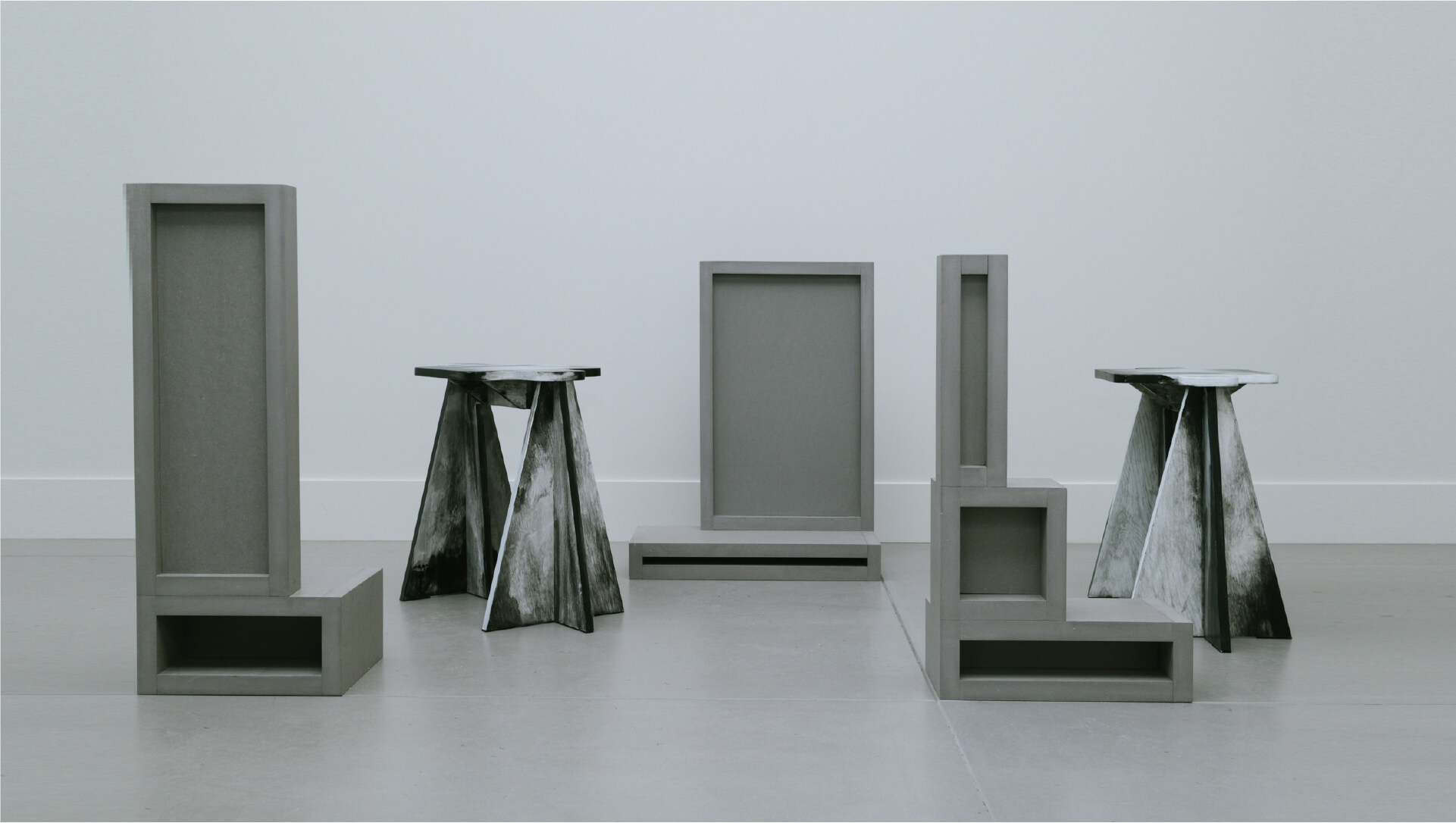
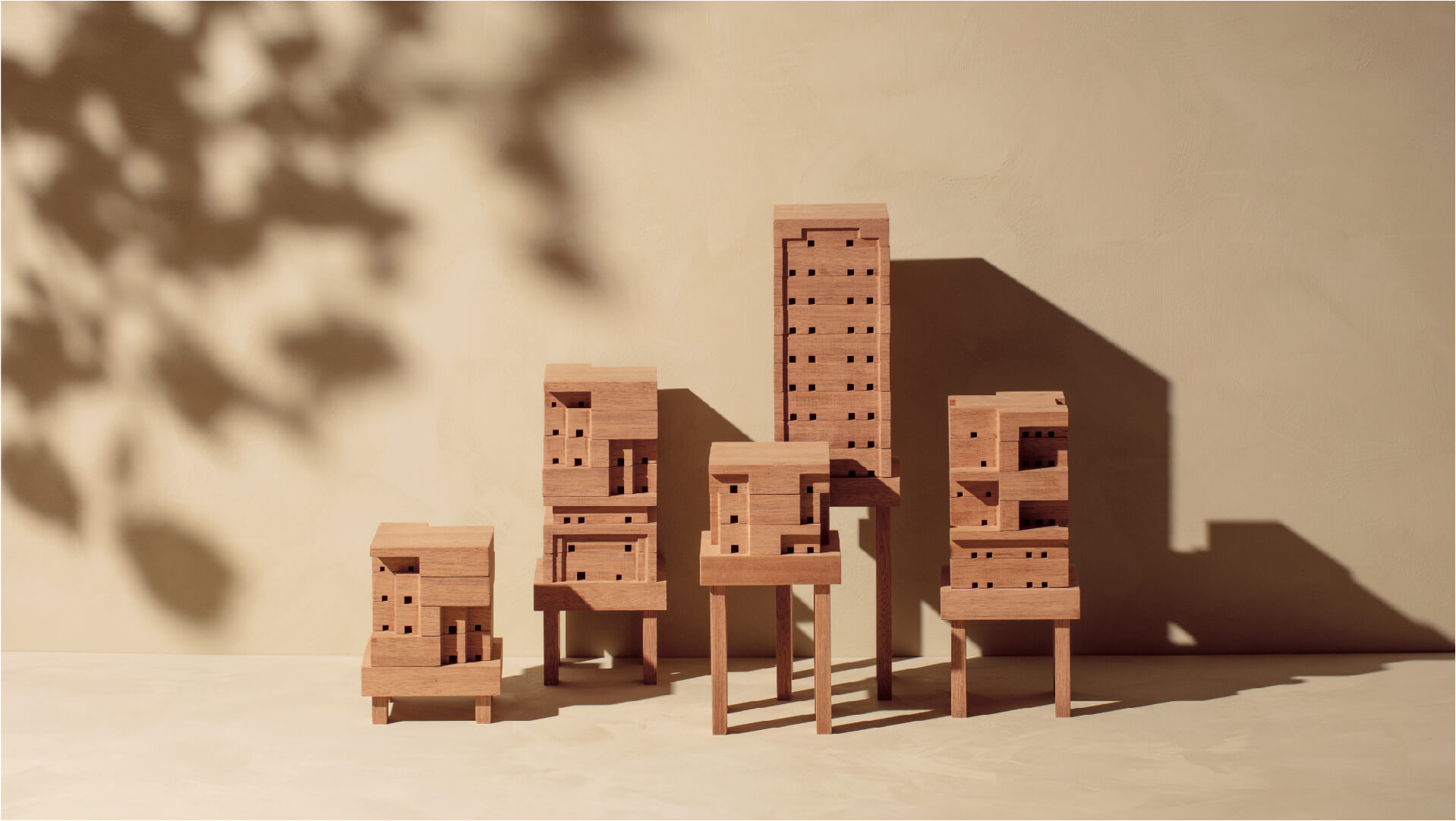
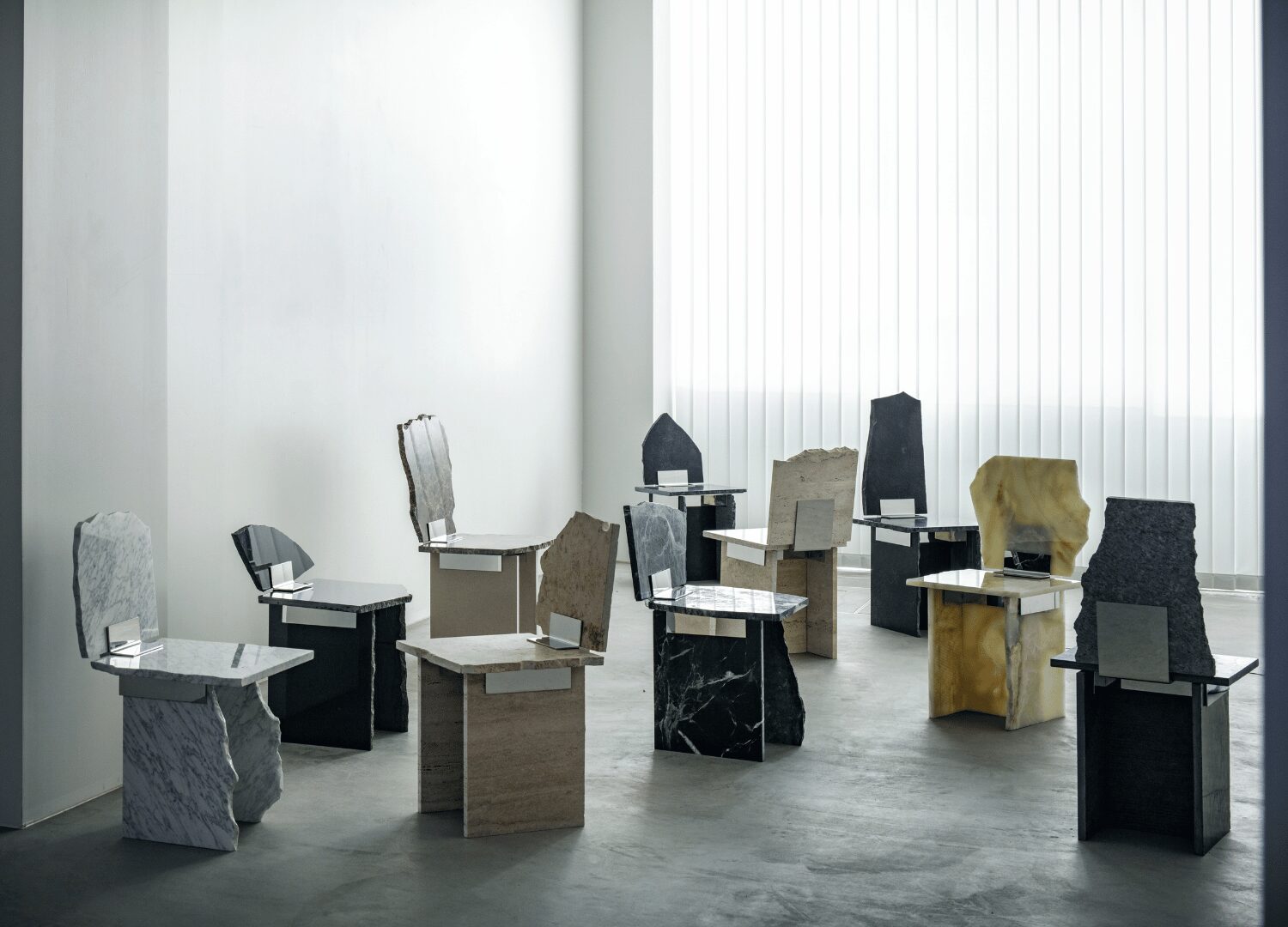
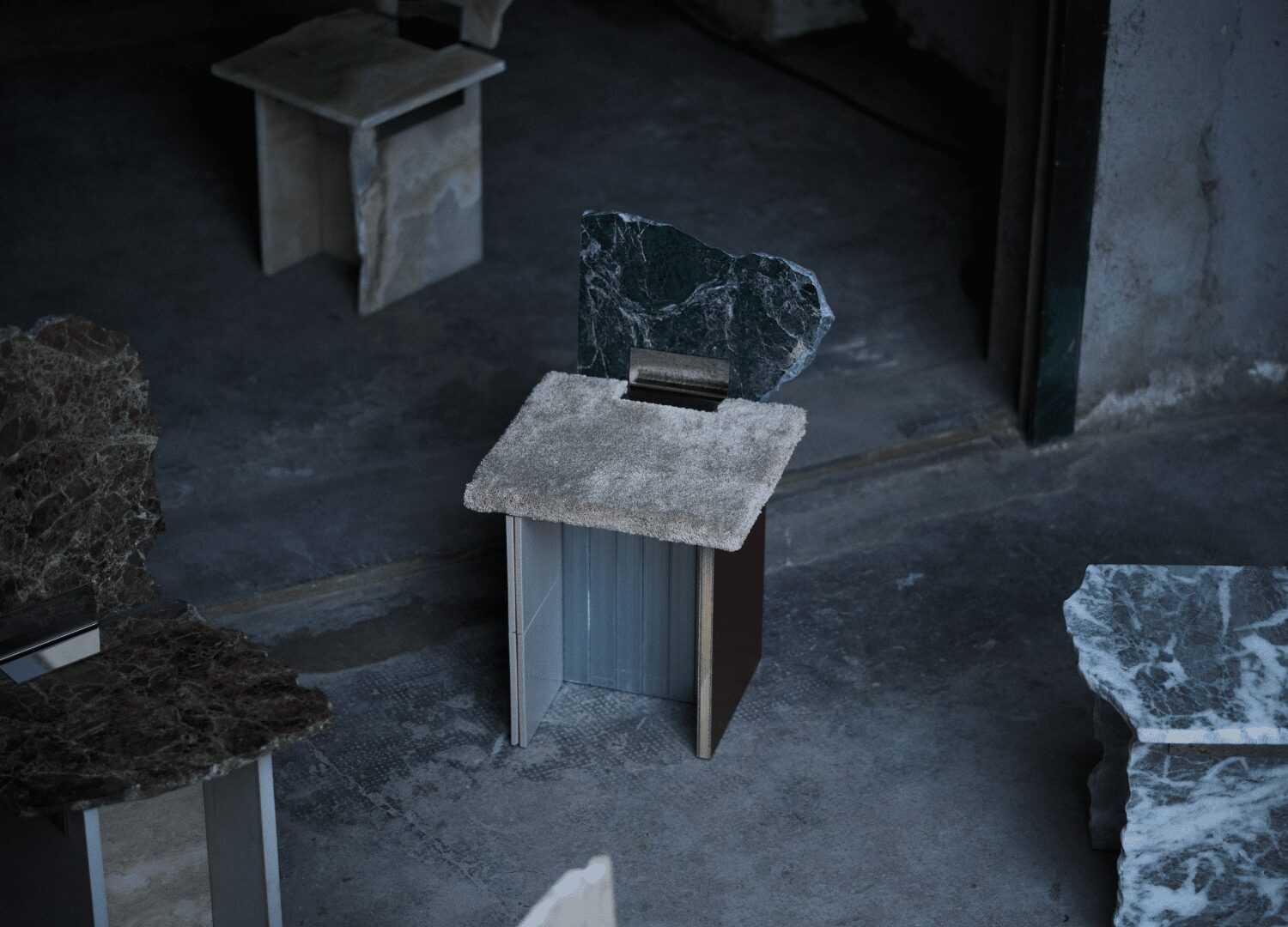
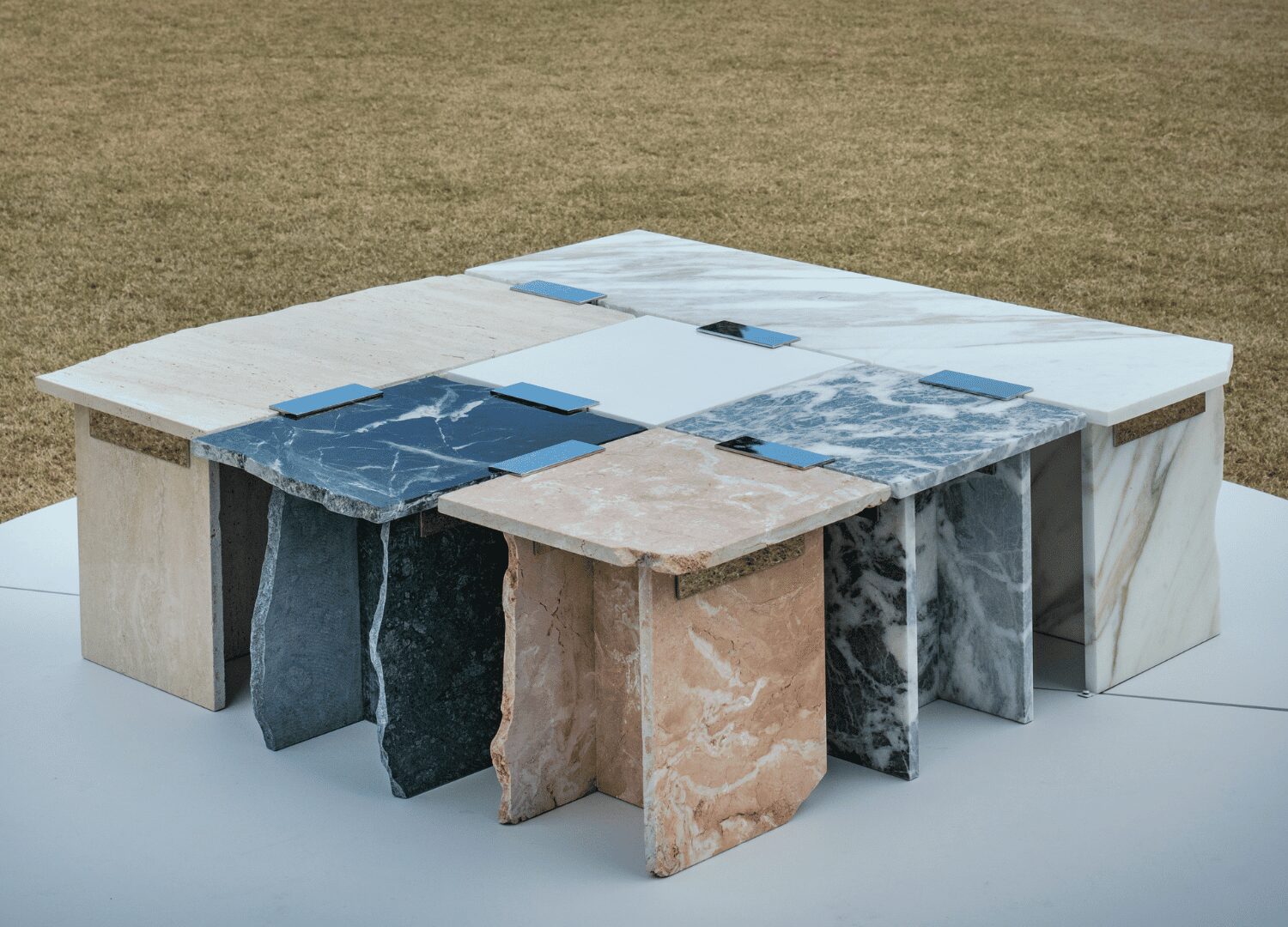
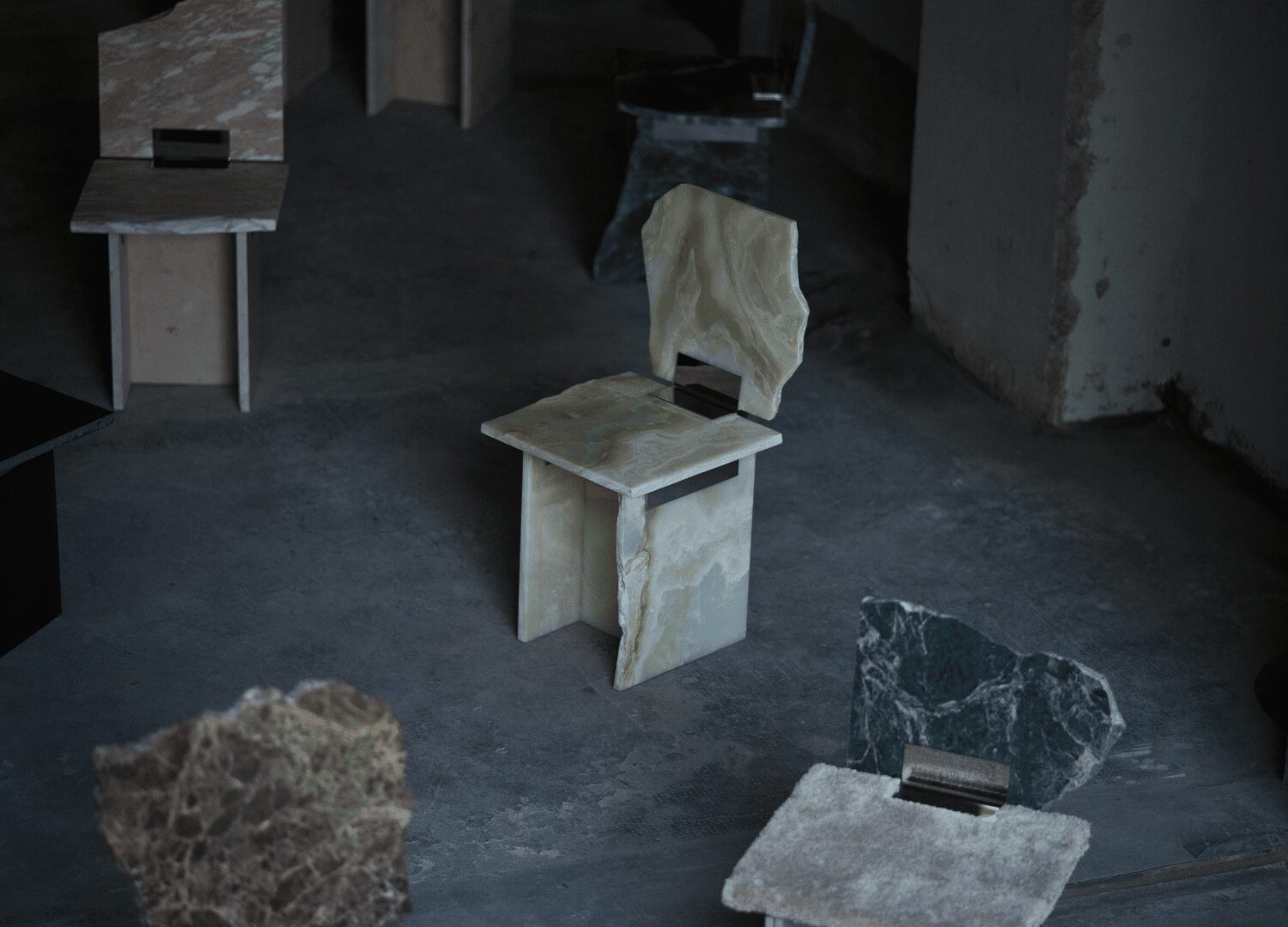
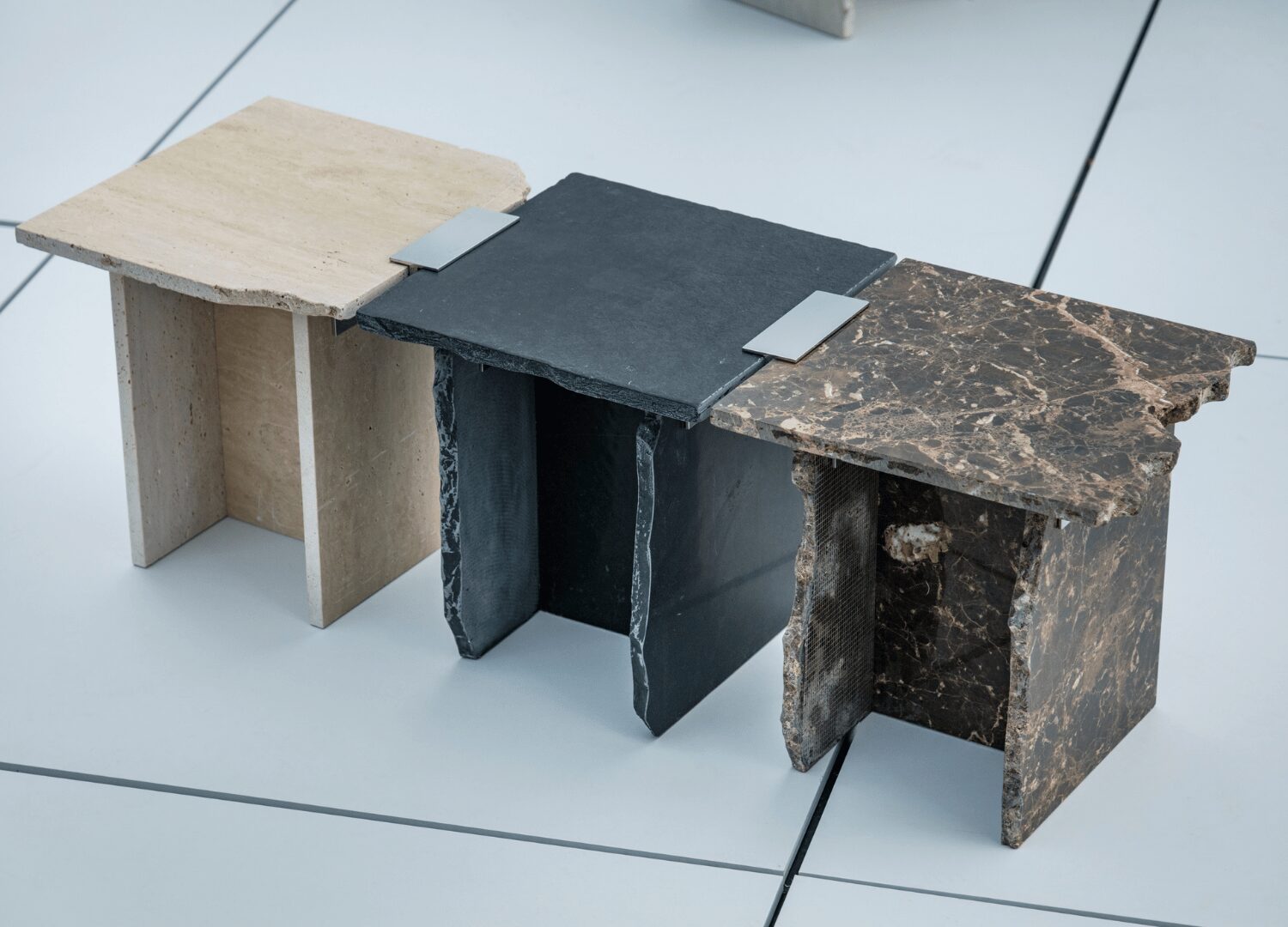
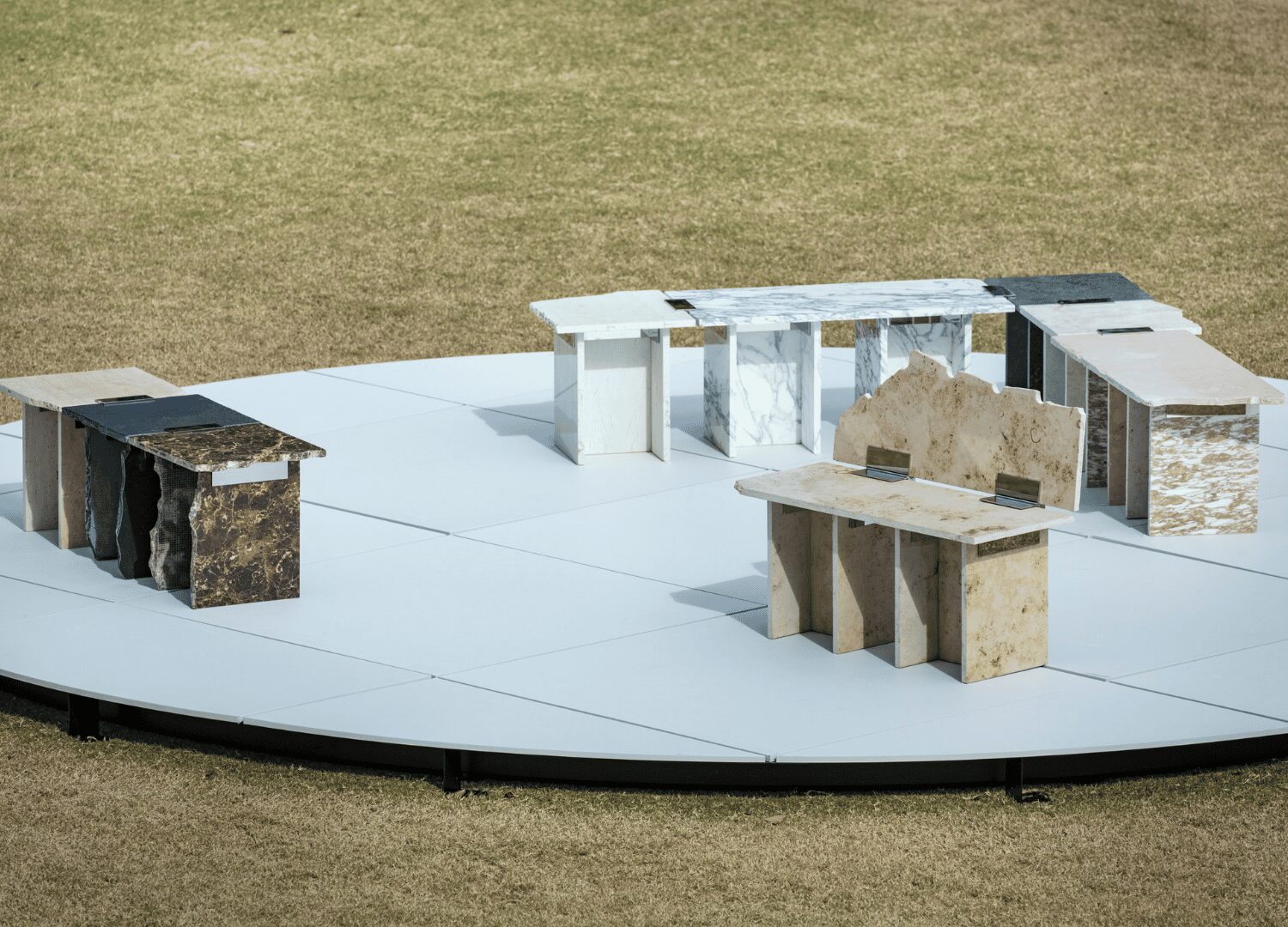
Stone, wood, tiles and carpet are the elements on which the SUR+PLUS collection is developed: fragments are selected to become joints, or to take on a structural function, such as seats, backrests and legs. It does not carry out any processing on the collected pieces, emphasising the importance of considering this “waste” as a raw material ready for use.
The aesthetic concept
The reuse and transformation of debris are central themes in architecture and design, as is the research into techniques for precisely joining different materials and creating uniform and stable structures. The design approach behind SUR+PLUS goes in the opposite direction: embracing different thicknesses, textures and stories – as an example, the collection also includes a model where two wooden panels support a carpet-covered seat and a marble backrest.
In this case, aesthetics are the result of the project rather than a feature to be defined in advance. The aim is not to create a product that responds to market trends, but a conceptual collection that can demonstrate the potential of what we consider a waste.
In AtMa’s words, “the fragments are assembled as they are, preserving cracks, chips and traces of time. What emerges is a form of coexistence: elements connected to one another while preserving their differences.”
SUR+PLUS as a reflection on society
By exploring these themes, the studio expands on their meaning by contextualising the concepts of connection and coexistence within today’s society. In SUR+PLUS, the components do not simply physically connect the materials, but bring different elements into relation, each with its own history and identity.
“The project brings to light what production structures often overlook and proposes a possible form of coexistence in contemporary society, where different cultures and materials meet,” AtMa explains.
The collection thus becomes a metaphor for a reflection on the concept of coexistence: SUR+PLUS explores how different elements can be embraced as they are, and connected while preserving their differences.