This is not a treehouse: a 30-meter bridge turns into a home
In India, the studio Wallmakers defies gravity and terrain with an extreme residential project structured as a 30-meter-long habitable bridge. Local materials such as straw and mud, combined with a lightweight suspended structure, transform the house into a living ecosystem.

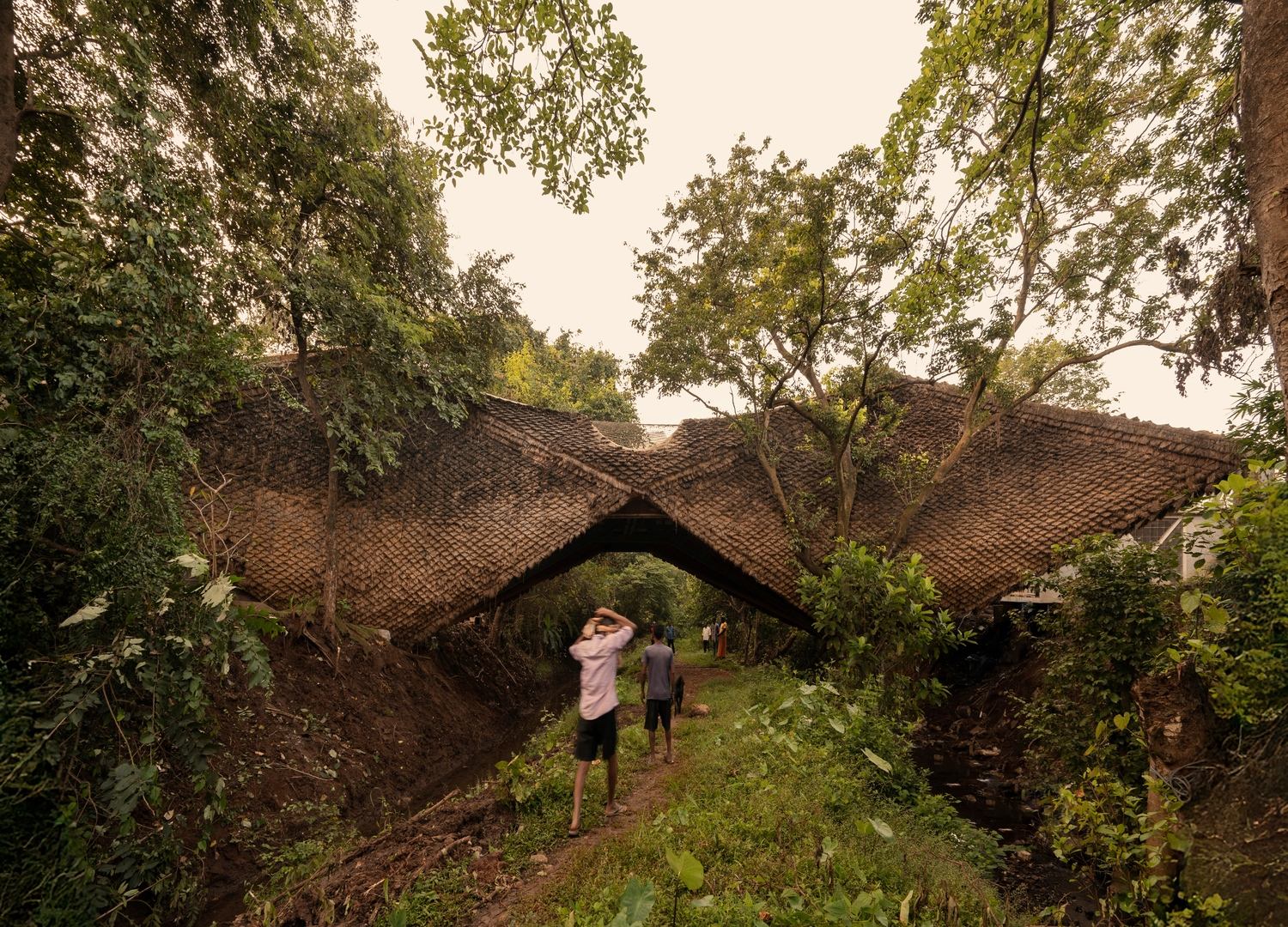
A challenge and a risk at once, Bridge House overturns traditional building paradigms, inviting the architecture world to question not only “how” to build, but above all “whether” to build in extreme conditions. From this reflection emerges a residential project that transcends typological conventions to become something else entirely: a bridge connecting two plots of land, linking humans and nature, form and function. Located in Karjat, Maharashtra, this project is the result of Wallmakers’ radical vision in tackling contemporary climate challenges, leveraging local materials and the site’s natural morphology. More than just a house, the project functions as a habitable infrastructure: a true living ecosystem.
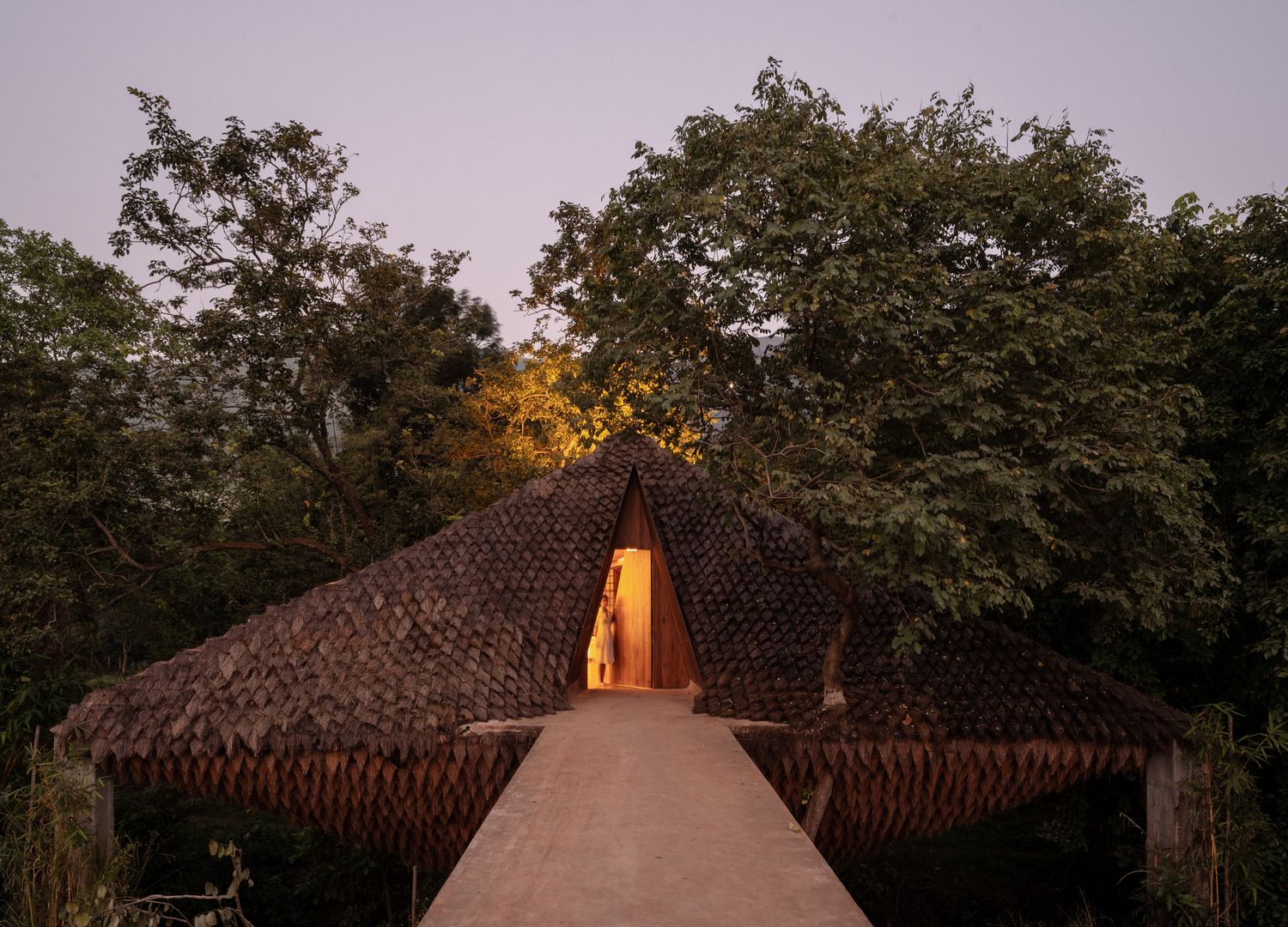
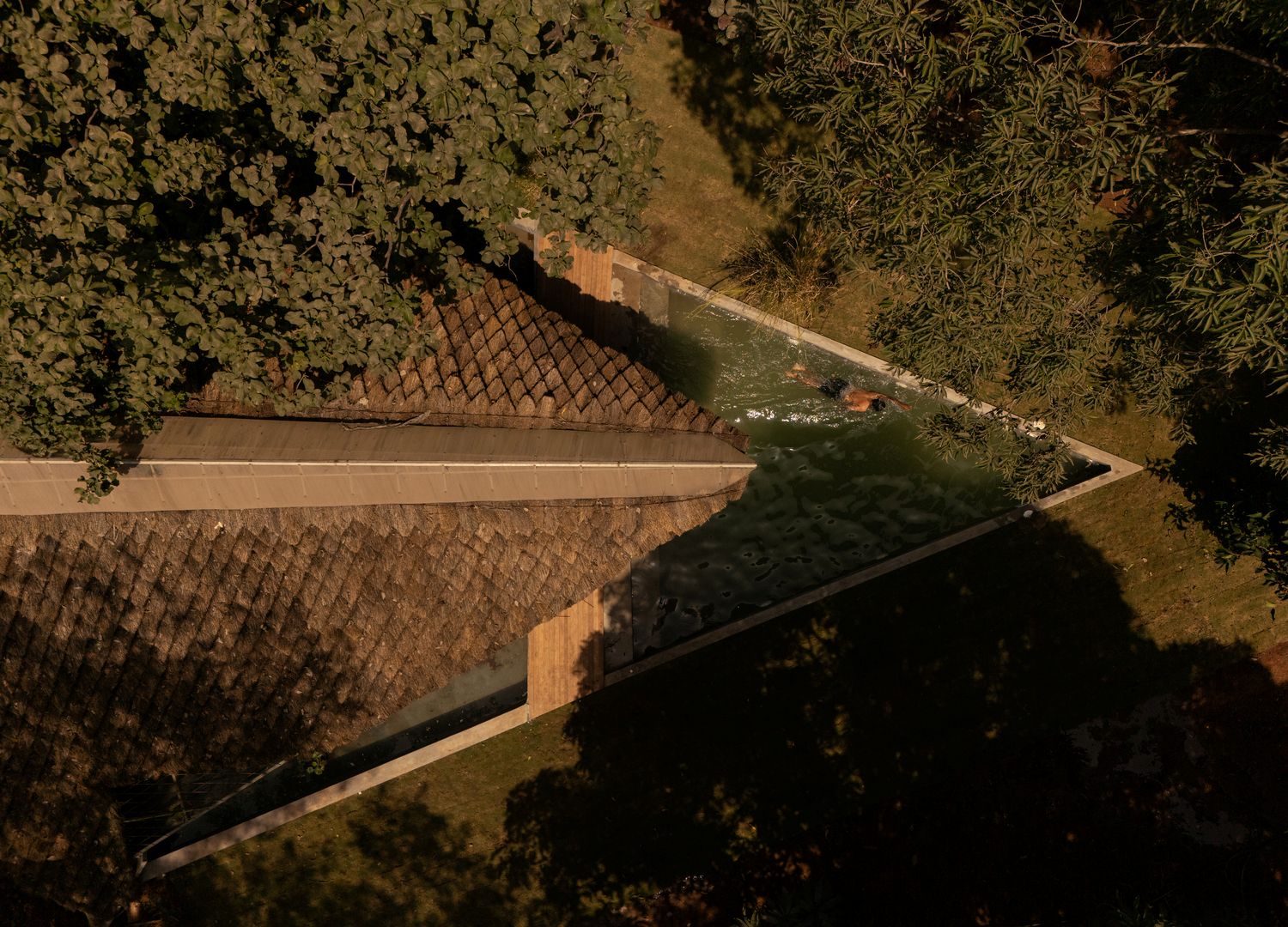
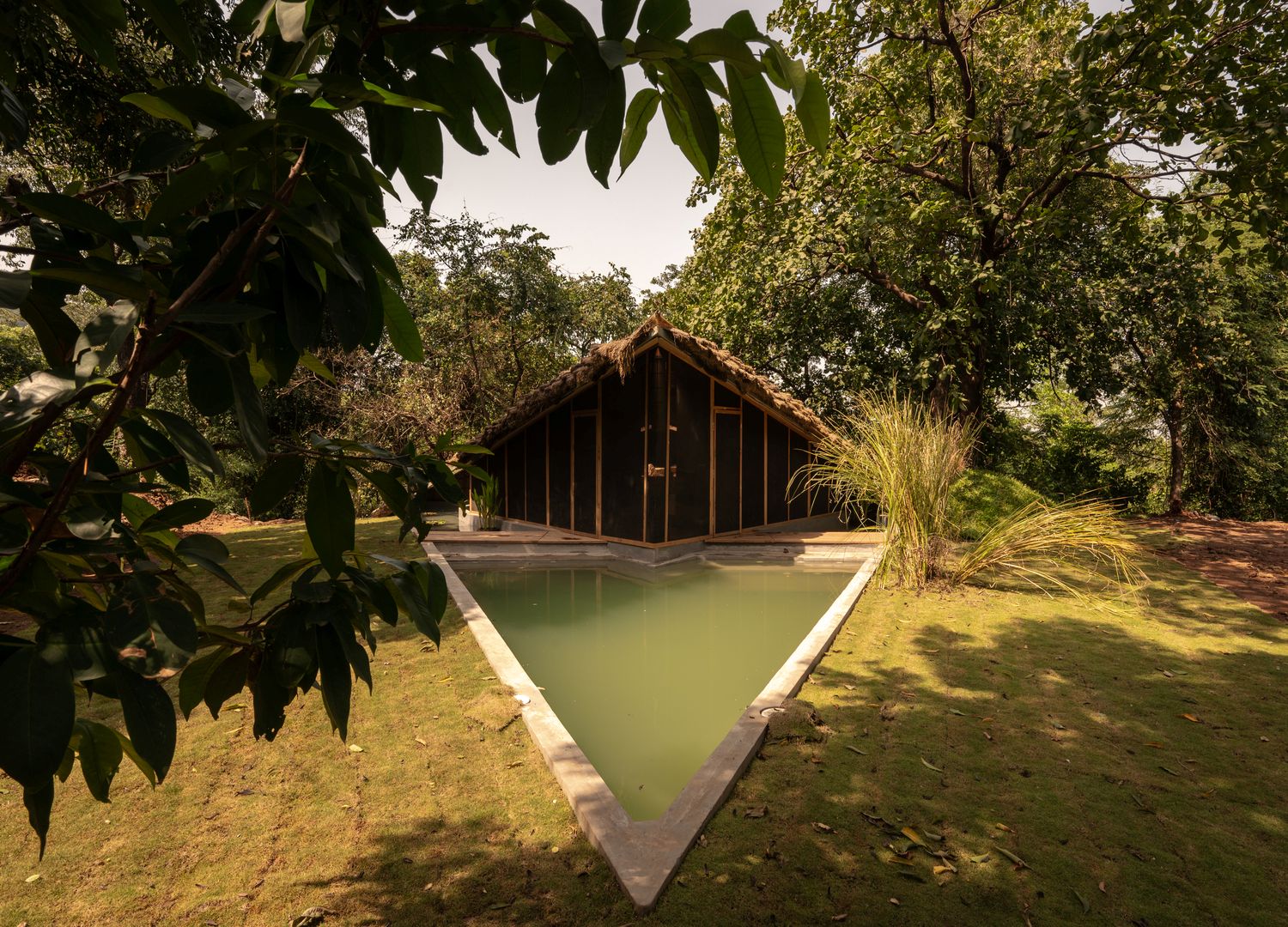
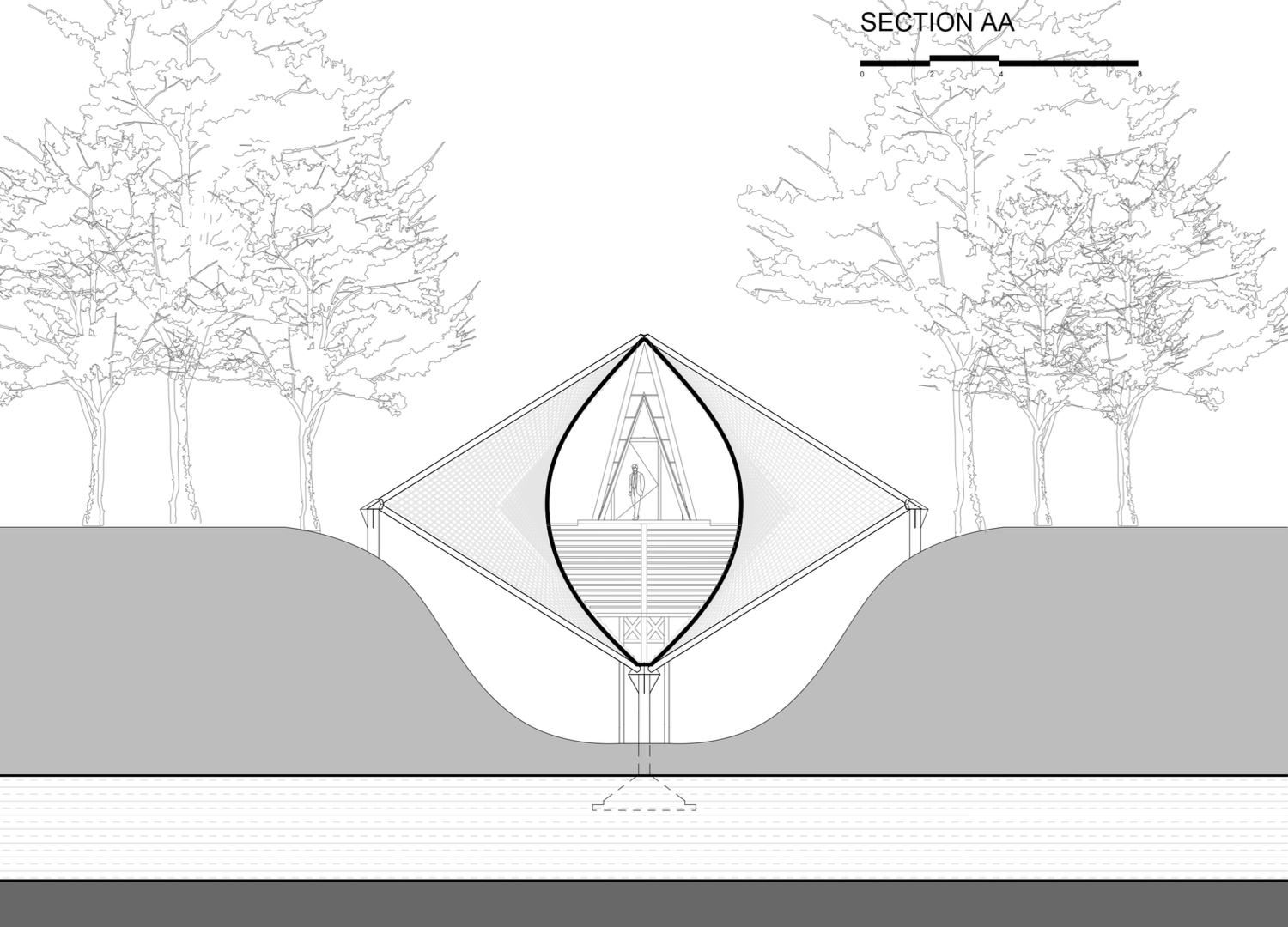
The extreme site conditions – two plots separated by a 7-meter-deep water channel and dense vegetation – shaped the design solution. The house does not rest on the ground but spans it via a 30-meter-long habitable bridge, suspended through four hyperbolic paraboloids made with minimal steel tubing and tension cables. This concept links the two plots without disturbing the gorge below, allowing the house to touch the ground as little as possible.
Gallery
Open full width
Open full width
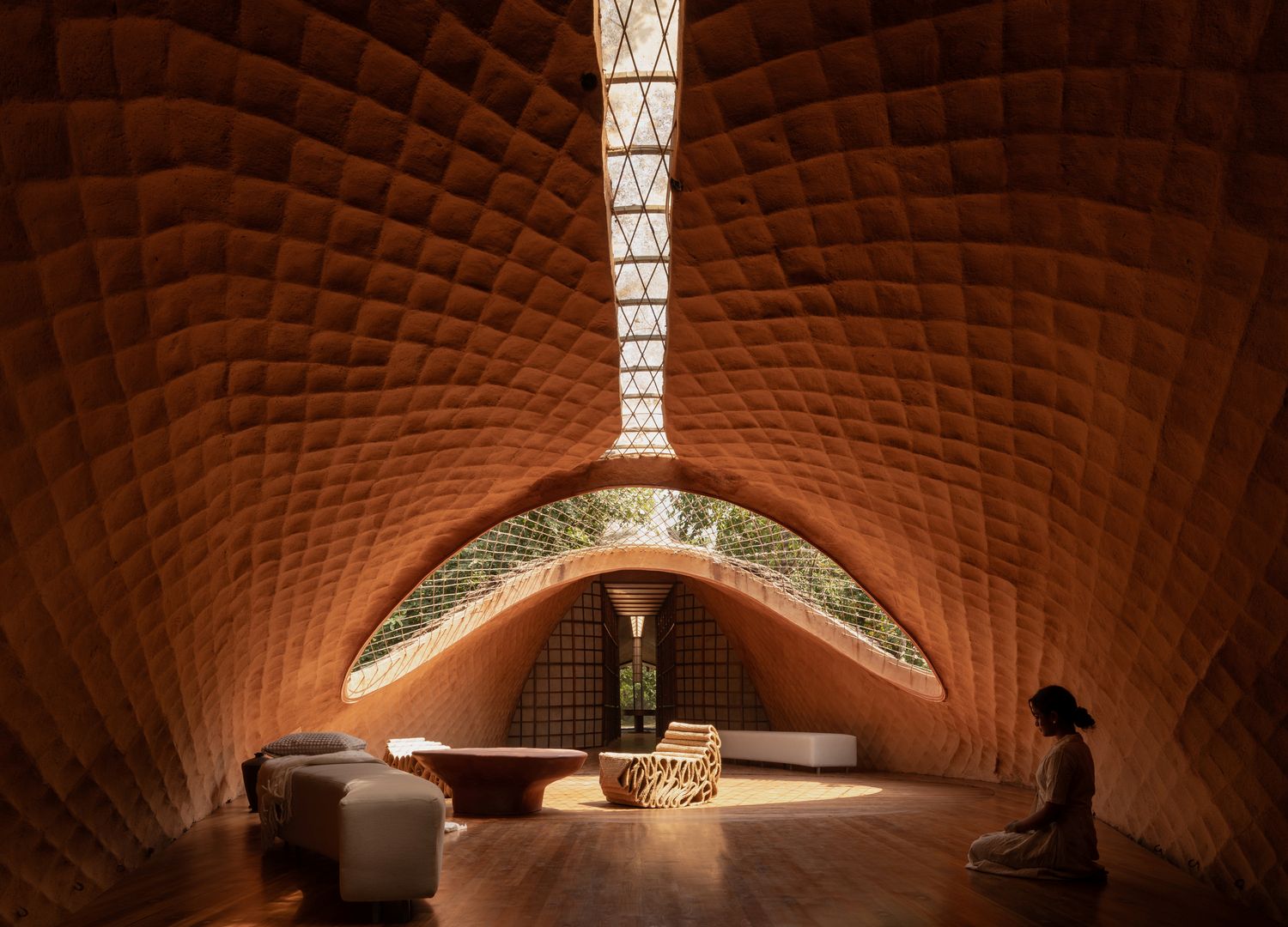
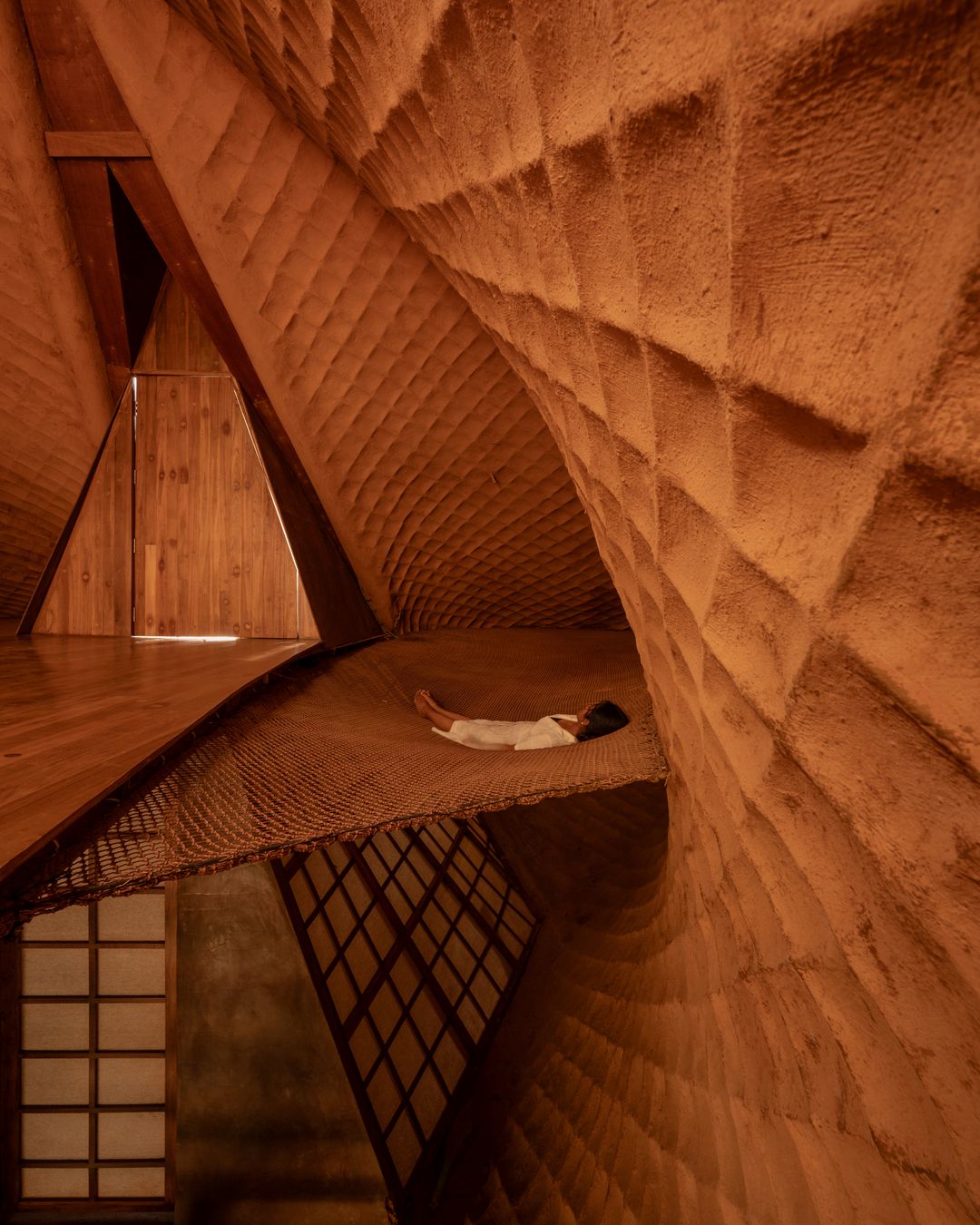
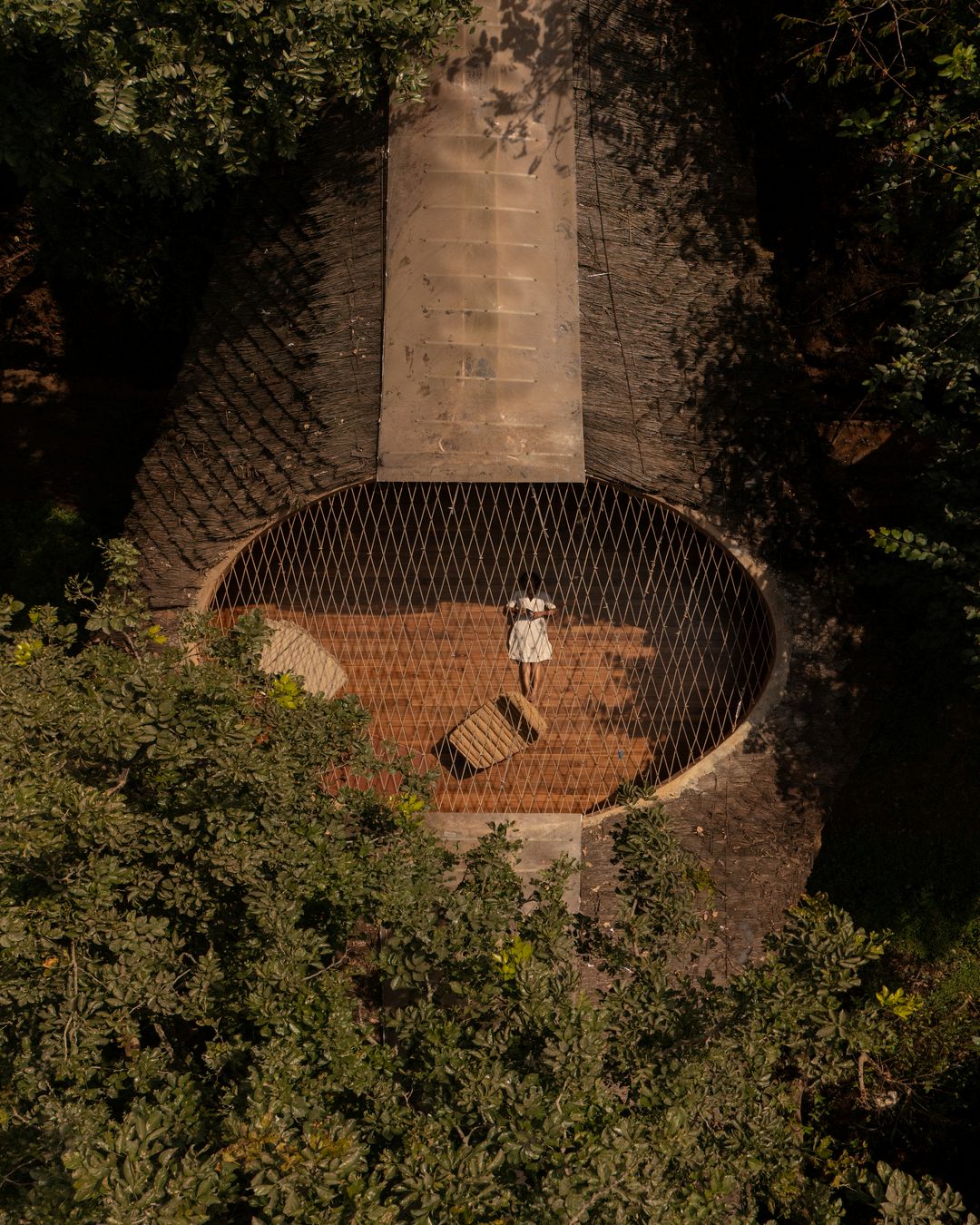
Bridge House’s experimental and sustainable character is revealed in its material choices, which fully respect the surrounding environment, including the wild grass spanning a five-mile radius. A straw-and-mud composite roof, inspired by pangolin scales, wraps the entire structure like a cocoon. This choice is not only poetic but practical: the envelope provides high thermal inertia and passive cooling, while also supplying the compressive mass needed to stabilize the structure, compensating for the absence of central vertical pillars.
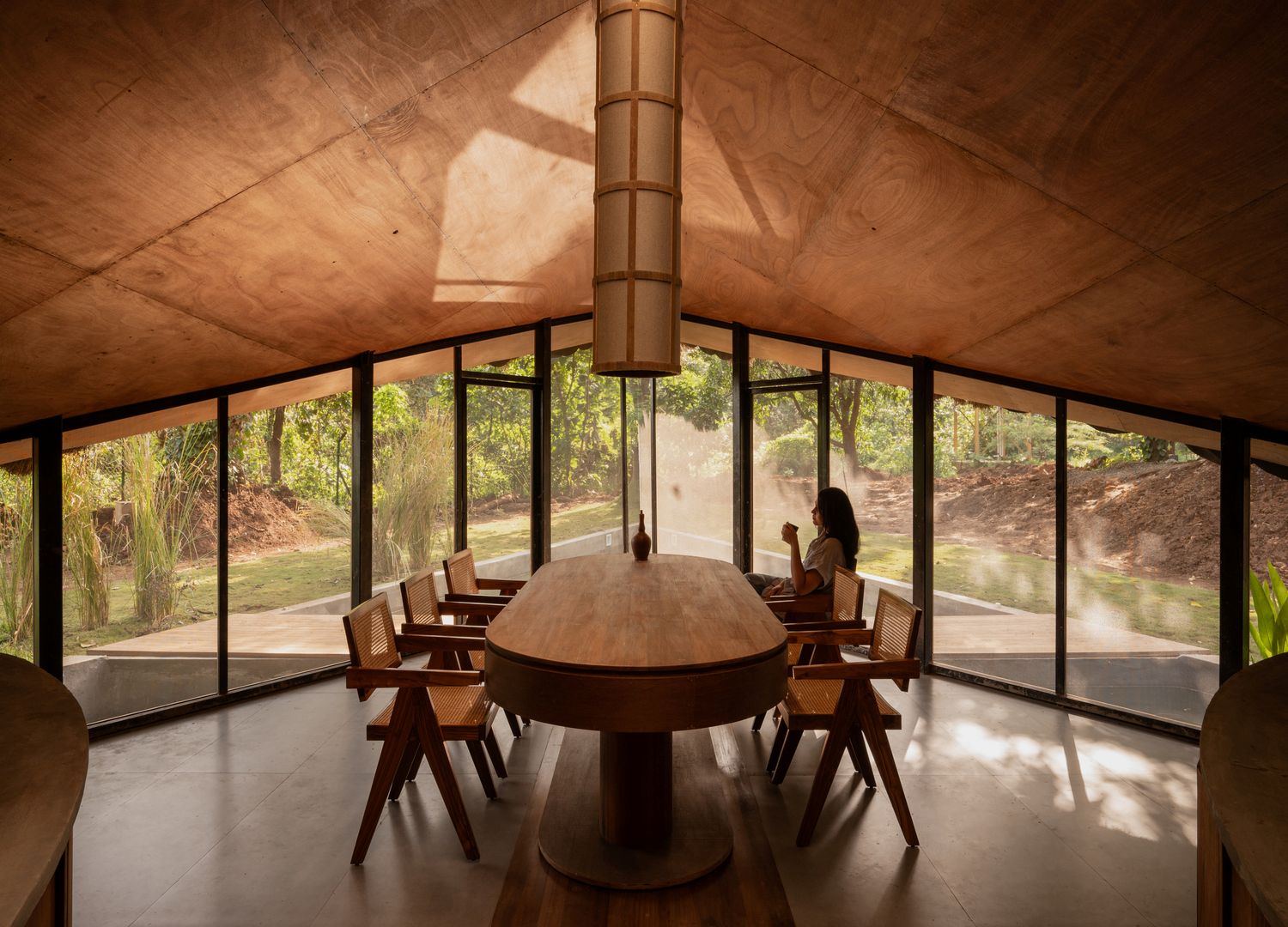
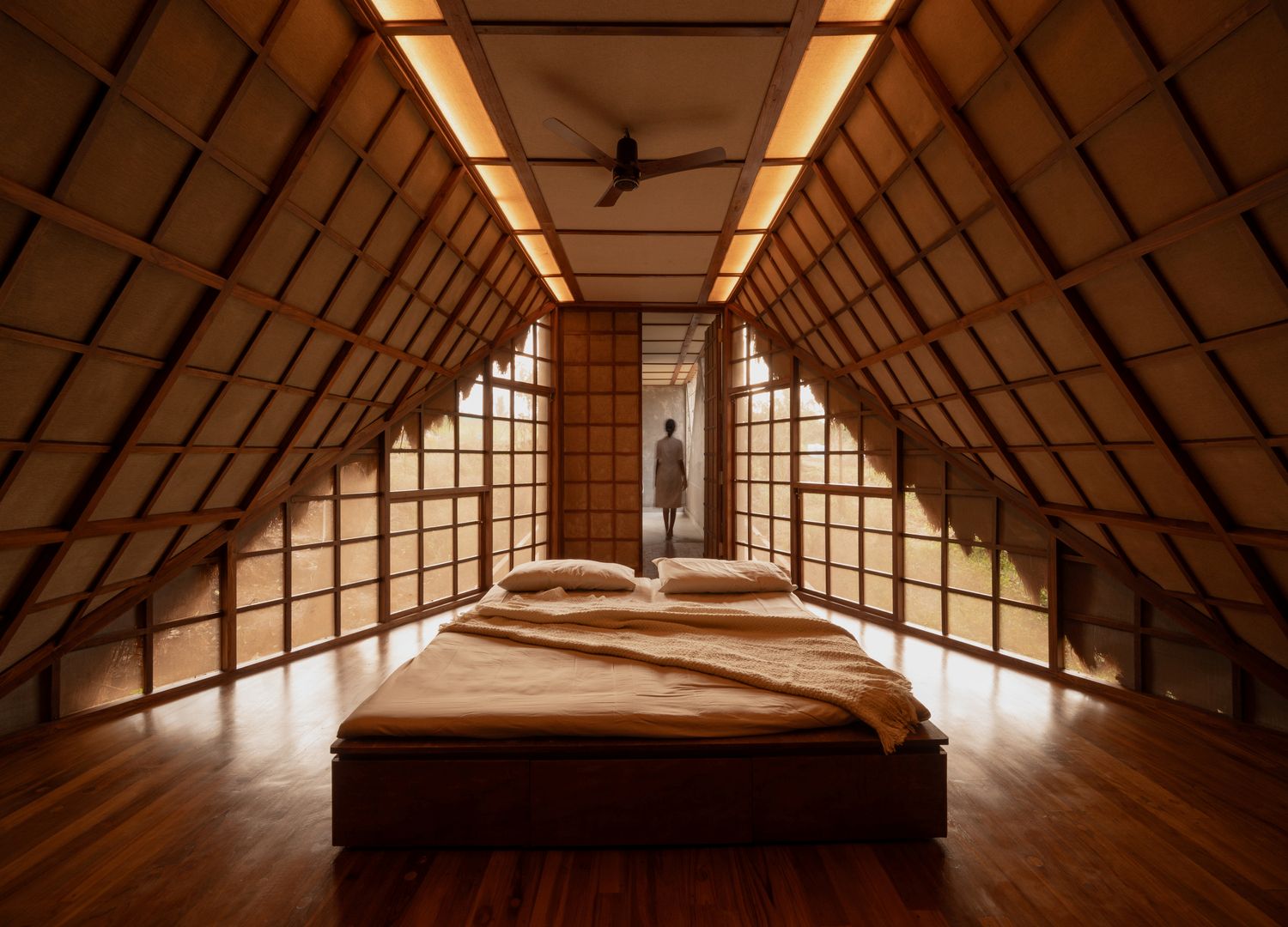
The mud coating also addresses a common vulnerability of straw roofs – susceptibility to rodents and pests – enhancing the structure’s durability. Nestled among the trees, it blends into the landscape, while an oculus in the center serves as a courtyard, allowing light, air, and rain inside. The four bedrooms overlook either the forest or the watercourse below, and the interior layout is fluid, reinforcing the dialogue between built space and nature. Interior materials complete the philosophy: jute screens and metal meshes filter light, while floors are made from reclaimed wood sourced from old naval bridges, a further example of adaptive reuse. Nothing in Bridge House is purely decorative; every element responds to a functional, climatic, or structural need.
Founded in 2007 by Vinu Daniel, who graduated in architecture from the College of Engineering in Trivandrum and later worked with the Auroville Earth Institute on UNDP post-tsunami reconstruction, the Indian studio Wallmakers has long pursued research into alternative construction techniques, including debris walls and the use of materials typically considered waste. The formative years spent working with earth-based building techniques and emergency housing deeply shaped the practice’s approach, prompting Daniel to devote his energies to sustainable and cost-effective design.
Driven by a fundamental question – “should we build at all?” – the studio seeks strategies that minimize environmental impact. Bridge House exemplifies this philosophy, showing how extreme site conditions can generate innovative, “wow-effect” solutions that remain respectful of the context. Responsive to its landscape and climatic conditions, the project balances structural ingenuity with material restraint, producing a structure that is both utilitarian and expressive. Ultimately, Bridge House is neither simply a house nor just a bridge: it is a built manifesto, reminding us that architecture, when attuned to its site and constraints, can balance human needs and natural integration.