Where is the line between waste and resource? WASTED by Potato Head is cancelling it.
An odd collaboration between the Potato Head luxury resort in Bali and British designer Max Lamb is bringing to life a new vision of sustainability and circular design models, guided by zero-waste principles.
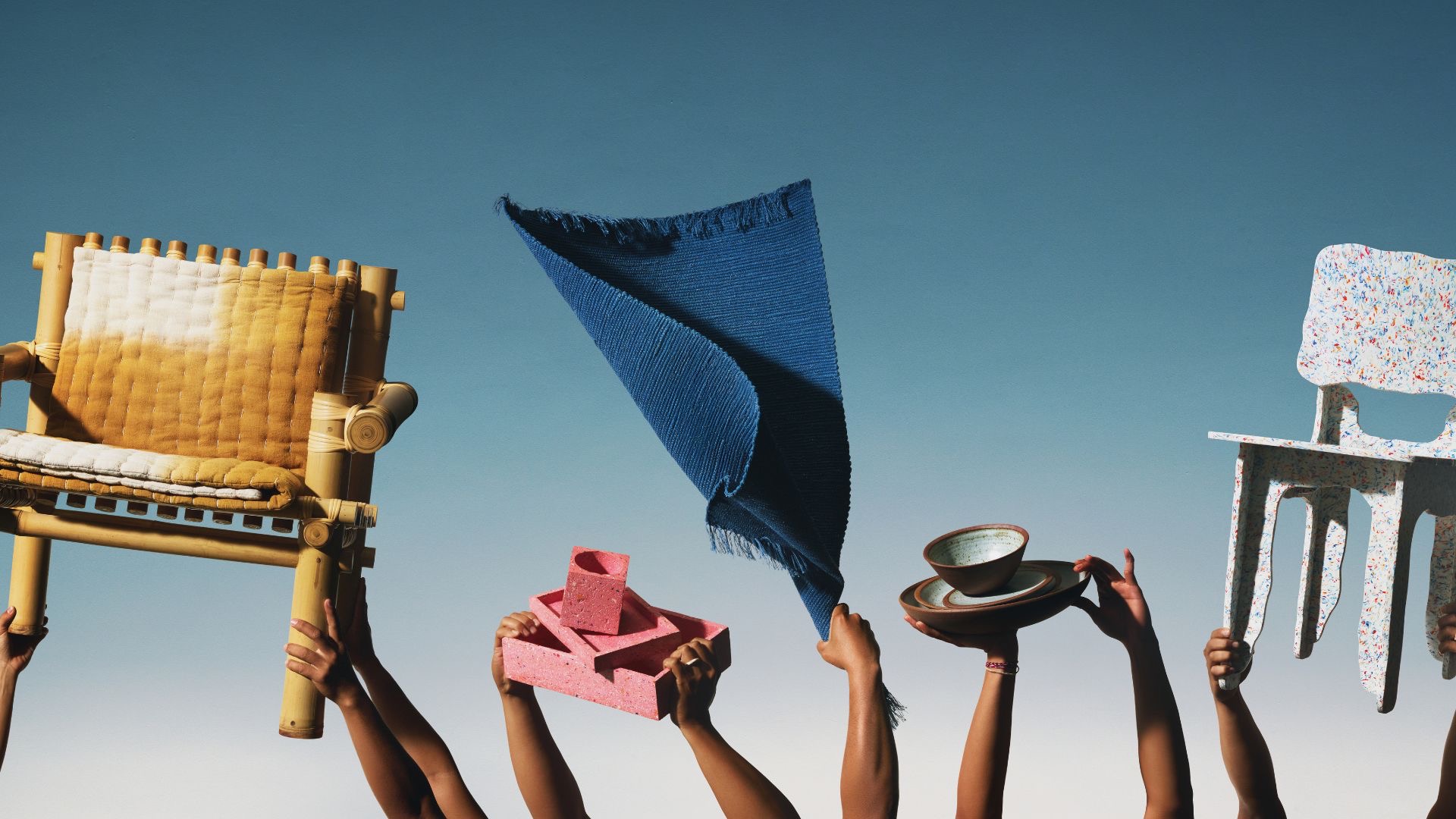
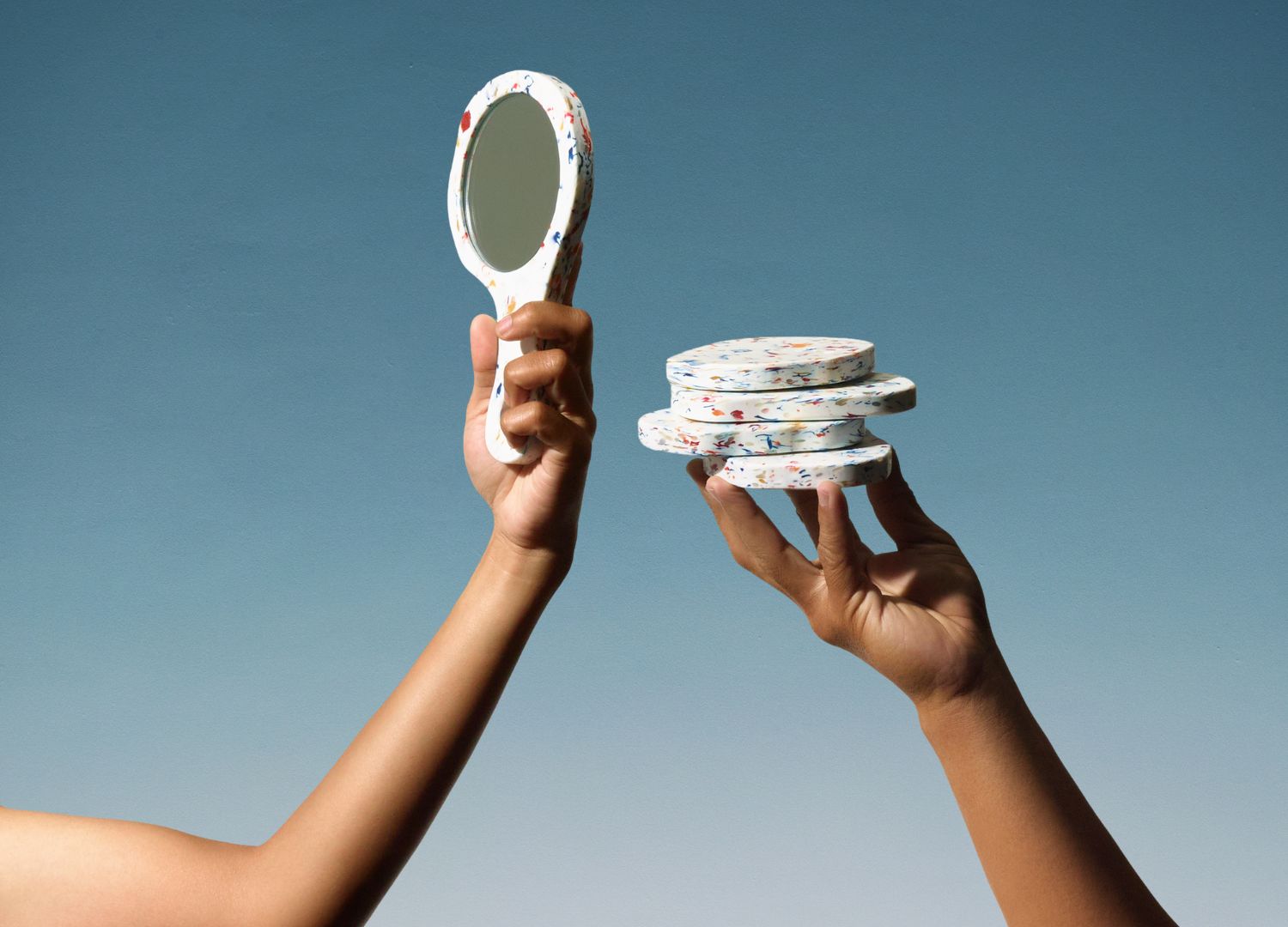
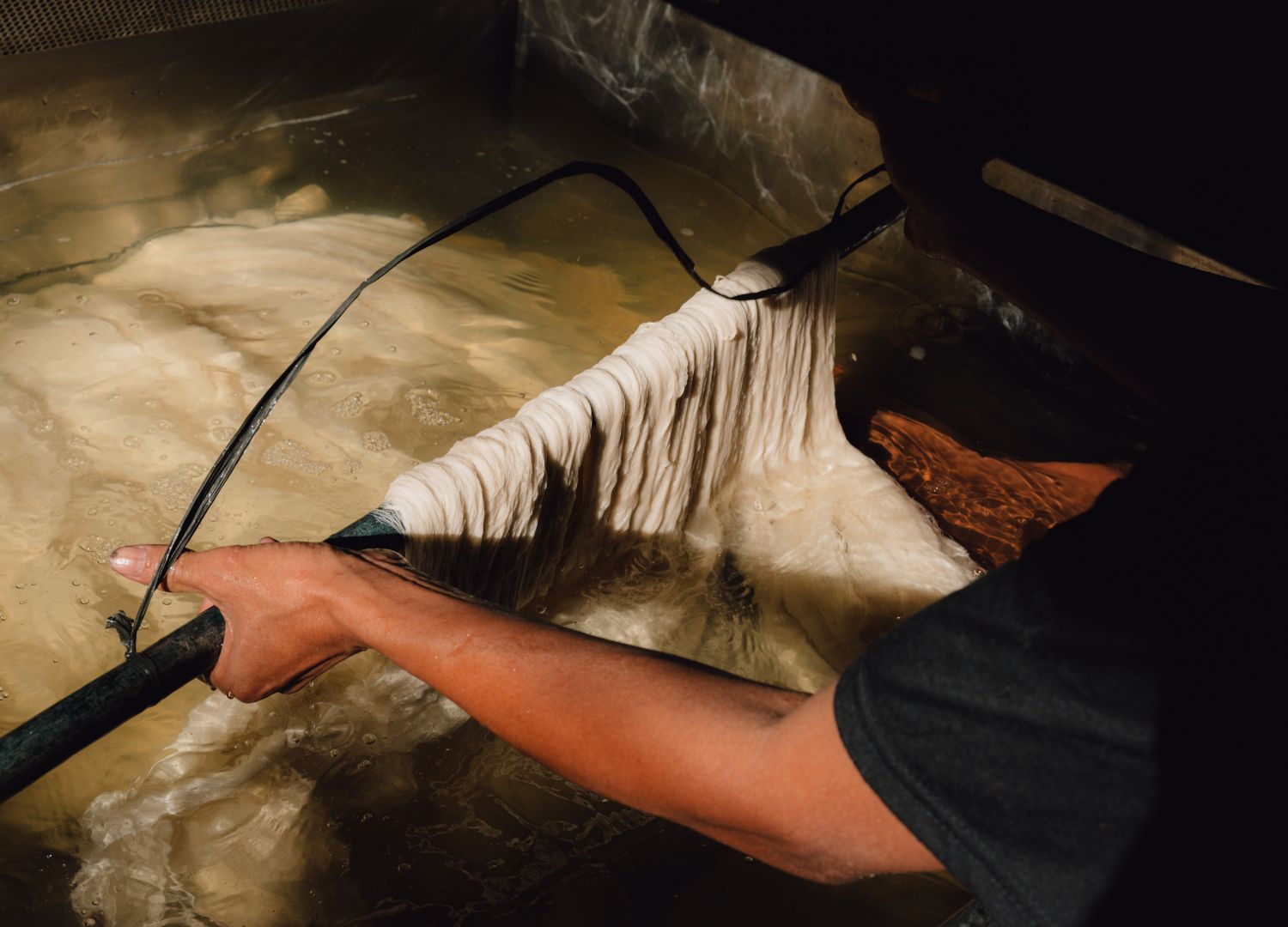
In a sun-kissed resort in Bali, discarded hotel bed linens are being hand-dyed with spent marigolds from yesterday’s offerings. Across the workshop, plastic water bottles confiscated from guests feed into a hopper, re-emerging as marbled sheets of recycled material. Meanwhile, oyster shells from last night’s dinner service are being crushed and mixed with styrofoam destined for landfill, and transformed instead into elegant bathroom trays.
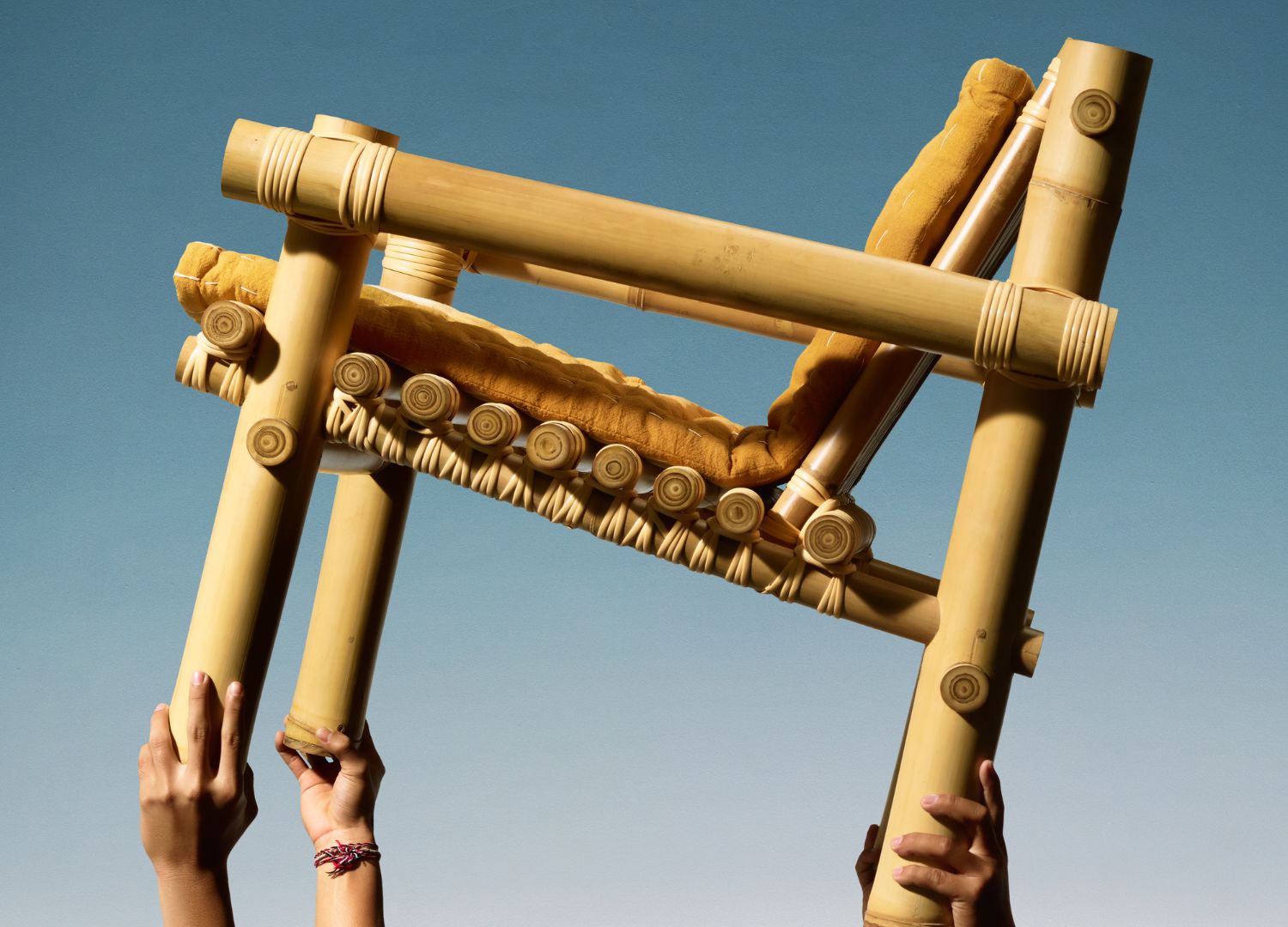
This utopic vision is WASTED, a five-year collaboration between designer Max Lamb and Desa Potato Head, a zero-waste hotel and cultural village in Bali. The project’s Collection 001 is a series of objects that Max Lamb designed using the resort’s waste materials, all produced locally by Bali’s artisans. The work is redefining how far circularity can go, and is challenging everything we know about waste, luxury, and the hospitality industry.
Gallery
Open full width

Open full width
In the past few years, Desa Potato Head has radically transformed its operations, achieving 99.5% zero waste to landfill. This effort is especially significant in a place like Bali, which does not have proper systemic support to handle trash as the West does. “Bali has no proper waste management infrastructure,” co-founder and CEO Ronald Akili says. “When we realised that it was in our power to do something, to process our own waste successfully, we thought that it was our responsibility to do so.”
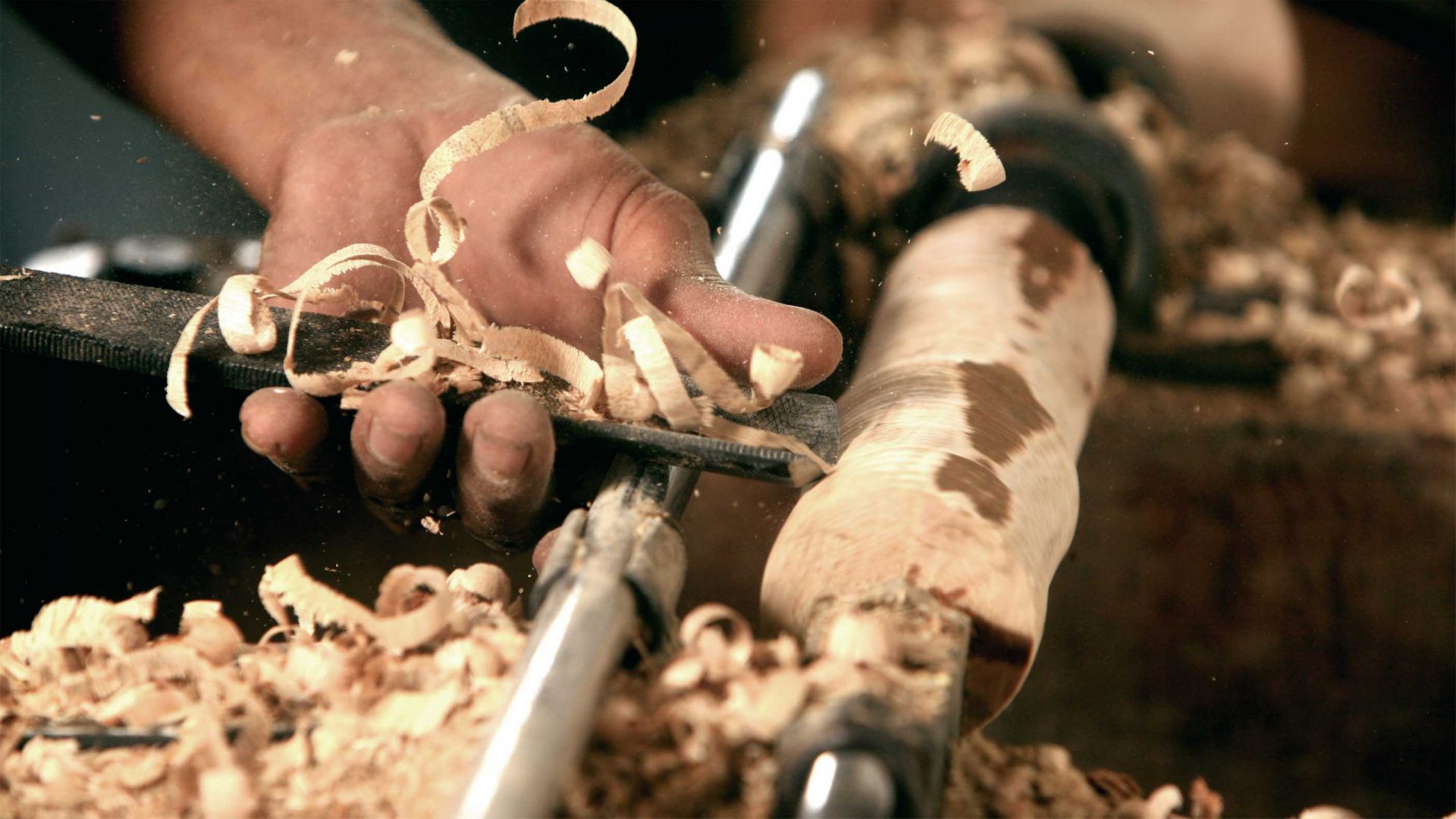
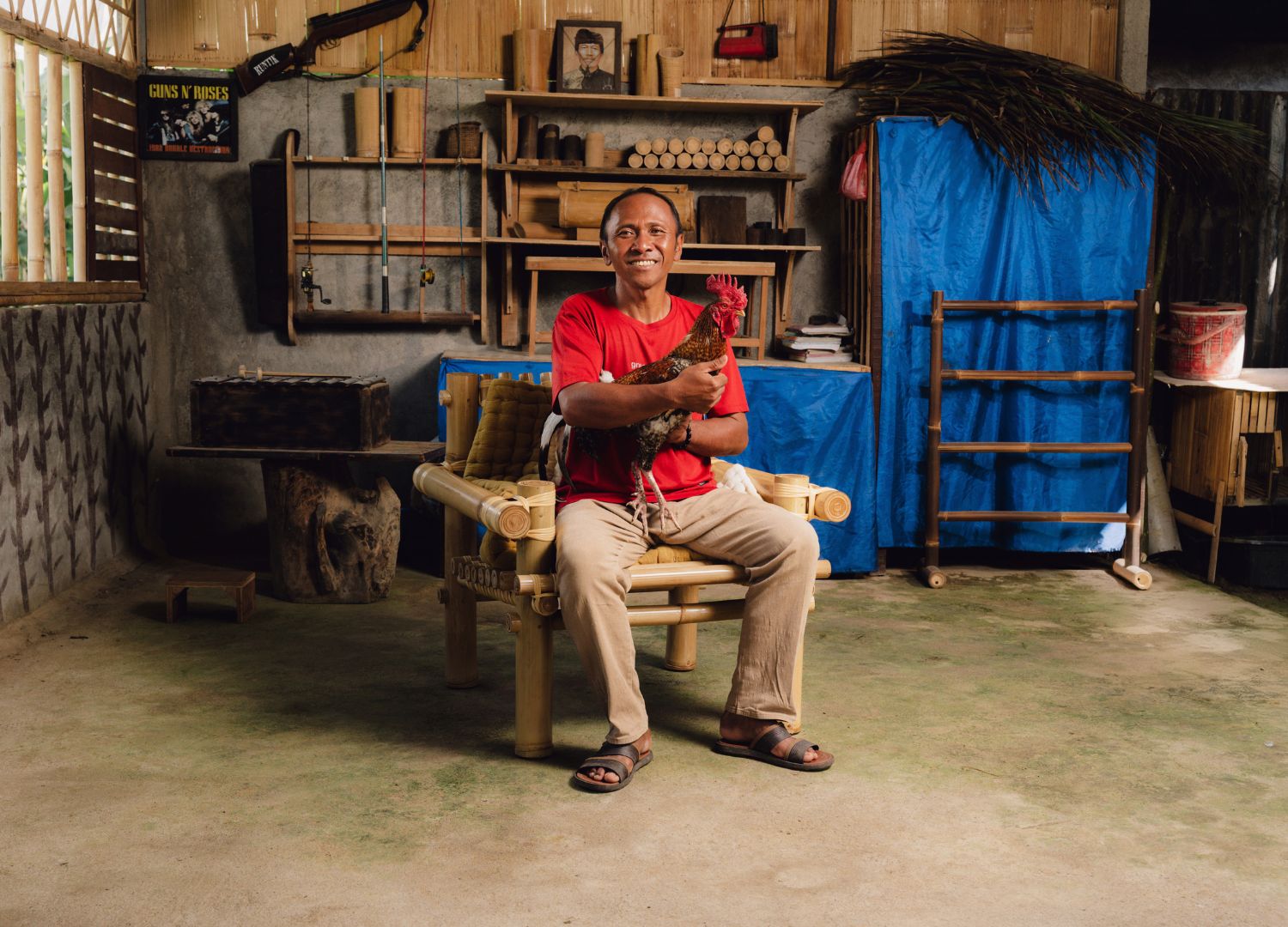
British designer Max Lamb has built his reputation on his unusual relationship with materials and design, speaking of giving materials their own voice, in a sort of collaboration with them. In 2019, he was approached by Potato Head to design furniture for their 168 rooms, with products that had to be made exclusively in Indonesia. Lamb took this brief even further, deciding to produce only within a 50-mile radius. “I didn’t have any designs on paper before I came,” Lamb explains in the zine accompanying the collection. “I met the communities and craftspeople, and I gained a sense of both Potato Head as a family and what their needs would be, as well as what was possible to achieve there.”
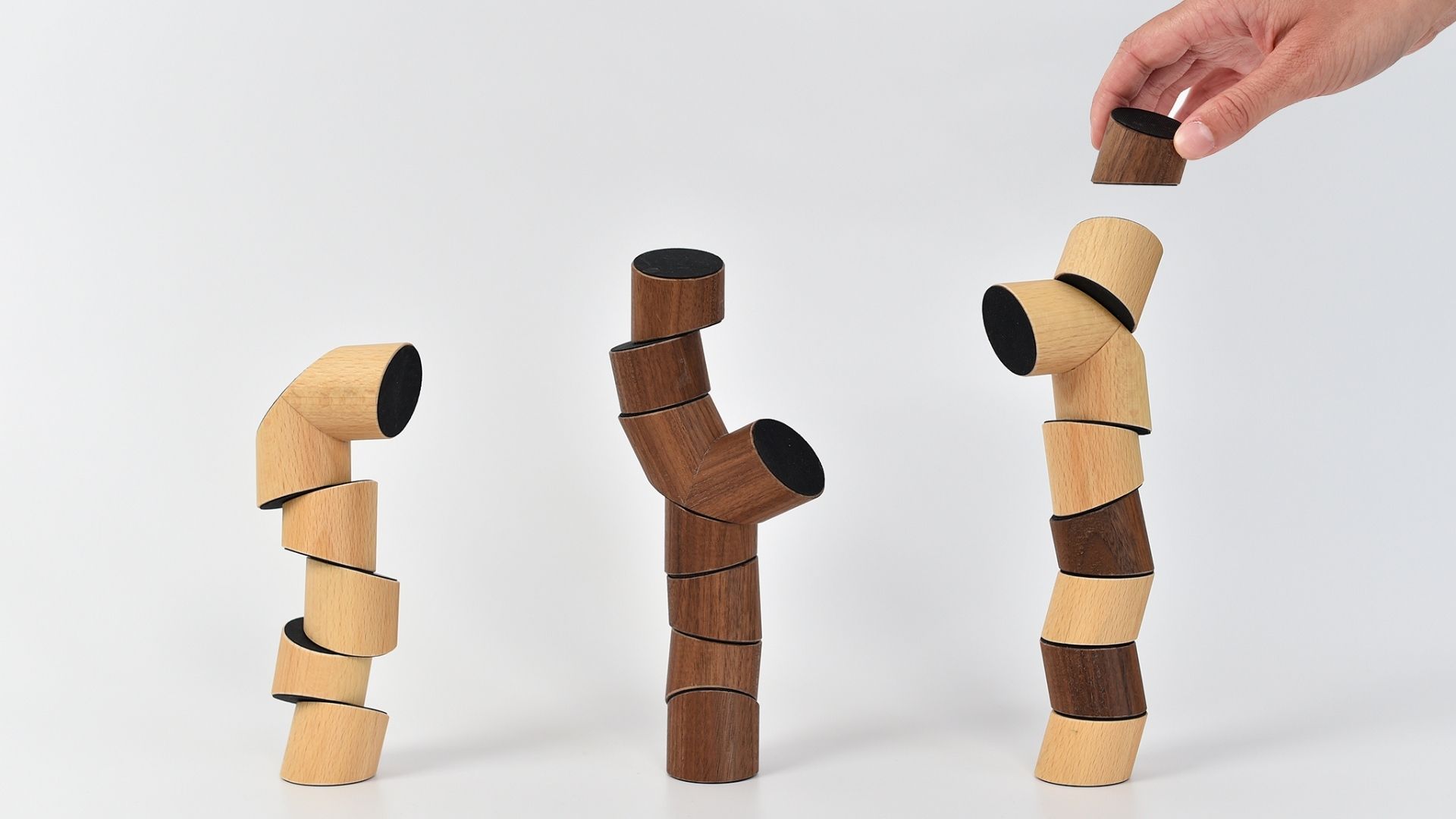
The result of the collaboration is composed of eight distinct material families, each derived from a specific local waste stream, like used cooking oil or salvaged ceramics. The work shows that the line between waste and resource is arbitrary and maintained only by imagination. Each piece is handmade in Bali by local artisans, blending Max’s experimental, process-driven approach with Indonesia’s craft traditions.
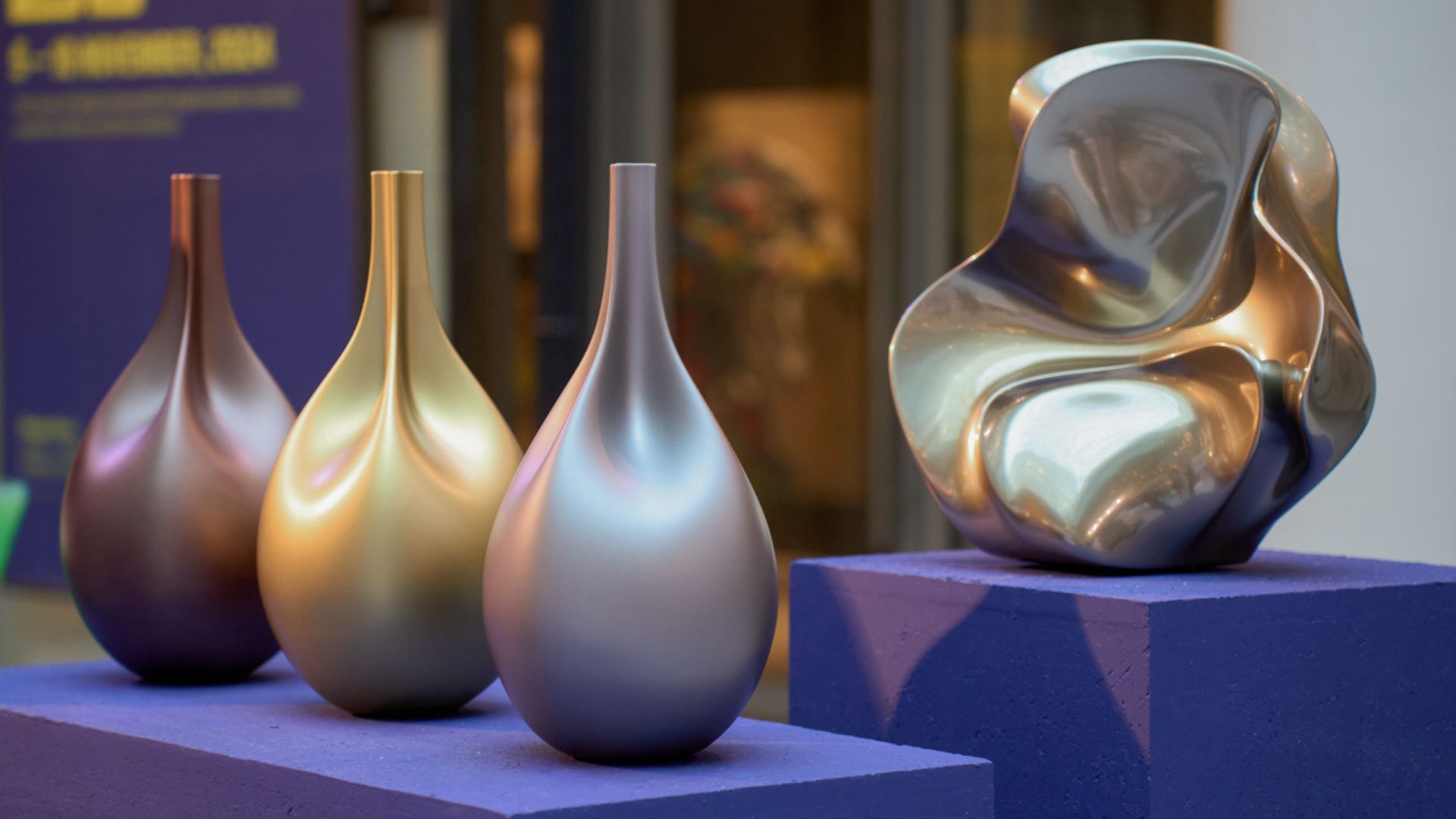
The hotel released a zine explaining the project, which reads like an inventory of the luxury hotel’s trash cans. It includes, for example, the Plastic Family, a series of chairs made of recycled HDPE sheets from clear juice jerrycans, enriched with colourful splashes of orange, red, and blue from automotive oil containers and water bottle caps. The Rag Rug is a carpet woven from used bed linens, dyed with local indigo plants. The Broken Glass family is a series of mouth-blown bottles, tumblers, and dishes made with construction glass waste as well as empty beer, wine, and spirit bottles used at Potato Head’s restaurants.
The WASTED project proves what Max Lamb has been working on for years: sustainability does not require sacrifice. The Desa Potato Head resort operates on the same philosophy that nobody likes sacrificing quality of experience or product for sustainability, so everything they create proves that there’s no need to compromise. The question is, how long will it take for other companies and designers to follow this lead, and why haven’t they already?