Drywall collection: the hidden grammar of construction
What happens when the metal profiles we hide inside every wall step out of their usual role? Claudio Larcher and Sofia D’Andrea ask us to reconsider the beauty of things that were never meant to be seen.
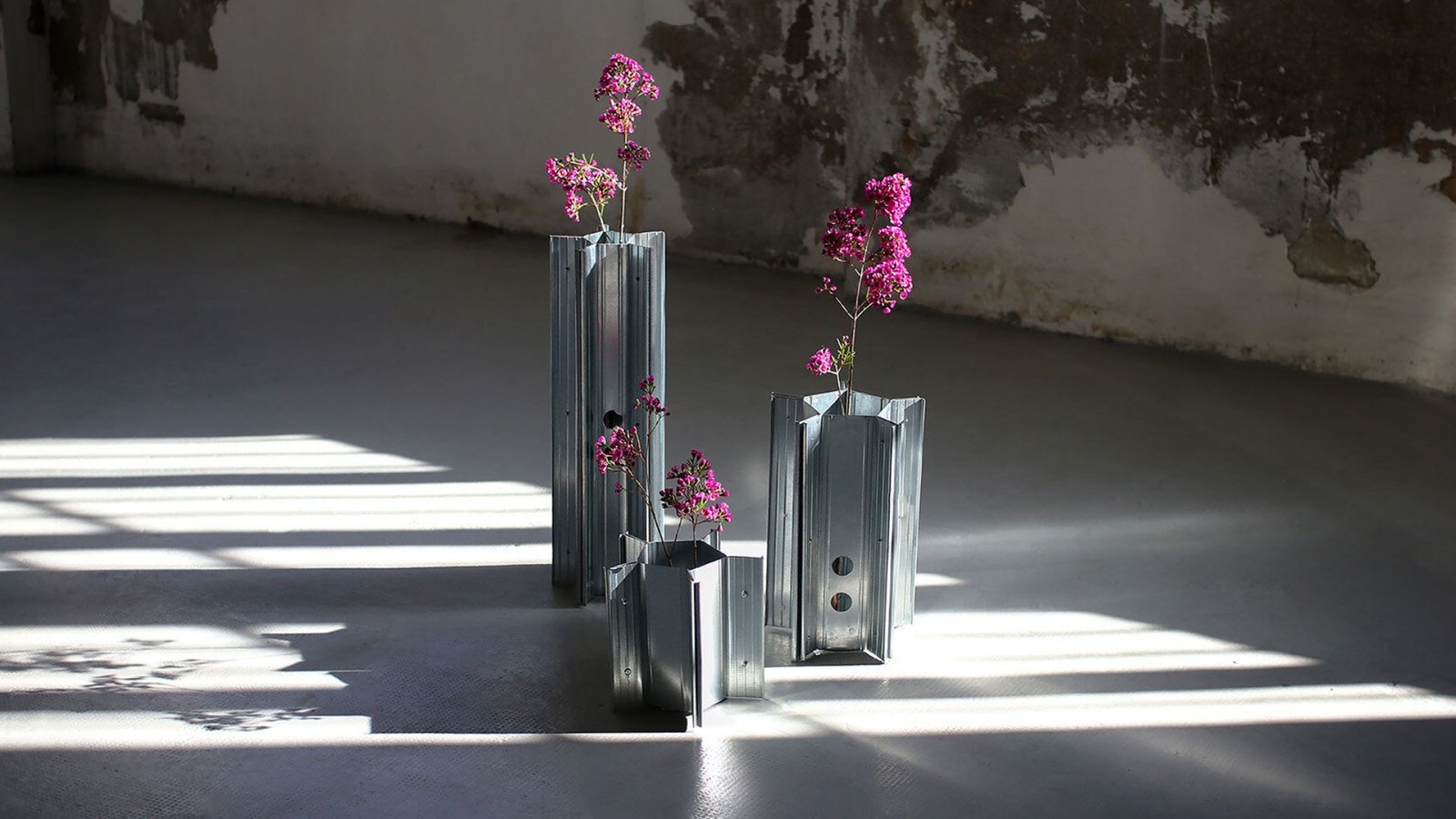
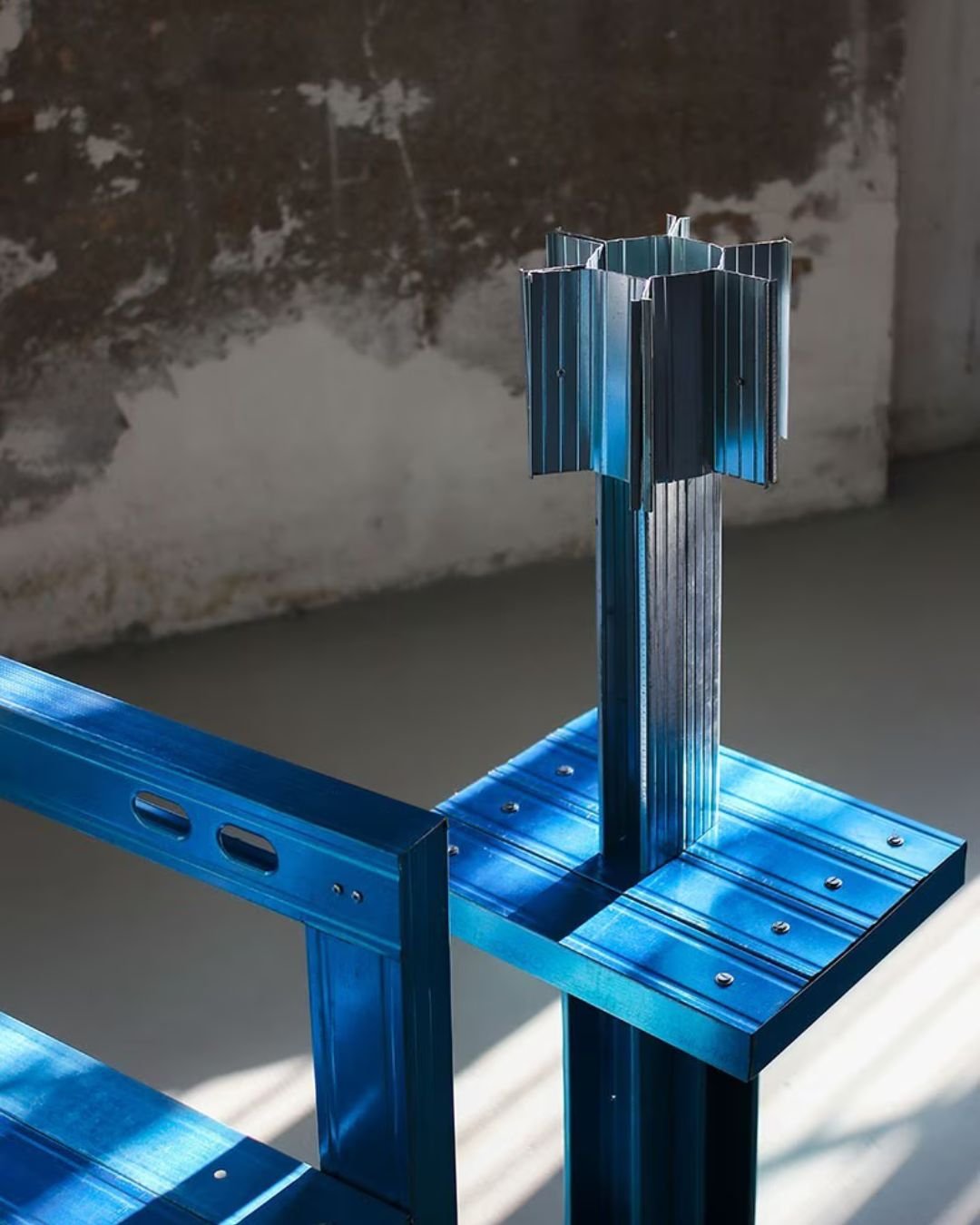
The drywall track is a cold-formed steel channel profile, a mass-produced object designed to be hidden behind plaster and paint, performing its structural duties in the dark. Its design is purely technical, a precisely engineered section that no one is supposed to see, yet Claudio Larcher and Sofia D’Andrea have brought it into the living room.
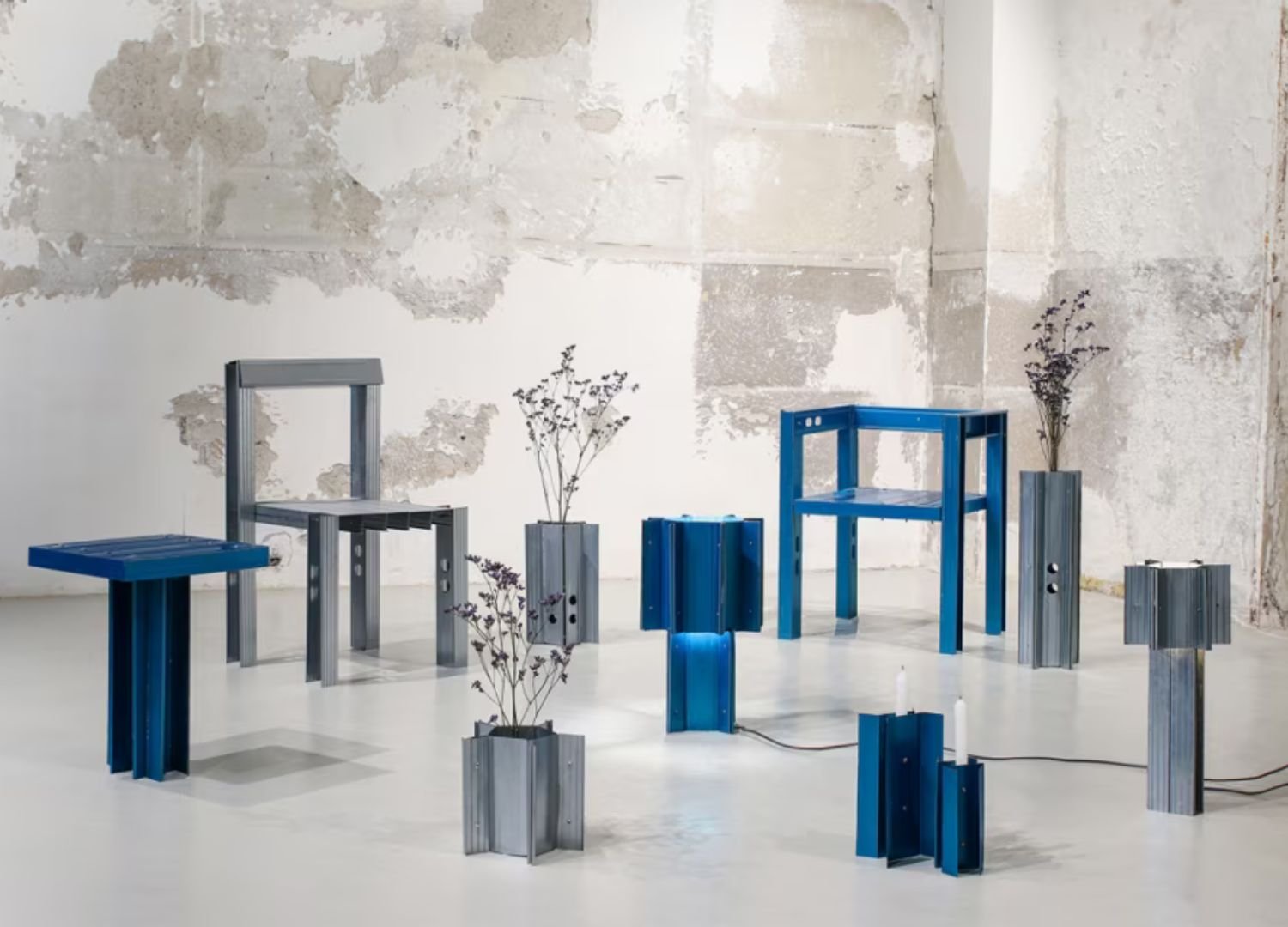
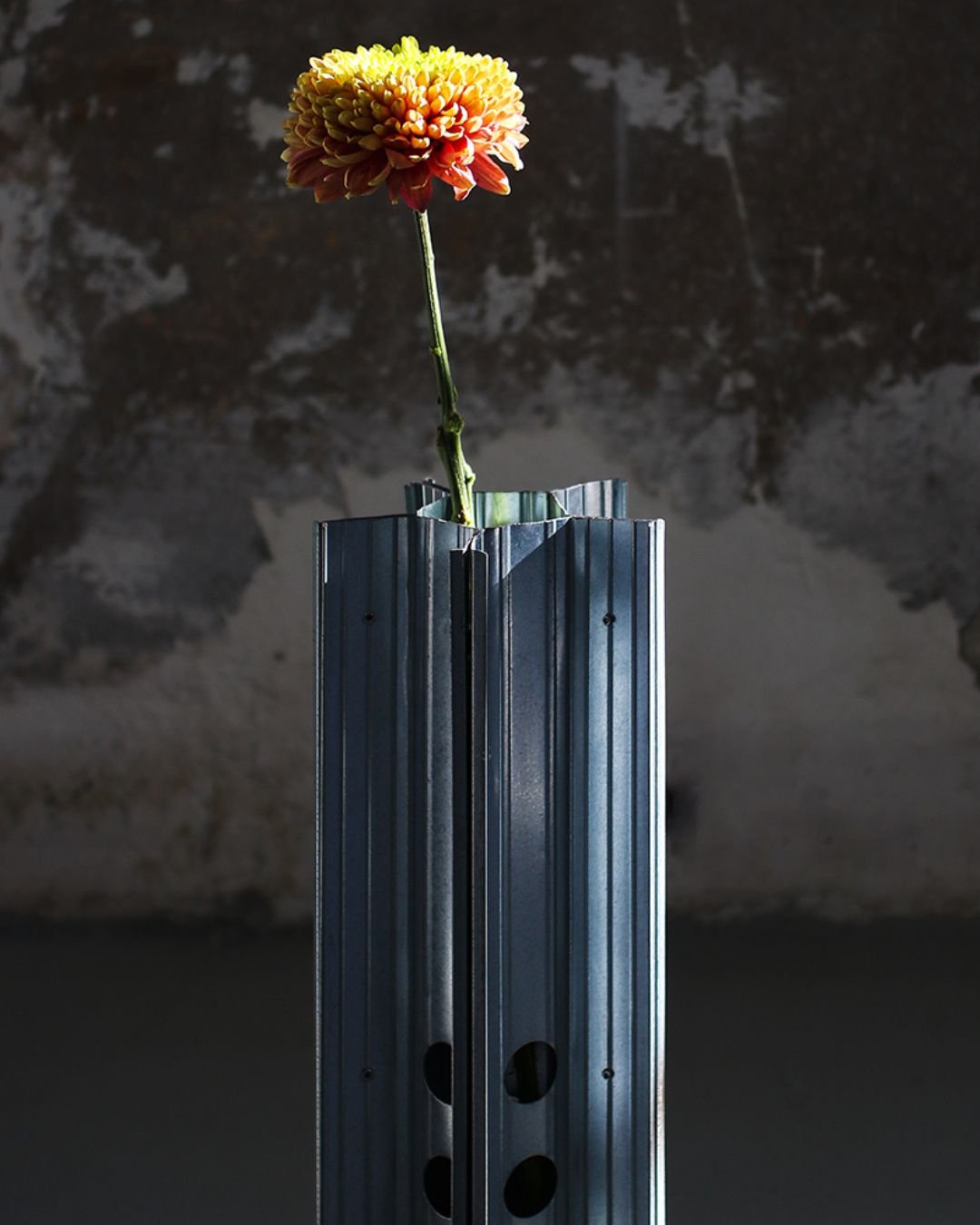
The Drywall collection uses these standard profiles as a new material vocabulary for a series of furniture and home decor objects, edited with minimal modifications. The project belongs to the practice of working with standard parts, making something new from what already exists, and allowing the origins of the material to remain legible in the finished object. Running from the Dadaist provocations of Marcel Duchamp through to IKEA’s DIY culture, the question is the same: how much transformation is required before we can claim to have made something new?
Gallery
Open full width
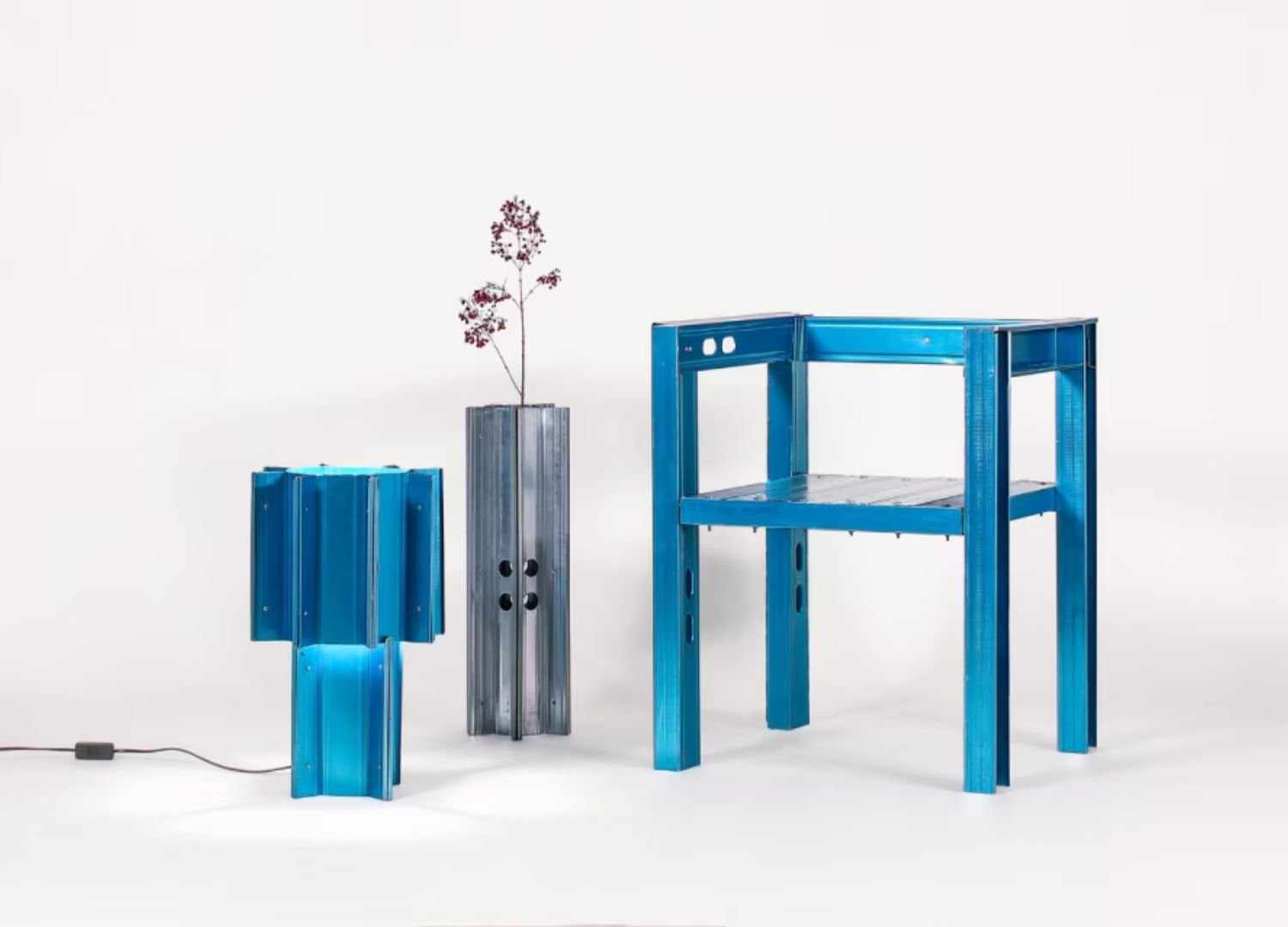
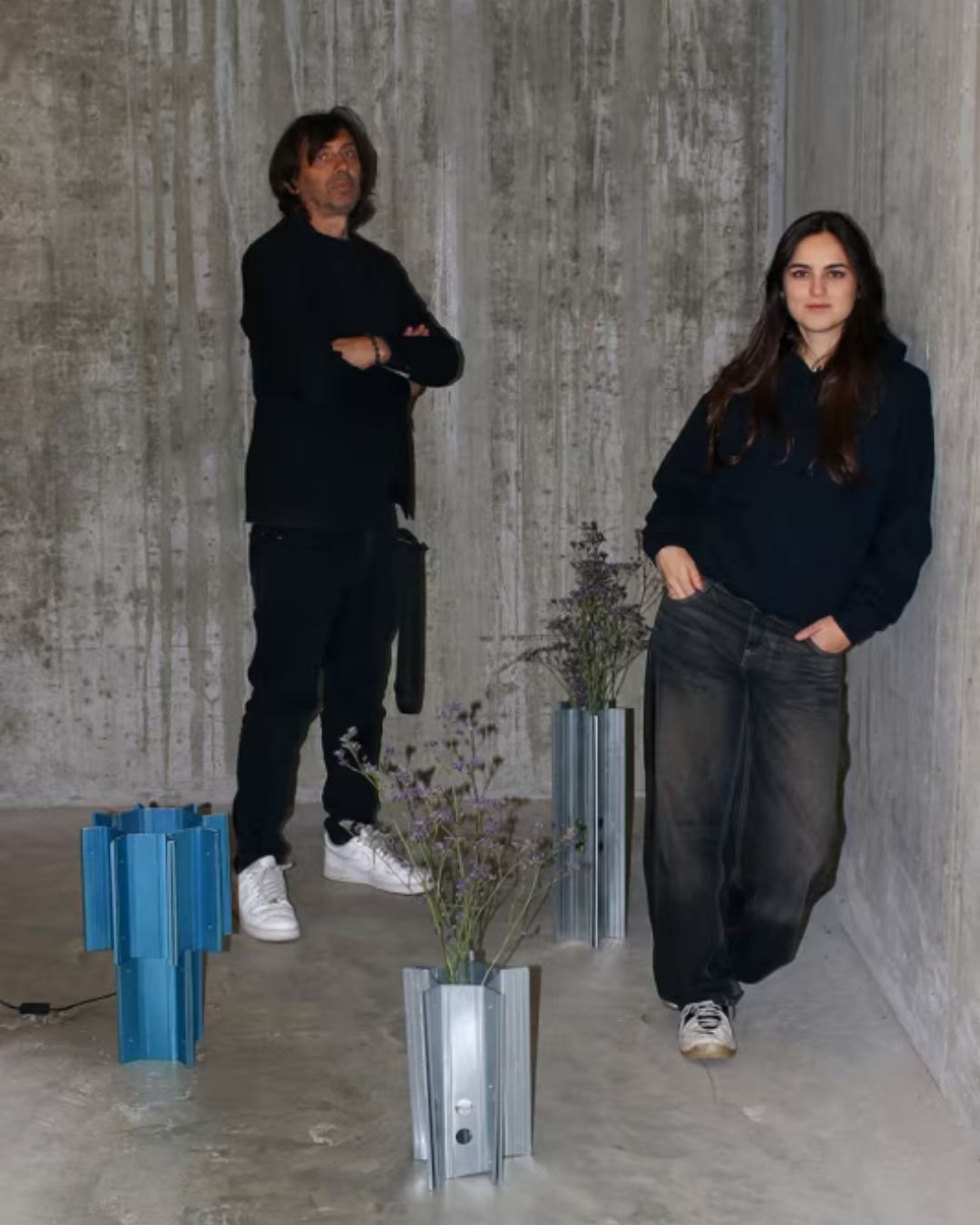
Open full width
We spoke with Claudio Larcher and Sofia D’Andrea about the origins of the project, its architectural references, and material memory.
How did you first encounter drywall guides as a design material? Was there a specific moment when you realised their potential?
Claudio Larcher:
“In the past years, we had the opportunity to visit several construction sites related to architecture and interior design, and it was there that our curiosity toward certain building materials began. We were particularly interested by the color of the drywall studs, their technical shape, and above all the amount of waste generated during construction. We no longer saw them as simple hidden structural elements, but as potential design components with their own personality.
The architectural language they carry remains very present even when we transformed them into furniture objects: it is as if they retain a kind of constructive memory, even while changing function and scale.”
There’s a long history behind designers working with found materials or standard parts. Is there any work in particular that has inspired you in creating the Drywall collection?
Claudio Larcher:
“A very important reference for us was the Putrella by Enzo Mari, produced by Danese, an industrial element reinterpreted through a very minimalist gesture, but with strong conceptual meaning. If we look at the architectural scale, the Centre Pompidou by Renzo Piano and Richard Rogers is a decisive inspiration. In that work, the functional and structural parts are not hidden but become part of the aesthetic and visual communication. This way of thinking strongly influenced the Drywall collection, encouraging us to make visible what normally remains behind the scenes.”
The architectural reference that the designers call out is telling; the Centre Pompidou is a building that turned itself inside out, its structural systems, ventilation ducts, escalators, were all moved to the exterior, colour-coded and celebrated rather than concealed. The building’s technical skeleton became its identity. The Pompidou is often read as a playful provocation, but it was also a serious architectural argument about honesty of means, that the logic of construction has its own beauty. In the same way, Drywall brings one of construction’s internal organs into the living room and asks us to find it beautiful.
A recurring theme behind the practice of designing with standard industrial components is that the designs can ultimately be replicable by the audience, without having to rely on a custom production. Is this something you considered during your process?
Sofia D’Andrea:
“For us, the project is above all a creative gesture and a personal vision of the world and of the objects that inhabit it. Drywall collection was not conceived with the intention of being an open or easily replicable system, but rather as a critical reflection on the material and its expressive possibilities. Nevertheless, we are aware that it may inspire other designers, inviting them to look at standard components or materials that usually go unnoticed from a different perspective.”
In this sense, the project is less about design than it is about attention, about the act of looking carefully at the world as it is, rather than as we have been taught to see it. Claudio Larcher and Sofia D’Andrea propose that there is meaning, beauty, and creative possibility in the materials that surround us and that we have learned not to notice.