Iris Ceramica Group opens ICG Gallery Dubai with “Designing the Invisible”
The company marked the official opening of its new Dubai gallery with “Designing the Invisible”, a programme exploring how ceramic surfaces, acoustics and fragrance shape spatial perception.
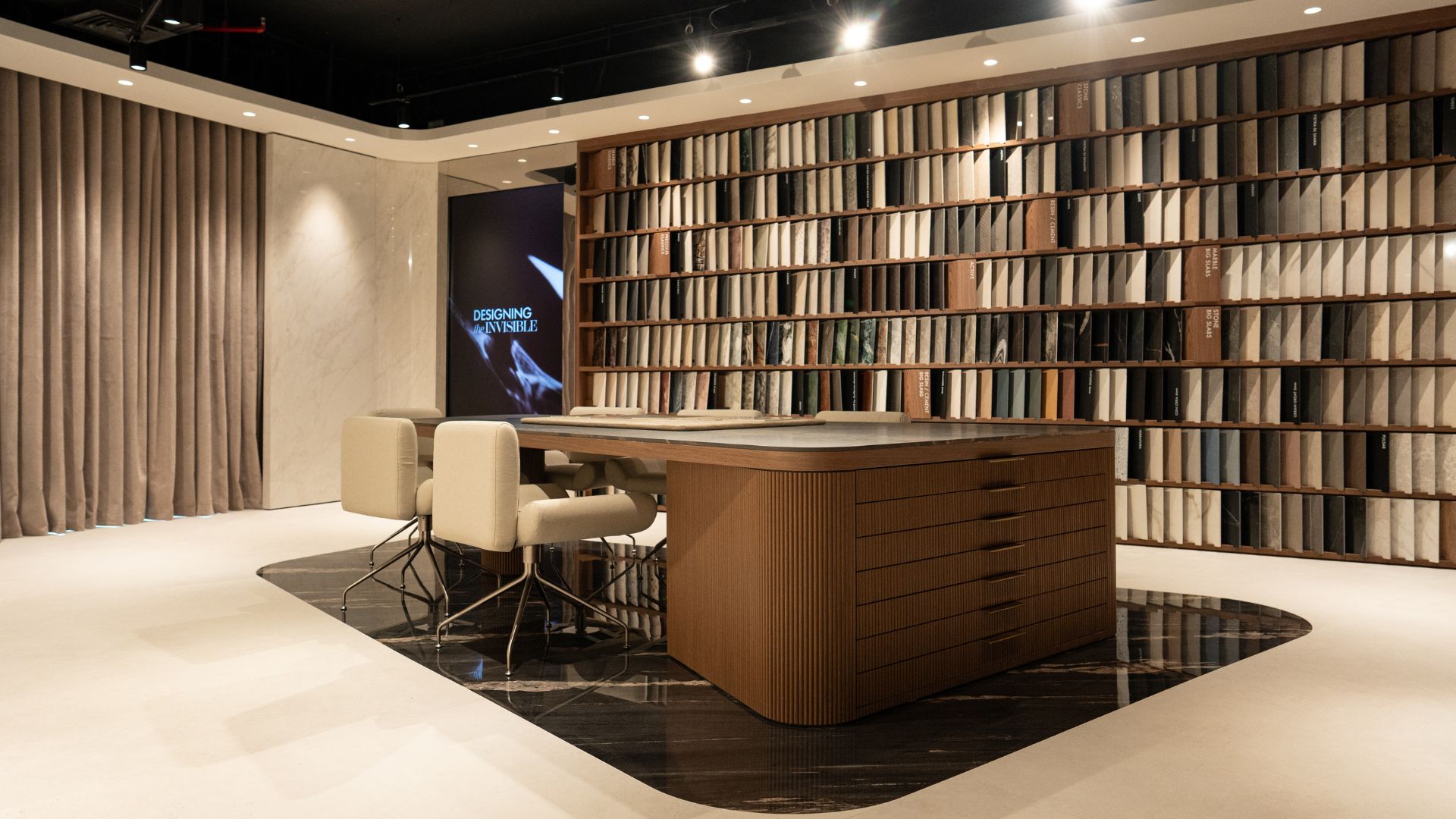
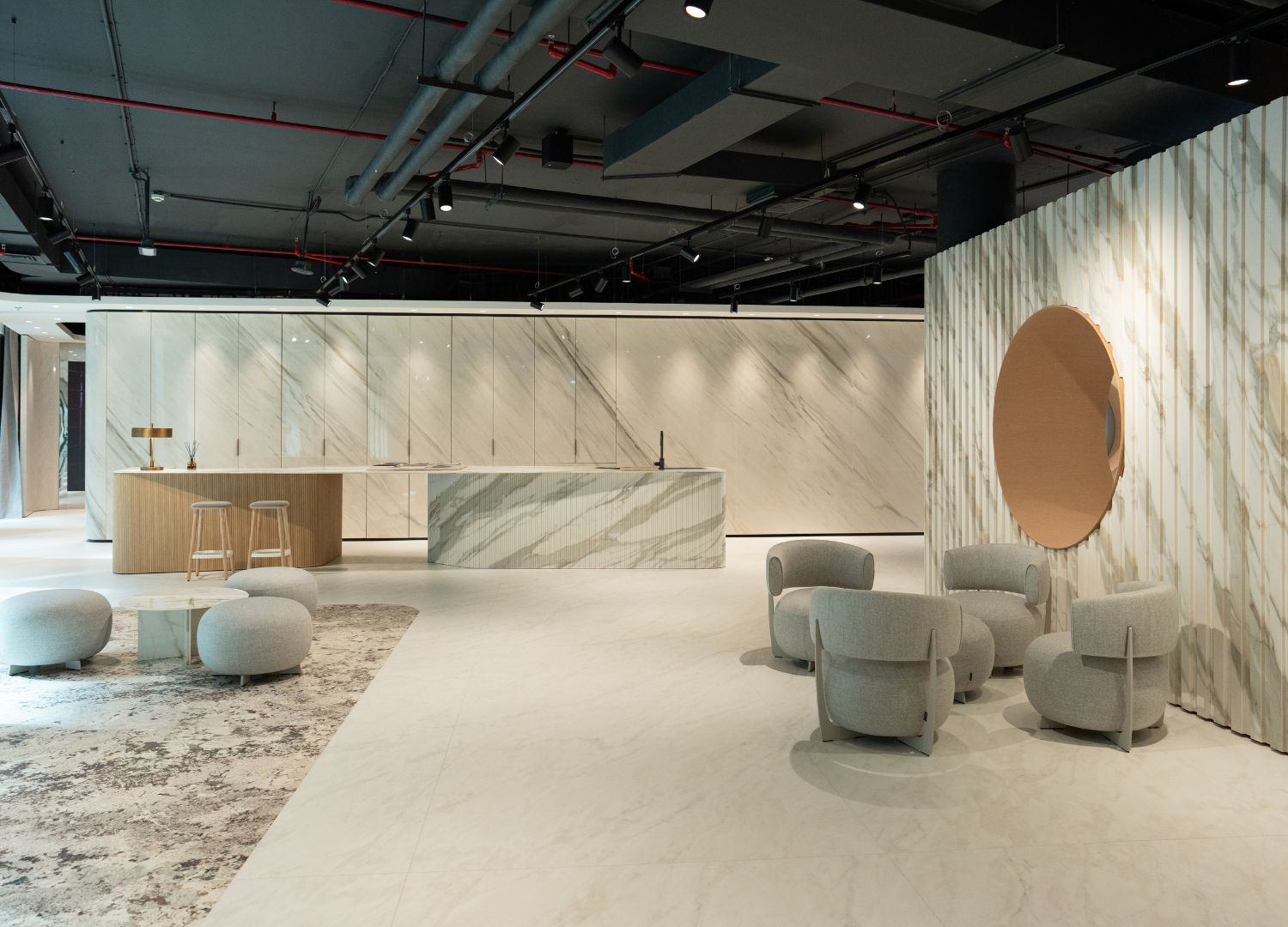
The new ICG Gallery Dubai brings Iris Ceramica Group’s ceramic materials and surface technologies into a showroom organised around architectural applications. Located in Dubai Design District, the space joins the group’s international gallery network, which includes locations in Milan, London, Paris, Berlin and Madrid.
Its inaugural programme takes the gallery’s materials as a starting point for examining how people experience interiors. Alongside the visual qualities of ceramics, “Designing the Invisible” considers touch, sound and scent as elements that architects and designers can work with when developing a space.
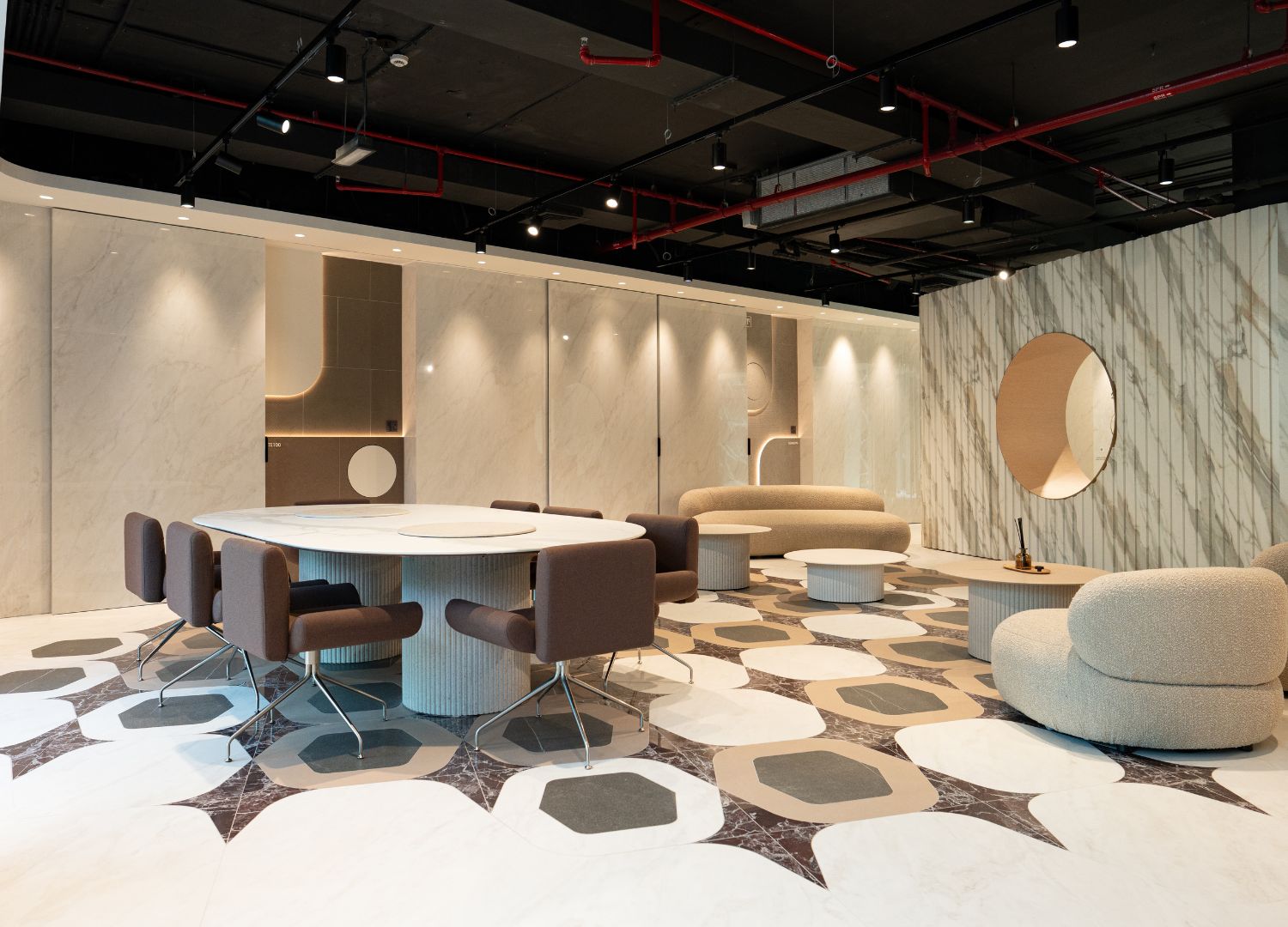
ICG Gallery Dubai – Highlights:
A workshop connecting surfaces, sound and scent
The programme centres on Atmospheres Lab: Surfaces, Sound & Scent, an interactive workshop developed with perfumery specialist Campomarzio70 and acoustic solutions company Autex Acoustics.
Available throughout the five-day programme, the lab invites participants to assemble a sensory moodboard and a model of an interior incorporating ceramic surfaces. Acoustic materials introduce a way to explore how sound reverberates or softens within that environment, while fragrance adds another component to its atmosphere.
The exercise brings material selection into contact with decisions that are often addressed separately during a project. Participants can consider the feel of a surface alongside the behaviour of voices and music, then explore how different scent ingredients contribute to the identity of the same space. This approach gives the workshop a practical structure: visitors work with combinations of materials and sensory elements, using the model to explore relationships between them. The programme places these interactions within the broader process of designing how an interior is experienced and remembered.
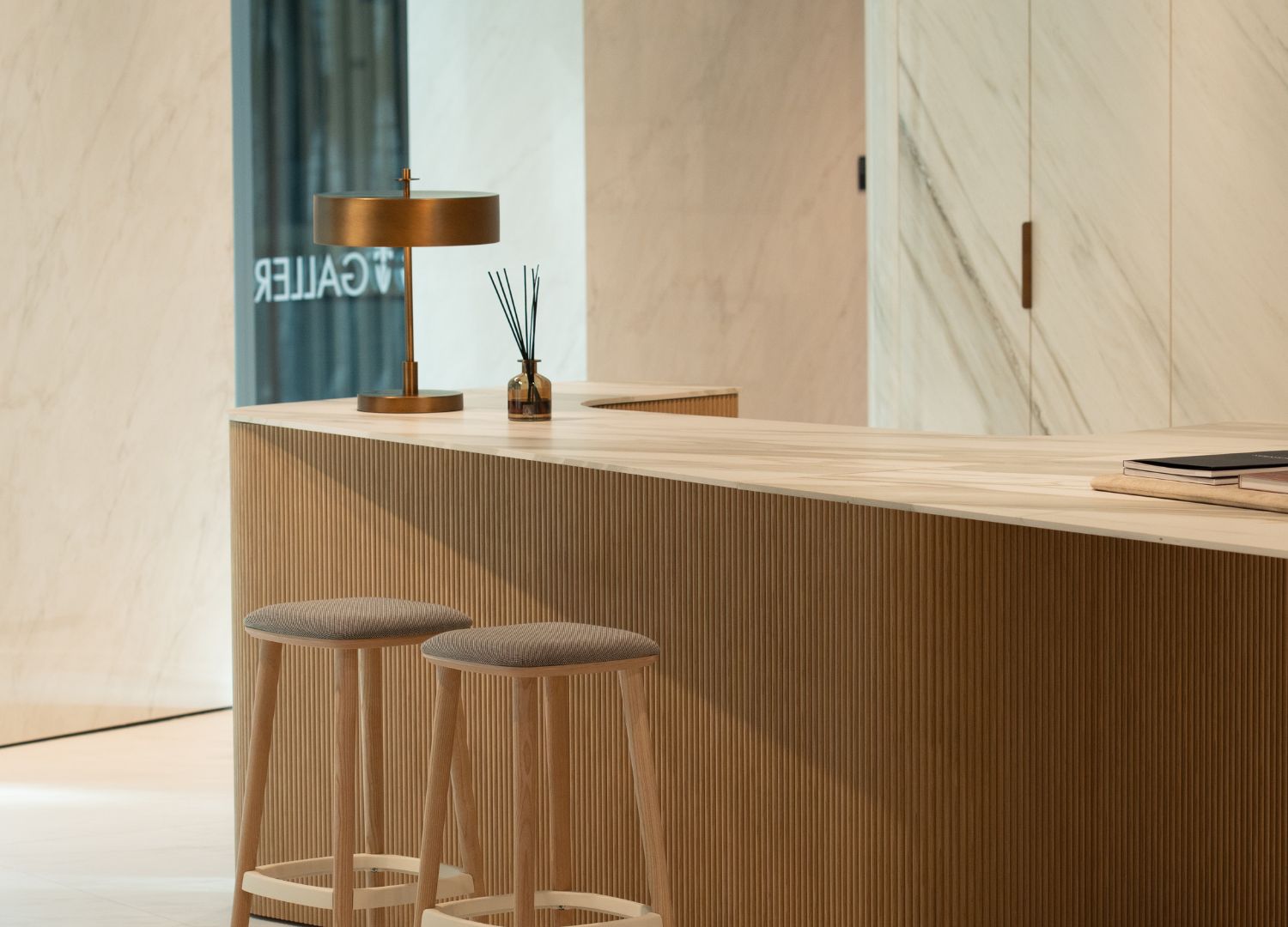
Neuroarchitecture as a framework for discussion
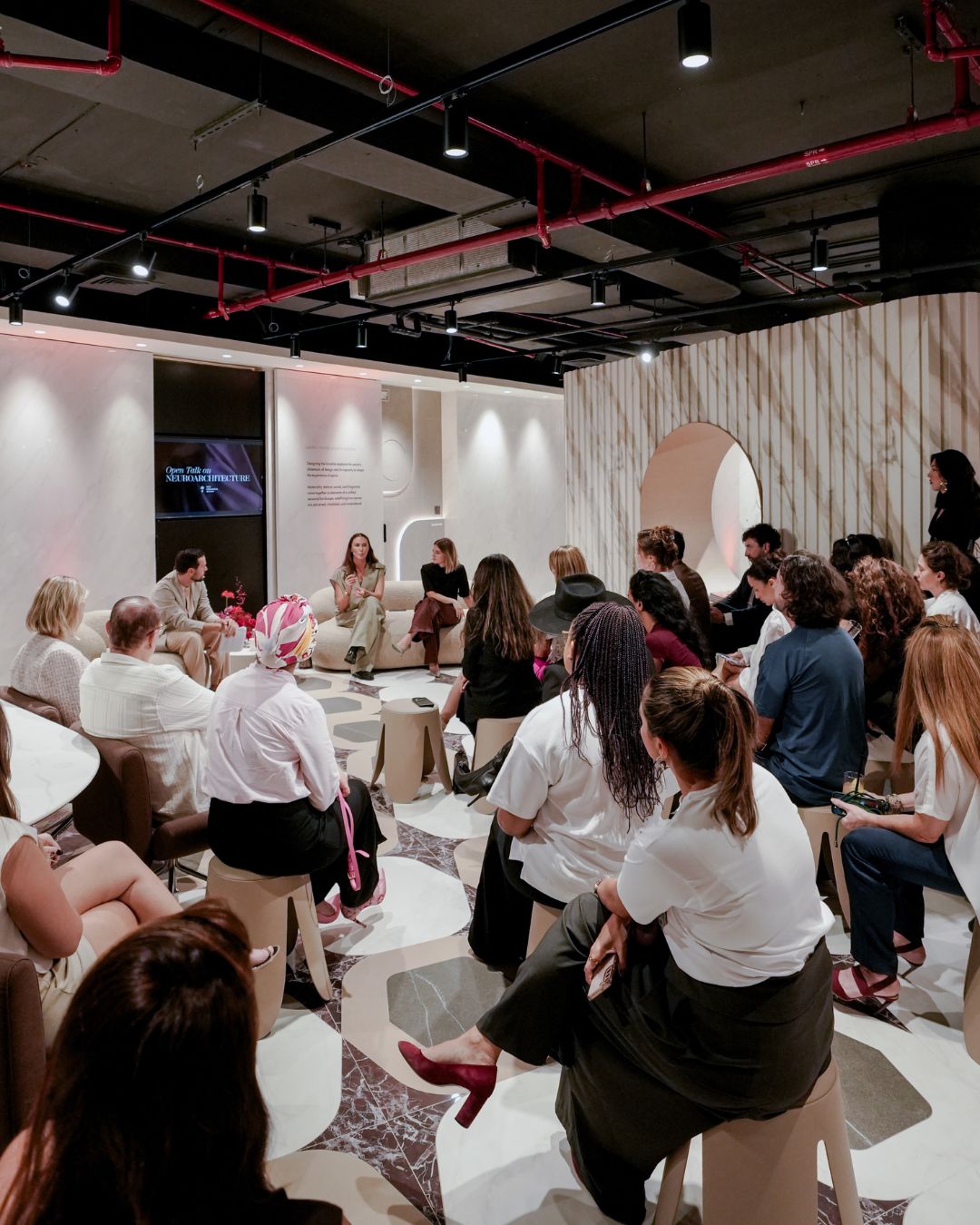
The opening programme also included a conversation on neuroarchitecture. The announced speakers were Evgeniia Molchanova, founder and Design Director of E+A Studio, and Adriana Graur, Creative Director at DWP and founder of Adiarchetype. Paolo Bleve, publisher of IFDM, was named as moderator.
The discussion was conceived to connect the sensory theme with neuroscience and its application to architectural practice. Its focus was the relationship between the environments people inhabit and their perceptions, emotions and responses.
“Smell and sound are easy to overlook because we cannot see them, yet they act on us constantly. […] There are the sounds and scents we notice: a conversation, music, a fragrance. Then there is the background: the hum of air conditioning, distant traffic, the smell of new paint or adhesive. […] In every project we work on the background first. Only then we layer sound and scent with intent, according to what each space is for: rest, focus or gathering. […] A scent can carry a memory quietly, an unexpected note that takes you back to a place or a moment. Those layers are where a space starts to feel personal.” said Evgeniia Molchanova.
“Material is not finish. It is the first decision, and it is the longest-lasting one. […] A material speaks to the body before it speaks to the eye. A warm floor underfoot, a linen that absorbs rather than reflects, a stone that stays cool against the hand, these are not decorative choices. They are long, quiet instructions to the nervous system. […] So the earliest stages of our design process are, in truth, a material conversation. The aesthetic concept emerges from it, not the other way around.”, added Adriana Graur.
Within the gallery programme, this provides a framework for considering how material, acoustic and olfactory choices might inform design decisions. The workshop explores those choices through direct participation, while the conversation introduces perspectives from practitioners working with spatial experience.
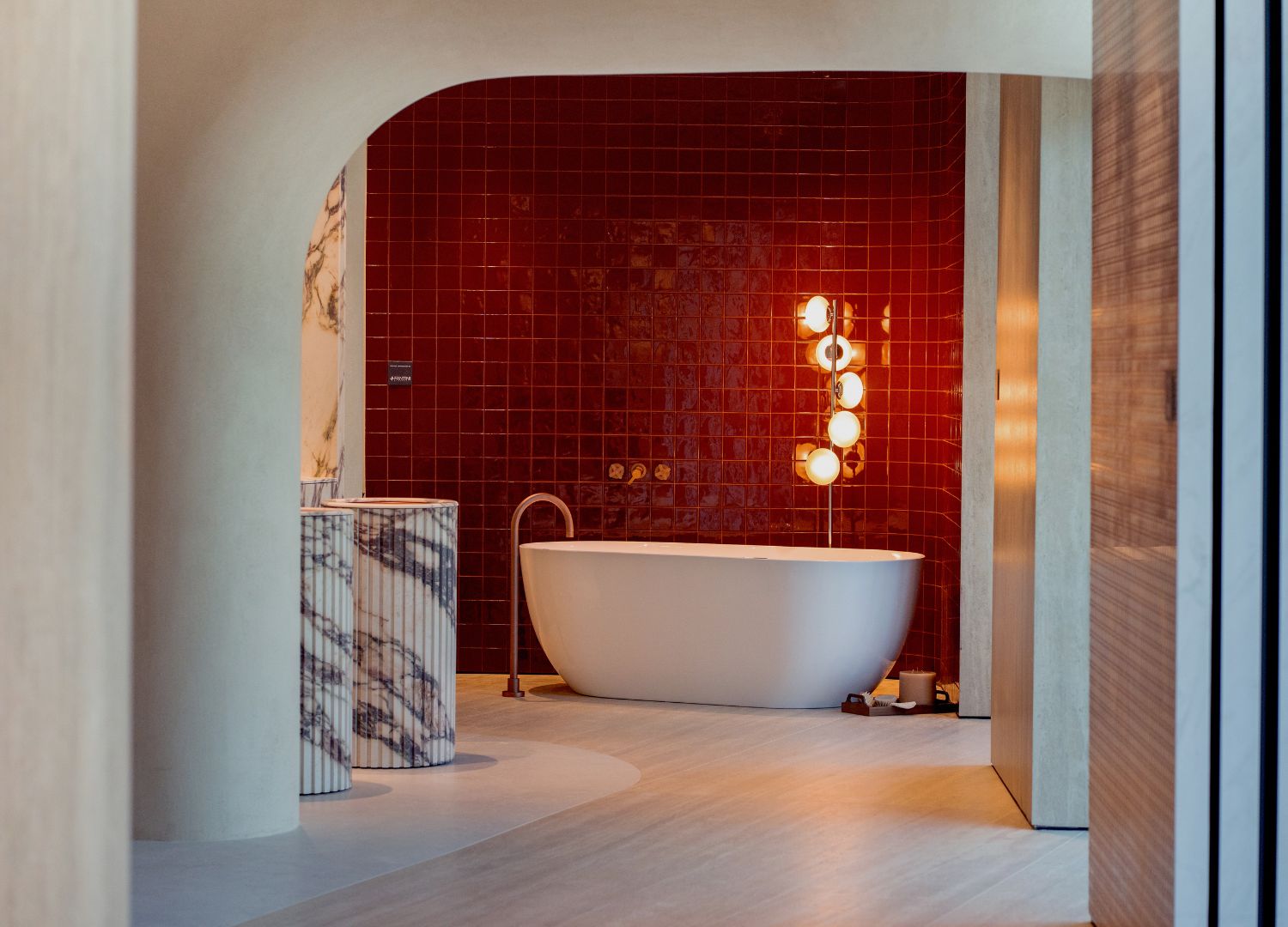
Ceramic surfaces with integrated functions
The showroom itself extends the programme through installations demonstrating the group’s surface technologies. These include Hypertouch, which connects touch-sensitive ceramic surfaces to home automation systems, and Moonlight, a solution for backlit slabs. Alchimia, developed by VBH and Iris Ceramica Group, integrates audio-video systems behind ceramic surfaces so that equipment can be revealed when required.
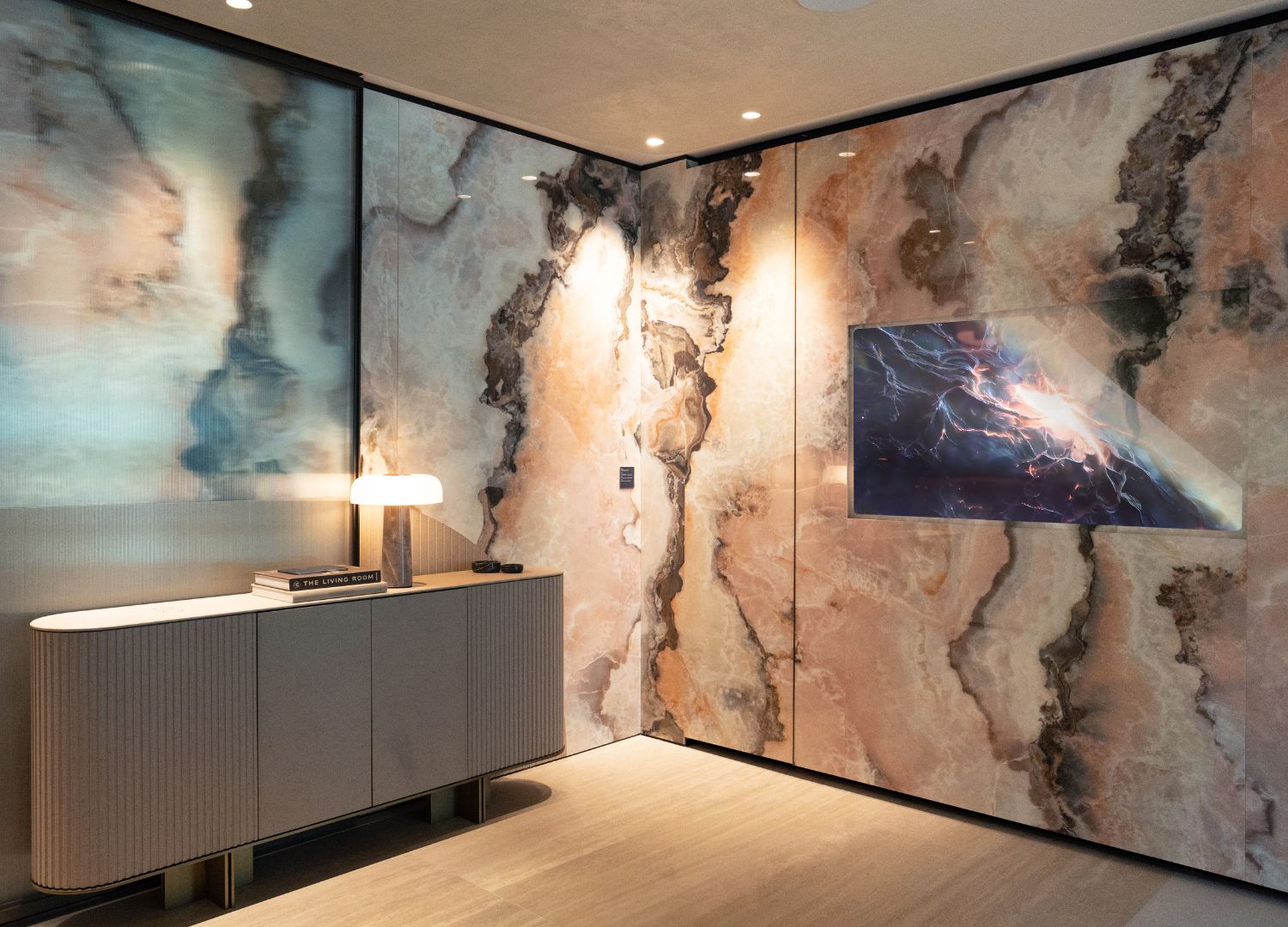
These applications sit alongside ceramic-clad environments including a lobby, suite and wellness area. Their arrangement provides examples for hospitality projects, showing how surfaces can be specified across different functions within an interior.
Scent forms a further part of the showroom through a fragrance created with Campomarzio70. Developed to express the group’s identity, it introduces an olfactory component alongside the materials and technologies on display.
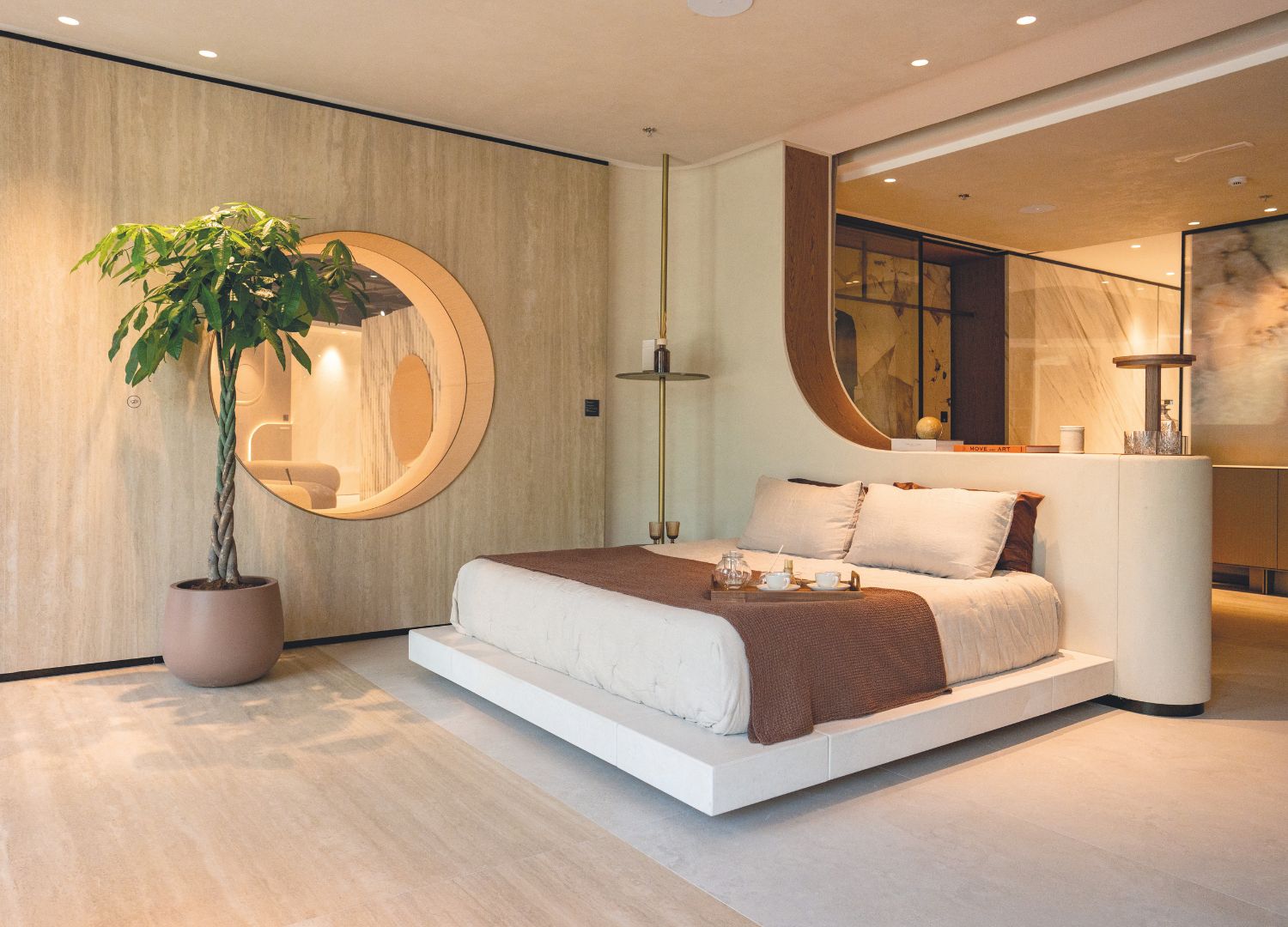
The new gallery is located in Building 6, Suite B101, Dubai Design District. Its opening programme brings these permanent displays together with temporary activities, giving the local architecture and design community different ways to explore the relationship between ceramic surfaces and the experience of an interior.