Soft structures: 9 inflatable design projects
Tracing the evolution of inflatable design from modernist experiments to contemporary furniture, lighting and urban interventions, this compilation explores how air-driven objects respond to mobility, protest and changing ways of living.
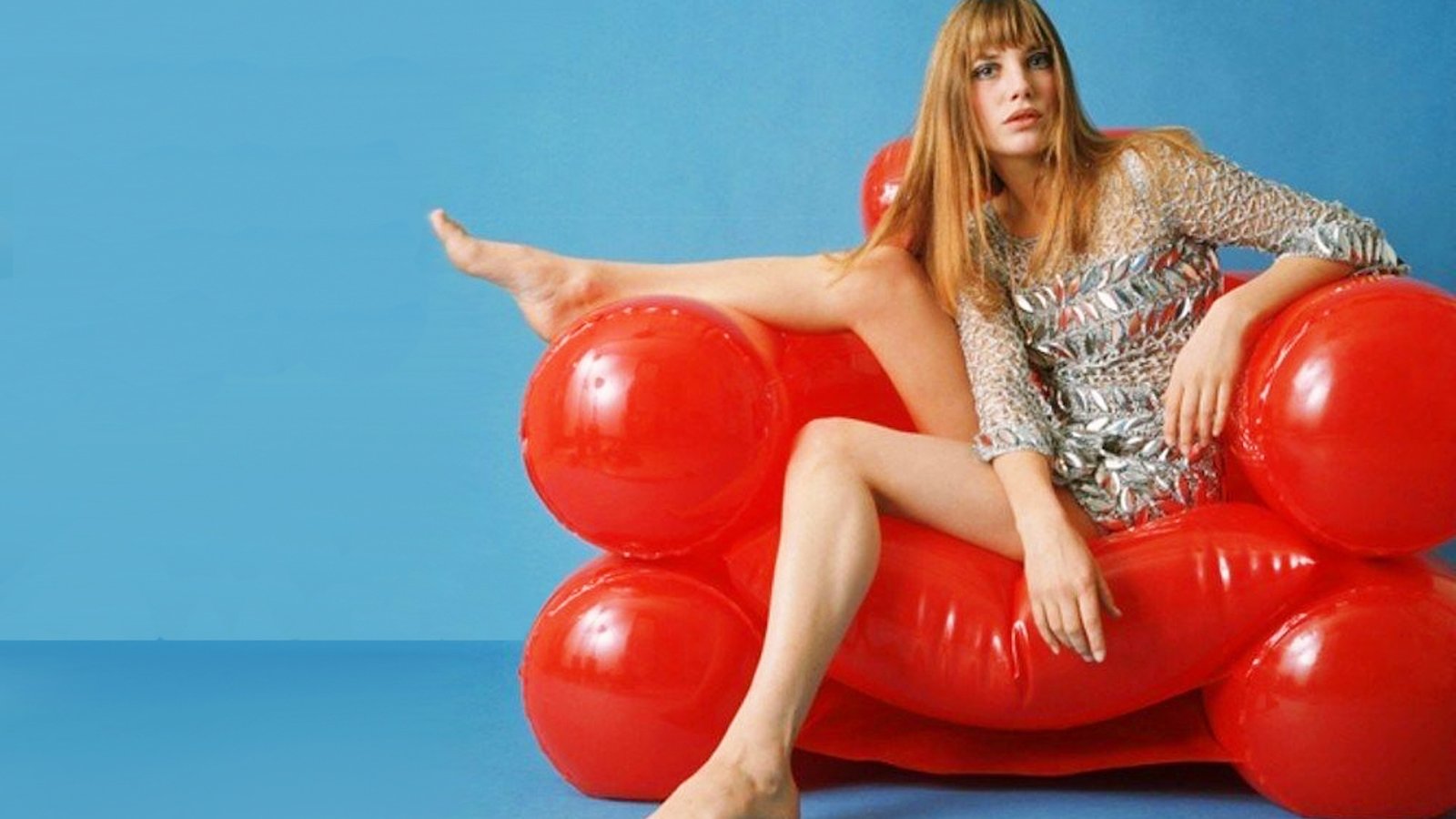
Transparency, lightness, boldness, pop-culture references: inflatable design remains compelling precisely because it sits at the intersection of immediacy and imagination. Its appeal lies in the ability of plastic to take on balloon-like forms and introduce a playful, almost ironic presence into domestic and public spaces – without ever fully slipping into irony. What emerges is a renewed field of experimentation built on a material that is anything but new.
The history of plastic, which gained momentum in the 1950s, took a decisive turn with the introduction of transparency and air. Long before that, however, inflatable objects and pneumatic systems had already shaped the imagination of designers at the beginning of the 20th century, when new materials and technologies opened unprecedented formal possibilities.
Gallery
Open full width

Open full width
Eileen Gray’s Bibendum Chair, conceived nearly a century ago, stands as an early expression of this sensibility. When soft, transparent, inflatable plastics entered mass production after the 1960s, objects no longer borrowed only the visual language of air-filled structures, but also their physical qualities and advantages. The Blow chair by De Pas, D’Urbino and Lomazzi for Zanotta is a direct outcome of that experimentation, a design that has since permeated everyday culture, from interiors to seaside landscapes.
Contemporary design remains acutely aware of this legacy – not only of the material’s aesthetic potential, but of its identity and latent possibilities. Lightness, portability, intuitive use and formal adaptability redefine the role of objects within domestic and collective environments. Inflatable design questions how design responds to shifting lifestyles, constraints and desires, following paths shaped by necessity. Different contexts call for different approaches. In this landscape, form follows lightness, mobility and use, allowing function to emerge from constraint.
Nine inflatable design projects:
Cubee by Yu Ren
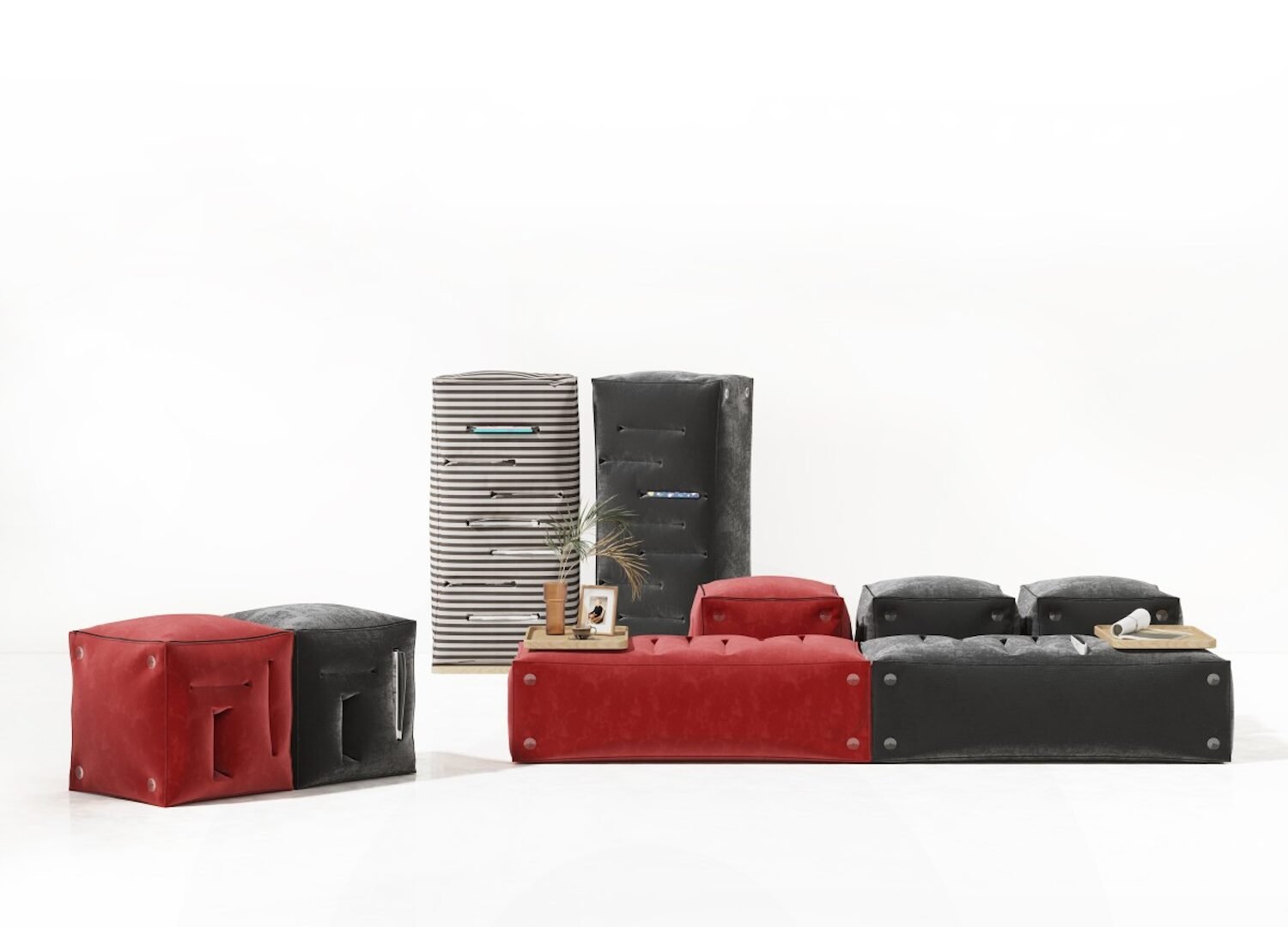
At first glance, Cubee engages with the familiar language of modular living, yet its real strength lies in how air subtly reorganises domestic space. Inflatable cores allow the system to shift scale and function without adding visual weight, keeping interiors flexible. Recycled materials reinforce a pragmatic stance, far removed from the utopian rhetoric often surrounding modular furniture. Cubee does not romanticise nomadism; it responds to the concrete reality of shrinking spaces. The result is furniture that feels provisional in the most constructive sense: adaptable, reversible, never definitive. In this collection, air operates more as an infrastructure than as just a material.
Conqueror by Shengjie He and Lan Wang
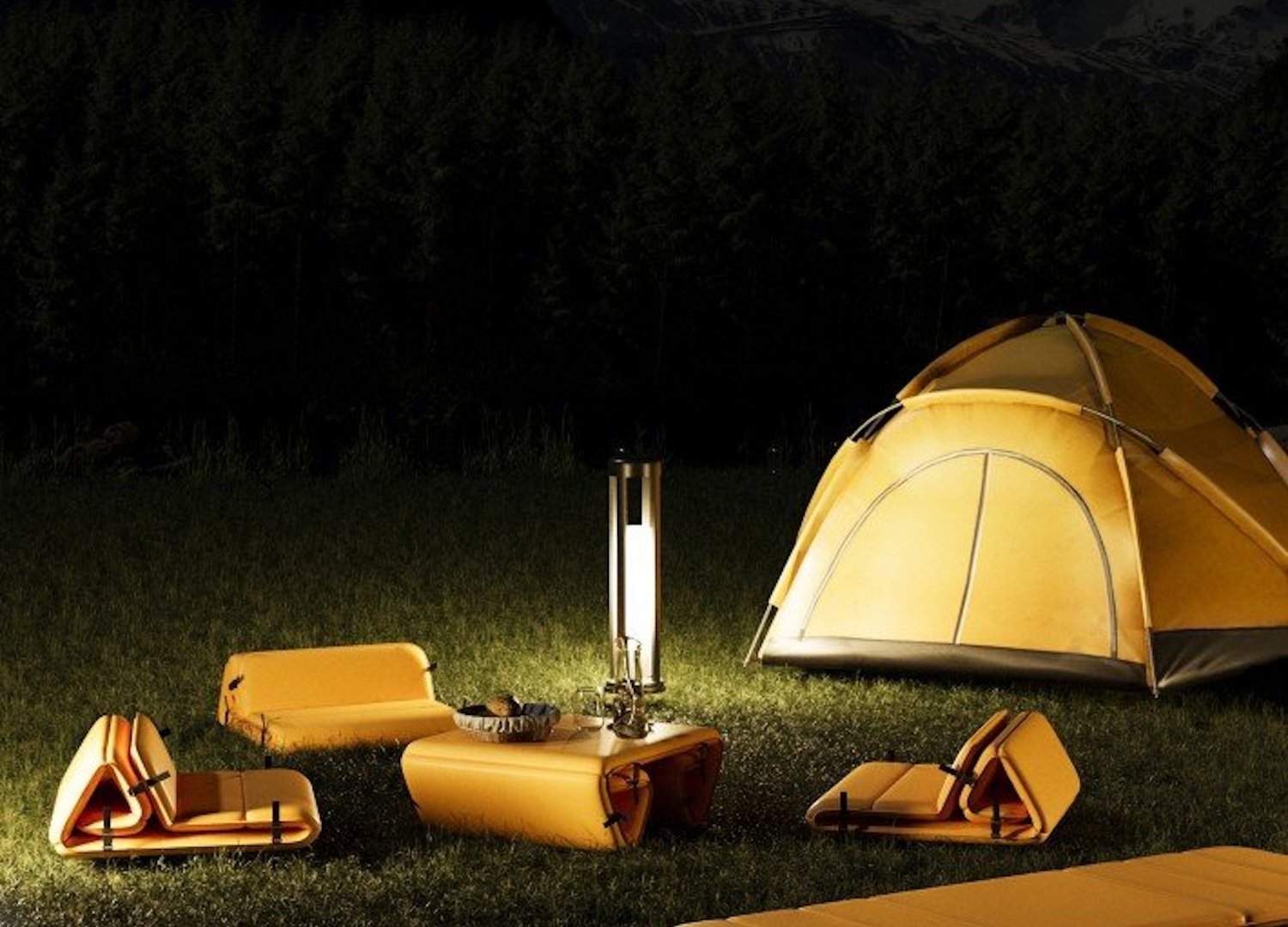
Camping furniture often oscillates between rugged aesthetics and functional compromise. Conqueror avoids both by treating inflation as a strategic design choice. Chairs, tables and beds materialise only when required, reducing volume without sacrificing comfort. The system’s modularity suggests a campsite that can be assembled, reconfigured and dismantled with minimal trace. Materials and construction point towards durability, distancing the collection from the disposable logic often associated with inflatable products. This inflatable camping furniture system frames air as a tool for rethinking temporary living.
Jelly Collection by Jell-O
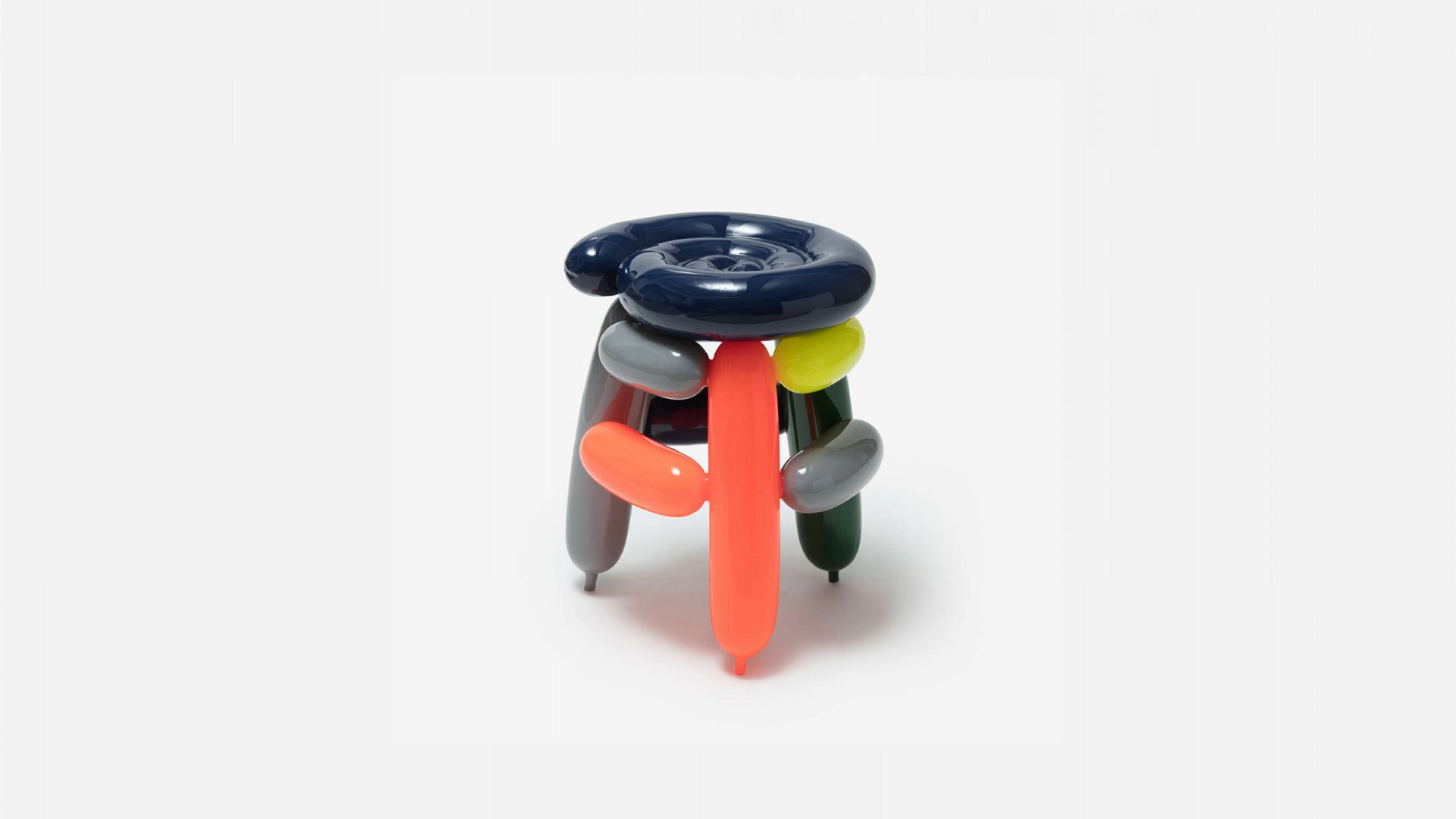
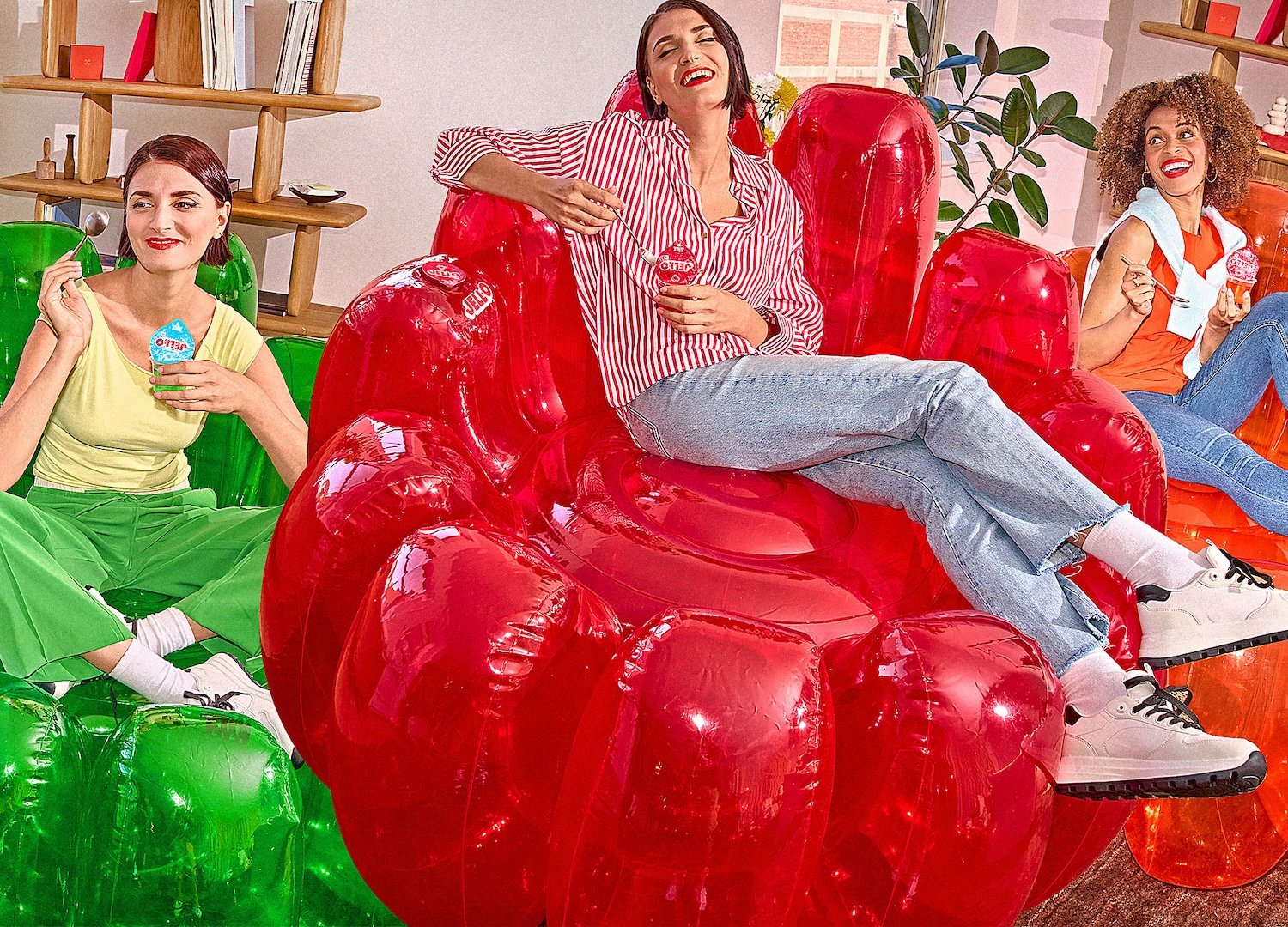
The Jelly Collection occupies a more speculative terrain, yet its intent is clear – these inflatable chairs revisit the language of blow-up furniture through a sculptural, material-driven lens. Glossy, jelly-like surfaces soften the objects’ presence, shifting them away from pure functionality toward visual and tactile play, recalling a candy that is present in collective memory. The forms embrace their inflatable nature, foregrounding softness and impermanence, where longevity appears secondary to atmosphere and seating becomes a device for mood.
Bubble Lamp by Studio Ololoo
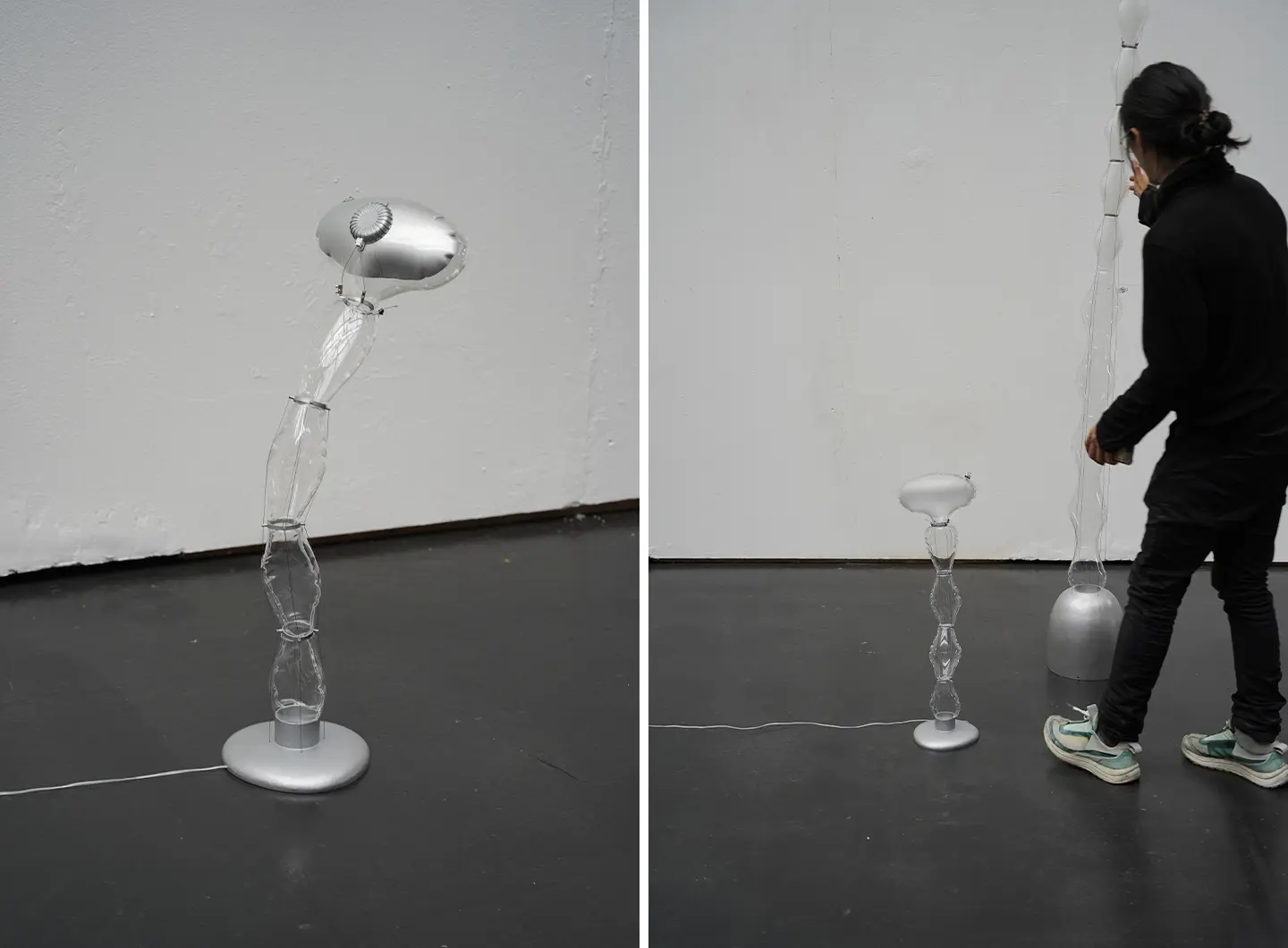
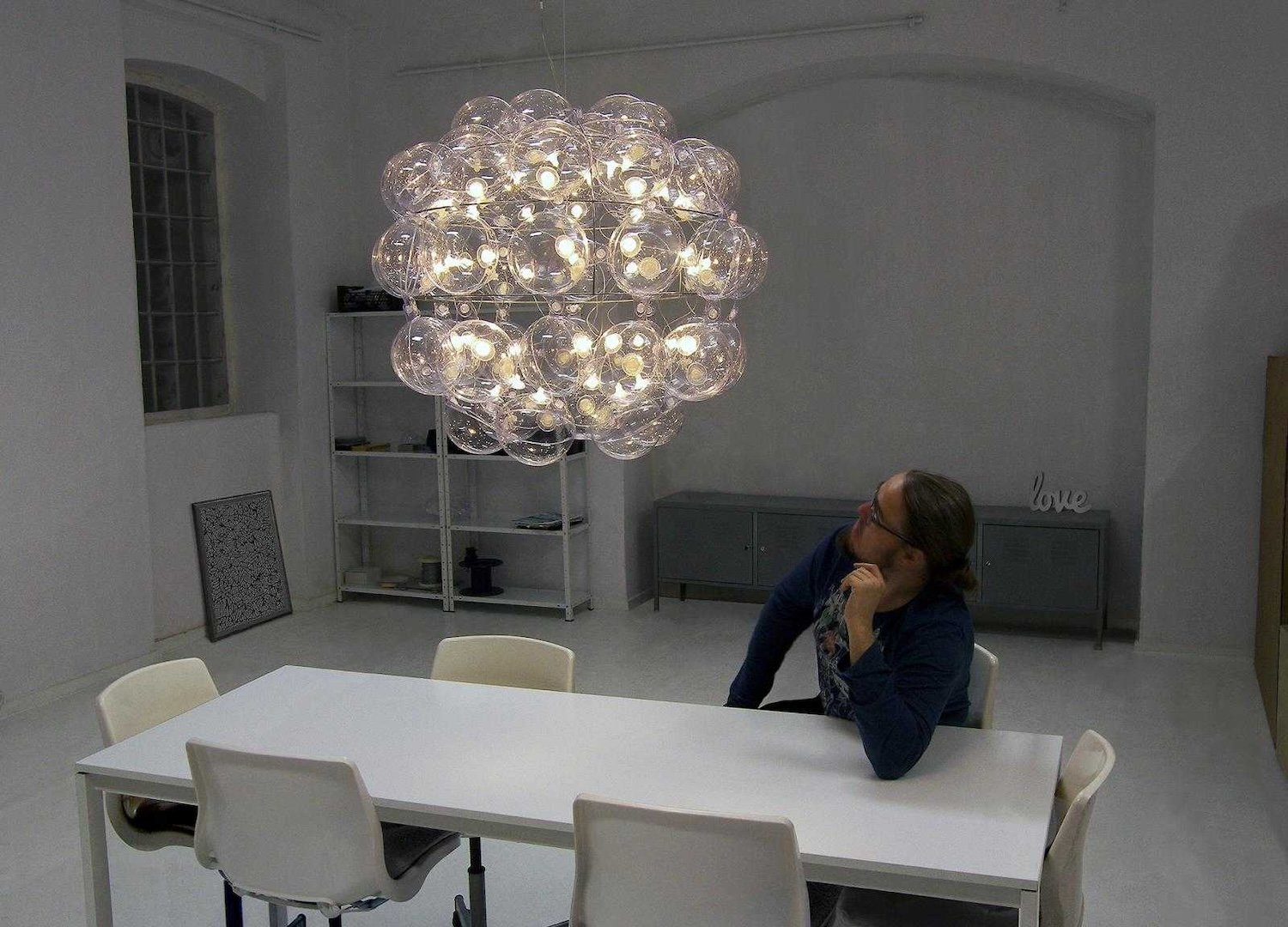
Bubble Lamp transforms inflation into a restrained act of construction. Its translucent TPU body is shaped and stabilized through internal tension, giving the lamp a suspended, almost breathing quality. The segmented surface diffuses light gently, avoiding the theatrical effects often associated with inflatable objects. Studio Ololoo treats air as a collaborator, allowing form to emerge through pressure and balance. The lamp occupies space quietly, precise yet unobtrusive, asserting presence without dominance.
Blow Me Up by Ingo Maurer, Theo Möller and Team
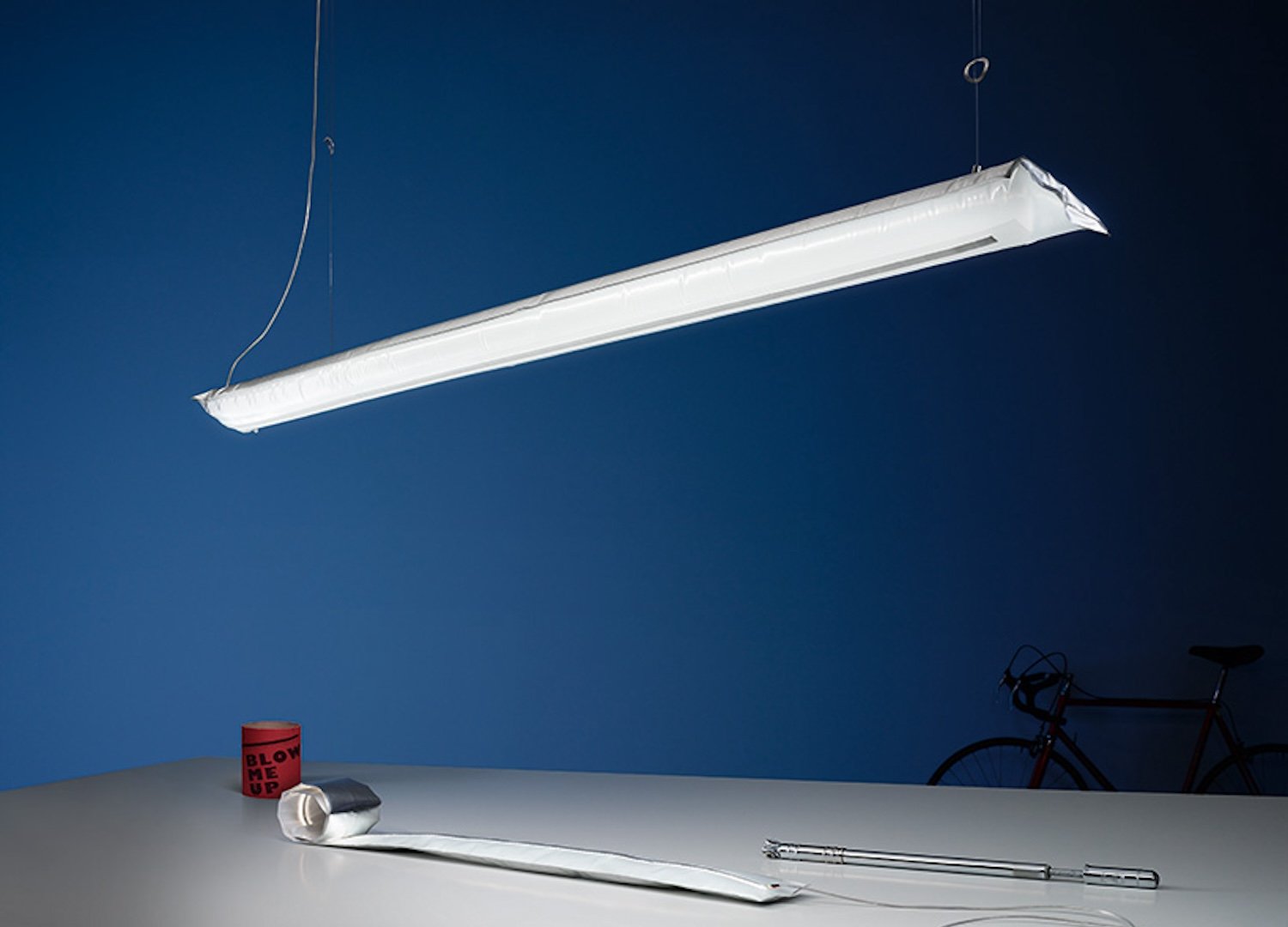
A lamp that must be inflated by the user: Blow Me Up condenses Ingo Maurer’s experimental ethos into a single, explicit gesture. Delivered deflated, the luminous tube resists permanence and invites participation, with a new idea of what inflatable design is. Its flexibility allows it to lean, hang or sprawl, adapting fluidly to space and circumstance. The inflatable shell diffuses light evenly, tempering its industrial undertones. By foregrounding fragility, the piece allows air to become performative, turning lighting into an experience of temporary form.
BrännBoll by IKEA
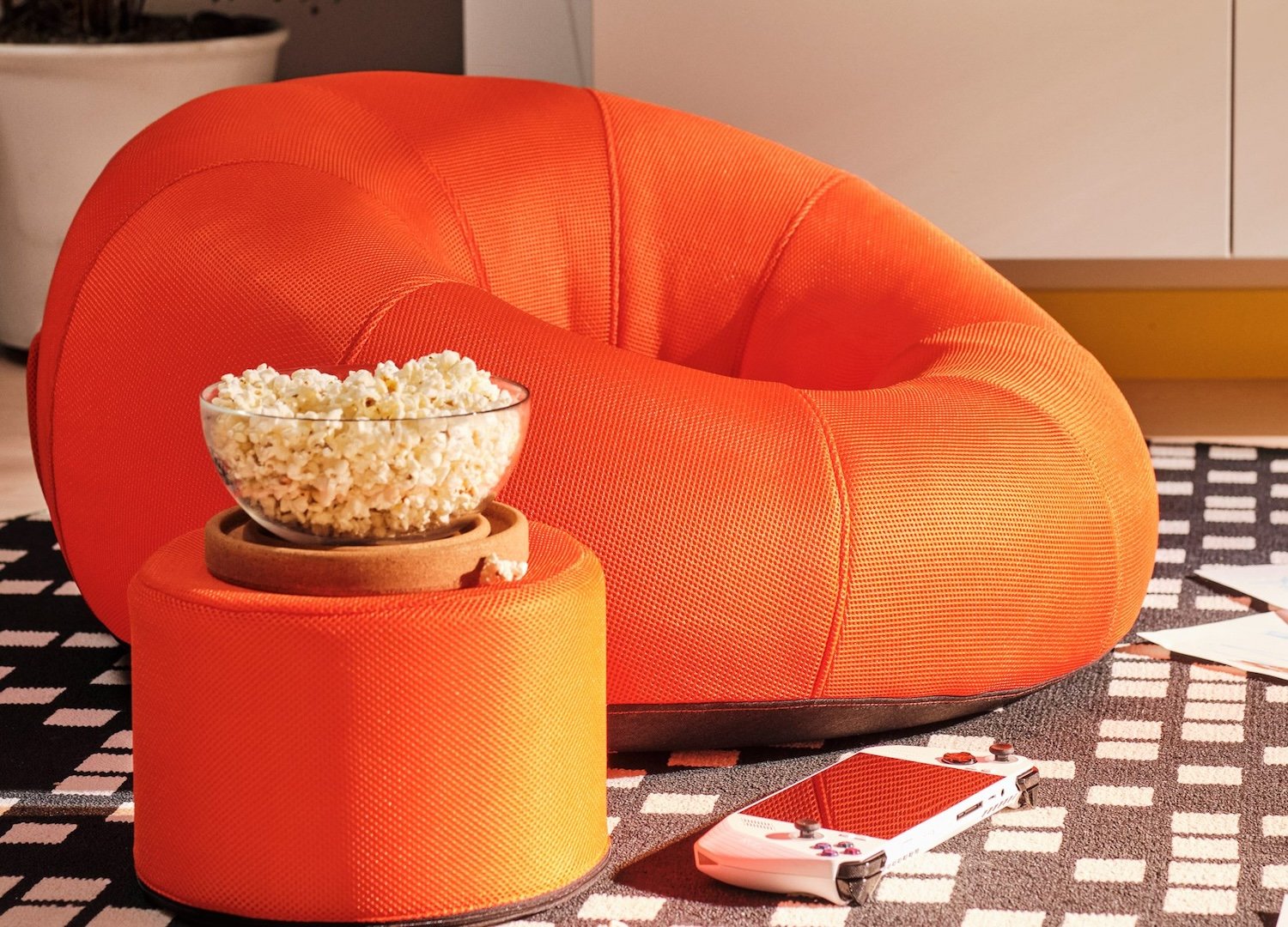
With BrännBoll, IKEA brings inflatable seating decisively into the mainstream, stripping it of irony and speculative discourse. The inflatable lounge chair is unapologetically functional, designed for gaming, lounging and rapid setup, and very easy to understand, well priced and pleasant. Mesh inserts provide structure once inflated, anchoring the object in everyday use. Its bright color and soft volume suggest informality and even disposability, yet the design remains deliberate. BrännBoll normalizes air as a viable construction method, subtly reshaping expectations of comfort and permanence.
Starlette by PUFF-BUFF
PUFF-BUFF operates at the intersection of lightness and control. Their inflatable design lighting use air to expand volume without adding mass, producing forms that are both graphic and ephemeral. Rather than referencing traditional lamp typologies, the brand explores new configurations shaped by pressure, surface and restraint. The aesthetic remains deliberately soft, supported by technical precision. In PUFF-BUFF, air functions as a structural principle, and suggests a future in which lighting is defined less by fixtures and more by atmosphere.
Street Seats by Pneuhaus
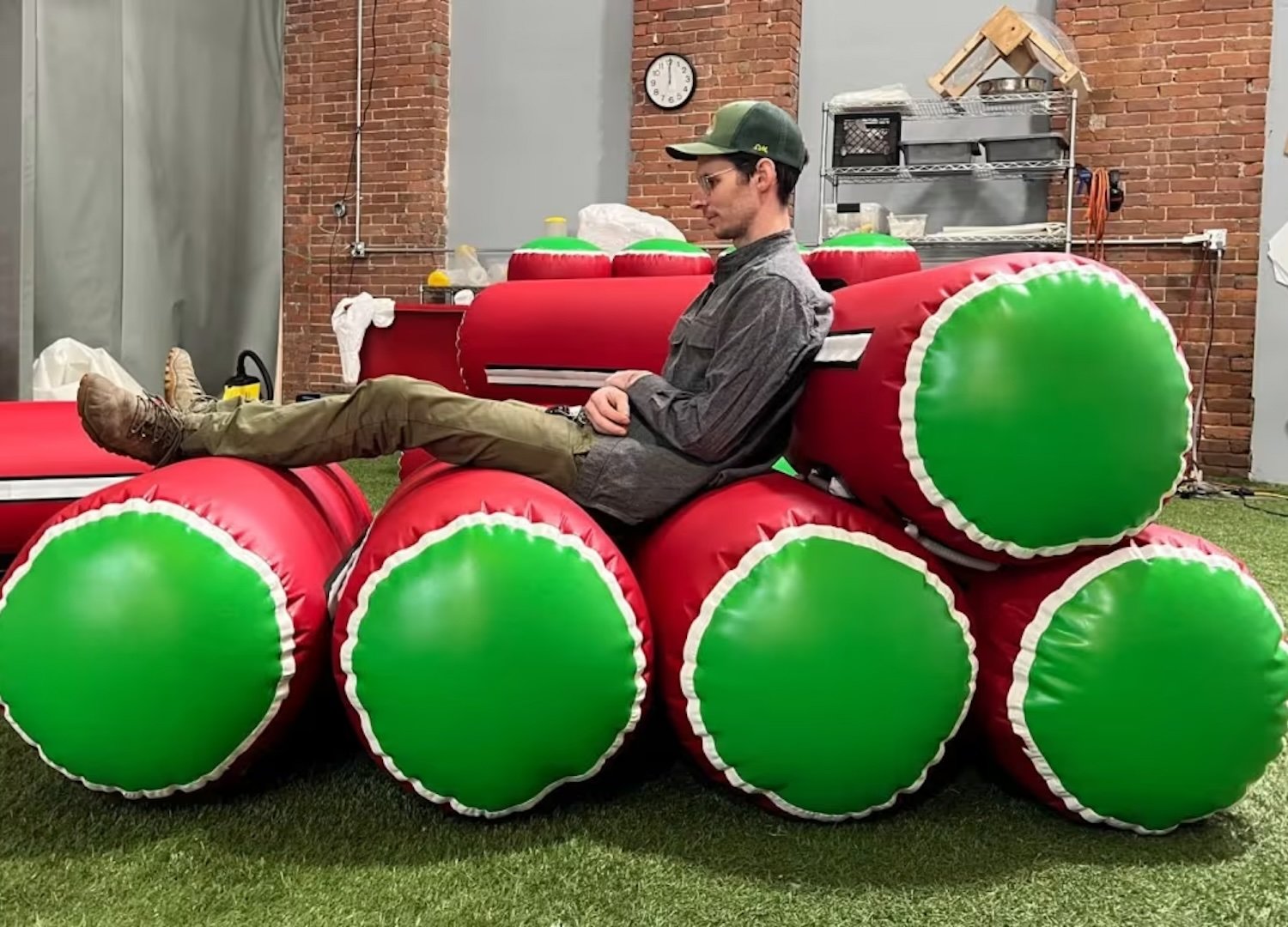
Originally conceived as inflatable seating for public space, Street Seats has recently been reconfigured by Pneuhaus into something far more charged. In response to escalating violence during US campus protests, the studio transformed its soft, modular inflatable design into lightweight shields designed for collective self-defence.
Made from ultra-resistant materials similar to those used in Zodiac boats, the inflatables remain mobile and connectable, equipped with handles and Velcro edges to form protective barriers. Their oversized, rounded shape resists easy grip and reduces the risk of injury on both sides. In this context, design refuses neutrality and becomes a political act, and air becomes a social catalyst, helping people during difficult times, contrasting without using violence.
Floating Pouf by HeFlies

Floating poufs – two words, a new meaning. The operation behind HeFlies is to turn seating into a suspended gesture. Appearing to float until activated, the pouf questions the moment an object becomes functional: is it when it stands in our spaces or, really, when we use it? The point, here, is all about inflatable design, which grants buoyancy and presence without anchoring the piece to the ground. The interaction unfolds subtly: approach, descent, use – like a choreography, this piece highlights air as a temporal material, shaping experience over time. HeFlies is less concerned with comfort alone than with redefining how furniture enters and occupies space.
About the author

Ludovica Proietti, journalist, design historian and curator, teaches in universities and curates events, always exploring projects with fresh, unconventional perspectives.
Instagram