Can the mop become a design object? From invisible utility to domestic desire
Joseph Joseph, with its new UltraClean, continues to guess us on how domestic tools can finally enter the vocabulary of contemporary aesthetics, shaping a new language where beauty meets functionality and wellbeing.
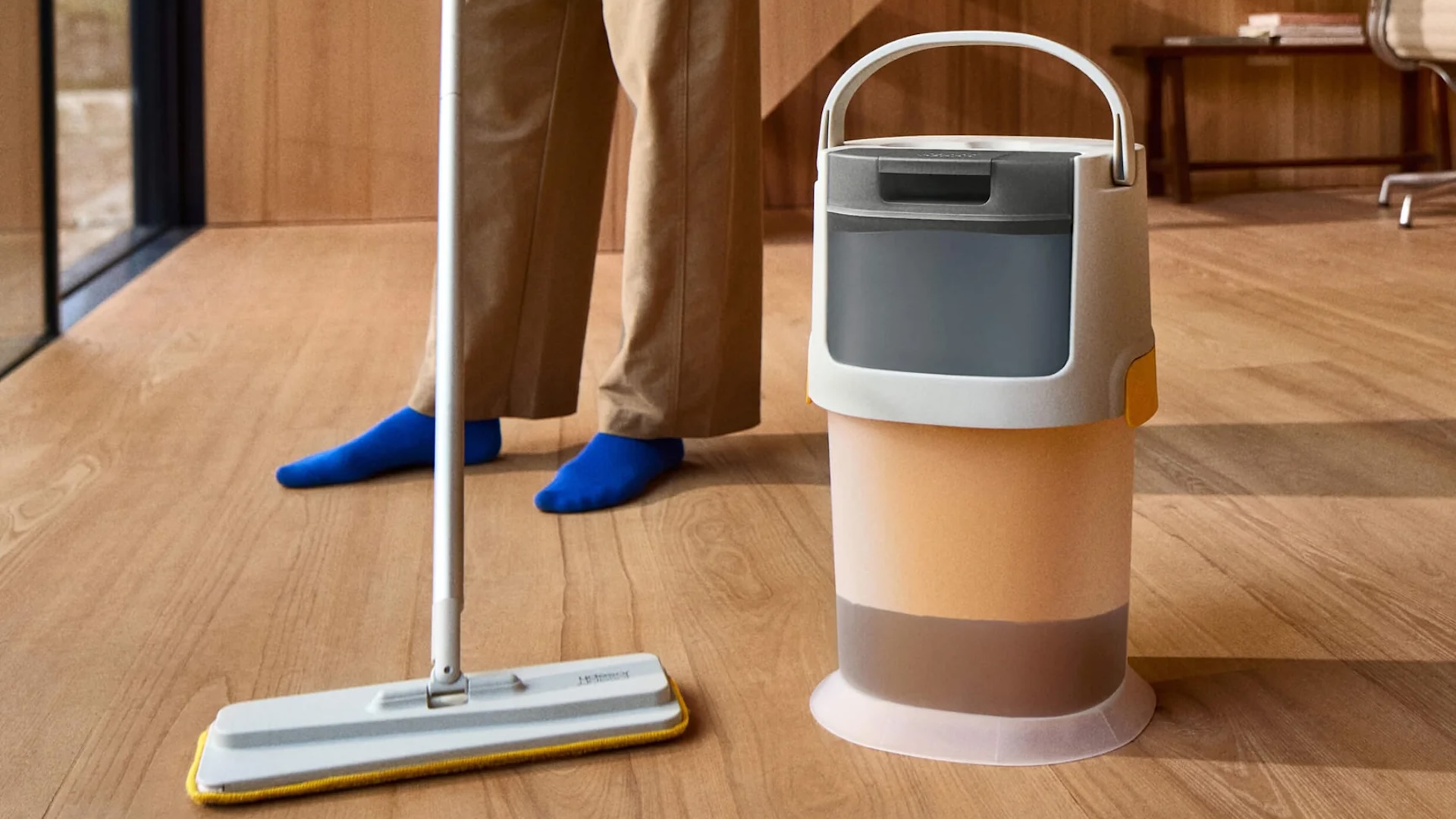
Today, visual storytelling and emotional projection are transforming objects associated with domestic labour into increasingly refined presences within the home, turning them into legitimate sites of design research rather than purely functional tools. The UltraClean cleaning system by Joseph Joseph exemplifies this shift particularly well. Conceived less as a conventional household appliance than as a carefully integrated domestic accessory, it deploys the visual vocabulary typical of contemporary lifestyle design – the muted “stone” palette, the near-frictionless geometry of its components, the soft aesthetic language of the campaign imagery – all contributing to repositioning the cleaning system within a broader ecosystem of curated domestic aesthetics, far removed from the traditionally technical world of household maintenance.
This evolution becomes especially significant when considering how long these objects remained excluded from the history of design itself. For decades, tools associated with domestic labour occupied a peculiar blind spot within modern design culture: essential, omnipresent and structurally necessary, yet visually neglected and culturally invisible. If 20th-century design mythology largely revolved around chairs, lamps, storage systems and, later, consumer electronics – objects capable of embodying taste, progress or social status – the mop, the bucket or the drying rack were relegated to a parallel universe of pure utility, hidden under sinks and inside service closets, exempt from almost any real formal ambition.
Gallery
Open full width
Open full width
Joseph Joseph – Ultraclean mop:
From Scandinavian Modernism to the kitchen floor: a long road to legitimacy
In many ways, this represents the final extension of a process that design has been pursuing for decades. Already in the postwar years, particularly through Scandinavian design, the idea emerged that beauty should not remain confined to elite interiors but should instead permeate ordinary life through serial production and affordable objects. Yet even within that democratizing vision, there remained a hierarchy between the “designed object” and the merely functional tool – what seems to have shifted now is that this threshold itself is muting and the same visual and ergonomic attention once reserved for high-end furniture or consumer technology can be increasingly invested in (still high standard and price) domestic products, whose value lies precisely in their banality.
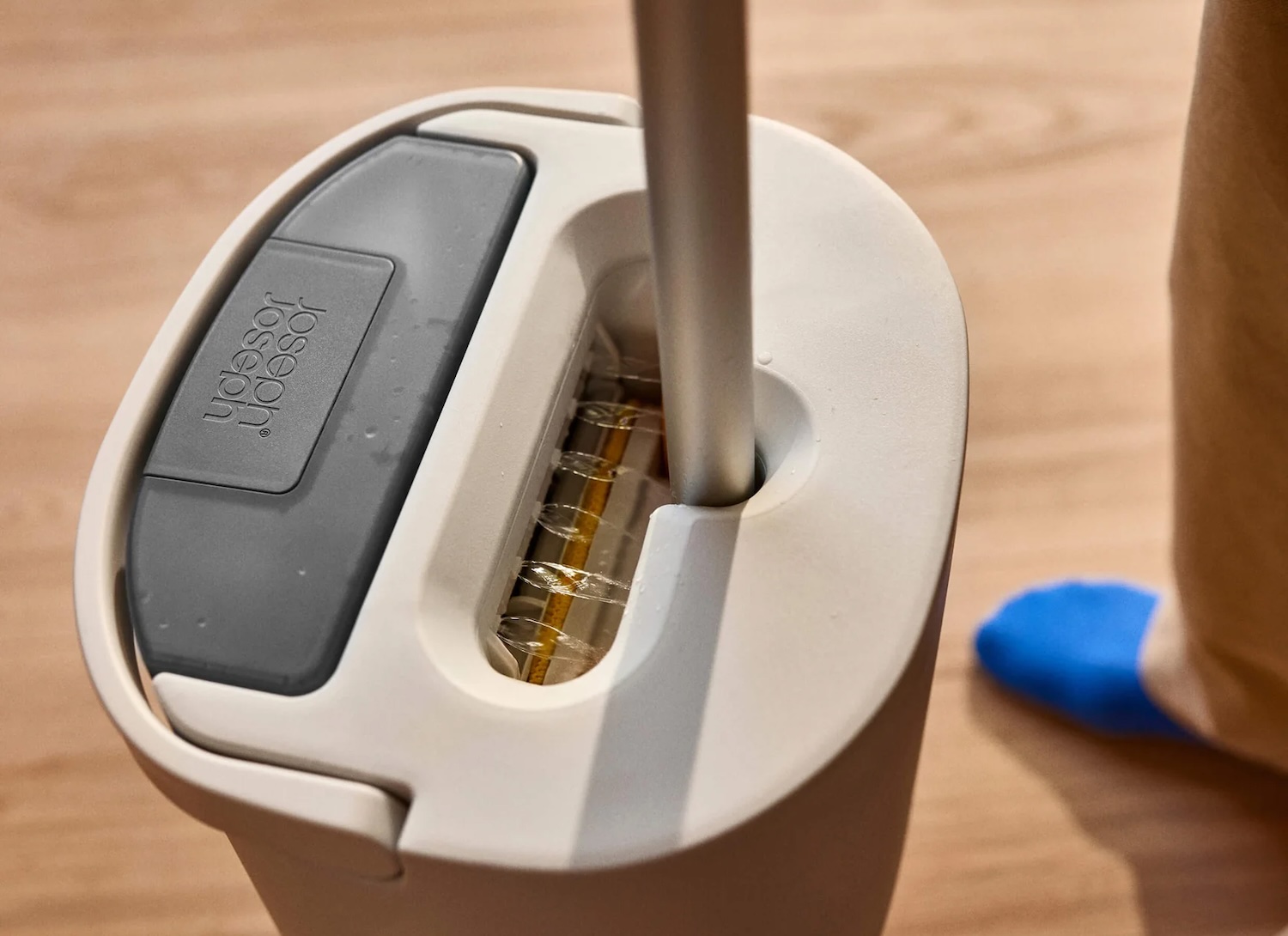
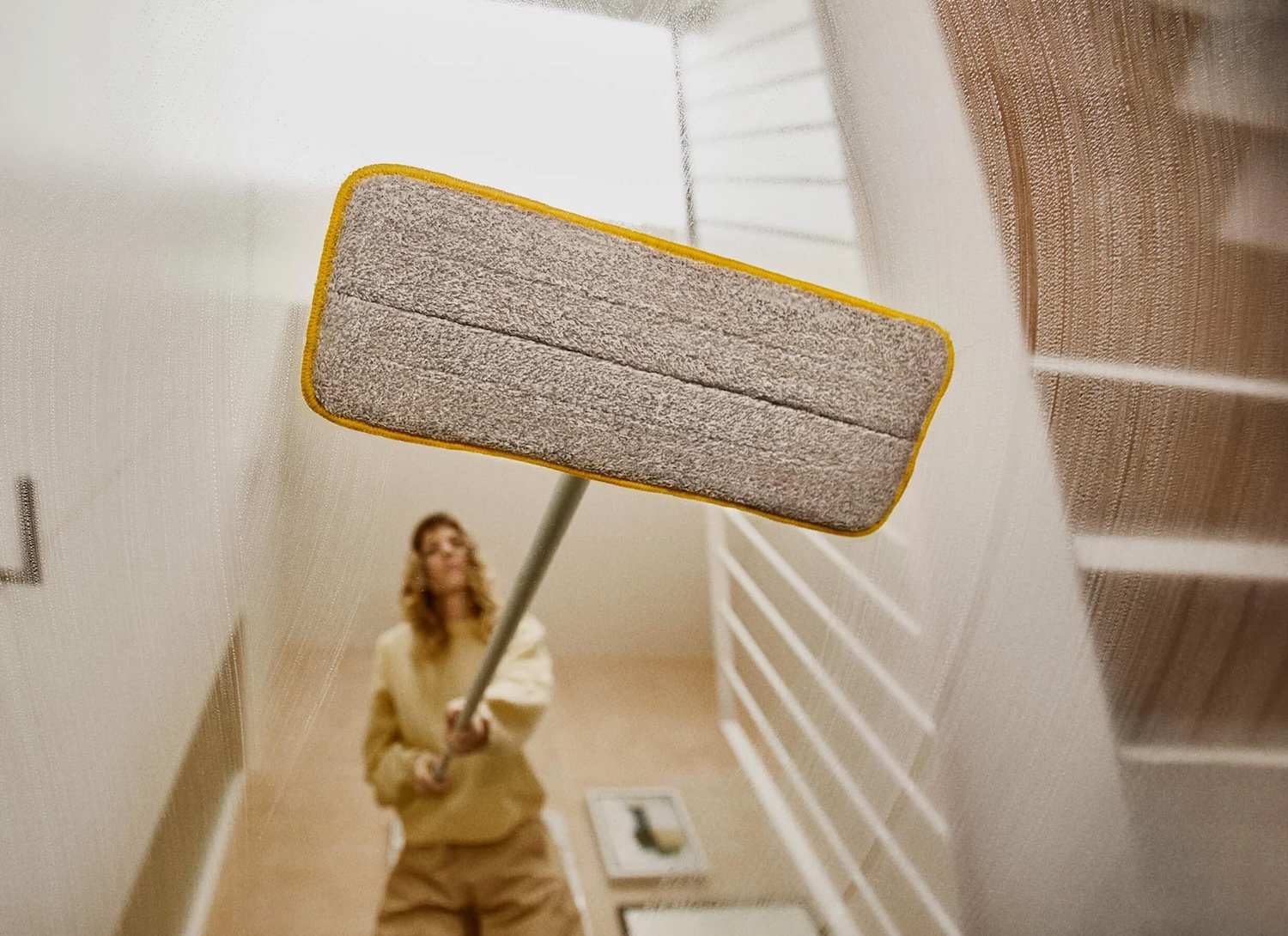
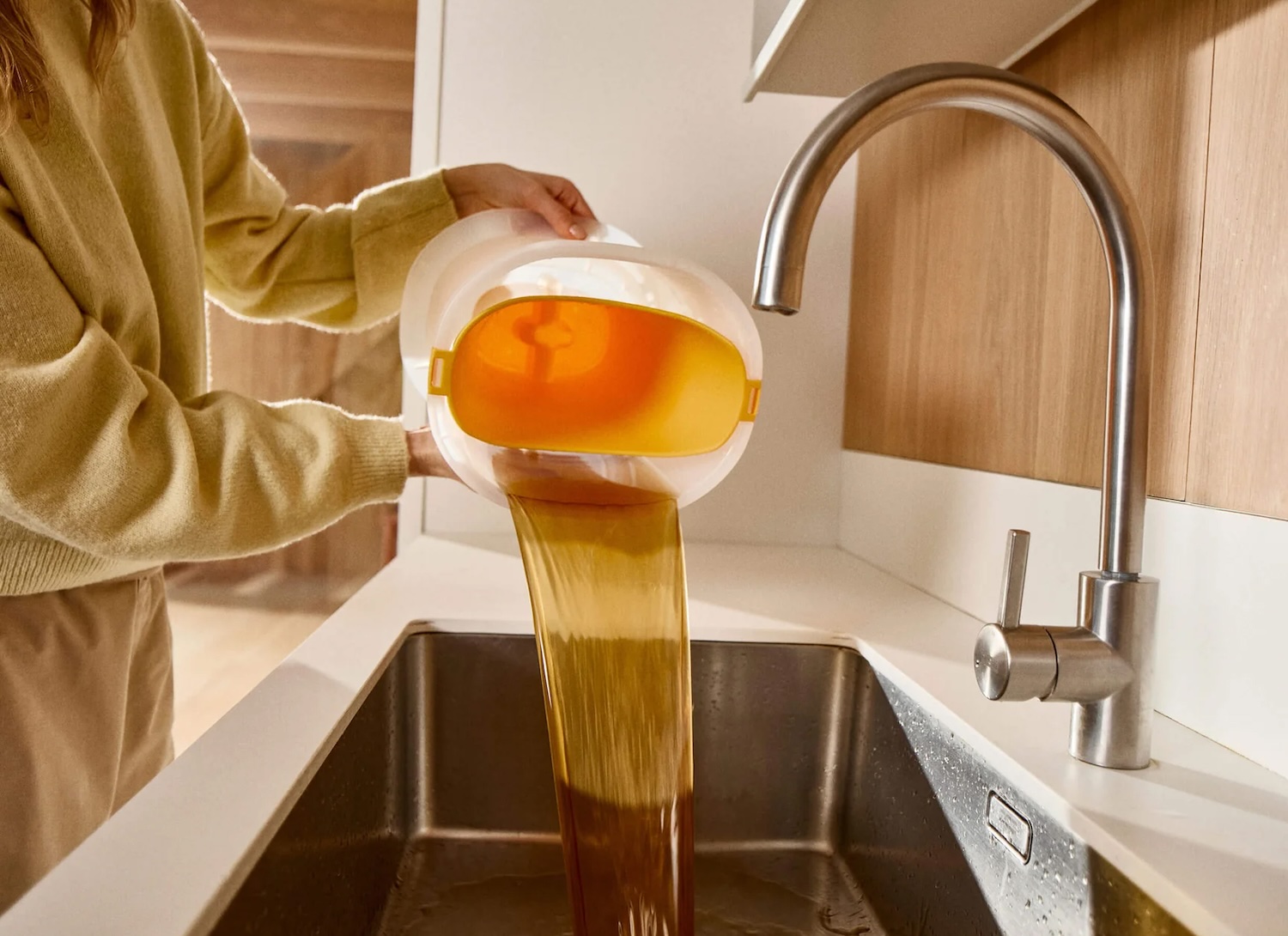
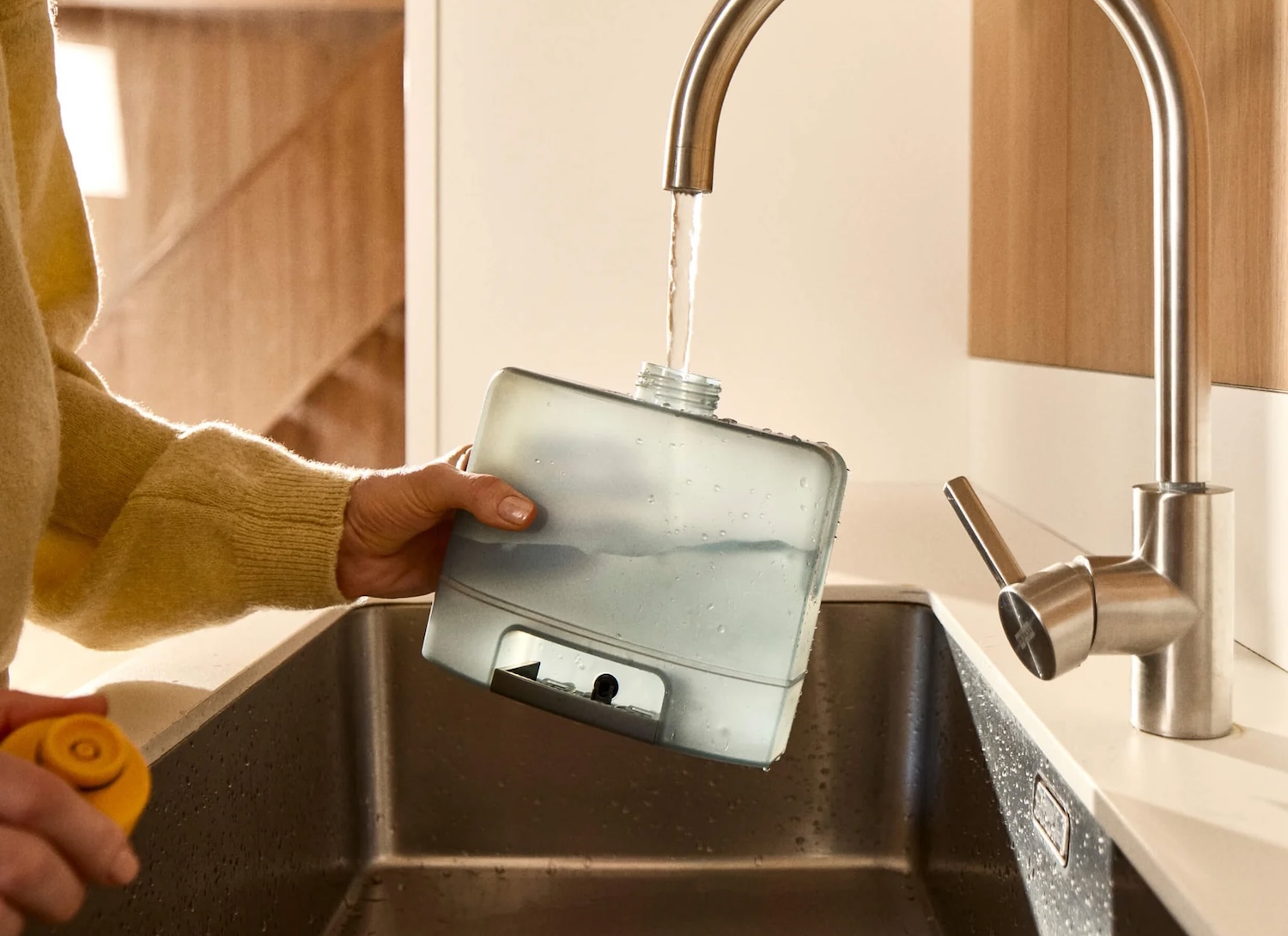
This new system makes the aesthetical pleasing of performance visible almost programmatically, and its product narrative turns cleaning itself into an almost choreographed visual experience. At the centre of UltraClean is a dual-chamber mechanism that separates clean and dirty water while simultaneously rinsing and refreshing the microfibre pad, ensuring that contaminated water is never redistributed onto the floor. The process itself becomes oddly satisfying to watch, with the telescopic handle that extends with the smoothness of a personal-care device, and the rotating mop head glides easily into corners and under furniture, while the rinsing and wringing system transforms an otherwise invisible domestic gesture into something more engineered and controlled.
Cleaning as wellness and the language of hygiene culture
Perhaps the point is that contemporary design culture is less interested in exceptional gestures and technological additions, preferring instead an emotional optimization of everyday routine – one that extends formal and aesthetic considerations to objects once considered too mundane to merit them. This is not a new approach by Joseph Joseph, and similar companies, like MUJI, that, in a broader and more architecturally significant way, have built a recognizable formal language from just a handful of elements, and have internalized a lesson where reduction, softness, coherence, tactility and intuitive interaction form part of the experience even with the least visible but always necessary objects.
Another compelling dimension of this product, which promises to become one of the company’s top sellers, is the claim of “fresh water every time,” emphasizing the separation between clean and dirty, insisting on washable, reusable pads and more hygienic mechanisms. This rhetoric feels remarkably close to skincare, wellness culture or even medical technology, and it speaks to a growing sophistication of cleaning systems.
Historically, domestic tools were designed around durability and efficiency, evoking a language grounded in reassurance and practicality. In this case, something different emerges, coming from a register borrowed from wellbeing, reflecting the enormous amount of research currently being invested in objects connected to home care, hygiene and maintenance.
The “aestheticisation” of domestic labour in the age of curated interiors
Over the past decade, domestic space has progressively shifted from background infrastructure to curated identity landscape, amplified by social media, interior culture and the rise of a hyper-visible aesthetics of everyday life – the AirSpace culture, where an imaginary that began with the perfect Airbnb-style home gradually defined a new movement of organized and visually coherent, if often artificial, environments. If domestic labour remains repetitive, often invisible, and still unevenly distributed socially and economically, the market increasingly aestheticises the instruments through which that labour is performed.
And within this context, objects associated with cleaning can no longer remain visually marginal or materially embarrassing, and if the house itself becomes a continuous performative surface, then even maintenance tools must participate in its coherence. The chore interface becomes smoother, calmer, more seductive – a blobject sensibility in which cleaning systems now aspire to produce less friction, less visual noise, less anxiety around contamination or disorder, a faint ASMR quality that is quietly entering the objects of everyday life.
Some of the most revealing design objects today may not be collectible pieces or speculative furniture editions, but precisely these highly engineered tools for ordinary life – ones that democratize beauty, reduce the distance between the designed and the merely functional, finally bringing formal attention to the maintenance rituals that modern design history once preferred not to see.
About the author

Ludovica Proietti, journalist, design historian and curator, teaches in universities and curates events, always exploring projects with fresh, unconventional perspectives.
Instagram