Swimming in the Pool or the Ocean?
The pool has clear boundaries. The ocean has horizons. As a designer, where do you choose to swim?
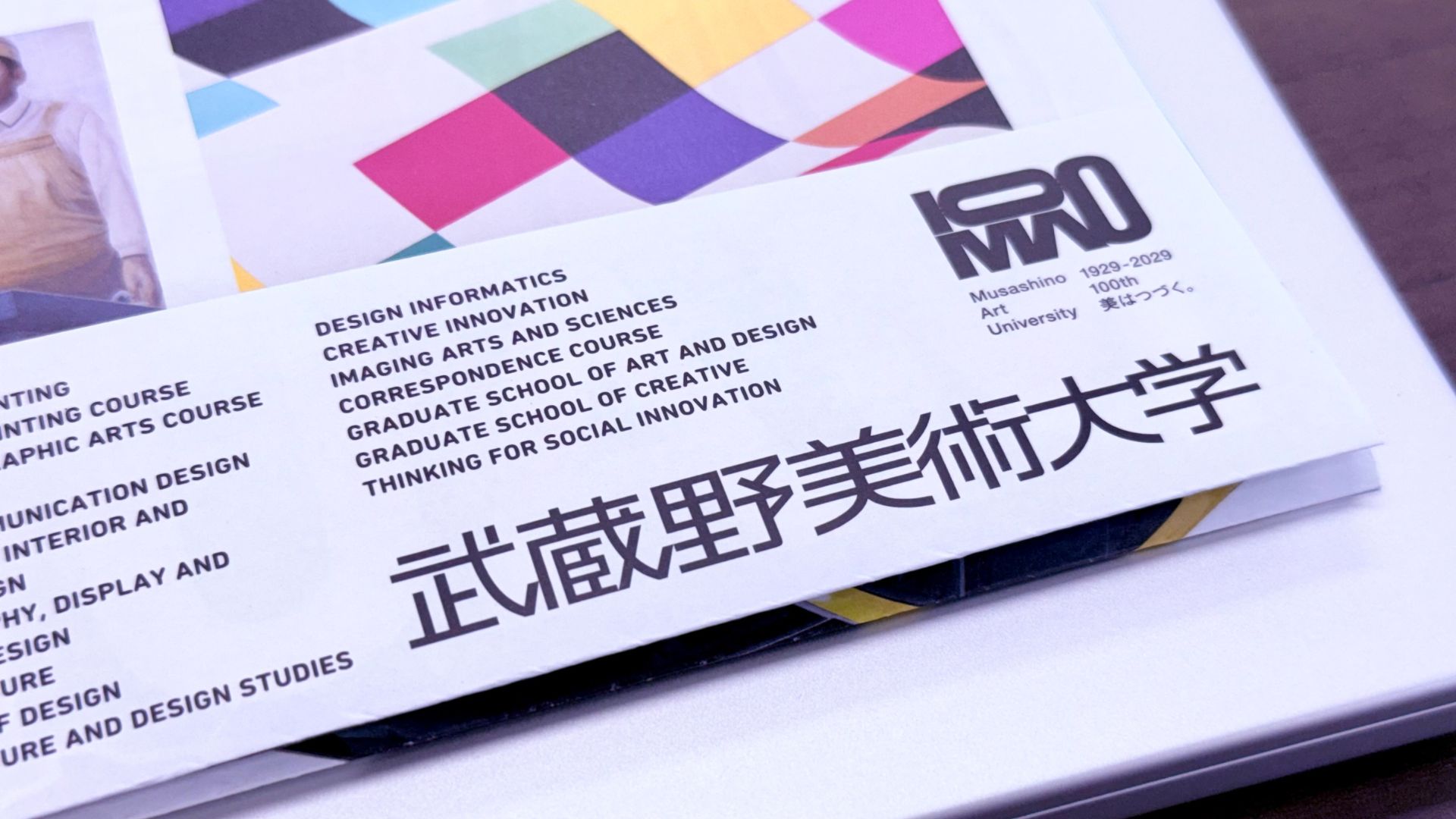
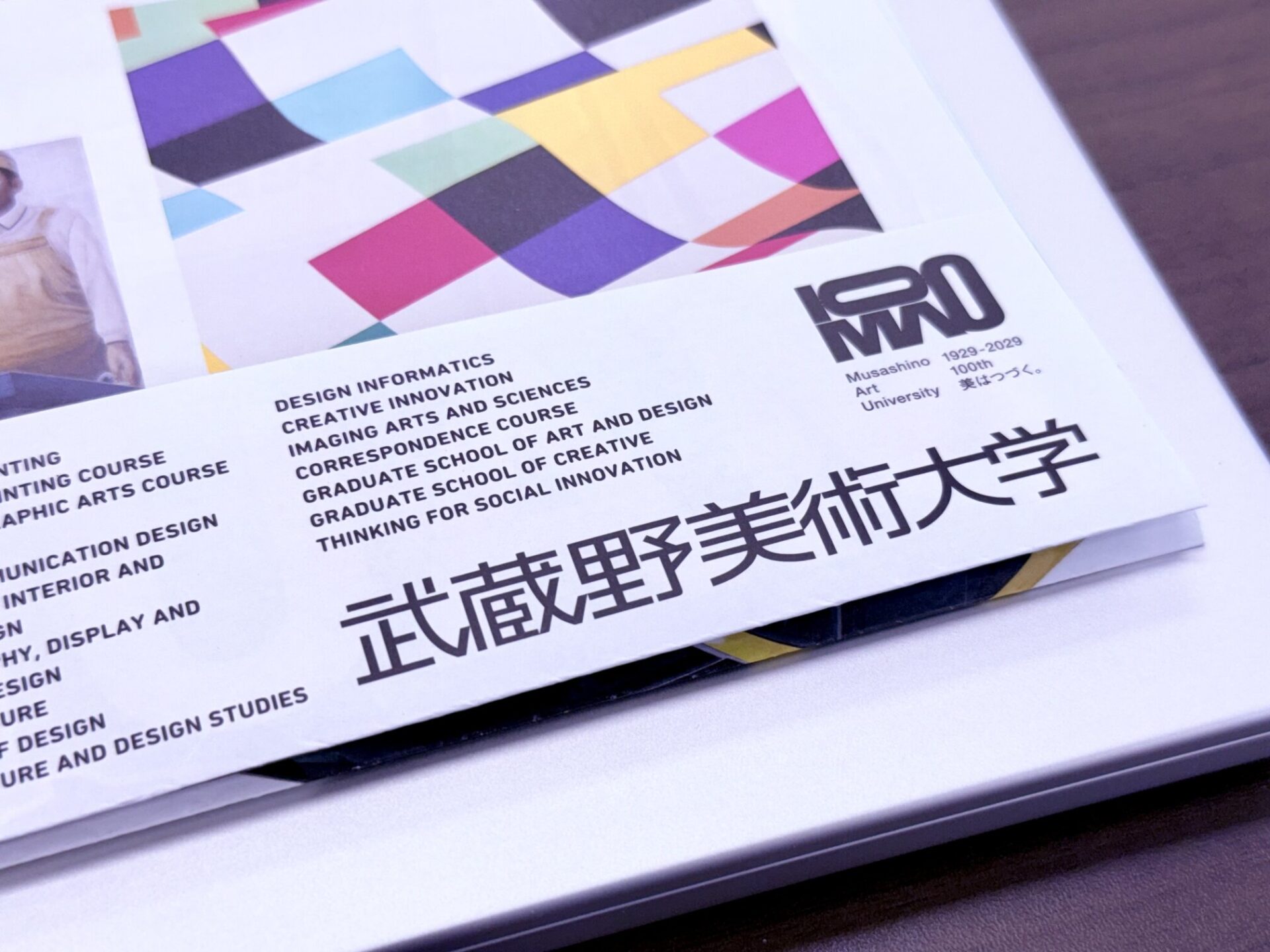
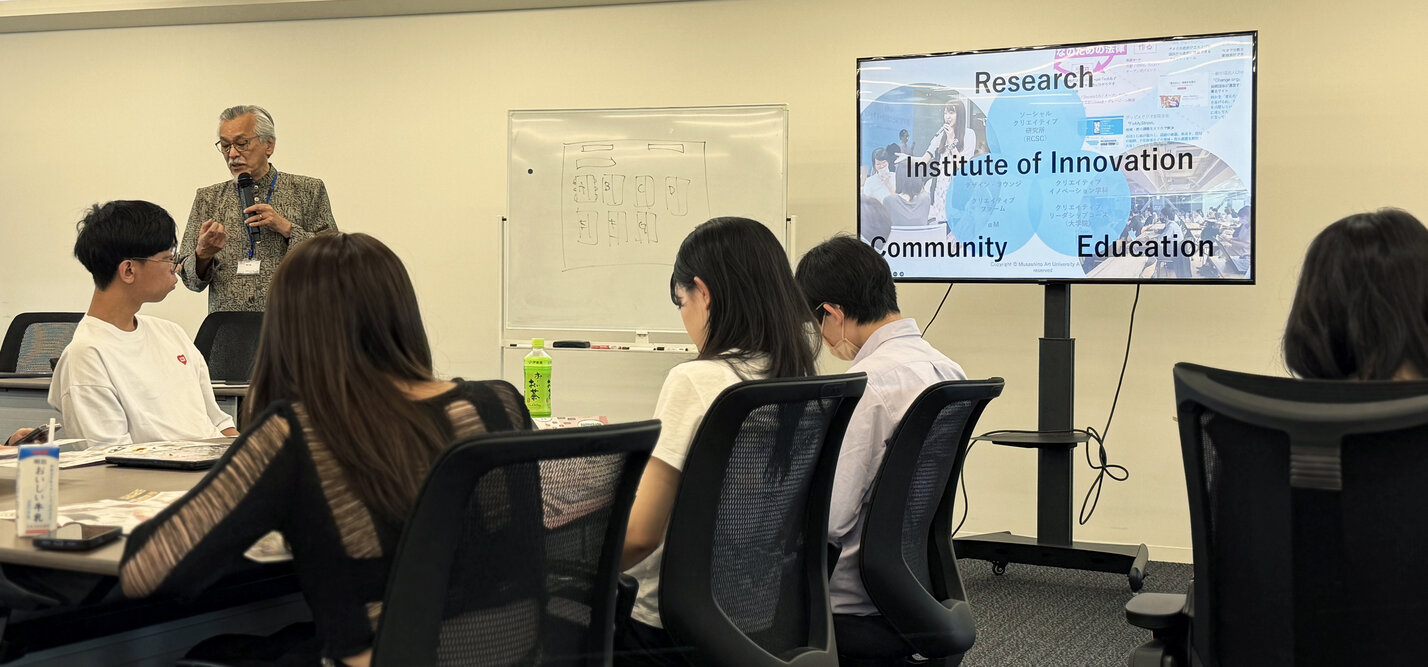
When Tadanori Nagasawa, Executive Chairman and Former President of Musashino Art University, posed this question at a Design for Longevity (D4L) workshop in Tokyo, it seemed like a simple metaphor.
At first glance, it seems like a simple metaphor. Yet the more I reflected on it, the more it captured many of the questions designers face today. Should we operate within established disciplines or venture into unfamiliar territories? Should we optimize what already exists or imagine entirely new possibilities? Should design focus on creating artifacts or shaping relationships, systems, and futures?
Gallery
Open full width
Open full width
As AI reshapes creative work, disciplinary boundaries blur, and societal problems grow more complex, designers are increasingly asked to navigate uncertainty rather than simply solve problems. The question is no longer where design fits, but how designers choose to operate within a world of expanding possibilities.
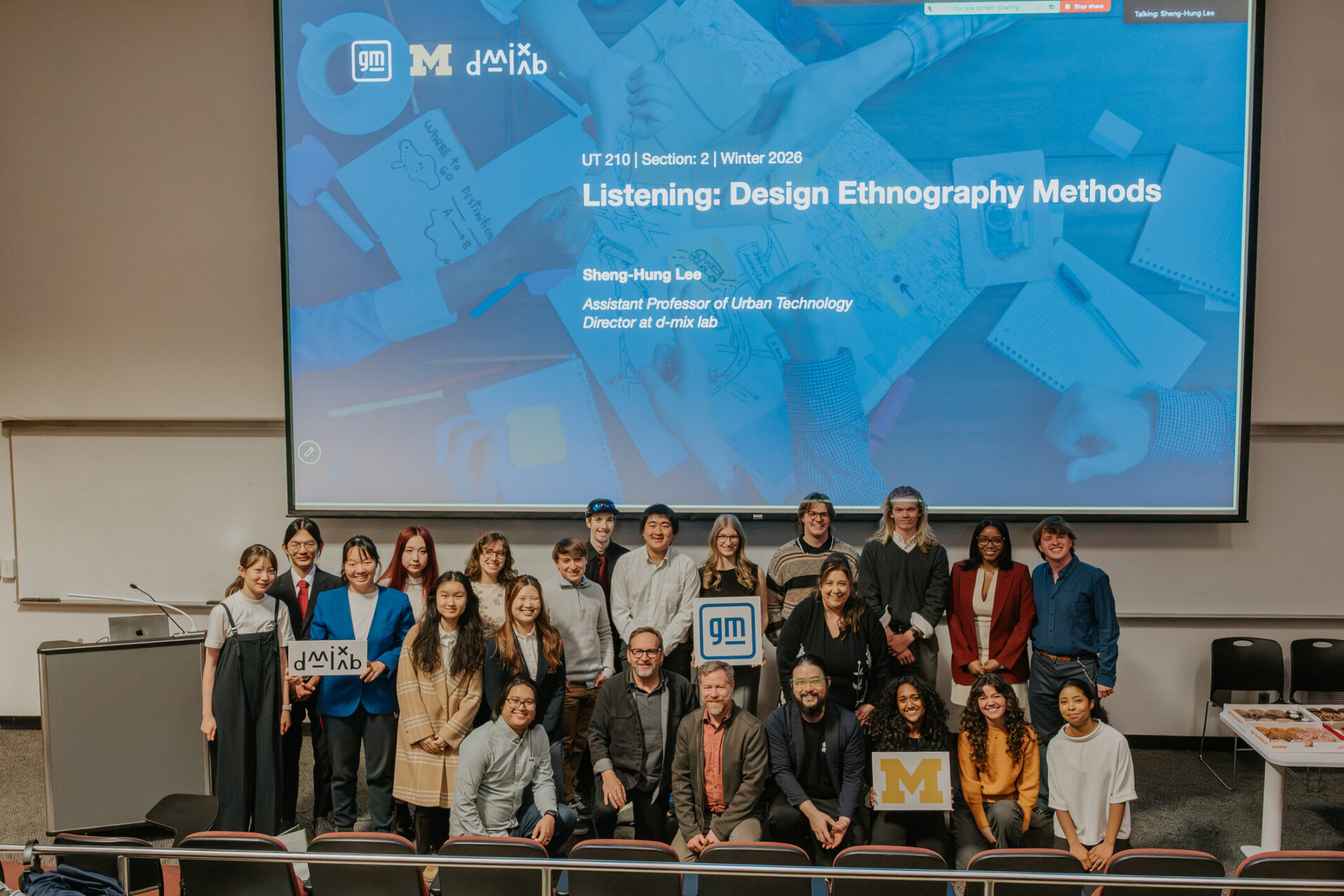
These questions arrived at a particularly meaningful moment in my own life. After relocating from Cambridge to Ann Arbor, I completed my first winter semester teaching Design Ethnography Methods at the University of Michigan (Figure 1) while simultaneously entering the final production stage of my forthcoming book, D4L: Exploring Design for Longevity.
This transition—from doctoral researcher to faculty member, from one city to another—has prompted me to reflect on the evolving relationship between design and education in an era increasingly shaped by artificial intelligence (AI), interdisciplinary collaboration, and societal complexity. Three reflections have emerged from this transition:
Swimming in the Pool or the Ocean? Three reflections:
Although these three reflections emerged from different experiences, they share a common theme: design is becoming less about producing artifacts and more about navigating relationships—between disciplines, between people, and between possible futures.
Creative Friction: From Difference to Discovery
The Urban Technology program at the University of Michigan’s Taubman College of Architecture and Urban Planning is only six years old. As a relatively young discipline, Urban Technology is still defining itself. What exactly is urban technology? How does it differ from established fields such as architecture, urban planning, computer science, or design?
These questions are not unique to Urban Technology. Across higher education, many design-related disciplines are undergoing a similar transformation. Boundaries between fields are becoming increasingly porous, while AI is accelerating the integration of knowledge, methods, and expertise. New academic programs are emerging, job descriptions and opportunities are evolving, and industry expectations are shifting rapidly.
Perhaps the most visible transformation is occurring within the design process itself.
Activities that once required days or weeks—from ideation and rendering to CAD modeling, simulation, and prototyping—can now be completed within minutes.
Designers can visualize, test, and iterate ideas in real time. Increasingly, we can see, touch, and evaluate potential futures before they physically exist.
This shift fundamentally changes the temporal dimension of design.
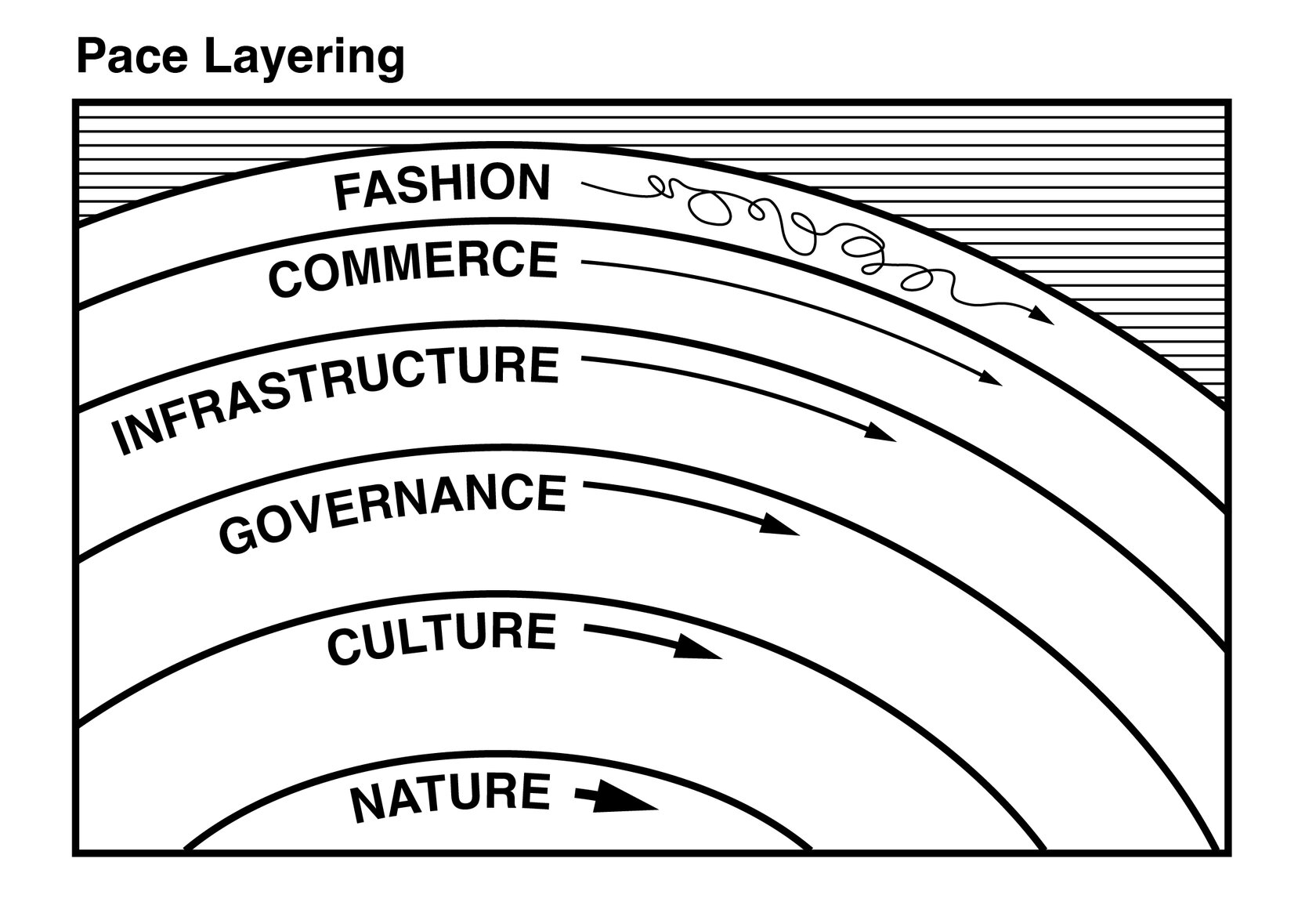
It reminds me of Stewart Brand’s (1998) Pace Layering Framework, which describes six interconnected layers operating at different speeds: nature, culture, governance, infrastructure, commerce, and fashion (Figure 2). The outer layers move quickly, while the inner layers change slowly. Innovation often occurs at the intersection of these layers, where different tempos collide.
I think of these collisions as creative friction.
In an AI-augmented design environment, time itself becomes a design material. As AI rapidly simulates experiences, generates visualizations, and optimizes systems at a scale and speed beyond human capability, the question is no longer what AI can do. The real question is: what remains uniquely human, and where should designers invest their time and attention to create meaningful value?
The answer may lie in what AI still struggles to do well: developing empathy, conducting field research, understanding context, interpreting ambiguity, and uncovering human meaning.
Creative friction emerges when designers move between computational efficiency and human complexity. It exists in the tension between quantitative prediction and qualitative understanding, between technological possibility and lived experience. These moments of friction generate new perspectives, challenge assumptions, and create opportunities for innovation.
As AI accelerates the production of ideas and solutions, the designer’s value may shift toward making sense of creative friction and framing questions that matter. In an age of abundance, judgment—not speed—may become the designer’s most valuable asset.
The Boundaries of Design: From Constraint to Connection
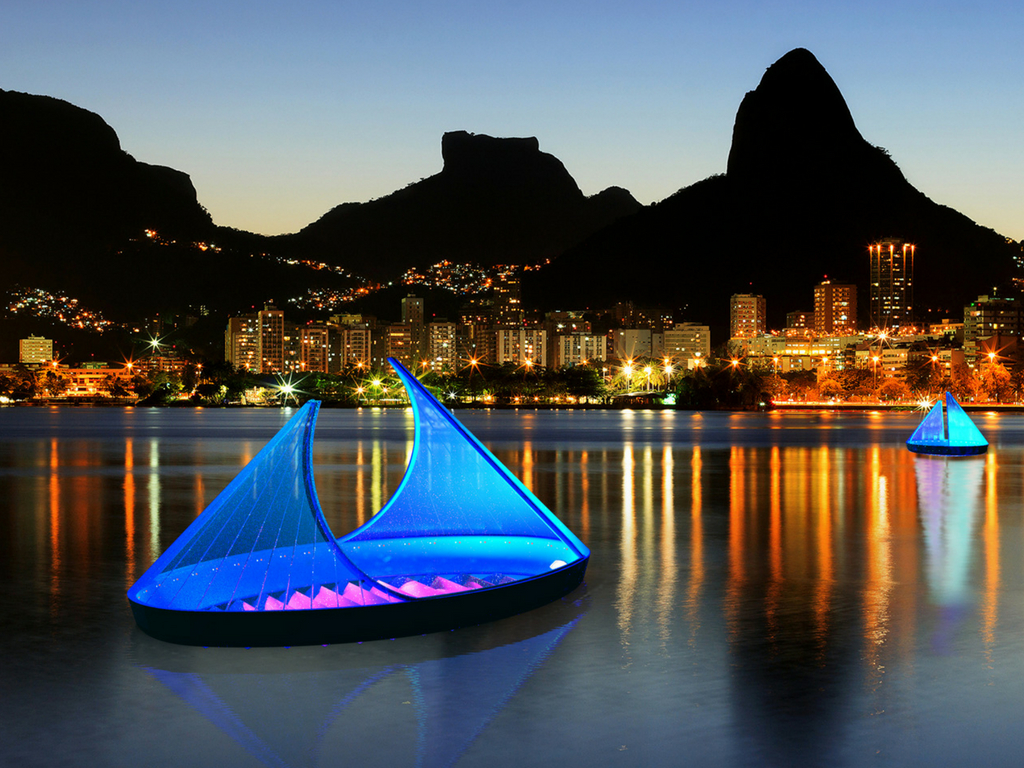
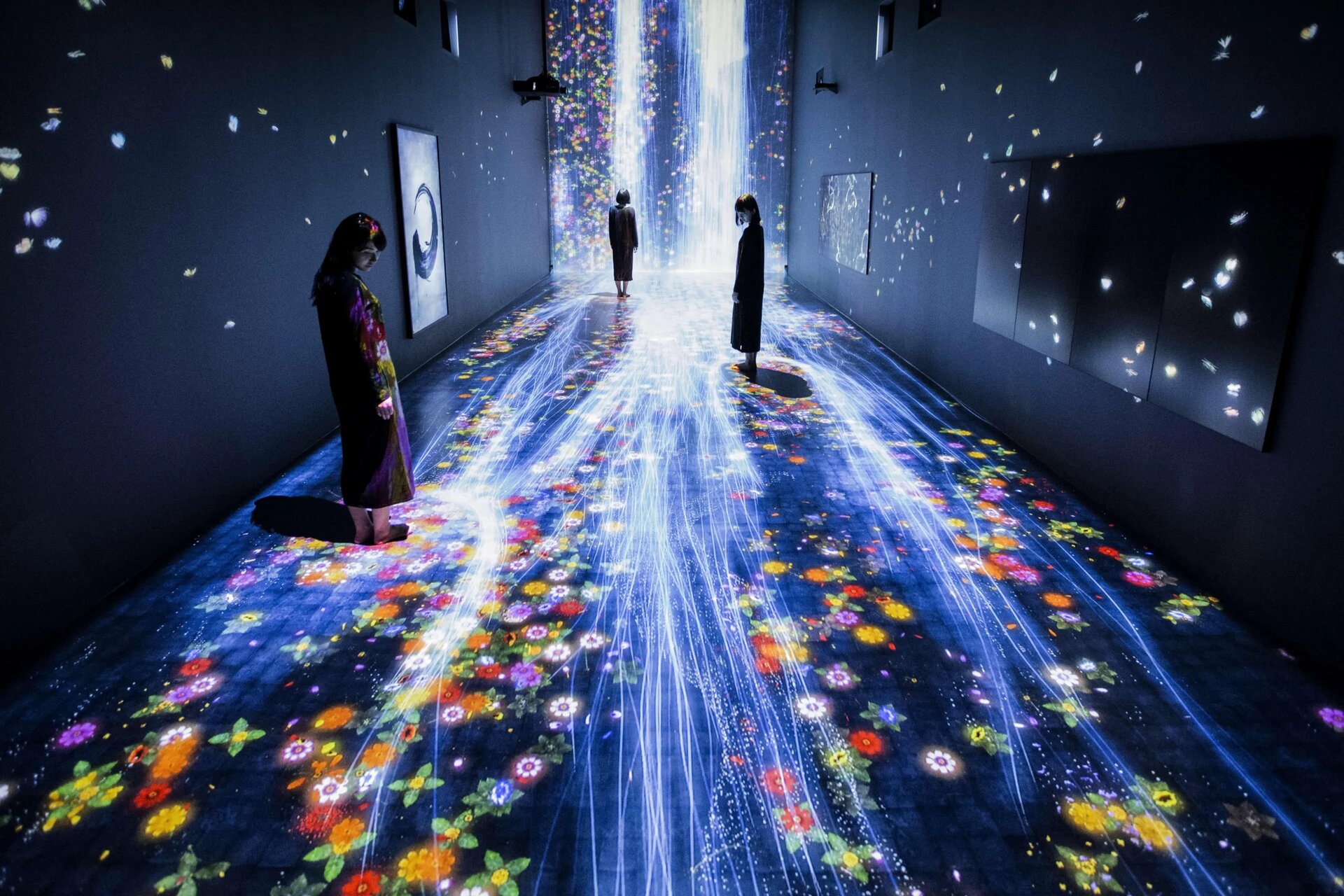
One of teamLab’s early exhibitions was titled Transcending Boundaries (2015). The exhibition explored the idea of a “boundaryless” world in which artworks flowed into one another, dissolving traditional distinctions between objects, spaces, and audiences (Figure 3).
The concept invites an interesting question: Does design have boundaries?
I think the answer depends on how we understand the notion of a boundary itself.
Echoing Tadanori Nagasawa’s question about whether designers choose to swim in a pool or an ocean, Takeshi Yamada, Head Recruiter at teamLab, offered another thought-provoking metaphor: for a fish, an aquarium is bounded by glass, while the ocean stretches toward unseen horizons. Both contain water, yet they embody fundamentally different perspectives on freedom, limitation, and what becomes possible when boundaries disappear.
As design increasingly engages with social, technological, environmental, and systemic challenges, its scope continues to expand. Yet there remains a common misconception that design alone can solve every problem. The image of designers armed with Post-it Notes and Sharpies has become a familiar stereotype, reinforced by countless consulting firm videos and design thinking workshops.
Rather than asking whether design has boundaries, we might ask how boundaries function within design. Design connects disciplines rather than replacing them.
Here, the concept of the boundary object, introduced by Susan Leigh Star and James R. Griesemer (1989), offers a useful perspective. Boundary objects facilitate collaboration across communities with different expertise, values, and goals. They need not be physical artifacts; they can also be ideas, frameworks, maps, stories, or shared languages.
From this perspective, design itself can be understood as a boundary object—a field that facilitates collaboration across disciplines rather than operating within a single domain.
Design does not replace expertise. It connects expertise. Its value lies not in claiming expertise over every domain, but in helping diverse forms of expertise work together. It creates shared spaces where architects, engineers, planners, policymakers, technologists, and communities can collaborate despite differing perspectives.
If design functions as a boundary object that connects people and disciplines, what exactly guides those connections? The answer may not lie in process or outcome alone, but in intention.
Design as Intention: From Making to Meaning
Design is often described through two lenses: processes and outcomes.
Design processes emphasize the journey of creation. Service designers may develop service blueprints (Zeithmal and Bitner, 1996) and ecosystem maps (Vink et al., 2021). Systems designers may construct John Sterman’s (2002) causal loop diagrams (CLD) or Dov Dori’s (2002) object-process methodology (OPM). These methods help teams understand complexity, coordinate stakeholders, and envision future possibilities.
Design outcomes can be tangible, digital, spatial, or informational. From a metro station’s wayfinding system to a product interface, a public space, or a service interaction, designers create artifacts and experiences that people can see, navigate, interpret, and remember. These outcomes make design visible, measurable, and ultimately meaningful in everyday life.
But what about design as intention?
Compared with design process and outcome, design intention is less visible but arguably more consequential. It concerns the users’ motivations, design values, assumptions, and aspirations that shape design decisions long before a solution emerges.
Design intention requires in-depth understanding of human behavior, psychology, relationships, and culture. It depends on curiosity, empathy, and observation. It involves asking questions, not merely to find answers, but to uncover deeper questions beneath them.
The ability to frame and articulate a challenge may be one of the critical design skills.
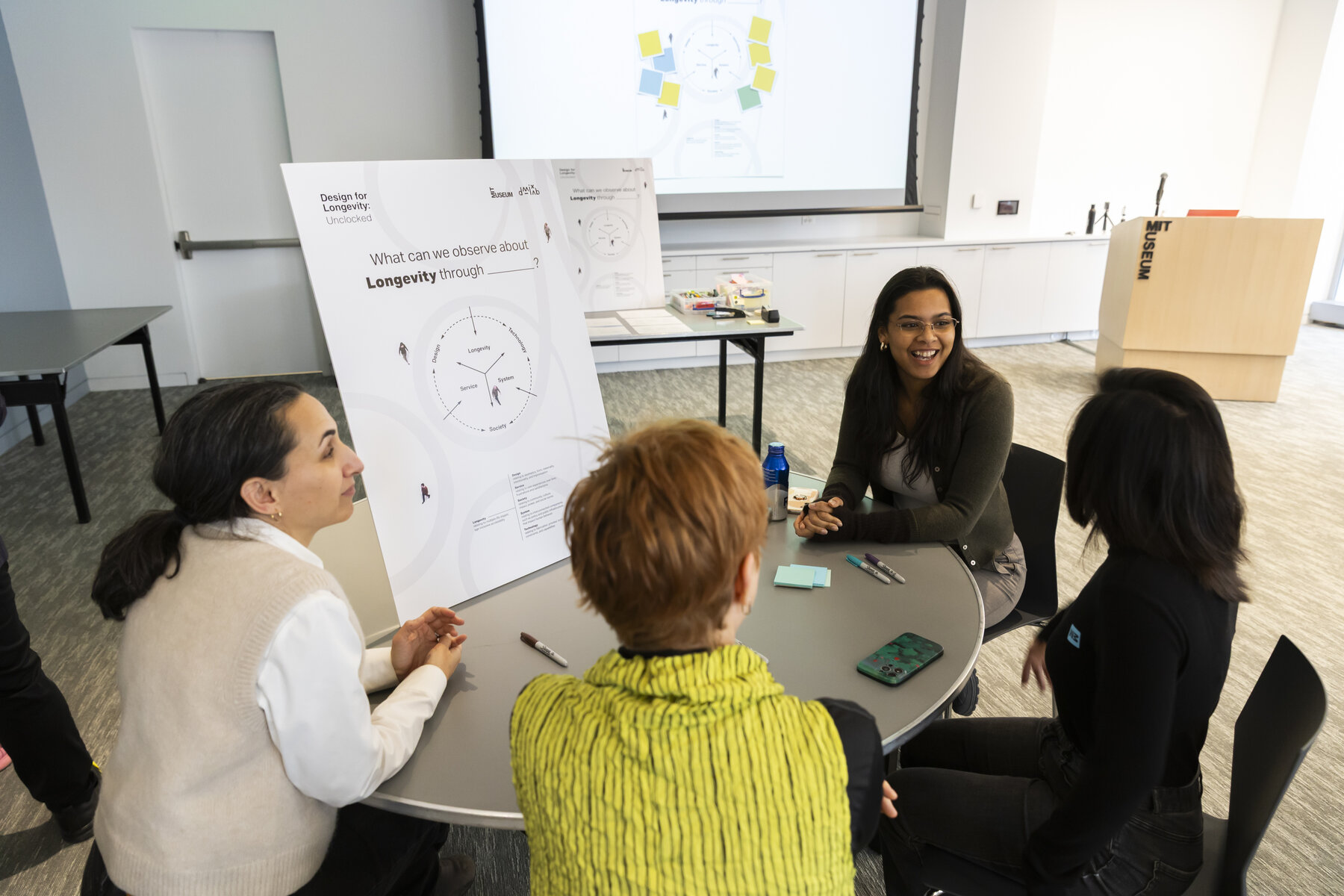
Every project begins with curiosity and questions. The quality of these questions often determines the quality of the outcome. In the context of Design for Longevity (D4L), this becomes especially important (Figure 4). Designers are not simply solving isolated problems; they are addressing interconnected challenges that unfold across generations and throughout the lifespan.
For example, in D4L, a financial plan is not simply a document to be completed. It is an evolving framework that adapts to changing health conditions, family structures, community relationships, and life transitions. Likewise, aging in place is not only about choosing a home; it is about cultivating the social infrastructure and support networks that make a place meaningful over time.
D4L-related questions about health, caregiving, mobility, purpose, community, education, and financial well-being rarely have simple answers. They require continuous reframing as circumstances evolve.
Beyond applying a design process to achieve a desired outcome, design intention can be understood as an ongoing practice of inquiry, an effort to understand not only what people need today, but also who they may become tomorrow.
As designers, our task is not simply to create solutions, but to create meaningful solutions that acknowledge the complexity, uncertainty, and richness of human lives.
Closing Reflection
Tadanori Nagasawa’s question continues to linger in my mind:
Do we choose to swim in the pool, where boundaries are clear and predictable, or in the ocean, where horizons remain open and uncertain?
Perhaps the future of design lies not in choosing between the two, but in learning how to navigate both. The swimming pool teaches mastery within constraints. The ocean invites exploration beyond them. Between certainty and uncertainty, discipline and imagination, lies the space where meaningful innovation emerges.
In an age of AI, rapid technological change, and increasing complexity, our role is not simply to create better products, services, or systems. It is to navigate uncertainty with intention, curiosity, and care. AI may compress the time required to generate solutions, but it cannot compress the time required to understand people.
Perhaps that is the enduring lesson of both design and education: we are all students because we are all learners. The moment we believe we have reached the horizon is often the moment we stop exploring.
Fortunately, horizons are not destinations.
They are invitations.
References:
About the author

Sheng-Hung Lee is an Assistant Professor of Urban Technology at the University of Michigan and Director of the d-mix lab. Trained in both design and engineering, his work explores how technology and human-centered design can shape more equitable and longevity-ready societies.
WebsiteInstagramLinkedin