BorromeoDeSilva reshaping SMEG’s visual grammar with Musa
The collaboration with SMEG explained by BorromeoDeSilva’s Carlo Borromeo – and the discipline behind it: coherent geometries, a careful control of space, and what details are allowed to do.

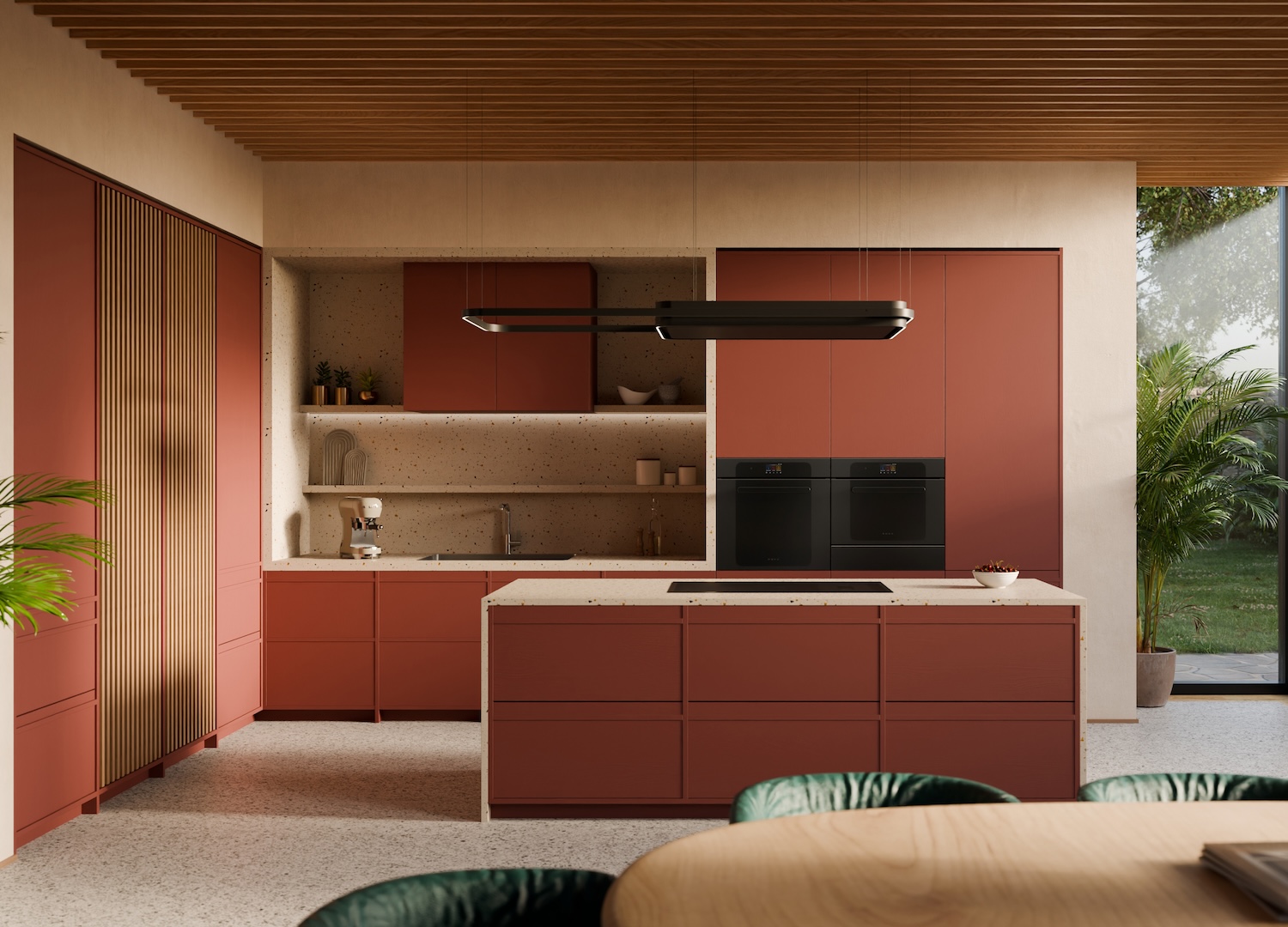
BorromeoDeSilva collaborations with SMEG on Musa space within a broader reflection on the role of the kitchen today – no longer a purely functional system, but a layered environment where technology, identity, and domestic rituals intersect. In this context, appliances are asked to take a position, which either dissolve into architecture or reassert themselves as authored objects.
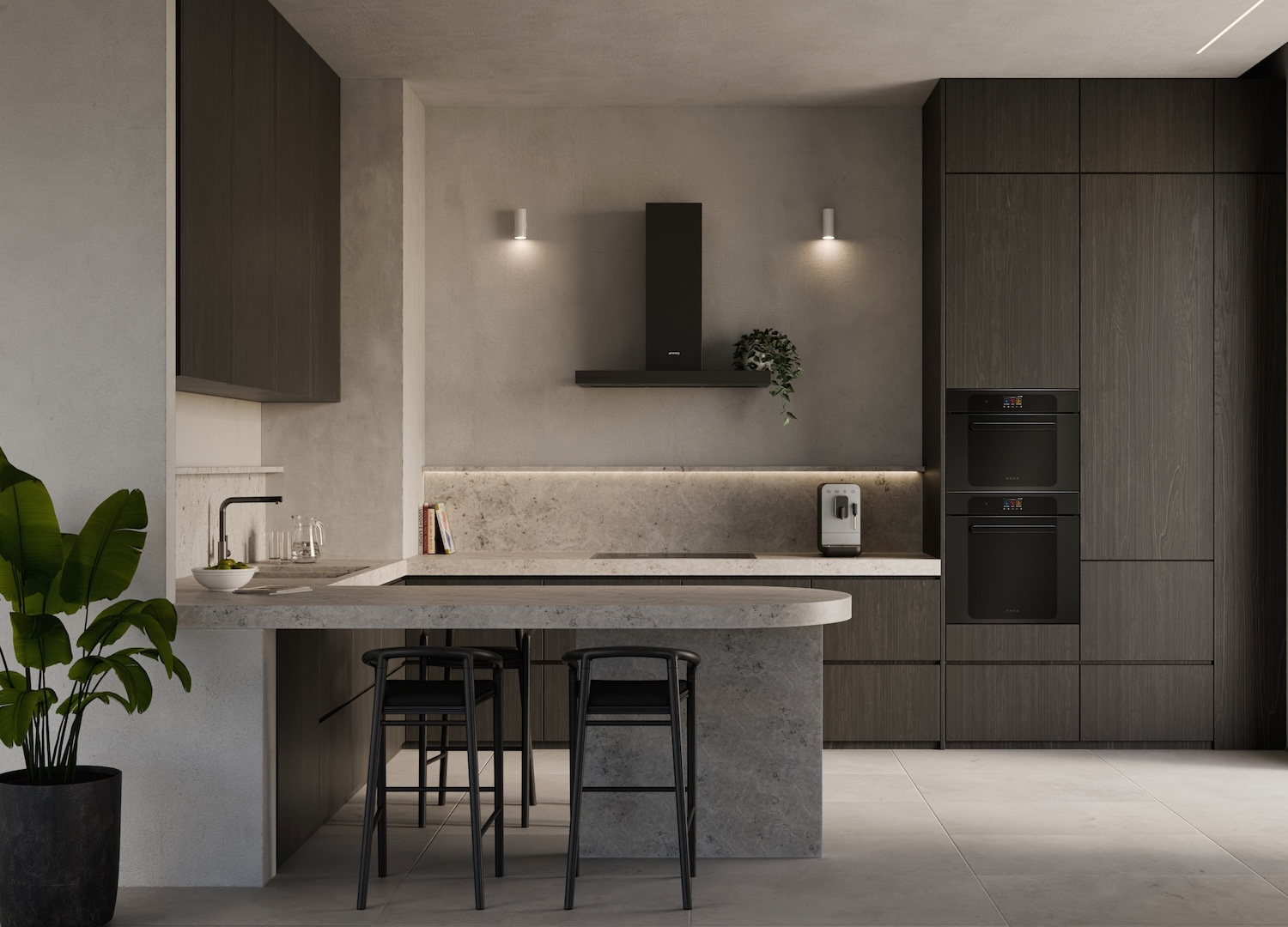
Founded in Emilia-Romagna in 1948, SMEG has consistently pursued the second path, building a recognizable language of softened geometries, controlled surfaces, and precise detailing. The collection developed with the design studio fits within this trajectory as a calibrated intervention, with a project that works through reduction, refining proportions and components, starting from the built-in oven. The door becomes a single continuous volume, merging control panel and glass, while a radiused, porthole-like opening and a restrained palette of matte and gloss articulate a presence that is measured rather than declarative.
Gallery
Open full width


Open full width
Musa, along with other new collections, such as Isola with Stefano Boeri Interiors or the TOTALLY MATTNESS finishing, is going to be presented by SMEG during Salone del Mobile 2026, within EuroCucina 2026 and the wider Milan Design Week 2026.
Here, the brand extends its established identity rather than revising it, using collaborations as a way to stress-test its design language without diluting it. Carlo Borromeo, half of the studio, describes a process grounded in continuity and precision, where form, finish, and proportion are used to modulate the object’s presence in space – integrated into the architecture, yet intentionally legible.
Your work often moves between formal control and expressive tension: how do you build a recognizable language today without becoming self-referential, and what, in your view, makes a dialogue with a context or a brand genuinely fertile rather than merely strategic?
Carlo Borromeo:
“Open-mindedness and inclusivity. Open-mindedness stems from the experience we have built over 15 years in the automotive sector and from our ability to activate true cross-pollination across different fields. Automotive has been our testing ground – it has given us a pragmatic, multicultural approach that we now bring into every new context, offering a lateral, never predictable point of view.
Inclusivity is an essential value for us because it implies dialogue. Designing is not just a technical response; it is the construction of an authentic narrative in which the client and their vision are central. Every project has different premises, actors, places, and ambitions: our role is to embrace all these elements and enhance them, filtering them through our creative lens. In doing so, we bring out both our strengths and those of the brands we work with, without one prevailing over the other, generating synergies that are each time unique, meaningful, and shared.“
Musa, a project built on highly calibrated signs, is presented as an evolution of SMEG’s language. Where did you see room to intervene?
Carlo Borromeo:
“The goal of Musa was to restore character to products that today tend to be standardized by industrial logics. In an increasingly varied and customizable kitchen market, the challenge was to create a product that is both versatile and expressive. Starting from the built-in oven, we set Musa’s stylistic guidelines by redefining the door and its components.
We began by working on the object’s proportions, removing the typical separation between the control panel and the glass. By materially merging these two areas, we created continuity across volumes that elongates the window: the result is a cutout with an unusual proportion, a kind of porthole with radiused edges that invites you to come closer and look inside. Circularity and lightness also define the physical elements, designed with an aesthetic that is at once minimal and decorative, such as handles, knobs, graphics, and finishes that become interpreters of SMEG’s DNA. The result is an evolution with a modern, technological design that nonetheless conveys a strong personality and the brand’s characteristic formal warmth.“
Across the collection, there is a balance between presence and discretion, where monochrome and the gloss/matte contrast operate through controlled, almost architectural elements. How complex was it to define a signature that is distinctive without becoming intrusive in the domestic space?
Carlo Borromeo:
“Finding this balance required meticulous work, in which our experience in the automotive sector proved invaluable. In many of our projects we deal with constraints: where possible we act on form; where not, the outcome is achieved through materials and finishes. These elements are often considered secondary, yet it is striking how much a finish or a material can switch on or switch off a component, giving it prominence or making it recede.
For Musa we focused on radiused, rounded lines that recall the SMEG style, with refinements that keep the look contemporary. To manage volumes, we used matte materials along the perimeters and glossy ones in the infill, preserving the outline while visually lightening the masses. Through graphics and decoration, we emphasized the refinement typical of Italian design tradition and of the brand. We developed a pattern that invites discovery: the closer you get, the more details emerge. As a finish, we chose a metallic anthracite rich in reflections, allowing the product to feel alive in domestic spaces, shifting with the light.“

For SMEG, the appliance has always been a design object, therefore recognizable. With Musa, how did you balance your authorial gaze with the need to fit within such a structured aesthetic?
Carlo Borromeo:
“We usually balance our authorial perspective with an analytical, respectful approach, studying the brand’s or product’s stylistic codes in depth and starting from what should be preserved. We aim to understand the cultural impact of past projects and to build on their iconicity and heritage, intervening where elements can be improved or reinterpreted through our vision. Our approach is deeply rooted in the Italian context and its excellence, with the awareness that we operate in a time when it is essential to engage and compete globally.“
Looking ahead, do you see this collaboration opening a broader evolution in the language of appliances, or remaining an episode confined to SMEG’s identity?
Carlo Borromeo:
Our intent is always to celebrate stylistic expression and creativity in a broader sense. SMEG gave us this opportunity, and the result emerged from a very natural process. We believe our philosophy aligns perfectly with the brand, while also recognizing that SMEG is a unique reality, one that has made creativity its true strength.
About the author

Ludovica Proietti, journalist, design historian and curator, teaches in universities and curates events, always exploring projects with fresh, unconventional perspectives.
Instagram