Fragments Becoming: turning timber offcuts into a new kind of marquetry
Copenhagen-based practice Studio Booboon extends a centuries-old inlay technique into three dimensionality, building cabinets, tables, and chairs from discarded wood.
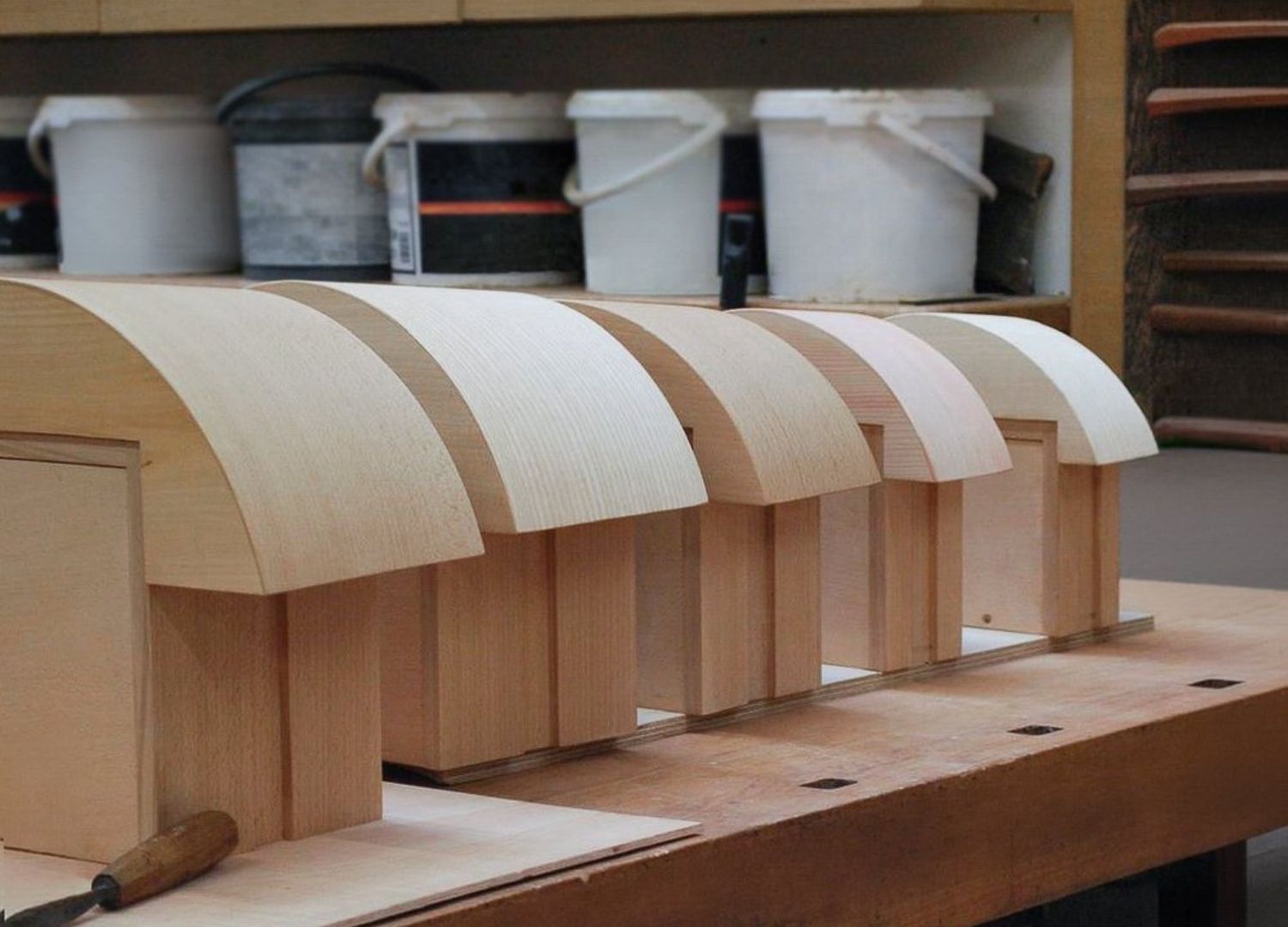
Every workshop generates waste. Offcuts, trims, the odd-shaped remainder of a board that’s been cut, these are the by-products of furniture making, and they typically end up as kindling or landfill. Studio Booboon‘s Fragments Becoming collection starts from the opposite premise: that these fragments are not leftovers to be discarded but raw material for construction in their own right.
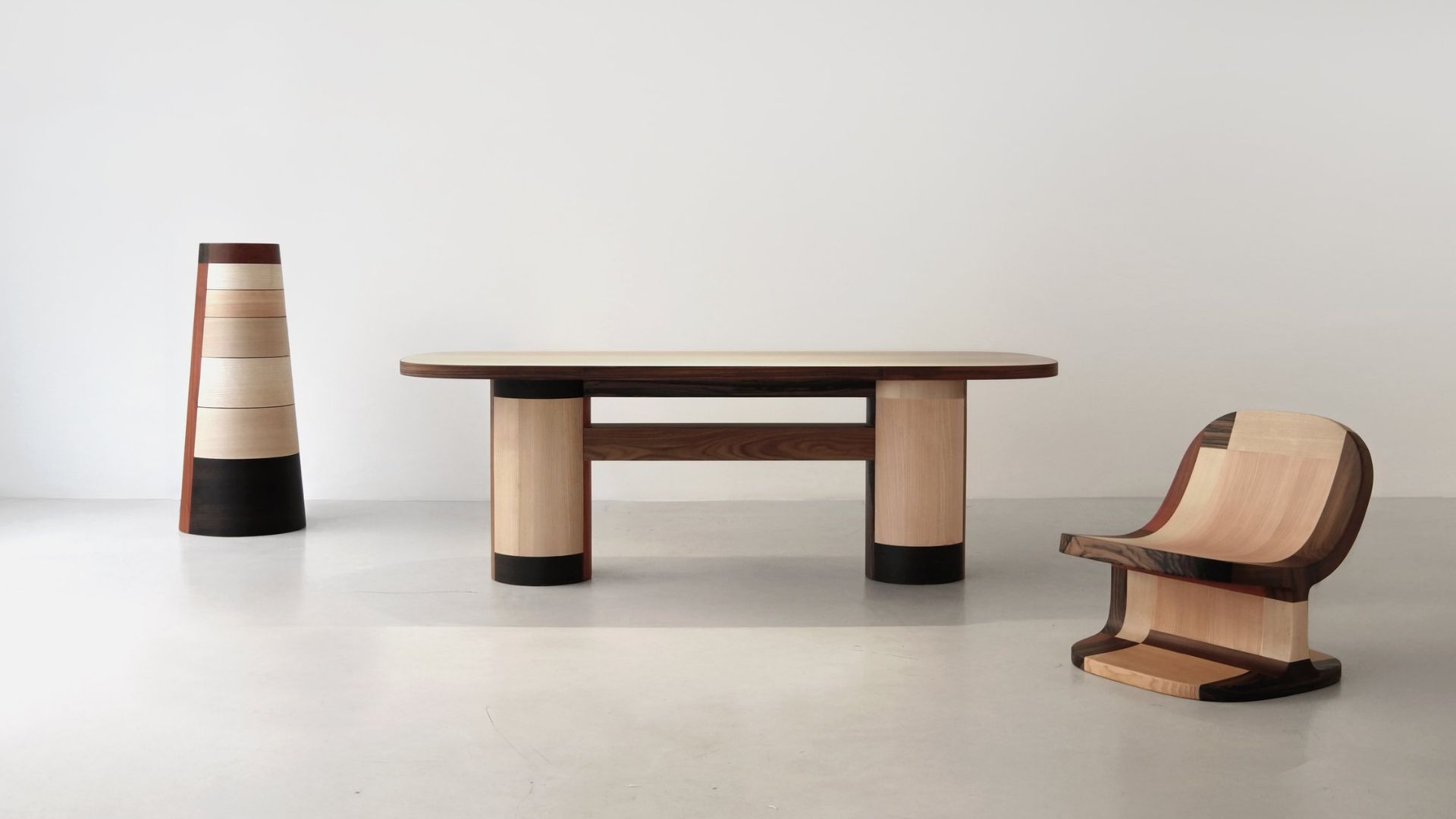
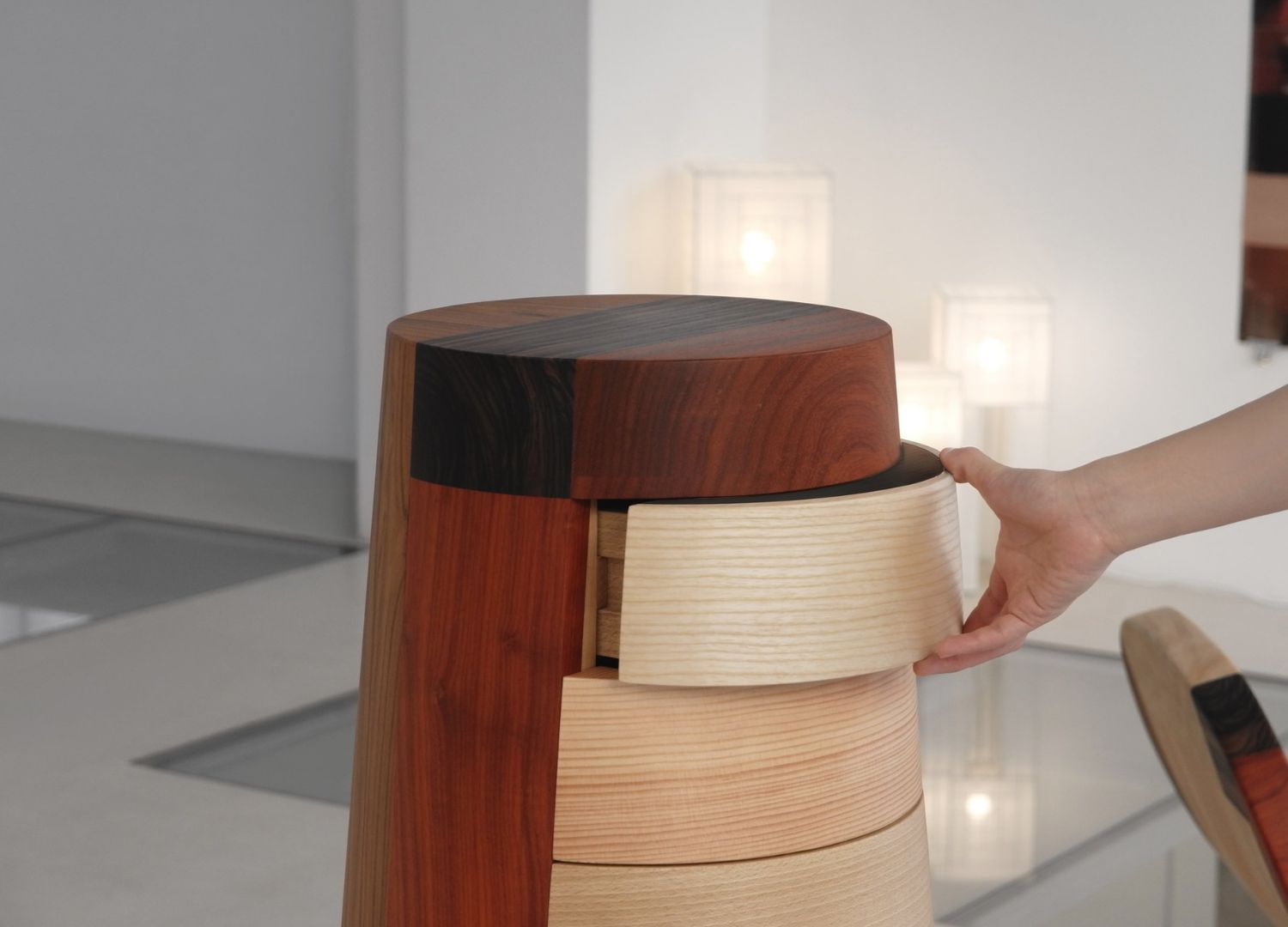
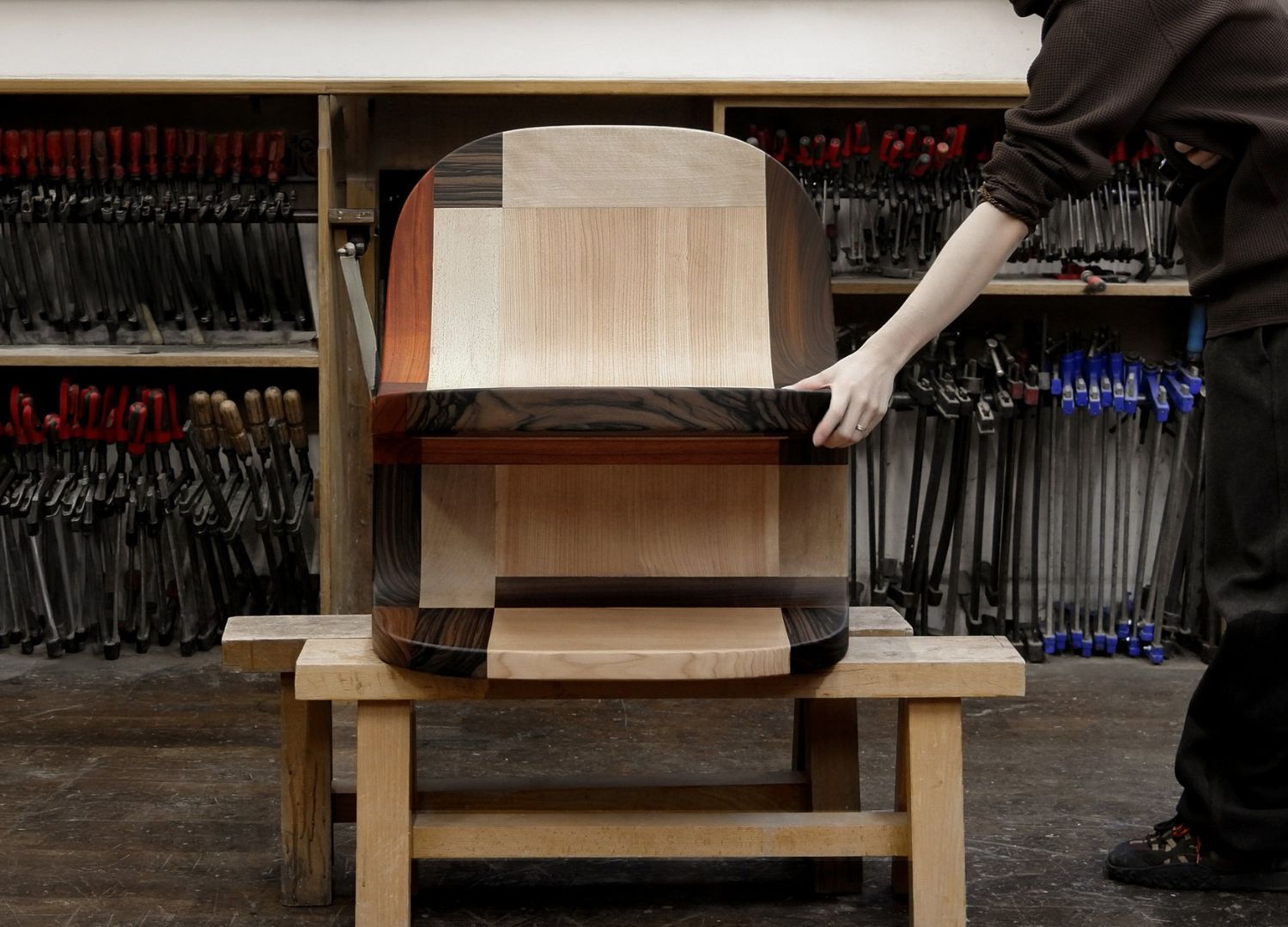
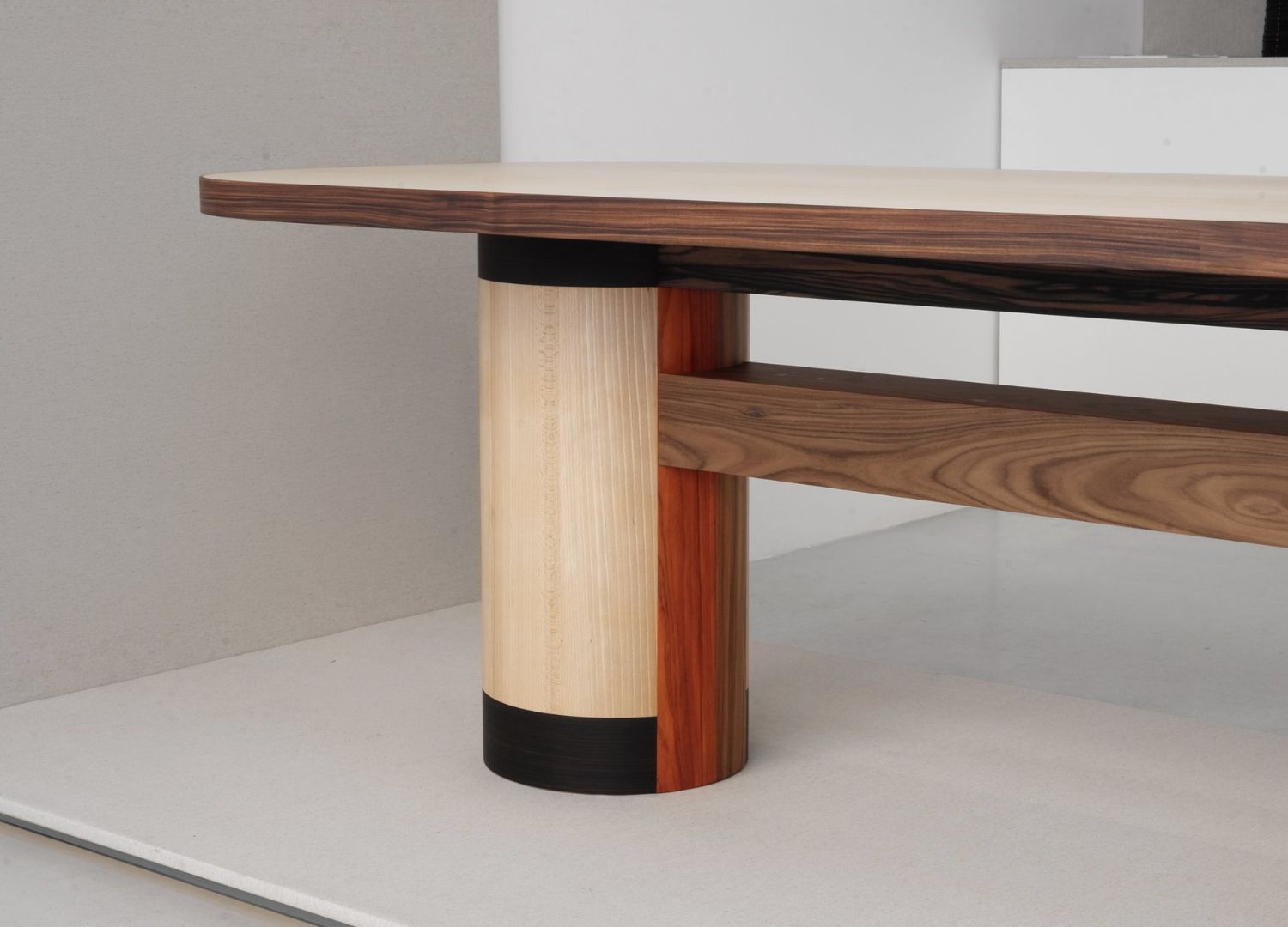
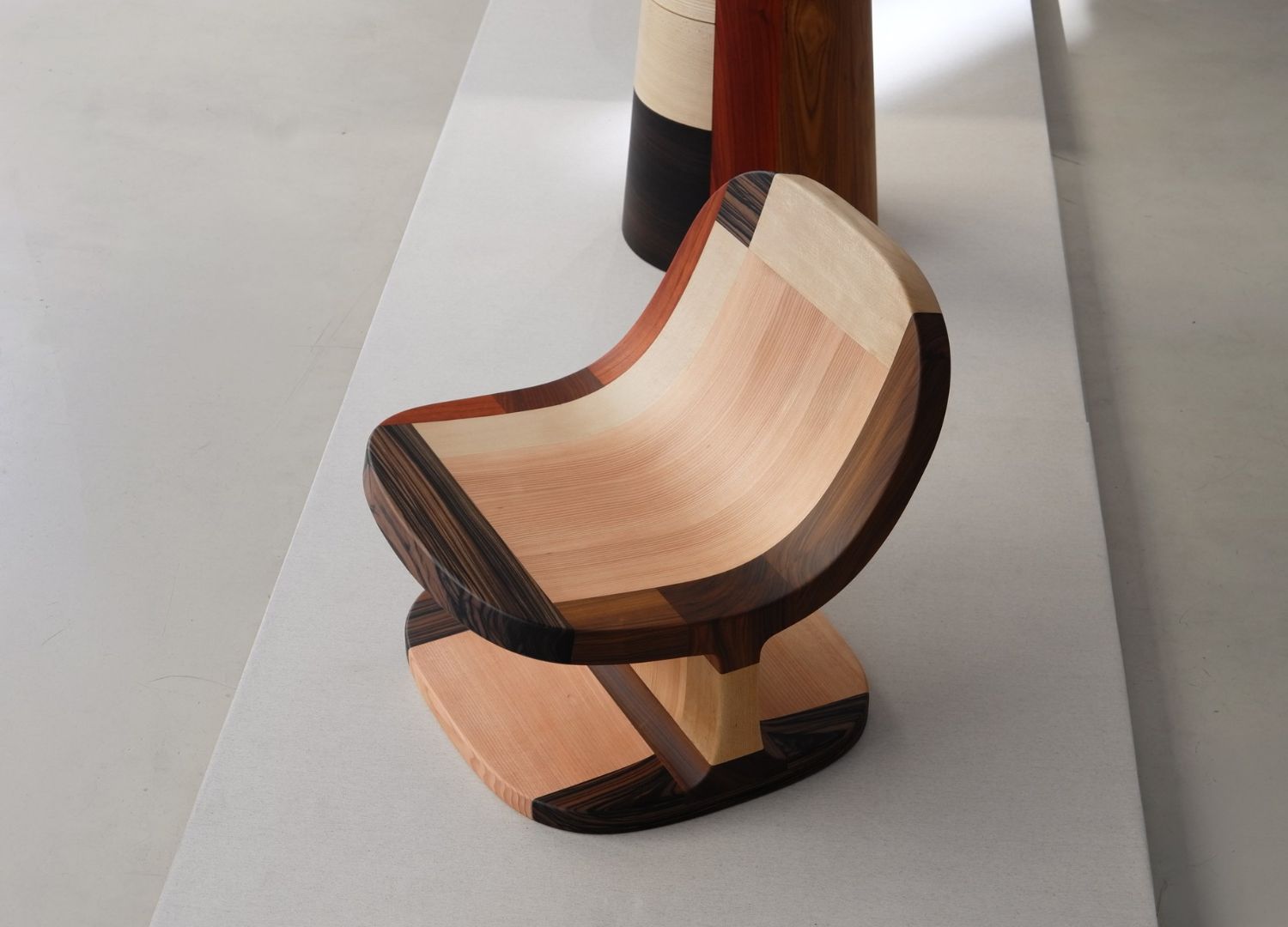
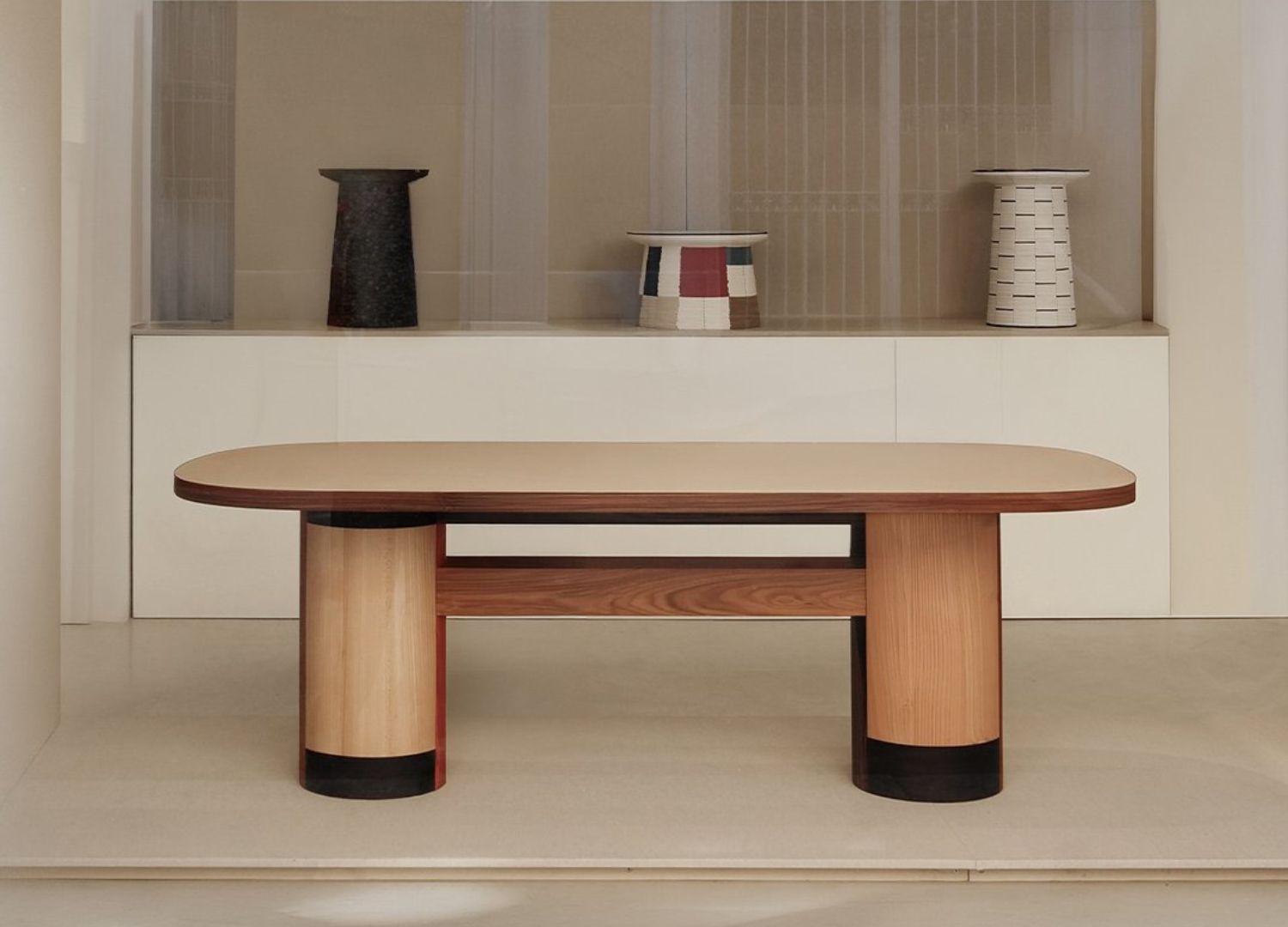
Presented at Other Circle 2026 during 3daysofdesign in Copenhagen, the collection features a cabinet, a dining table, and a lounge chair, each built from timber offcuts arranged so that no two pieces read as filler or leftovers. The studio calls the method 3D marquetry, opening up a new frontier in woodworking and industrial design.
Gallery
Open full width
Open full width
Fragments Becoming:
The marquetry technique
Marquetry, in its traditional sense, is a surface technique. Thin veneers of different woods are cut and fitted together like a jigsaw, then glued onto a solid base to create a decorative skin, like a picture or pattern applied to the outside of an object. The craft has a long history: inlay work appears in a wooden casket from Mesopotamia dated to roughly 2600 BC, which then evolved into the more recognisable veneer marquetry developed in Renaissance Florence and Naples before reaching its most ornate expression in the workshops of 17th- and 18th-century France.
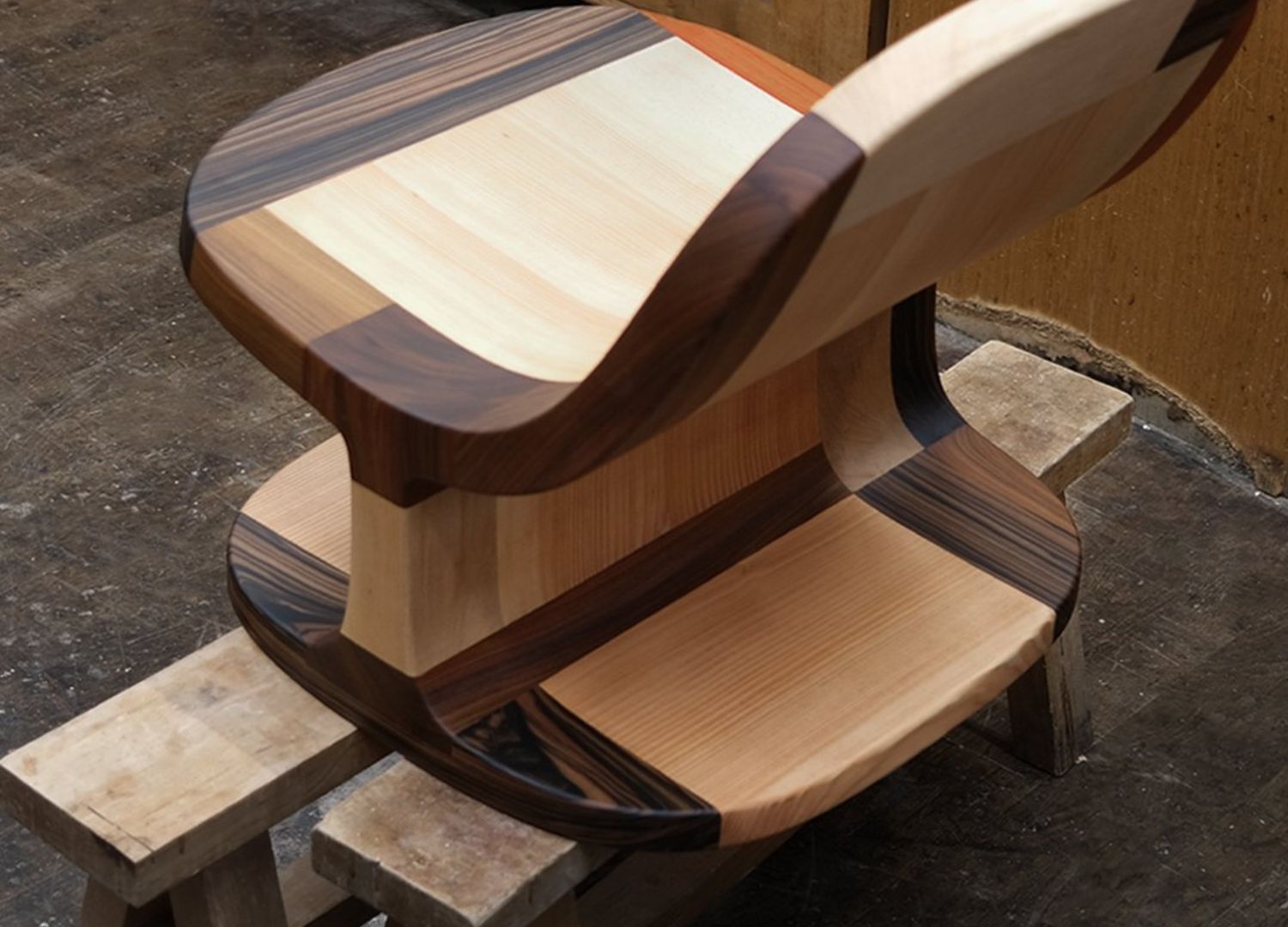
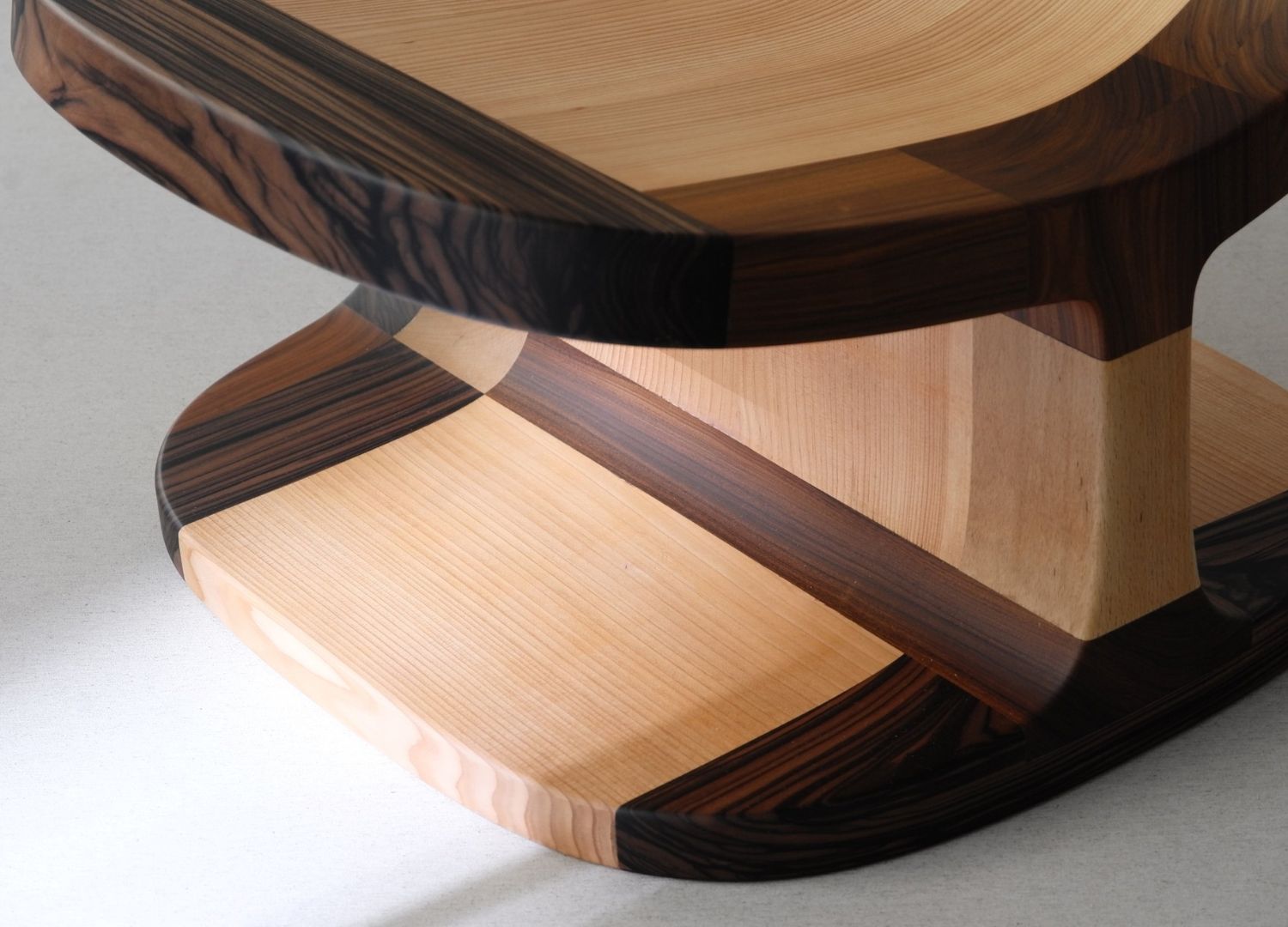
Studio Booboon’s take on this ancient technique is that instead of applying a pattern to a surface, the studio treats each individual fragment of wood as a structural unit. The pattern doesn’t sit on top of the object; it runs through its volume. A cabinet door isn’t a flat panel decorated with inlay, the door itself is built from assembled fragments, so the visual language of the piece and its physical construction are the same thing.
The collection
The three pieces in the collection each work through the method at different scales and with different structural demands. A cabinet’s drawer has different load and joinery requirements than a chair that needs to hold a sitting body, so applying the same fragment-based logic across different furniture types is itself part of the design problem set by the studio.
All three pieces are finished with no stain or artificial colour, which means that every tonal shift, grain pattern, and contrast visible in the finished object comes from the actual variation in the timber fragments used, which removes the option of disguising a mismatched fragment with pigment, so the composition has to work on the material’s own terms.
The studio’s approach
Fragments Becoming is the most recent chapter in a broader line of research the studio has been pursuing since its first collection. Studio Booboon was founded by Richard Bone, a British designer trained at RCA, and Jisu Yun, a Korean designer, who both used to work at Nendo. Their debut collection, Playful Reappropriation, launched at Milan Design Week in 2024 and was built around furniture derived from Korean craft and materials. That show included Jodak, a series of lighting sculptures made from fabric offcuts and waste, and a Silhouette furniture collection built from discarded slices of beech.
Even at this early stage, the throughline is visible: taking discarded or fragmentary material and reassembling it using craft techniques, so that the method becomes the design itself. Fragments Becoming continues that logic while pushing the construction further into structural territory rather than decorative. Overall, it is less an argument about waste and more about craft, reinterpreting traditional techniques and investigating new ways to make things.