Designing with the ocean: Sway’s rise in seaweed packaging
Seaweed is emerging as a key resource for the future. Through design and material innovation, Sway turns it into compostable, high-performance packaging that replaces plastic, regenerating oceans, ecosystems, and communities. From sea to soil.
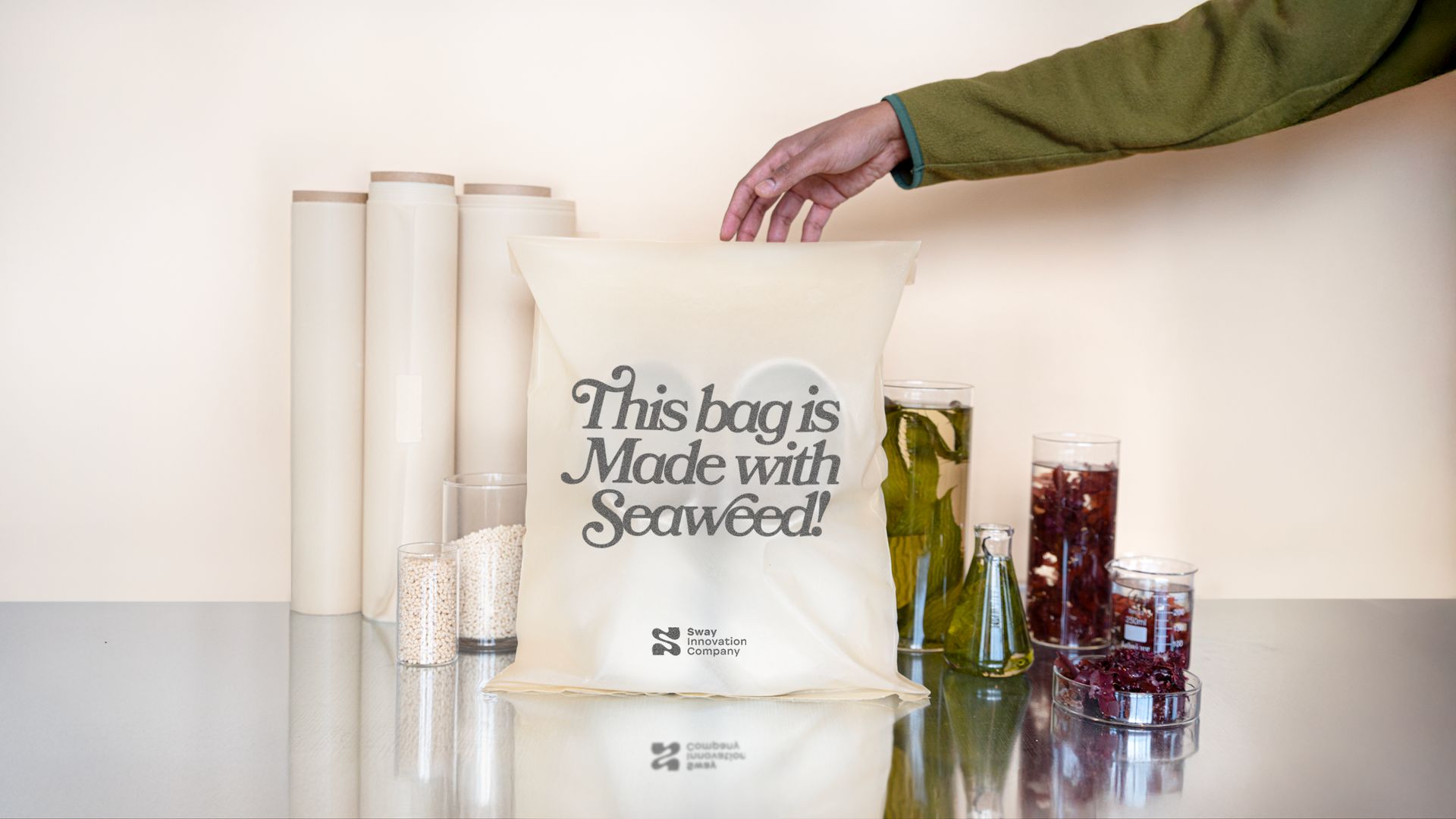
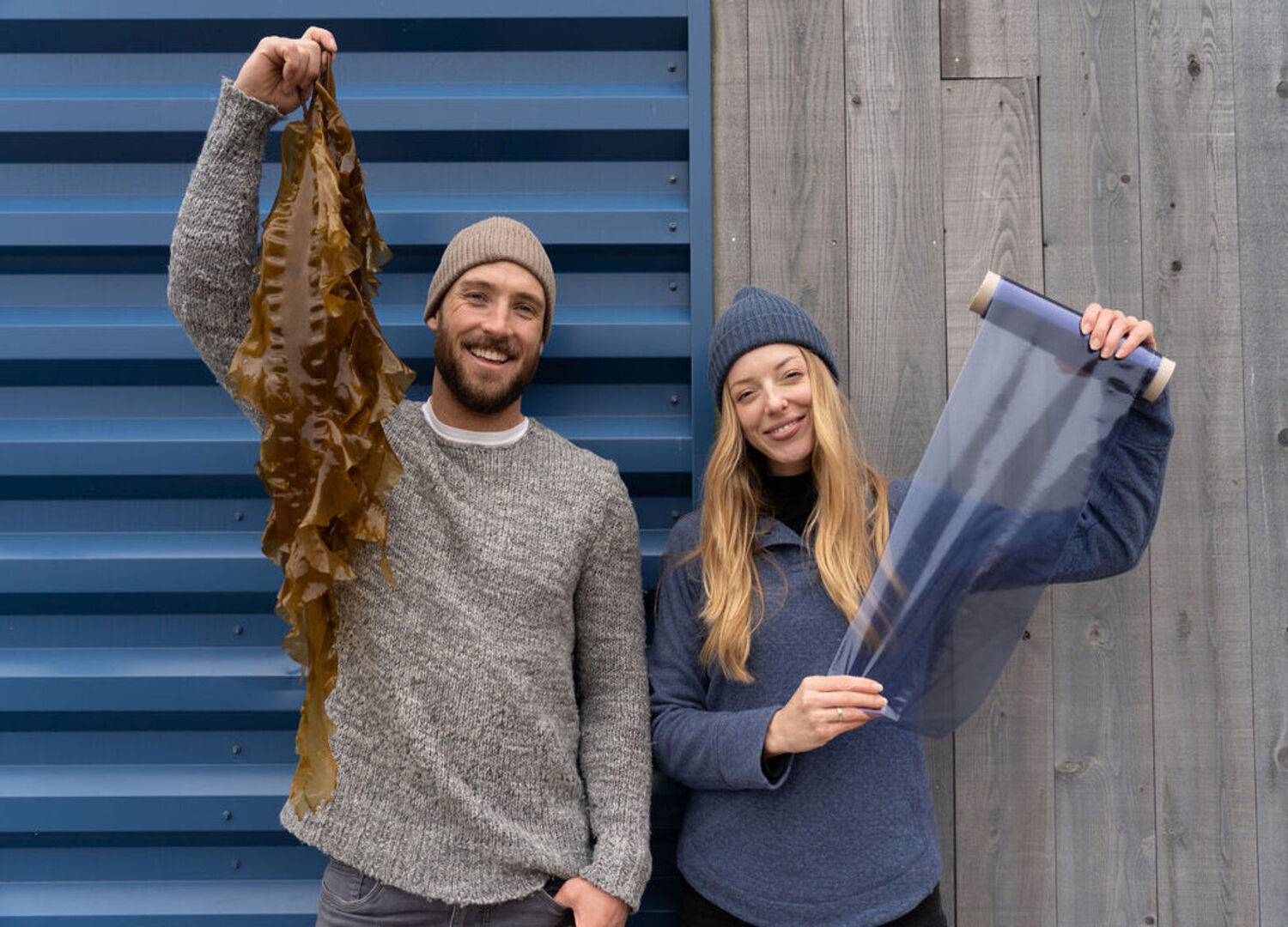
For years, innovation in sustainable materials hovered between aspiration and reality. Many prototypes promised much, but few products managed to cross the critical threshold of industrialization and global adoption. It is precisely in this space – between vision and pragmatism – that Sway was born. Founded by Julia Marsh (CEO) and Matt Mayes (COO), the California-based startup has a clear mission: to transform seaweed, an abundant resource, into tangible alternatives to single-use plastic.
An approach that combines design, materials science, technology, and regenerative impact, which quickly brought the company into the international spotlight. It was no coincidence that Sway was named a TIME Best Invention of 2025, won Fast Company’s World-Changing Idea award, and took first place in the TOM FORD Plastic Innovation Prize, gaining coverage in Forbes, The Guardian, and WIRED. This confirms that next-generation materials are truly entering the mainstream. Finally!
Gallery
Open full width



Open full width
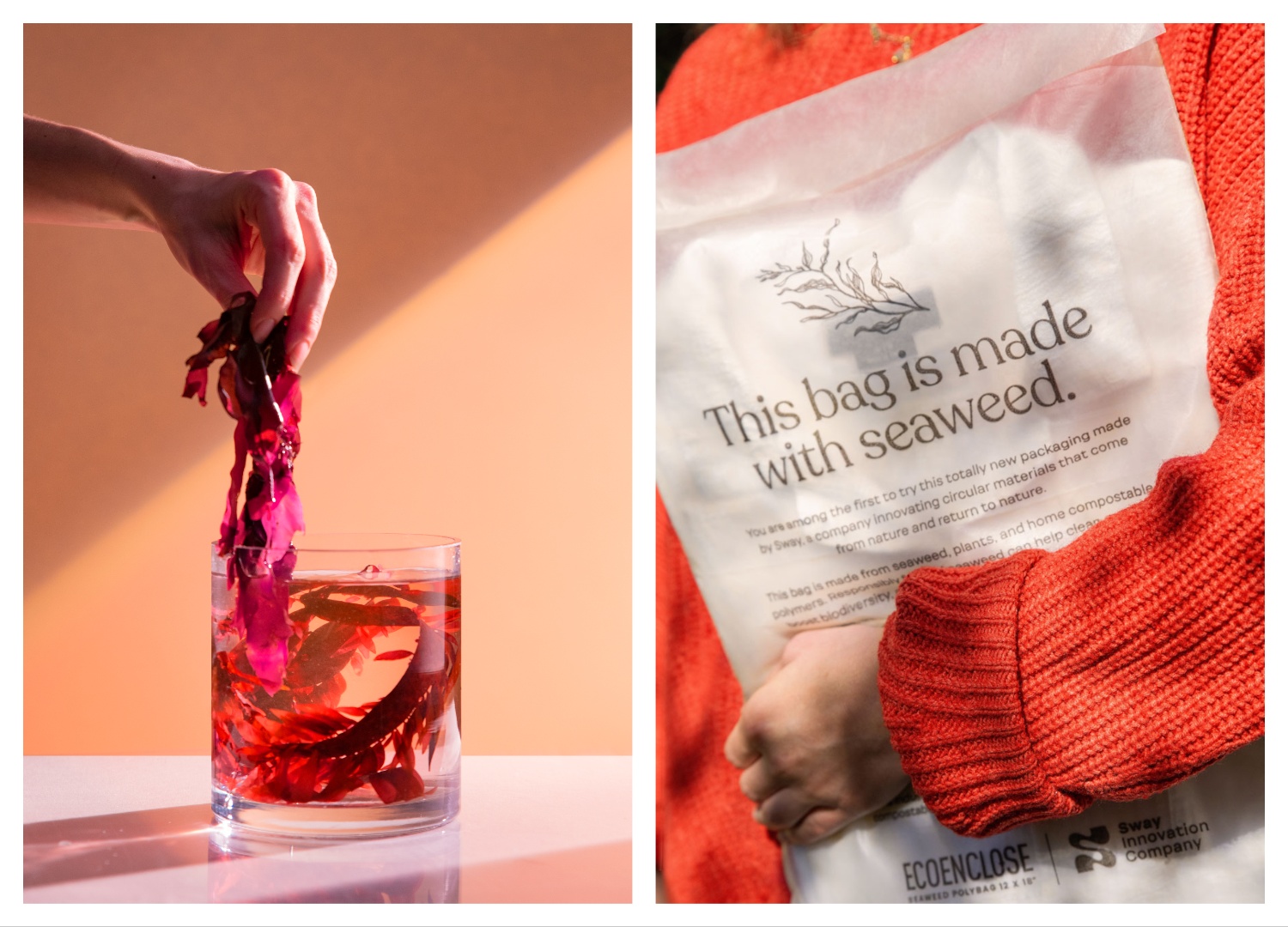
At the heart of this venture is a natural element, both simple and powerful: seaweed. It grows rapidly without fertilizers or freshwater, supports marine biodiversity, and helps mitigate acidification and erosion. They are also naturally rich in polymers such as agar, alginates, and carrageenan, which Sway has transformed – in what feels like a ‘magical’ alchemical experiment – into a compostable, scalable matrix, tackling one of the sector’s toughest challenges: making a bio-based material compatible with existing industrial processes.
As Julia Marsh explains: “It took four years, hundreds of formulations, and tremendous support from our manufacturing partners to make seaweed behave like conventional plastic. Optimizing a single property often creates tension with others: we had to face difficult trade-offs between performance, cost, and environmental impact.”
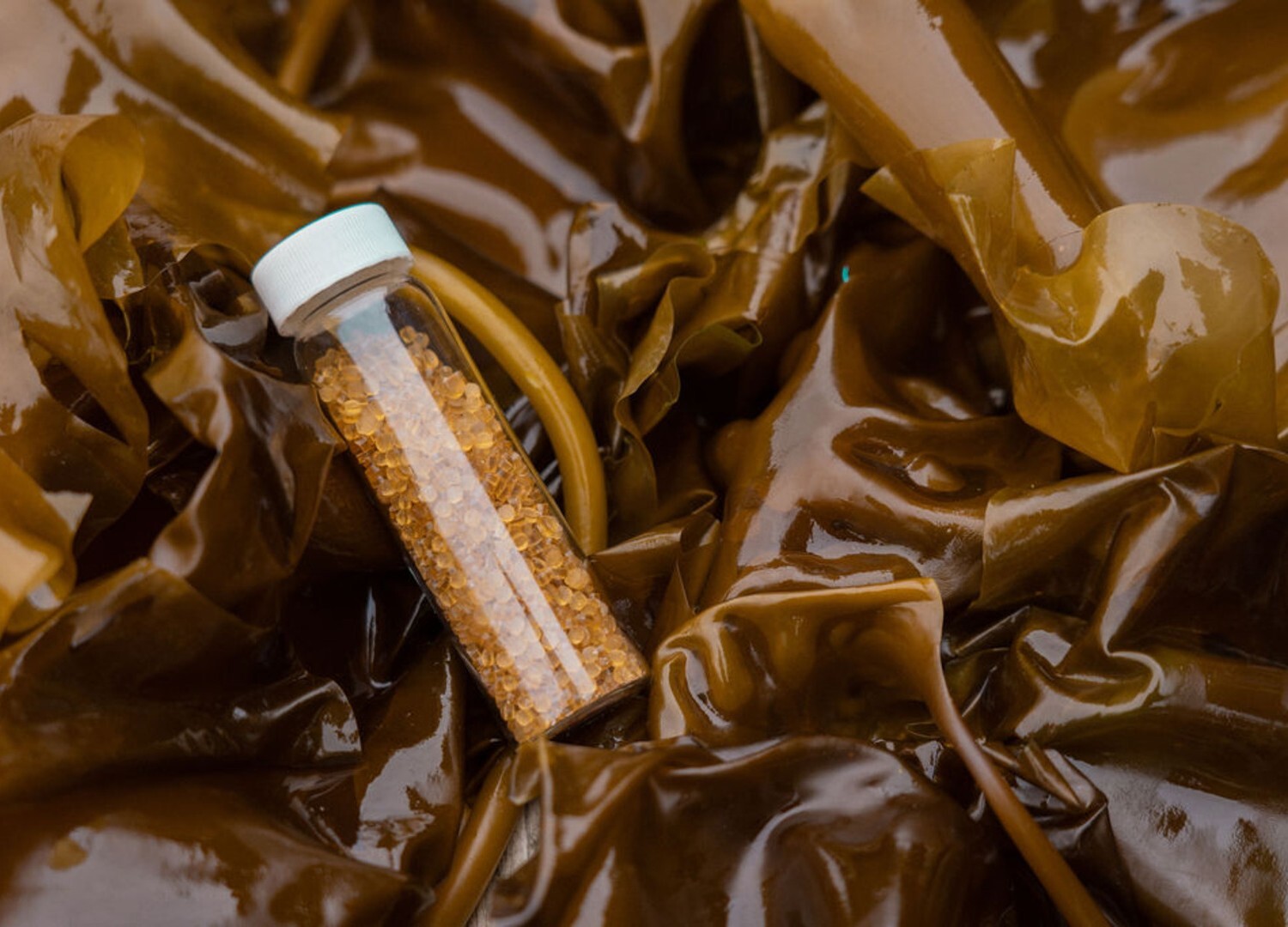
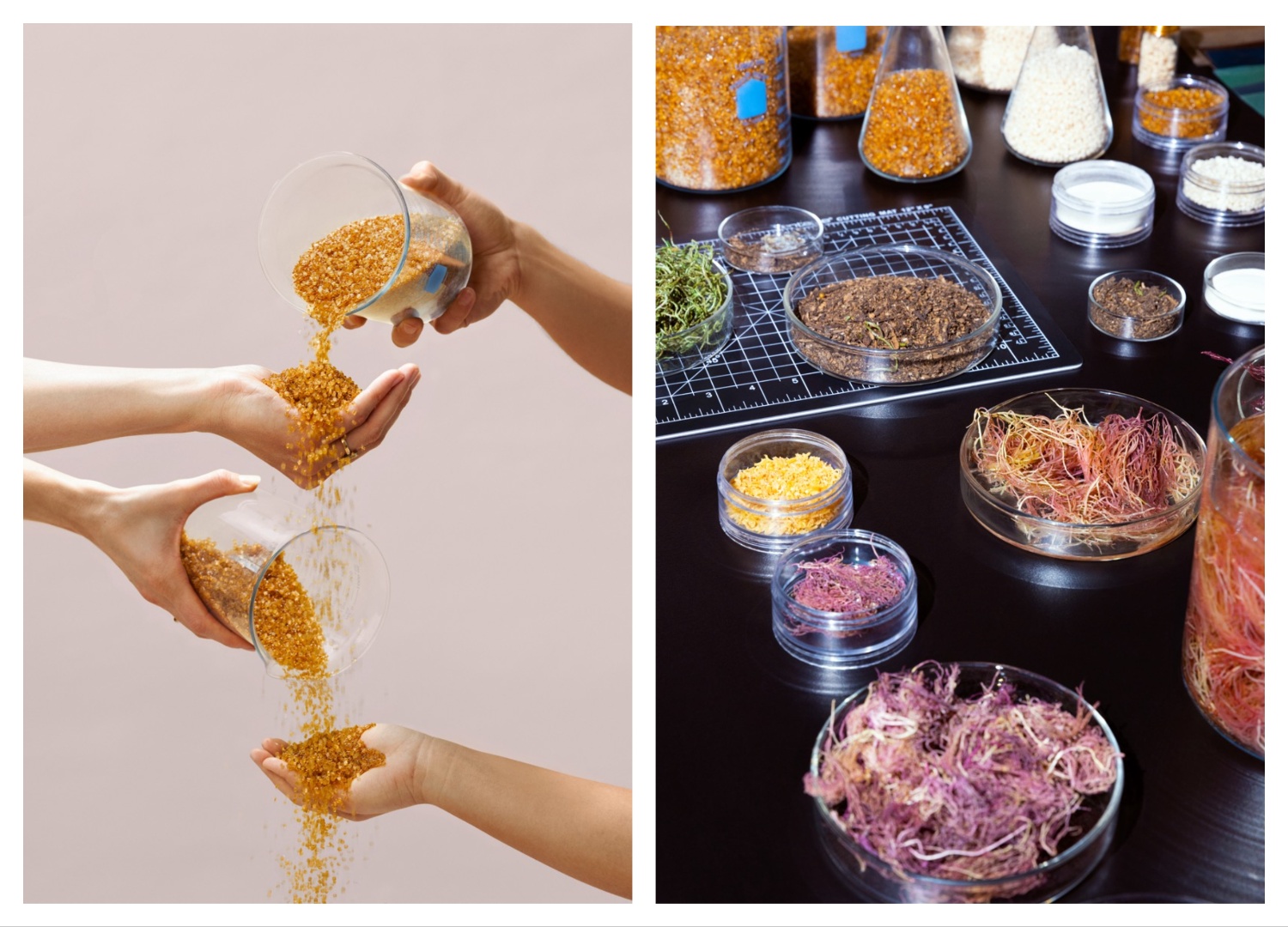
The result of this research journey is TPSea™, the first thermoplastic pellet made from seaweed, designed to melt and flow like conventional plastic without losing strength or flexibility. Its ability to integrate with existing manufacturing infrastructure represents a turning point, setting it apart from many promising bioplastics that remain difficult to bring to market. And this is where design comes into play: not as a mere aesthetic factor, but as a strategic lever. Integrating it from the earliest stages allows Sway to optimize functionality, brand appeal, and industrial feasibility. As Marsh emphasizes, “80% of a product’s environmental impact is determined at the design stage,” proving that the real challenge is not just creating sustainable materials, but solutions that fit global supply chains and deliver measurable impact.
Sway operates as a collaborative ecosystem, involving scientists, engineers, designers, manufacturers, and farms across more than 30 countries. This model has already supported over 100 acres of cultivation, contributing to the absorption of tens of tons of carbon and the removal of excess nutrients like nitrogen and phosphorus, with direct benefits for the health of oceans and coastal ecosystems.
Local stories show the power of this forward-thinking, regenerative approach: in Indonesia, seaweed grows in multi-trophic systems where the waste of one species becomes a resource for another; in Puerto Rico, invasive sargassum is transformed into useful material; in Maine, fishing families are shifting toward resilient kelp cultivation in response to climate change. Completing the supply chain are brands – from J.Crew to Burton, Dr. Bronner’s, Faherty, and Florence – and manufacturing partners like EcoEnclose, Atlantic Packaging, and Charter Next Generation, essential for bringing these solutions from lab to end user.
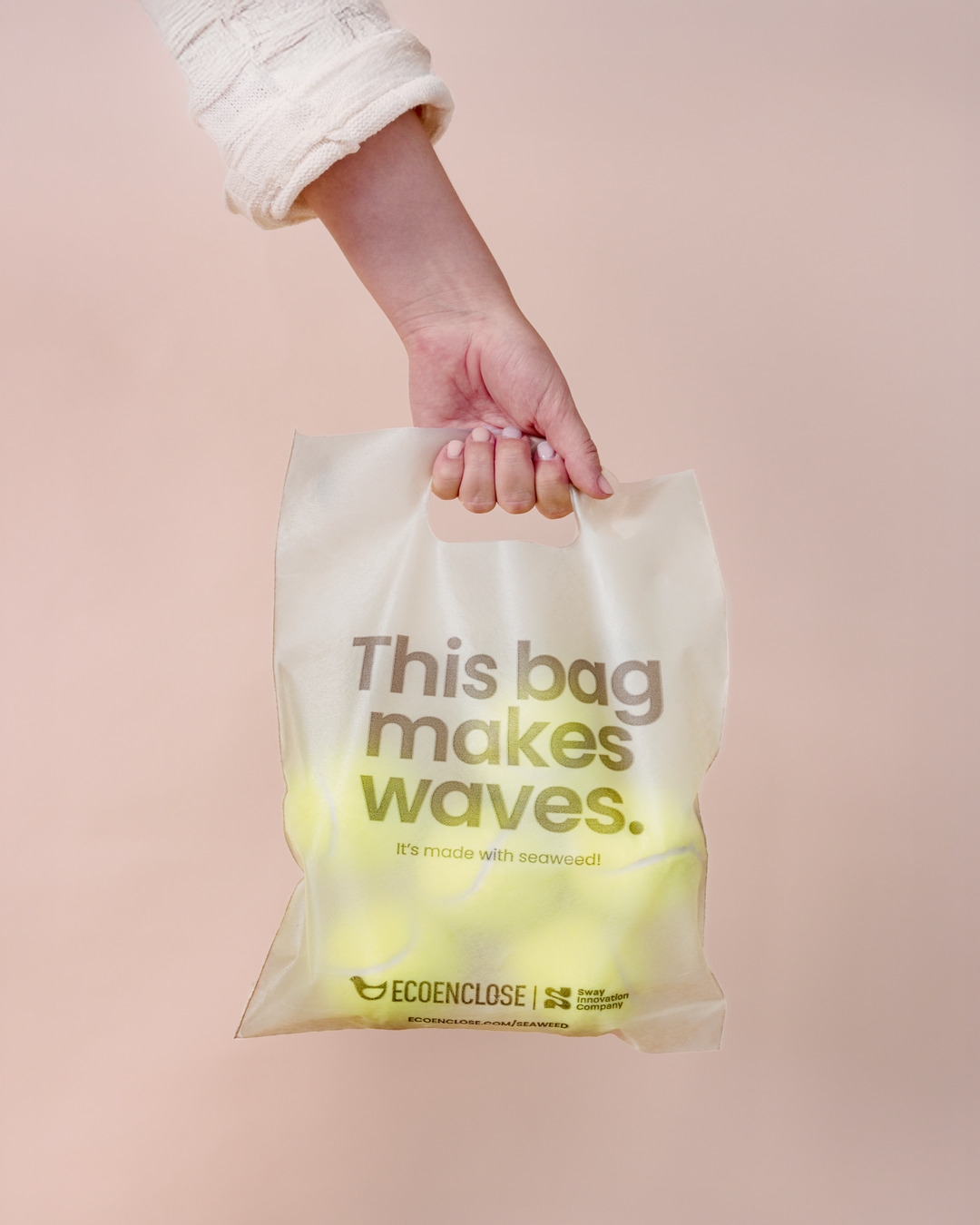
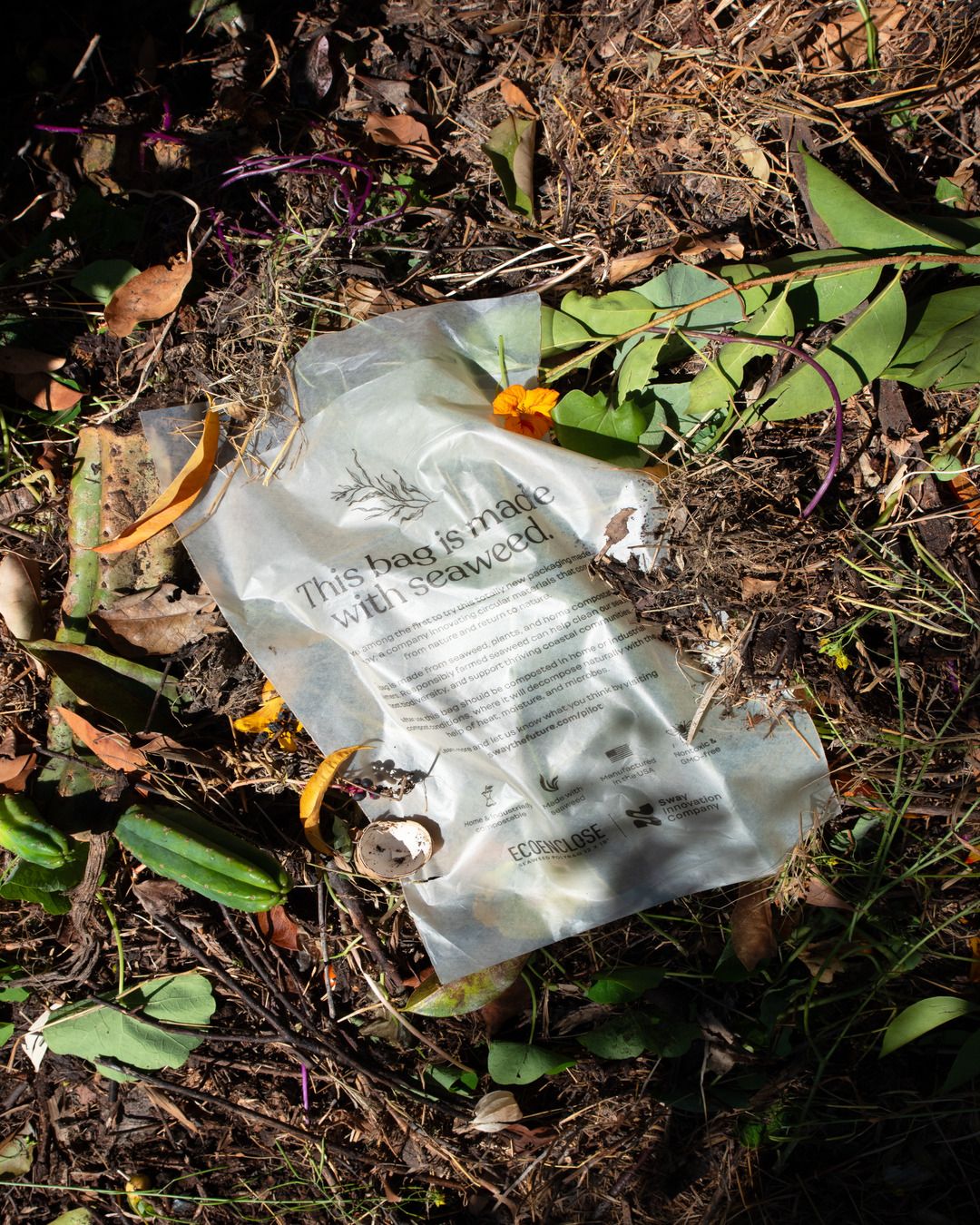
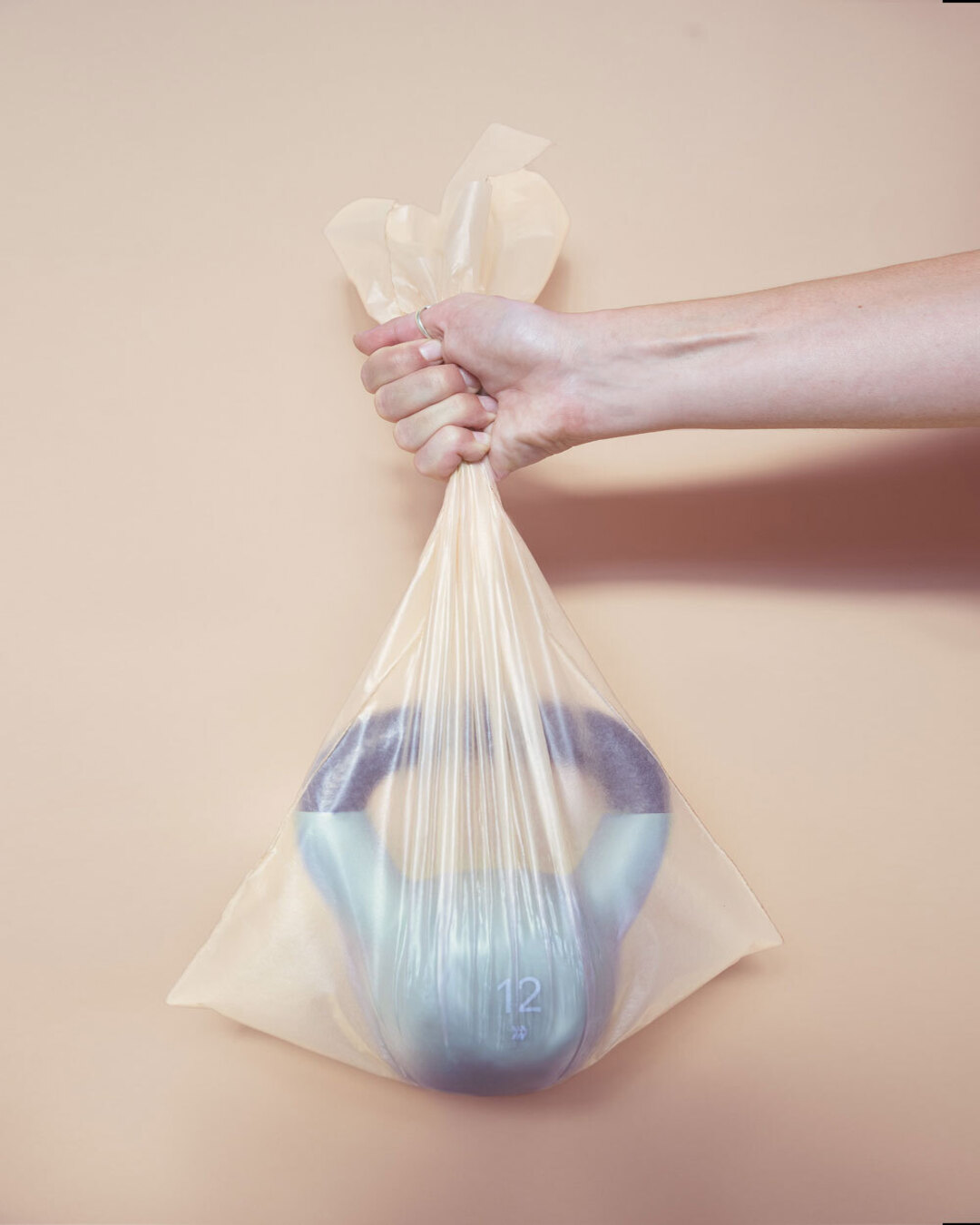
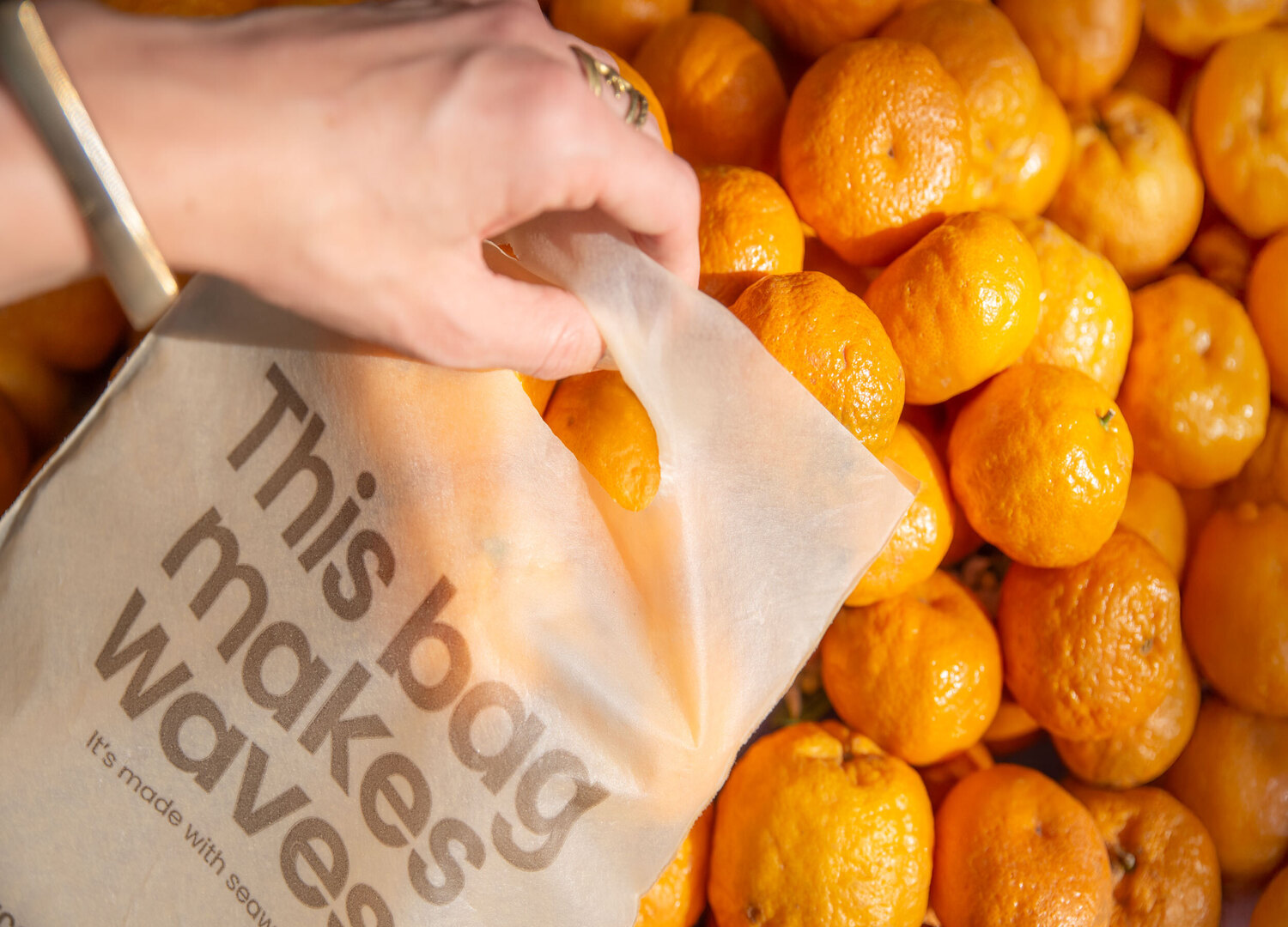
What emerges from this journey are tangible, real-world solutions. TPSea™ gives rise to TPSea Flex™, a versatile, high-performance film that forms the basis of Sway Polybags, compostable bags for retail and shipping. Strong, flexible, and lightweight, they protect products throughout the supply chain and fully degrade through home or industrial composting, without releasing microplastics or toxic residues.
Available in various thicknesses, finishes, and textures, they are suitable for sectors such as fashion, outdoor, cosmetics, and home goods. More than proposing a definitive solution to the plastic crisis, Sway demonstrates that innovation can be tangible and scalable, following the “progress over perfection” philosophy. Every bag, film, or pellet becomes a tool for regeneration, returning value to oceans, biodiversity, and coastal communities, transforming research and design into real impact.
“We believe everyday materials can give back to the planet, from sea to soil. This is only the beginning: now is the time to scale these solutions and make them a global reality,” concludes Julia Marsh in our interview. With international recognition, strategic collaborations, and already measurable impact, Sway emerges as one of the most exciting players in the future of packaging – and beyond – demonstrating that the convergence of material research, design, and vision can turn an environmental crisis into a tangible opportunity for innovation. For the present and the future!