Virgil Abloh’s unfinished conversation with design
With his first archival exhibition opening in Paris, it feels like Virgil Abloh’s Codes are just the beginning of his work, instead of the end. Leaving behind a legacy that still inspires thousands of creatives, Virgil continues to live in the future of design.

Out of all the designers of this century, we can say that no one yet has been as prolific and impactful as Virgil Abloh. Despite being most famous for his works in fashion, Virgil was originally an engineer and an architect, and has contributed to various fields, including industrial design through his collaborations with IKEA, Vitra, Alessi, and more. Testifying to his legacy, Virgil Abloh: The Codes is a window into his entire body of work, an exhibition presented by the Virgil Abloh Archive and Nike at the Grand Palais in Paris.
The exhibition opens to the public today, as I’m writing this on September 30th, which would have been Virgil’s 45th birthday. In his honour, we will go over Virgil’s key ideas and philosophies about contemporary design, a field which would never be the same without his legacy.
Gallery
Open full width


Open full width
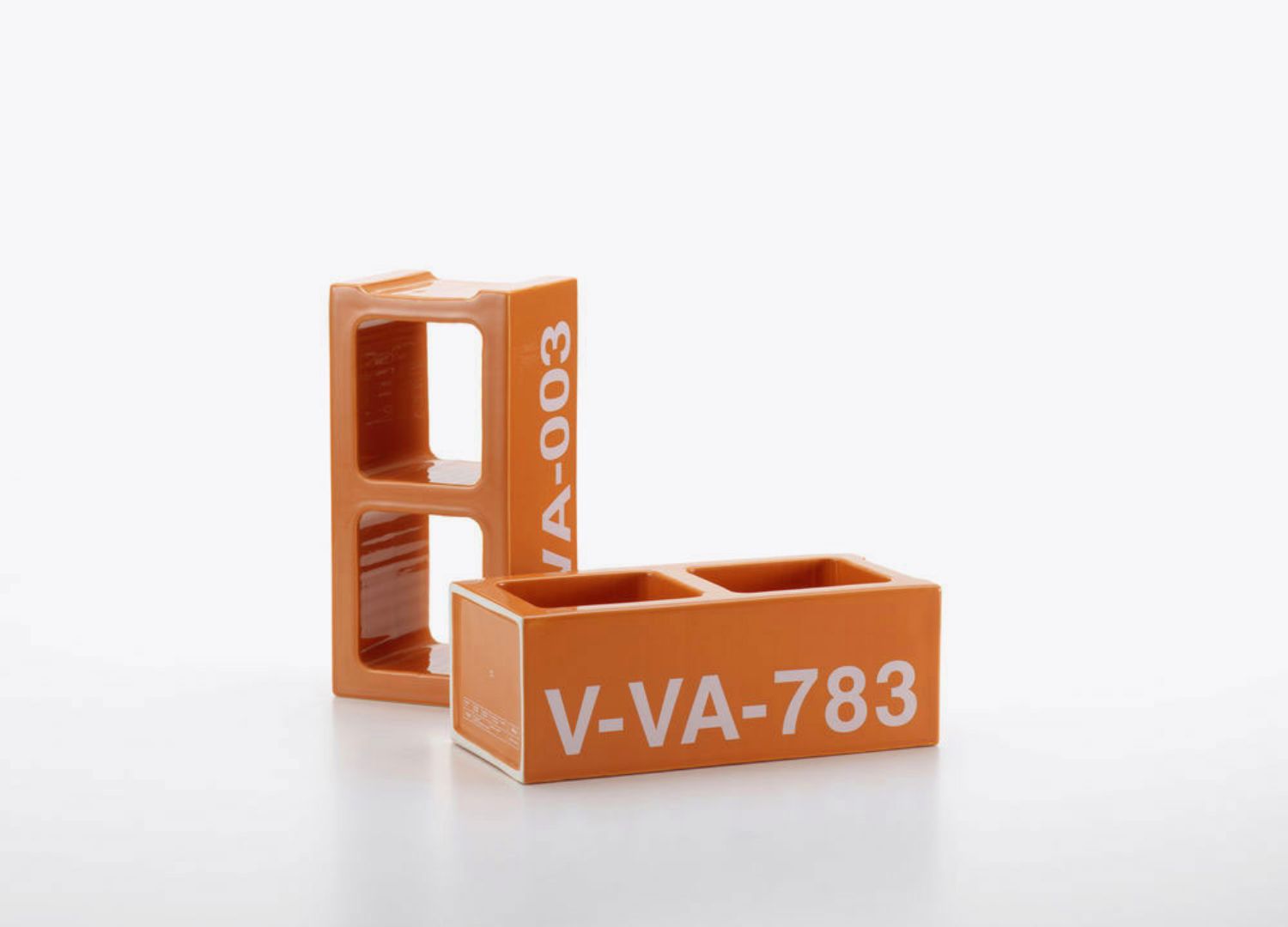
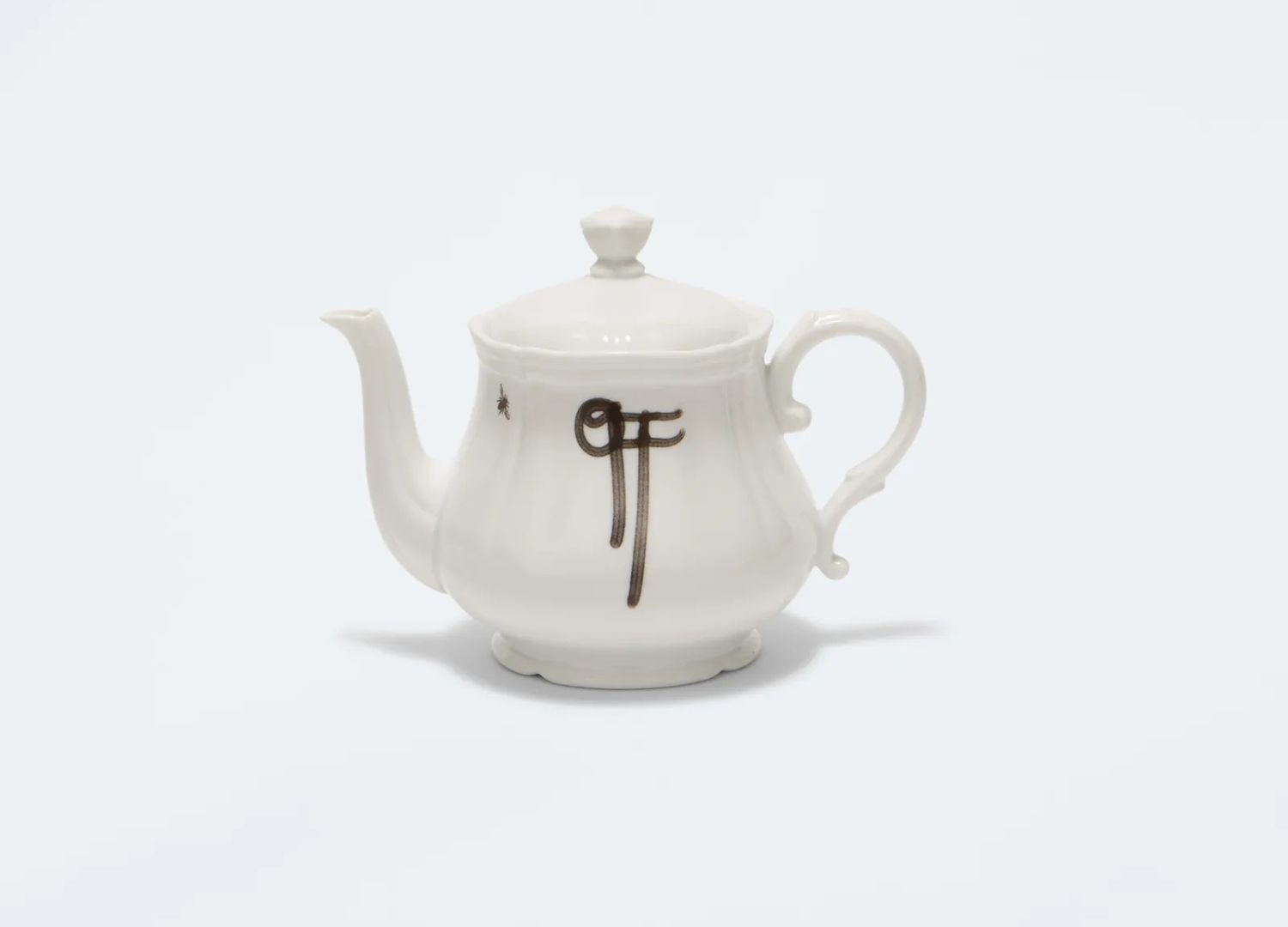
Virgil Abloh’s approach to product design was playful yet systematic, intellectual yet accessible. He operated through what we could call “codes“, repeatable principles that could be found throughout all his work. He rendered most of these principles explicit during his talk at the Harvard University Graduate School of Design in 2017, where he explained his process and way of thinking when designing.
One of the key principles which is also reflected in the current exhibition is the idea of catering to the tourist and the purist, meaning to be aware of the diversities in your audience. The tourist is your everyman, someone who has a vague understanding of design but is not particularly passionate about it, who might very much appreciate Virgil’s collection with IKEA, straight to the point and accessible. The purist is the opposite, he knows very much about the field, and needs layers to uncover. Being able to create with both audiences in mind is an incredible skill in design, allowing one to create something that is both conceptually rigorous and culturally accessible at the same time, and is destined to more than one specific target group.
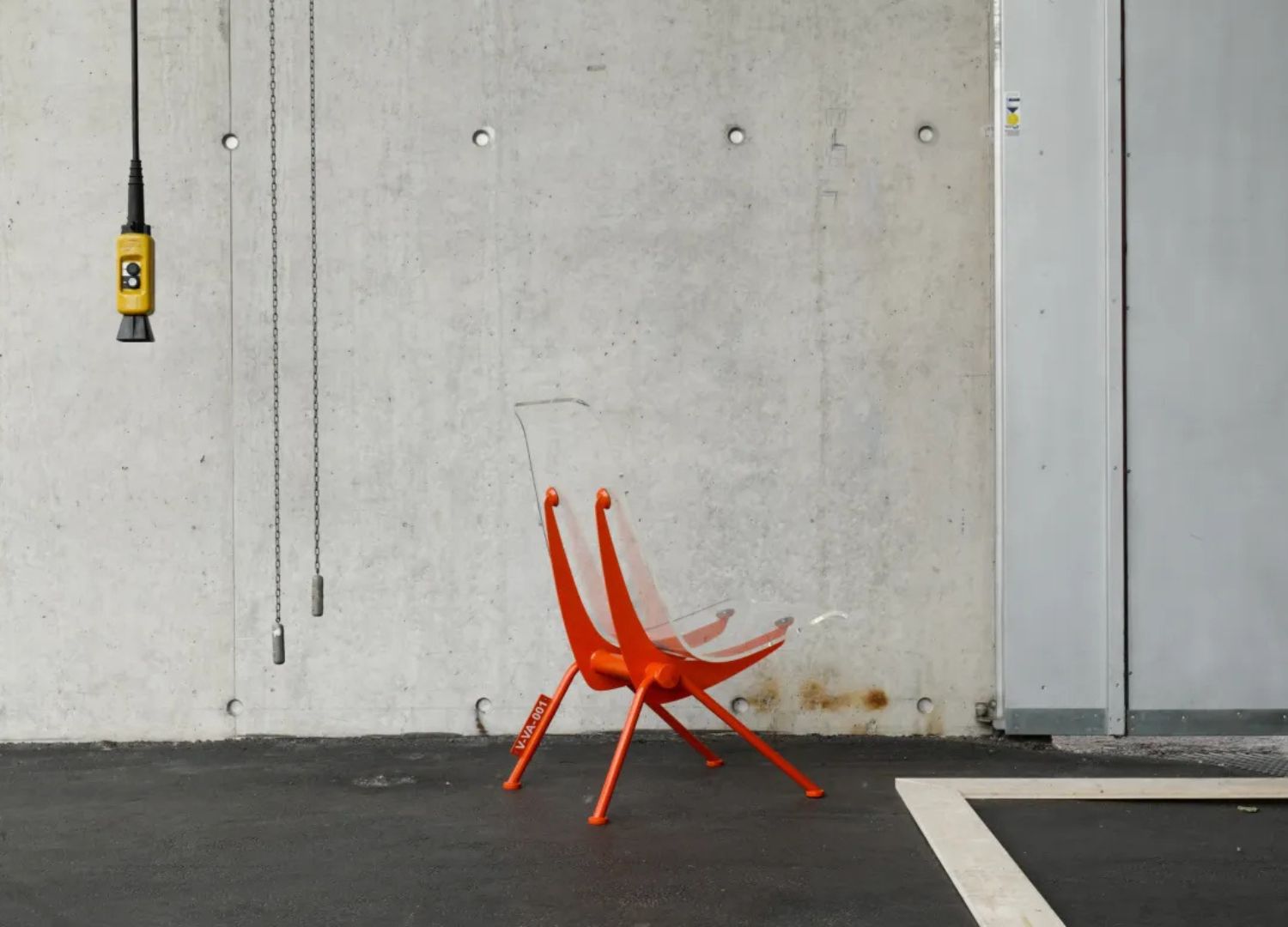
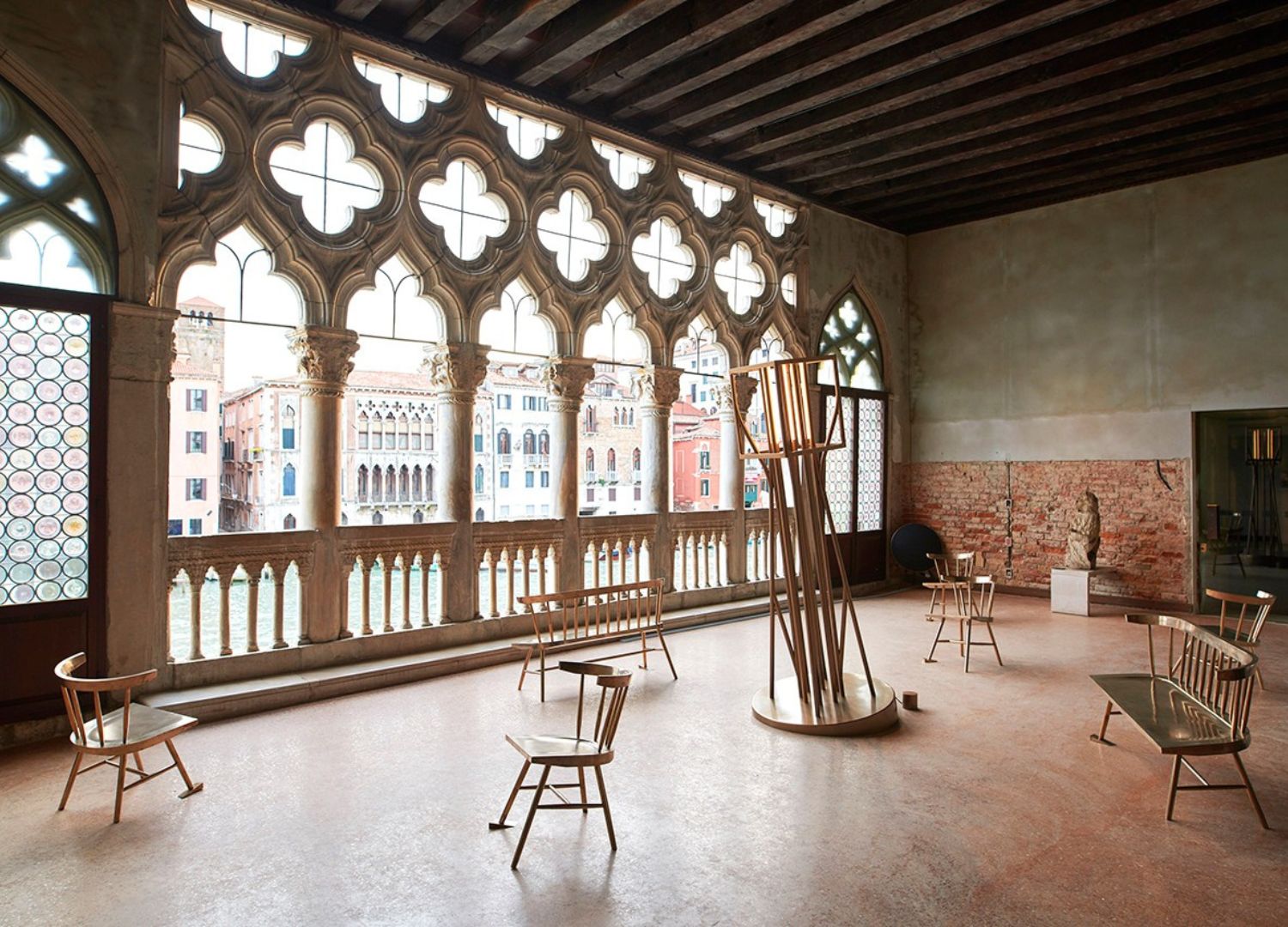
One of the slides presented during the Harvard talk mentioned earlier was simply a text stating, “Do we need another chair in the world?”. Though much of Virgil’s work was commercial, there are some of his more artistic endeavours that prove his versatility. For the 2017 Venice Biennale, he presented the Acqua Alta collection, featuring chairs that appeared to sink into the floor. As a commentary towards climate change and rising sea levels, he showed a way through which simple objects can become symbols, uniting a design form to thoughts on the future.
Virgil Abloh often said he was more like a DJ than a designer, always sampling, remixing, reworking existing elements into new configurations. Fundamentally, his work followed an open source approach; rather than inventing things from scratch, he supported mild interventions as a way to true innovation. In the same way, his wife Shannon Abloh emphasised this point at the Paris preview, as the archive is offered as “an open source for education and mentorship to future generations with the hope they build upon Virgil’s ideas as they create and carry out their own.”
Despite Virgil not being here to create anymore, he shared so much of his thinking to have his ideas live on through the future generations of designers in this world. Honorary exhibitions are usually monumental places of grief, but Virgil’s archive feels like a school lab, a gathering of raw materials that can be used to create something new. The exhibition will run for ten days, but the conversation it represents will last decades. The codes are a toolbox, the work continues.