Between the built and the wild: Casa Solai
Six years in the making, Studio Saxe carefully placed two unique pavilions within Costa Rica’s wild landscape and turned them into a family home designed to be self-sufficient.

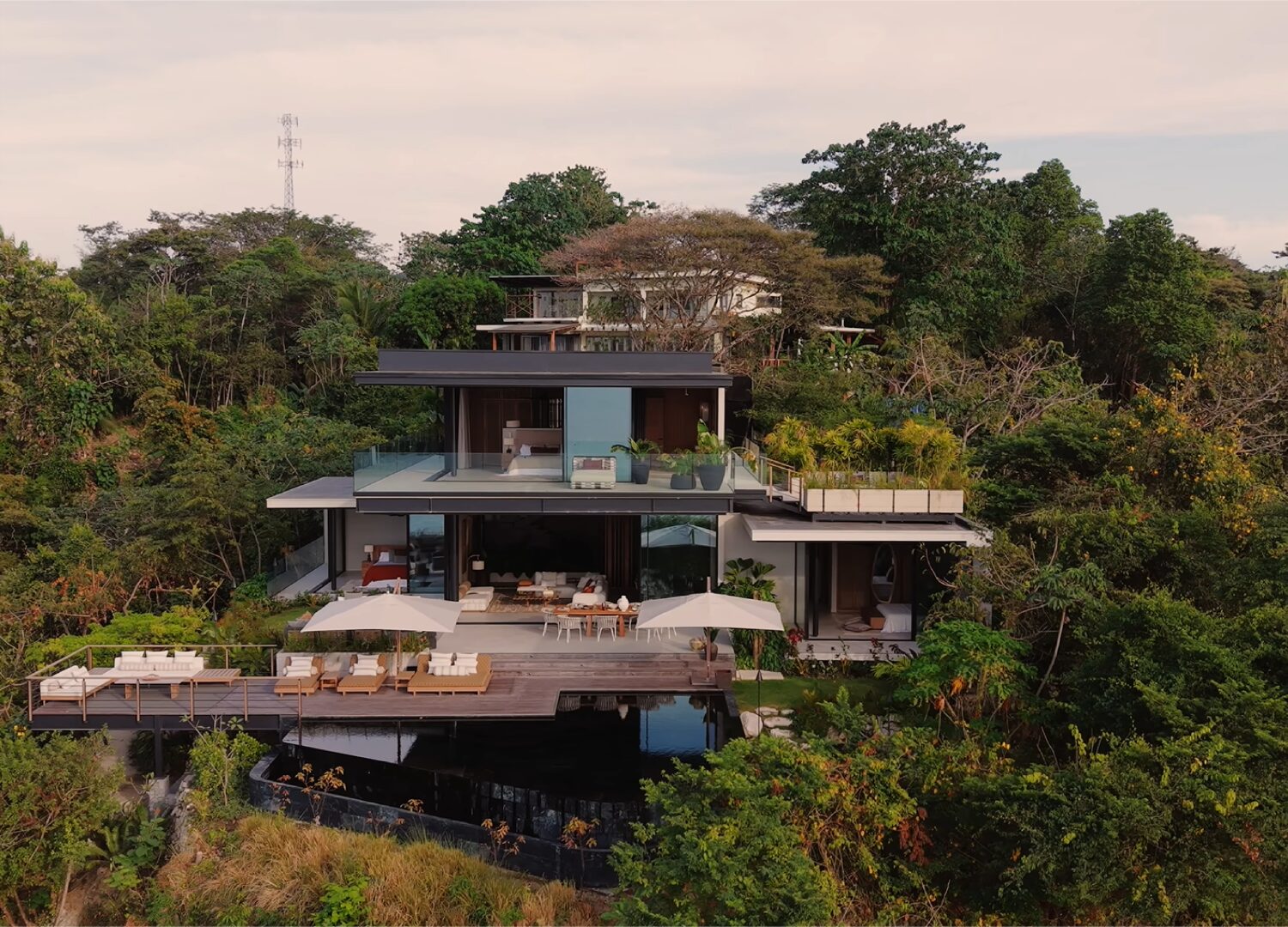
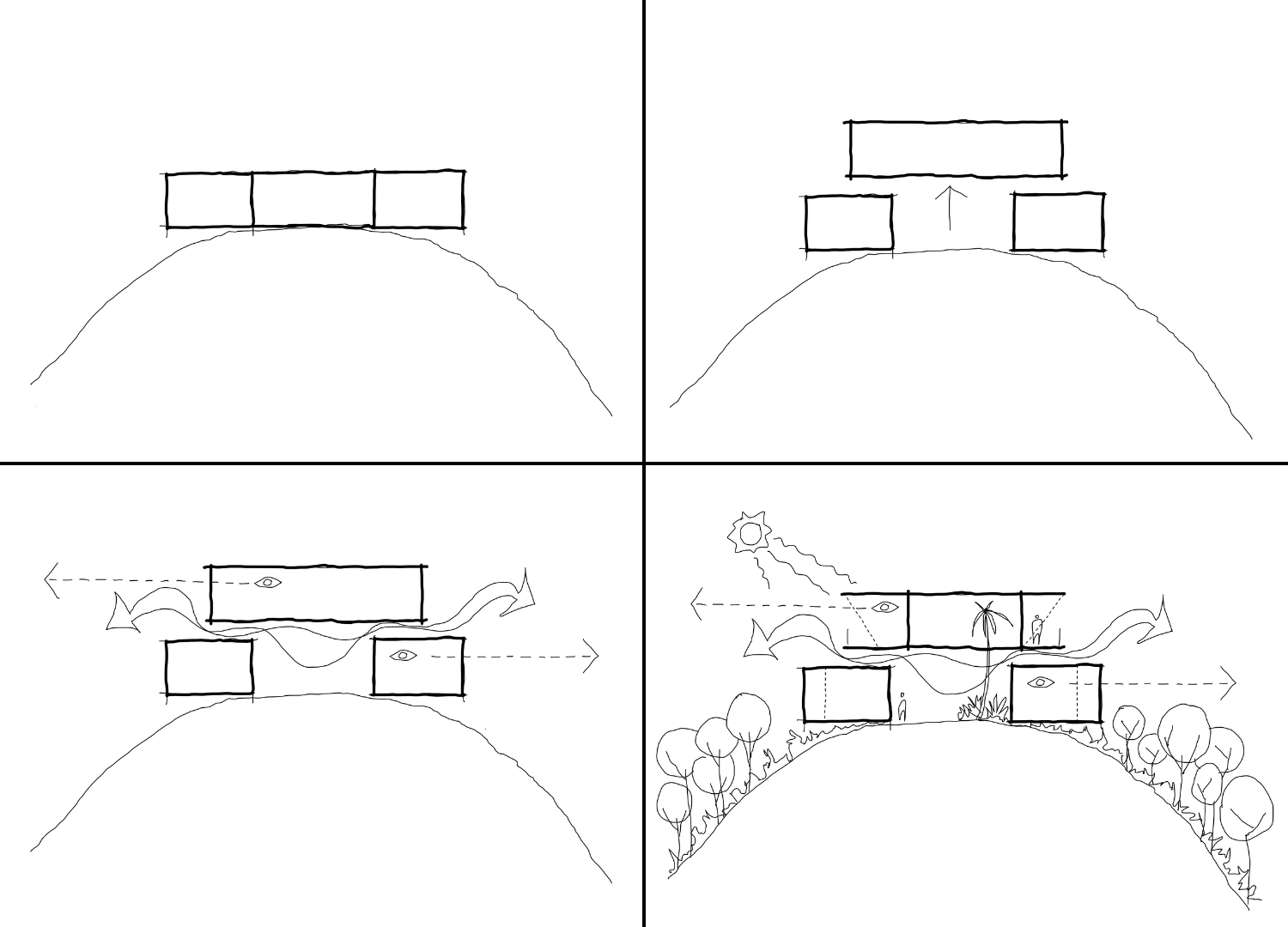
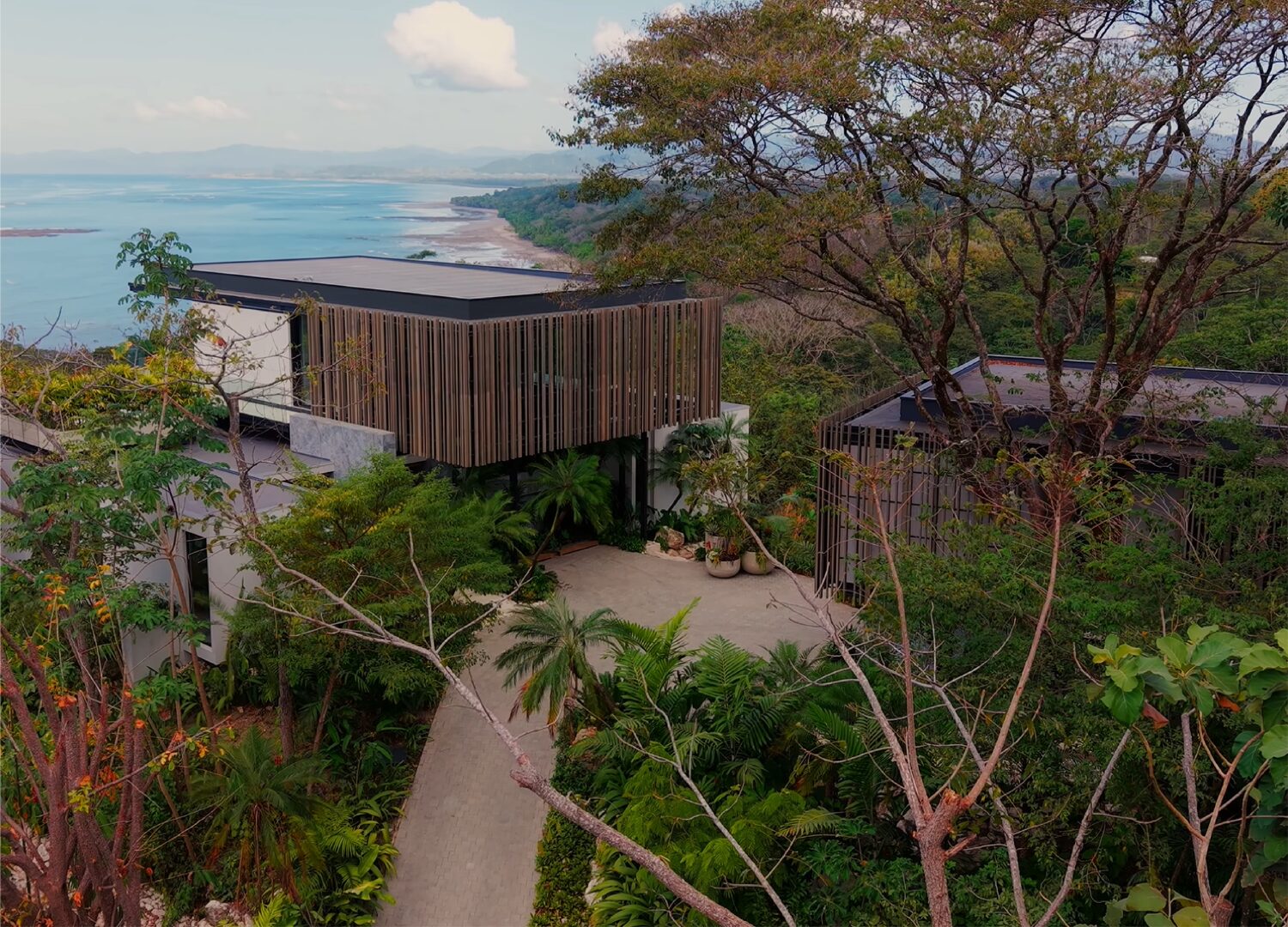
A family home rises into the lush jungle canopy along Costa Rica’s Pacific coast, Puntarenas, ready to welcome a lifetime of unforgettable memories. With a visual balance that blends seamlessly into the wild landscape it rises from, Casa Solai embraces both openness and seclusion. The project features two wooden pavilions -one firmly rooted to the earth and the other hovering above the treetops- connected by a graceful central foyer that creates a fluid spatial flow between the master suite and guest quarters.
Each design decision was made to ensure a cohesive architectural layout that harmonizes the entire home. Studio Saxe creates an intriguing design language with the decision of one rooted and one floated pavilion. These contrasting volumes invite interaction with the space, while the connecting foyer provides a serene transition between them.
Gallery
Open full width
Open full width
Stairway to Heaven
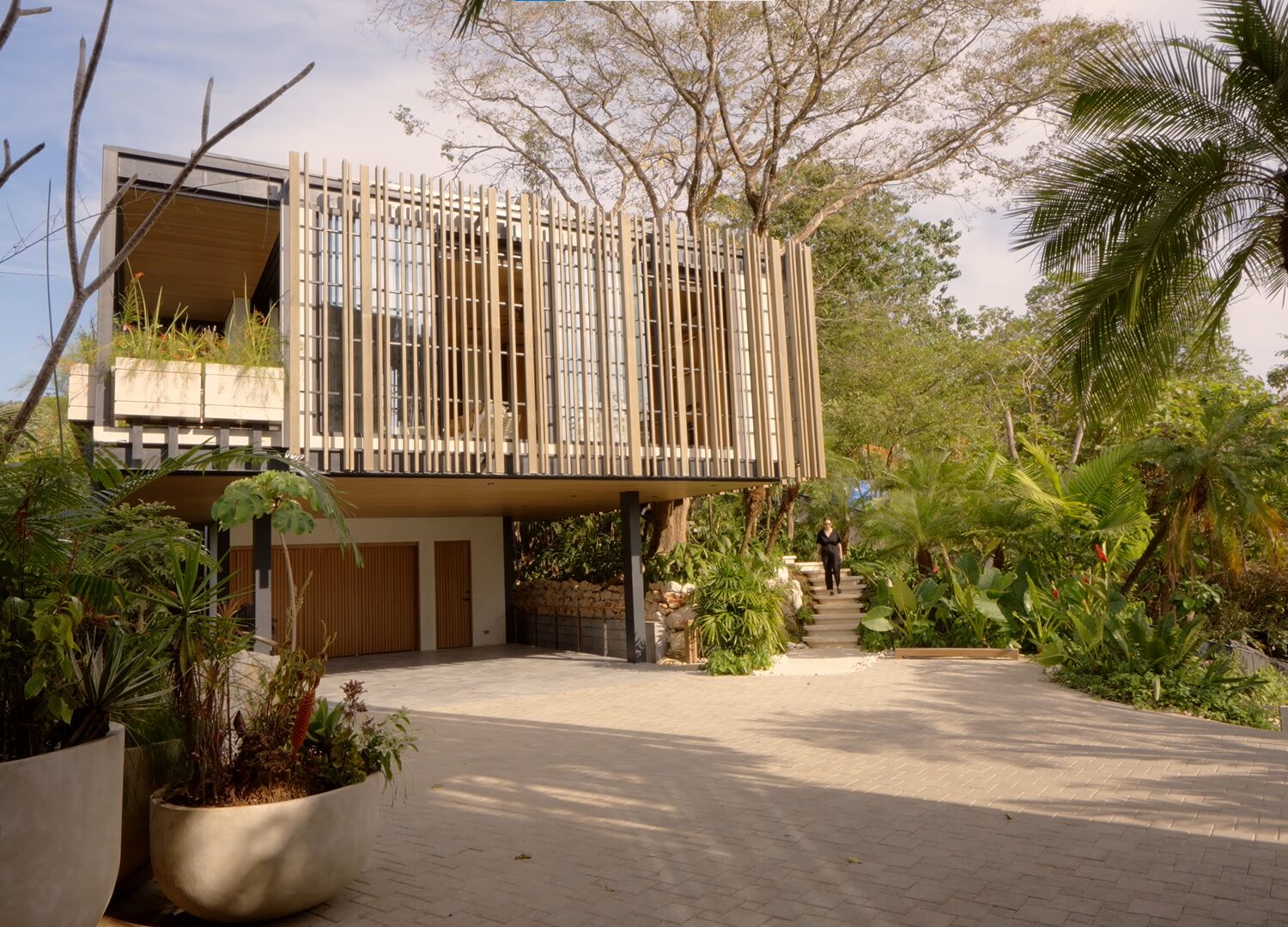
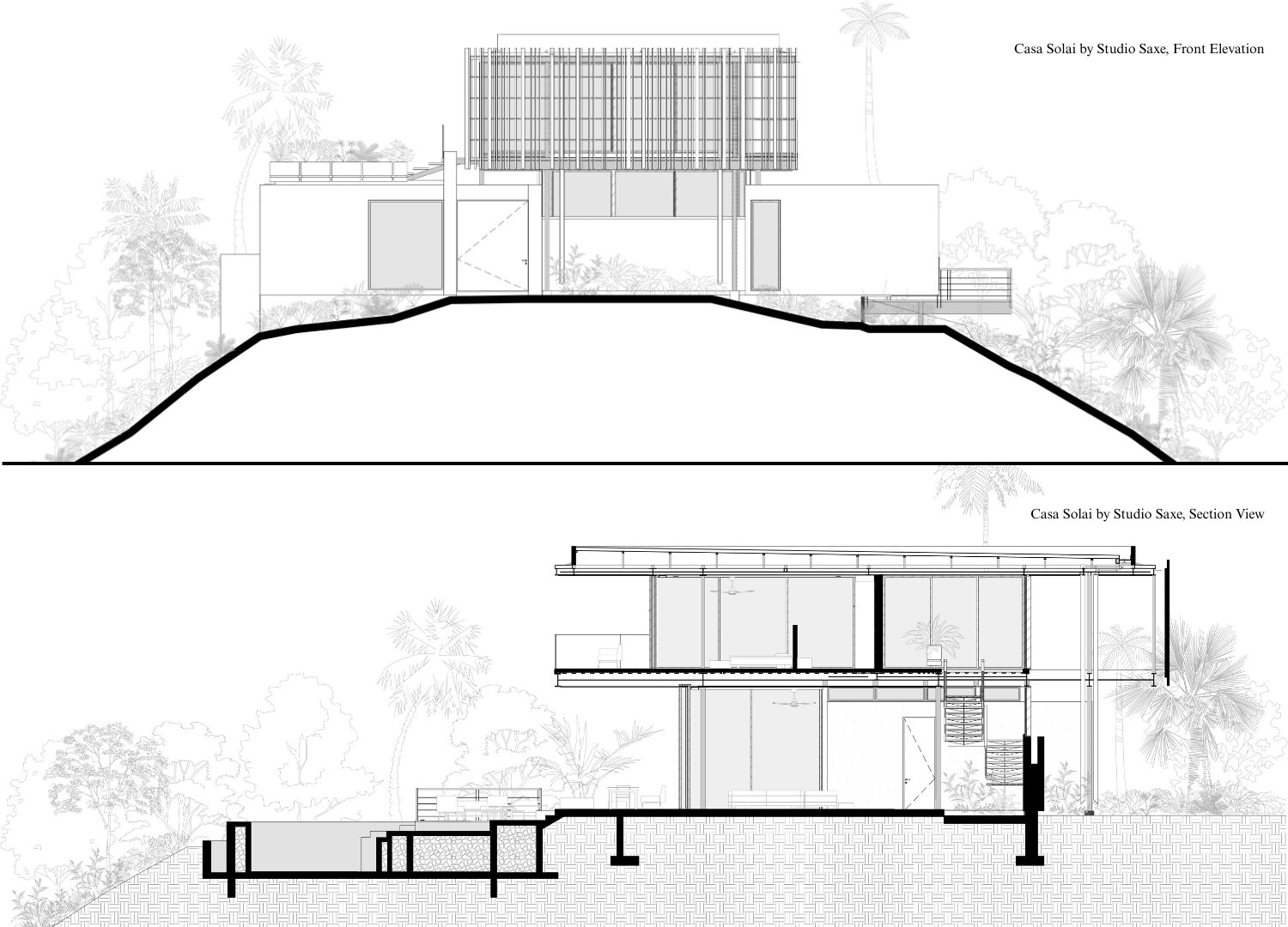
A stone pathway greets you at the entrance and guides you through dense greenery to an interstitial space where the jungle aparts and architecture takes over. Here, the home divides into two similar yet unique volumes: one grounded in the hill, the other raised above, wrapped in a timber louver façade. By positioning on the elevated volume, this façade amplifies the levitating effect of the design while demanding careful engineering.
The warm timber and vertical rhythm echo the surrounding palm trees and the forest, making the home feel part of the landscape. Thanks to large glass panels that also ensure a pleasant indoor climate, the home never feels cut off from its surroundings. Through rigorously selected connection details and seamless surface transitions, the design achieves a spotless statement. Adorned with vertical gardens and terraces flowing into an infinity pool, the home offers a front-row seat to the full moon’s occasional meeting with the ocean.
Six years in the making
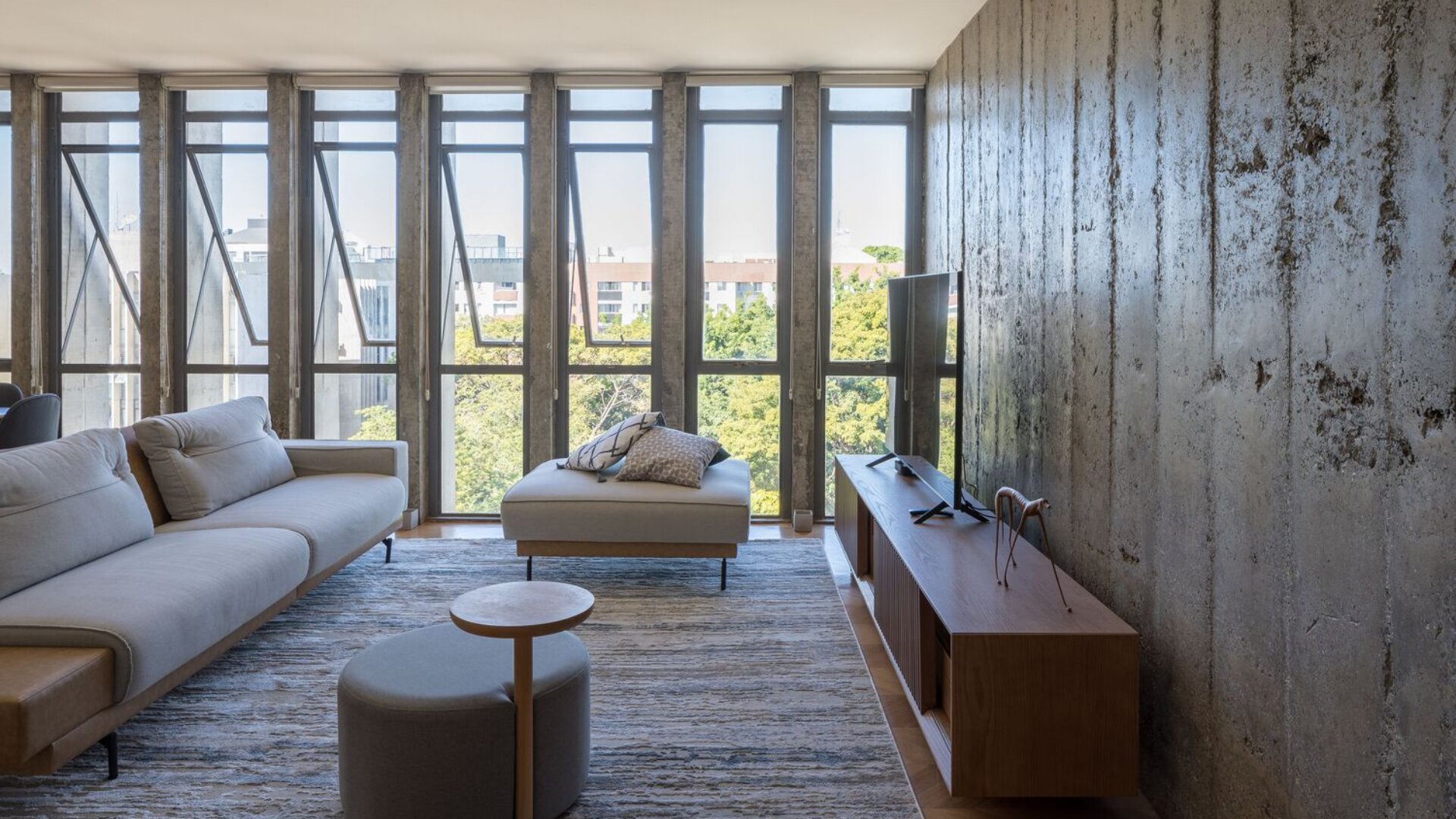
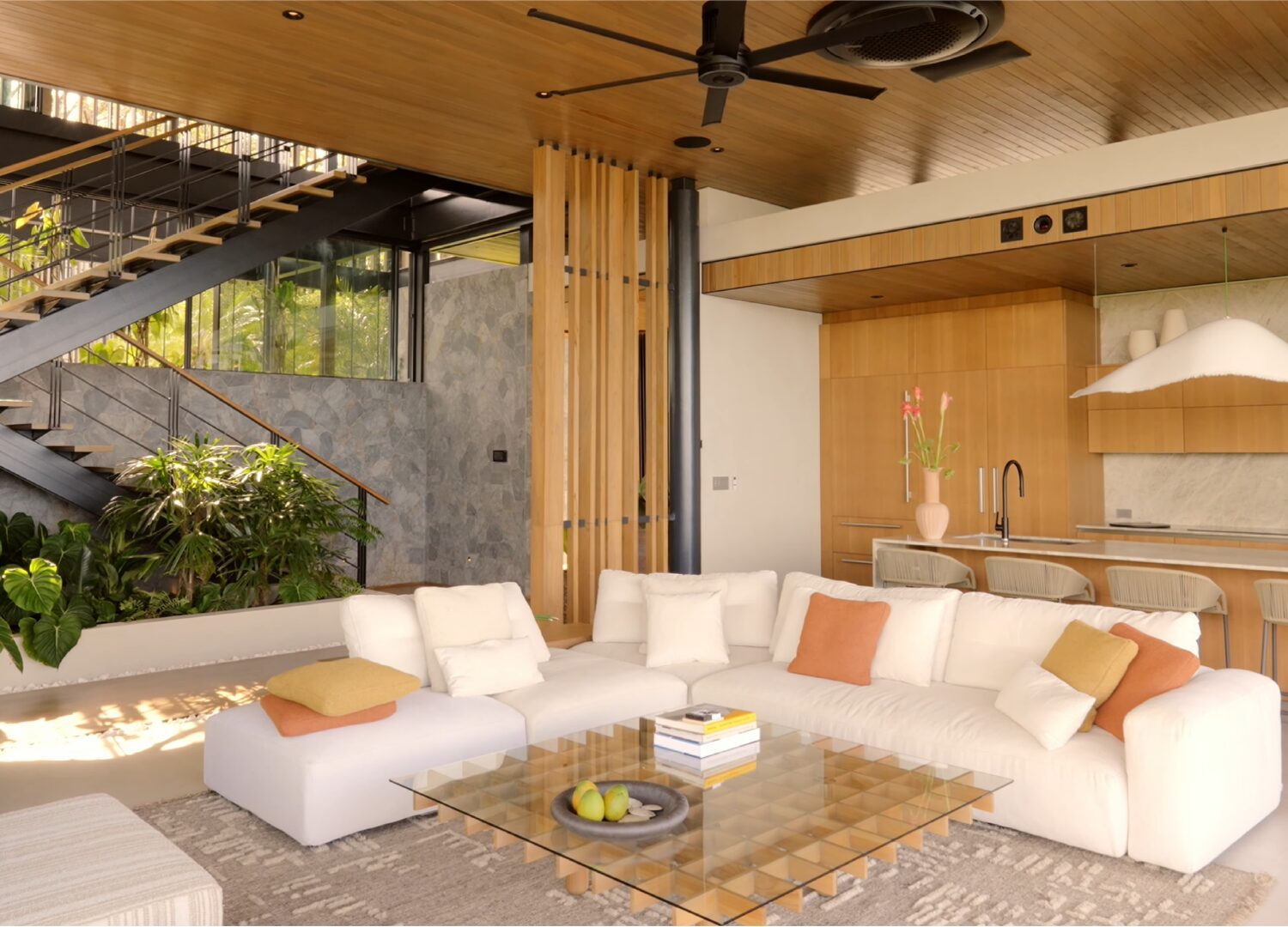
Costa Rican local firm Studio Saxe, from the very beginning and over six years of collaboration, led the project comprehensively, from architecture to interior architecture and decoration, to create a harmonious and consistent design experience. Drawing inspiration from its coastal setting, the interiors reflect the essence of Santa Teresa’s natural beauty through stone walls and earthy tones.
The studio is well known for bridging local craftsmanship with international design applications, and this project exemplifies that philosophy. Many interior elements were deliberately sourced from local artists, including handmade tiles, custom furniture and fossil-rich stone surfaces. The dining table was designed specifically for the project by the studio to complement the overall interior character. Intelligent lighting, audio and shading systems are other impressive interior design elements that furnish the home with spatial purity.
Off-grid and self-sufficient
Due to the site’s remote location, the house was designed to be self-sufficient. Power is generated through solar systems, and energy use is minimized with passive design strategies like natural ventilation, shading, and thermal control. Strong, renewable material which is responsibly harvested mosso bamboo helps shade the building, aid ventilation, and give it an elevated appearance. Operable glass panels boost passive cooling and reduce the need for air-conditioning. This off-grid, eco-conscious house requires minimal maintenance thanks to its reforested teak ceilings and durable stone surfaces.
Effortless appearance
The house’s construction strategy balanced practical engineering with visual lightness. Strong concrete plinth grounds the house into the terrain, securing it to the site and providing seismic resistance. On top, prefabricated steel frame supports the timber-clad pavilions, reducing the on-site disruption and ensuring precise assembly. While the louvers appear to float effortlessly and amplify the design language, their installation demanded innovative structural coordination, using the upper framework as the support.
Casa Solai by Studio Saxe invites its inhabitants to live in harmony with the built and the wild.