Ceramiche Keope gives a new life to a centuries-old terracotta tradition with CottoMilano
CottoMilano, designed by Domenico Orefice, is a porcelain stoneware tile collection inspired by the ancient Milanese tradition of the terracotta craft, revisited in a contemporary key.

Ceramiche Keope has brought a piece of Milan’s architectural DNA to Cersaie 2025 with CottoMilano, a porcelain stoneware collection that reinterprets the distinctive red terracotta produced by Fornace Curti since the 15th century. Different from the pink-toned terracotta from the Tuscany region, Lombard terracotta carries an iron-rich, deep red character, which has coloured Milan’s buildings from the Renaissance period. Ceramiche Keope challenged itself to translate this historical material into a contemporary ceramic surface that could meet the demands of today’s market, with all its warmth and chromatic depth.
Fornace Curti is a historic kiln in Milan that has operated continuously since the 1400s, making it one of Europe’s oldest functioning kilns. Over the years, it has become synonymous with a specific kind of red terracotta that is now integral to the city’s architectural identity. Fornace Curti’s methods have remained largely artisanal, with knowledge passed down through generations of craftsmen. For CottoMilano, Ceramiche Keope drew on this century-old legacy not to replicate its production methods, but to capture the essential material qualities of terracotta: colour depth, matte surface, and tactile warmth, into a product that can match contemporary performance standards.
Gallery
Open full width


Open full width
Ceramiche Keope’s Marketing Director, Paolo Cesana, describes to us the story of the origin of this collection, saying that the idea for CottoMilano originated from Milan’s SaloneSatellite, where designer Domenico Orefice first presented a series of handmade terracotta decor created at the historic Fornace Curti. That encounter inspired Keope’s vision to reinterpret the emotional richness of Lombard terracotta through the language of contemporary design. From the outset, the goal was to recreate in porcelain stoneware the sensory qualities of traditional terracotta – its warmth, tactility, and expressive depth – while extending its use to international architectural contexts. Guided by Cesana’s intuition, the project evolved as a synthesis of memory and innovation: a material that preserves the authenticity of handmade clay but gains new strength, precision, and versatility through Keope’s advanced technology.

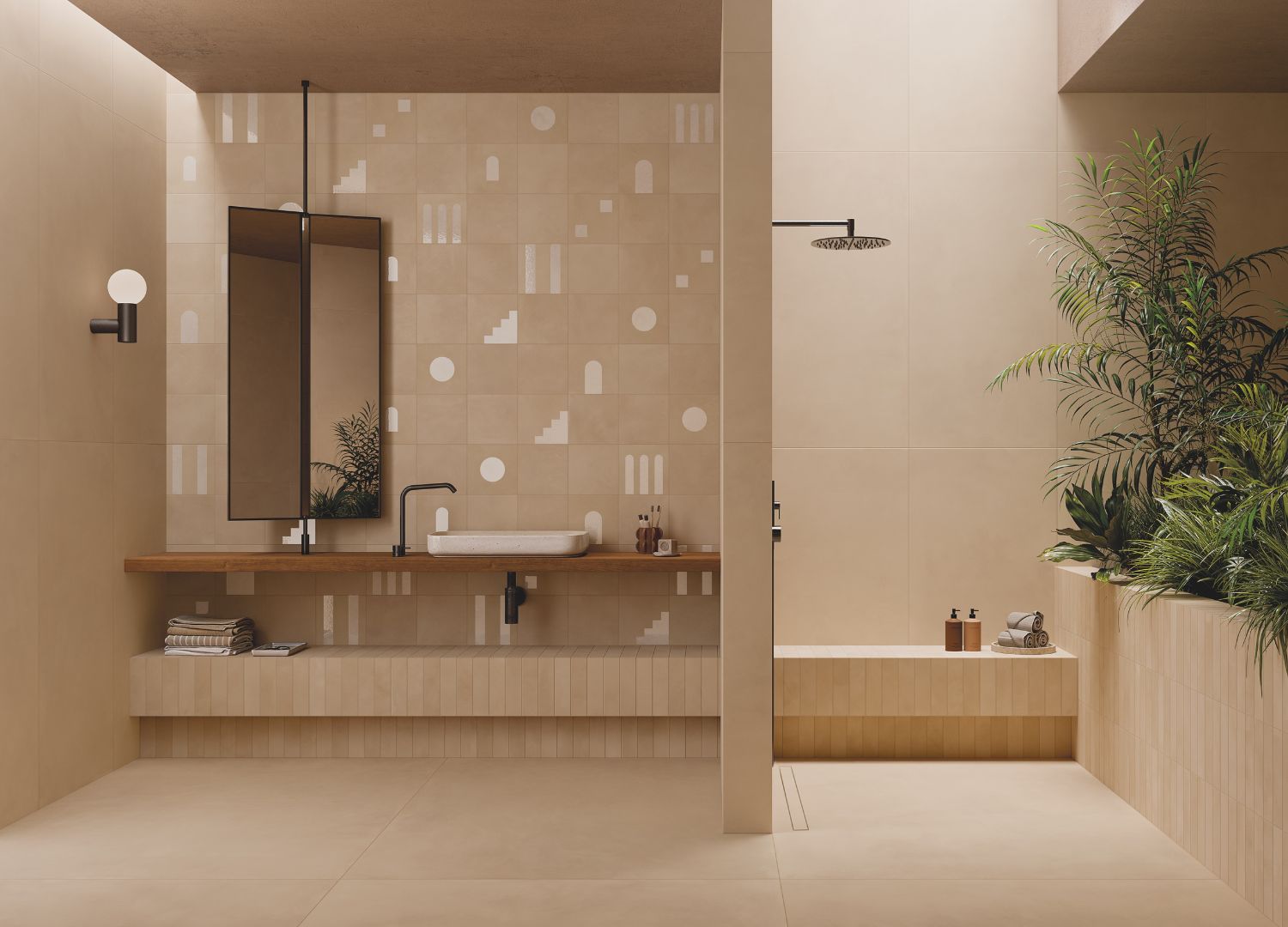
The collection’s standout feature is ULTRAmatt, a finish currently under patent application that delivers exceptional opacity while remaining easy to maintain, a combination that has always been extremely difficult to achieve in ceramics. This was a key development for this project, as terracotta is distinguished by its matte appearance. Paolo Cesana tells us, “the greatest challenge was to preserve the tactile softness, chromatic richness, and visual porosity of natural terracotta, while enhancing its strength and technical performance through porcelain stoneware technology. The result is a rare synthesis of craftsmanship and innovation, a surface that bridges centuries of Italian material culture with the rigour of contemporary architecture.” Beyond ULTRAmatt, CottoMilano is also offered in a Glossy finish and a Structured R11 finish for outdoor use.
CottoMilano extends beyond the traditional brick red into a broader colour range, designed for contemporary architecture. The palette includes warm material tones like Terracotta, Sabbia, and Creta, alongside more neutral shades like Argilla and Talco, positioning the collection for more versatile uses where terracotta’s rustic associations might otherwise limit its use. The collection focuses on large formats, particularly 120×120 and 60×120, suited to commercial and urban projects, while also offering smaller elements like 20×20 or 6×24 bricks, available in glossy or matte finishes.

The creative hand behind the collection is Domenico Orefice, an industrial designer who opened his studio in 2010, after graduating from the Polytechnic University of Milan. Orefice has built a practice that bridges artisanal craft traditions with contemporary design and is especially rooted in Milanese culture, even opening his own brand called “Mani di Milano” in 2018. The studio’s work spans custom pieces, commercial collaborations, and art direction for multinational brands.
About the partnership, the company shares that “the collaboration with Domenico Orefice emerged naturally from a shared sensibility. His design philosophy, grounded in material authenticity and emotional design, aligned perfectly with Keope’s vision for CottoMilano. Orefice reinterpreted the identity of terracotta beyond nostalgia, giving it new expressive relevance. His creative insight, combined with Keope’s R&D expertise, shaped a collection where craftsmanship meets industry, a contemporary evolution of Italy’s most iconic material.”

Founded in 1995 in Casalgrande, in Italy’s Reggio Emilia province, Ceramiche Keope operates as part of Gruppo Concorde. The company manufactures porcelain stoneware tiles exclusively in Italy, to then distributes them in more than 100 countries. Ceramiche Keope currently positions itself in the technical performance category, as its materials can resist many phenomena such as fire, frost, humidity, and more while maintaining colour stability. Its products don’t emit organic substances and meet the environmental standards that have now become fundamental in commercial and public projects.
The company’s growth over three decades reflects the strength of Italian ceramic production, which is for the most part concentrated in Emilia Romagna, the region where Ceramiche Keope was founded and still operates, and also where the Cersaie fair takes place. Maintaining a domestic production is key for the company, which is deeply tied to the Italian artisanal heritage and attention to detail. However, Ceramiche Keope also looks to the future, investing strongly in R&D – evident here in their ULTRAmatt patent application – indicating a strategy that is focused on material innovation just as much as it is on traditional artisanality.

CottoMilano represents an interesting test case: can a high-tech ceramic material capture the essential character of a historic craft? “CottoMilano captures the tactile appeal and rich colours of traditional terracotta but reinterprets them using porcelain stoneware, a material known for its exceptional durability, stability, and versatility. Unlike natural clay, porcelain stoneware is completely non-porous, frost-resistant, and easy to maintain, making it ideal for contemporary residential, commercial, and hospitality environments. Thanks to Keope’s advanced surface technology, this collection maintains the soft matte texture and visual richness of authentic cotto while providing the technical performance required by modern architecture”, says Cesana. The collection suggests that the answer depends less on replication and more on translation, understanding which qualities matter, like the aesthetics that make the material so special, and which can be improved, like its technical characteristics.
For Ceramiche Keope, the bet is that in an increasingly technological world, there is a renewed appetite for materials that carry memory and tactility. In removing the natural imperfections of artisanal terracotta by offering a more comfortable and stronger industrial product, CottoMilano does not present itself as a replacement of authenticity but as its evolution. Advanced manufacturing technology does not have to erase material memory, but instead it can amplify and democratize it, bringing the warmth and character of Milanese terracotta accessible to projects worldwide that would never be able to use the original material. CottoMilano provides a path for historic materials to remain relevant in contemporary architecture, not by exact replication but because it captures what made the material meaningful in the first place: its ability to bring warmth, texture, and a sense of place to the buildings we inhabit.