Between ornament and structure: 5 design pieces from the mid-1920s
Around a century ago, design was negotiating its future. New technologies and materials coexisted with decoration and luxury, shaping a language in flux. These objects reflect a modernity still in formation, suspended between Art Deco sensibility and rational discipline.
By the mid-1920s, design was evolving within a broader cultural landscape marked by acceleration and contradiction: while Art Deco was still dominating the visual imagination – visible in architecture, fashion, cinema, and the decorative arts – new forms of mass culture were growing, reshaping how images, objects, and ideas circulated. Film, illustrated magazines, advertising: the image began to become a central cultural force, contributing to the shared Modern Movement visual language that extended well beyond the boundaries of design.
At the same time, Europe was grappling with the consequences of industrialisation, political instability, war and shifting social structures. And while these conditions fuelled a growing belief that culture–design, included, could no longer remain detached from everyday life, architecture, typography, furniture, and graphic design increasingly entered debates around efficiency and accessibility, and social responsibility, echoing similar concerns across literature, theatre, and the visual arts.
Gallery
Open full width
Open full width
The transition from Art Deco to the Modern Movement unfolded within this charged context. Rather than rejecting the past outright, modern design absorbed lessons from contemporary art, new media, technological progress, while critically questioning the role of ornament in a rapidly changing society, like in the little essay “Ornament and Crime” by Adolf Loos, of 1908. The result was a cultural realignment, more than a formal shift: design began to see itself less as an expression of luxury or taste, and more as an active agent in shaping modern life.
So, what was happening in the mid 20s of the XX century? Around one hundred years ago, designers and audiences alike were facing the promise of a new, tubular, technologically driven future, while still clinging to ideas of beauty, decoration, and luxury – often more image than substance. How could a movement that would later be summed up by the phrase less is more find its place in such a contradictory world? How did it begin to redefine the very culture of design?
These five objects, designed in 1926 or just around that moment, offer a precise snapshot of that transition.
5 design objects. marking the transition from Art Deco to the Modern Movement:
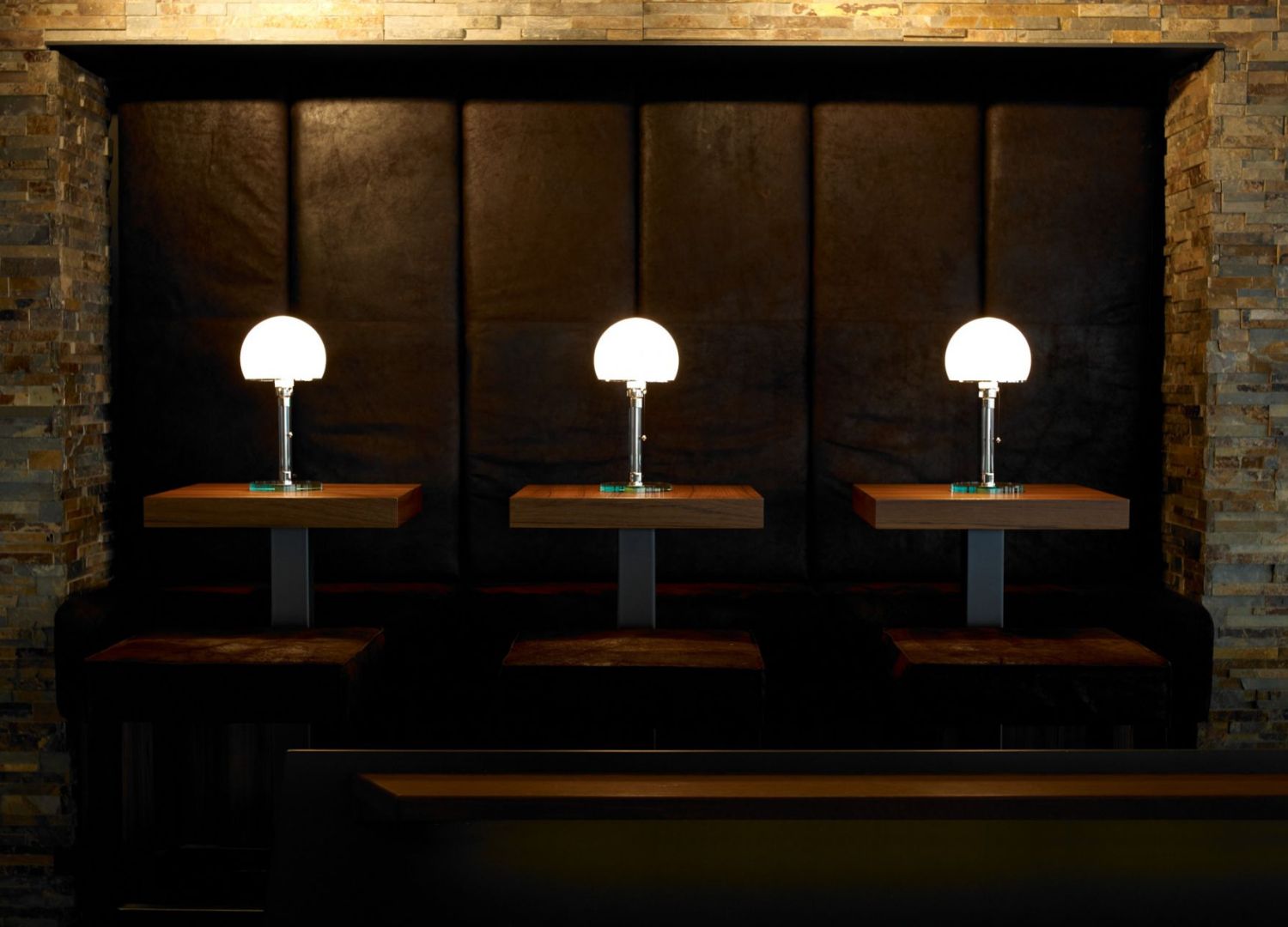
WG24, Wilhelm Wagenfeld (1924)
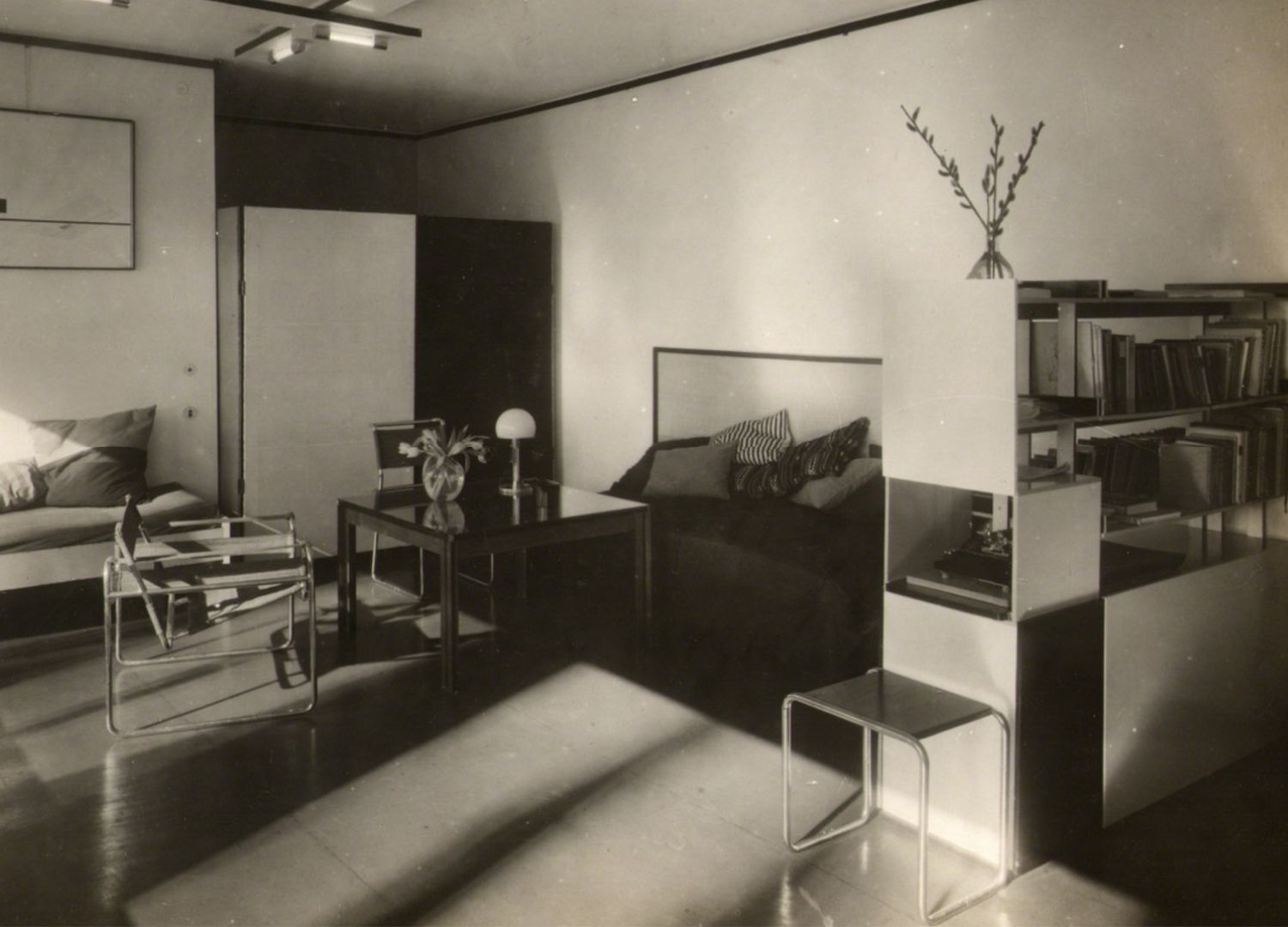
In an era shaped by new technologies, when art and industry were increasingly converging in an effort to redefine the very meaning of industrial design, a school first based in Weimar and later in Dessau became a driving force behind a new understanding of everyday objects. That school was the Bauhaus. Designed in 1924 by Wilhelm Wagenfeld – first a student and later a teacher there – this object embodies with clarity the emergence of a new, sober language of design, one intended to enter domestic space as part of everyday life.
The lamp, composed of a tubular metal stem concealing the electrical components, an opaline glass dome, and a circular base, is built from a vocabulary of essential geometries that articulate a vision of modernity grounded in both function and elegance. The use of a nearly opaque glazed finish softens and diffuses the light in a way that was unprecedented at the time, subtly anticipating later lighting technologies. Light is not merely emitted but modulated, shaping the atmosphere of a space with a sensibility that still feels distinctly contemporary.
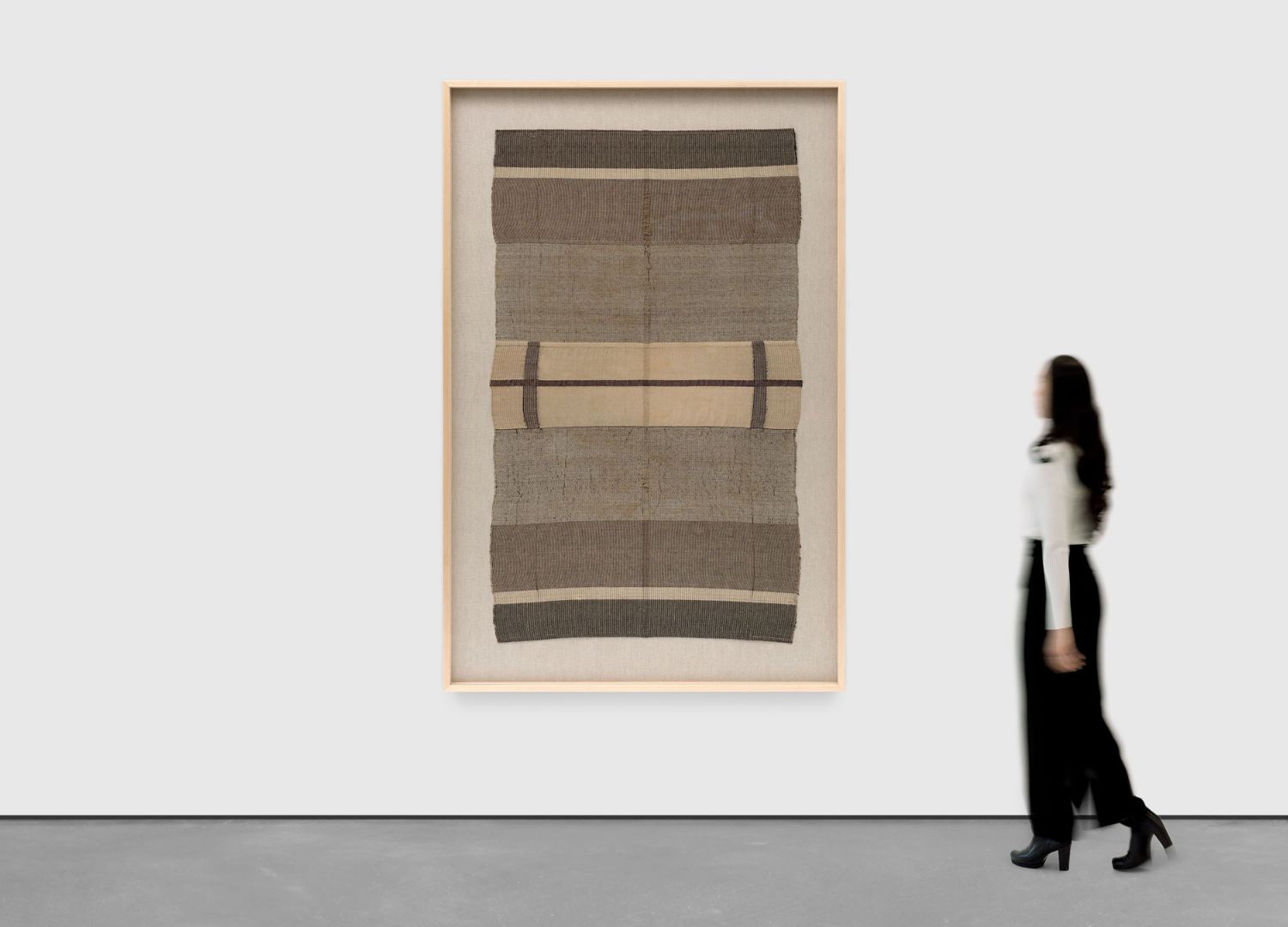
Wall Hanging, Anni Albers (1924)
In the mid-1920s, textile design played a crucial role in redefining the boundaries between art, craft, and industry. Anni Albers’s early wall hangings, developed during her years at the Bauhaus, exemplify this shift with particular clarity. Working within the constraints of the weaving workshop – often one of the few spaces open to women at the Bauhaus – Albers transformed limitation into experimentation.
Her textiles rejected pictorial representation in favour of structure, rhythm, and material intelligence, becoming patterns able to stand on surfaces, being reproduced, in a very industrial way. Threads were chosen not only for colour, but for texture and durability.
These works operated simultaneously as functional objects and abstract compositions. They aligned weaving with architecture, positioning textile design as an integral component of modern interiors. In doing so, Albers laid the groundwork for a new understanding of textiles as a modern, system-based design discipline.
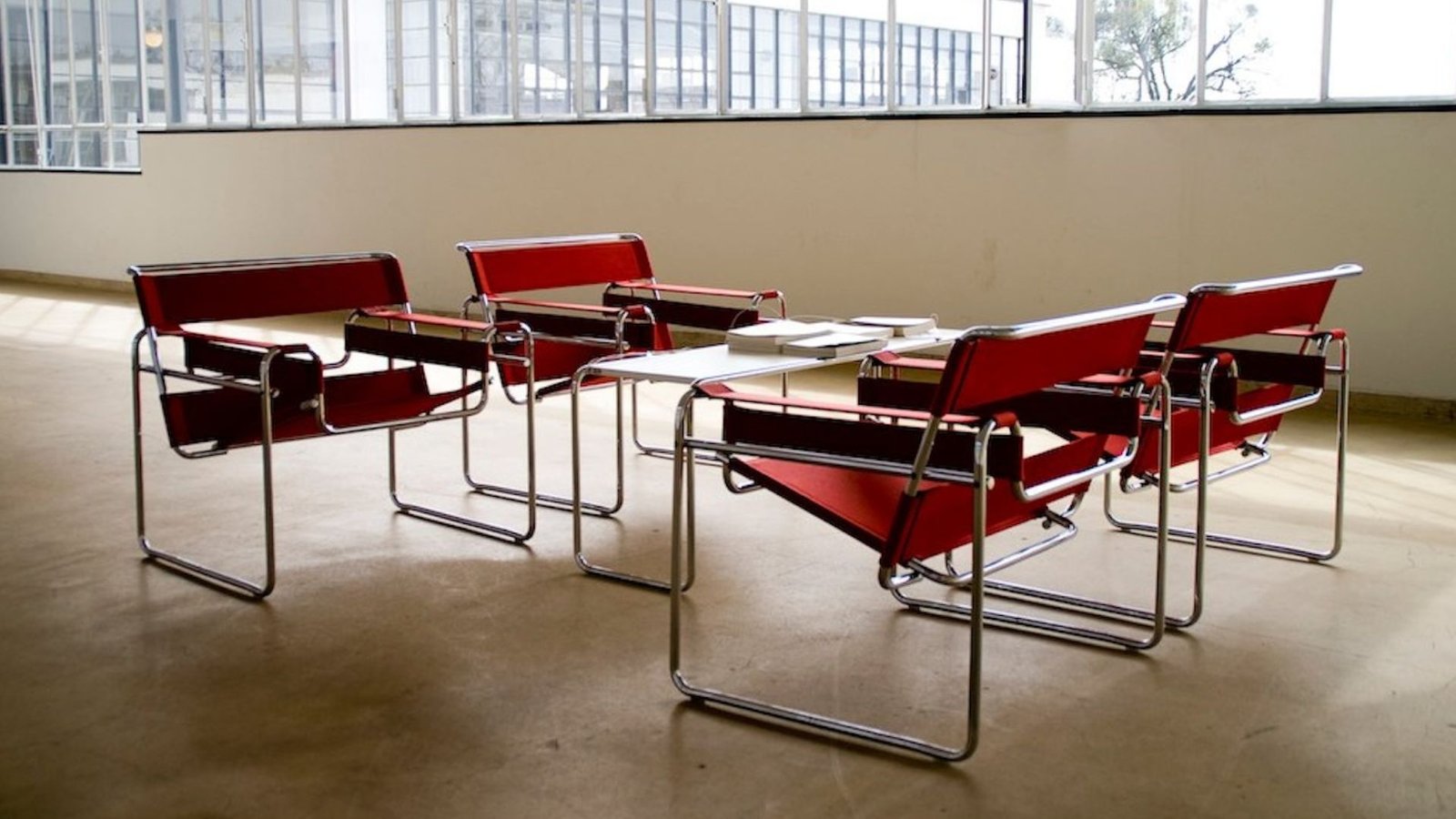
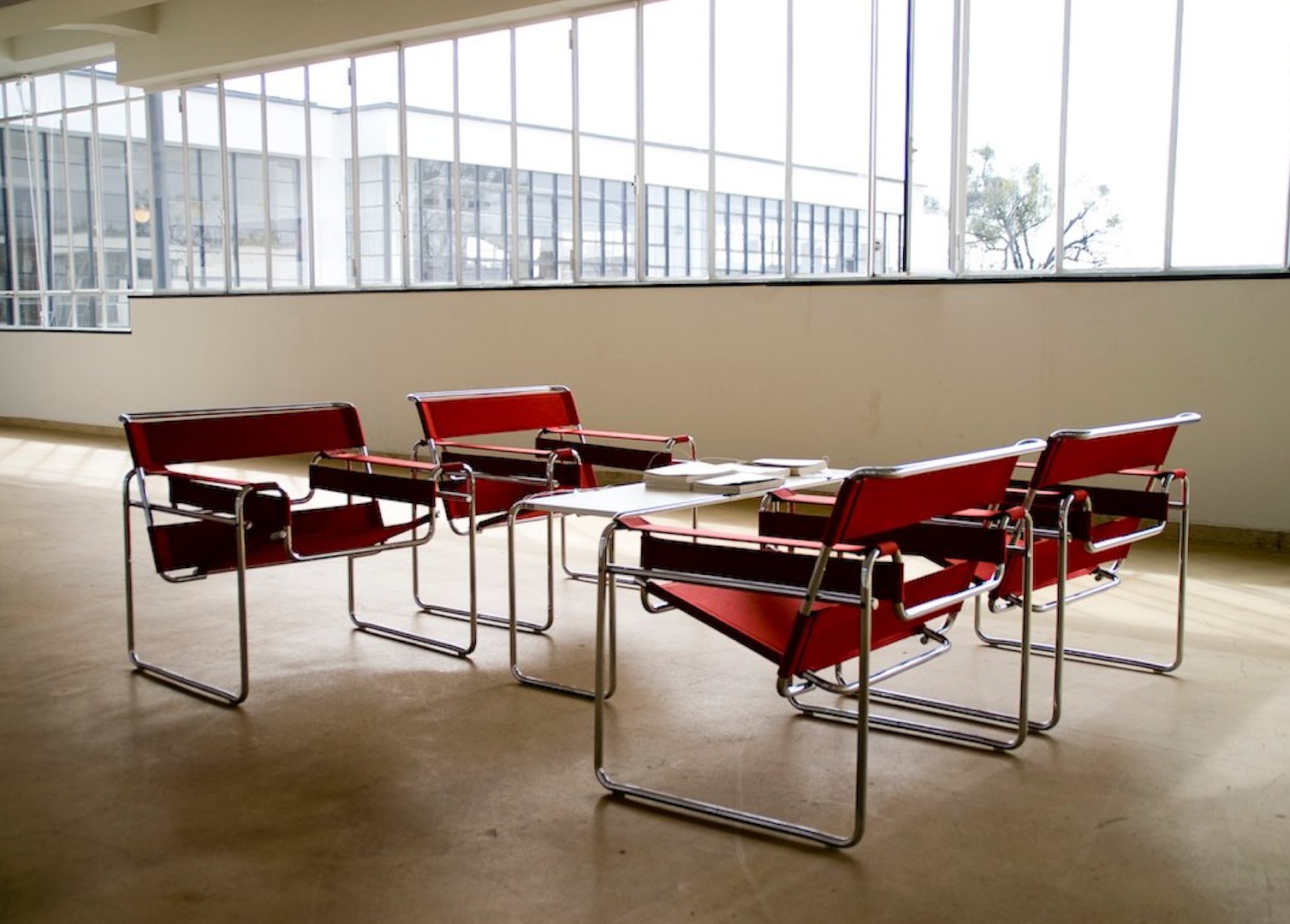
Wassily Chair, Marcel Breuer (1925)
Many legends surround this iconic chair. The most persistent claims that Wassily Kandinsky himself commissioned it from his former student Marcel Breuer – an anecdote that, while seductive, is largely unfounded. Yet the truth is ultimately less important than what the chair represents.
Designed at the Bauhaus, the Wassily Chair marked a radical departure from traditional furniture construction. Breuer adopted tubular steel not as a stylistic gesture, but as a structural and industrial solution. The absence of conventional upholstery, replaced by taut bands of fabric and leather, exposed the chair’s logic with unprecedented clarity.
Every element serves both a functional and a visual purpose. Light, precise, almost skeletal, the chair embodied a new idea of comfort – one based on ergonomics and efficiency. In doing so, it became one of the clearest material expressions of the Bauhaus ethos and of modern design’s ambition to reconcile industry, aesthetics, and everyday life.
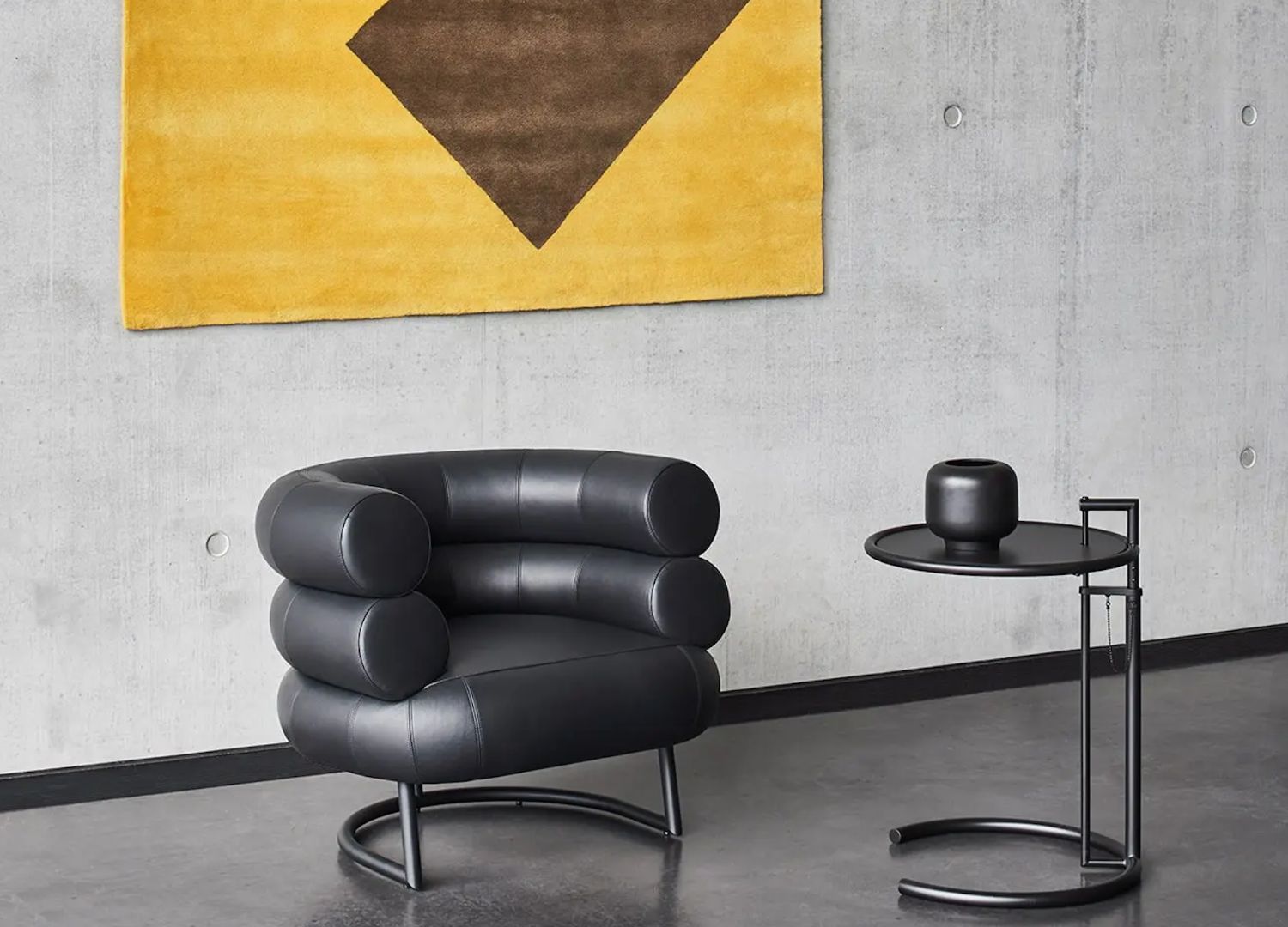
Bibendum Chair, Eileen Gray (1926)
The Bibendum Chair stands at the threshold between Art Deco and Modern Movement, capturing the tension and the continuity between the two. Designed in 1926, it takes its name from the Michelin Man, whose rounded silhouette is clearly echoed in the chair’s inflated, circular backrest.
Gray’s approach was neither ornamental nor purely functionalist. The generously padded upper section offers a sense of comfort and sensuality typical of Art Deco interiors. Yet this softness is counterbalanced by a rational, tubular steel structure that firmly anchors the piece in the modern vocabulary.
Rather than rejecting luxury, Gray redefined it. The Bibendum Chair is intimate and indulgent, but also restrained and architecturally precise. It reflects her broader vision of modern living – one in which emotional comfort, bodily experience, and technical innovation coexist without hierarchy.
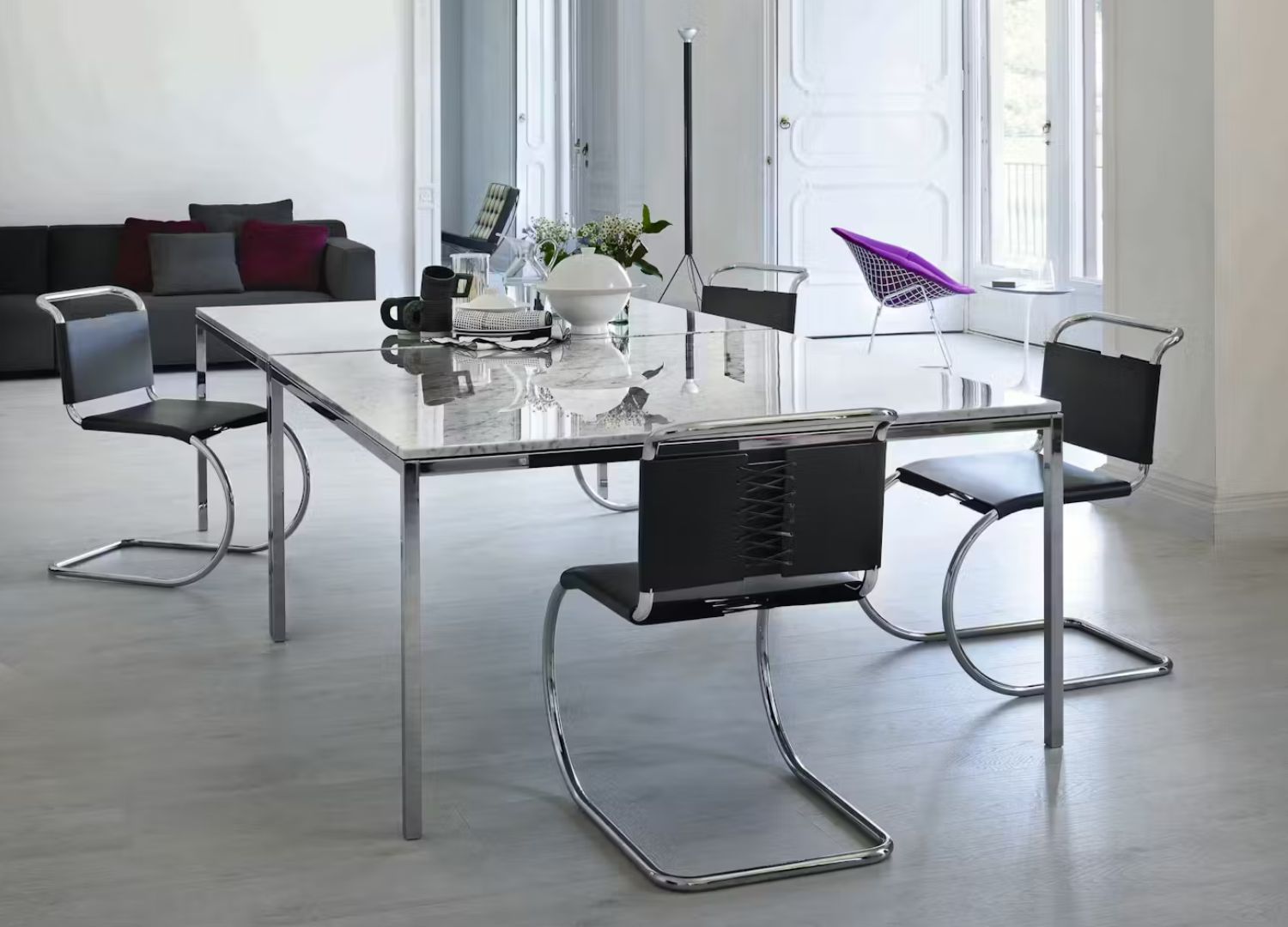
MR Side Chair, Ludwig Mies van der Rohe (1927)
Designed in 1927, the MR Side Chair translated Mies van der Rohe’s architectural principles into furniture with remarkable coherence. Using a cantilevered tubular steel frame, the chair eliminated the traditional rear legs, allowing the structure to flex subtly under the sitter’s weight.
The result was a chair that appeared almost immaterial – continuous, linear, and reduced to its essential elements. The use of steel tubing aligned the piece with industrial production, while the restrained proportions reflected Mies’s pursuit of clarity and order.
Far from being merely formal, the MR Chair embodied a new idea of modern comfort: dynamic rather than static, structural rather than padded. It exemplified the modern belief that beauty could emerge from precision, logic, and restraint – without recourse to ornament.
About the author

Ludovica Proietti, journalist, design historian and curator, teaches in universities and curates events, always exploring projects with fresh, unconventional perspectives.
Instagram