The OLUS air purifier unlocks the power of plants with its biophilic design
Inspired by the benefits of biophilic design, the OLUS air purifier is an ingenious air filter that proves that plant-based alternatives can be sustainable and effective.
OLUS was born from a simple but urgent reality: breathing clean air is still not recognised as a basic human right. Despite growing awareness of the damage caused by polluted air, the United Nations estimates that 6 to 7 million people die prematurely every year due to air pollution. This makes pollution a dual threat — one of the greatest global public health risks and a major contributor to the climate crisis.
Access to clean, fresh air benefits both the planet and people, supporting lung health and improving cognitive function. In response to this growing issue, air purifiers have rapidly multiplied on the market, and concepts like OLUS are gaining increasing attention. What sets OLUS apart from conventional solutions is its use of fully biodegradable, plant-based filters.

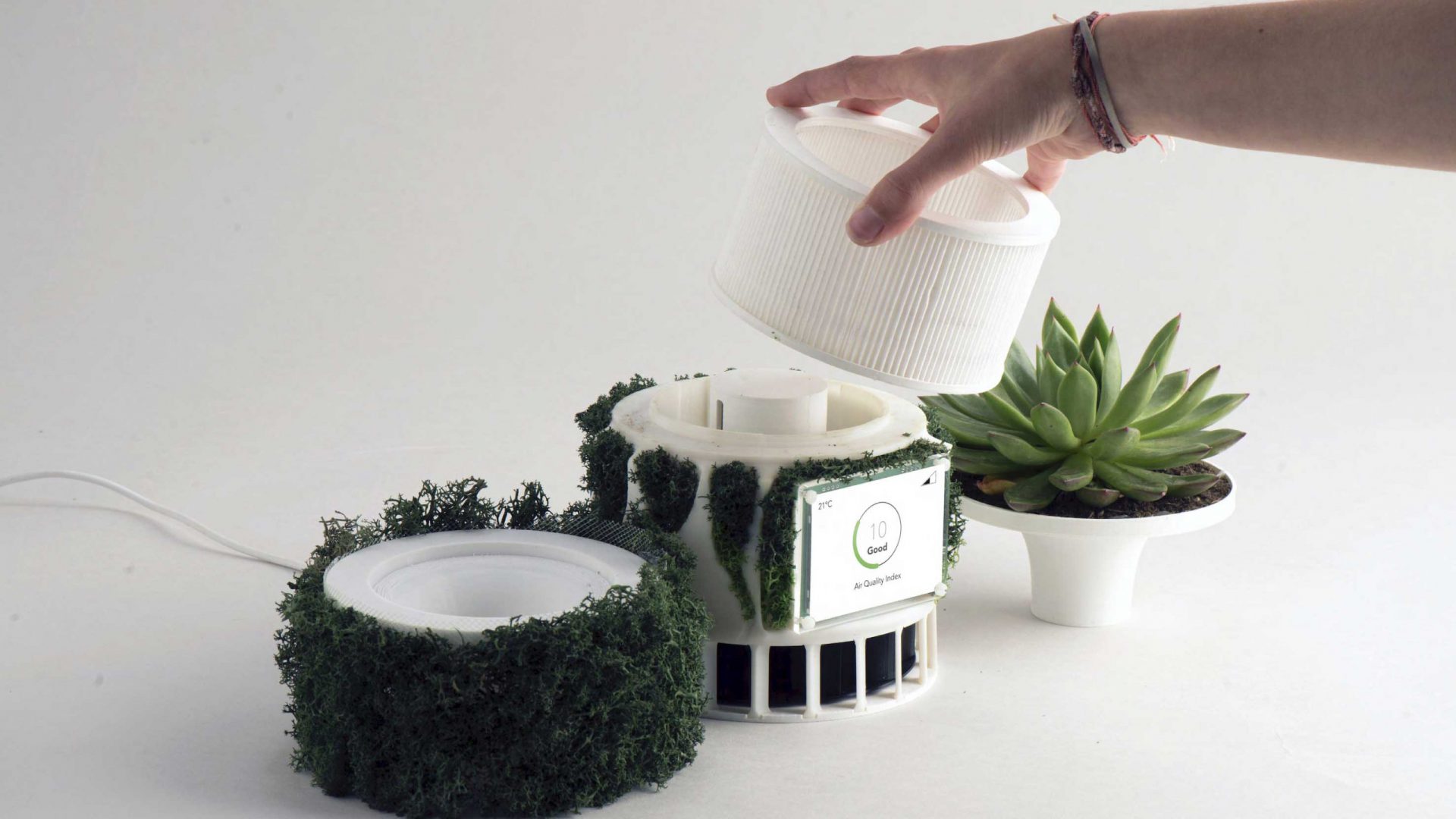
Ethically sourced and designed to generate zero waste, these organic filters significantly reduce the environmental impact typically associated with air purification. Made from Polylactic Acid sustainably derived from corn plants, OLUS filters are capable of removing up to 99% of particulate air pollution — offering a cleaner, more responsible way to breathe.
Developed by product designer Louie Duncan, OLUS uses organic materials and biophilic design to develop a more sustainable, efficient and compact air purifier. The device works in conjunction with dried moss and a houseplant that sits on top to absorb carbon dioxide and produce oxygen to create a healthy home. This is in contrast to the use of standard HEPA filters commonly seen in most air purifiers which take thousands of years to decompose.

“Currently, domestic air purifiers provide a solution, at the expense of the environment where 6000 tonnes of used air filters are sent to landfill every year,” says Duncan. “These products commonly neglect small urban living spaces, where air pollution is most prominent.”

OLUS provides its benefits within a small, lightweight product and is guided by a circular design process, meaning the product moves from conception to eventual disposal. When a filter is replaced every eight months or so, the old filters can be returned to the supplier before being shipped to municipal composting facilities.
About the author

Kieron is a freelance writer and Digital Consultant who doesn't consider himself a design lover but a user of design - which to him is more than enough.
Linkedin