Peter Donders’ design language, between hand and algorithm
Exploring how the Belgian artist continues in his country’s avant-garde trails, fusing traditional craftsmanship with cutting-edge technology to create furniture and objects that seem to come from outer space.

There is something about the Belgian temperament that resists the obvious. From René Magritte’s paradoxical paintings, to the fluid, hidden structures of Victor Horta, up to the Antwerp Six emerging in the 1980s to completely deconstruct high fashion’s language forever, Belgium has always been home to the avant-garde, to the artists who dared to question their predecessors. Peter Donders is no different, fusing technology and nature into design pieces that do not look real.
Gallery
Open full width
Open full width
Born in 1965 in Leut, Donders was inspired by his father, a creative carpenter. After studying furniture design and graduating at 22, he established himself locally as a self-employed carpenter, experimenting with unconventional materials and forms. However, as technology in the field progressed, his leap into CAD design marked the true turning point of his career.
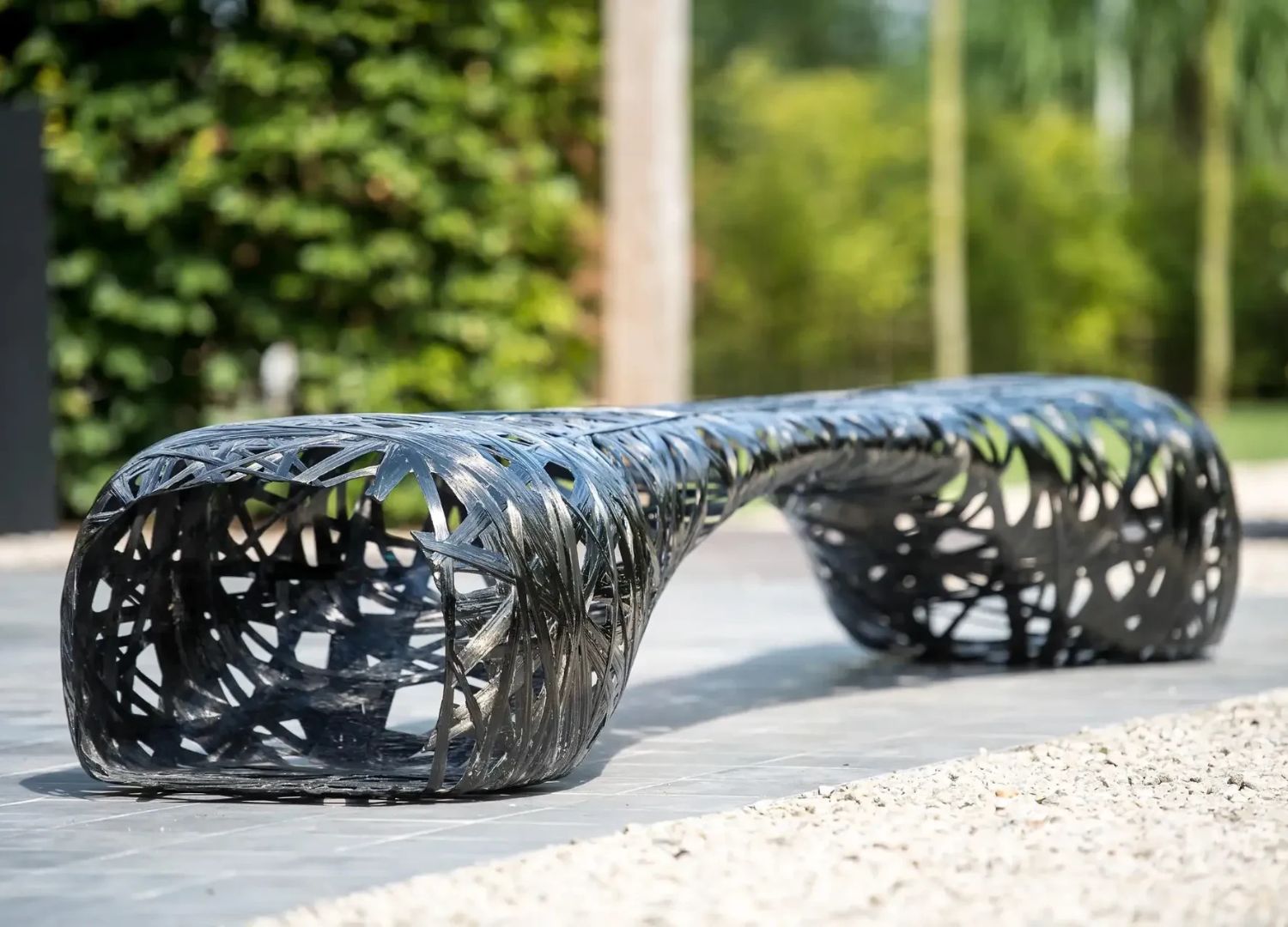
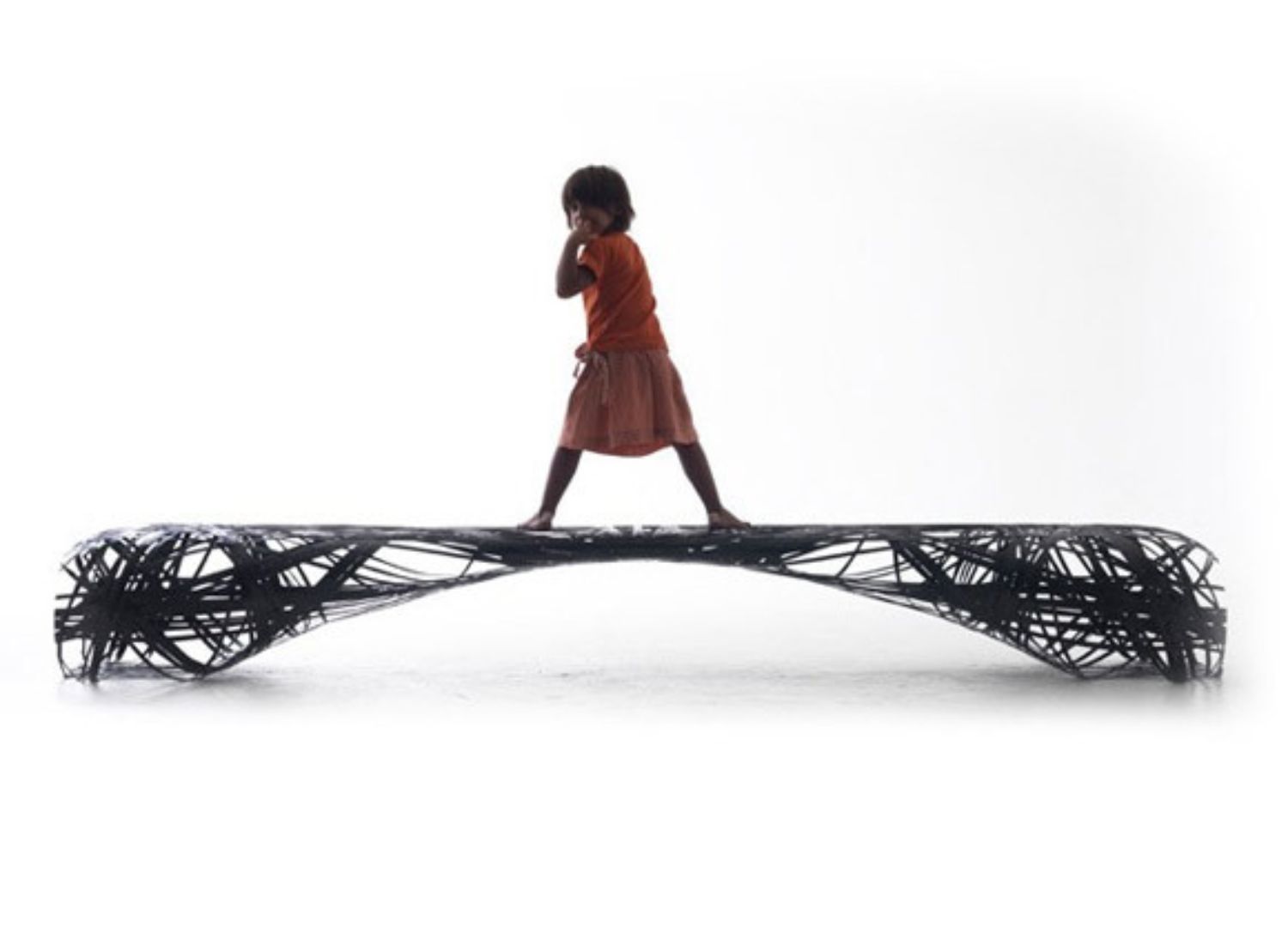
Since then, Donders has positioned himself in the avant-garde of design’s technological realm, using new materials, new software, and new processes to create futuristic and alien-looking products. His 2010 C Bench and C Stone series were organic works created by twisting a single string of carbon fibre around a mould that was later removed, creating an airy yet incredibly strong structure.
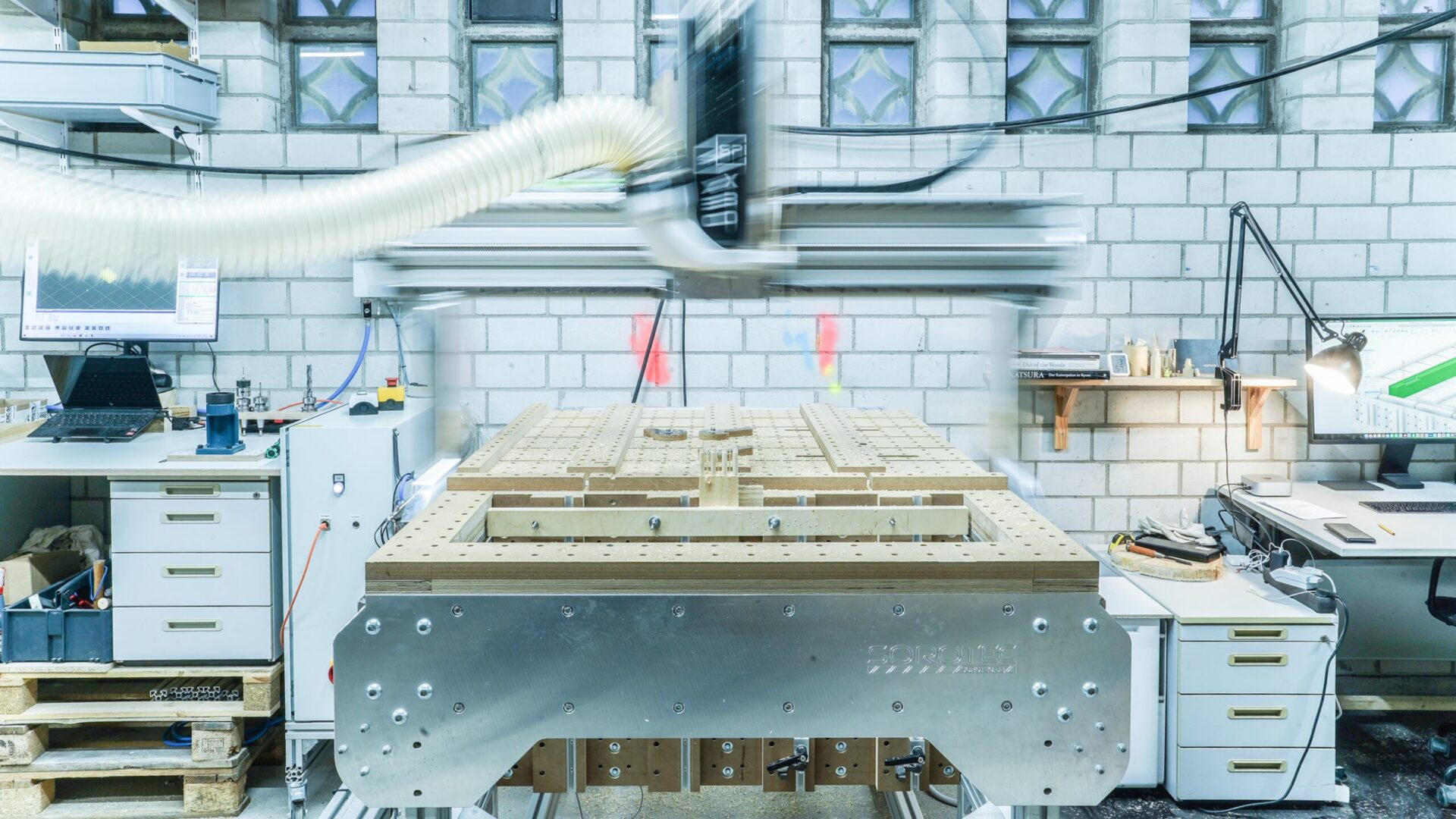
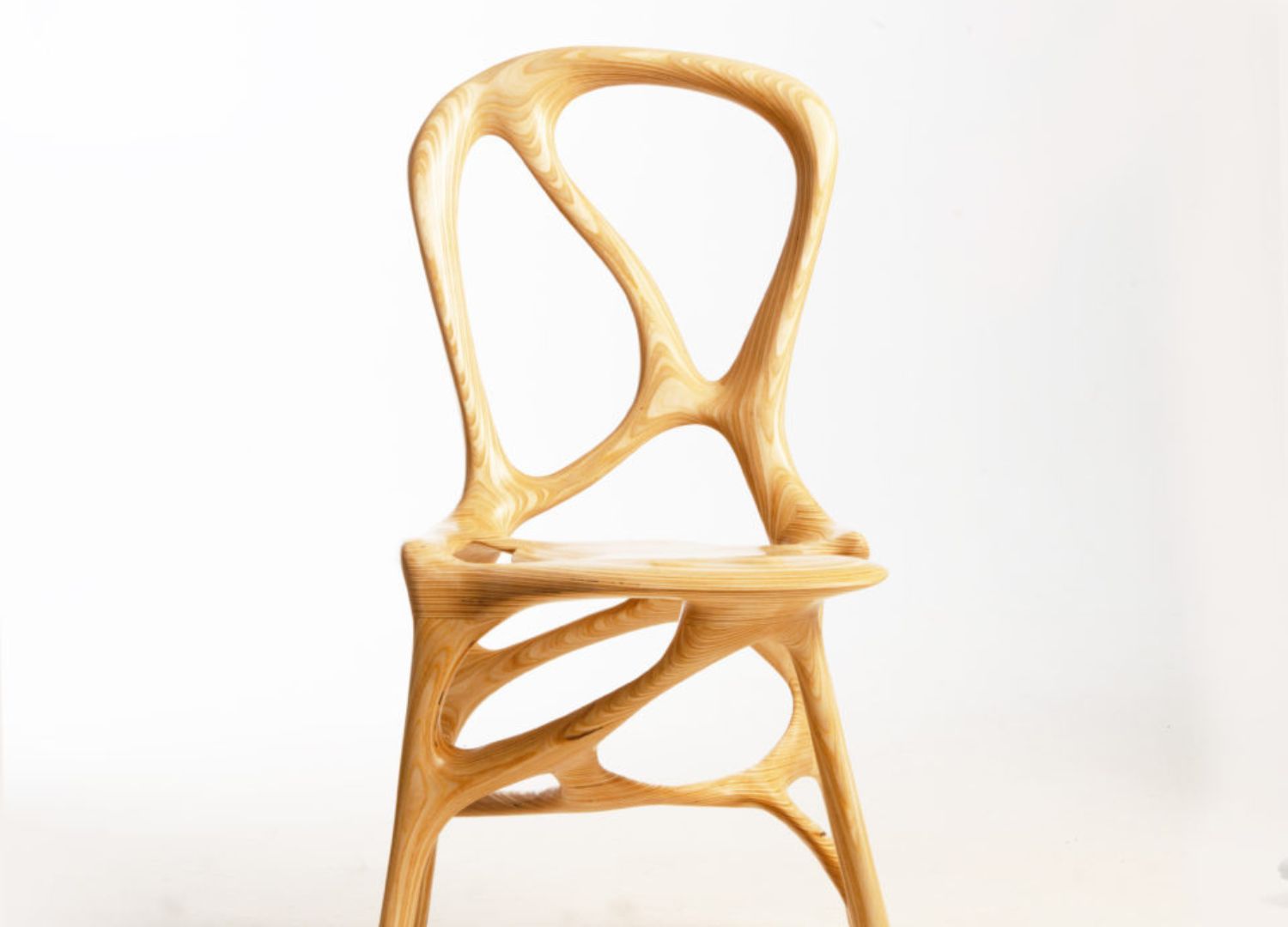
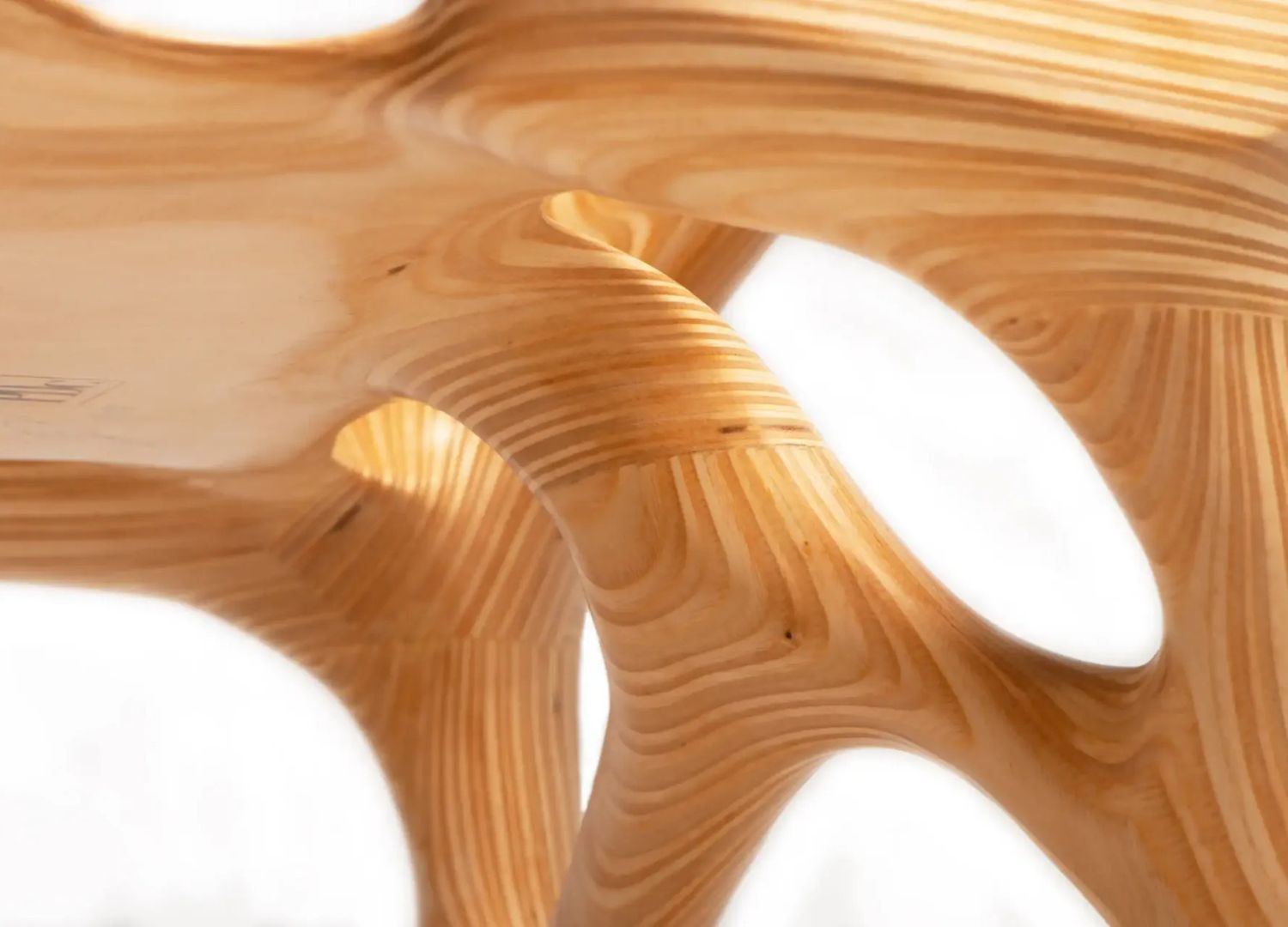
Dusty is a chair that Donders created in 2018, out of just 3 and a half sheets of 6 mm thick Birch plywood sheets. Its organically designed 3D model is cut into five parts, which are all sliced like a 3D print file. Each of the 148 pieces is numbered and 2D milled, to then be sorted and glued together by hand into the original model. This approach allows the chair to look substantial but to weigh only 5.8 kg, wasting less material and realising a more efficient production than the traditional 5-axis milling.
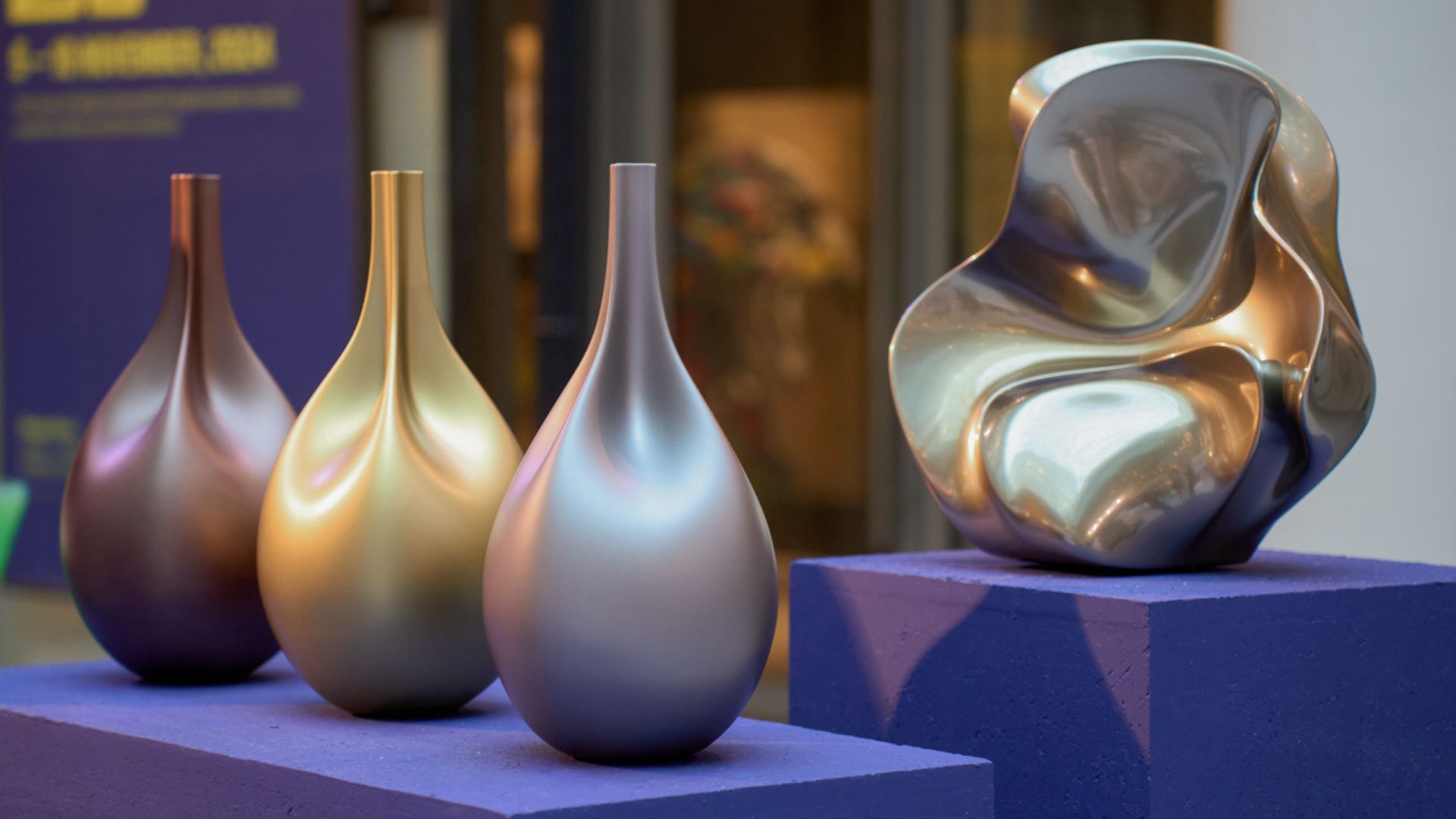
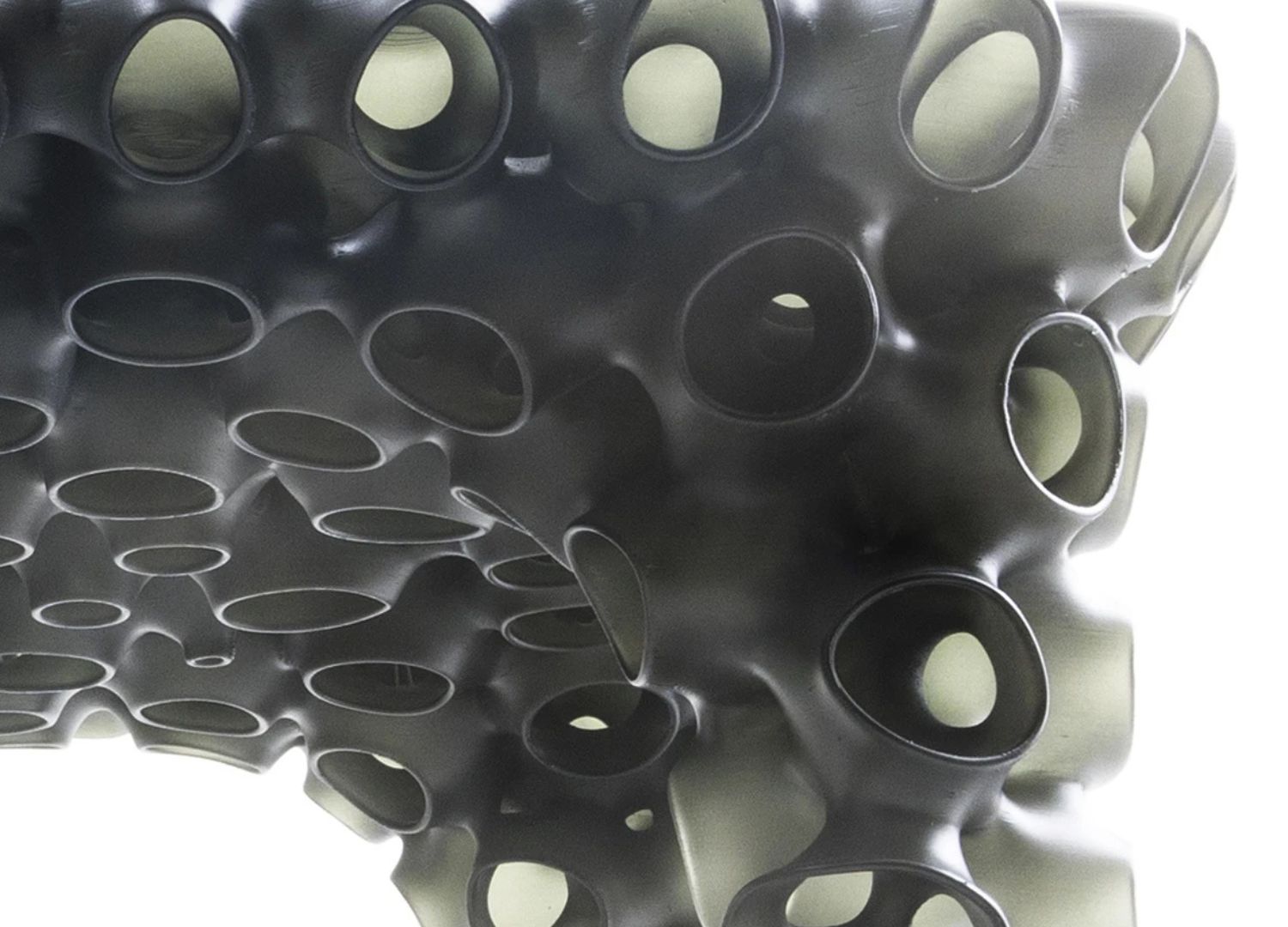
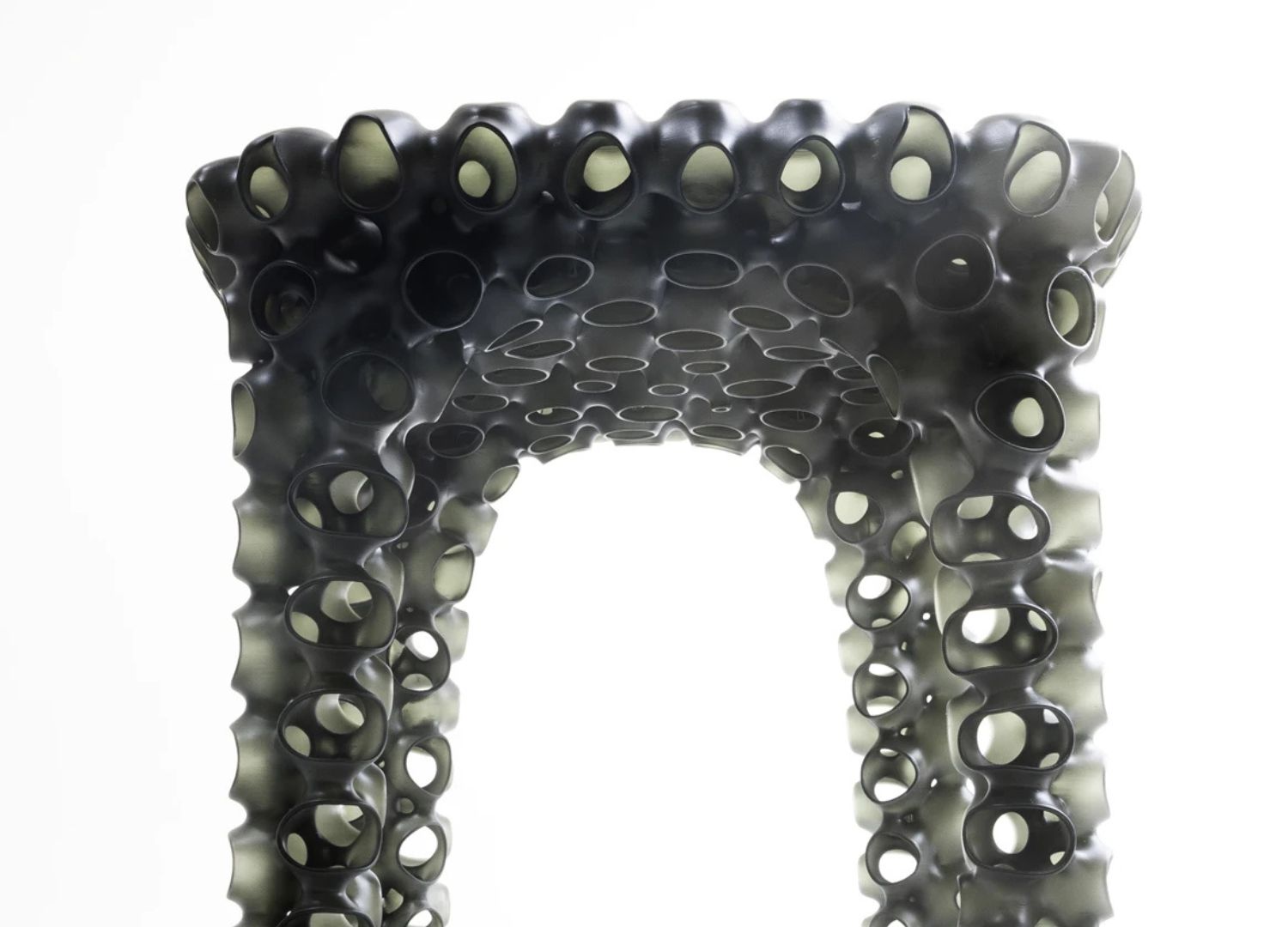
At Harmon House on Chaussée de Charleroi, the exhibition “Donders at Harmon” is running through November 4, 2025, showcasing his latest Spherene table objects, a culmination of his lifelong work in harmonising technology with nature. The works were created using the homonymous Swiss computer algorithm “Spherene”, a Rhino3D plugin that generates so-called metamaterials, which are artificially modified materials with properties that are not typically found in their natural versions.
For example, the program can develop steel structures with the weight of aluminium, by engineering their geometries. In the Spherene side table’s case, the furniture piece is printed with SLA technology out of Accura, a rough resin that offers durability and a fine surface finish, hiding layer lines. Donders is also proposing another version made out of sand, merging nature and innovation in the table’s organic design language.
Technological products and sustainable products are often seen at two different ends of the design spectrum. However, Donders’ work proves how well the two can work together, using metamaterials or advanced algorithms to reduce material waste and make products that are more intelligent as well as more sustainable. His practice reminds us that technology is not separate from nature. The algorithms that optimise his structures use the same principles found in bones and shells; digital fabrication is not a departure from the natural world, but can simply be another way of learning from it.
What Donders, Magritte, Horta, and the Antwerp Six share is mastering tradition so thoroughly to then know exactly how to subvert it; you cannot deconstruct what you don’t understand completely. Donders understands traditional craftsmanship so deeply that he can see clearly where digital tools can expand their possibilities, rather than overtaking its art. His computer calculates what the hand cannot, but proportion and shaping are still judged by a human eye. Technology can be an incredible aid in the process, but creative work will always be inevitably human.