What is the stadium’s role in a city’s urbanistics? JKMM Architects has an answer
In Finland, you can now live and shop in a football venue, at the new Tammela hybrid stadium. Integrating urban life with sports, the project redefines the stadium as an active component of the local community.
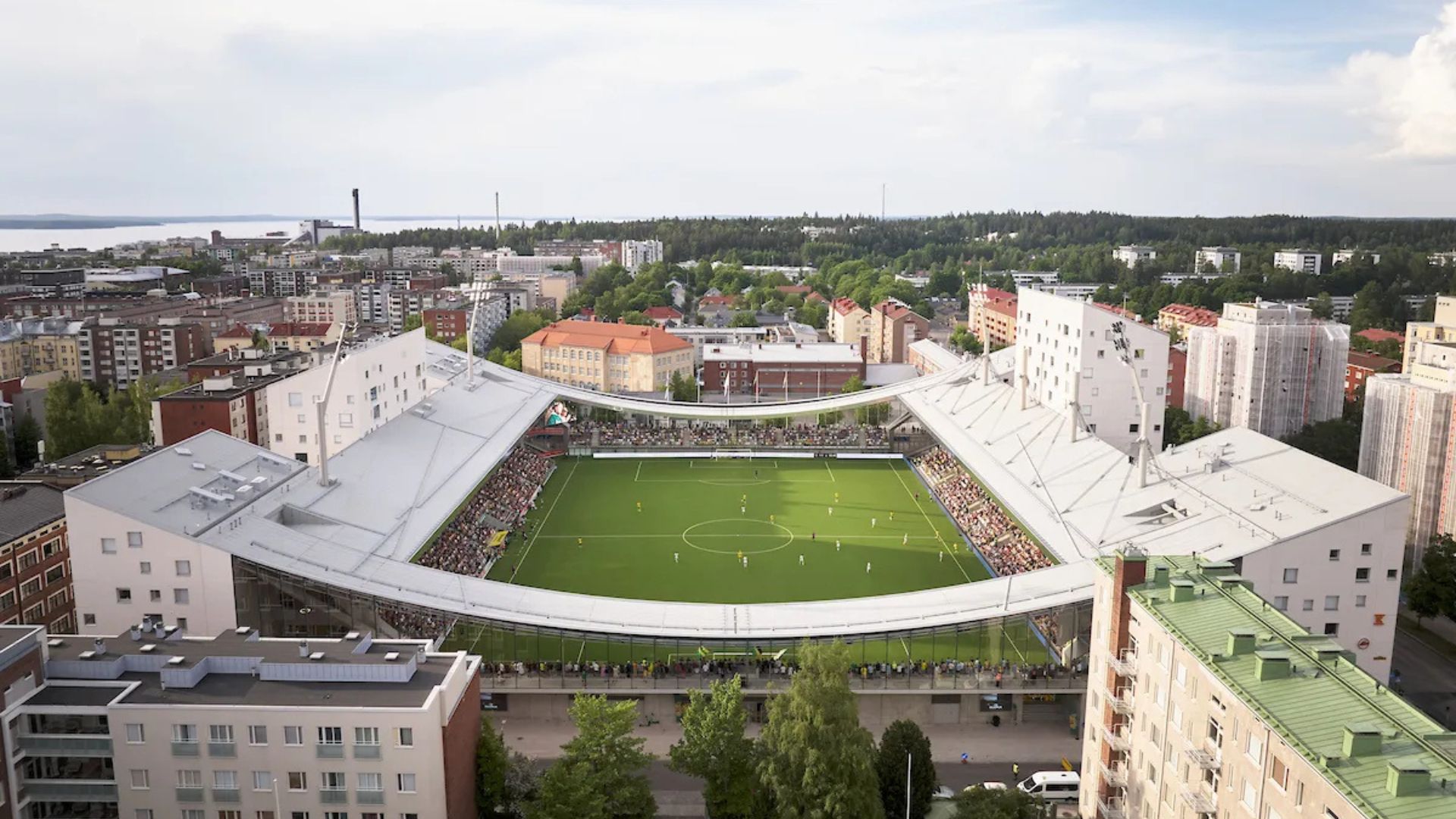
In the spring of 2024, Finland’s first hybrid football stadium opened in the Tammela district of Tampere, marking a milestone for both Finnish architecture and sports culture. The Tammela hybrid stadium, designed by Helsinki-based JKMM Architects, is a bold reimagining of what a football stadium can be, as a fully integrated component in a city’s infrastructure.
Stadiums are usually large, isolated structures, often found in the outskirts of a city, and whose functionalities are limited to sports events and concerts. For this project, the architects wondered, what if sports venues became a core element of urban living? By making the stadium multifunctional, adding residential, retail, and public spaces, JKMM created a building that can be at the centre of a city’s social life.
Gallery
Open full width


Open full width
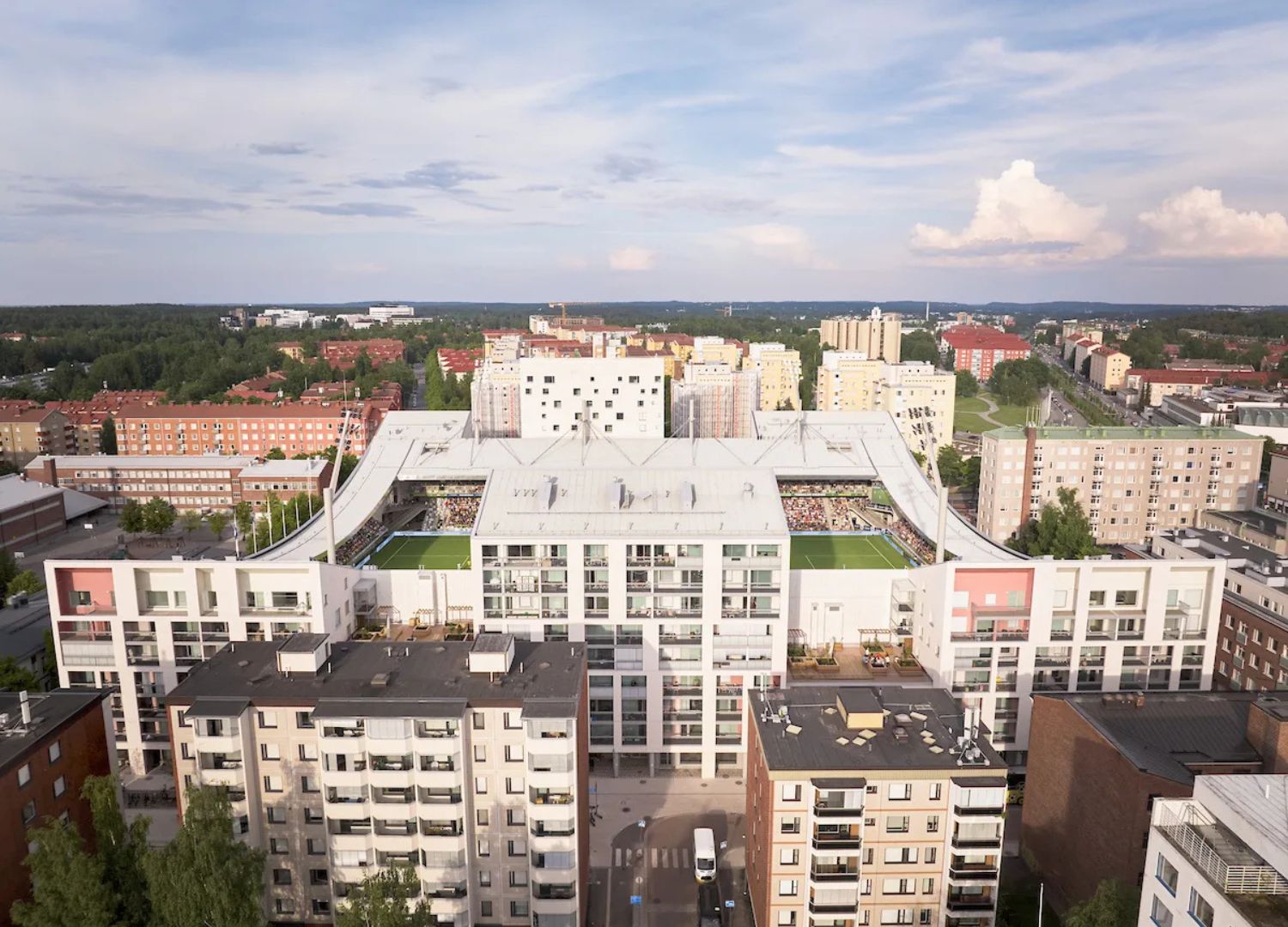
The project, developed through a collaboration between the city of Tampere, the Pohjola Rakennus construction company, and JKMM Architects, took over a decade to be realised. The journey began in 2014, when Tampere held an architecture competition to give new life to the old Tammela stadium, which was no longer fit for use. The studio’s proposal introduced a radical concept: rather than building a standalone stadium, they would create a 50,000 square metre city block that seamlessly integrated it with other structures that the city’s inhabitants needed.
The stadium consists of eight interconnected plots, with residential buildings on the east and west sides, and shopping centres and parking lots beneath. This configuration represents what urban designers believe to be the future of sports venues, places that activate their surroundings every day of the year rather than sitting dormant between match days. The facility meets UEFA Category 4 requirements, enabling it to host Europa League and national team matches. Beyond football, the stadium can accommodate 15,000 people for concerts and large scale events.

The stadium’s primary tenant is the Ilves team, which was founded in 1931 and currently plays in the Veikkausliiga, Finland’s top professional football league. The club has experienced dramatic ups and downs, including a period in the 1990s when financial troubles led to the dismantling of the men’s team. The Ilves managed to return to the field in 2008, beginning a slow climb back to the top. It is now one of the largest and most successful clubs in Finland, and their return to a proper home stadium in Tammela, after years of temporary arrangements, represents both a homecoming and a new beginning for the club.
The Tammela hybrid stadium is part of a broader international trend towards making sports architecture more versatile and useful to the surrounding community, as single-use venues no longer make economic or urbanistic sense. In North America, projects like Atlanta’s Battery at SunTrust Park and Los Angeles’s SoFi Stadium complex have shown that stadiums can anchor entire neighbourhoods, becoming new social hotspots for locals. The trend also reflects changing attitudes toward public financing: as taxpayers have grown sceptical of subsidising facilities that mostly benefit wealthy franchise owners, cities are now focusing on development models that generate more activity and community benefit year-round.
A good architect’s job goes beyond designing structural beauty, as a building is meaningless without its function or context. A complete understanding of not only what a building is meant for, but also of how it will impact its surroundings, its neighbours, and the overall dynamics of a city, is key to designing great architecture. As urbanistics becomes more and more complex, the Tammela hybrid stadium by JKMM is a prime example of how a building’s limitations can be transformed into new possibilities.