We Design Beirut, where tradition and experimental design become one
The second edition of We Design Beirut has just concluded: an international platform that enlivened the Lebanese capital with a rich program of initiatives celebrating local creativity and international influences.

Founded by Mariana Wehbe of Mariana Wehbe Public Relations, in collaboration with industrial designer Samer Al Ameen, the 2025 edition of We Design Beirut (October 22 to 26) opened to the public across five key locations, where eight exhibitions explored a design vision rooted in the event’s three pillars: empowerment, preservation, and sustainability.
Through the involvement of students and professionals, and the creation of installations, interactive experiences, and guided tours, the event invited visitors to engage in a collective reflection on local life and culture, with the aim of understanding how design can shape the future – from the reinterpretation of traditional customs to an exploration of the role of design in a place defined by contrasts.
Gallery
Open full width




Open full width
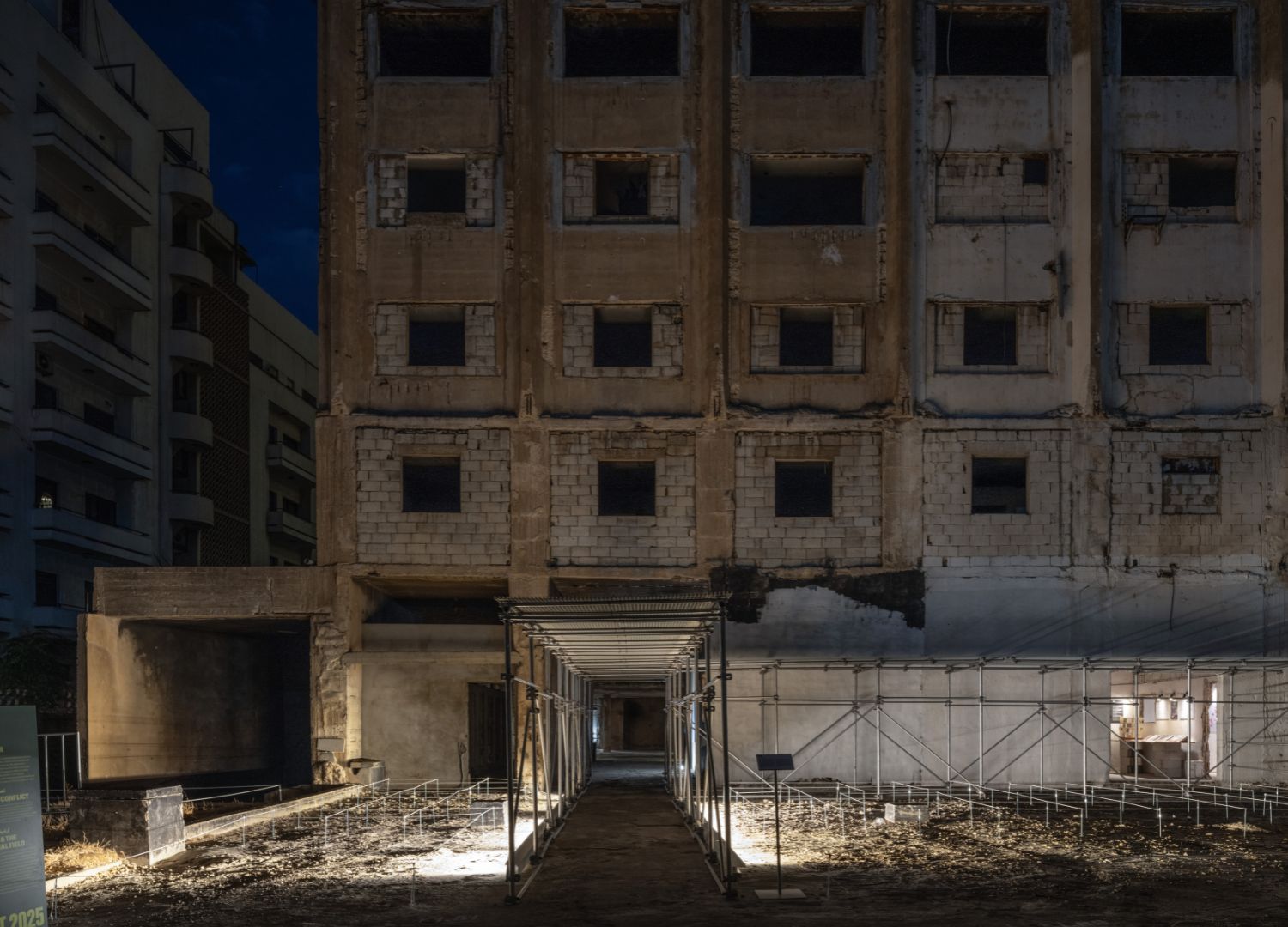
The five-day Lebanese “design week” showcased a concept dedicated to stories and experiences – from rethinking new uses and techniques for traditional materials to exploring the role of design in a place marked by contrasts. Design ‘In’ Conflict, hosted in the unfinished Burj El Murr skyscraper, showcased the work of students and alumni from local universities. The exhibitions Threads of Life, Métiers d’Art, and Skin of a City, set in the abandoned Abroyan textile factory, focused on the theme and future of craftsmanship.
Totems of the Present & the Absent, at Villa Audi, celebrated the reopening of Smo Gallery with a collection of totems, while the historic site of the Roman Baths hosted the marble design exhibition Of Water & Stone. At Immeuble de l’Union, Union—A Journey of Light explored the building’s history – under renovation since 2016 – and its evolving role within Beirut’s cultural landscape. Below is a selection of the event’s most remarkable exhibitions and projects.
We Design Beirut – Highlights:
Design ‘In’ Conflict – Burj El Murr
Curated by Archifeed founders Teymour Khoury and Yasmina Mahmoud, in collaboration with Tarek Mahmoud and Youssef Bassil, and with the support of Solidere, the initiative invited students and alumni to develop proposals addressing the theme of conflict as a condition of life. Based on the premise that in Lebanon, conflict is not an isolated event but a true way of living, the project did not focus on war or speculative solutions for the future but explored the theme across diverse works.
From personal protection tools such as Rhea Bassil’s Sound Protection Kit – composed of a sound-dampening ear cover integrated with a soft fabric wrap for psychological relief in high-noise environments – and Zoe Sakr’s Human Black Box – a wearable that acts as a locator and memory archive, tracking and preserving the wearer’s last words – to research like Paolo Barkett’s The Window Project that offered an analysis of how certain architectural structures – such as Burj El Murr – can in fact function as instruments of surveillance, and thus as geographical projections of the city’s restrictions.
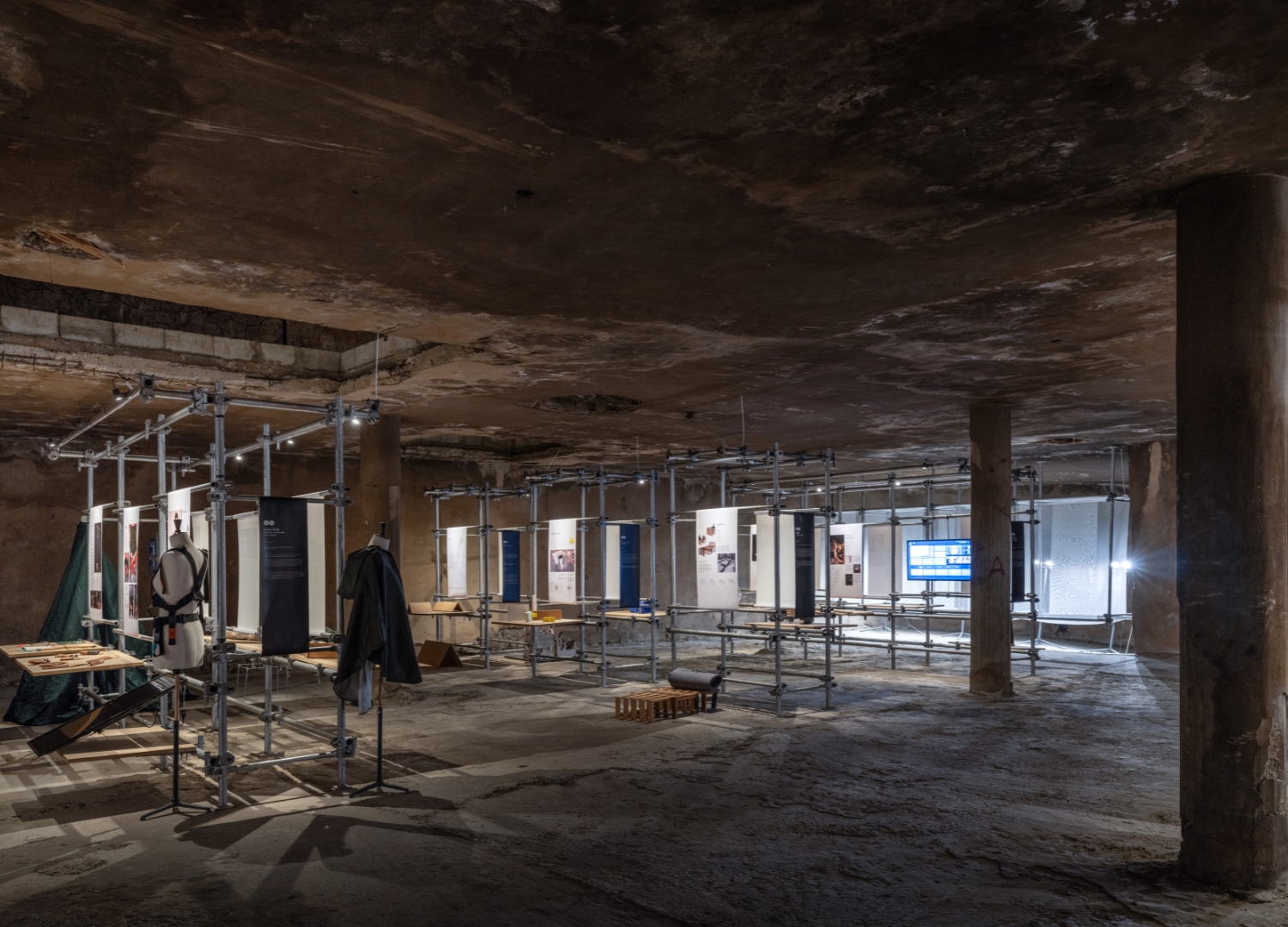
Through four different sections – the Design and Architecture Students Showcase, the Amphitheater, the Alumni Showcase and the Vertical Survey installation – the aim was to present a collection of objects, interviews, videos and performances questioning how architecture, design, and art can engage with the theme as a system to be explored and revealed.
Métiers d’Art – Abroyan Factory
At Abroyan Factory, the theme of craftsmanship was explored through installations and workshops. Among the works, the project Clay Unbound: A Sensory Inquiry into Matter and Transformation was a living laboratory dedicated to clay and created by Fabrica Design Platform for We Design Beirut. The main question the event sought to answer was: “What is clay and what can it become?” In line with Fabrica’s identity as an experimental school that aims to unite traditional knowledge with research, Clay Unbound explored the culture and techniques surrounding the material, stimulating new debates on its evolving role.

The space was organized into three areas: Interactive Installations, inviting the public to touch, shape, and explore clay in all its forms; the Material Alchemy Lab, with two installations showing how the material reacts to fire, time, and human intervention; and Collaborative Workshops, hosting four free public sessions each day to learn, play, and expand skills.
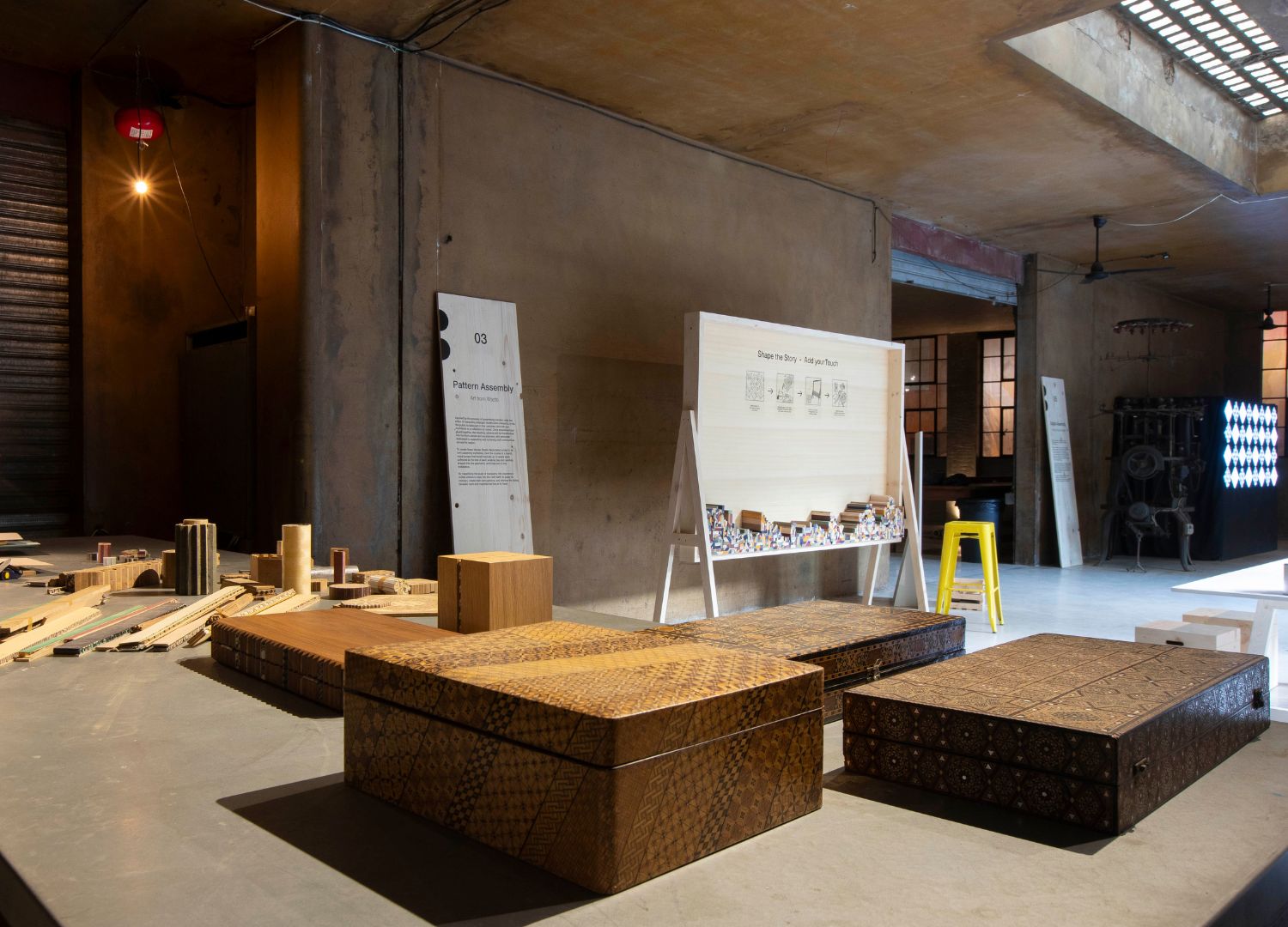
Another installation featured in the exhibition was In Assembly – Patterns at Play, curated by Studio Nada Debs. It was an immersive installation celebrating connection and play, inspired by the refined art of wood marquetry, traditionally found in backgammon tables. Master craftsman Nabil Haswani was the protagonist of the event, with live demonstrations and the display of the Funquetry and Marquetry Mania collections – early experiments that marked the beginning of his collaboration with Studio Nada Debs and the modernization of this ancient craft.
The installation unfolded through a series of spaces offering different perspectives on the art of marquetry. The public was also invited to participate actively by contributing to the creation of a collective piece and the virtual design of a backgammon game, thanks to the collaboration with TRAME and Art Blocks, with technology integration sponsored by Flying Submarine.
Threads of Life – Abroyan Factory
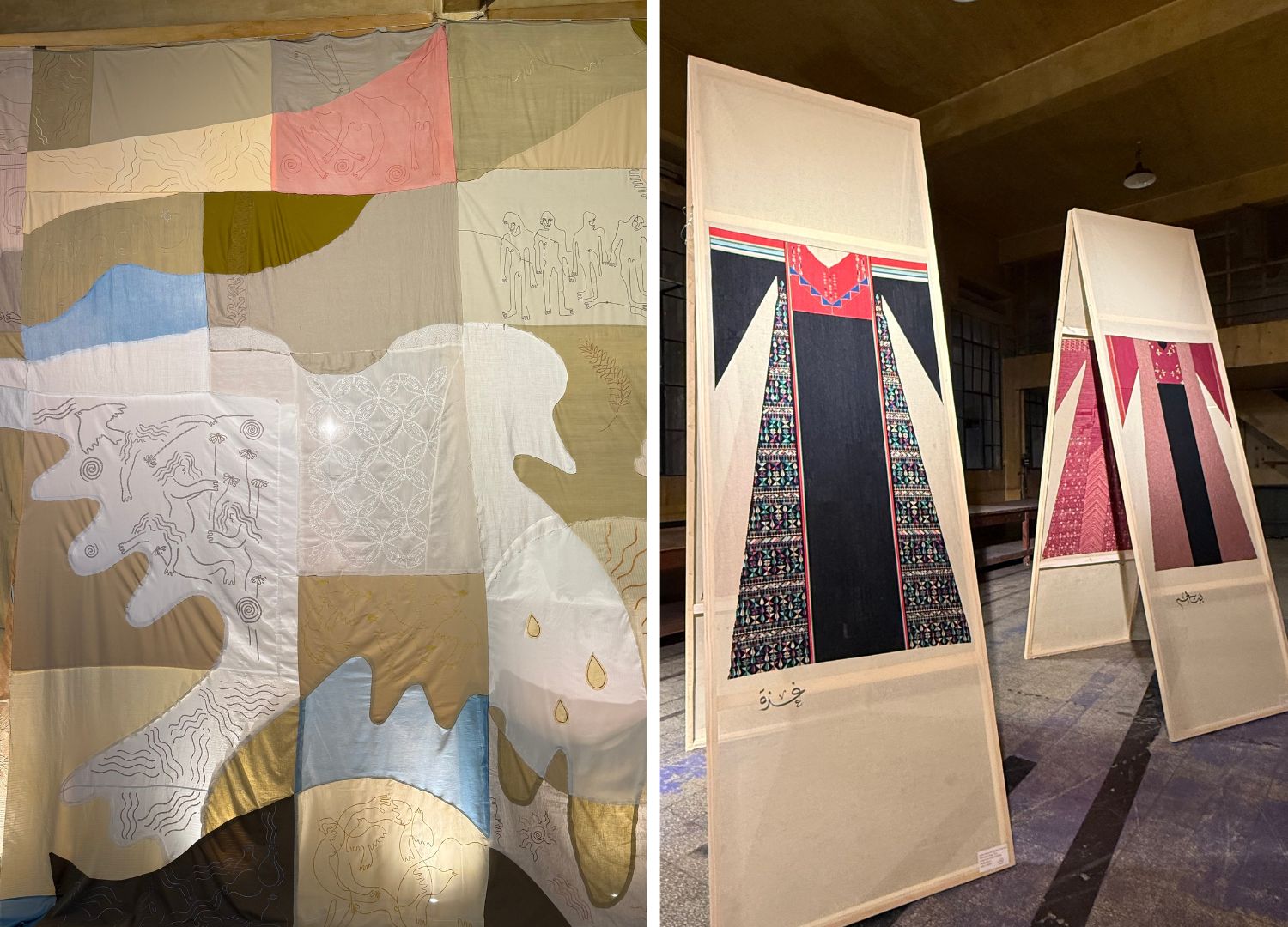
In this exhibition celebrating the art of textile as living memory, one of the highlights included Textured Love by Ahmed Amer, a textile mural composed of layered panels of deadstock fabrics, each carrying Levantine or Aghabani embroidery, fusing traditional craftsmanship with Ahmed’s personal artistic language shaped through Beirut. Through the reuse of discarded materials and the connection between panels, it conveys renewal, community, and dialogue, paying tribute to the artisans Ahmad Shoukeir, Ayman Helwani, Ibrahim Ali, Borhan Ashour, Patile Tachjian, and Anas Mahfouz behind it.
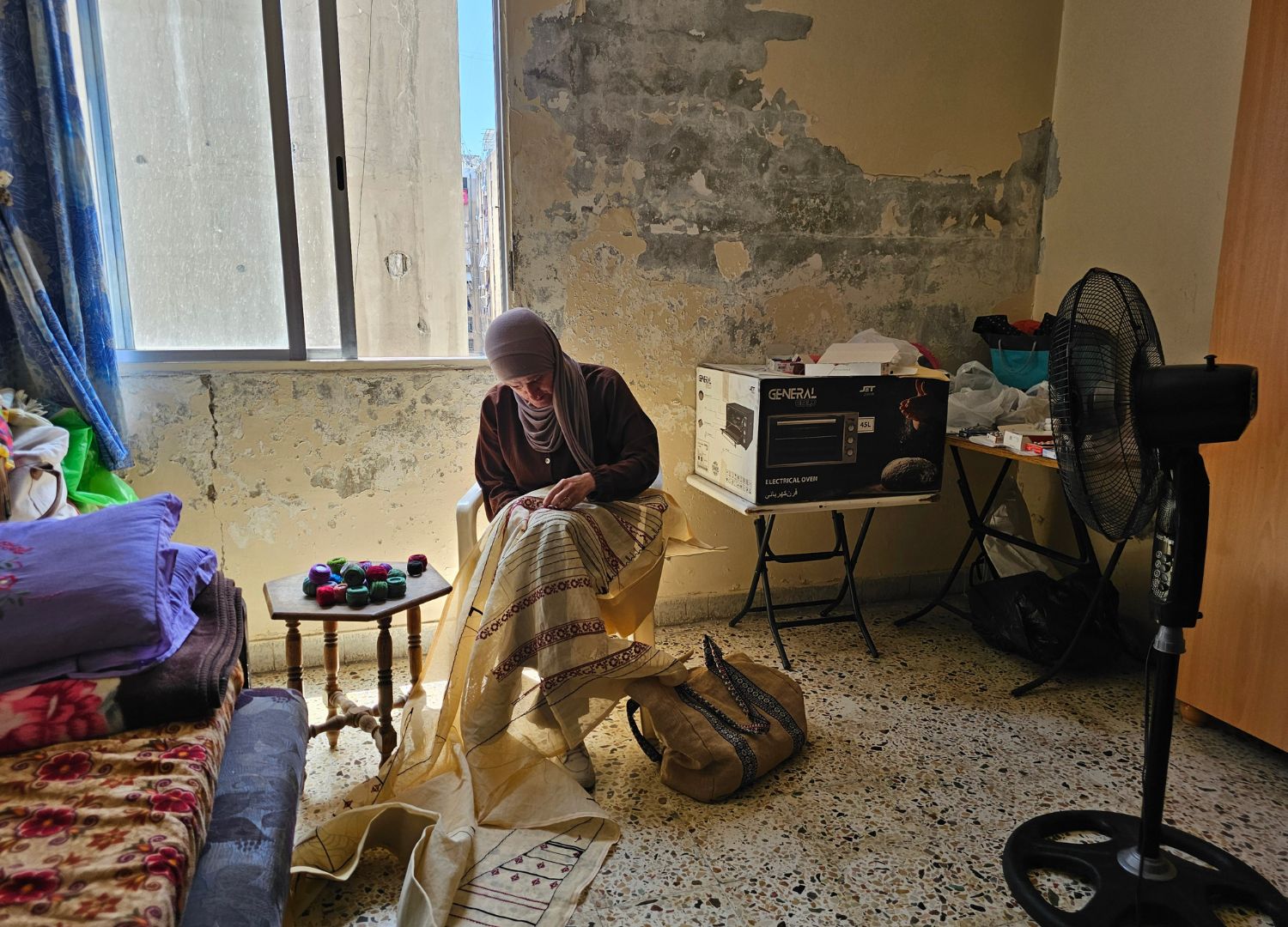
Moreover, A Nation in Stitches was the name of the installation created by Inaash, a Lebanese non-profit association that works with Palestinian women in refugee camps. The project presented six different models of the traditional Palestinian dress, the thobe, the result of the embroiderers’ work over eight months, weaving their history and tradition as a testament to a rich culture.
Totems of the Present and the Absent – Villa Audi
Curated by Gregory Gatserelia, the exhibition of modern celebratory totems —a tribute to what’s missing and what refuses to go away —marked the reopening of Smo Gallery, a space that once gave voice and visibility to designers. Among the proposals was Pink Phoenix by George Geara, a bar sculpted from a single block of pink onyx with references to Lebanese symbols and culture. Inspired by the character of the phoenix, the totem is meant to be a symbol of freedom and rebirth.
Studio Bazazo, with Solace, presented a true confessional that does not grant absolution but invites reflection on the confessions people hold about Beirut, those they declare, those they whisper, and those they refuse to voice.

SI-01 (Power Supply Indicator 01) by Dia Mrad focused instead on Lebanon’s daily negotiation of fragmented electricity infrastructures, through an industrial control panel turned sculpture. Each light signal corresponds to a fluctuating energy source – solar, generator, public grid, or none – making visible the uncertainty that structures daily life.
Union — A Journey of Light – Immeuble de l’Union
Karim Nader and Atelier 33 opened the doors of the Immeuble de l’Union to the public with an exploration of the building, structured floor by floor through interventions by local and international artists and designers, both emerging and established. The exhibition reflects on Beirut’s renewal, using light to reveal continuity and change. It brings the past into focus and traces the city’s passage from destruction to regeneration, carrying its history into a hopeful future.
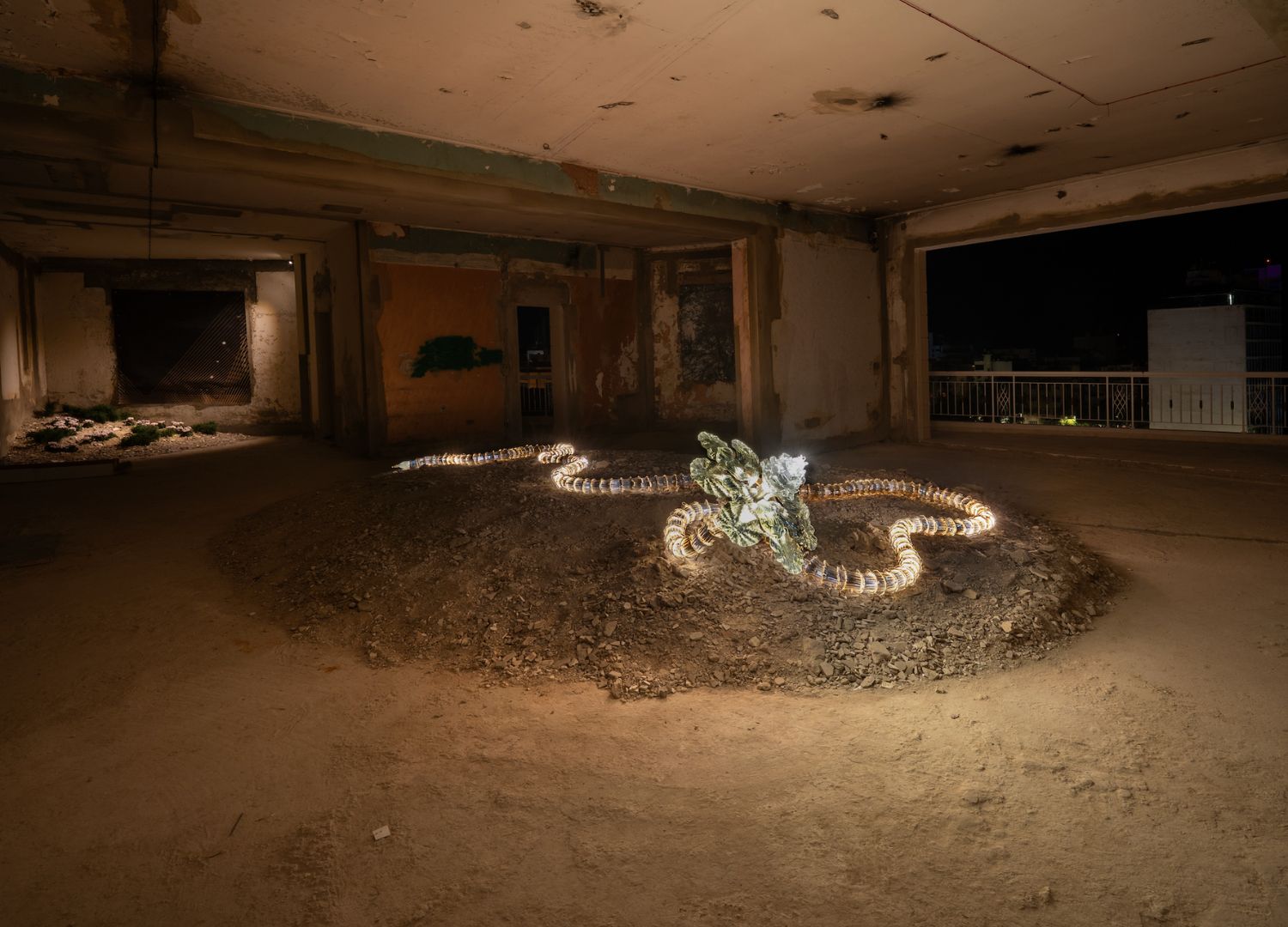
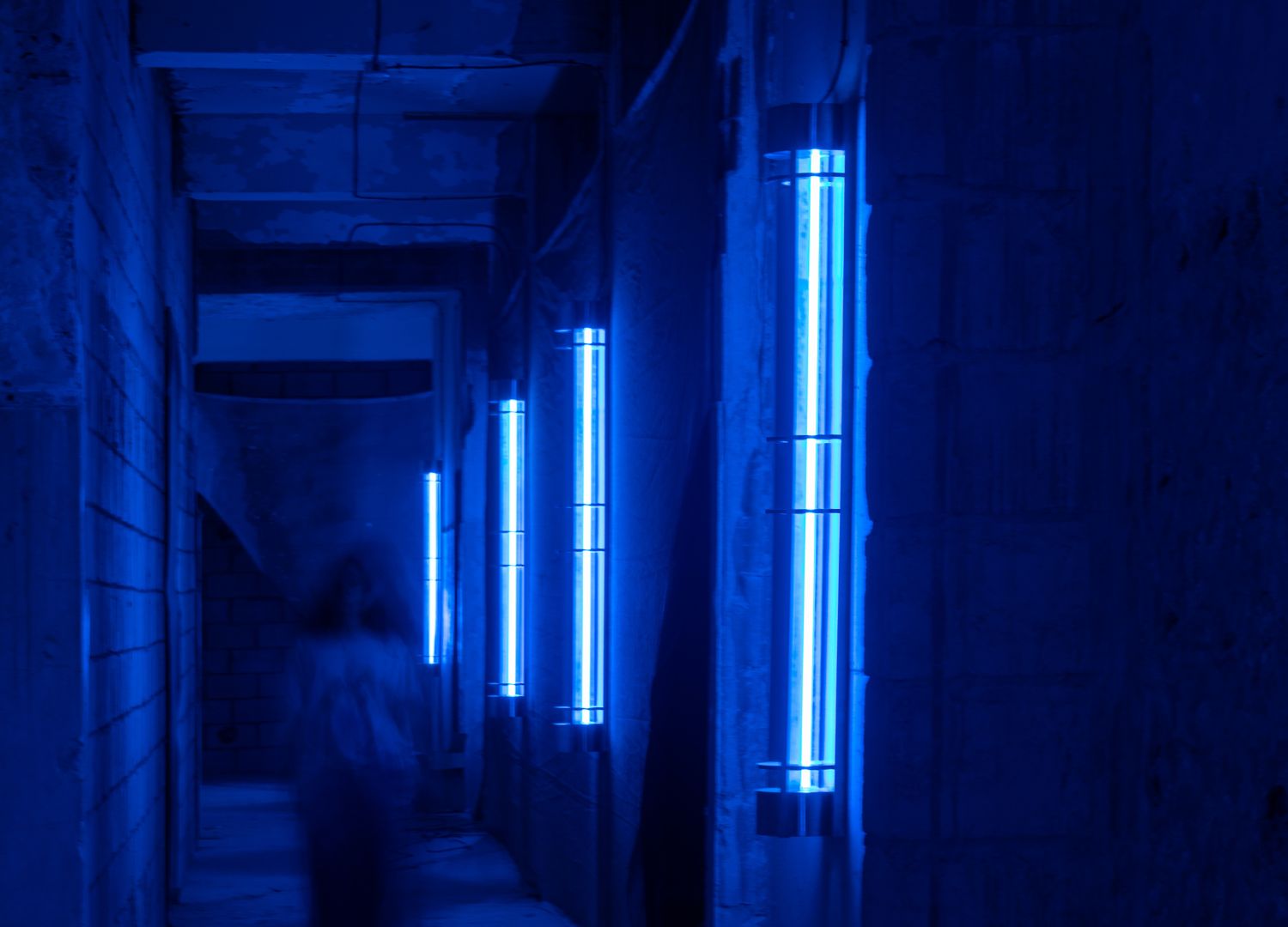
An example of the installations was Cyclamen by Christian Pellizzari, whose work merges sartorial tradition with experimental materiality. The luminous installation, created with layered glass elements, was a sculptural play of transparency, reflection, and light. Sky by Atelier 33: on the seventh floor, the Purple Venue project plays with the building’s industrial essence, where vertical cuts of blue neon, enclosed in steel cages, punctuate the space, creating rhythm and tension.
Open Studios
We Design Beirut not only offered exhibitions and workshops but also the opportunity to visit design studios. Among them was Eclec, founded by Ahmad Hamad, which explores the intersection between design, architecture, and experience.
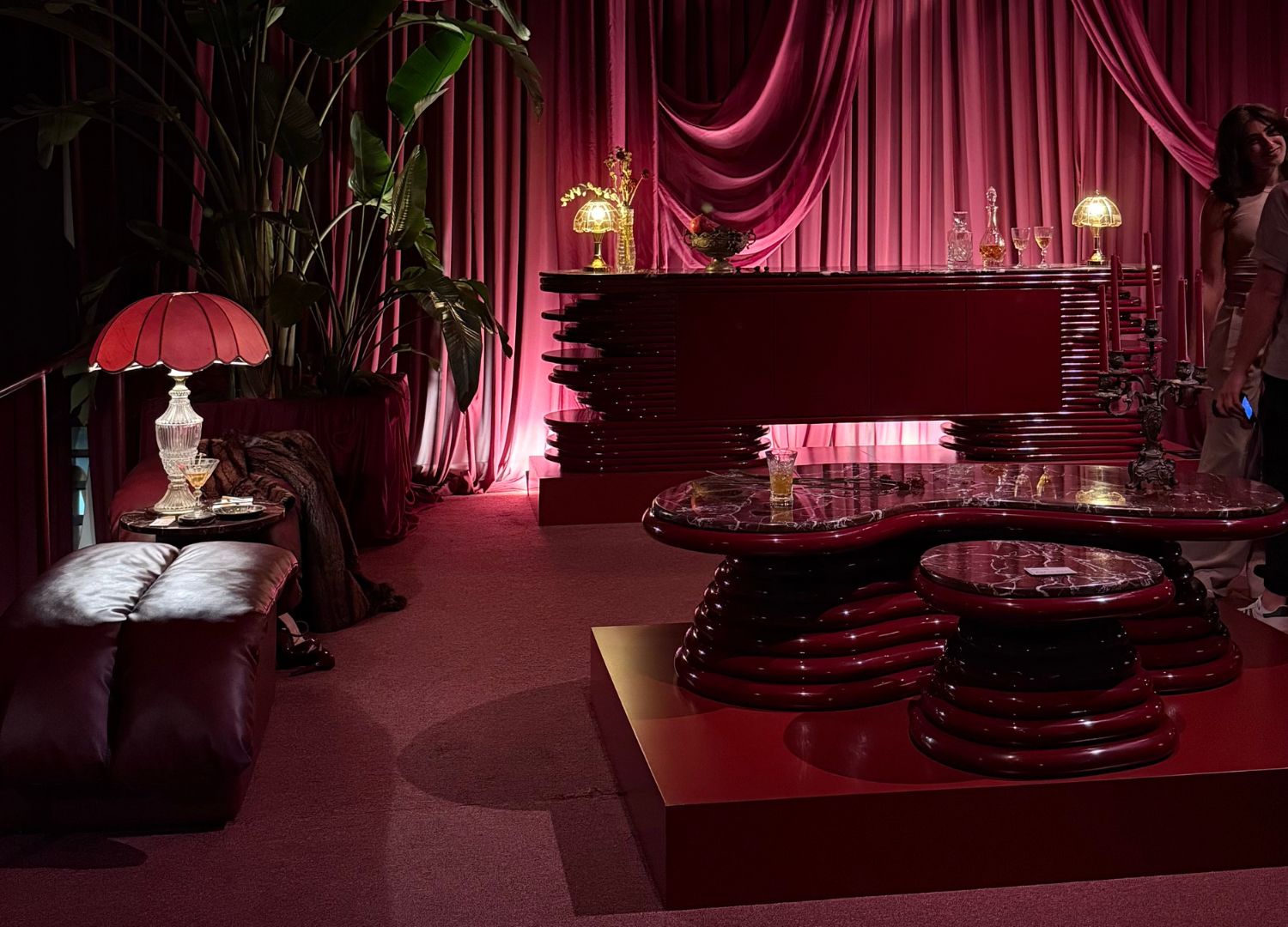
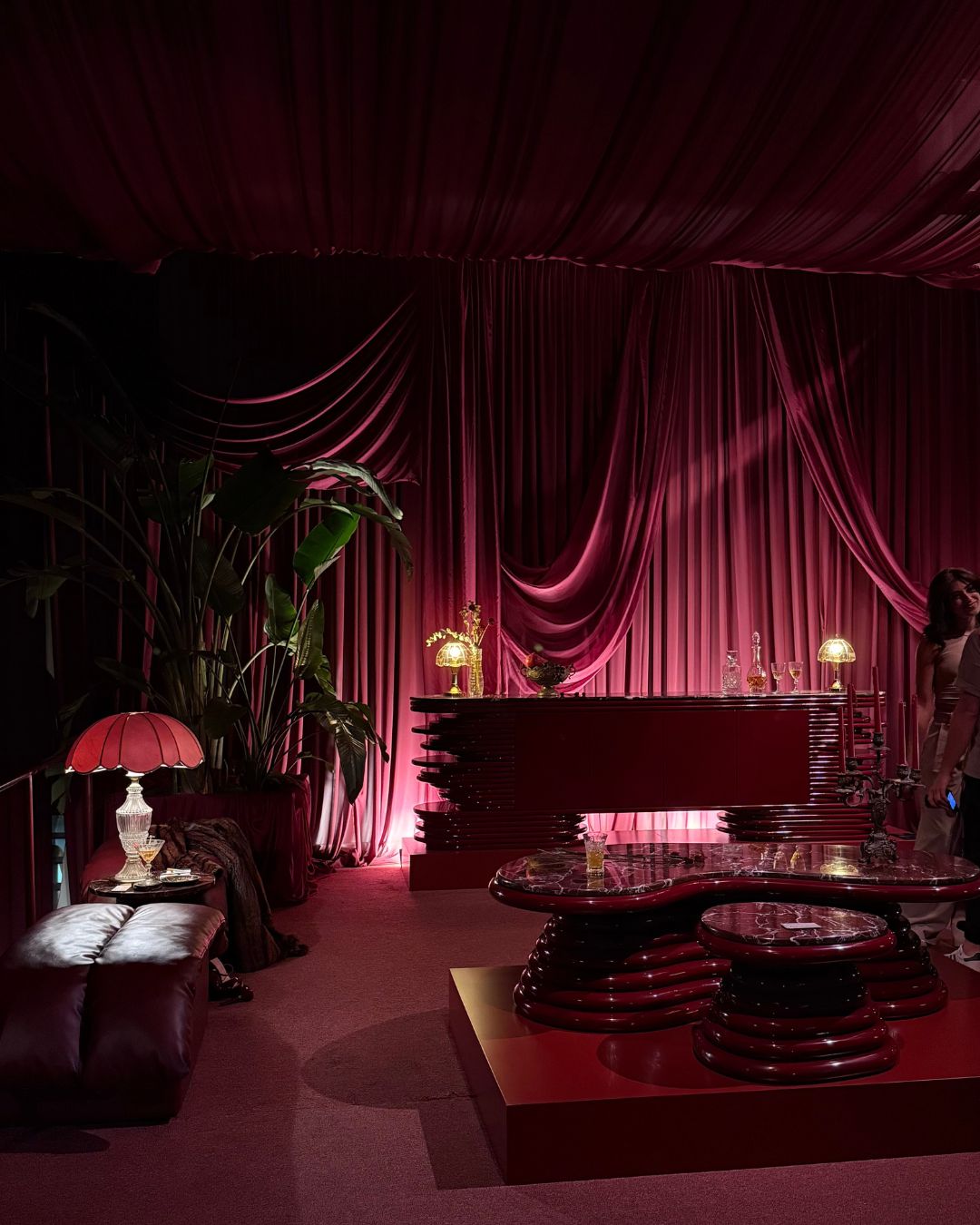
Eclec presented itself to the public with Scarlet, a scenography developed in collaboration with Carlo Kassabian, a bright red room featuring three sculptural volumes Carmen, Charlize and Gaelle– two container furnishings and two tables – characterized by organic and soft forms.