Foster + Partners’ sculptural architecture for the UAE’s new museum
Emerging from the ground like falcon wings, the Zayed National Museum is a shining tribute to the country’s founding father, merging traditional values with ultra-modern architecture.

A new landmark of the United Arab Emirates will open up in December 2025 as the Zayed National Museum has finally been completed by Foster + Partners, 18 years after its appointment. Located in the heart of Abu Dhabi’s Saadiyat Cultural District, the museum represents a convergence of architectural innovation and cultural heritage, acting as a physical embodiment of the country’s journey from desert nation to global hub.
The museum takes its name from Sheikh Zayed bin Sultan Al Nahyan, the founding father of the UAE, who passed away in 2004. Zayed was a relatively liberal leader in the Arab world: he believed in the union of Middle Eastern countries, was committed to funding education, and worked for local environmental conservation. He believed that history was not only an archive of the past but also a lesson for the future, a key principle that the museum will carry in its exhibitions.
Gallery
Open full width


Open full width
Foster + Partners is an internationally renowned British architecture firm, founded by Norman Foster, who is known for his modernist style made of glass, steel, light and sustainability. For the Zayed National Museum, the firm created a structure that honours Emirati traditions while addressing the specific challenges posed by the country’s demanding climate.

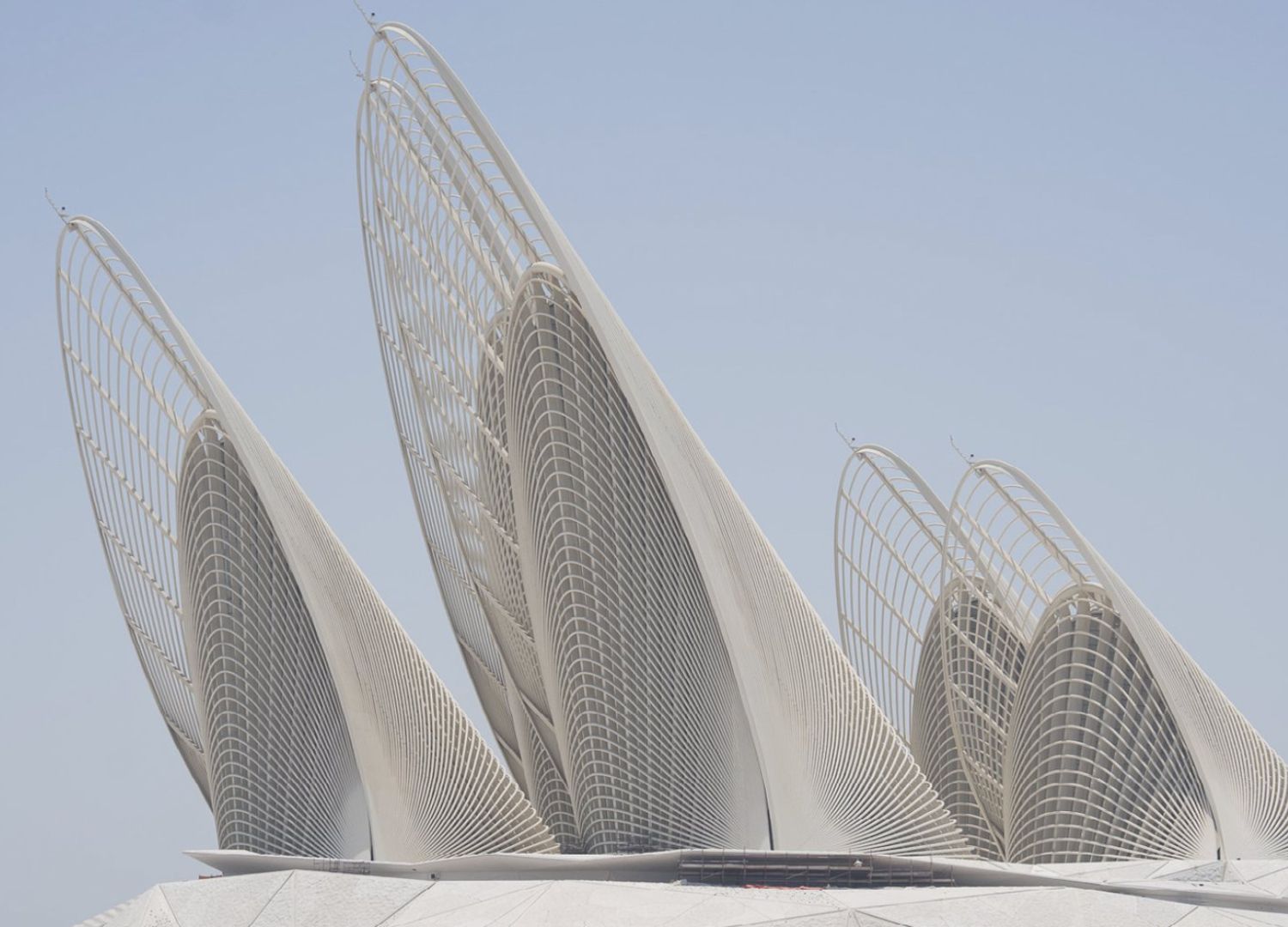
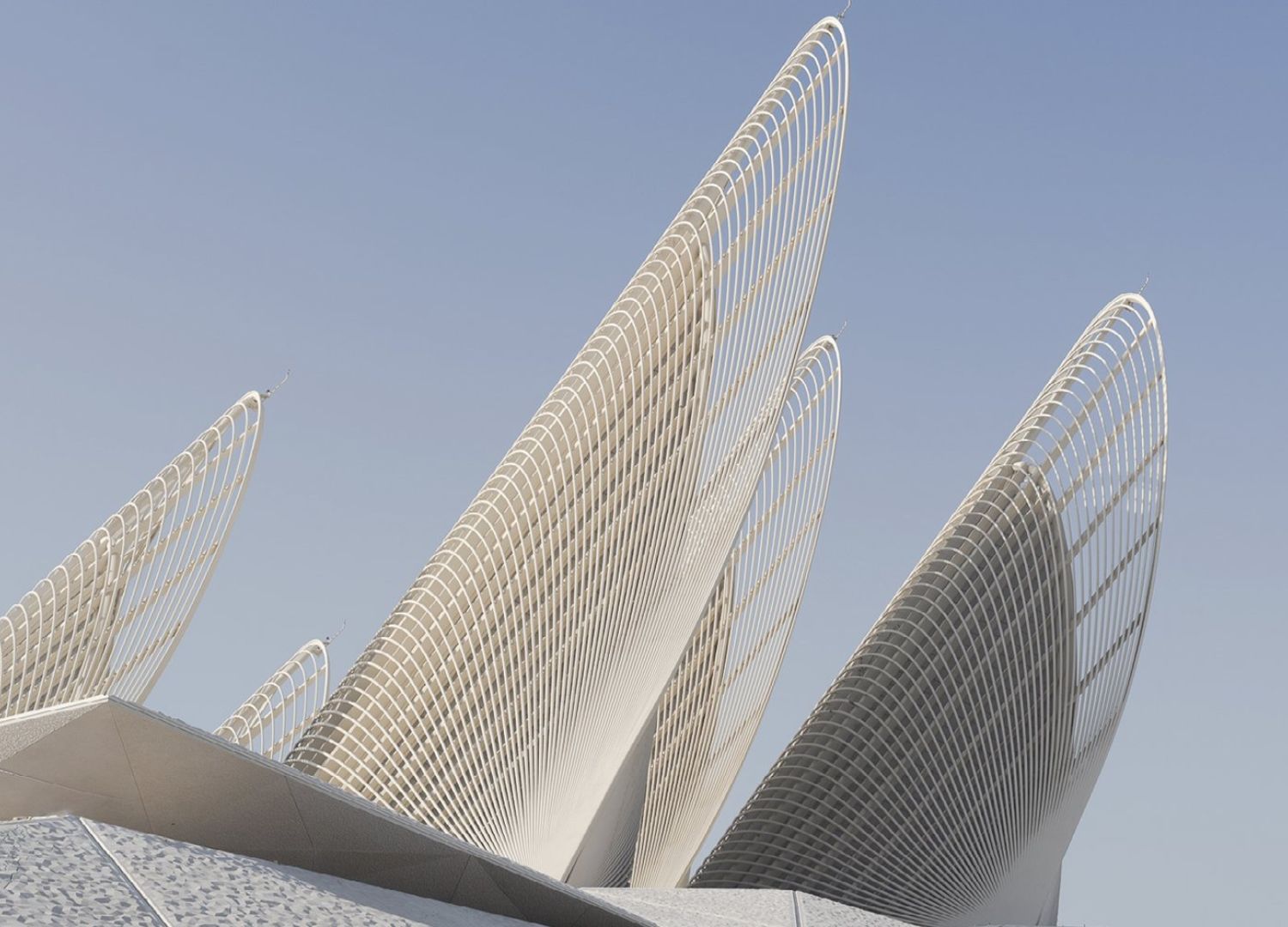
The primary galleries of the museum nestle in a massive mound, whose giant textured panels reference the topography of the UAE itself. Rising from this mound are five lightweight steel structures that give character to the architecture. Inspired by the falcon, a central animal to Gulf culture, the towers are aerodynamically sculpted to reference the bird’s wings during flight. However, this poetic reference also has a practical purpose, as the towers work as solar thermal chimneys, using the region’s intense heat to naturally ventilate the building.
The treatment of light in the building is made of a series of discreet openings, in reference to how typical Emirati architecture manages the region’s intense sunlight. Rather than fully opening the building, a few strategic apertures capture and direct light, creating moments of drama in the interior spaces. This response ot the region’s climate has effectively become a design language, echoing the values of privacy and contemplation of the local culture.

The colour palette of the museum is equally deliberate, as both the interior and exterior spaces are rendered in a warm-white shade that reminds visitors of Saadiyat Island’s sand. This chromatic unity between inside and outside makes the building feel more like a sculpture than a container, as well as creating harmony with its surroundings. The colour grounds the architecture in its specific place, opposite to the trend of architectural globalisation and blandness.
The Zayed National Museum refuses several contemporary orthodoxies: it is neither a geometric mirror-clad manifestation of technological progress, nor a nostalgic revival or historical forms. Instead, Foster + Partners proposes that contemporary architecture can be culturally grounded and formally innovative at the same time. As the museum nears its opening, its success will depend not just on architectural recognition but on whether it resonates with Emirati citizens and visitors as a place that genuinely reflects their sensations and their heritage.