In dialogue with Common Object Studio, the Regenerative Design explorers
From furniture to acoustic and lighting products, the studio investigates and develops new pathways to create truly sustainable opportunities for a more responsible and attentive design industry.

In a historical moment increasingly focused on the sustainability of design, it is essential to recognize the true value of processes within the ecosystem we inhabit, and this is precisely what Common Object Studio strives to achieve with its approach to design.
Co-founded by Fernando Ramirez and Justin Beitzel, experts in environmental design and engineering, respectively, the studio goes beyond traditional methods to help clients rethink processes, supply chains, and outcomes, with the goal of delivering regenerative and meaningful solutions that place people and the environment at the center.
From industrial design to spatial design, the studio embraces a revolutionary systemic approach that starts by analyzing how products and companies influence every aspect of our ecosystem, ultimately creating solutions with significant environmental and social impact – without losing sight of the fun and creative side of design. We asked Ferdinando and Justin to share insights into how their studio approaches its work.
Gallery
Open full width


Open full width
There is a lot of discussion about sustainability and circular design, but not enough about regenerative design. What does this term mean to you, and how does it apply to an industrial product?
Common Object Studio:
We think of regenerative design as moving beyond “less harm” toward creating systems that actually restore ecosystems and communities. It’s similar to what has happened in the food world, where the conversation shifted from sustainability to regenerative agriculture. Farming practices that build healthier soil, sequester carbon, and increase biodiversity show us that production can give back instead of only taking.
In our practice, we take that same mindset with the companies and projects we take on. If we start with materials and processes that can actively take bolder steps toward sustainability, the outcome has a chance to be more than just “neutral”. That’s why we incorporate this thinking up front, it shapes the process and the end result.
When you start a new project, what does it mean for you to think in terms of systems rather than finished products, and how does this influence your process?
Common Object Studio:
For us, thinking in systems is about zooming out. Of course, we still care deeply about the user experience – that’s a given – but we also ask: How can an object give back more than it takes? That includes supply chains, how it can be serviced, how the material performs and ages, and ultimately what happens at its end of life. We explore material palettes, supply chains, and processes before form. It’s a way of designing objects that not only serve people in use but also give something back to the systems they come from.
By expanding the lens beyond the object itself, we uncover richer opportunities for storytelling and design. A chair isn’t just a chair, it’s a network of suppliers, materials, farmers, and people who touch it along the way. By understanding those connections, we can design more intentionally and create products that feel alive within their systems rather than isolated from them.

Looking at your projects in detail, with BuzziSpace you launched BuzziChicle, an acoustic and lighting product. What were the main design choices and innovations you introduced?
Common Object Studio:
BuzziChicle was exciting because it was one of the first projects where a client invited us to set clear sustainability goals from the start. Together with BuzziSpace we took a hard look at the status quo: foams, glues, and textile waste that dominate the acoustic category. Then we designed a system to improve on it.
Our solution uses upcycled denim infill, requires no glue or foam, and is designed to come apart at the end of life. The modularity and simplicity of assembly were just as important as the material palette. For us, the innovation was less about inventing something flashy and more about reshaping a system that already existed, making it healthier, simpler, and easier to return to the loop.
Let’s talk about the OkaTerra series. The multifunctional Numero Table has received the Declare Label from the Living Future Institute. How important is transparency in processes and materials to you?
Common Object Studio:
Transparency is everything. With OkaTerra, we wanted to prove that you can trace a product all the way back to its roots. We can literally tell you what farm your sheep came from or where the tree for the table was harvested. That level of storytelling not only builds trust, but it also creates a deeper relationship between people and the products they live with.
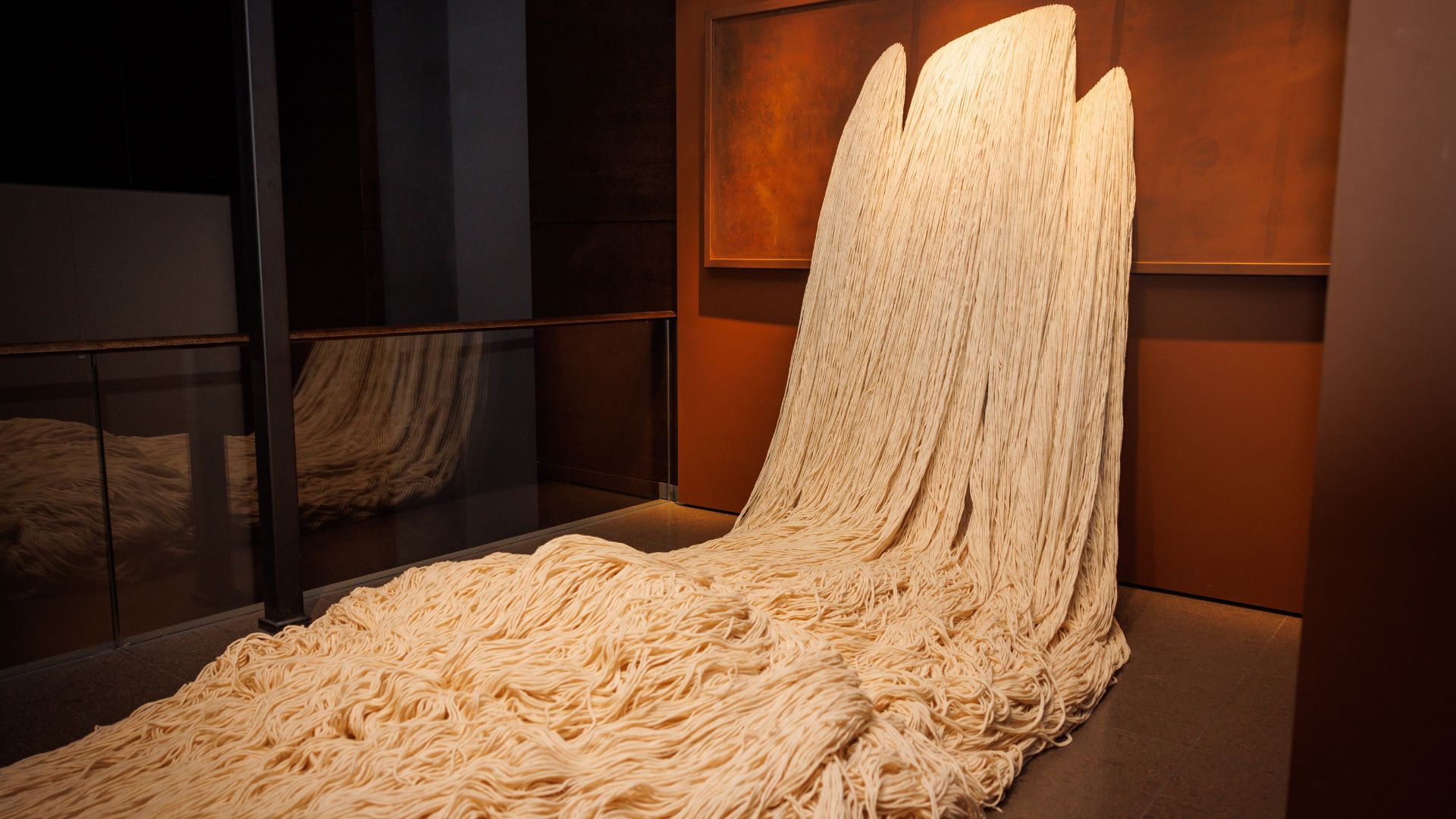
The Numero Tables carry the Declare Label, a third-party certification that makes those material and process choices visible, allowing the consumer to see everything that goes into the product. For our chairs, we leaned into fallen lumber, waste wool, and hemp because they are materials that can be tracked, understood, and returned to soil easily. As we’ve all learned, not all wood or other materials are harvested and processed responsibly. That clarity becomes part of the design language itself, part of the criteria that shapes it. The actual materials are quite familiar, but we are experimenting with what most would consider waste: fallen lumber, waste wool, and hemp waste to figure out pathways to commercialize these materials. From the design side, it is different; we’ve had to reframe what uniformity means, and we are designing to celebrate variation.
The new product of the series is an acoustic screen. How did this concept come about, and what goals did you set for yourselves during the design process?
Common Object Studio:
The acoustic screen came out of our residency with Patricia Urquiola for the Haworth Design Lab at NeoCon 2024. That mentorship challenged us to think not just about “another product” but about how systems of work and waste could be addressed simultaneously.
Our goal was to create a product that could solve a spatial need while also embodying the regenerative principles we set for the OkaTerra line, using bio-based materials, modularity, and an end-of-life pathway that can naturally decompose. The Understory screens are made of waste wool infill with a 100% wool textile for the covering, we also have hempcrete gumdrop stools, made from hemp hurd and colored by natural minerals. It’s all a continuation of the story: building a family of products where transparency and regeneration aren’t add-ons, they’re embedded in the DNA.

You are currently working on a system that diverts textile waste into housewares. Can you talk more about that?
Common Object Studio:
Yes, this is a strong example of systems thinking in practice. We’re working with partners who collect large volumes of deadstock material, and rather than seeing it as a liability, we see it as potential. The challenge is not simply “what can we make from scraps?” but “what products make sense for this specific waste stream, how can we commercialize the system, and which markets are best suited for it?”
So far, the output has included pillows, chair covers, and other smaller goods. What excites us most is experimenting with grinding leftover textiles into infill for upholstered pieces, which directly replaces virgin foam and down. It’s about finding the right applications where waste becomes an asset. By designing around the material, instead of forcing it into the wrong context, we can create products that are both functional and sustainable in their use of leftovers.
For the circular economy to grow, you have to invest in and understand the system, but it always begins with identifying the right market and the right client who can support those product numbers today. That is what gets the gears moving.
Looking to the future, what are the next challenges for regenerative design, and in which direction do you see the studio’s work evolving?
Common Object Studio:
One big challenge is that “regenerative design” risks being watered down as it becomes more popular. For us, it’s important to be precise and realistic. We like to say we’re finding pathways to regeneration, because these systems don’t flip overnight. They need momentum and alignment across industries to truly become regenerative. It’s a lot to ask of a large corporation, but we can help them find that pathway to take tangible steps with each product.
Looking ahead, we’re excited to apply these principles at larger scales. Consumer products, more furniture, really, most products could benefit from this mindset. Our goal is to find partners who are ready to go further, companies that want to experiment, play with their systems, and find that pathway toward regenerative solutions. That’s where we see the most potential impact.