The boutique hotel in Japan that turned Heian into a design language
Genji Kyoto is a boutique Design Hotels member that reinterprets the Heian-era machiya townhouse through contemporary architecture, handcrafted interiors, and a rooftop garden planted with species from the Tale of Genji — designed by an MIT-trained New York architect who has called Kyoto home since 1994.
There is a site a short walk from Genji Kyoto where, more than a thousand years ago, a garden mansion once stood — the residence believed to have inspired the home of Prince Genji in one of the world’s oldest and most celebrated novels. The mansion belonged to Minamoto no Toru, a Heian-period nobleman said to be the model for the literary character himself. That proximity is not accidental. The hotel’s name, its spatial logic, its material choices, and almost every object inside it are a considered act of tribute — not to nostalgia, but to the idea that great design can be a form of cultural memory.
Genji Kyoto opened in April 2022 as a Design Hotels member on a quiet riverside stretch of Shimogyo-ku, offering 19 rooms across five floors. We visited. What we found was something rarer than a well-designed hotel: a building that has genuinely thought through what it means to translate a literary and architectural tradition into contemporary space — and has done it without reverence tipping into pastiche.
Gallery
Open full width
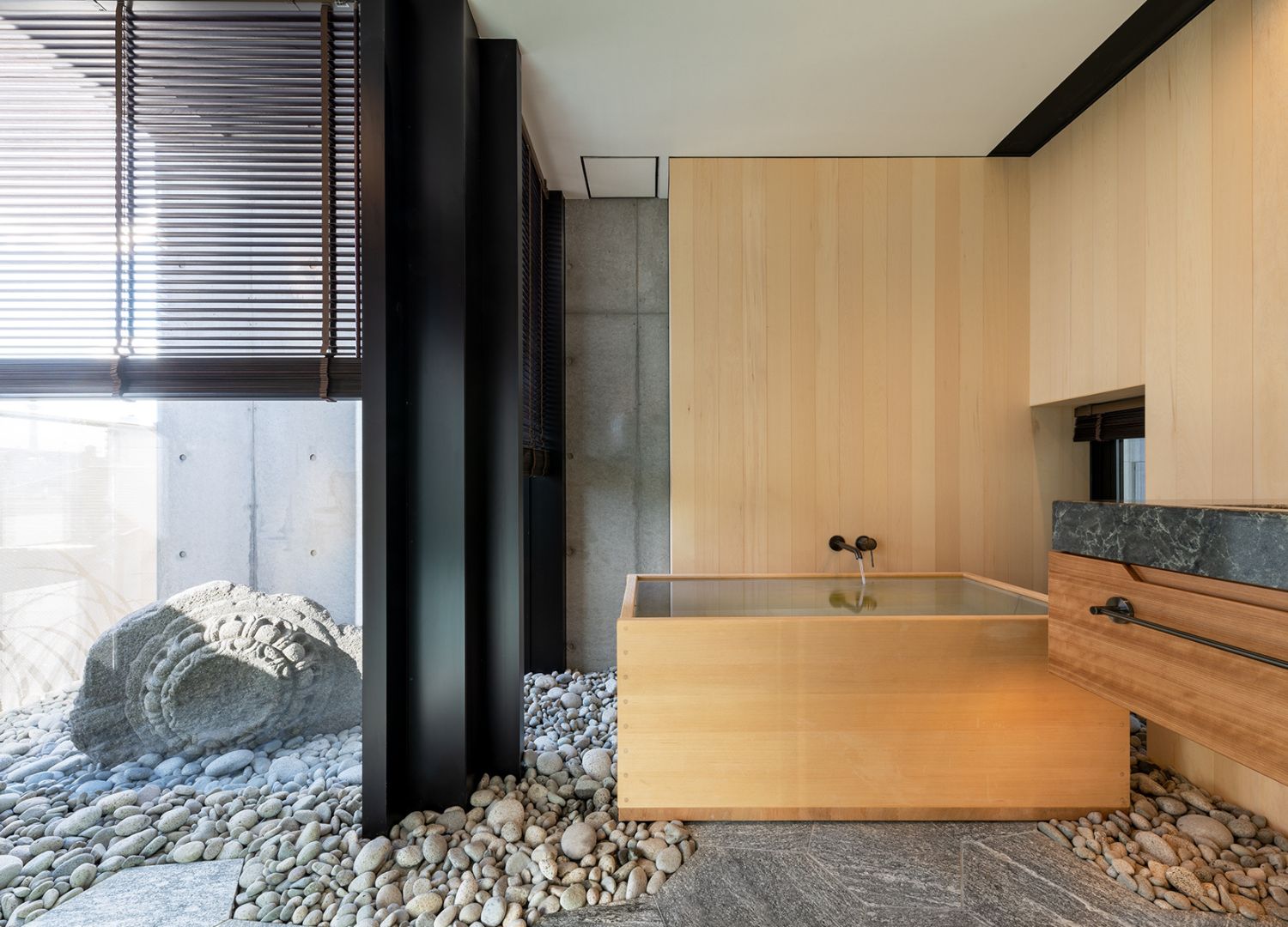
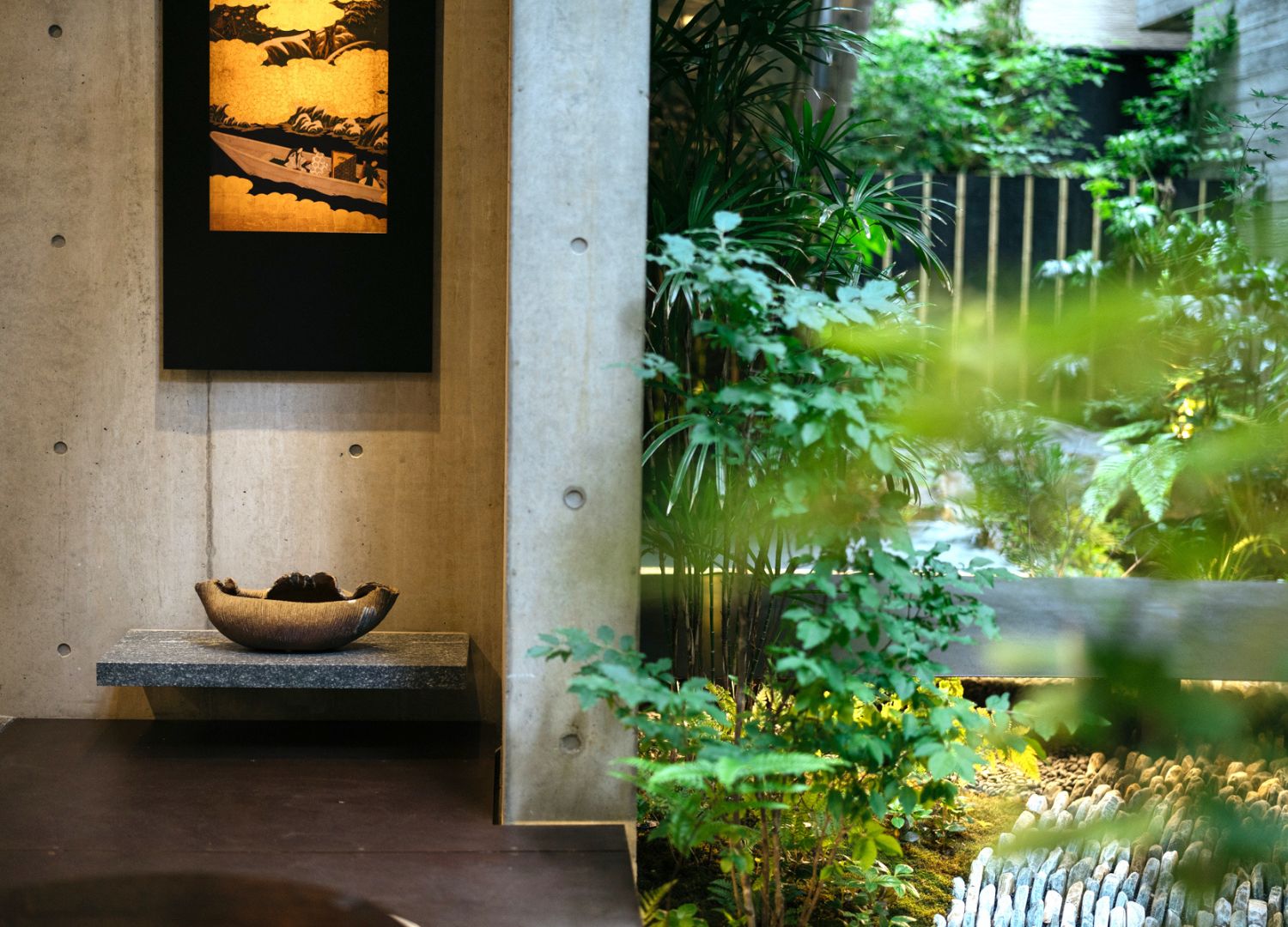
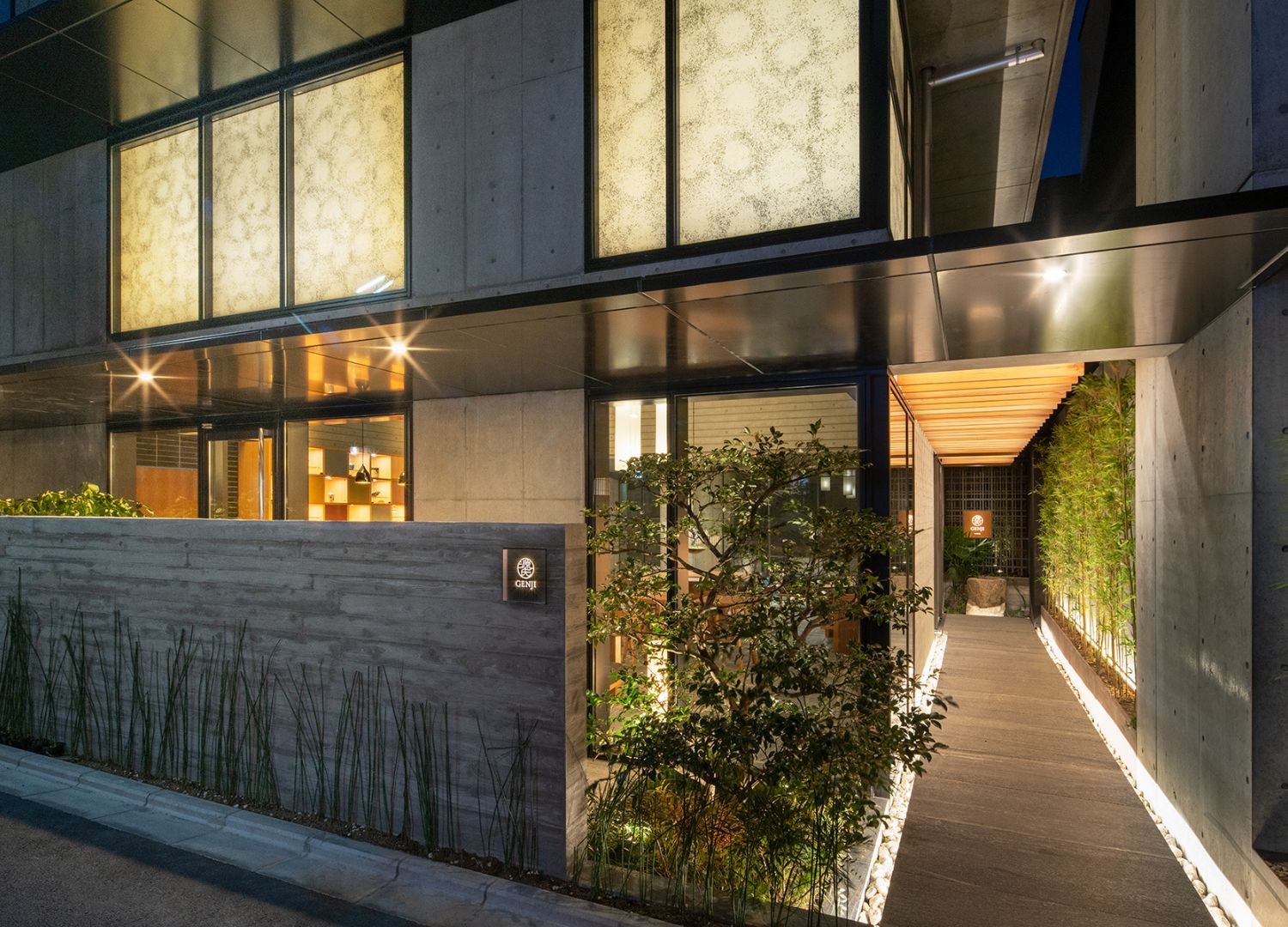
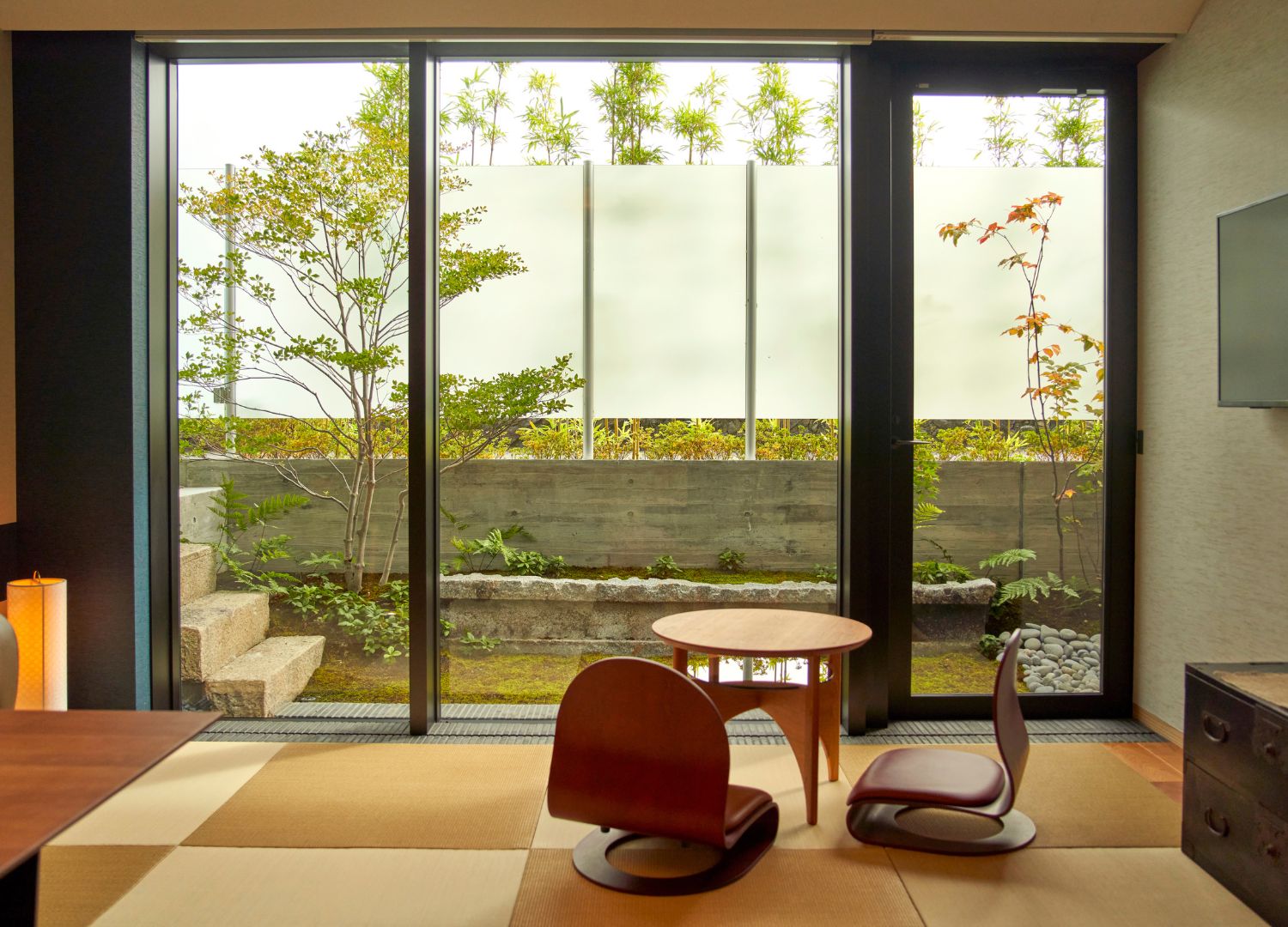
Open full width
Architecture: the machiya reborn in concrete and cedar
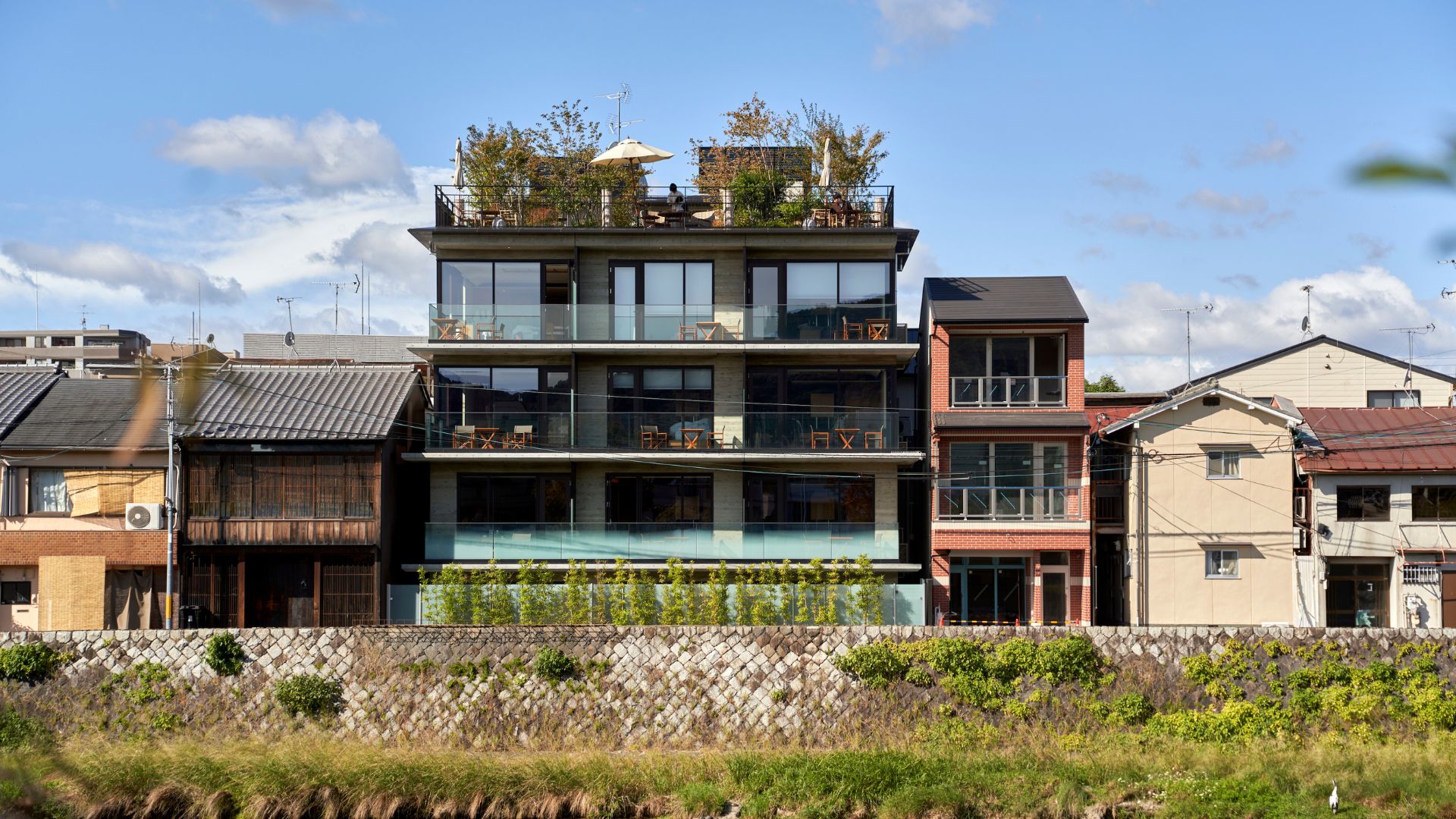
The structural premise of Genji Kyoto is deceptively straightforward. The hotel occupies the footprint of four machiya — the traditional Kyoto townhouses whose narrow, deep plots and layered interior-exterior relationships defined urban domestic life from the Heian period (794–1192) onward. Chief designer and architect Geoffrey P. Moussas of Design 1st — New York-born, MIT-trained, and Kyoto-based since 1994 — read that footprint as a brief rather than a constraint.
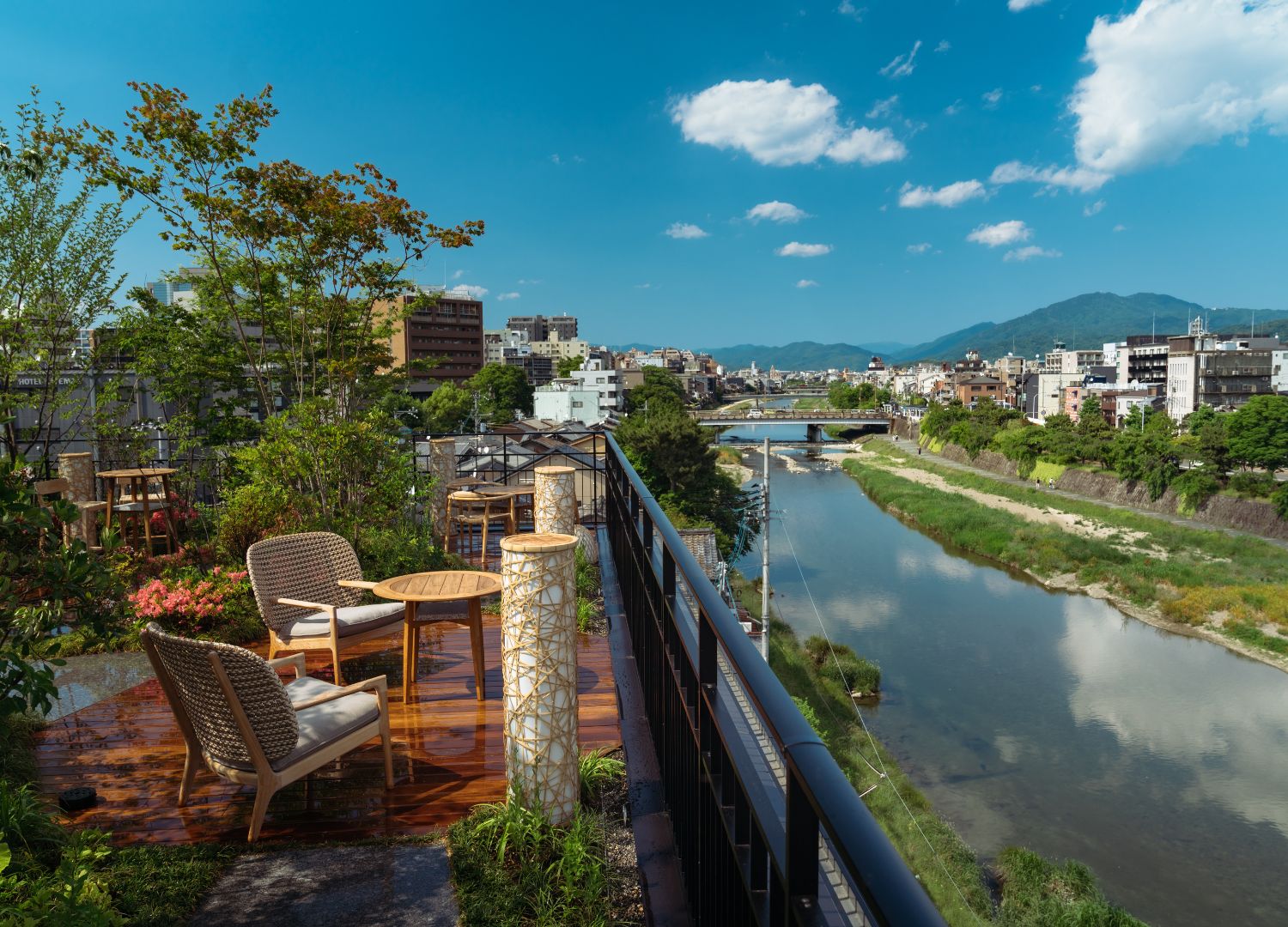
His response was two wings connected by a bridge across a Zen garden, with pocket gardens threaded through every floor all the way up to a rooftop garden with panoramic views of the city and its surrounding mountains. The vertical journey through the building replicates something of the horizontal depth experience of a traditional machiya: a sequence of thresholds, contractions, and openings that keeps recalibrating your relationship to inside, outside, light, and green.
The material language is where Moussas’s architectural intelligence becomes most visible. Concrete is the primary structural material — but cedar imprints pressed into it before curing leave the surface marked with organic wood grain patterns, transforming what would otherwise be cold and industrial into something warm and textured. It is a technique that speaks directly to the machiya tradition of using natural materials to mediate between the human body and the built environment — updated entirely into the vocabulary of contemporary construction.
“The architectural concept of the Genji Kyoto can best be described as one that is striving for a true Japanese experience through materiality and spatial techniques such as thoroughly integrating interior and exterior spaces,” Moussas explains. “These techniques have been expressed in Japanese architecture through the centuries since the Heian period, the era in which the Tale of Genji was set.“
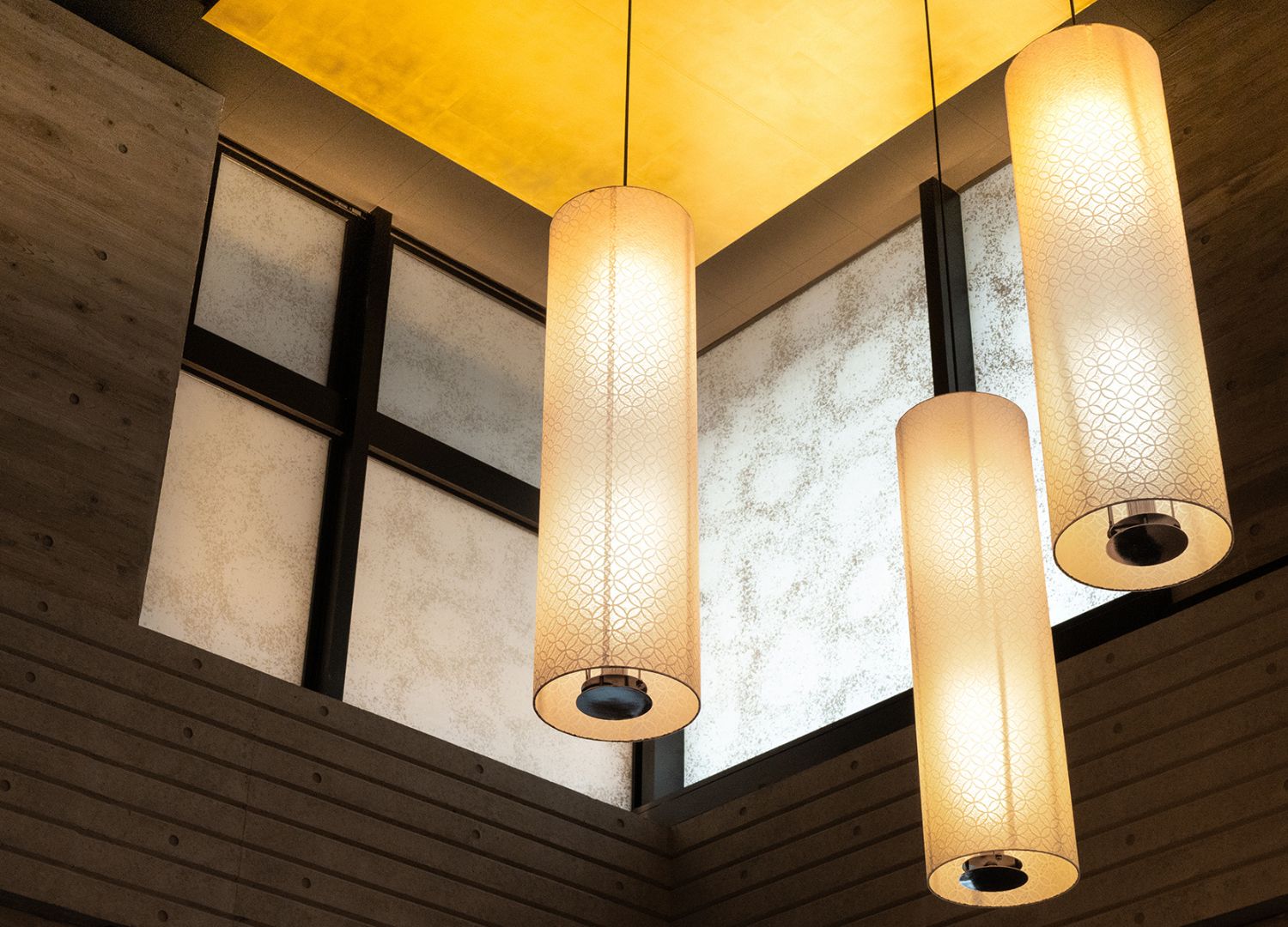
The lobby’s washi windows — designed by Eriko Horiki, Japan’s foremost washi artist and the creator of installations at Narita International Airport and Tokyo Midtown — filter light in ways that shift across the day, creating effects that are simultaneously ancient and entirely contemporary. They are arguably the most architecturally significant single element in the building: a reminder that surface, in Japanese spatial thinking, is never merely decoration.
Interior: the craft of restraint
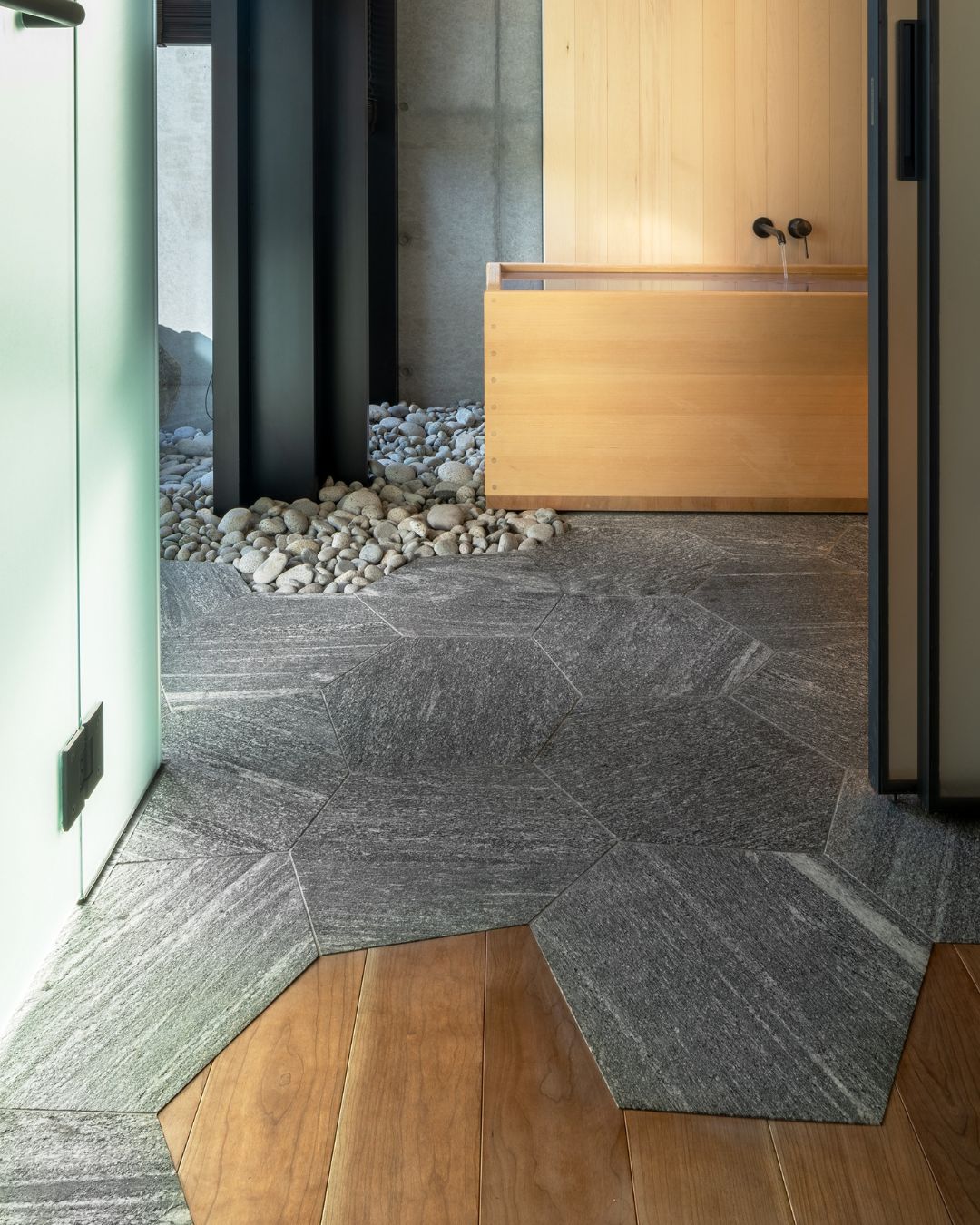
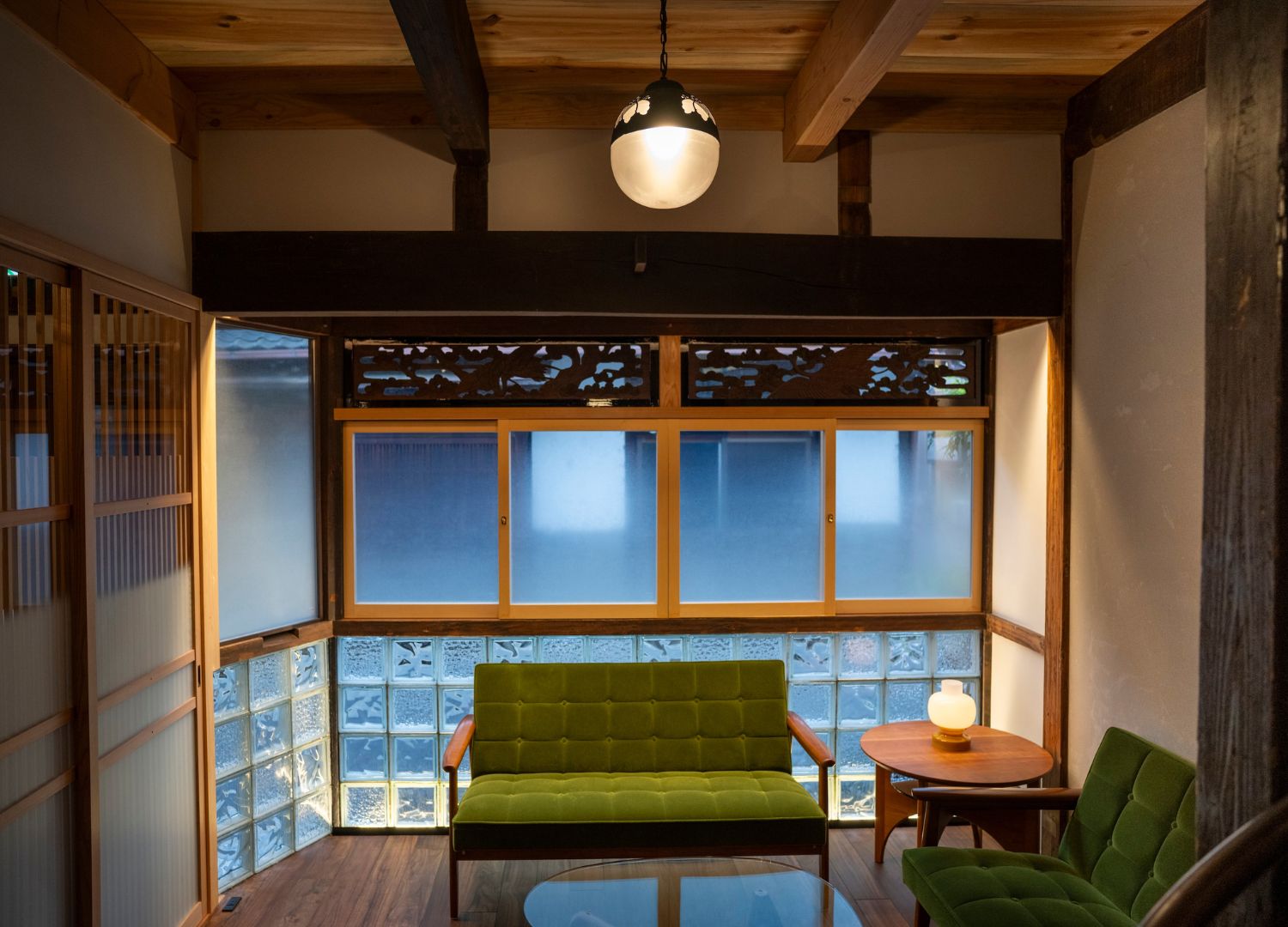
Interior designer Jun Tomita, founder of Atimont Design and a former professor at Kyoto University of the Arts who has also taught Japanese design at Stanford, operated from a principle he articulates with characteristic precision: “What you see and sense is Japanese Wa style, but what you touch and feel is modern comfort.“
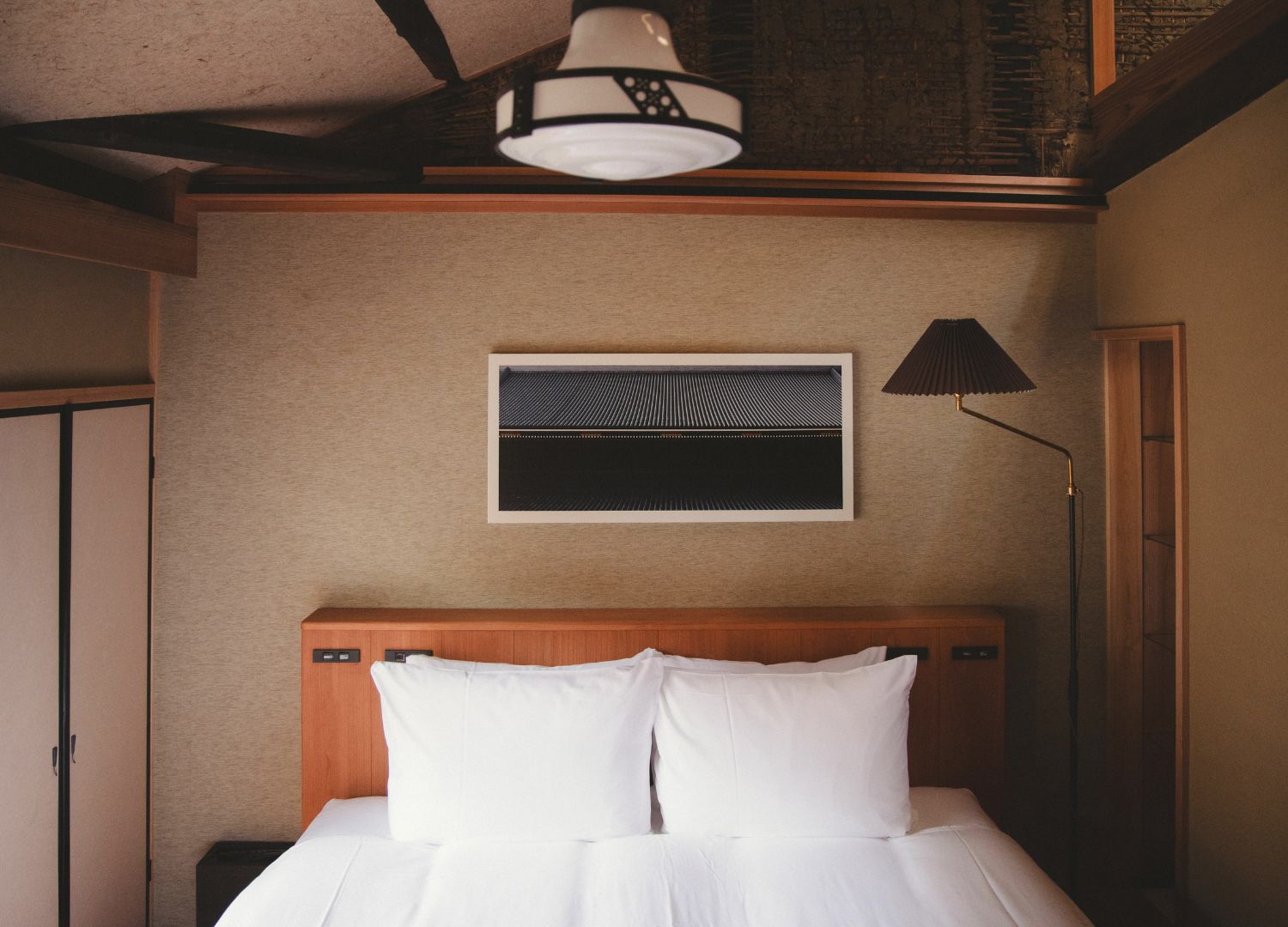
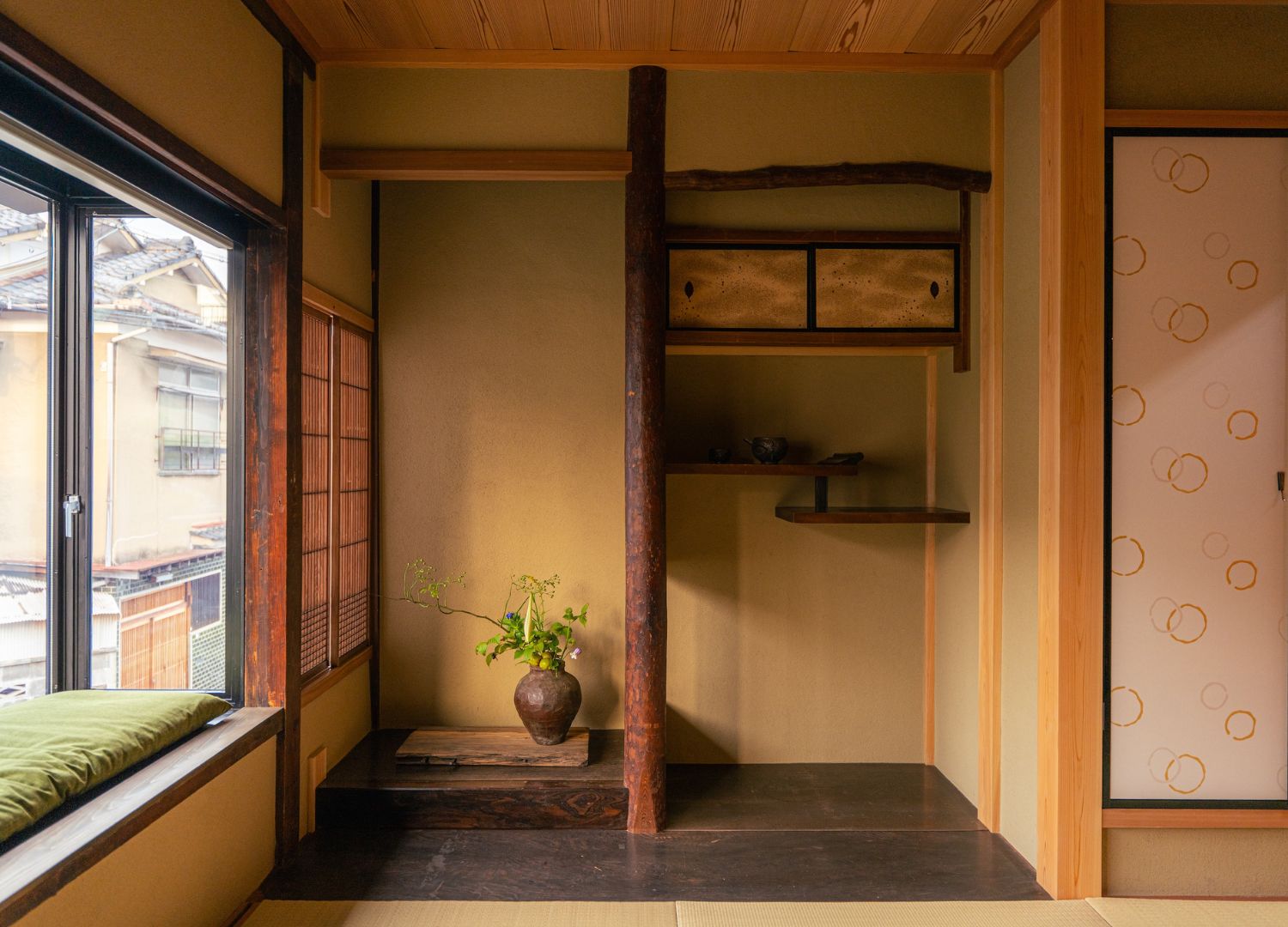
That tension — between the visual register of traditional Japanese aesthetics and the haptic register of contemporary ergonomics — runs through every room. All 19 rooms and suites include tatami areas alongside sofas, floor heating alongside radiant air cooling, and baths that reference Japanese bathing culture while delivering entirely contemporary performance. Nine riverside rooms have balconies. Every room has a view — either the river, the city skyline, or an enclosed tsubo garden that brings the outside in with the controlled intimacy of a still life.
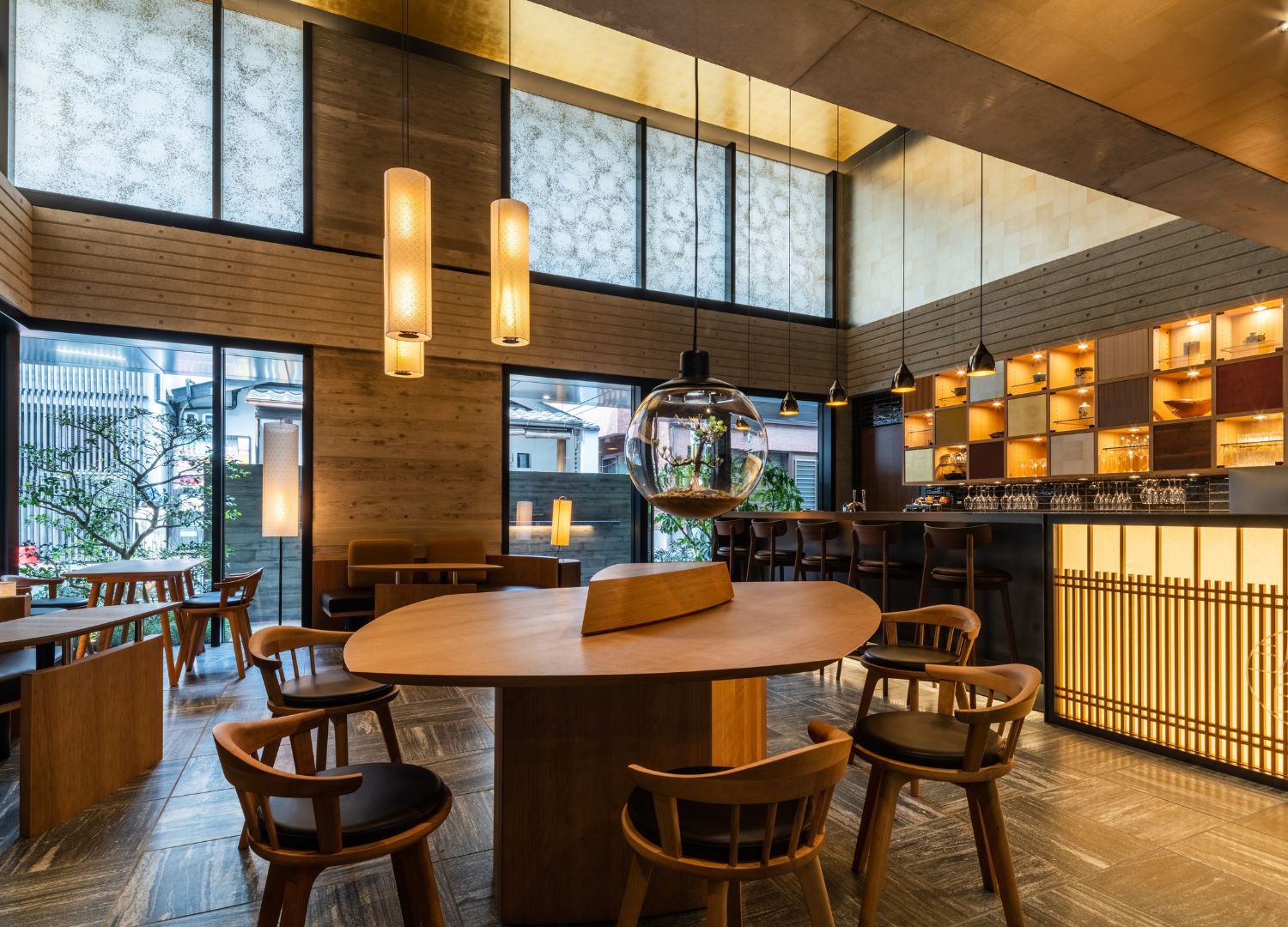
The custom furniture throughout the hotel was designed by Tomita and made by hand by craftsmen from Kyoto’s Futaba Furniture and +veve, the design duo of Yoshito Dodo and Kotaro Kawanabe, who have been at the forefront of Japan’s new wave artisanal movement since 2012. Every piece — entrance stools, lobby tables, bar chairs, tatami furniture — was conceived for the specific spatial and ceremonial logic of the hotel. The lobby’s sculptural centrepiece table and sofa-table sets, in particular, hold their ground against the architectural weight of the space around them.
Gardens: nature as design medium
If the architecture is the structural argument of Genji Kyoto, the gardens are its emotional one. Garden design was assigned to Marc Peter Keane, a landscape architect, writer, and artist who has lived and worked in Kyoto for over twenty years, and whose practice blends Eastern and Western aesthetic traditions with scholarly depth — he is currently a fellow at Columbia University’s Institute for Medieval Japanese Studies.
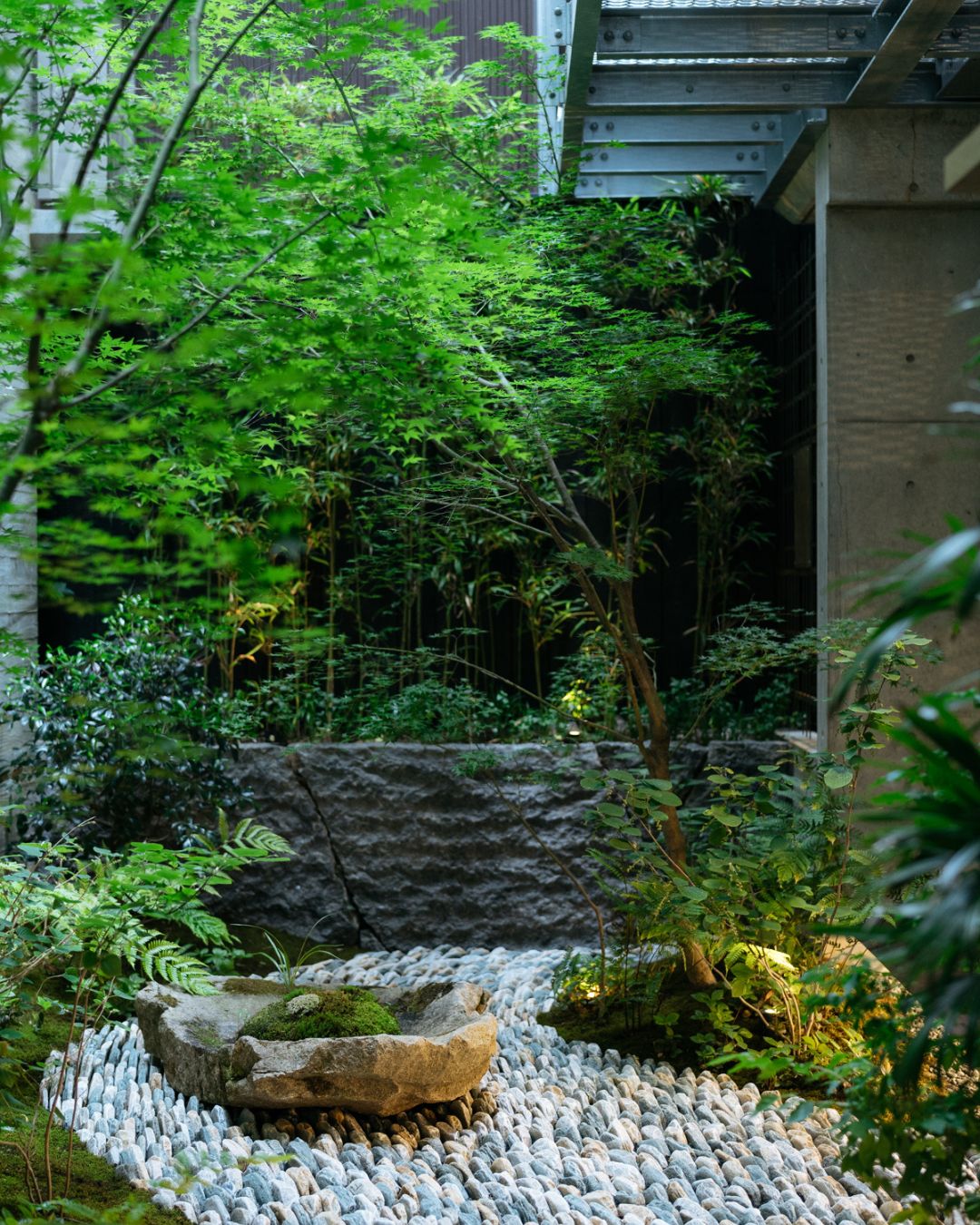
Gardens were central to the Tale of Genji itself: they were stages for the novel’s emotional scenes, indexes of their inhabitants’ sensibility, and expressions of a philosophy that made no sharp distinction between nature and human culture. Keane’s designs for Genji Kyoto honour that centrality without literalism.
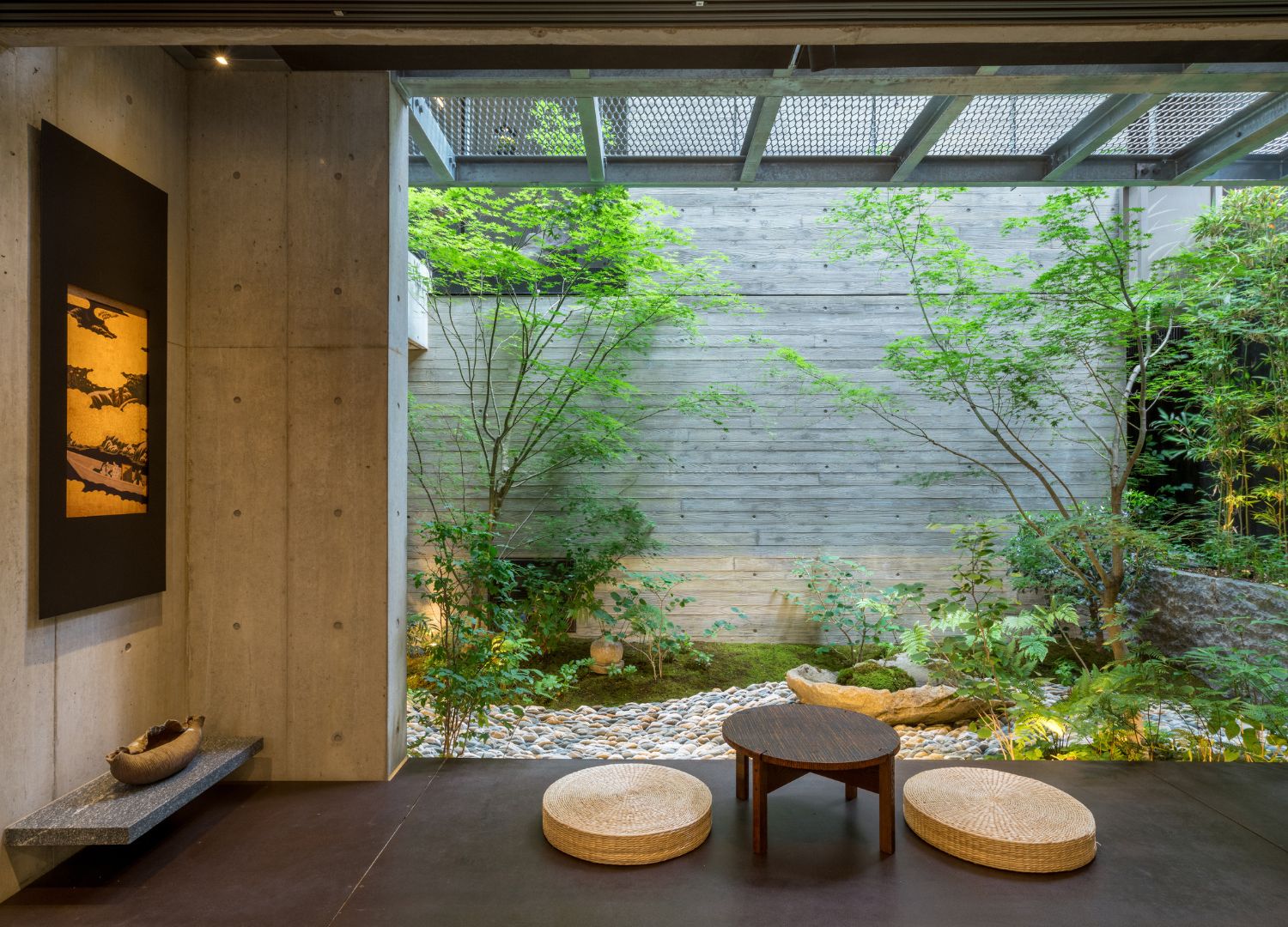
The lobby courtyard garden is named Ukifune — or Drifting Boat — after a chapter in the novel in which the character Ukifune represents the untethered evanescence of human experience. In the Zen garden, that evanescence is represented by a boat-like stone that also, in a quietly cosmic reading, symbolises our own earth drifting through the universe. Beside the garden, an Ukifune painting — a detail from a famous screen by Tosa Mitsuyoshi (1539–1613) — hangs alongside Curl, a boat-shaped sculpture by Kyoto artist Momoko Takeshita-Keane. Three objects, three mediums, one conversation: it is exactly the kind of layered cultural resonance that good hospitality design almost never achieves.
On the roof, the Sky Forest Garden plants species mentioned in the Tale of Genji — not as a replica of any specific Heian garden, but as an embodiment of the novel’s sensibility toward nature: attentive, reverential, aware of subtlety and complexity. In Japanese urban tradition this kind of retreat — a sanctuary within the city — is called shichū-in (市中隠), a hermitage within the city, or shichū no sankyo (市中の山居), a mountain hut within the city. The rooftop at Genji Kyoto earns both descriptions.
A collaboration, not a commission
What distinguishes Genji Kyoto architecturally from many design hotels is the collaborative depth of its making. This is not a single designer’s vision applied to a brief — it is a genuine intersection of an architect, an interior designer, a garden designer, a washi artist, furniture makers, and local craftsmen, each working within and contributing to a shared cultural framework. Heritage objects found on site — a water basin, a small shrine, antique stones — have been revived and incorporated rather than removed. The sustainability here is not a marketing position but a design method: nothing of quality is wasted, and everything is considered in relation to what came before.
The result is a building that feels, at every scale, considered. From the cedar-imprinted concrete of its exterior walls to the circle motif on a bar stool, from the washi light filtering through the lobby to the boat-shaped stone in the courtyard garden — Genji Kyoto is a sustained argument that the most rigorous form of contemporary design is not the erasure of the past, but its careful, honest continuation.