George Geara: a journey through architecture, design, and the spirit of places
From the Mediterranean Sea to the world, George Geara crafts “micro-architectures” where tradition meets technology. Exhibiting internationally, from Dubai to Spain, Geara has built a design language rooted in craftsmanship, innovation, and a deep respect for narrative.

Born and raised in Beirut, George Geara is an architect and designer whose practice moves effortlessly between the scales of buildings, furniture, and objects. After studying Architecture in his hometown, he pursued Industrial Design in Madrid, developing a unique lens that merges structural clarity with human intimacy. Today, his Beirut-based studio produces pieces that read like “micro-architectures” – functional yet sculptural works infused with emotional weight, cultural memory, and a refined sense of proportion. Exhibiting internationally, from Dubai to Spain, Geara has built a design language rooted in craftsmanship, innovation, and a deep respect for narrative.
In our conversation, George reflects on the philosophies and processes that shape his work – from the balance between handcraft and technology to the cultural influences that inform his material choices. He also shares the stories behind some of his most emblematic pieces and offers a glimpse into the evolving future of his studio.
Gallery
Open full width

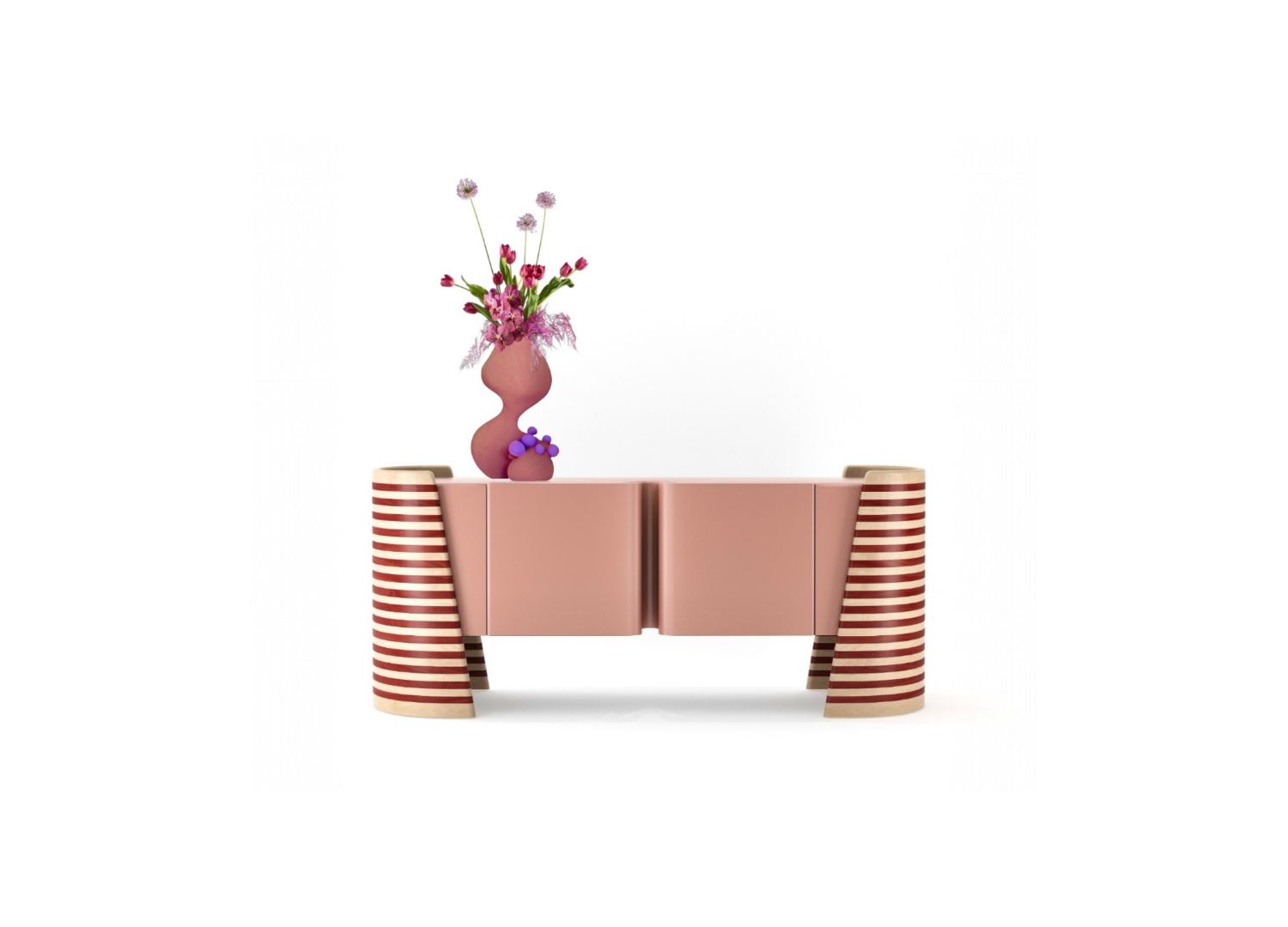
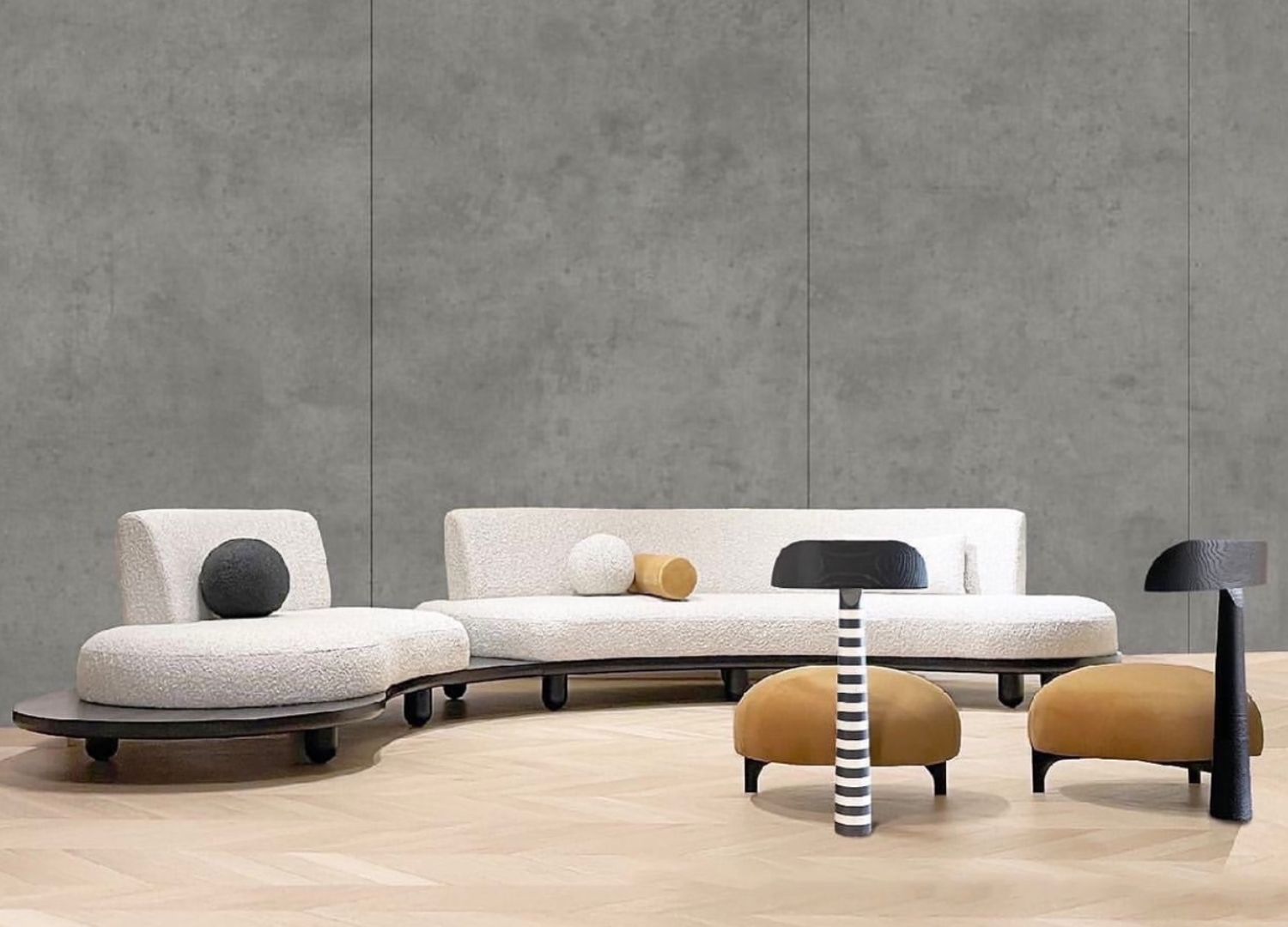


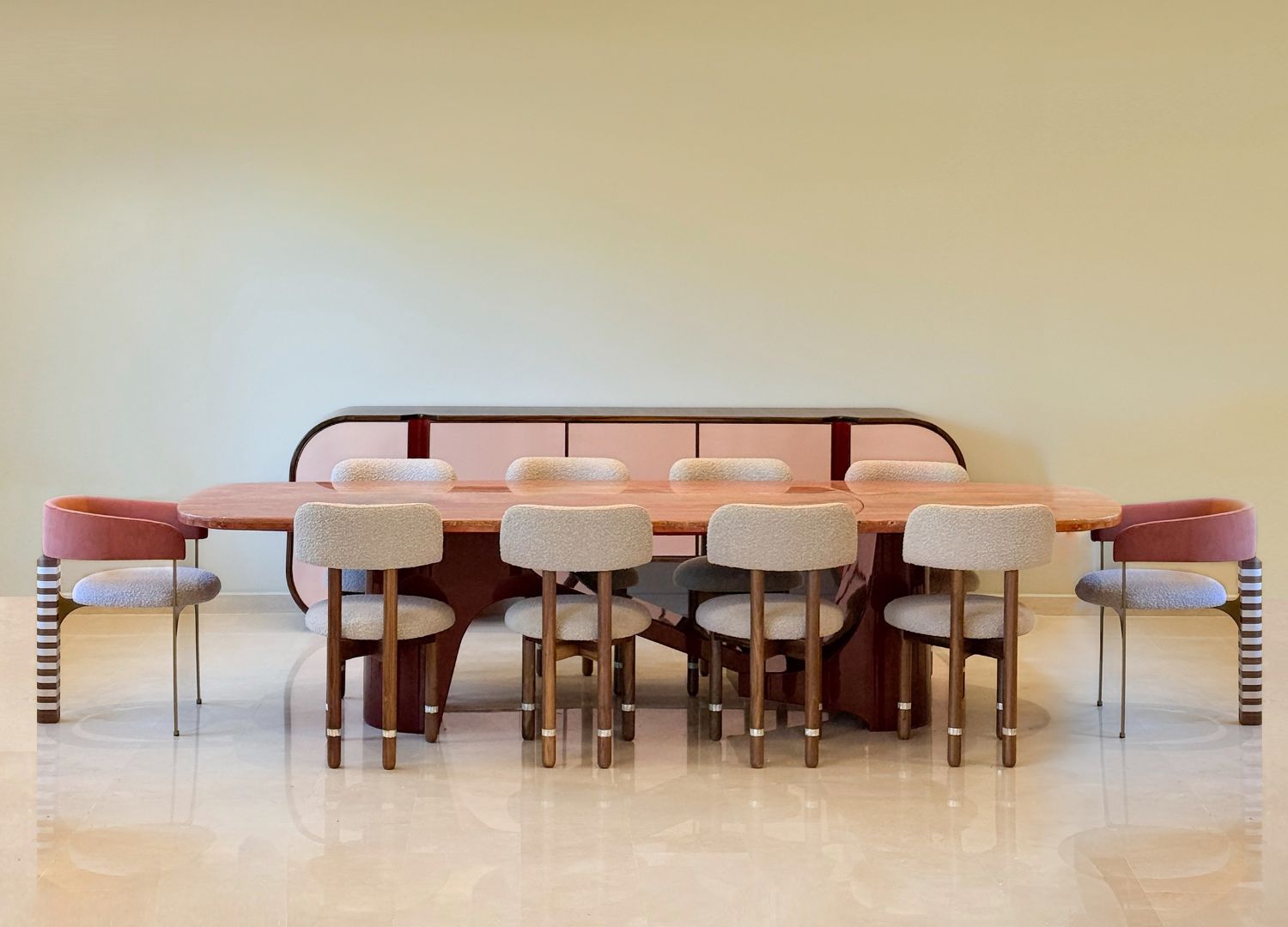
Open full width
You trained in both Architecture and Industrial Design in Beirut and Madrid – how do those two backgrounds influence your approach to furniture and interior design?
George Geara:
Absolutely! My foundation in architecture, which I studied in Beirut, gave me a deep understanding of proportion, structure, and how objects inhabit space. Later, my training in industrial design in Madrid allowed me to shift scale from buildings to objects and explore how people interact with form on a more intimate level. Together, these disciplines shaped my approach: I design furniture as if I were designing micro-architectures. My pieces need to carry both emotional weight and structural clarity. They must speak of form and space, but also answer to the body, to daily use, and to cultural memory.

Your work often blends traditional craftsmanship with modern forms, as seen in the Amalgam Collection. How do you strike that balance? Can you tell us the story, specifically, behind your Amalgam Bar Stools?
George Geara:
The Amalgam Collection was born out of a need to create a genuine dialogue between the hand and the machine. In the Amalgam Bar Stool, the backrest is hand-carved wood, inlaid with traditional marquetry, each one slightly different, made by artisans who put their heart into every detail. The front, by contrast, is laser-cut metal, precise and industrial. Together, they meet at a threshold where tradition and technology converse. That balance is not just aesthetic, it’s ideological. I want to create a design language where the artisan is not left behind in the race for modernity, but invited in, elevated, and integrated into production models that can scale without losing soul.
Some of your pieces, like Cathedra with hand‑carved wooden backs and marquetry, highlight artisanal techniques. What draws you to such detailed, handcrafted elements?
George Geara:
I see craftsmanship as a form of storytelling. In a world that’s increasingly fast and globalized, hand-carved elements carry the memory of place, of people, of process. In Cathedra, the backrest is more than a support; it’s a sculpture that speaks of time, of the artisan’s gesture. These elements carry the identity of a culture, and that’s something I never want to lose in my work. I’m deeply interested in how objects can preserve the soul of a society while living in modern spaces.

At the heart of Geara’s work lies a constant negotiation between tradition and modernity. His creations often combine centuries-old techniques, such as Lebanese marquetry or stone carving, with contemporary industrial processes like laser cutting.
The result is a body of work that feels both timeless and forward-looking – objects that carry the hand of the artisan into the future without losing their soul. Whether producing a one-off sculptural chair or a collection meant for wider production, Geara seeks to craft designs that are as poetic as they are practical, speaking to the body, the space, and the stories that connect them.
You’re based in Beirut but showcase work in Dubai, Spain, and beyond. How do diverse cultural contexts shape your design ethos? What guides your material choices and composition?
George Geara:
Beirut is my anchor: chaotic, poetic, full of contradictions. It taught me to embrace complexity. But working internationally, especially in places like Dubai or Spain, challenged me to refine how I express those ideas to broader audiences. I try to stay honest to my origins while allowing the materials, proportions, and visual language to speak across cultures. Material choice is always guided by emotion first: what story does it tell? What memory does it hold? and then by function, durability, and context.
Many of your creations look sculptural, almost like art installations. How do you balance functionality with expressive form?
George Geara:
That balance is at the heart of my work. I believe that function should not kill poetry, and poetry should not kill usability. My pieces are often conceived as sculptural forms first, but then I dissect them architecturally to ensure they are ergonomic, comfortable, and practical. Cathedra, for example, looks like a sculpture, but it was designed as a main dining chair. It’s stable, supportive, and stackable. I enjoy that tension between stillness and use, art and life.

Is there a project or design you’ve created recently that marks a shift or growth in your creative process?
George Geara:
Yes. Recently, I’ve been exploring more collaborative design models, involving artisans from different regions, sometimes even from different disciplines. One upcoming project is a series of pieces that bring together Lebanese stone carvers and Spanish metal workers. It’s made me think more deeply about how craft traditions from different cultures can coexist in the same object. It’s a kind of global craftsmanship not in style, but in process. That feels like an evolution.
With this evolving body of work, how do you see the future of your studio both in terms of aesthetic direction and geographic reach?
George Geara:
I see the studio growing as a platform that bridges craftsmanship with design innovation, not just from Lebanon but across the Mediterranean and beyond. Aesthetically, I want to continue exploring the sculptural, but also push into softer forms, new materials, and perhaps even digital-physical hybrids. Geographically, I aim to establish deeper roots in cities like Paris, Milan, Dubai, and Madrid, places like the US, that understand narrative design. But wherever we go, the core mission stays the same: to create objects that carry meaning, memory, and humanity.
About the author

Ludovica Proietti, journalist, design historian and curator, teaches in universities and curates events, always exploring projects with fresh, unconventional perspectives.
Instagram