When engineering resolves into form: Inrō is design in its fullest expression
Inspired by an ancient object emblematic of Japanese craftsmanship, Inrō by Atelier Nuanda is a project that embodies a design vision rooted in the study of materials, engineering research, and a genuine reverence for tradition.
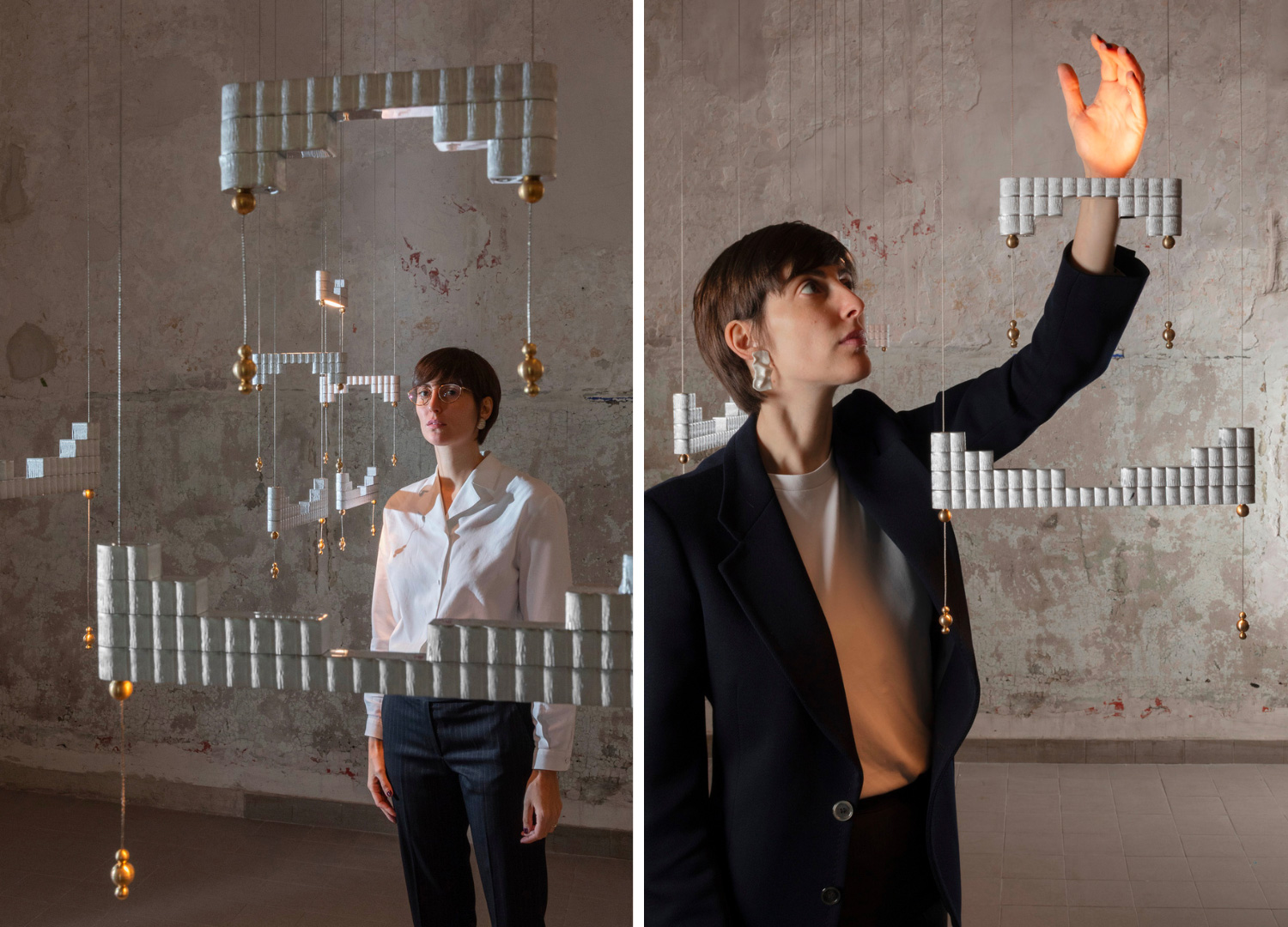
We have already had the opportunity to feature the work of Atelier Nuanda in a a previous interview,, where the delicacy and depth of thought of Cecilia Rinaldi– co-founder of the atelier, together with her husband Marco Martelli, clearly emerged. That same intellectual depth shapes the studio’s design vision, guided by Cecilia’s innate curiosity and her desire to explore what her soul has yet to discover.
Multidisciplinarity, or rather interdisciplinarity, is among the defining traits of Atelier Nuanda. Its body of work – spanning accessories, garments, decorative objects, and furniture – reflects a constant and remarkably successful effort to balance contemporary visions and tools with techniques, narratives, and aesthetics rooted in the past, while nurturing a dialogue between its Italian heritage and diverse cultural influences.
Gallery
Open full width
Open full width
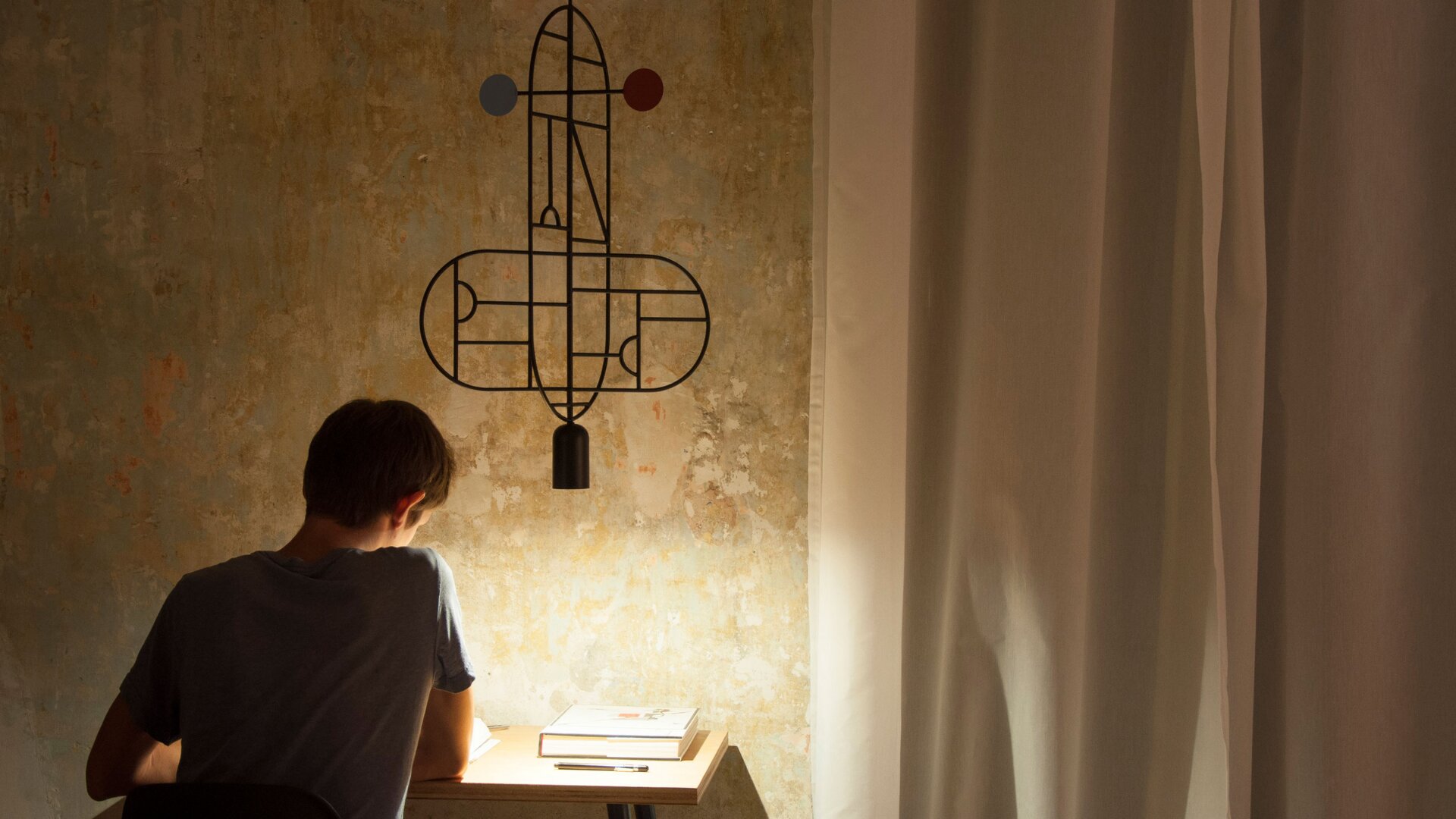
It is from Japan that the inspiration for Atelier Nuanda’s latest project – and the studio’s first lighting design piece – takes shape: Inrō. Presented at the latest edition of EDIT Napoli – the fair dedicated to editorial and authorial design – the project earned two special mentions, including one from DesignWanted. What impressed both the fair’s audience and the judges was the project’s extraordinary ability to master industrial machinery to create a uniquely crafted design piece, overturning the traditional paradigm of mass production.
The inspiration, as mentioned, comes from Japan, specifically from ancient containers crafted by artisans during the Sengoku period (1467–1615). These were small cases made by stacking compartments held together at the ends with a bead (ojime) and two passing cords. Traditionally worn at the waist and used to carry personal items, over the centuries, they evolved into collectible objects, and, in the hands of Atelier Nuanda, into a suspended modular lamp.
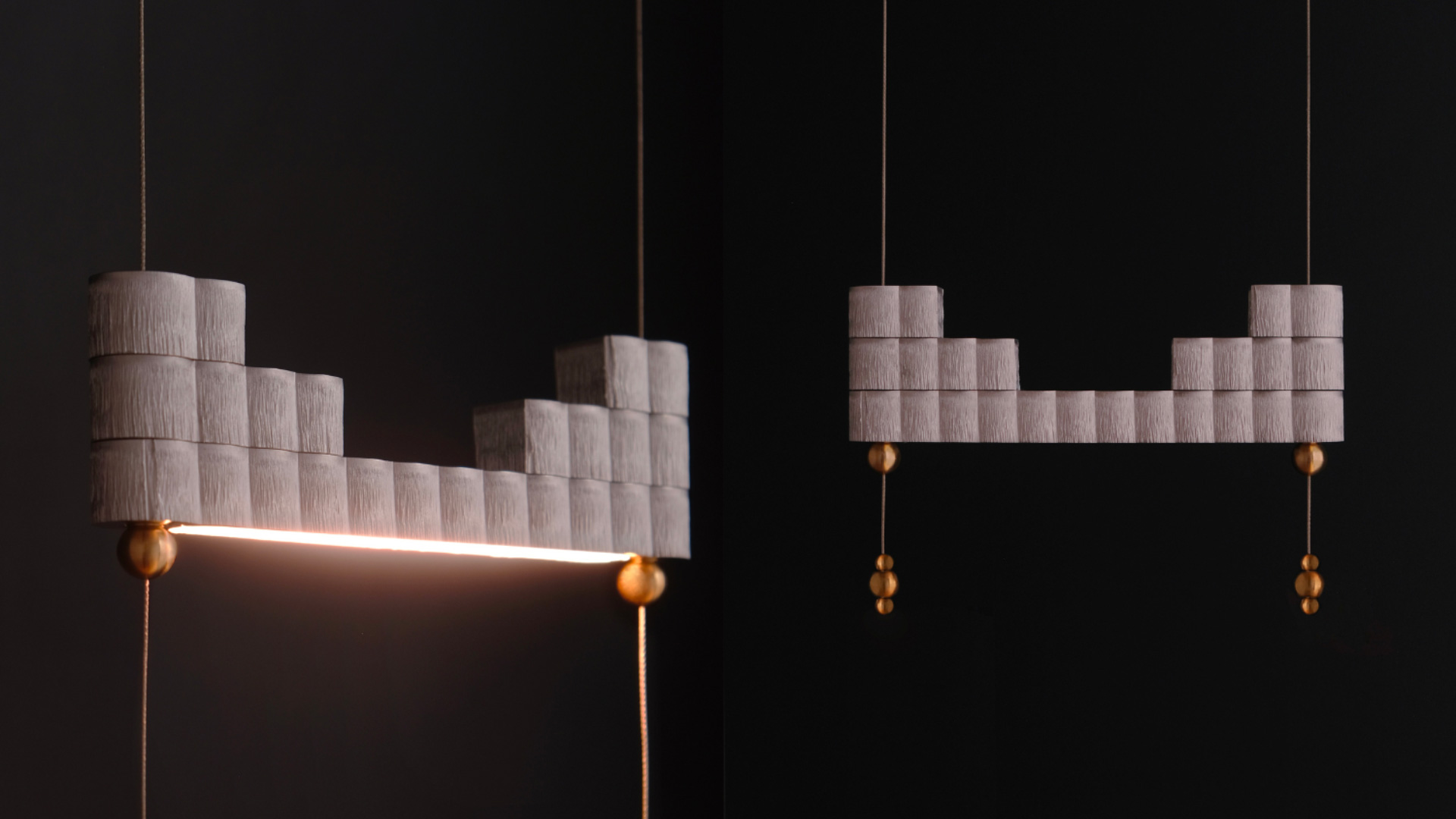
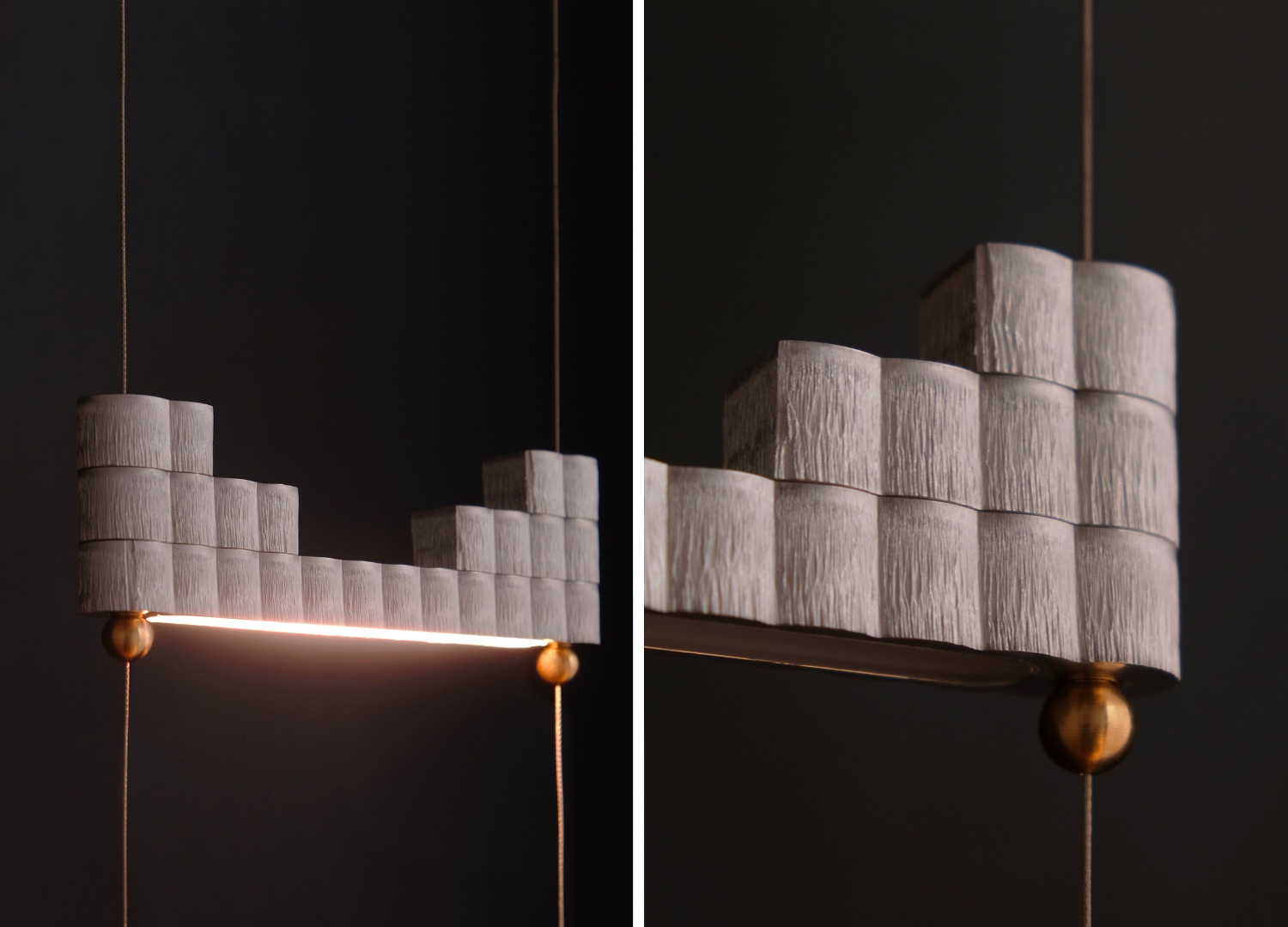
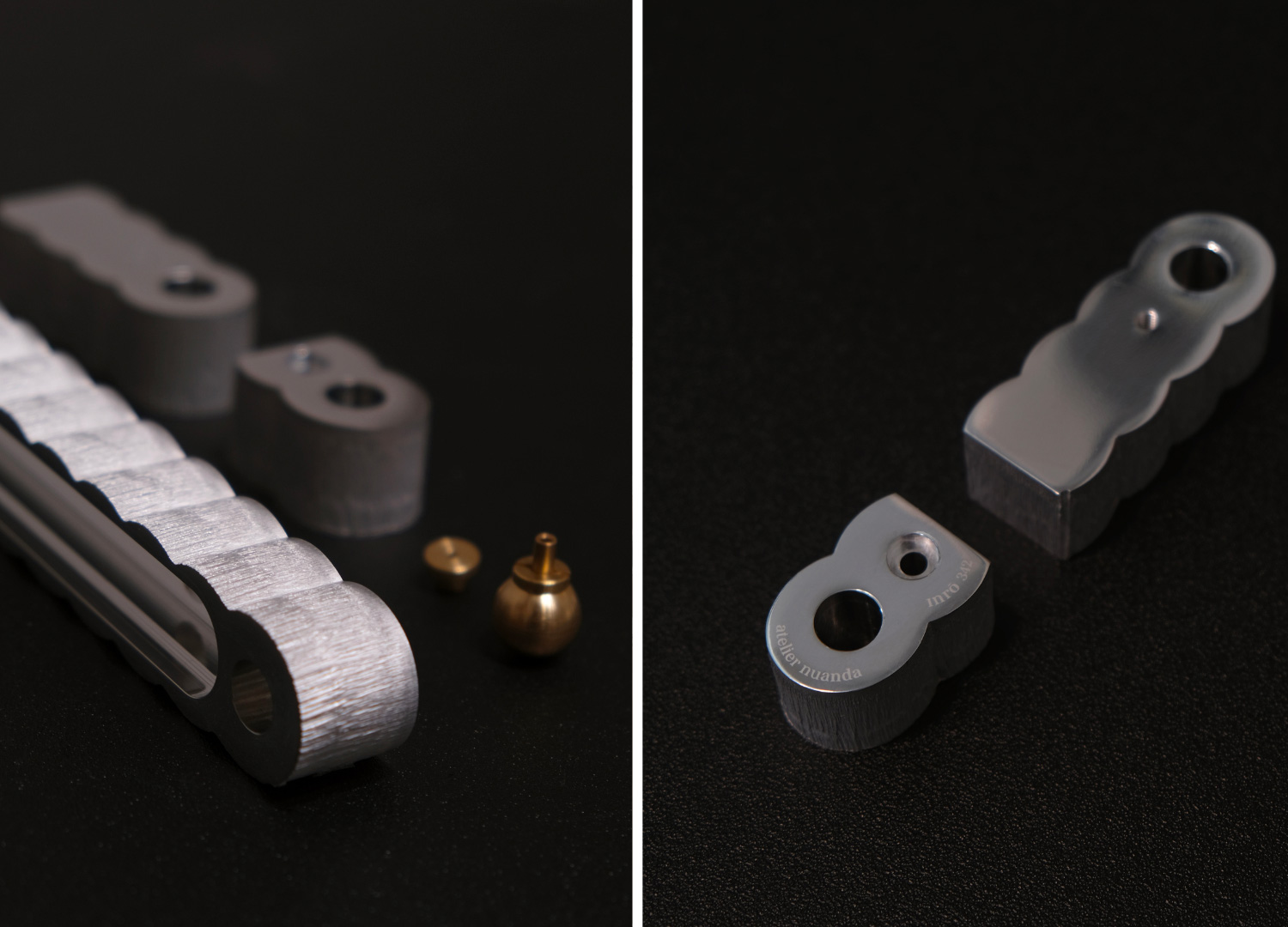
Just like those ancient containers, the structure of Inrō is composed of stacked aluminum bars threaded with cables that not only support the lamp but also power the light source. The cables, of opposite polarity, are made from conductive materials, woven silver with a steel core. Directly connected to the LEDs hidden within the aluminum bars, the cables serve both as mechanical support for the lamp and as conductors of electricity.
Inrō thus appears to float elegantly from the ceiling, producing light from an almost invisible source. The light can be directed downward, to illuminate tables or other surfaces and create focus, or upward, diffusing a softer glow that fosters a welcoming and warm atmosphere.
The choice of materials requires meticulous attention from the atelier, both in this project and in all its creations. It is through the careful selection and study of materials that the atelier gives life to a creative process aimed at storytelling and highlighting ancient traditions, reinterpreting their forms while adopting more modern production methods. Aluminum is the protagonist here, chosen not only for its aesthetic qualities but also for sustainability, as it is 100% recyclable.
The laser-cutting process applied to the aluminum sheets is designed to shorten the production chain, reduce time, pollution, costs, and energy consumption. This approach lies at the heart of Atelier Nuanda’s research, representing the culmination of a relentless study of materials and industrial manufacturing tools.
Thoughtful decisions regarding the type of machinery used – and even adjustments to standard production parameters – have allowed the atelier to create unique pieces that celebrate both craftsmanship and the achievements of industrial progress. Every stage of production has been overseen by the atelier alongside specialized technicians, ensuring each step has been optimized and has resulted in a product that is consciously crafted.
The attention given to the aesthetic aspect of the final product is, of course, an integral part of the project, which does not compete with the technical aspects but rather engages in a continuous dialogue with them. The surface of Inrō recalls the calm sea, slightly rippled by the wind, and the delicacy of crinkled tissue paper. This aesthetic effect is achieved through the cooling and subsequent crystallization of the aluminum following the laser-cutting process.
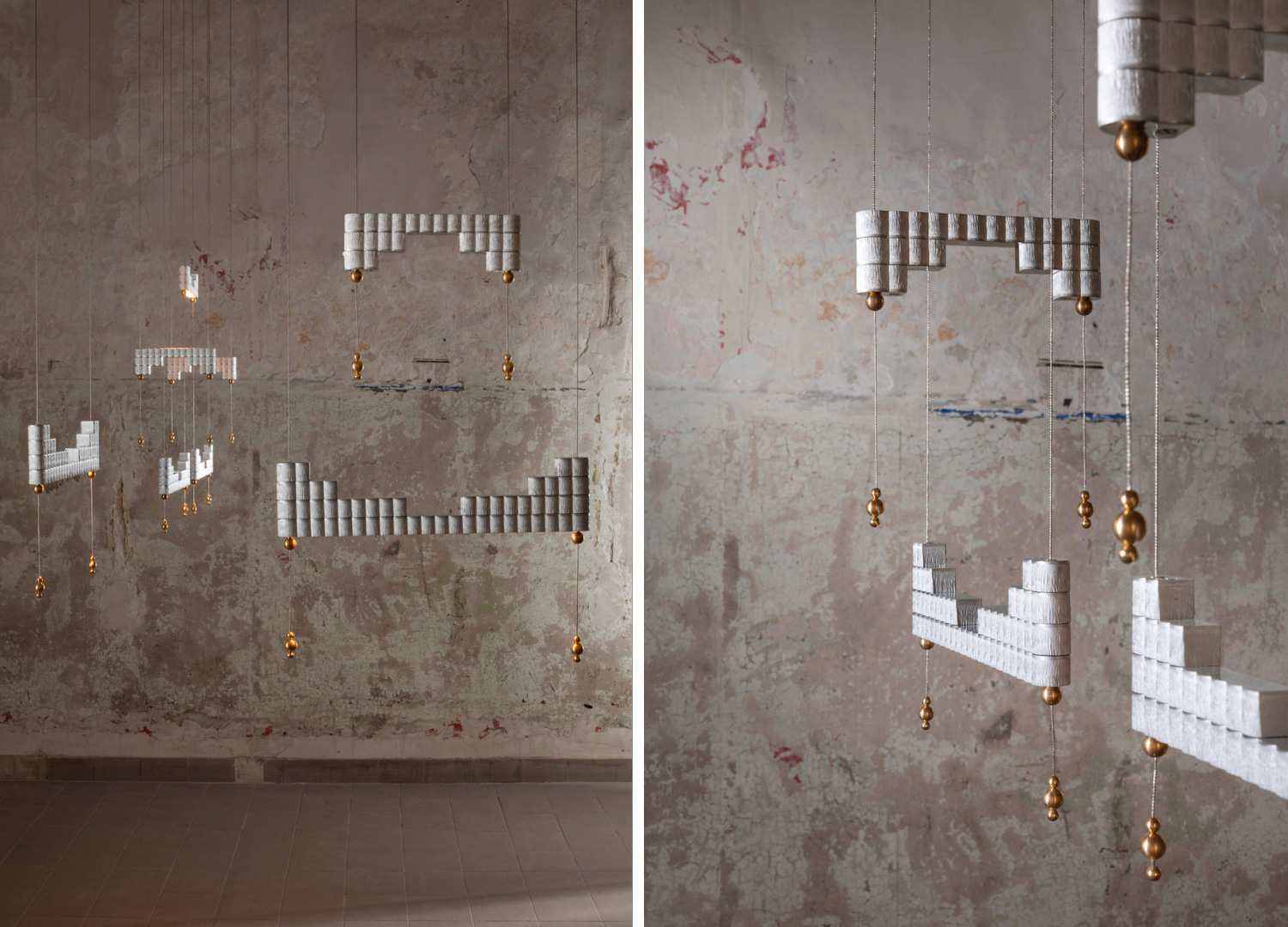
Installed individually or alongside its twins to form a chandelier, Inrō presents itself as an exceptionally delicate presence in its elegance and lightness, yet strong and striking. It is a project that immediately captivates with its unmatched aesthetic value and leaves a lasting impression, upon closer study, for its engineering perfection. After all, isn’t this what design is all about?