Fresh and international: highlights from Maison&Objet’s September edition
From modular systems to bio-based materials, split-wood furniture and all-in-one audio cabinets, this edition of Maison&Objet spotlighted emerging studios shaping a new generation of design.

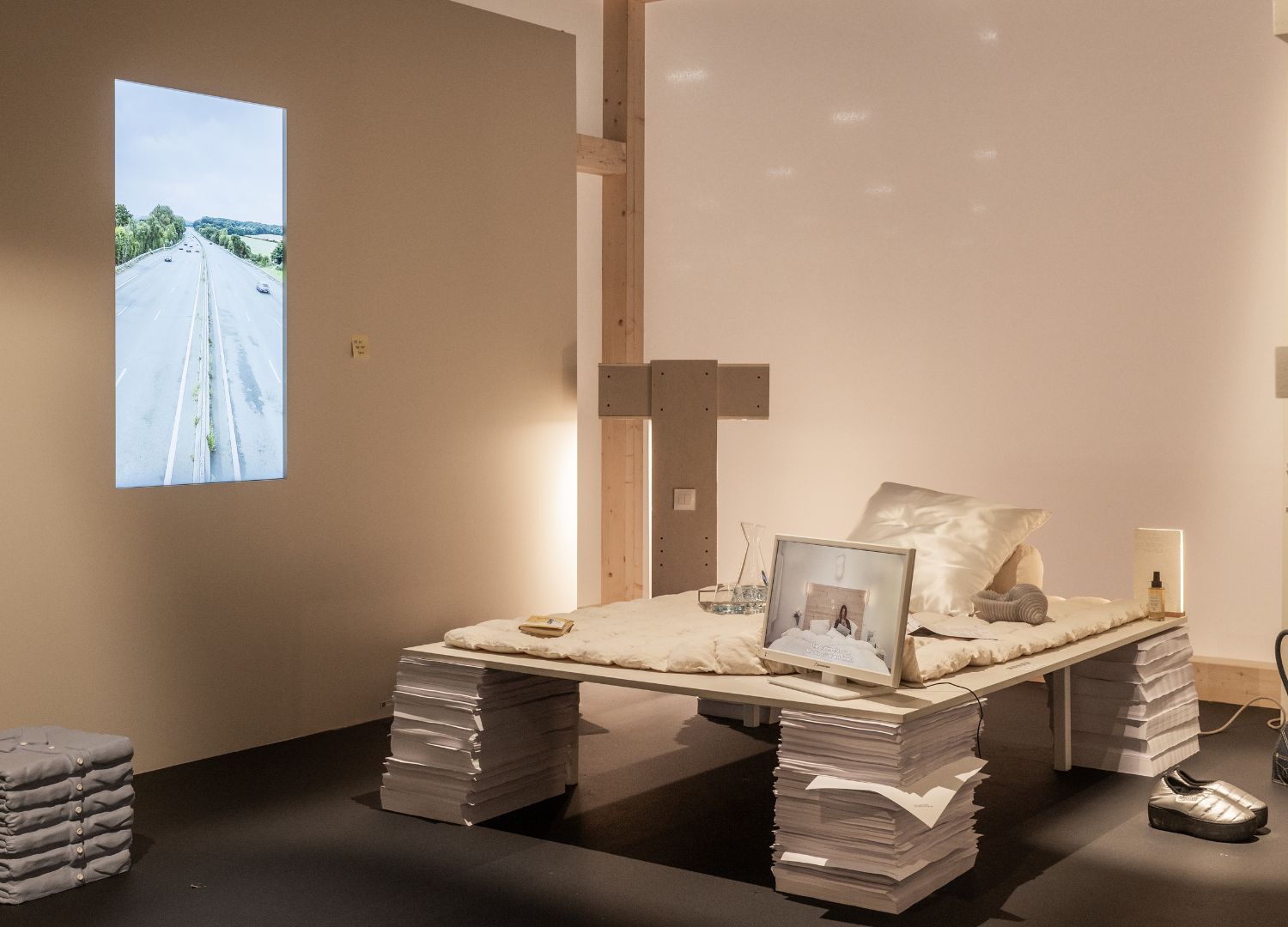
The September edition of Maison&Objet wrapped up last week, but the buzz from the Paris design main fair is still very much alive. This year’s theme was fully embraced, with guest art director Amélie Pichard offering a striking interpretation. Her installation, WELCOME HOME – An Open House, Open to All, spread over 150 m² and staged three hundred objects and characters in the form of a living house. More than just an exhibition, it was a manifesto, a space questioning our relationship with design and creation, celebrating openness, co-creation, and the “unfinished” way of conceiving our homes: a house for everyone, where reflection on the unexpected, on artificial intelligence, and on how we inhabit spaces became part of the experience.
Maison&Objet welcomed a huge number of 51.500 unique visitors, 10.400 of whom were first-time attendees, coming from 138 countries in total. While the majority came from France 62%, and 38% from abroad, this balance reflects both the fair’s solid domestic base and its growing international reach. France naturally topped the list of visitors, followed by Belgium, Italy, Germany, and the Netherlands, with the United Kingdom, Spain, Switzerland, the United States, and Portugal completing the top ten. Exhibitor participation echoed this global outlook alongside a strong emphasis on young studios, new ideas, and emerging designers: a total of 2.125 brands were present, including 626 new exhibitors, representing 58 countries.
Gallery
Open full width





Open full width
This emphasis on international dialogue is also reinforced by Maison&Objet’s own initiatives: the Rising Talents Awards, which each year highlight excellence from a different country, and this year spotlighted Germany, the upcoming second edition of Maison&Objet Intérieurs Hong Kong, and the dedicated focus on China. All of which underline the fair’s ambition not only to showcase French creativity, but to position itself as a truly global platform for contemporary design. Within this context, the new Design District stood out as a hub for experimentation, vision, and contemporary dialogue. Equally relevant was the sixth edition of Future on Stage, now integrated into the Design District, which spotlighted three game-changing companies across design, decoration, and lifestyle – projects marked by innovation and disruptive potential.
So, what caught our attention? Here are the highlights that best captured the energy and direction of this edition:
Maison&Objet September 2025 – Highlights:
Olympic System by Hall Haus – Design District
Inspired by the Olympic bench and the DKR chair, the Olympic System by Hall Haus evolves into a modular system of stools that double as coffee tables or sofa extensions, and storage units that recall the adaptability of Tetris. By relying on local metalworking – one of the few industries still accessible in France – they manage to produce high-quality furniture without heavy tooling investments. Their ambition is to offer design at the price of a pair of sneakers, while ensuring objects that adapt over time to the changing needs of their users.

Diplo by Julie Mallet Studio – Design District
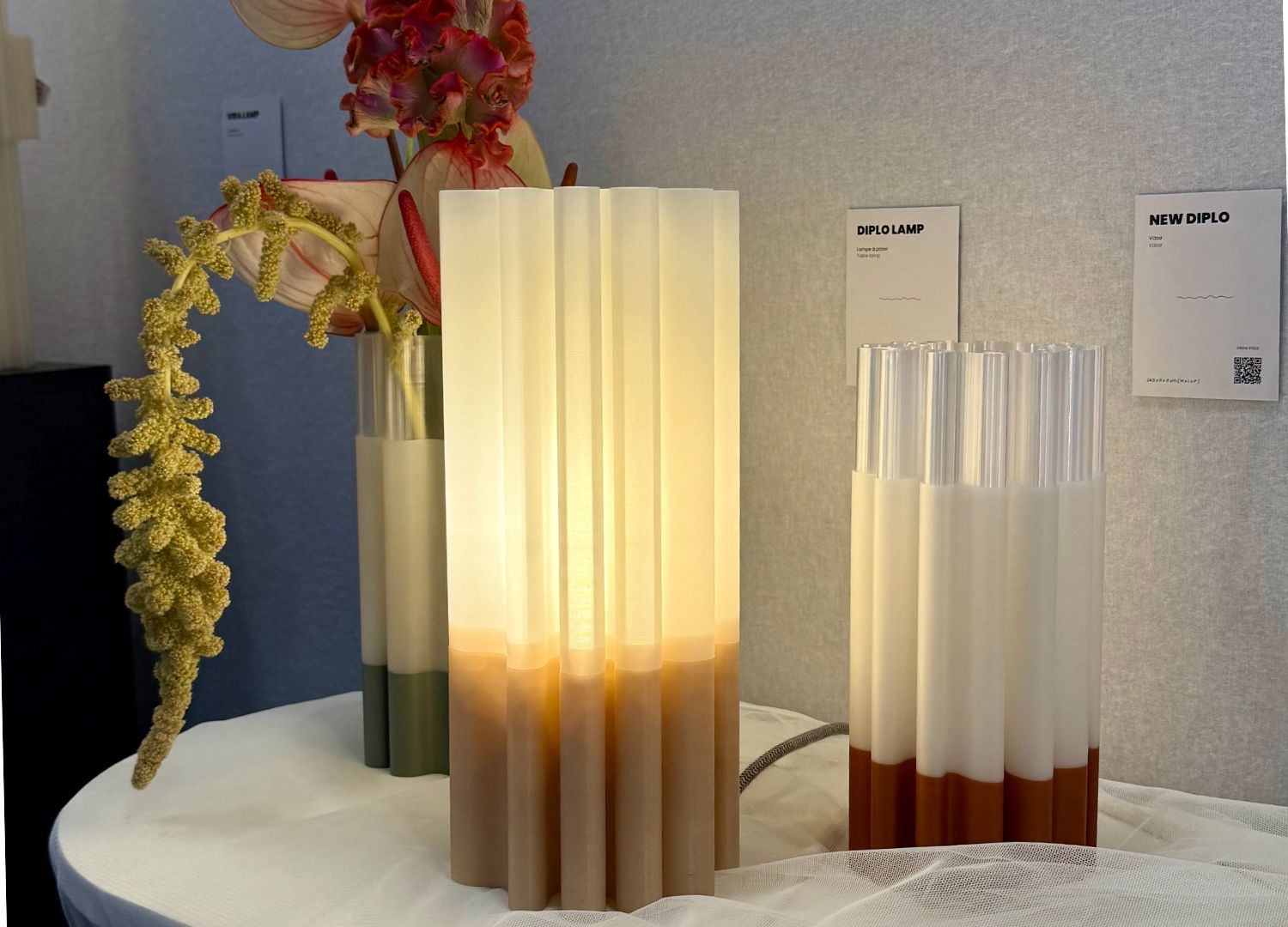
Julie Mallet Studio showcased Diplo, a 3D-printed vase made from PLA, the diffused bioplastic derived from corn or wheat starch, this time combined with recycled scallop shells that give it its distinctive white tone. Its organic shape takes inspiration from Diploria labyrintiformis, known as the coral brain, as well as from the cut-out drawings of Matisse. The green base is also made from PLA, colored with beet pigments and minerals. Entirely designed and produced in Marseille, the piece is waterproof thanks to a bio-sourced resin coating – though the studio continues to research a 100% natural solution. It is a poetic object that merges biomaterials, waste recovery, and the artistic heritage of the French Riviera.
Citra Collection by Instead – Design District
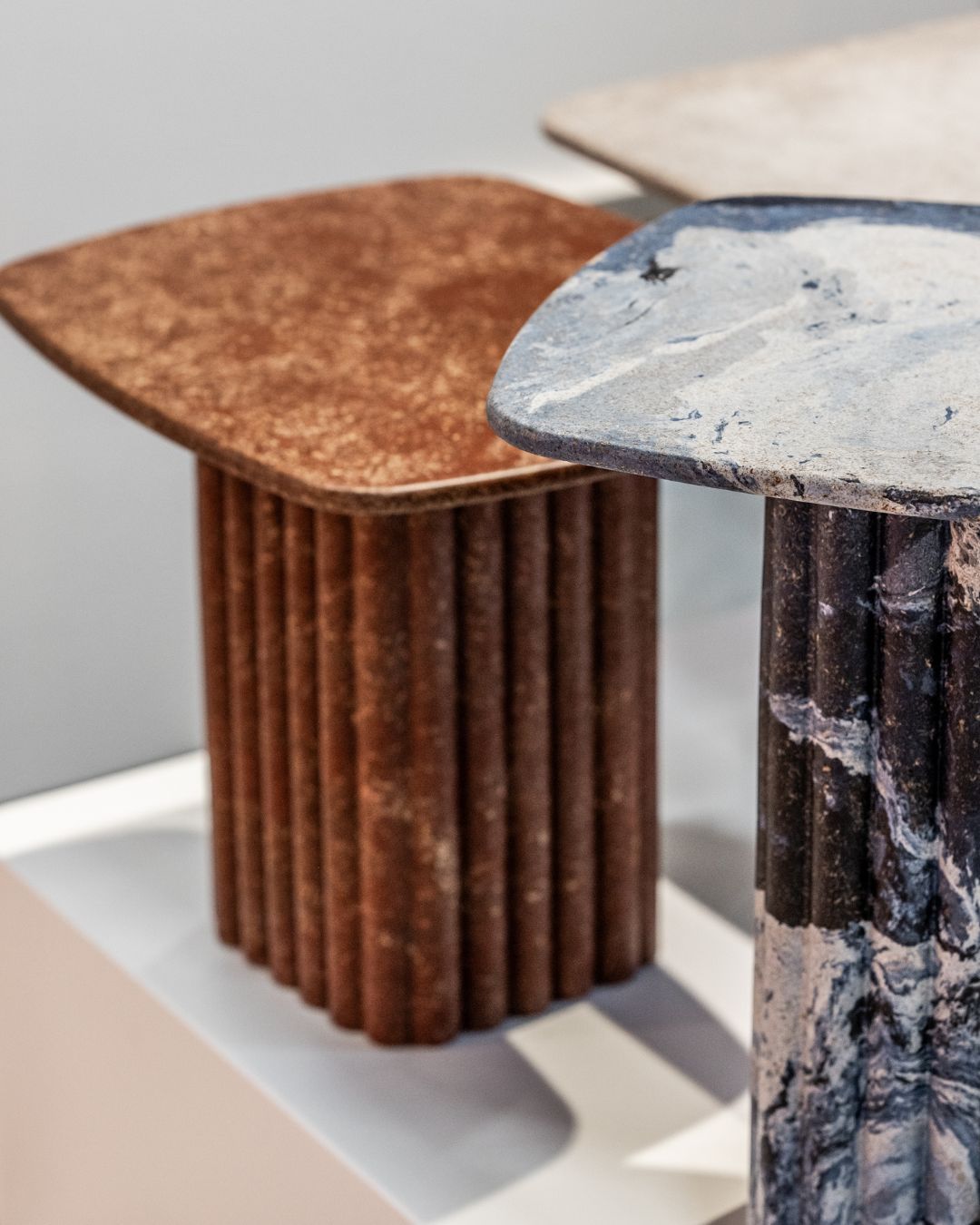
Instead, a French company founded in 2020, presented Citra, a furniture collection produced with Balt®, their proprietary eco-material developed from brewery by-products and recycled food packaging. The project emerged from the desire to revalue brewing waste – over 600.000 tons produced annually in France – turning it into a 100% recycled, 100% bio-sourced material. The new collection extends the design of their first side table, with its distinctive fluted legs, into a complete family of coffee tables, high tables, and side tables. Alongside this expansion, Instead also presented new marbled finishes, produced by blending natural pigments with recycled matter, ensuring that each piece remains unique. Entirely made in France with low-carbon processes, Citra positions itself as a sustainable and elegant alternative to fast furniture.

Manufacto Collection by AA[nd] – Decor & Design
The young French brand AA[nd] launched Manufacto, a collection shaped through close collaboration between emerging designers and the brand’s own workshop in northern France. Designers Döppel Studio, Robin Bourgeois, and Timothée Mion explored metal with fresh eyes, combining industrial mastery with creative experimentation. The resulting objects range from a coffee table and side table inspired by ancient columns, balancing strength with lyrical curves, to PLIS, a lamp cut and folded from sheet metal that offers four positions and varying intensities of light. Completing the trio, the Cadence bench is formed from precisely aligned bent steel tubes, where side handles blur the line between armrests and drawn outlines. Entirely produced in France, Manufacto celebrates the power of metal-bending craftsmanship while proving how industrial processes can serve bold and inventive design.

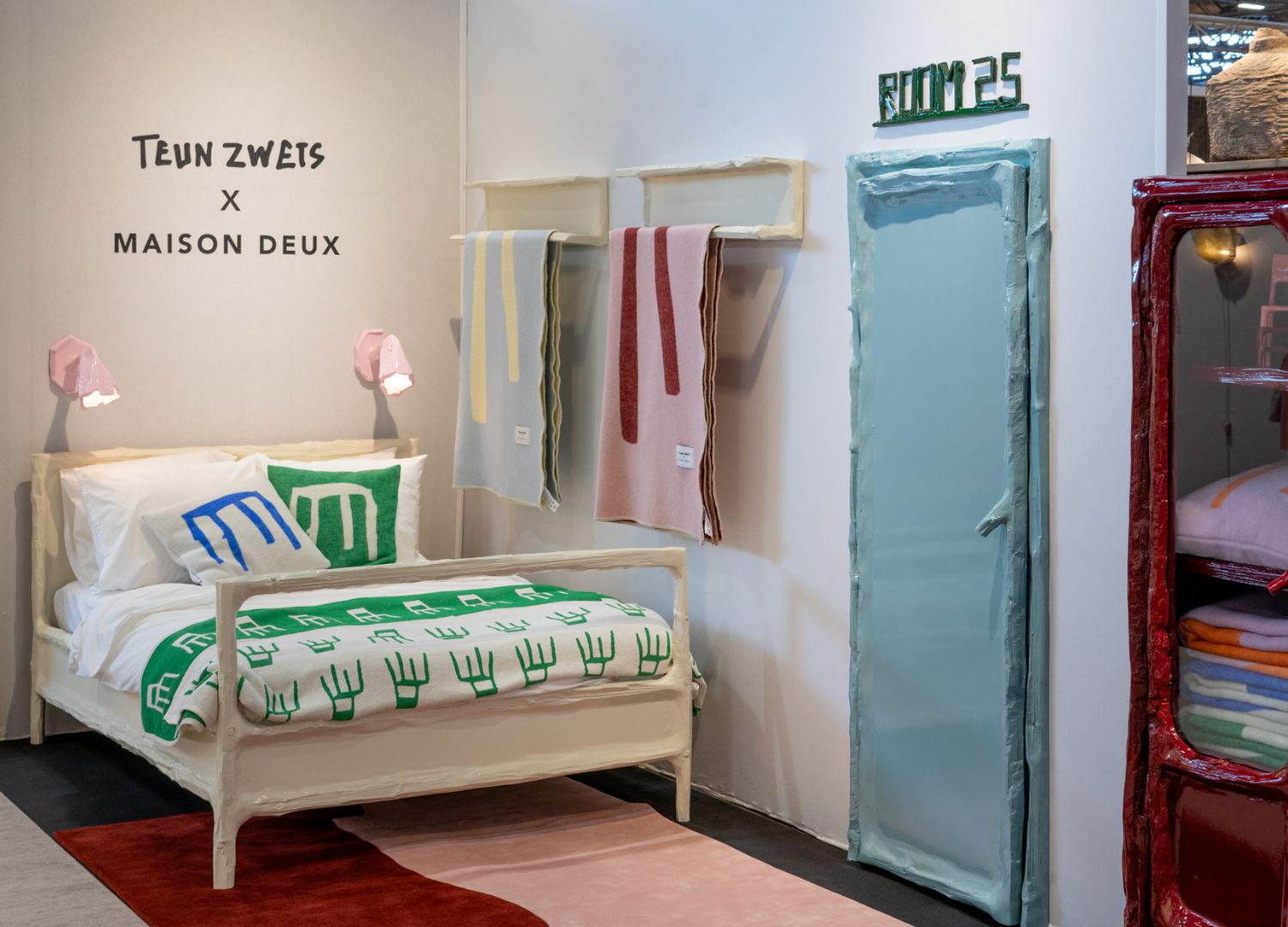
Splitted Collection 2025 by Teun Zwets – Design District
With his Splitted Collection, Dutch designer Teun Zwets turned the simple act of splitting wood into a design language. Each chair, table, and cabinet is made from Douglas fir, shaped with an axe to reveal its raw grain and tactile qualities. Sanded, primed, and finished with a glossy lacquer, the furniture preserves the marks of its making while becoming durable and functional. Every piece is unique, reflecting both the unpredictability of natural wood and the artisanal gesture behind its creation.
Drobe Suitcase by Studio Milla – Future on Stage
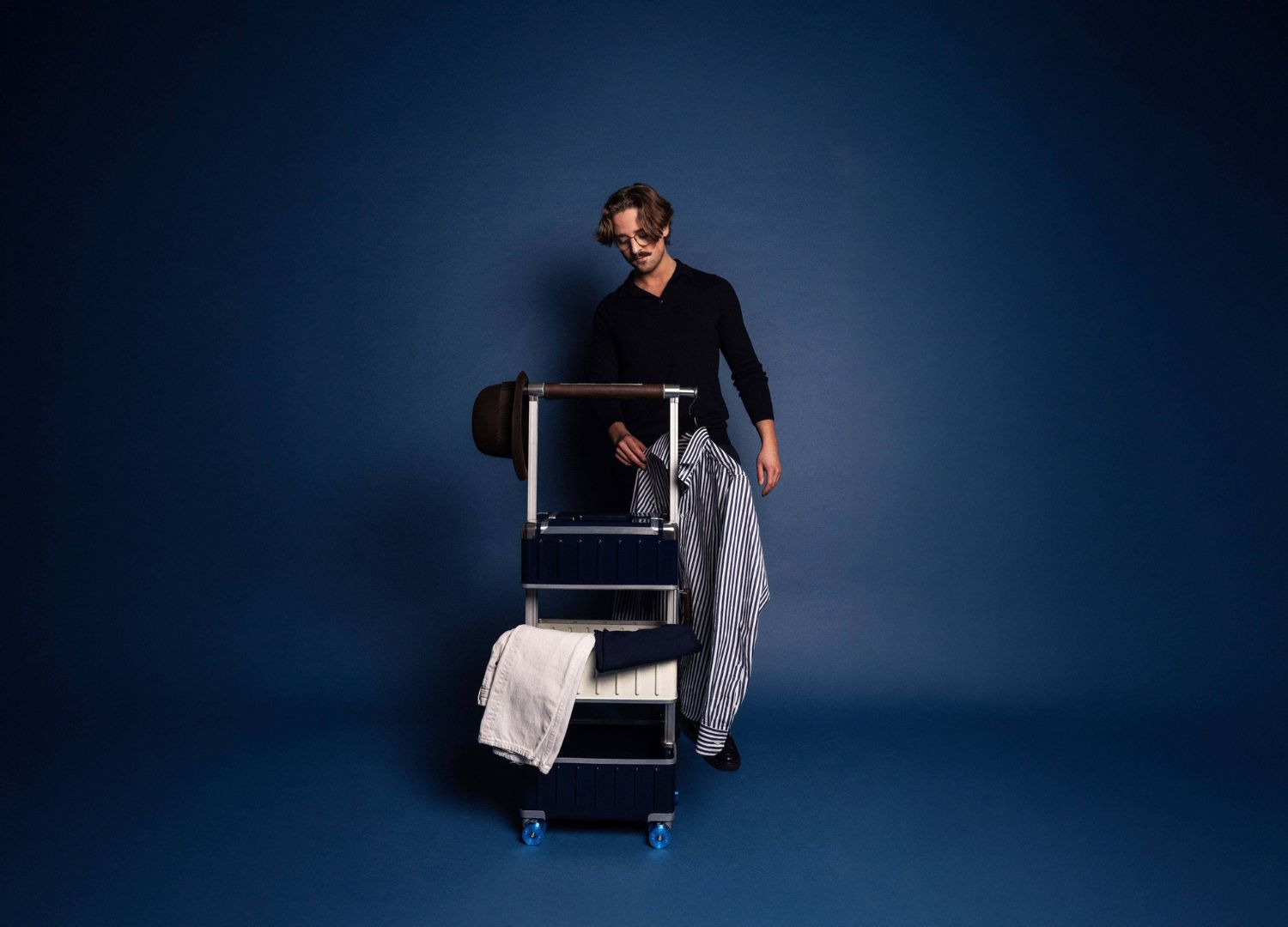
Milla Lack introduced Drobe, a portable wardrobe designed to fit within the dimensions of a suitcase. By reinterpreting the traditional wardrobe trunk through the lens of contemporary travel restrictions, the project combines practicality with a strong design identity. Drawing from her background in interior and industrial design, Lack balances mechanics and aesthetics, creating an object that is not just functional but embedded in a lifestyle context. Drobe reflects how storage can become flexible, mobile, and attuned to modern living.
Mercer’s Rugs – Decor & Design
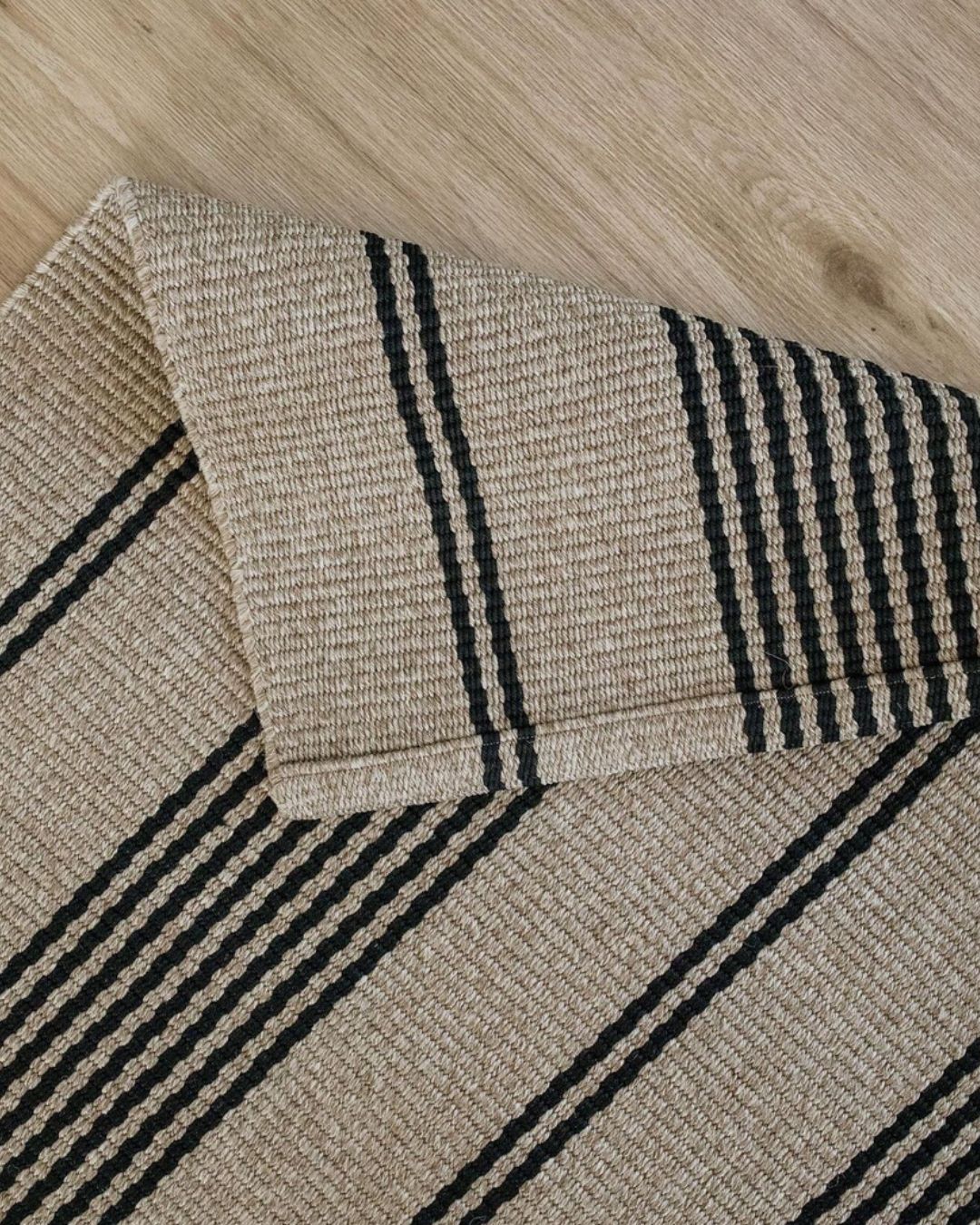
Mercer presented a collection of rugs made in Argentina from recycled plastic that looks anything but plastic. Durable and tactile, these pieces demonstrate how discarded materials can be transformed into soft surfaces for the home, without translating their nature and embracing soft tones, earthy hues and geometric elements that can be part of everyday homes. Their woven textures and patterns underline a commitment to sustainability while embracing a contemporary, yet subtle, aesthetic.
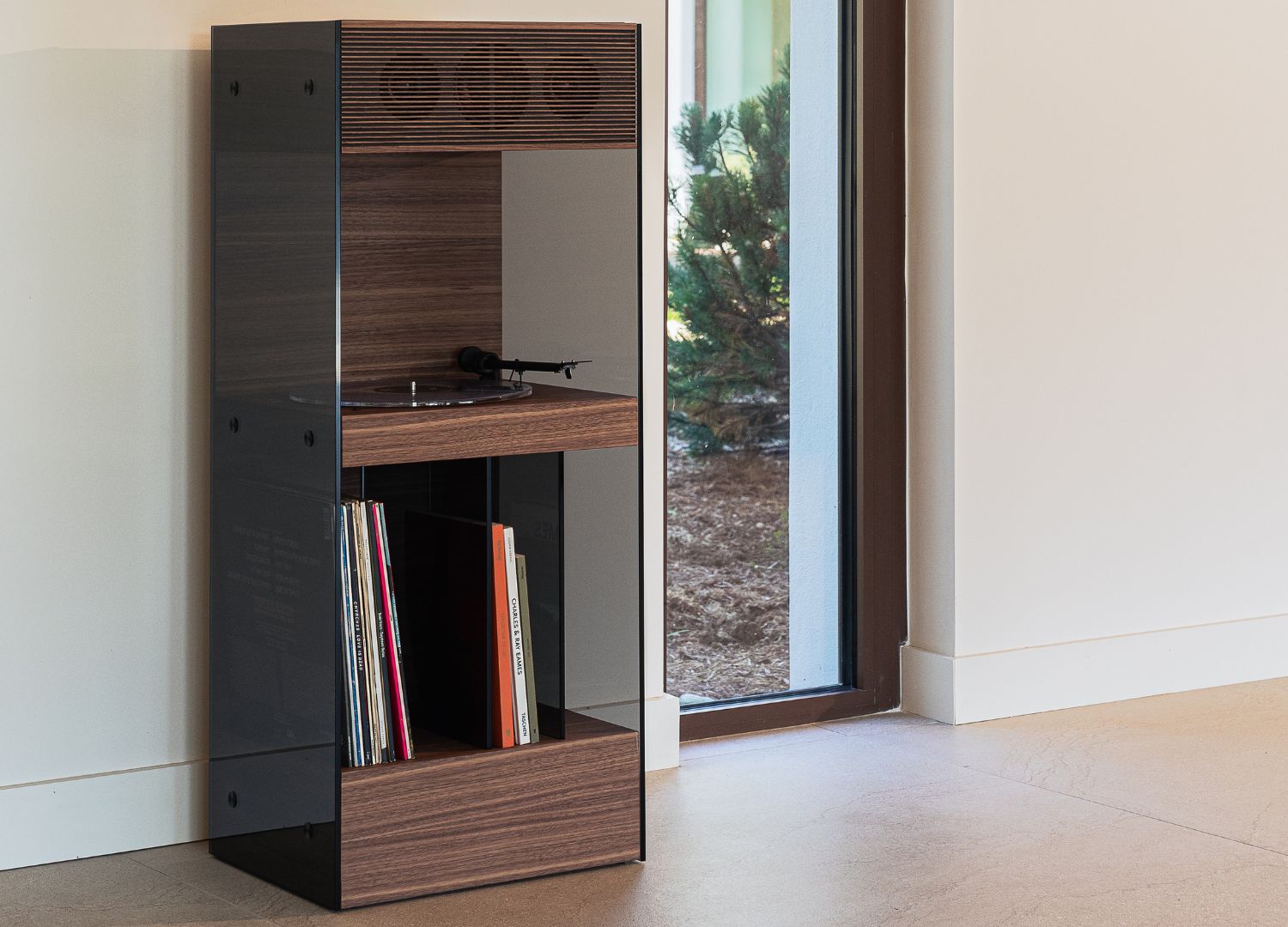
PR Alta by Iratzoki Studio x La Boite Concept – Design District
A collaboration between La Boite Concept and Iratzoki Studio resulted in PR Alta, an all-in-one audio cabinet that merges high-fidelity sound with furniture design. Composed of smoked glass, walnut, and aluminum, the vertical unit integrates a turntable, speakers, and vinyl storage. Compact yet powerful, it is equipped with La Boite’s patented Active Pressure Reflex® 2.0 technology, delivering deep bass in limited space. With multiple connectivity options – from Bluetooth to HDMI ARC, AirPlay 2, and Google Cast – it adapts seamlessly to both analog and digital listening. Elegant and discreet, PR Alta embodies a new approach to domestic audio furniture.
La Dré by Haus Otto for Nils Holger Moormann – Rising Talent Awards Germany
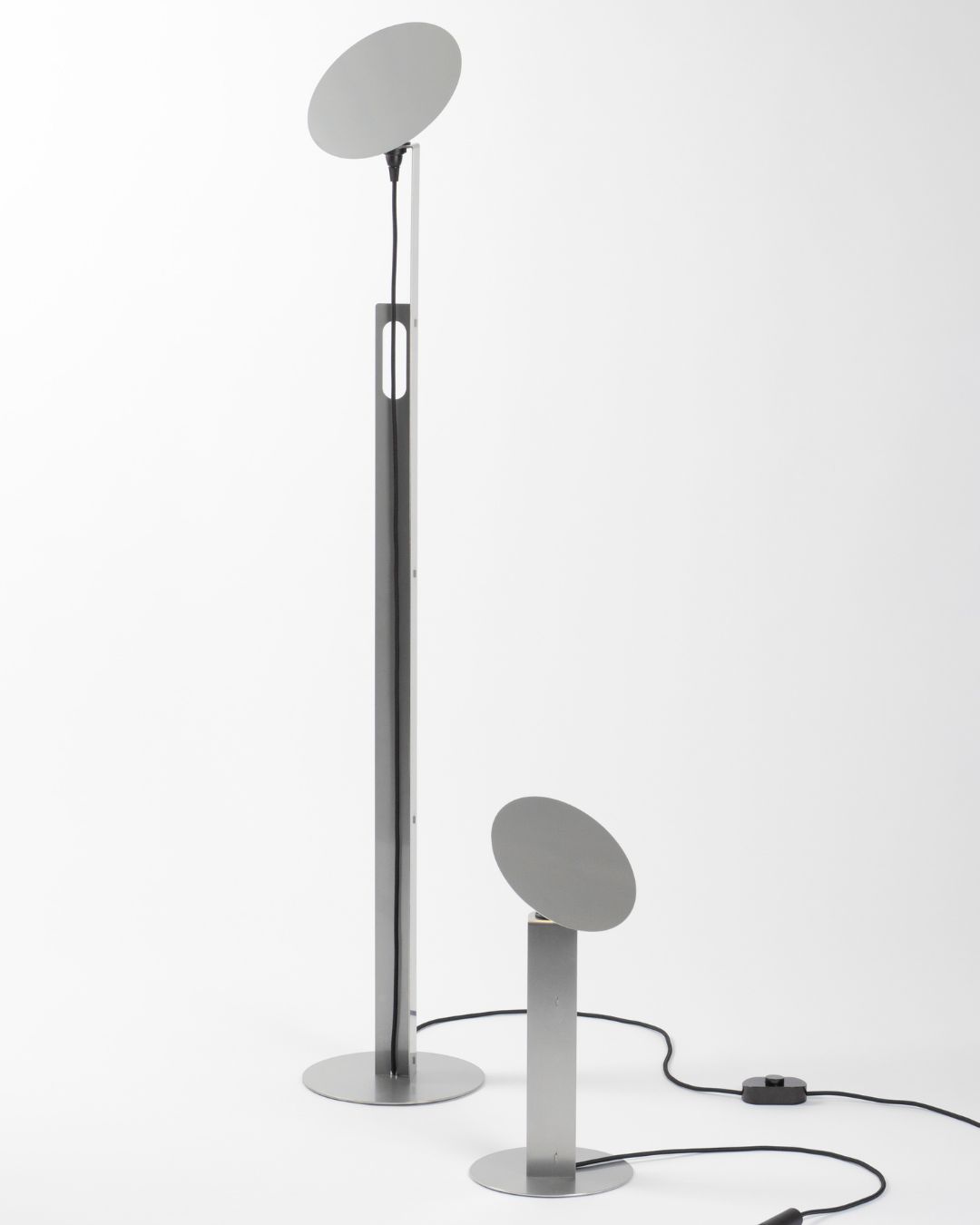
La Dré is a lamp designed by Haus Otto for Nils Holger Moormann that reduces lighting to its pure essentials. Its circular stainless-steel shade attaches directly to the bulb and connects to a ball joint, allowing it to rotate, tilt, and pivot to create different atmospheres. The frame, made of a few laser-cut parts, snaps together without screws or tools, making it easy to repair and durable over time. Honest, flexible, and transparent in its function, La Dré represents a minimalist approach that remains versatile in use.
Norm Lamp by Moritz Walter – Rising Talent Awards Germany
Speaking about lighting design, our eyes got caught by Moritz Walter’s Norm Lamp. Based on the principle of standardization, all visible parts of this object are crafted from a single aluminum profile, simplifying production and reducing waste. The design ensures durability while offering an evenly diffused light thanks to a wide LED array. Suitable for both domestic and professional environments, it proves how restraint can lead to clarity and efficiency.

Lecrase Stool, Unbroken and Fragments of Fair by Friedrich Gerlach – Rising Talent Awards Germany
The upcycling-driven designer Friedrich Gerlach presented three distinct projects that give new life to industrial waste. With Lecrase Stool, he transforms leather offcuts from the fashion and automotive industries into a structural material that can replace plywood, experimenting with folding and bending techniques to create self-supporting forms. In Unbroken, he uses off-spec production glass, fused at low temperatures to preserve cracks and speckles, which gravity then bends into sculptural stools with organic legs and crystalline transparency. Finally, Fragments of Fair reimagines discarded polypropylene flooring and packaging from trade fairs, compressing them into stool legs topped with an aluminum seat. Together, these projects demonstrate a consistent vision: turning waste into functional objects that are both expressive and sustainable.

About the author

Ludovica Proietti, journalist, design historian and curator, teaches in universities and curates events, always exploring projects with fresh, unconventional perspectives.
Instagram