When inspiration becomes a design model: the workflow behind nurholz
A great idea can be more than just a design solution, it can become the foundation of something entirely new. Let’s see how nurholz has transformed a vision into a process, building a new kind of design company.
One of the most exciting things about this design era is how unpredictable the designer’s path has become. Old patterns are breaking down. While some may feel disoriented by the change, the truth is that embracing risk and following a natural flow is the new rule.A great example of this shift is nurholz, the emerging brand founded by Michael Mahle, a designer and carpenter who started with a romantic vision and transformed it into a structured, scalable process to build furniture.
nurholz – Hightlights:
Gallery
Open full width




Open full width
Who is Michael Mahle?
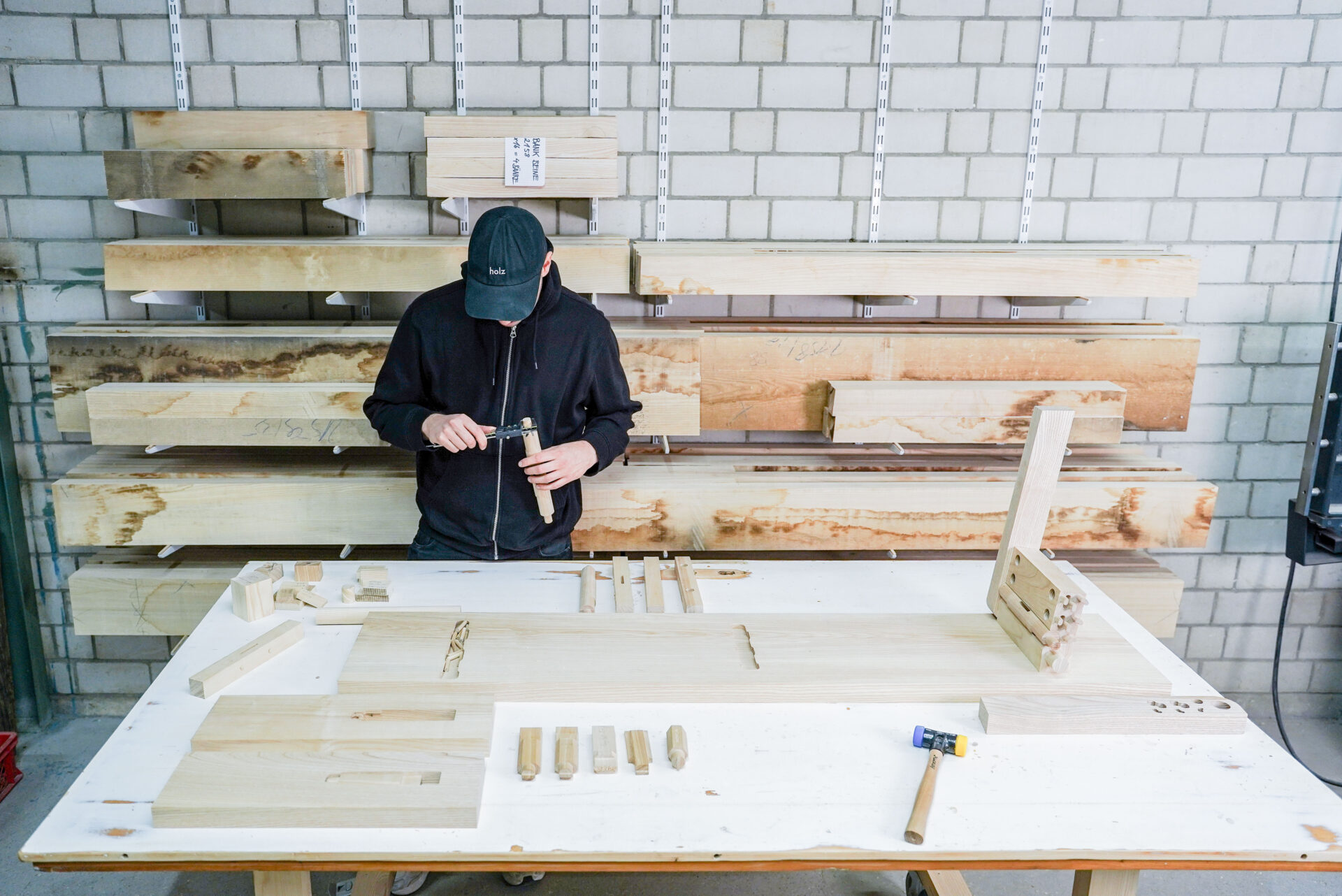
Michael Mahle is a German designer with a background in carpentry. His hands-on knowledge of woodworking gave him a unique perspective when studying design – it wasn’t just about creating shapes or aiming to work for companies. It was about building better systems.
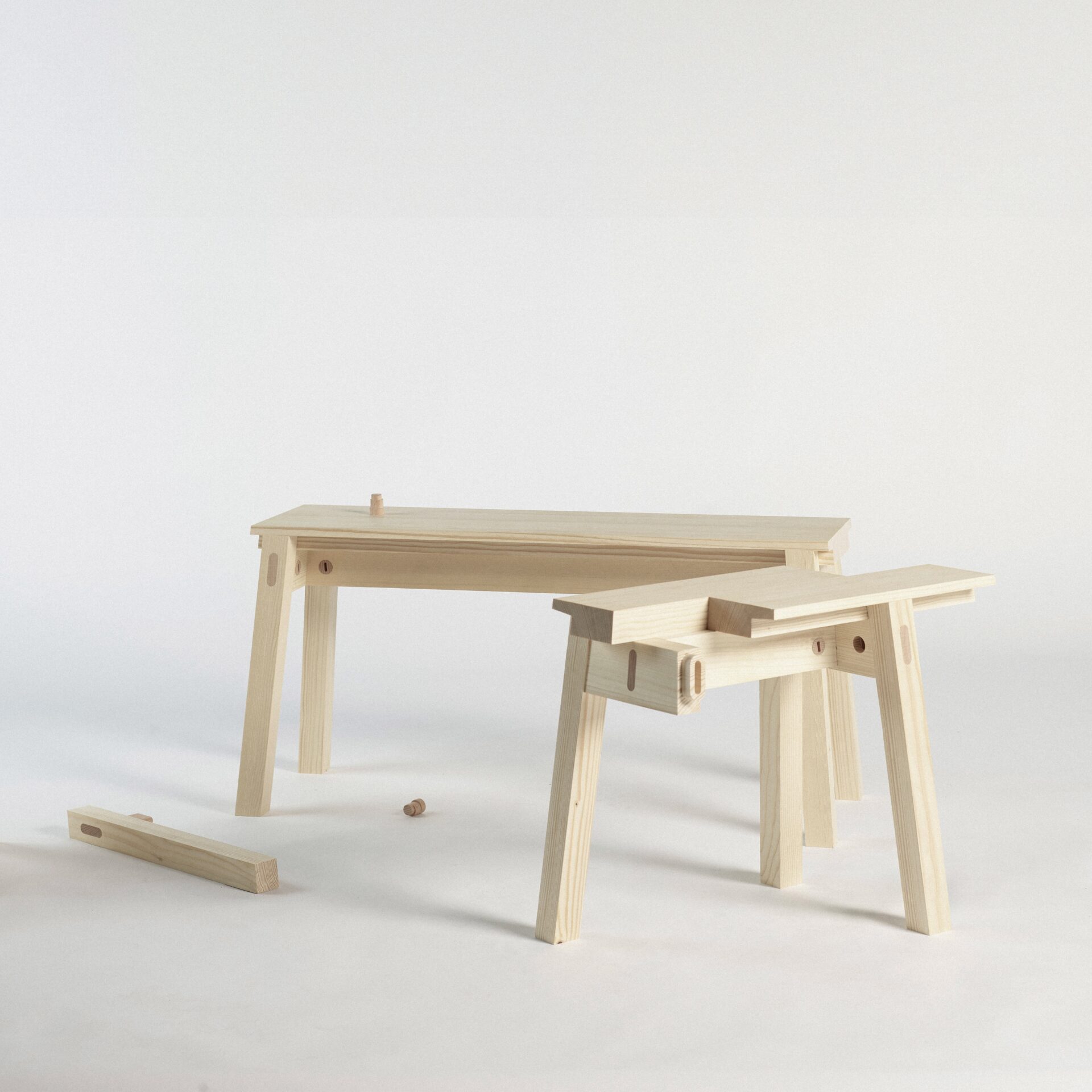
With sustainability always in mind, Mahle focused his attention on how wood is constructed. His graduation project asked a simple but powerful question: can we build furniture without glue or metal?
The answer came from Japanese joinery, centuries-old techniques that interlock wooden parts beautifully, without fasteners or adhesives.

The idea of CNC joinery
Traditional Japanese craftsmanship is poetic, but not easily scalable. It relies on artisan skill and often results in high costs. But Mahle saw an opportunity: What if you could capture the spirit of that approach in a process that’s replicable? That’s how the idea was born, to reinterpret those principles using CNC technology.
The goal: furniture that’s easy to assemble, made of just wood, and rooted in a philosophy of purity and simplicity. This idea became his thesis project at Bauhaus University Weimar – and the first step toward what would eventually become nurholz.
Spreading the word
The strength of the concept quickly drew attention. Mahle exhibited the project at Ambiente Frankfurt, one of the largest design fairs in Germany. That helped, but the real spark came from a simple Instagram video demonstrating how the pieces fit together. It went viral.
Thousands of likes and shares made one thing clear: the idea resonated. There was a market – but even more than that, there was love. The virality wasn’t just visibility, it was validation. In a world where algorithms and swipe culture often seem to dilute meaning, this was proof that the internet can still reward good ideas.
From a journalist’s perspective, this is part of a larger trend: social media is reshaping how design gains traction. Mahle’s story isn’t an isolated case – it’s another example of how platforms like Instagram are challenging the old rules and becoming cultural filters for what deserves attention.
It was time to build something real.
Turning a vision into a label
The idea started to evolve into something more substantial – this is still very recent, in 2024 – but it’s a careful process to turn a concept into a company. The goal was clear: build an entire furniture collection and sell it online.
That may sound easy in an era of direct-to-consumer brands, but when you’re creating physical objects – designed to be lived with – everything matters. Not just the look, but the process. Michael began outlining the infrastructure: a place to work, machines, people, a design pipeline, and a plan for distribution. Everything had to be designed with care, just like the products themselves.

Making things happen
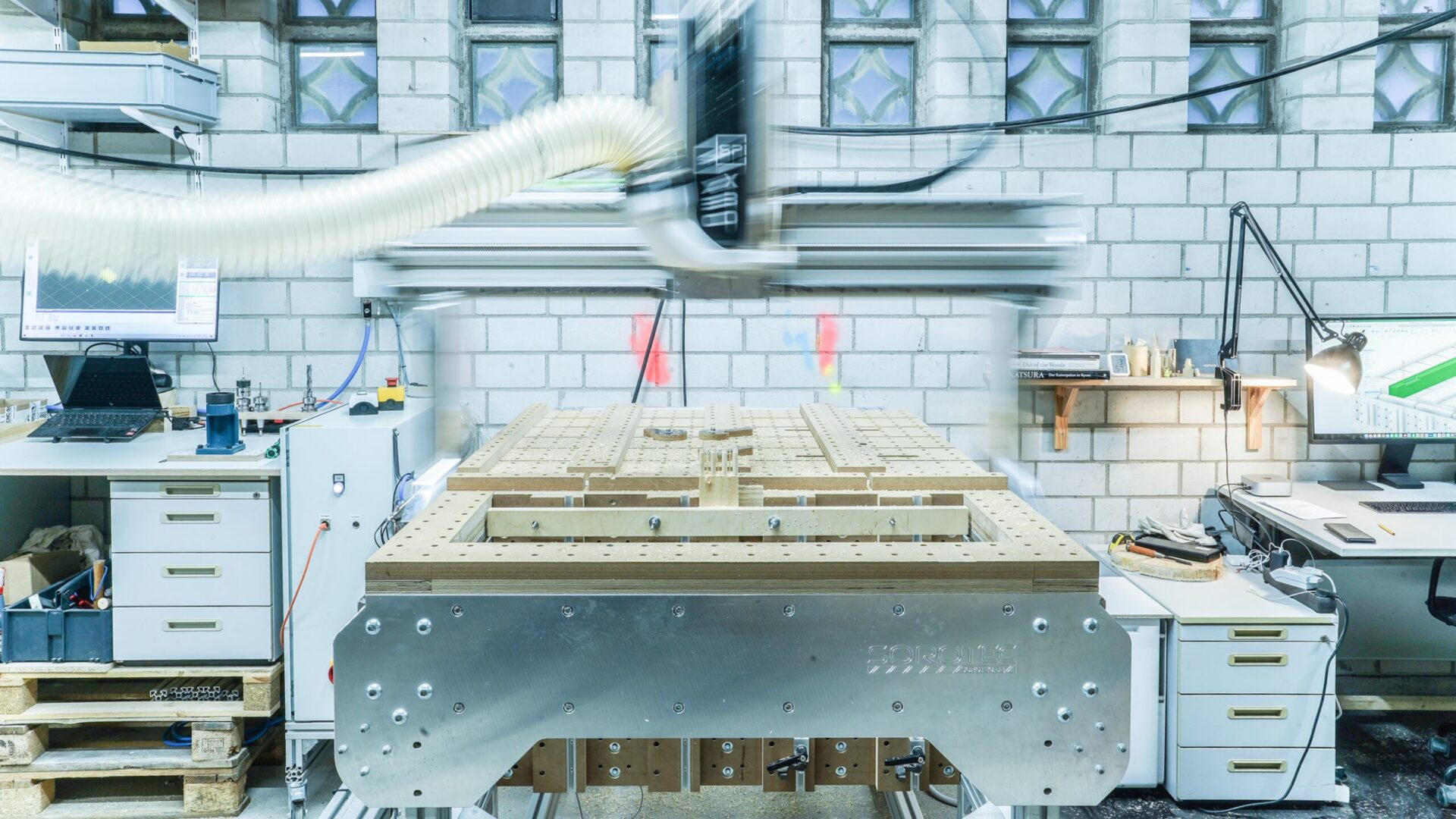
Finding a space might sound simple, but it wasn’t just about rent. The space had to reflect a vision. nurholz is built on CNC manufacturing, and those machines need room, not just to operate, but to grow.
The space also needed flexibility: room for content production (for online storytelling), a small showroom, and room to scale. It’s the kind of decision that sounds operational, but is deeply strategic. The collection itself is growing step-by-step, often starting as commissions. Each project becomes a proof of concept. Once tested in real life, it earns a place in the nurholz catalog.

Where ideas meet structure
Nurholz is still young, but already shows the outlines of a new kind of design model: one built from passion, but structured for growth. This isn’t just about making sustainable furniture. It’s about designing a business from the ground up, where every element- process, production, storytelling – serves the original idea.
Craft can become a process, if you give it structure. A single design idea can become a system, not just a product. Designing a business is not separate from designing objects – it’s part of the same creative act. This is what the new generation of studios is teaching us: good ideas don’t just live in objects – they live in the models that bring them to life.

We explored more design models, have a look at our article about Furf Design Studio or Kooij to better understand how a multidisciplinary studio makes its move in the design business.
About the author
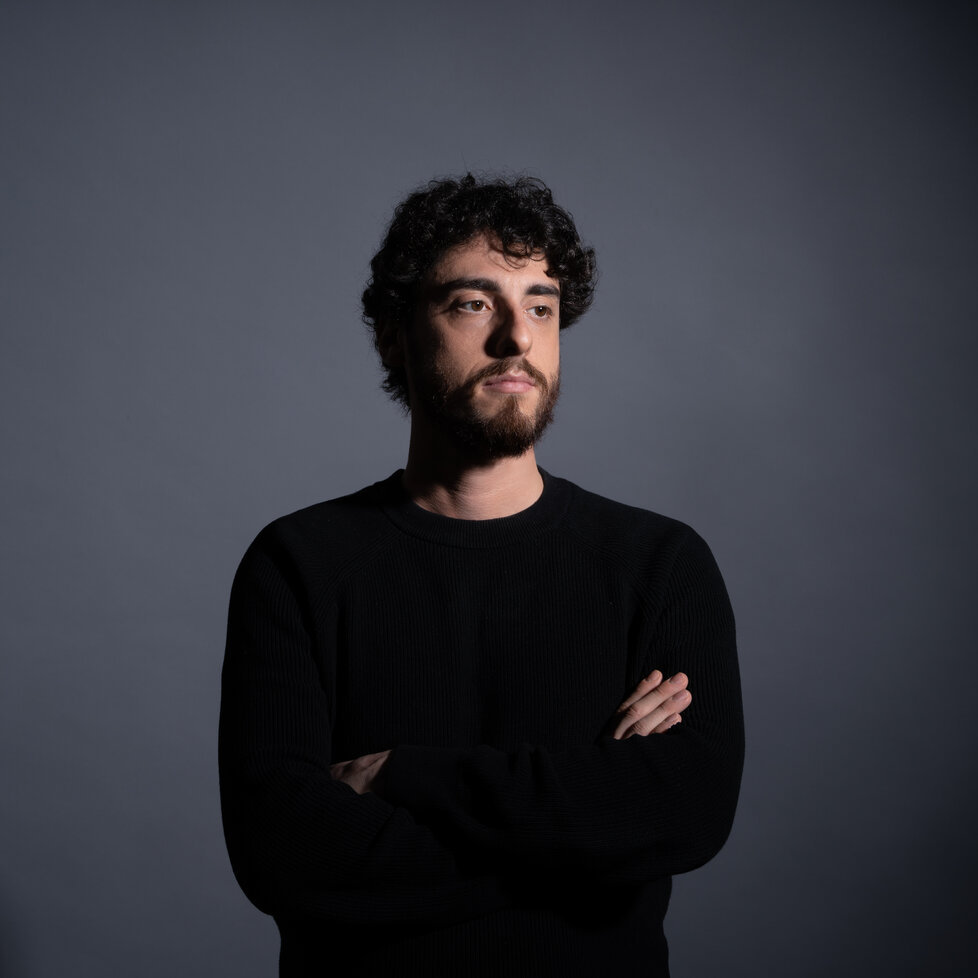
Mario Alessiani, founder and creative director of the Italian namesake design studio, specializes in product, lighting, and furniture design. His clients include companies such as Umbra, Fabbian, and Axolight. Mario also teaches at the University of Camerino, IED Rome and Sichuan Normal University in China. His work has been exhibited at prestigious events like the ADI Design Museum in Milan, Eindhoven Design Week, and Milan Design Week, earning him awards like the IF Design Award and Archiproducts Design Award.
WebsiteInstagramLinkedin