Amble One: designing a new type of car for short-distance mobility
A Lisbon startup staffed by veterans of Apple, Audi, and Ford is wagering that the answer to short-distance mobility is barely a car.
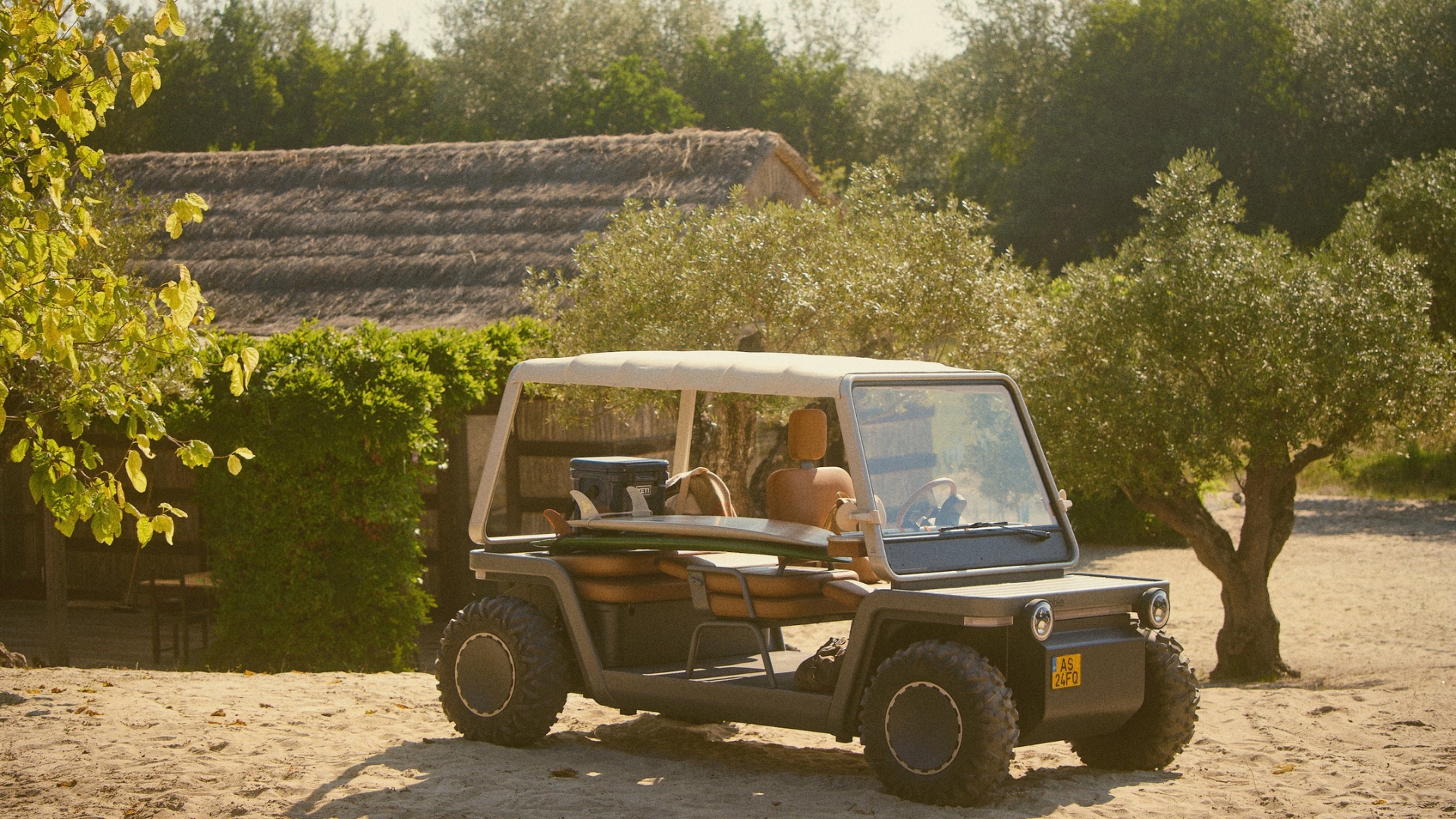
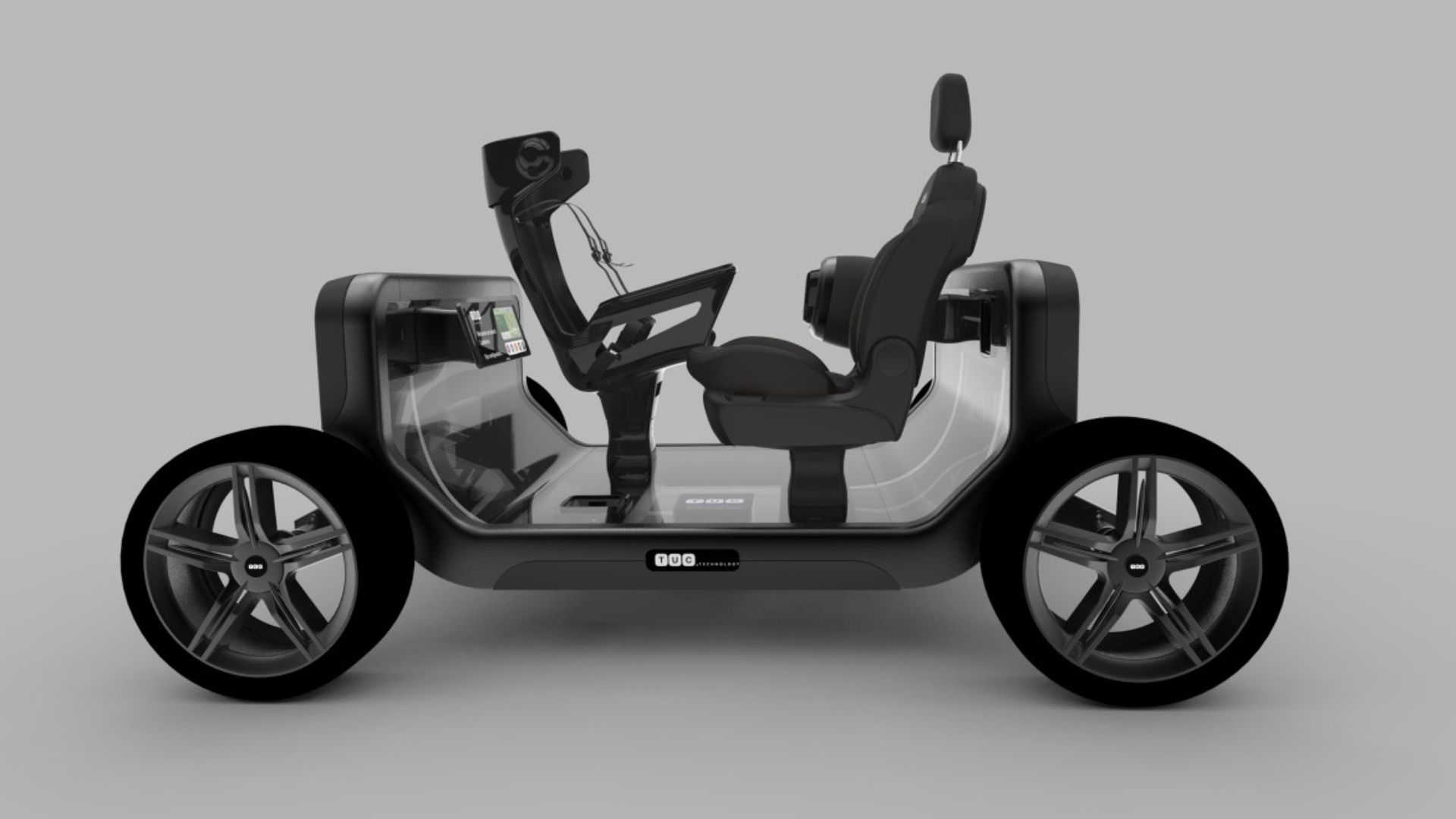
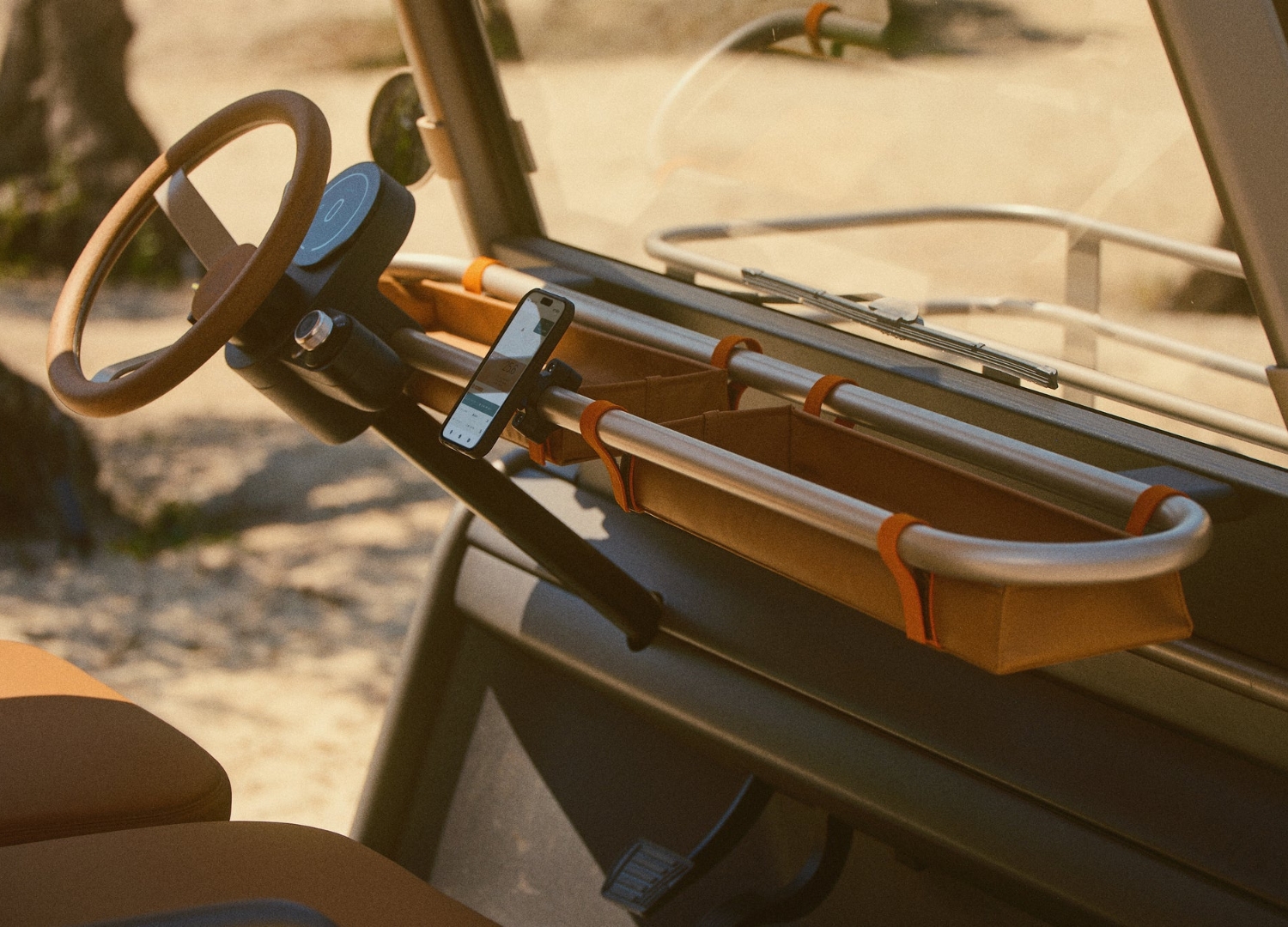
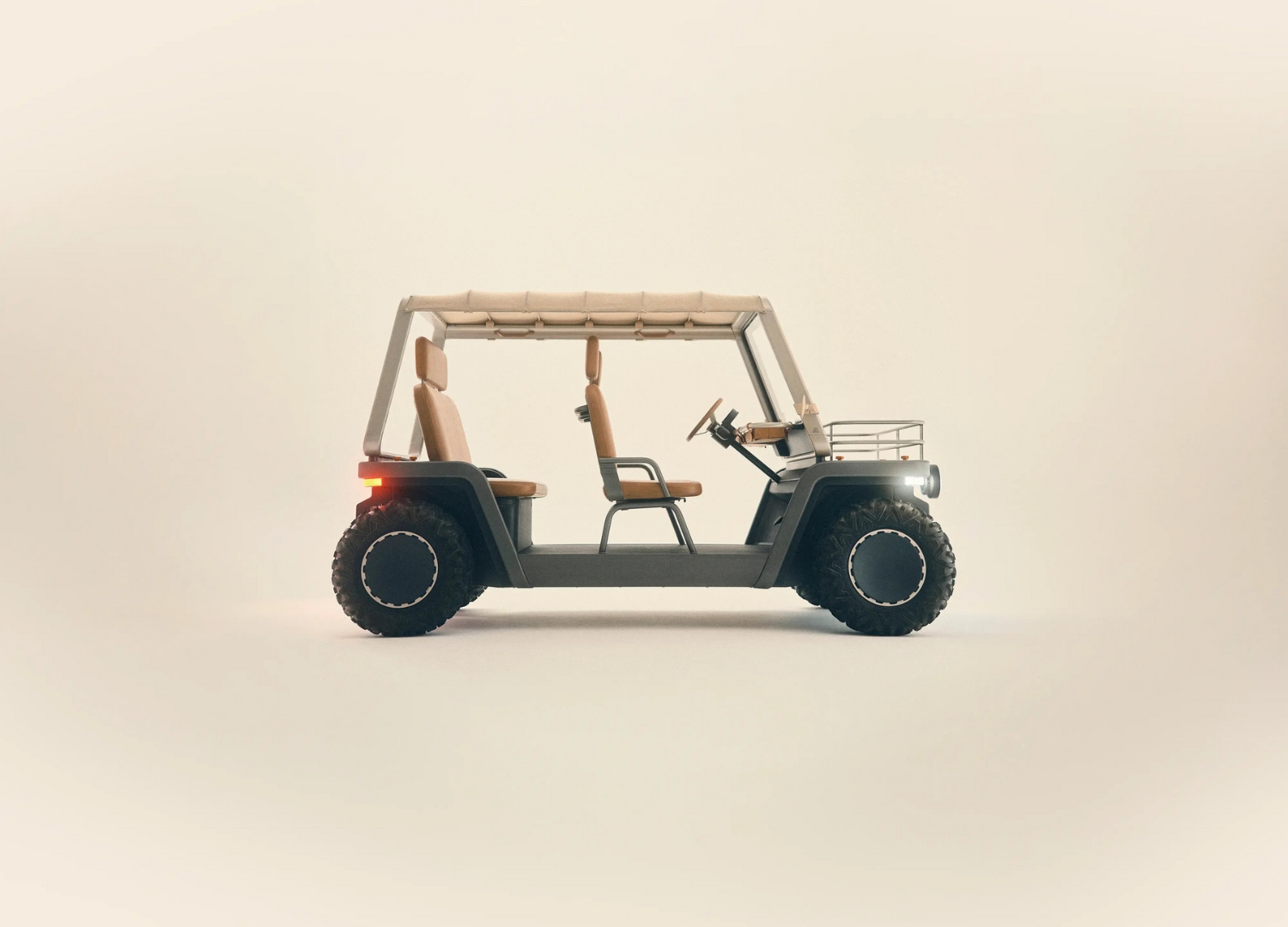
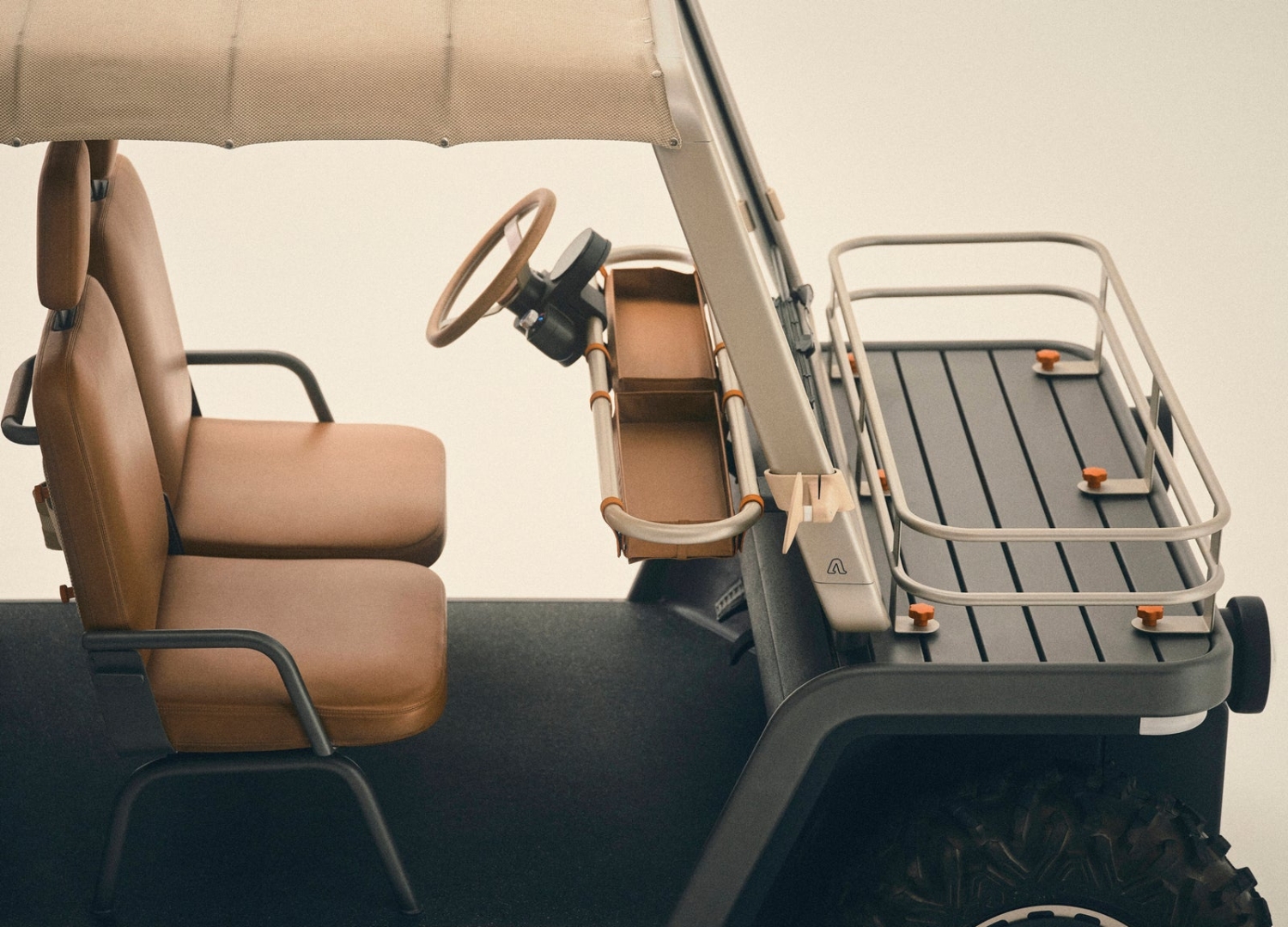
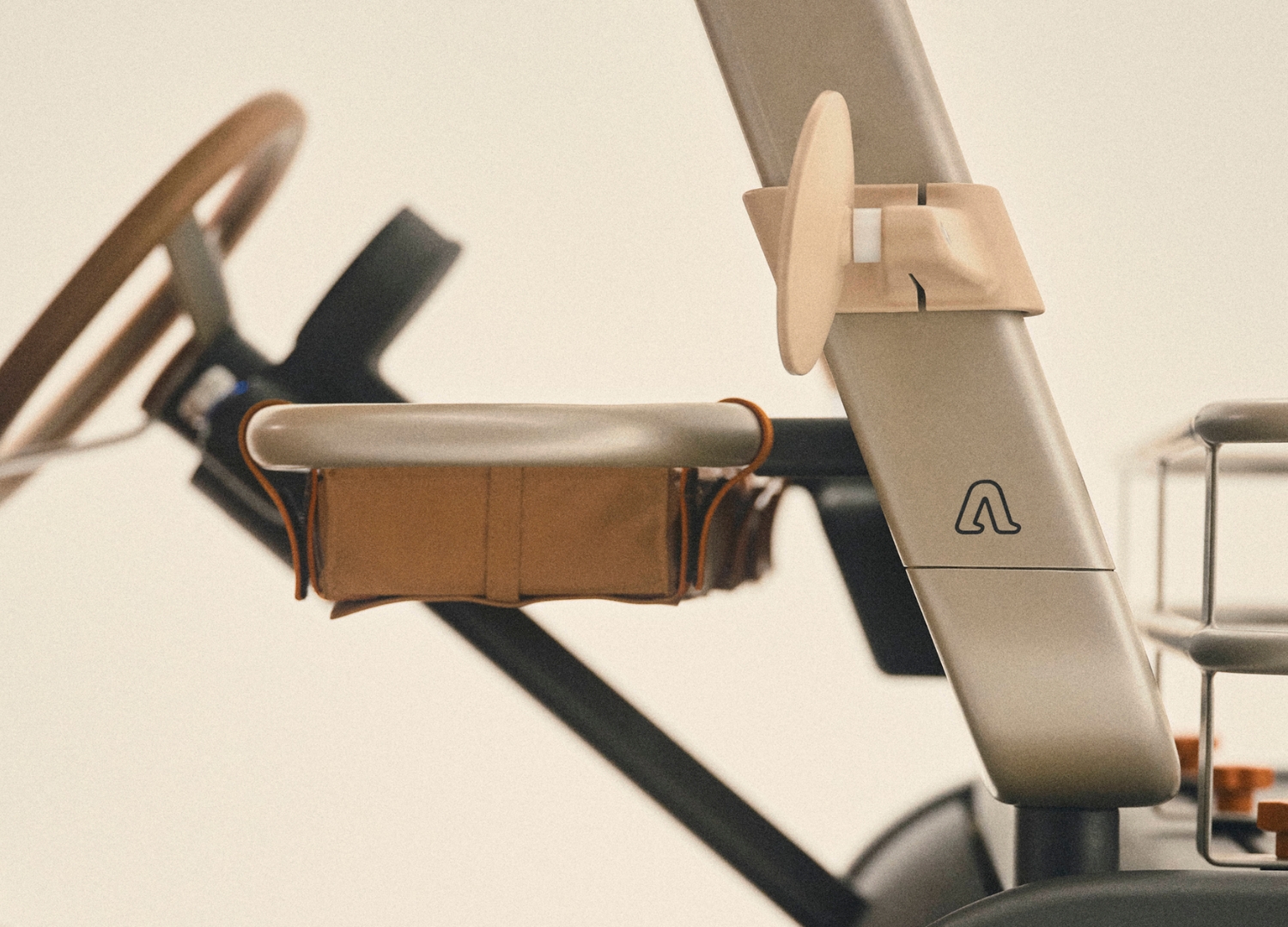
On June 25, 2026, a company called Amble pulled the cover off its first vehicle, unveiling something that resembled the skeleton of a car. No doors, almost no screens, a cork-wrapped steering wheel, a canvas roof stretched over an exposed aluminium frame. While the modern EV industry chases bigger batteries, longer ranges, and more touchscreens, the Amble One has chosen to do less instead of more.
Amble’s goal is not to replace the family car, but to target short-distance mobility, which involves all those quick trips that could have been a walk or a bike ride. By reducing the separation between interior and exterior, the car aims to reconnect the driver to its surroundings, a language about staying in touch with the place one is moving through instead of being literally sealed off from it.
Gallery
Open full width

Open full width
Amble One:
The superteam behind it
Design lead Julian Hoenig spent most of his recent years at Apple, working on the Apple Watch, the Vision Pro headset, and the company’s abandoned Project Titan car programme, a secretive and ultimately shelved effort to build an Apple-branded automobile. He co-founded Amble in Lisbon with José António Uva, a Portuguese hospitality entrepreneur, Michael Tropper, founder of the design studio forpeople, and Adrien Roose, who co-founded the e-bike brand Cowboy.
The hardware
The Amble One has a single rear-mounted motor, 15 kW and 48 volts, which draws from a 12 kWh lithium-ion battery, delivering a top speed of 65 km/h, and a full charge takes about five hours. The whole vehicle weighs roughly 450 kg, a fraction of the mass of a typical SUV, and seats four people. The body combines an aluminium frame with recycled polymer panels, a waterproof soft top, and outdoor fabrics designed to weather with use.
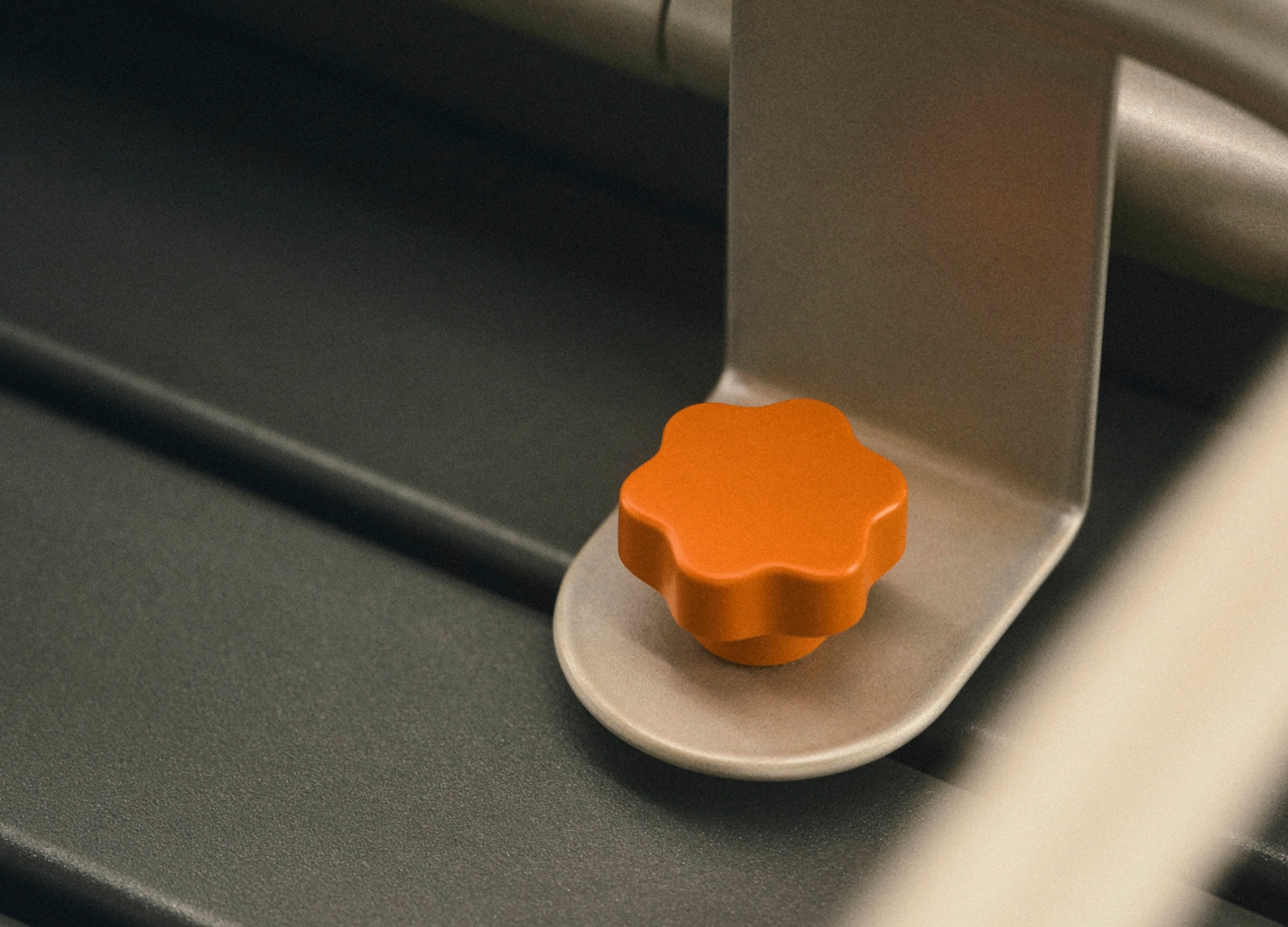
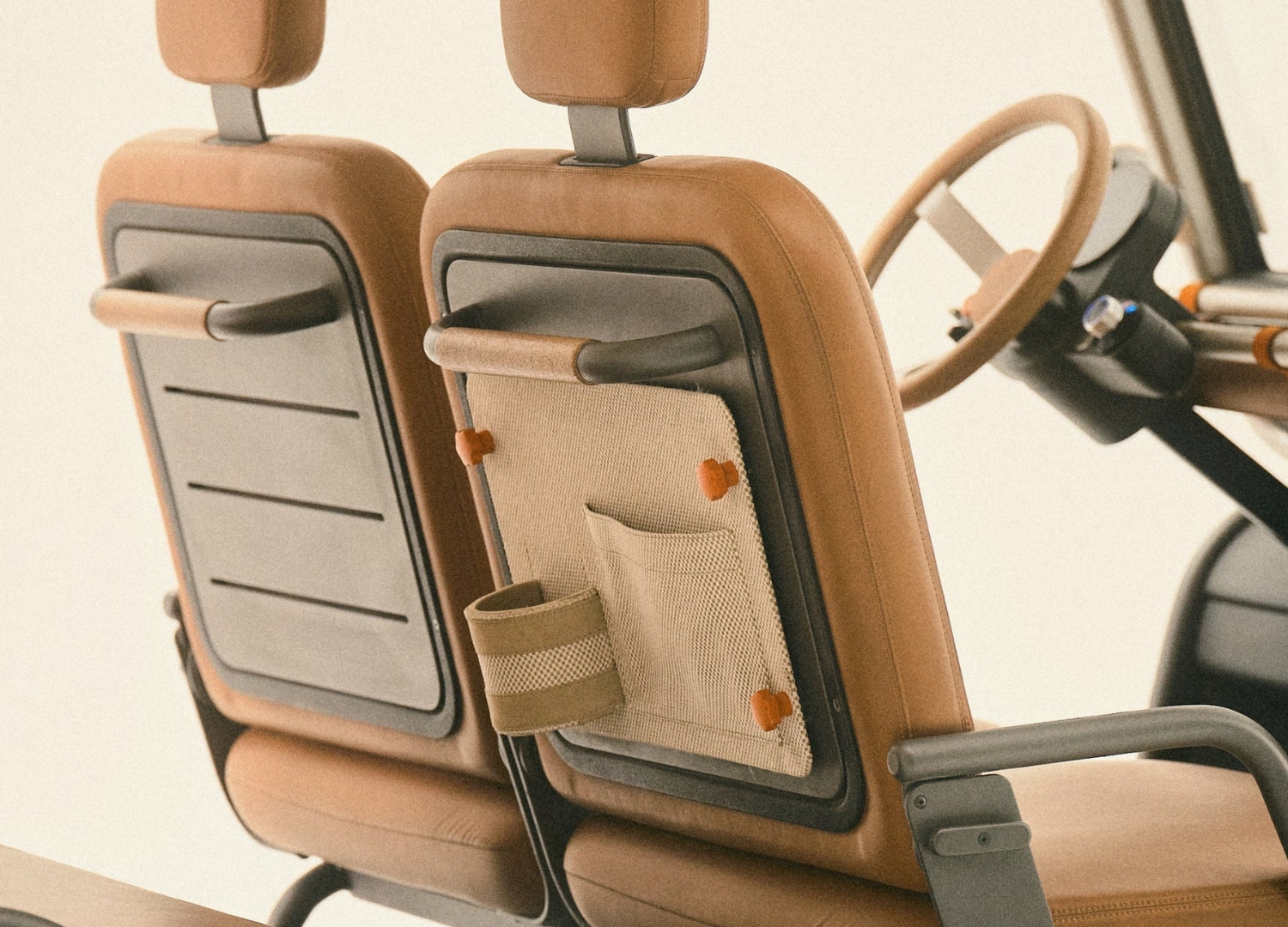
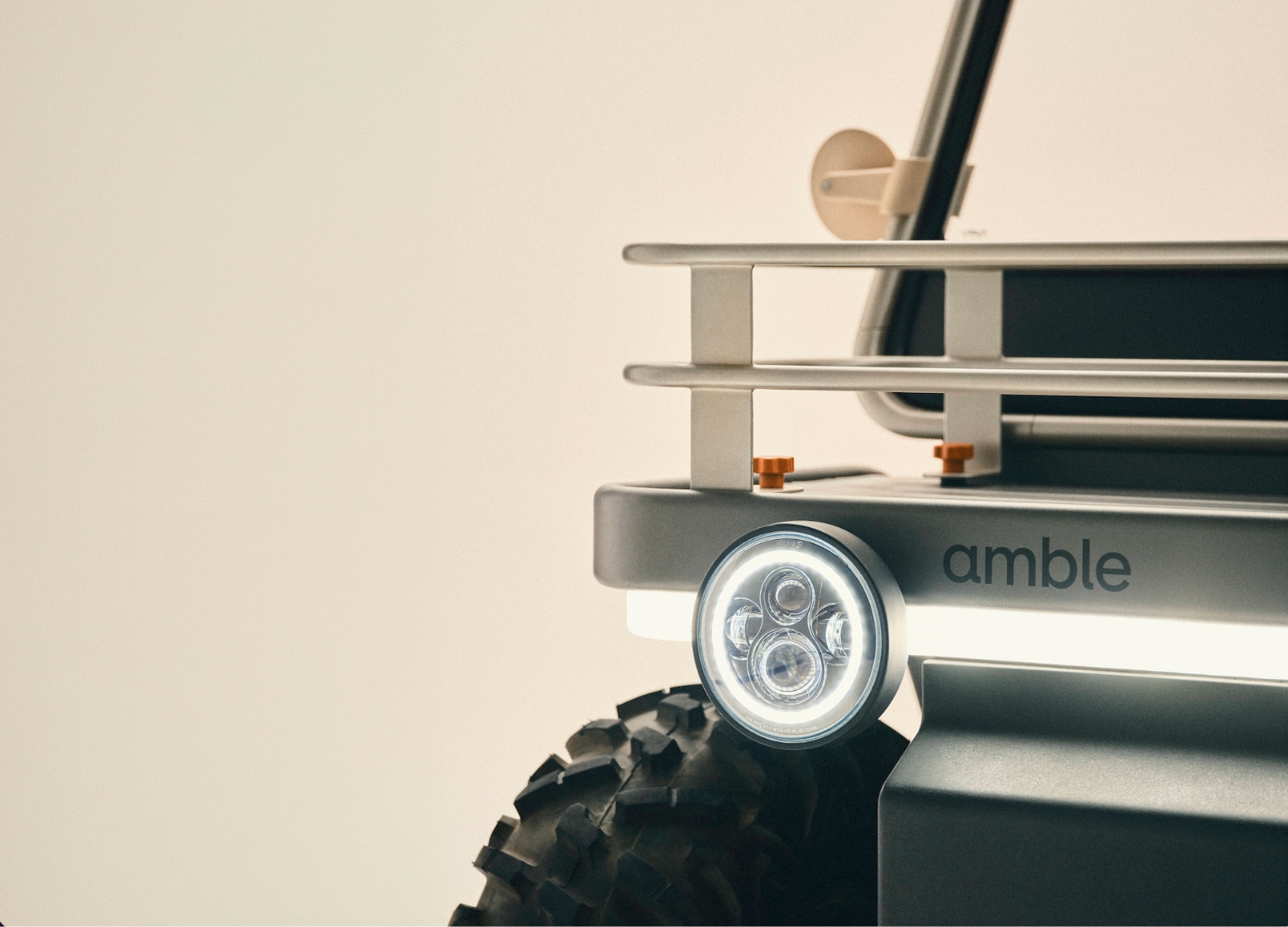
The vehicle’s usability is defined by modularity; the rear seats fold flat to create a cargo bed, and a mounting system lets owners attach baskets, straps, and storage directly to the frame without any tools, turning the car into a beach cruiser, a cart, or simply a comfortable ride. Hoenig has chosen to distance himself from his Apple background by deciding to drop the touchscreens, opting instead for physical buttons and dials, which keep the driver looking at the road rather than at an interface.
A car that can’t leave the city
None of this would be commercially plausible if Amble were building a conventional car. Crash testing and legal approvals for regular cars are an expensive gate, and Amble sidesteps it by staying under a certain weight and registering in Europe’s L7e category, the “heavy quadricycle” classification that covers off-road buggies and light vehicles.
It is a similar case to one we have previously seen with the LIUX BIG, a shortcut that makes a €20,000 starting price possible and by which the Amble One can be called “street-legal.” The company will also adopt a similar strategy in the US, where it will be classified as an LSV.
A lighter way to move
Cars delivered freedom, but as they have gotten bigger year by year, we have gotten to the point where a vehicle built for the highway is often the wrong tool for the five minute trip down to the beach or to the farmer’s market across town. The company’s bet is that short journeys have different requirements, and they should be met.
A quieter, lighter, and more exposed travel experience encourages a driver to notice their habitat more, to move more slowly, and to feel more present even in movement. By avoiding the aquarium effect, the car passengers will be able to hear the voices of people in the street and to experience a softer transition from one location to the other. Amble describes the car as a vehicle “made to wander,” encouraging a more mindful and curious approach to mobility.