Jia CURATED 2025: Highlights from the Bali design scene
From recycled waste and rattan to collectible design collections, Jia CURATED 2025 turned Bali’s repurposed festival park into a vibrant showcase of Indonesian design.

Bali’s creative scene was present stronger than ever during Jia CURATED 2025. Held in the surreal setting of a repurposed theme park, the fourth edition brought together over 150 designers who didn’t just exhibit — they transformed the space itself. What emerged was more than a showcase: it was a living, breathing portrait of Indonesia’s design scene in motion — diverse, experimental, and deeply rooted in place.
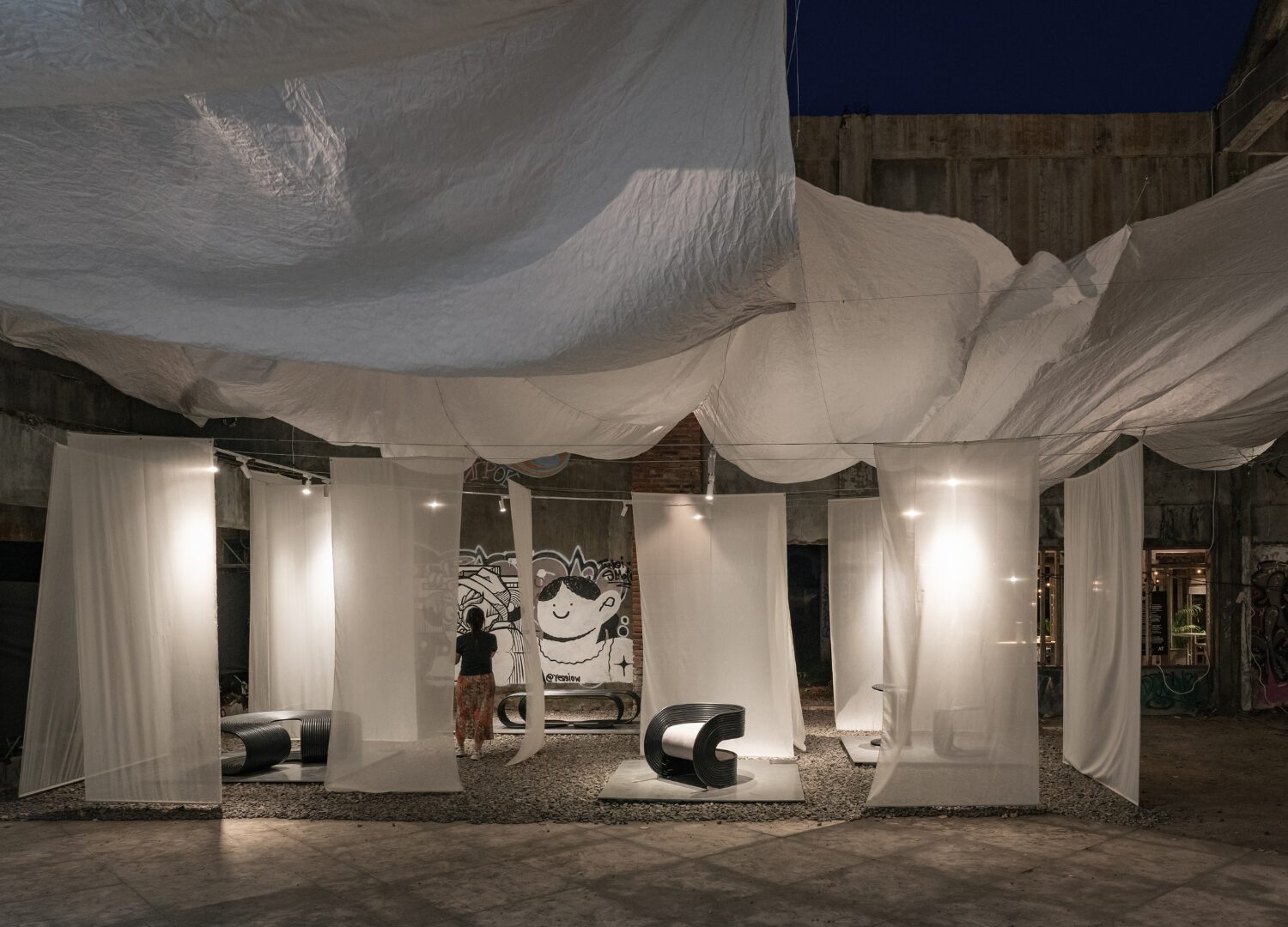
This year’s theme, Evolving Perspectives, invited visitors to rethink how design interacts with place, people, and purpose. Across the festival grounds, installations like Wang Sinawang by The Balvenie, the Garuda piece by Japanese duo Straft—Tamaki Ishii and Kazuma Yamagami, and a series of talks curated by Design Antology held in the repurposed theatre offered full immersion into cultural exchange and collaborative storytelling.
Gallery
Open full width



Open full width
Once again, the event reaffirmed its role as one of Asia-Pacific’s most compelling design platforms — bridging emerging voices with established ones. Here’s a selection of what caught our attention:
Jamur collection by ONG CEN KUANG
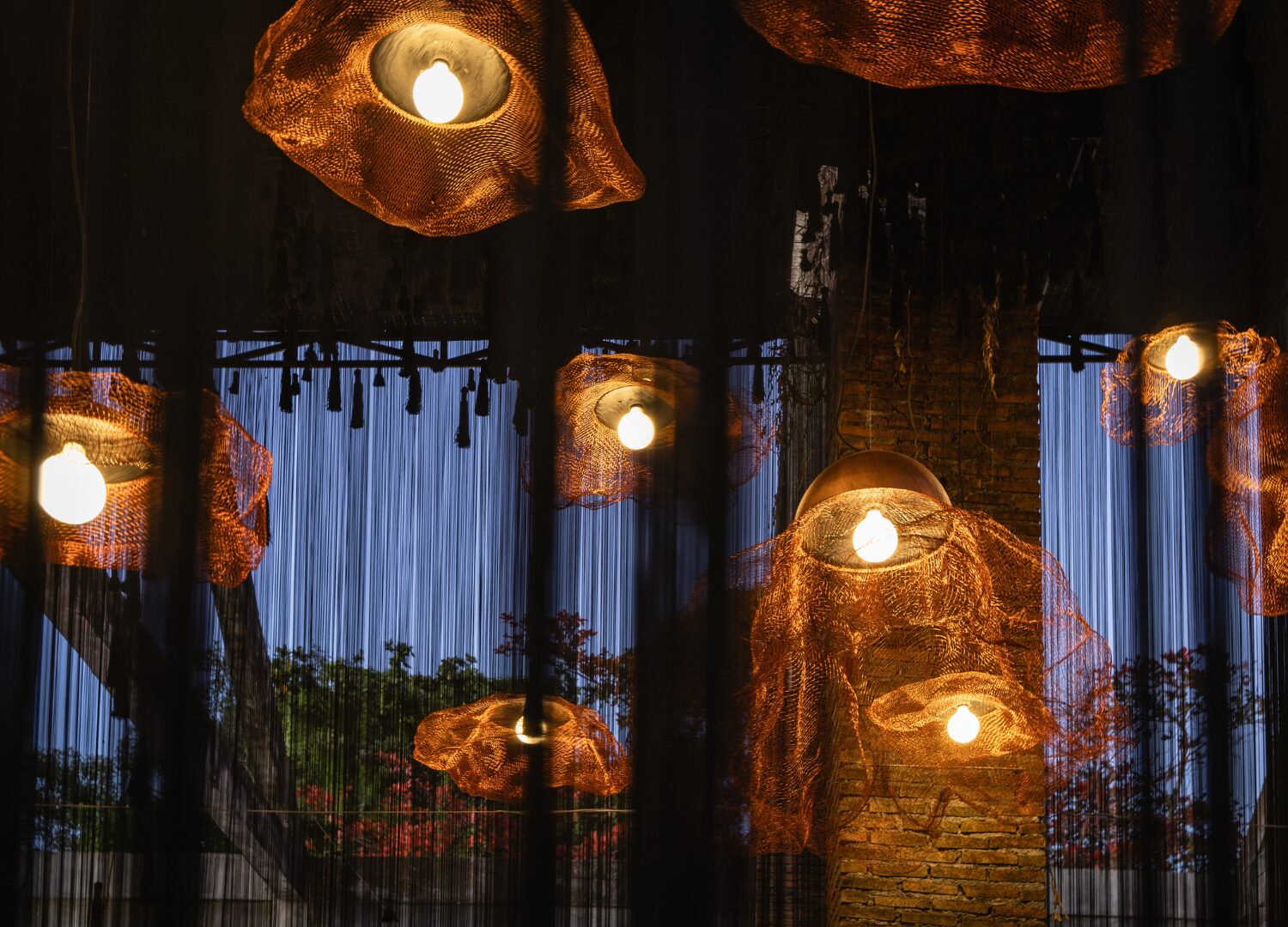
Ong Cen Kuang’s Jamur Collection takes its name from the Indonesian word for mushroom — and the reference isn’t just aesthetic. The lamps seem to grow slowly and naturally, shaped by hand in the Bali studio using copper sheets and wire. Nothing about them feels mass-produced. Each pendant is slightly different, by design.
Before installation, the owner can adjust the shape, bend it a little, and give it the final form they want. That gesture adds a layer of intimacy that’s rare in lighting design. The series reflects Ong Cen Kuang’s ongoing exploration of light, movement, and individuality — resulting in objects that carry emotional weight and respond to their surroundings.

Rambut stools by Pierre Charrié x CushCush Gallery
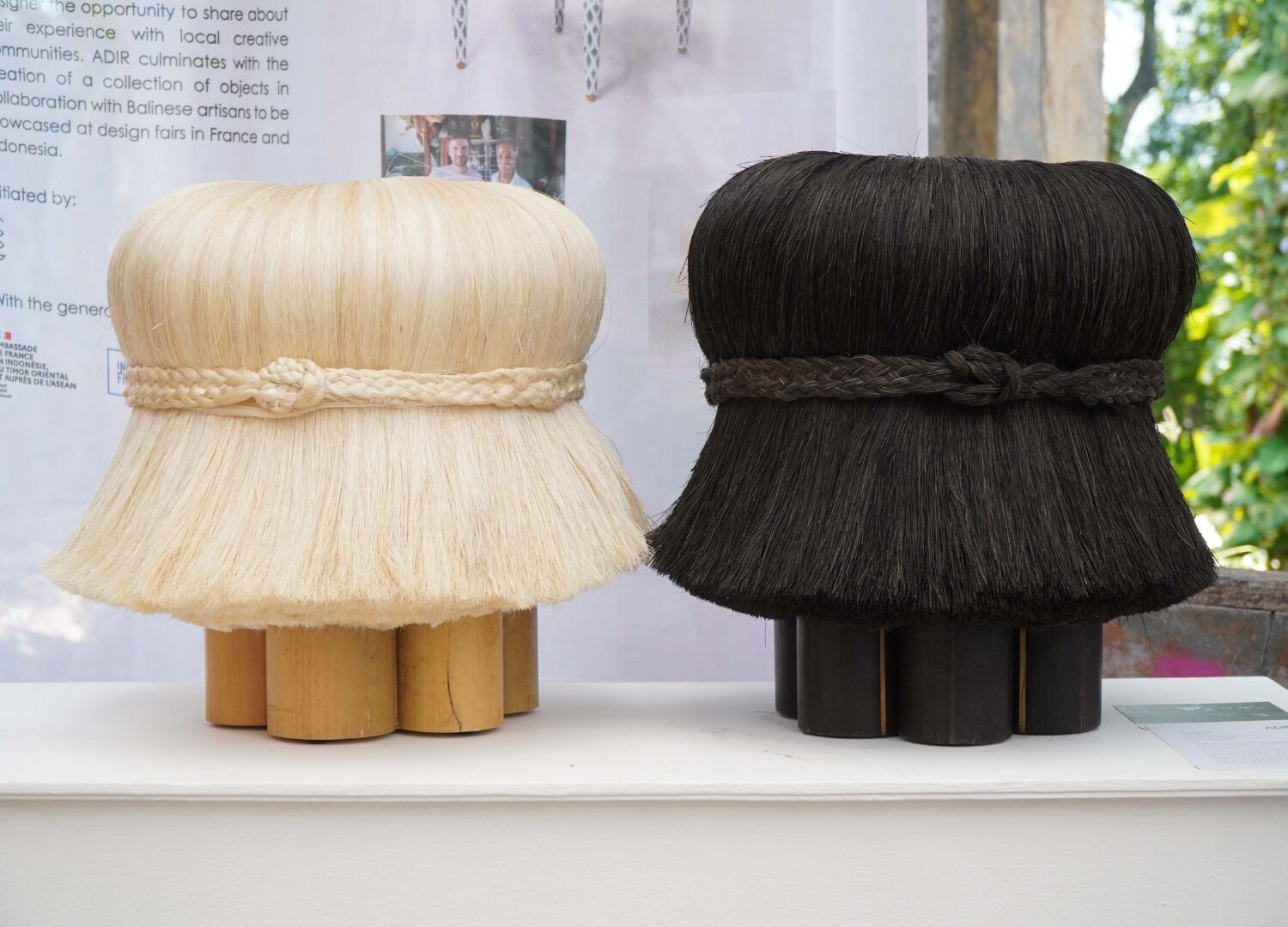
CushCush Gallery acts as a meeting point between international creatives and the Balinese community, encouraging collaborations that highlight local craftsmanship while opening space for contemporary experimentation. At this edition, the gallery showcased a selection of pieces developed over the years, including the Rambut stools by Pierre Charrié. The pair plays with contrast — soft and coarse, dark and light — echoing the Balinese concept of Rwa Bhineda, which sees harmony in opposites.
Rambut, meaning hair in Indonesian, takes shape through black ijuk, reminiscent of traditional thatched roofs, and sisal gebang fiber, linked to the vibrant costumes seen in Balinese mythology. The fibers are tied, brushed, and styled by artisan Jero Puspa and others, with bamboo and rope details that add a raw, energetic finish. The result is a reflection of CushCush’s approach: preserving heritage, supporting local makers, and crafting pieces that speak to both culture and function.
Waste to Wonder by Jia CURATED
Waste to Wonder is the initiative introduced by Jia CURATED that promotes the use of discarded materials and simple, low-tech techniques to create sustainable design solutions, repositioning waste as a tool for craftsmanship within community-focused environments.
One of the highlights was Communal Objects, developed in collaboration with Millimeter Manifesto — a collective of nine Indonesian designers — CushCush, LagiLagi, and CushCush Gallery. Together, they created benches, high tables, and pedestals distributed across the event area, all designed to be easy to replicate and assemble. Another standout was Light Between Lines by Studio Andramatin, an architectural installation-bookshop built entirely from recycled paper tubes.

Circuit – Sequence Bamboo Edition by messagingleaving
The Balinese design event didn’t just spotlight local talent — it also welcomed international designers who brought fresh energy to Bali’s creative scene. Among them was messagingleaving, a Taipei-based studio founded by designer and artist Chialing Chang, known for blending industrial precision with poetic craftsmanship.
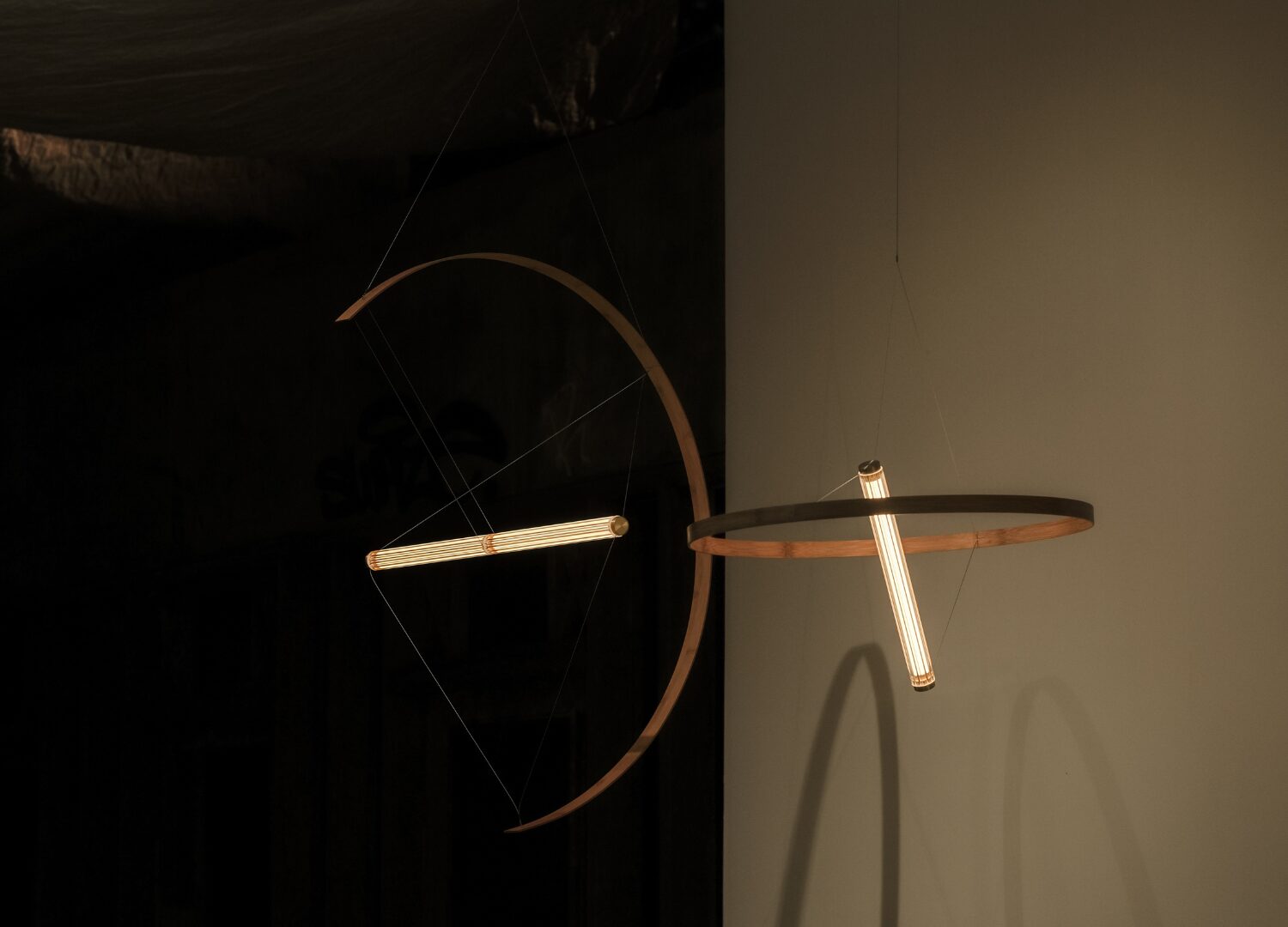
At Jia, the studio unveiled Circuit–Sequence Bamboo Edition, a series of mobile lighting sculptures that make invisible forces visible. Steel cables do more than hold the structure together — they conduct electricity, carry weight, and create tension, forming a live circuit that powers the work. Developed in collaboration with engineering-art group ZAP, each piece pairs bamboo with brass fixtures and suspended light tubes, balancing warmth and technical finesse.
Rotella collection by Pietro Franceschini x CVP
Among the international participants spotlighted was Pietro Franceschini, a Milan-based designer and architect well-known in the collectible design field. For this occasion, he teamed up with Indonesian manufacturer CVP to create Rotella, his first rattan furniture collection. Thanks to the savoir-faire of local artisans, Franceschini and CVP developed a series that highlights the power of connection between international creative minds and local heritage — one of the main purposes of the event.
Using 2 cm black rattan pipes, the designer twists and coils the material into fluid shapes inspired by the 1990s Haribo licorice wheel — a nod to childhood geometry with a grown-up edge. The collection, composed of five pieces — a chair, coffee table, bench, and two side tables — balances a sense of whimsy with formal precision. Bold, graphic lines give the pieces a strong contemporary identity, while subtle references to midcentury icons like Joe Colombo’s Nastro Chair anchor them in design history.
Sungai Carafe by Kevala Ceramics in collaboration with Sara Howard and Sungai Design
A pressing and persistent issue in Bali is the lack of recycling infrastructure. Landfills continue to grow in several areas of the island, and plastic and glass waste are increasingly visible — not only on land, but in rivers and waterways. This challenge led to a collaboration between Sara Howard, Kevala Ceramics, and Sungai Design, who joined forces to transform glass waste collected from Bali’s rivers into refined ceramic carafes.
The project gives discarded glass a second life — locally, and meaningfully. Each year, Sungai’s team removes over 26,300 kilograms of glass from Bali’s waterways, accounting for 4.6% of all river waste. In the past, this material was exported to Java for recycling. Now, through this collaboration, it is reclaimed and reshaped into ceramics that preserve natural resources while telling a story of circular design.

This year’s edition of Jia CURATED revealed how design in Southeast Asia — especially in Indonesia — is becoming a way to care: for materials, for stories, for the land itself. From river glass turned into carafes to rattan elevated into contemporary design, the event highlighted a generation of designers who are not only looking forward, but looking inward — asking how design can preserve, connect, and belong.
About the author