SMEG at Milan Design Week 2026 marks a new approach to reframing its heritage
At EuroCucina 2026, SMEG expands its design language through Musa, designed by BorromedeSilva, and Isola, in collaboration with Stefano Boeri Interiors, introducing TOTAL MATTNESS and a renewed focus on appliances as spatial elements.
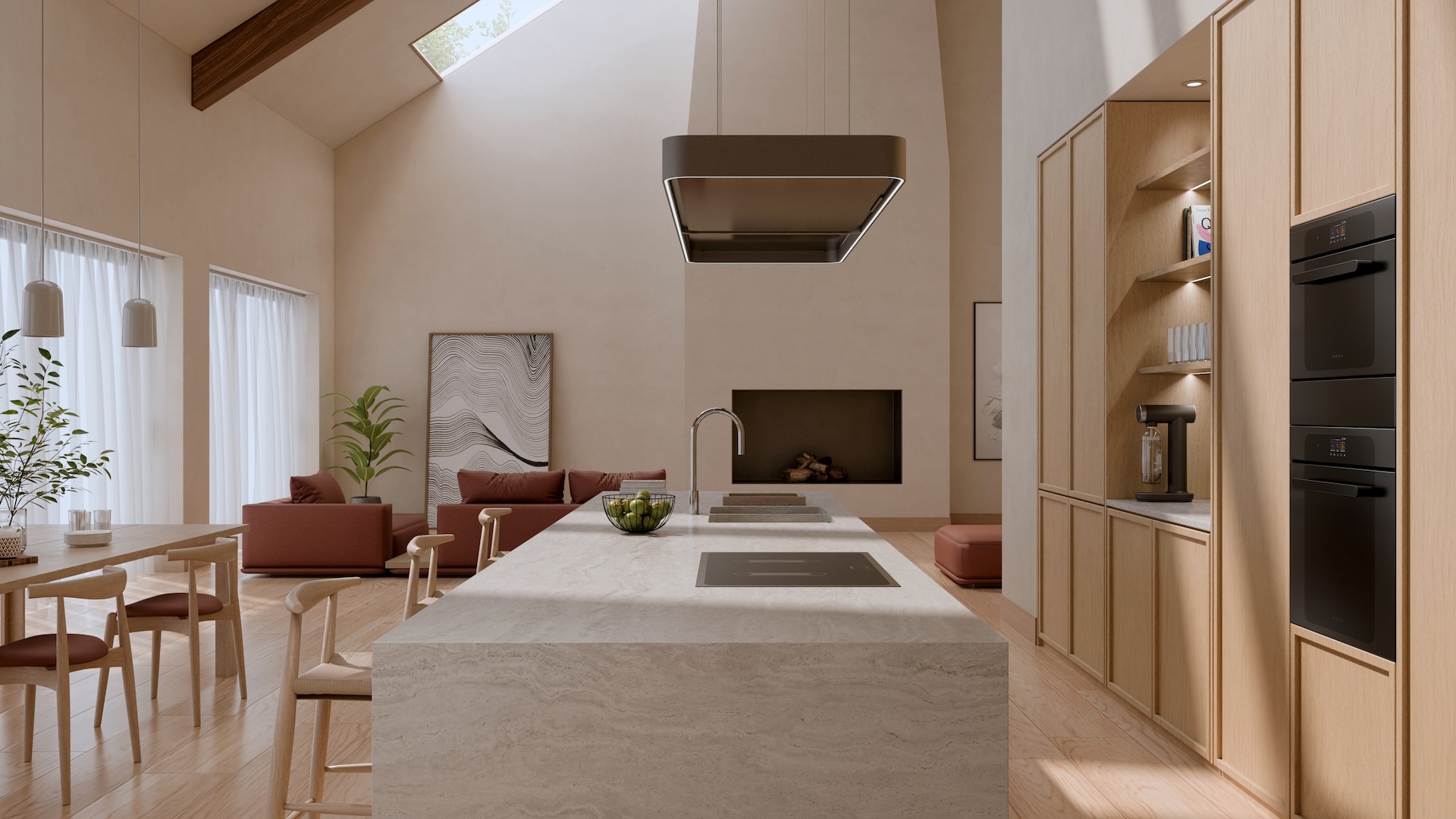
At Salone del Mobile, and within the dense program of EuroCucina 2026, the kitchen returns to the center of the design conversation – not as a purely functional system, but as a layered environment where technology, identity, and domestic rituals intersect. It is here that brands are forced to clarify their position, whether to follow the neutralization of appliances into architecture or to push them back into visibility as authored objects.
SMEG has historically chosen the second path. Founded in Emilia-Romagna in 1948, the company has built a precise and recognizable visual language: saturated color, softened geometries, reflective surfaces, and a consistent attention to detail. These elements have made its products legible across decades, resisting the flattening tendency of minimalism without losing coherence. At Milan Design Week 2026, this identity is not revised but extended through a set of collections that sharpen the relationship between appliance and space, developed and refined through collaborations with design studios such as BorromeodeSilva and Stefano Boeri Interiors, as well as with brands like Porsche.
Gallery
Open full width



Open full width
The direction is clear: appliances are not background infrastructure. They operate as design devices, capable of structuring the kitchen both visually and functionally. The new releases of the brand align with this stance, reinforcing a narrative that merges technological performance with a controlled aesthetic vocabulary, calibrated to contemporary domestic scenarios.
Presented during EuroCucina, the two main collections – Musa and Isola – are developed in collaboration with external studios, a recurring strategy for SMEG. The intent is not to dilute the brand’s DNA, but to stress-test it through different design approaches. Both projects remain anchored in the company’s core language, while introducing variations in tone, scale, and spatial role.
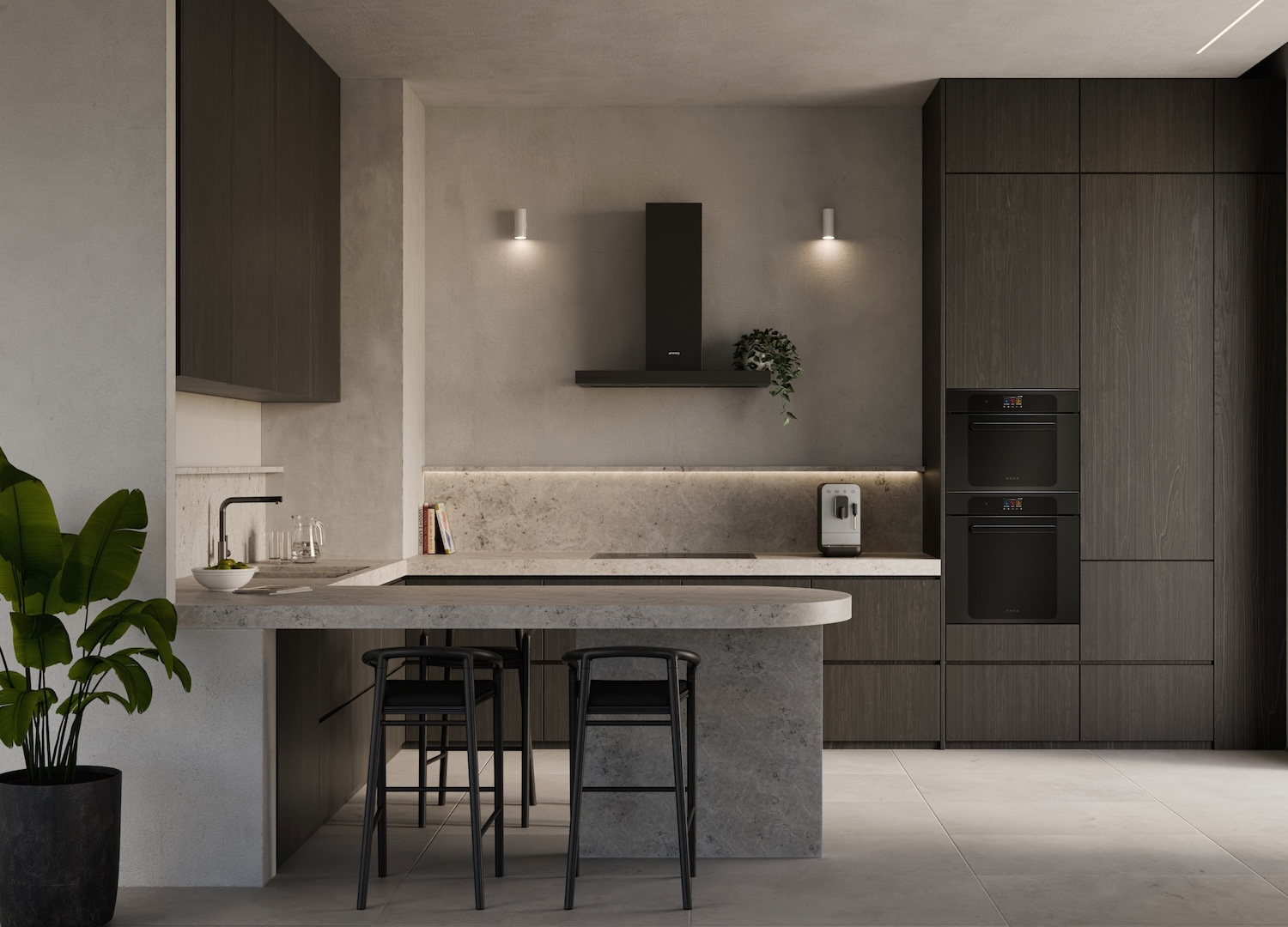
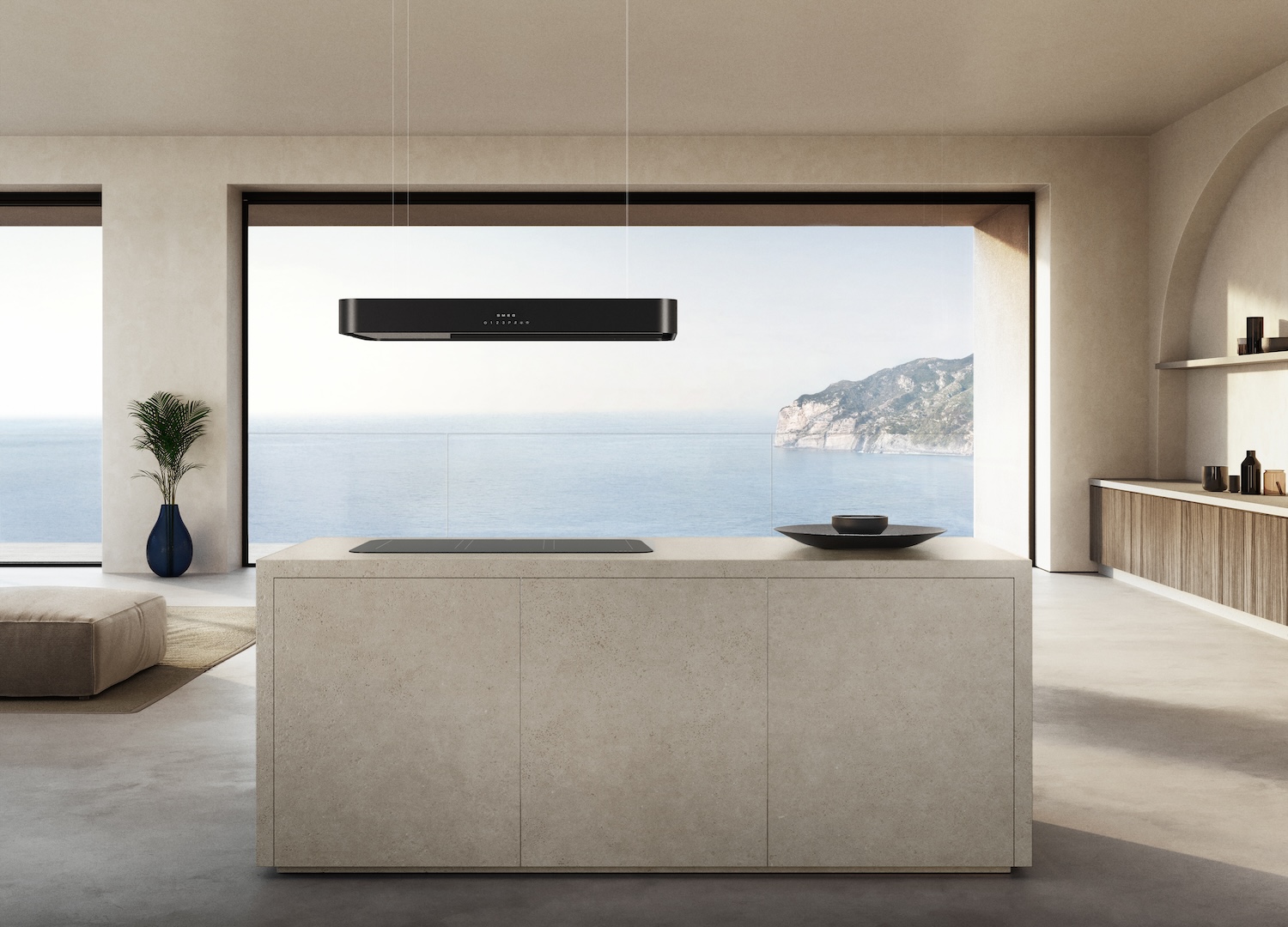
Musa, designed with BorromeodeSilva, operates through reduction. The collection is defined by a minimal and rigorous formal system, where elements are stripped to their essential geometry, surfaces alternate between matte and gloss, but within a restrained palette – black and silver dominate, avoiding chromatic distraction. The result is a controlled visual field, where contrast is measured and never decorative.

The collection includes induction hobs, hoods, built-in coffee machines, and wall-integrated storage elements. Each component is conceived to sit within the architecture rather than compete with it, yet without disappearing entirely. The balance is subtle: Musa does not aim for invisibility, but for precision. Its presence is quiet, almost technical, but still intentional and expressive. This approach aligns with BorromeodeSilva’s broader practice, which often navigates between narrative and industrial design. The studio’s experience with technologically driven companies is evident here, particularly in the way complexity is resolved into legible forms.
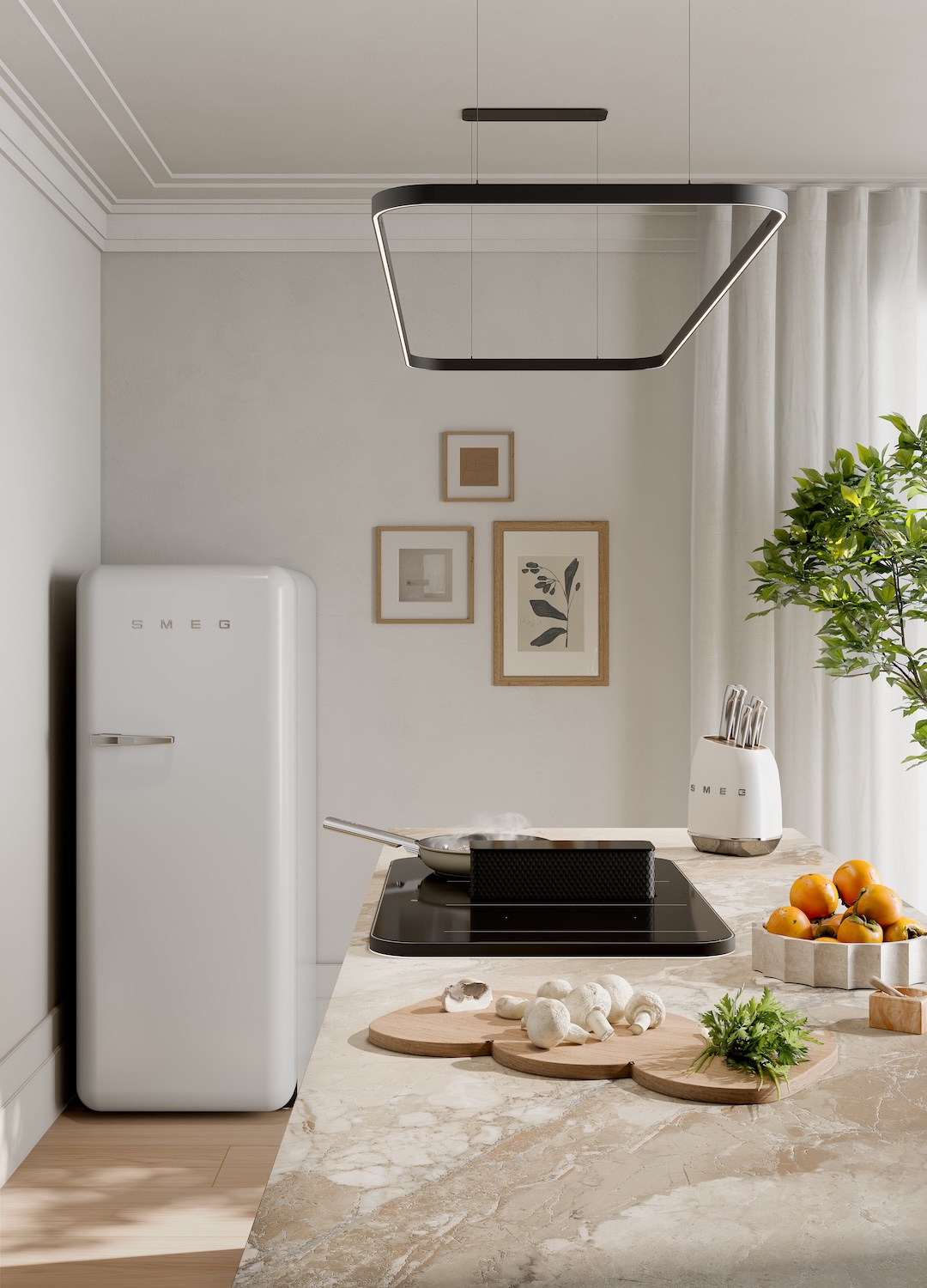
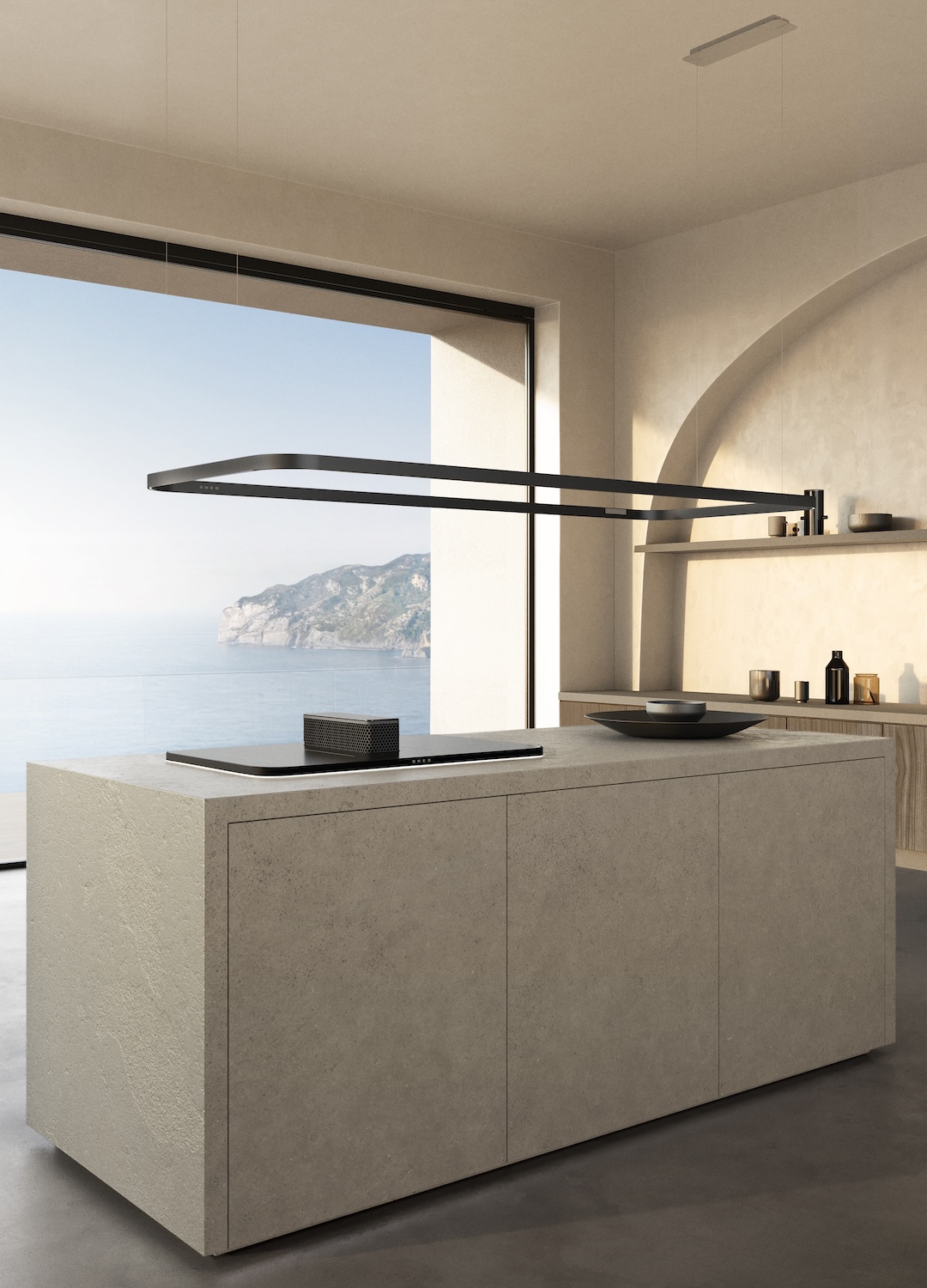
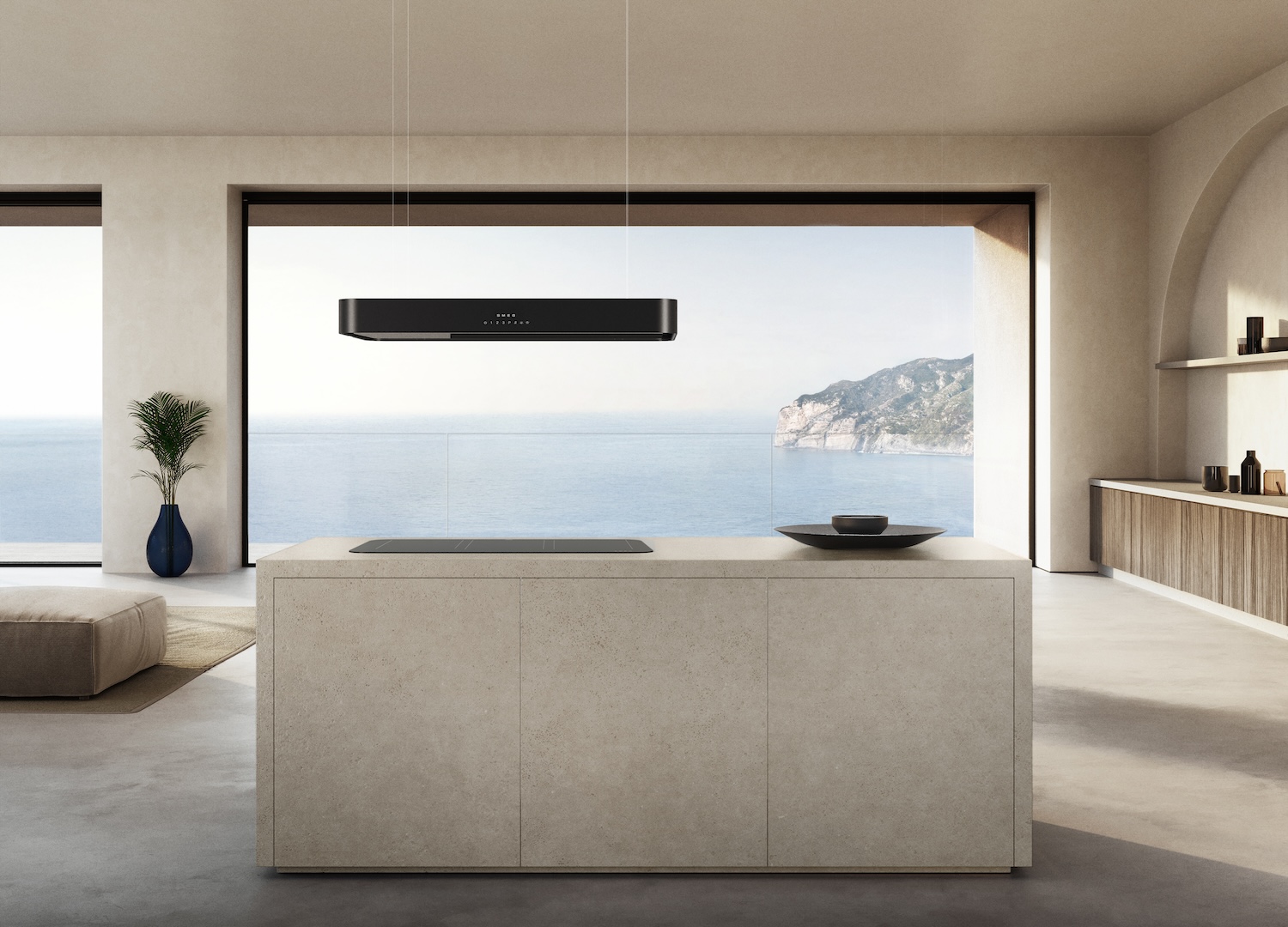
If Musa works by subtraction, Isola takes the opposite route. Developed with Stefano Boeri Interiors and already awarded with the Design Intelligence Award in 2025, the collection positions appliances as central actors within the kitchen space. Rather than integrating into cabinetry, these elements emerge as focal points.
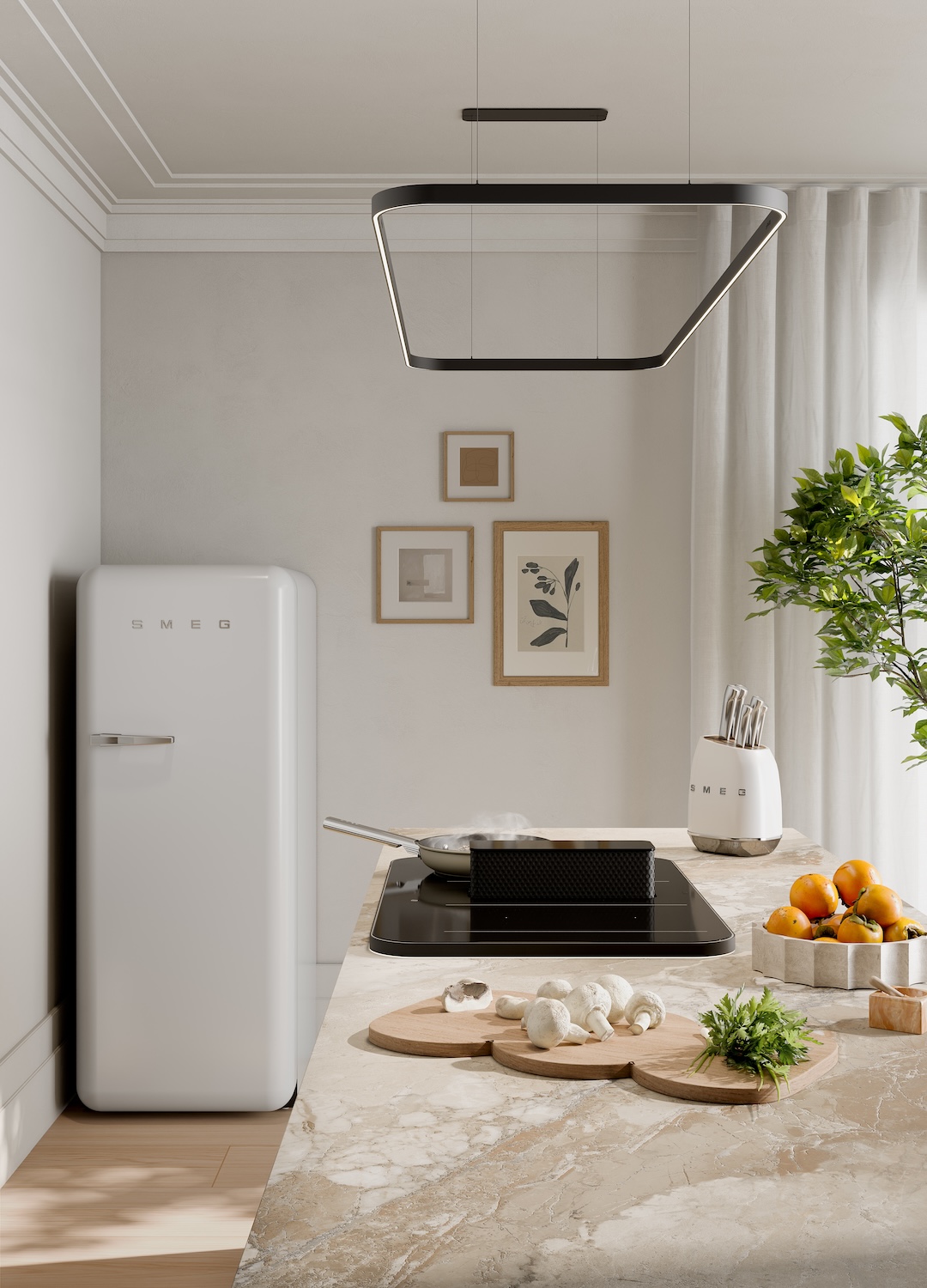
Isola revolves around induction hobs with integrated extraction systems, combined with suspended hoods and a modular system of illuminated rails. The configuration is open, flexible, and explicitly visible, defining spatial markers that rethink how the kitchen is used and perceived. The project reflects a broader shift, where the kitchen island is a performative stage, and cooking is both action and display.
Also, materials, proportions, and lighting are calibrated to give the objects weight within the room. The collaboration with Stefano Boeri Interiors is coherent in this sense. The studio’s work often treats design as a transformative agent, capable of redefining how spaces are organized and experienced. Applied to SMEG’s technical expertise, this results in a hybrid language – part infrastructural, part expressive.
In this sense, Musa and Isola do not compete, but they outline two possible trajectories for the contemporary kitchen – one, moving toward reduction and integration, and the other toward exposure and articulation.
The exhibition design – both at the fair and in the SMEG flagship store – supports this dual reading. The setup emphasizes material presence – in a context increasingly dominated by digital representation, the installation insists on physical interaction, and wants to be surfaces to be touched, finishes to be read under changing light, volumes to be navigated. This focus on materiality responds to a growing gap between the virtual and the built, particularly in design communication. By foregrounding tactility, SMEG repositions its products within a sensory framework.
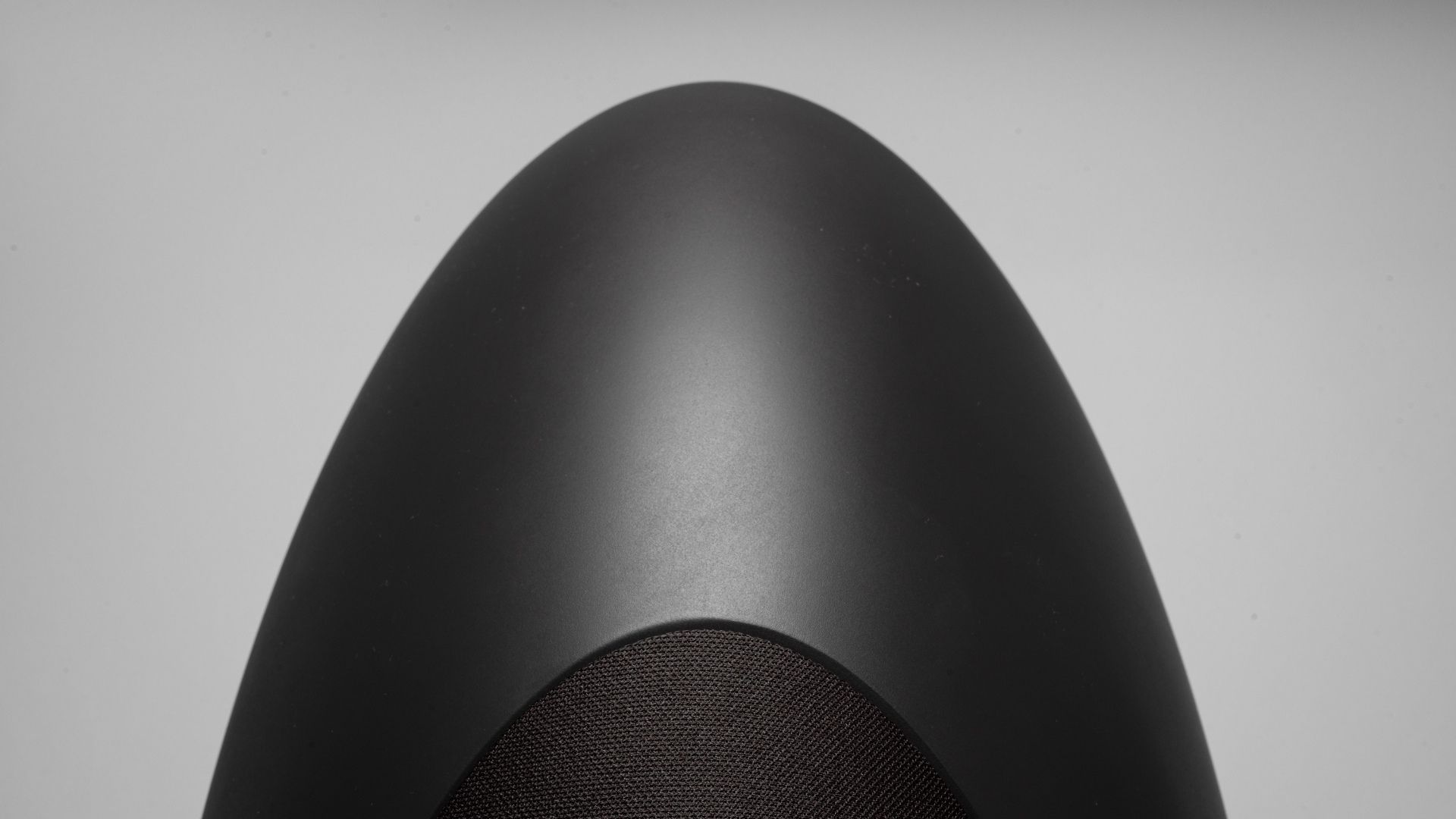
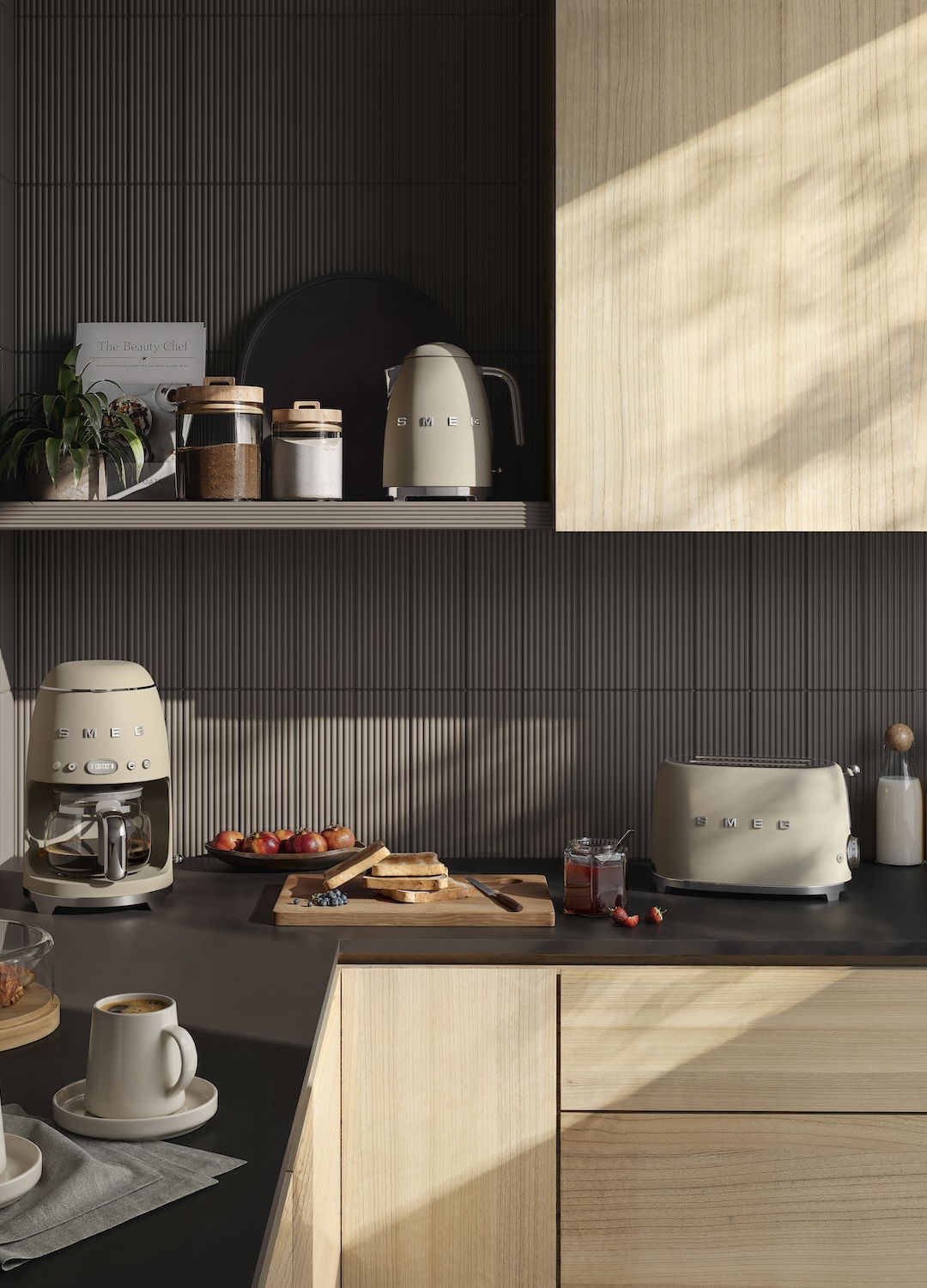
And within this trajectory, the company sharpens its position on the surface as a primary design tool. Through the introduction of TOTAL MATTNESS frames the matte, finishing is meant as a defining aesthetic of contemporary living. Here, opacity is treated as an active condition, and absorbs light rather than reflecting it, stabilizing color and giving volume a more grounded presence, in a quite atmospheric effect.
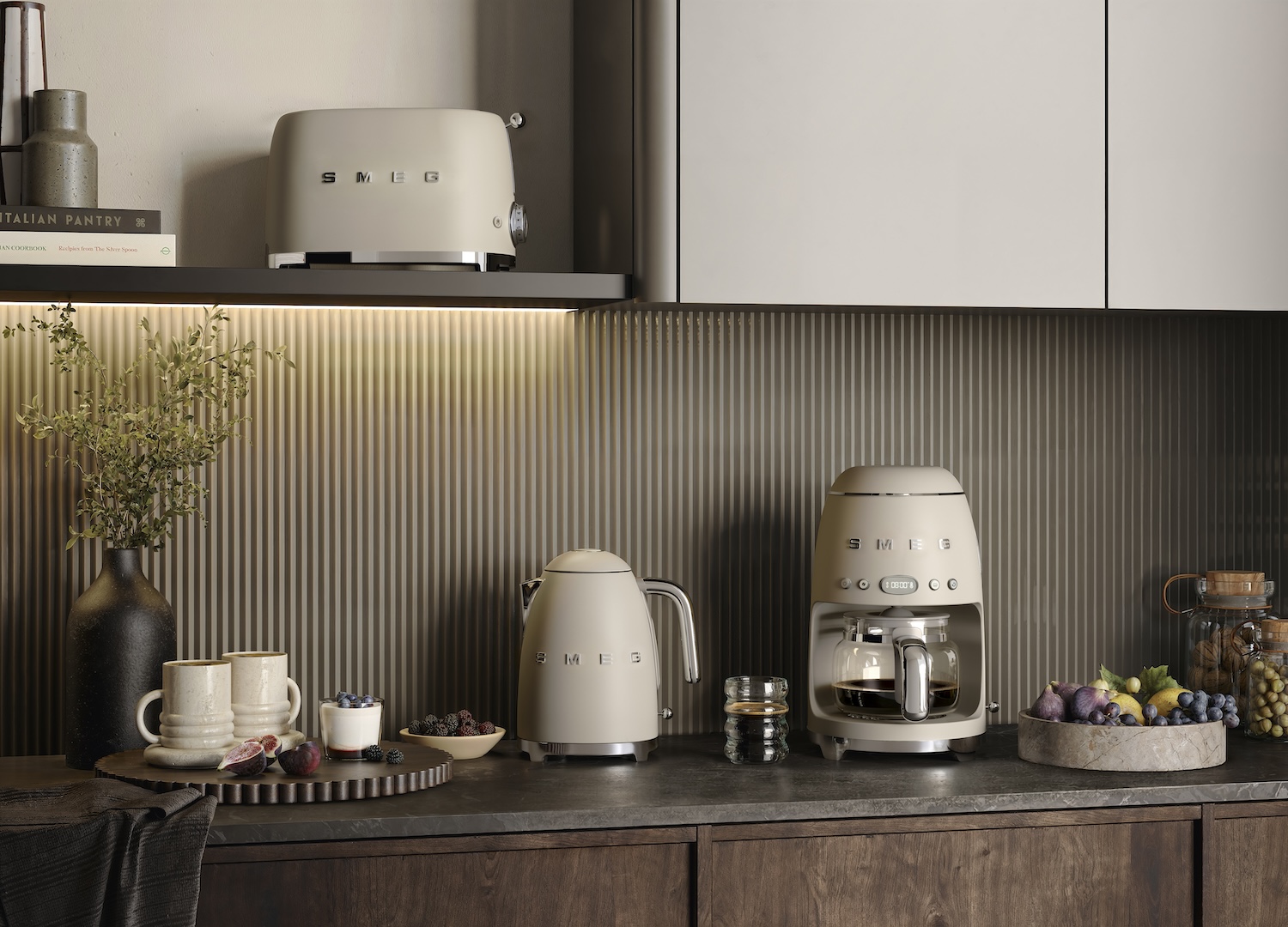
The project is structured around three coordinates – nature, material, and color – used to construct a real domestic landscape where each finishing is conceived as a chromatic field rather than a single tone, calibrated to interact with light and adjacent materials. Black and white shift toward density and softness; Storm Blue and Emerald Green introduce depth without becoming decorative; Amber Clay carries a more explicitly material register. Moonlight, positioned as a contemporary neutral, operates in between – warm, diffused, and deliberately low-contrast. What emerges is not a palette in the traditional sense, but a system that can be extended across product categories – from FAB refrigerators to Portofino freestanding cookers, hoods, taps, and small appliances. The absence of gloss reduces visual noise, making material transitions more legible and the overall environment more cohesive.
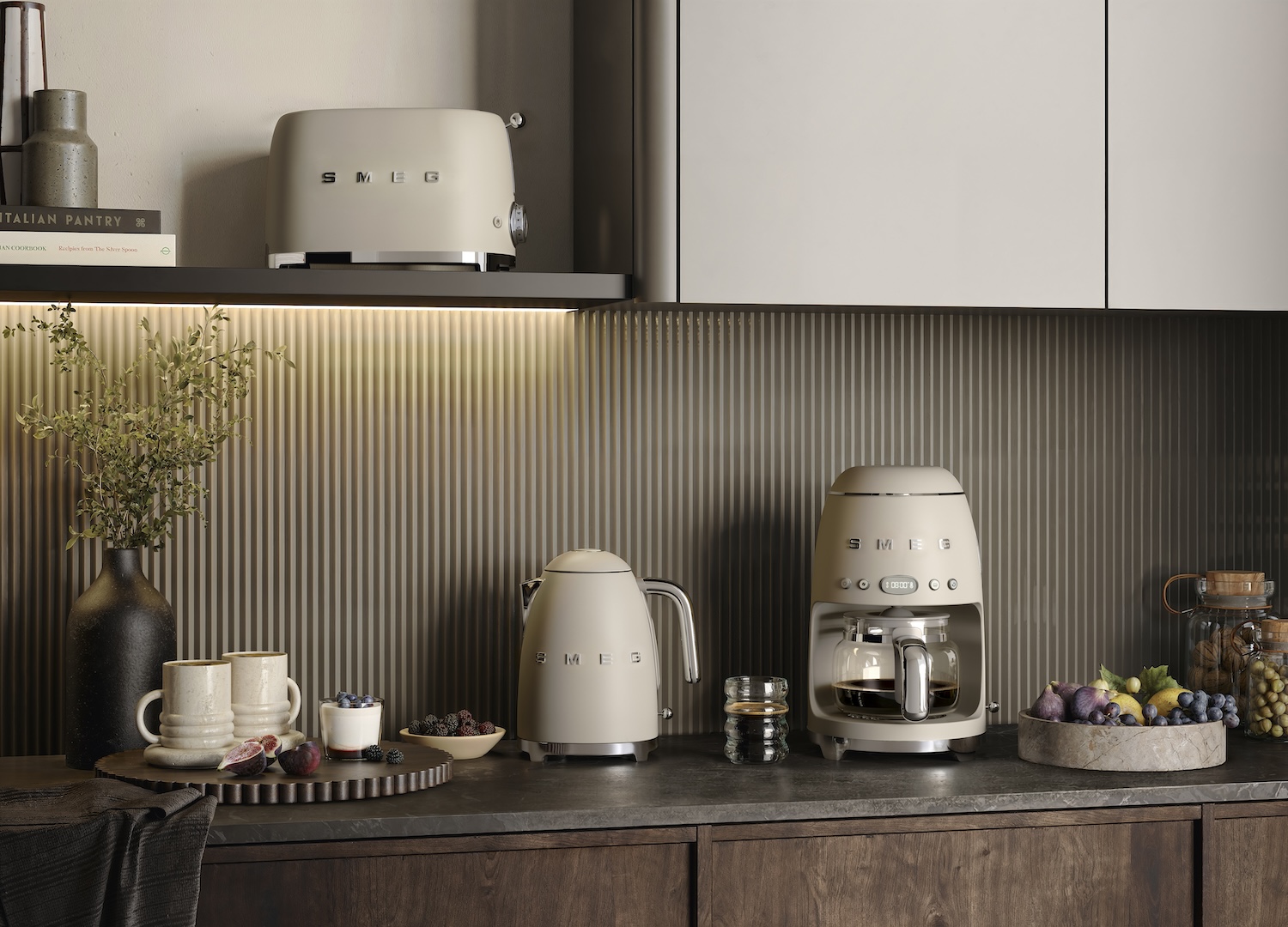
Alongside the new collections, the brand introduces updates to existing lines. The Dolce Stil Novo range undergoes a targeted restyling, focusing on customization. The intervention refines rather than redefines, allowing for greater adaptability within different interior contexts while maintaining the collection’s established identity. The Portofino series also expands, with new matte finishes that shift its visual balance. Originally inspired by the Ligurian coastline – its colors and light – the collection now incorporates more subdued surfaces, designed to interact with stainless steel in a less reflective, more contemporary way.
This evolution sits within a longer trajectory. Since the mid-1950s, SMEG has treated cookers as a core product category, combining Italian design with a steady investment in cooking technology, translating this legacy into a high-performance system, with large-capacity ovens, triple fan technology for even heat distribution across multiple levels, and advanced insulation that improves efficiency while reducing preheating time. The range is designed for versatility, positioning it between domestic use and a more professional approach.
Color remains central in the evolution of the FAB refrigerators, among the most recognizable products in the catalogue. For 2026, the palette extends toward softer, more atmospheric tones. The introduction of the Moonlight finish – muted, luminous, and deliberately understated – marks a shift from high-saturation retro hues to a more controlled chromatic language.
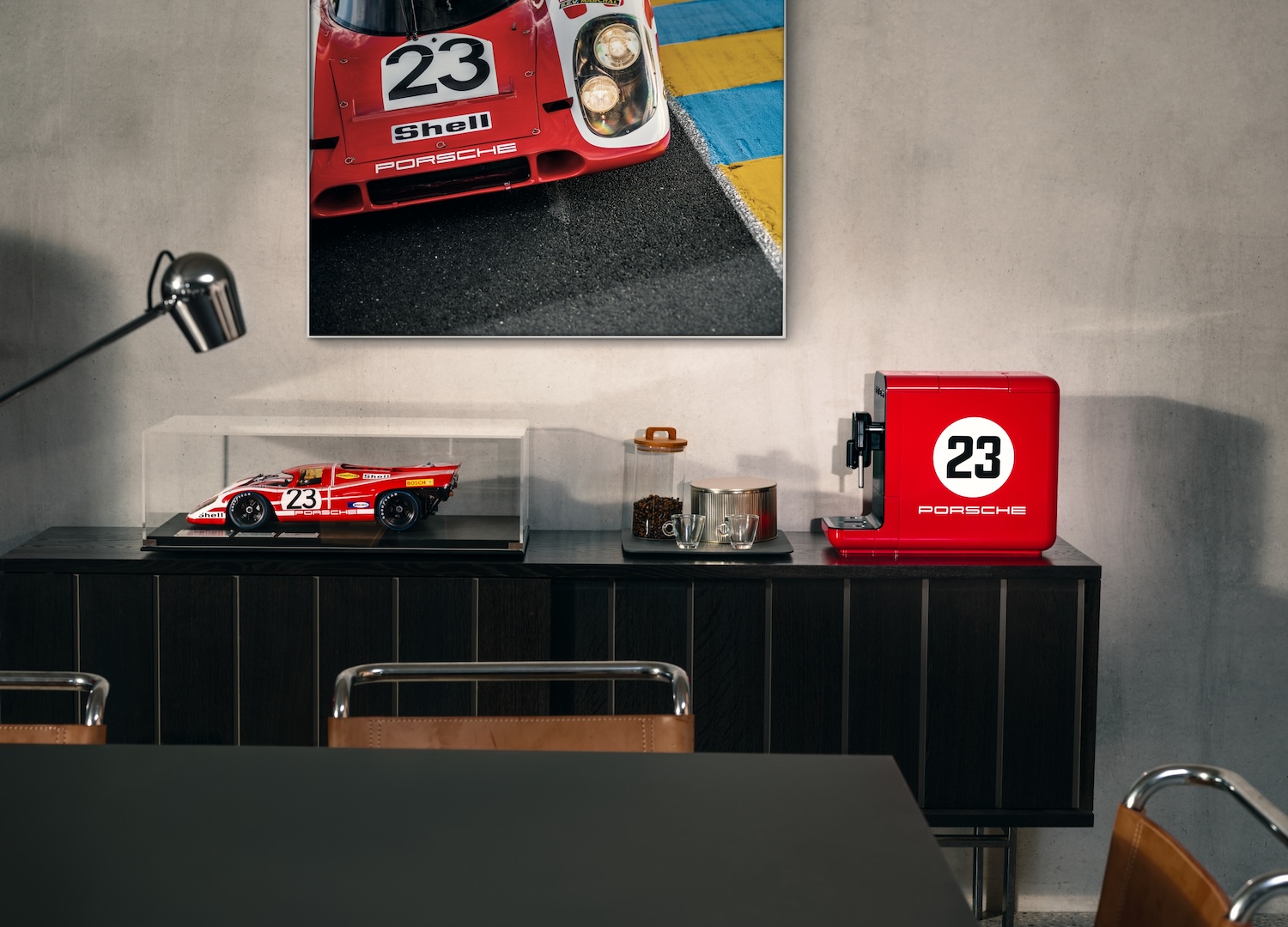
The week also features the Porsche x SMEG collection, a recent partnership that merges the automotive precision of Porsche with SMEG’s domestic expertise. The partnership brings together two brands aligned on precision, performance, and recognizability, translating Porsche’s motorsport legacy into the domestic scale without diluting either identity. The result is a controlled overlap between automotive engineering and appliance design, where form is tightly linked to function, and aesthetics remain purposeful.
At the core of the release is the 917 Salzburg collection, a limited series of 1,970 individually numbered pieces – including refrigerators and coffee machines – referencing Porsche’s first overall victory at the 24 Hours of Le Mans. The use of Salzburg Red, a special color developed for the collaboration, operates less as a direct citation, anchoring the objects in a specific moment of racing history while reinforcing their collectible dimension. Alongside this, the Carrara White and Shade Green variants extend Porsche’s signature finishes across a broader range of SMEG products.
Taken together, these elements outline a consistent strategy. SMEG, at the 2026 Design weeks, shows how its approach is still contemporary even for a well-known and iconic brand, working through continuity – and, at the same time, evolving its language in response to evolving domestic landscapes, while maintaining a strong formal identity.
About the author

Ludovica Proietti, journalist, design historian and curator, teaches in universities and curates events, always exploring projects with fresh, unconventional perspectives.
Instagram