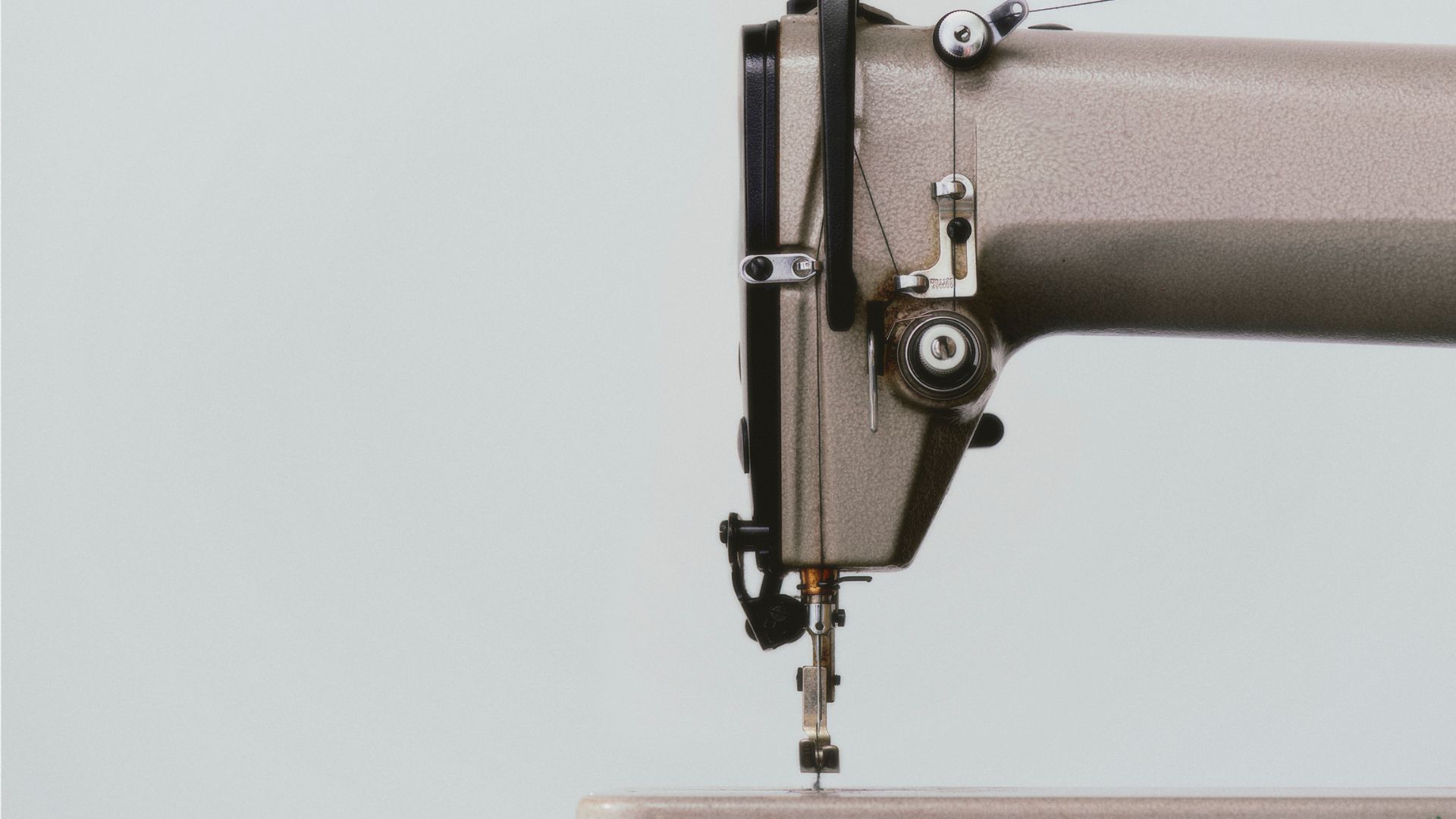
Can a sewing machine become the starting point for 10 different design stories?
For the third edition of VÆRKTØJ at 3daysofdesign 2026, 10 designers were invited to work with the sewing machine. Despite sharing a common starting point, the resulting projects reveal strikingly different approaches, showing how tools quietly shape creative processes, influencing materials, forms and ideas long before a finished object emerges.
Copenhagen’s design calendar is once again anchored by 3daysofdesign, Denmark’s official design festival and the city’s flagship Design Week. Running from June 10 to 12, the 2026 edition unfolds under the theme Make This Moment Matter, spreading across eight Design Districts and confirming the event’s status as a global platform for showcasing and celebrating creativity.
Among this year’s standout presentations is the return of VÆRKTØJ, now in its third edition. Founded in 2024 by Frederik Weber, Gustav Dupont, Jonas Trampedach, Kasper Salto, and Michael Antrobus, VÆRKTØJ has built its reputation as an award-winning exhibition format dedicated to a single, deceptively simple question: what role do tools play in shaping design?
Gallery
Open full width
Open full width
VÆRKTØJ 3:
VÆRKTØJ returns to 3daysofdesign
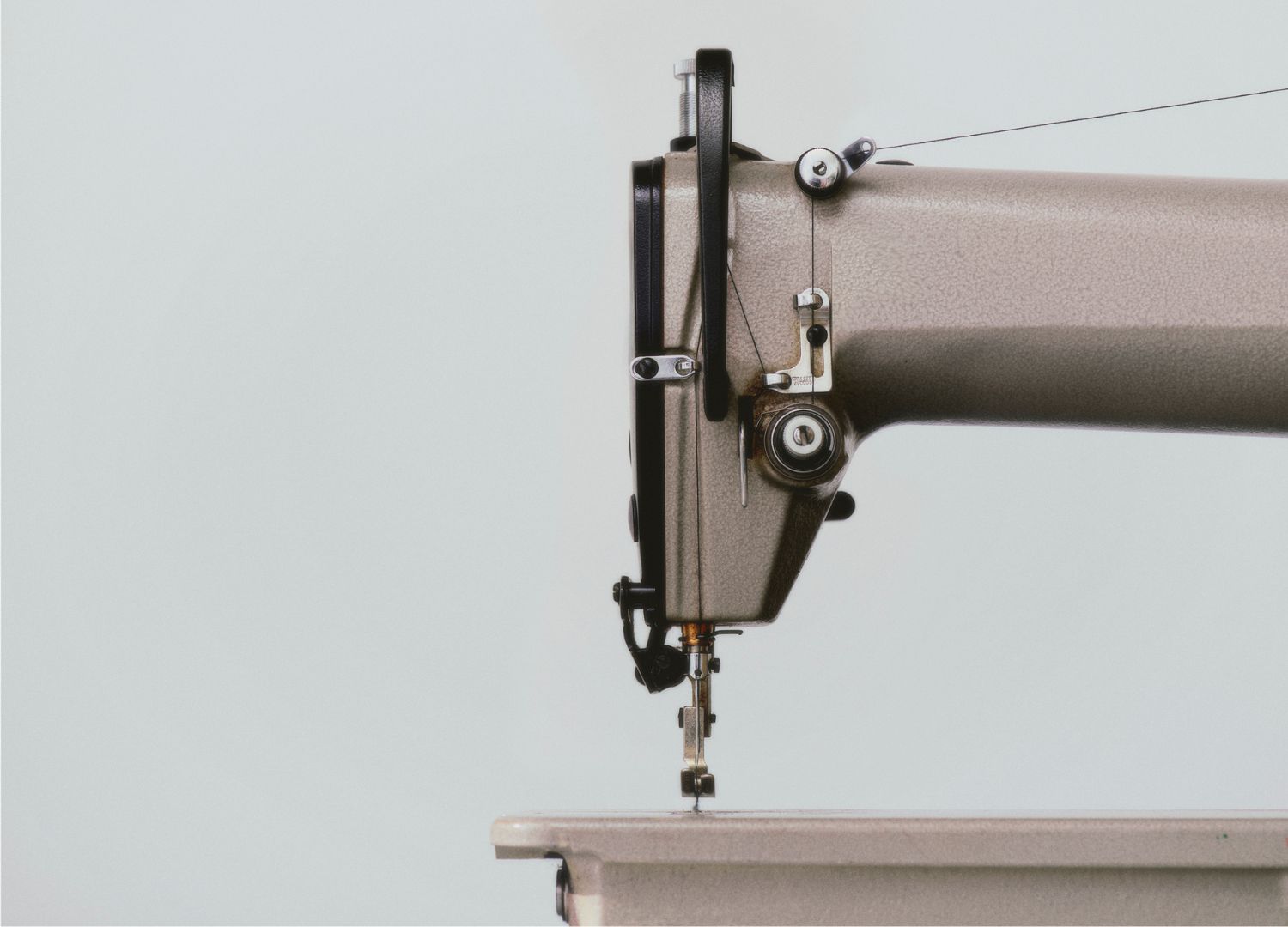
For VÆRKTØJ 3, the answer takes a sharp, unifying focus. The sewing machine – a tool equally at home in industrial production and domestic craft – has been used, in part or in full, to create every piece in the exhibition. Starting from this shared point of departure, the show explores how tools shape not only the design process but also its outcomes, informing material choices, forms, and ideas long before a finished object takes shape.
“VÆRKTØJ 3 invites visitors to consider the often invisible influence of tools and how they shape a designer’s identity”, explain the platform’s founders. They expand on this idea with a broader reflection on the role of tools throughout human history: “Throughout history, tools have been crucial to humanity’s ability to survive and innovate. From primitive stone tools to advanced machinery, tools have been key to shaping the world. With the exhibition format, we want to communicate and demonstrate how our identity as designers is largely shaped by the tools we use, as they not only drive the development of ideas and creative processes but also leave a distinct imprint on the final product”.
The designers
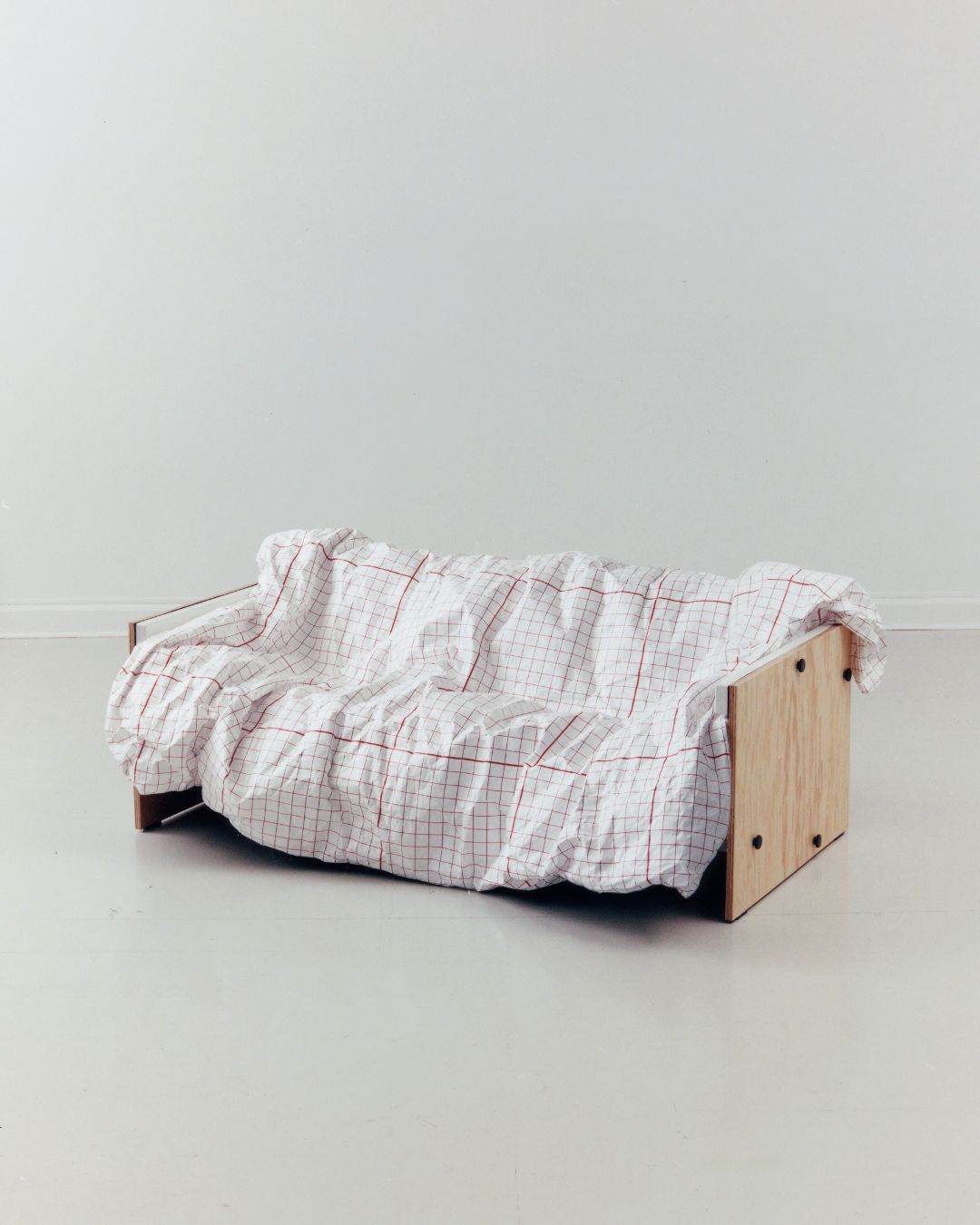
This year’s exhibition brings together new work from ten designers and studios: Erwan Bouroullec, Foster + Partners Industrial Design, Frederik Gustav, Jonas Trampedach, Kasper Salto, Louise Campbell, Lærke Ryom, Michael Antrobus, Pearson Lloyd, and Sia Hurtigkarl. Each interprets the sewing machine through a distinct lens, resulting in a collection that ranges from soft seating to sculptural lighting. Erwan Bouroullec’s Avalanche Sofa poses the question of what counts as the “best minimum”. Built in the most direct way possible, it strips the sofa down to essential form and function, while its Tyvek upholstery redefines minimalism in textile terms – lightweight, durable, and washable.
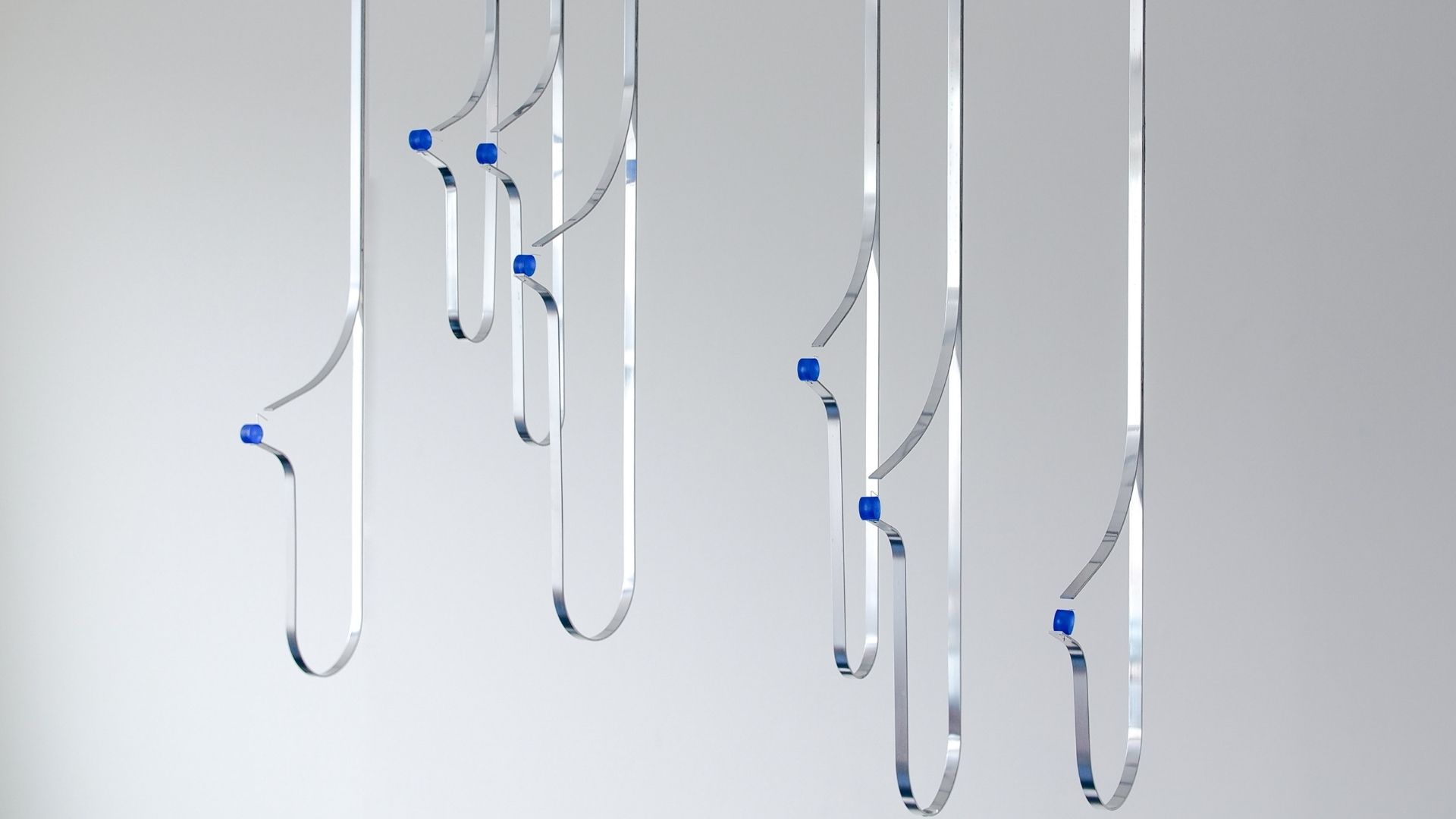
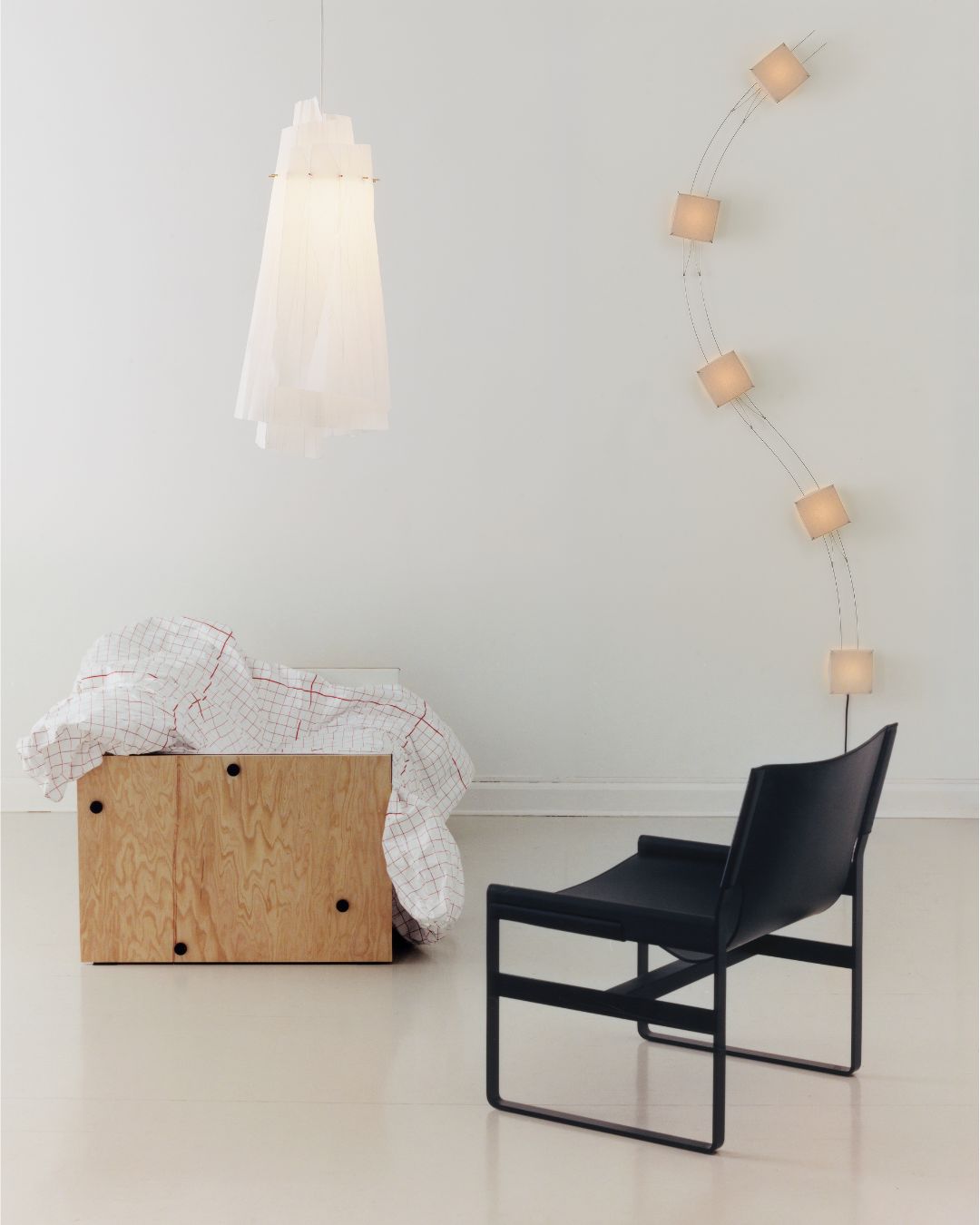
Foster + Partners Industrial Design presents Lomme, a lighting collection whose name is the Danish word for “pocket”, reflecting the spatial depth and form generated through a simple act of connection. Here, stitching is structural rather than purely decorative: a single seam defines a geometric fold and gives the piece its shape. Frederik Gustav’s Soft Box uses small folded and sewn textile volumes to create softly diffused clusters of light. Linked by thin spring-steel wires, the system can scale into free-form spatial arrangements that climb and meander through a room.
Every tool leaves a trace
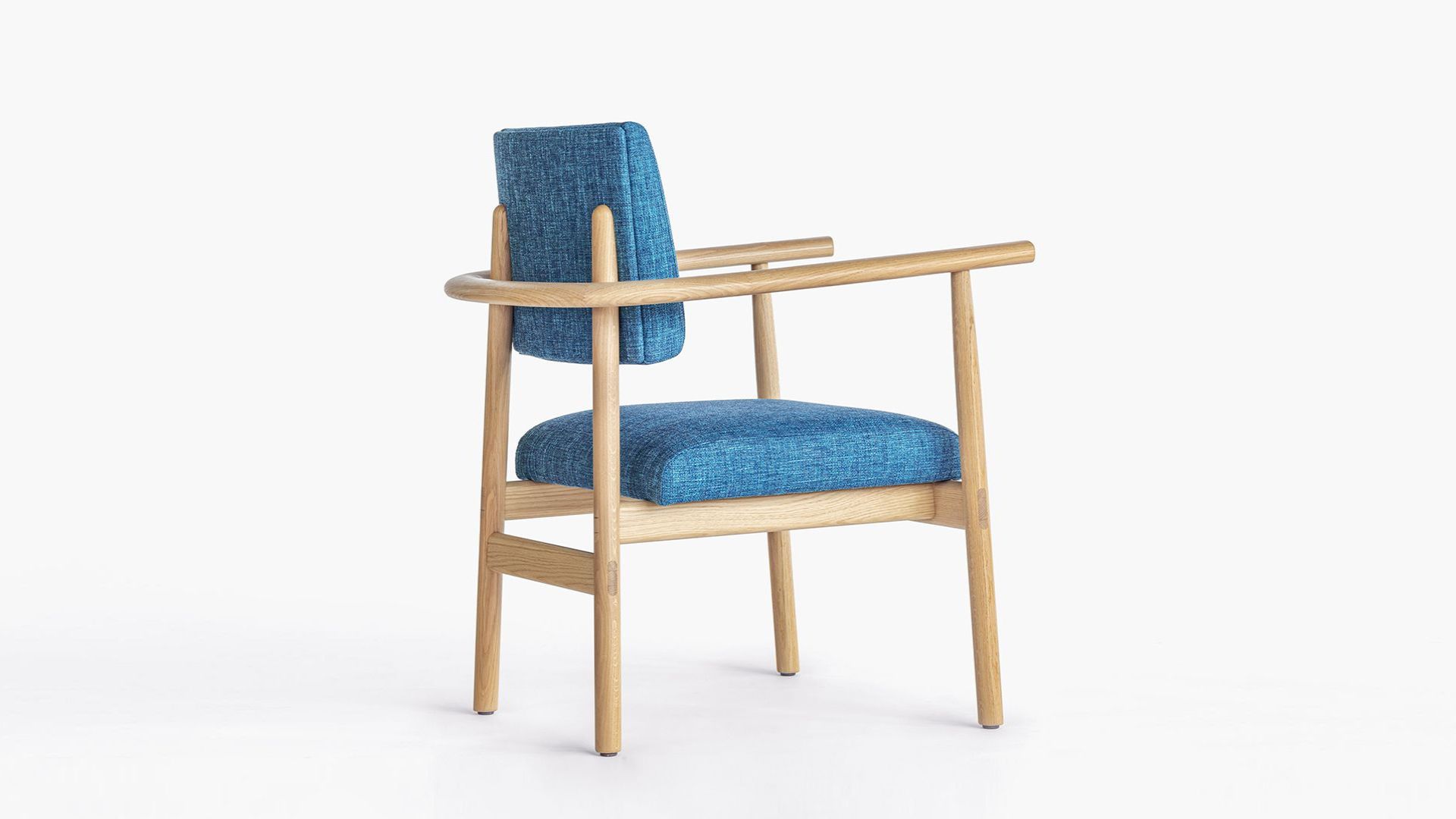
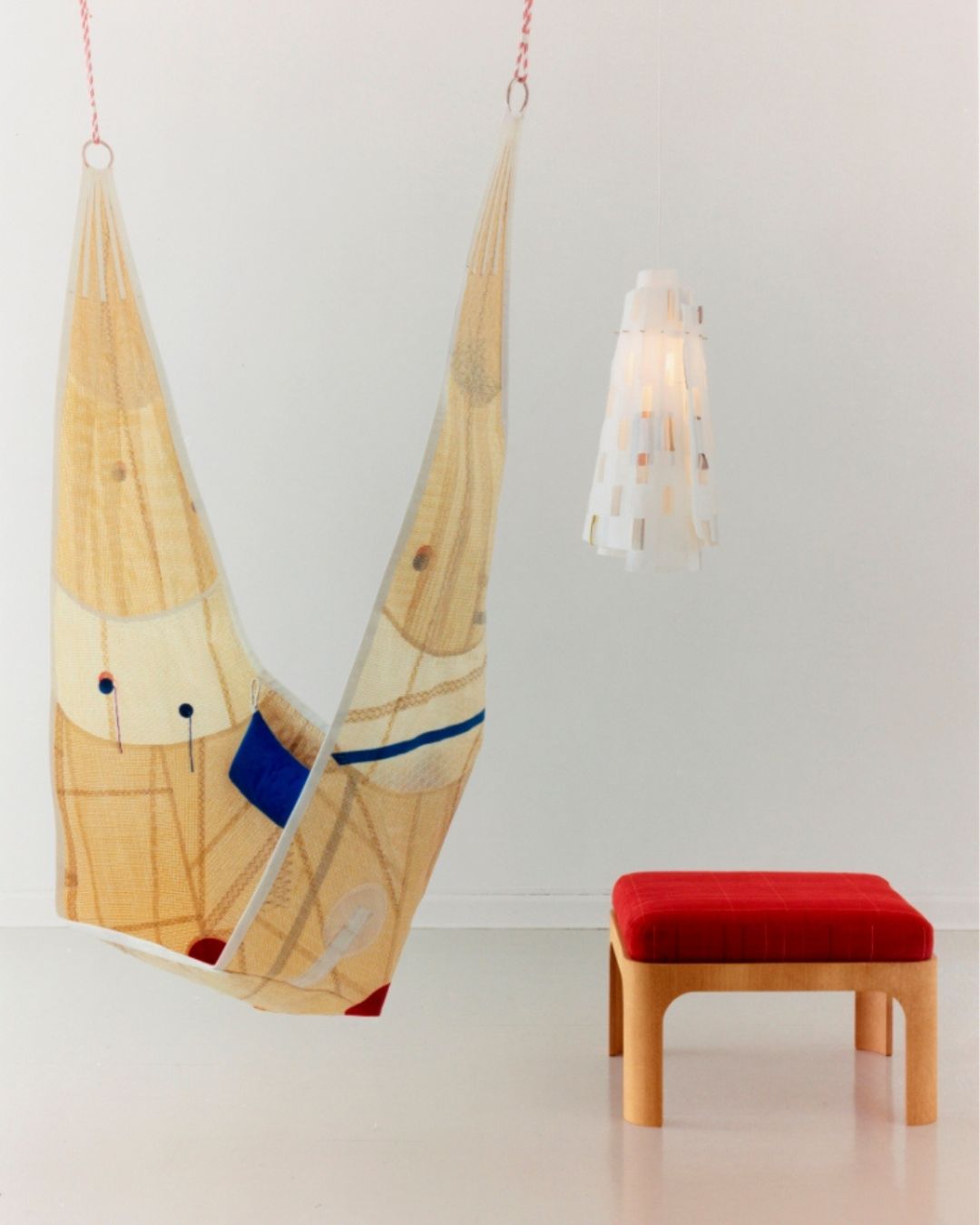
Jonas Trampedach’s Taut Lamp draws on textile samples finished with translucent polyester thread, which becomes nearly invisible once illuminated. The fabric is stretched over a custom glass tube that doubles as both light source and structural element. Kasper Salto reworks his own table construction from last year’s edition into a stool with Otto, pairing materials chosen for their quality, durability, and beauty. The cushion, created by Rikke Salto from upcycled vintage fabric, echoes the warm glow and geometry of the pressed-wood frame beneath it.
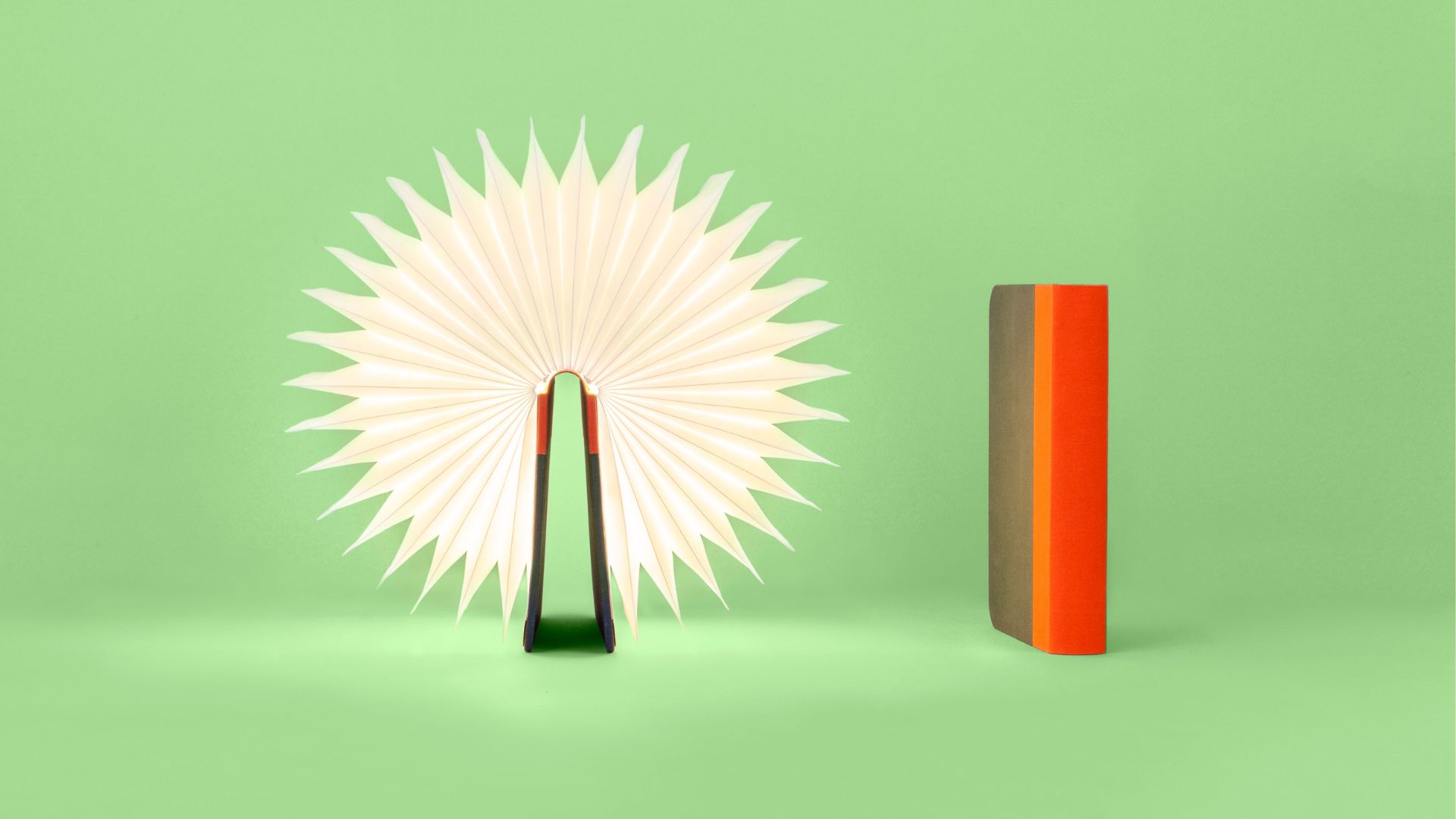
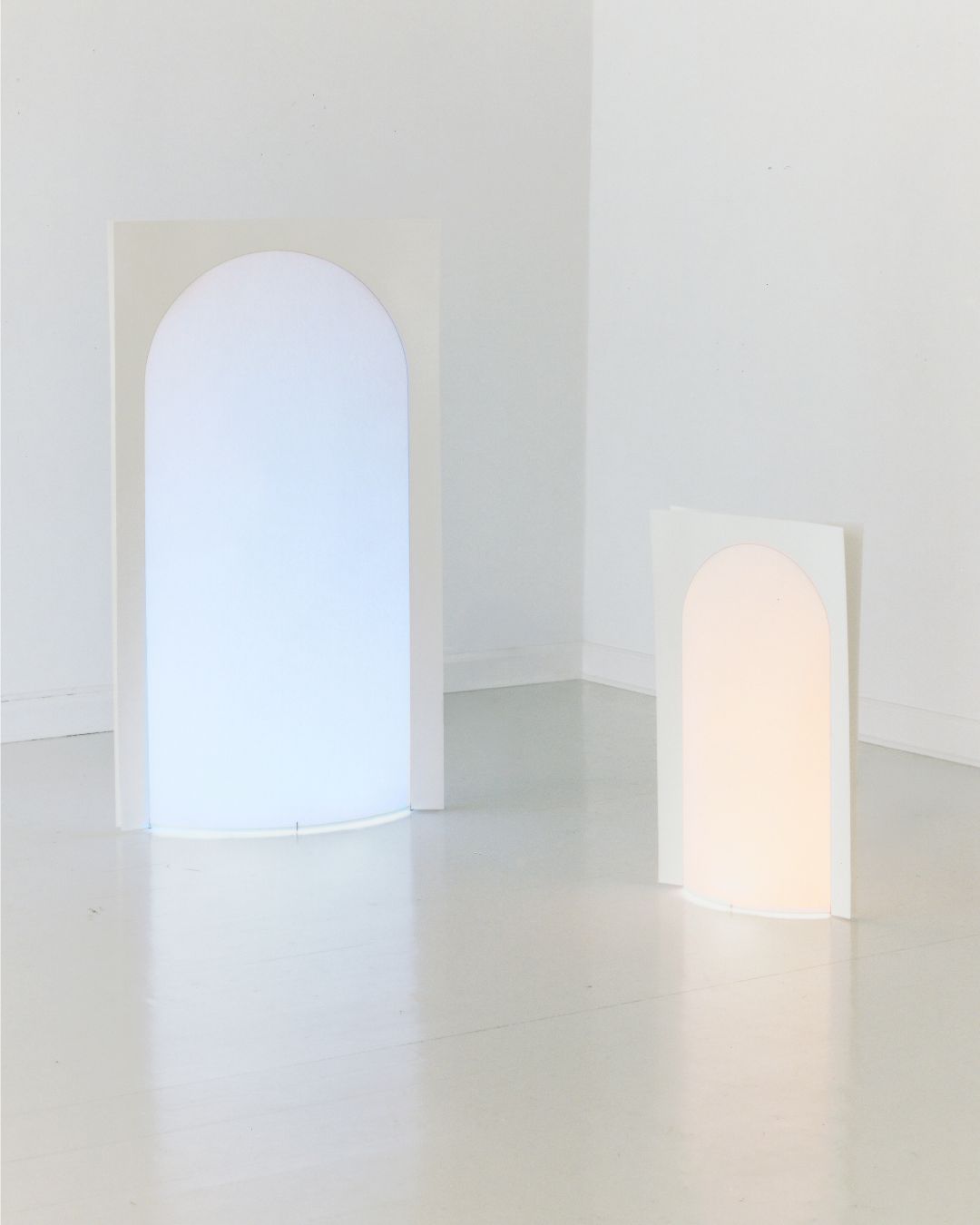
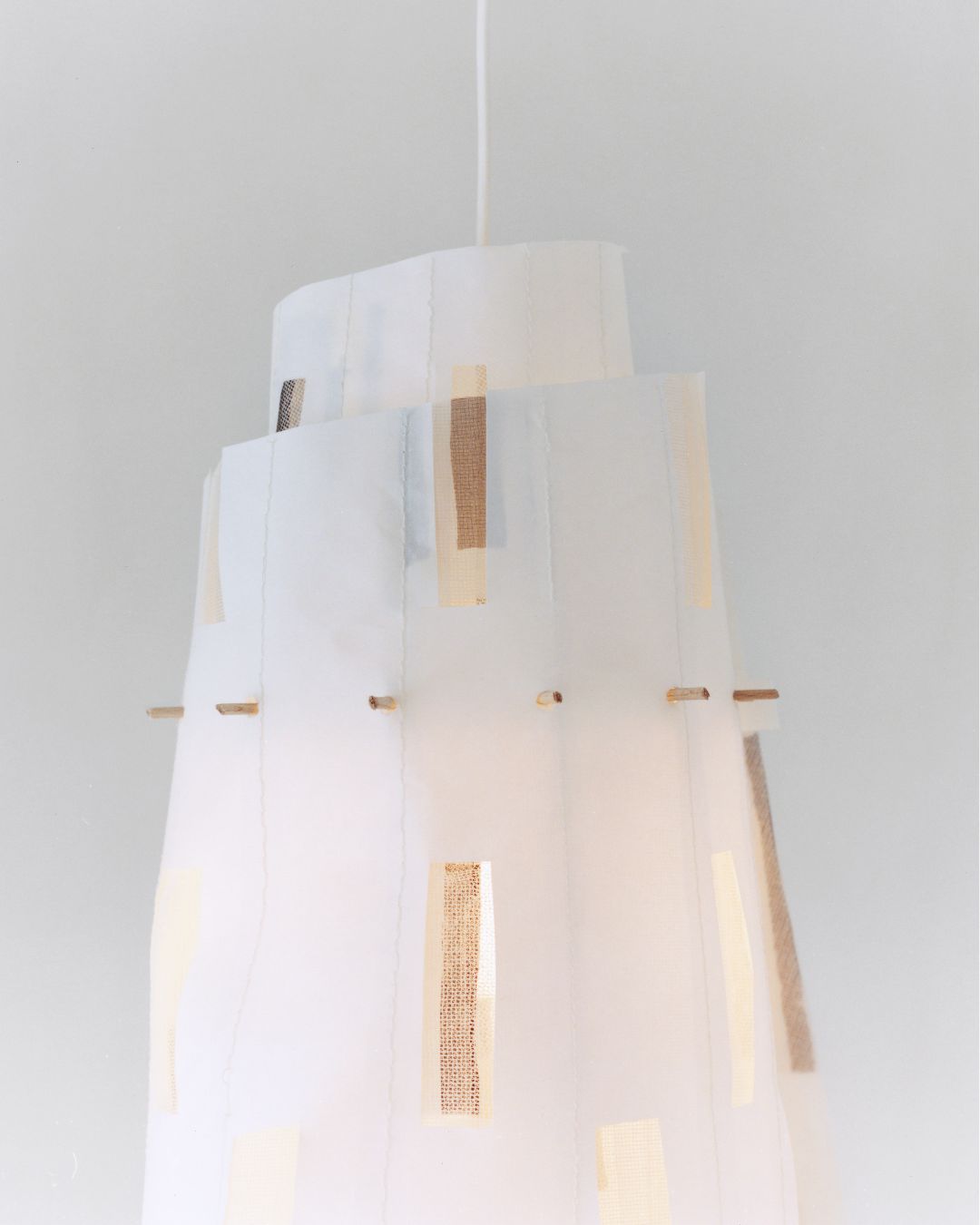
Louise Campbell’s Peep is a series of lightweight, roll-up lamps made from almost weightless textiles and paper, constructed with as few stitches as possible and designed to pack flat. Thin spiral bands and sticks hold the form, while the visible dark stitching serves only to join the materials together.
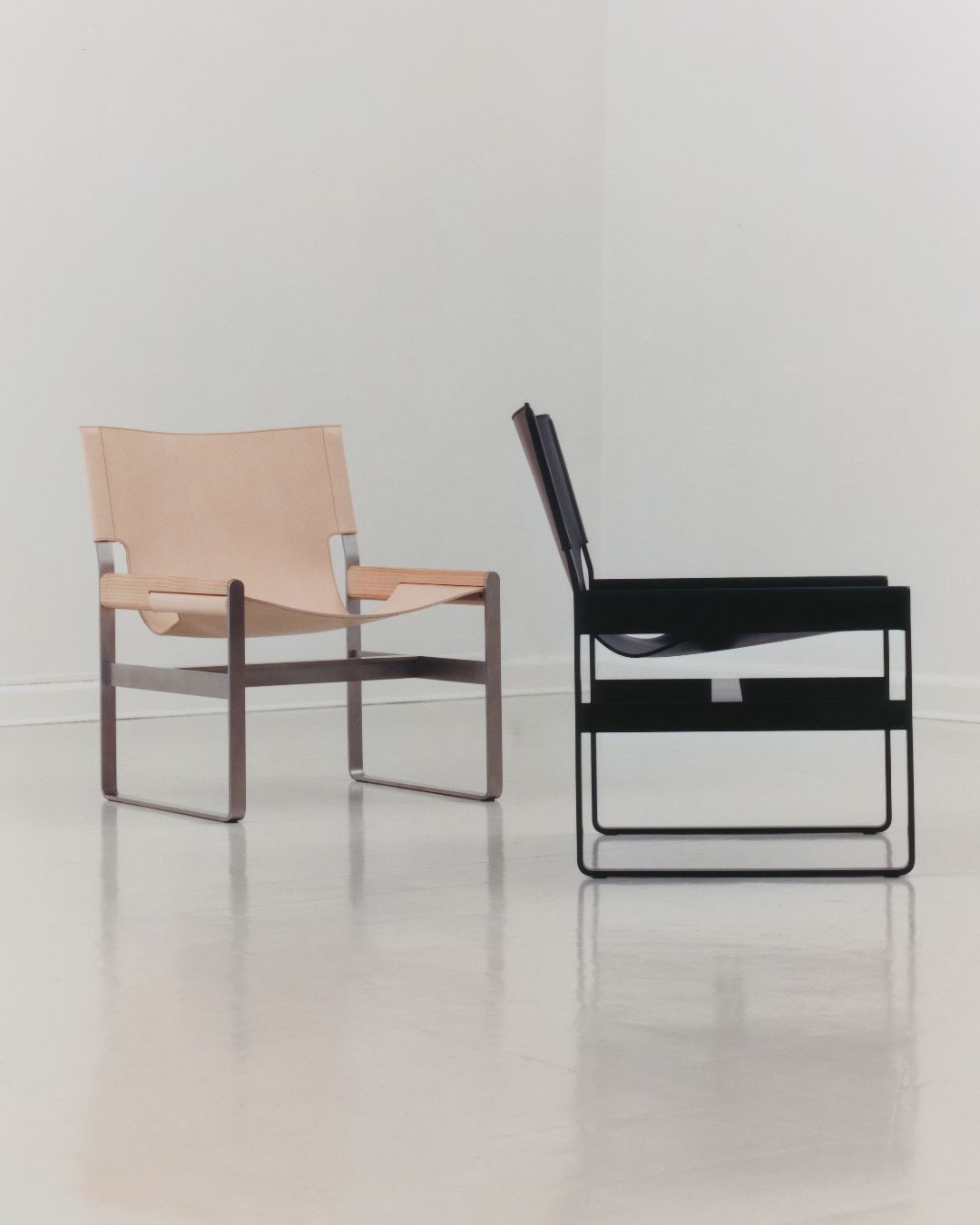
With the Enfold Chair, Lærke Ryom treats upholstery as a tailored garment rather than a covering, dressing the chair’s frame in folds and creases that challenge the conventional taut membrane. The result dissolves the usual hierarchy between base and upholstery into a single, shared formation of texture and form. Michael Antrobus’s Plane is a lounge chair built around a leather sling suspended within a steel framework. Two layers of leather are precisely sewn together along their edges to form the seat, while wooden rests integrate seamlessly with the frame, softening its industrial structure.
Design shaped by the act of making
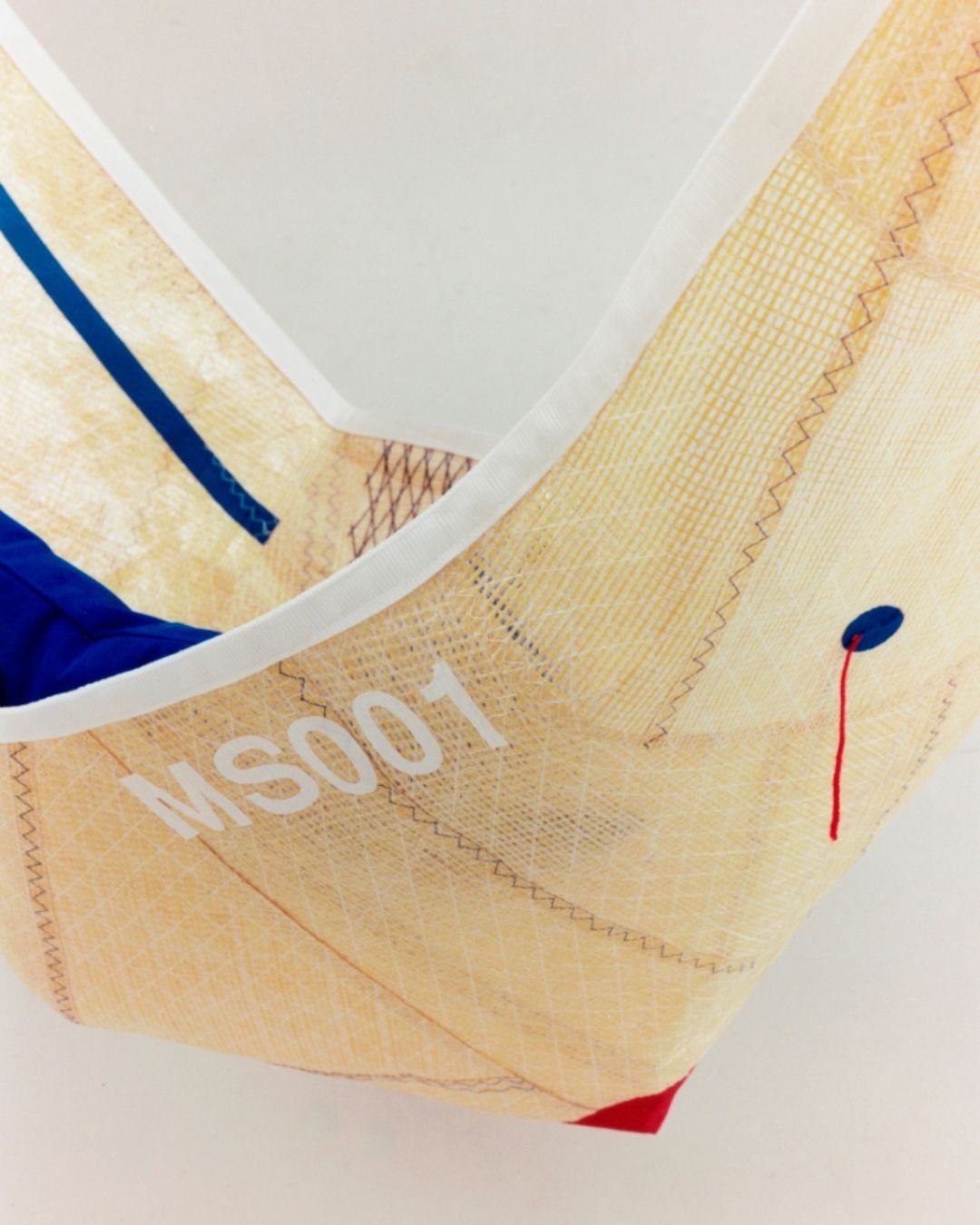
Pearson Lloyd’s BiCone continues the studio’s exploration of dematerialization. Rather than using the sewing machine to upholster an existing form, the studio lets ripstop nylon and fibreglass struts generate the form itself. Presented here as a pendant light, BiCone is one expression of an ongoing investigation into screening, lighting, and related typologies. Finally, Sia Hurtigkarl’s En Sejlmagers Stol is made from discarded sails, repurposing strong maritime textiles while preserving traces of their previous life at sea. The piece is as much a study of sailmaking as a craft as it is a chair – exploring the stitching, reinforcements, machines, materials, and construction methods particular to the sailmaking profession.
Taken together, the ten projects in VÆRKTØJ 3 demonstrate just how far a single tool can travel – from industrial workshop to domestic sewing table – and how deeply it can influence the creative process. More than a means of production, the sewing machine emerges as an active participant in design, shaping material choices, guiding formal decisions and opening unexpected possibilities. The exhibition ultimately reveals that every tool carries its own logic, and that part of a designer’s voice is formed through the instruments they choose to work with.